


- 100 Views
- 11 Min Read
- (0) Comment
TL;DR:
- Ngorongoro Crater offers dense wildlife viewing but is often crowded and expensive.
- Uganda provides exclusive, personalized safaris with fewer visitors and unique primate encounters.
- Choosing depends on preference for guaranteed Big Five sightings versus intimate wilderness experiences.
Few wildlife destinations generate as much excitement as Ngorongoro Crater in Tanzania. Its reputation as a self-contained wildlife paradise draws tens of thousands of visitors each year, and the promise of seeing the Big Five within a single caldera is genuinely compelling. But many travelers arrive expecting an intimate, exclusive experience and leave surprised by the crowds, the costs, and the sheer number of vehicles circling the same pride of lions. Uganda tells a very different story. From mist-shrouded rainforests to open savanna teeming with tree-climbing lions, Uganda offers something rare in modern safari travel: genuine exclusivity, personalized service, and wildlife encounters that feel truly wild.
Table of Contents
- Understanding the Ngorongoro Crater: Landscape, wildlife, and UNESCO status
- Ngorongoro Crater travel experience: Cost, crowding, and policies
- Uganda safaris: Personalized experiences beyond the crater
- How to choose: Key differences between Ngorongoro and Uganda safaris
- Our take: What expert safari planners wish travelers knew
- Plan your personalized adventure with local safari experts
- Frequently asked questions
Key Takeaways
| Point | Details |
|---|---|
| Ngorongoro offers dense wildlife | The crater’s ecosystem makes it possible to see the Big Five in one day but comes with high crowds and costs. |
| Uganda safaris are more personal | Smaller groups and custom tours in Uganda create a more exclusive and flexible experience. |
| Compare costs and goals | Travelers should weigh crowding, budget, and wildlife priorities when choosing their ideal safari. |
| Expert planning enhances trips | Pro guidance and local knowledge help travelers avoid classic pitfalls and design rewarding safari adventures. |
Understanding the Ngorongoro Crater: Landscape, wildlife, and UNESCO status
Ngorongoro Crater sits in the Crater Highlands of northern Tanzania, roughly 180 kilometers west of Arusha. It is the world’s largest intact volcanic caldera, spanning approximately 260 square kilometers with walls rising up to 600 meters above the crater floor. The UNESCO World Heritage designation it received in 1979 reflects its extraordinary geological and biological significance. The crater formed roughly 2.5 million years ago when a massive volcano collapsed inward, creating a natural enclosure that now functions as one of Africa’s most concentrated wildlife ecosystems.
The wildlife density inside the crater is remarkable. Estimates suggest the caldera supports between 25,000 and 30,000 large animals at any given time. That includes all members of the Big Five:
- Lions: Ngorongoro hosts one of Africa’s densest lion populations, with roughly 60 to 70 individuals living year-round inside the crater.
- Black rhino: One of the last viable wild black rhino populations in East Africa survives here, making sightings a major draw.
- African elephant: Large herds roam the crater floor and surrounding highlands.
- Cape buffalo: Massive herds are common, often numbering in the hundreds.
- Leopard: Less frequently seen than other Big Five members, but present in forested areas along the crater rim.
The landscape itself is visually stunning. The crater floor contains open grassland, acacia woodland, a soda lake called Lake Magadi that attracts flamingos, and the Lerai Forest, a grove of yellow fever trees. The combination of habitats in such a compact space is genuinely unique in Africa.
| Feature | Details |
|---|---|
| Size of caldera | ~260 sq km |
| Estimated wildlife population | 25,000 to 30,000 animals |
| UNESCO status | World Heritage Site since 1979 |
| Elevation of crater rim | ~2,300 meters above sea level |
| Key species | Big Five, wildebeest, zebra, flamingo |
The crater’s fame has made it one of the most visited wildlife areas in Africa. Travelers combining Ngorongoro with Serengeti safari options often cite it as the highlight of a Tanzania itinerary. That popularity, however, comes with significant trade-offs that every traveler should understand before booking.
“Ngorongoro Crater is one of the natural wonders of the world. But visiting it without understanding the logistical realities is like buying a front-row concert ticket and discovering the view is blocked.” — Experienced East Africa safari planner
Ngorongoro Crater travel experience: Cost, crowding, and policies
The logistical reality of visiting Ngorongoro in 2026 is something travelers need to budget for carefully. The Tanzania National Parks Authority (TANAPA) and the Ngorongoro Conservation Area Authority (NCAA) charge fees that stack up quickly.
Here is a realistic cost breakdown for a single-day visit in 2026:
- Conservation area entry fee: $71 per person per day
- Crater descent fee: $295 per vehicle per descent (this is separate from entry and applies each time a vehicle enters the crater floor)
- Guide fee: Mandatory crater guide, typically $20 to $30 per trip
- Vehicle fee: If using a park-registered vehicle, additional daily charges apply
- Accommodation: Crater rim lodges range from $200 to $600 per person per night
For a couple spending two days at Ngorongoro, total costs easily exceed $1,500 before flights, transfers, or additional park combinations. That figure surprises many travelers who assume a UNESCO site in a developing country will be budget-friendly.
| Cost item | Approximate 2026 cost |
|---|---|
| Entry fee per person/day | $71 |
| Crater descent per vehicle | $295 |
| Guide (mandatory) | $20 to $30 |
| Mid-range lodge (per person/night) | $200 to $400 |
| Estimated 2-day total (couple) | $1,500 to $2,200+ |
Compare this with Uganda safari pricing, where gorilla trekking permits at $800 per person include a full hour with a habituated gorilla family, and game drives in parks like Queen Elizabeth often cost a fraction of Ngorongoro’s daily fees.
Crowding is the second major challenge. The NCAA limits the number of vehicles on the crater floor at any one time, but during peak season (July through October and December through January), that limit is frequently reached. Travelers report seeing 20 or more vehicles clustered around a single lion sighting. The experience can feel more like a traffic jam than a wildlife encounter.
Plan Your Uganda Safari with Local Experts
 WhatsApp Us
Pro Tip: If Ngorongoro is on your Tanzania itinerary, book a very early morning descent slot (gates open at 6:00 AM) and plan to exit by 10:00 AM. The crater floor is significantly quieter in the first two hours after sunrise, and the light is better for photography.
Seasonal timing matters enormously. The short dry season from June to October brings peak crowds. The shoulder months of May to June and October to November offer a meaningful reduction in visitor numbers, though some roads can be muddy after the long rains.
Uganda safaris: Personalized experiences beyond the crater
Uganda operates at a different frequency entirely. The country hosts an extraordinary range of wildlife across dramatically varied landscapes, and the tourist infrastructure, while world-class in quality, sees far fewer visitors than Tanzania’s northern circuit. That gap translates directly into a more personal, more immersive safari experience.
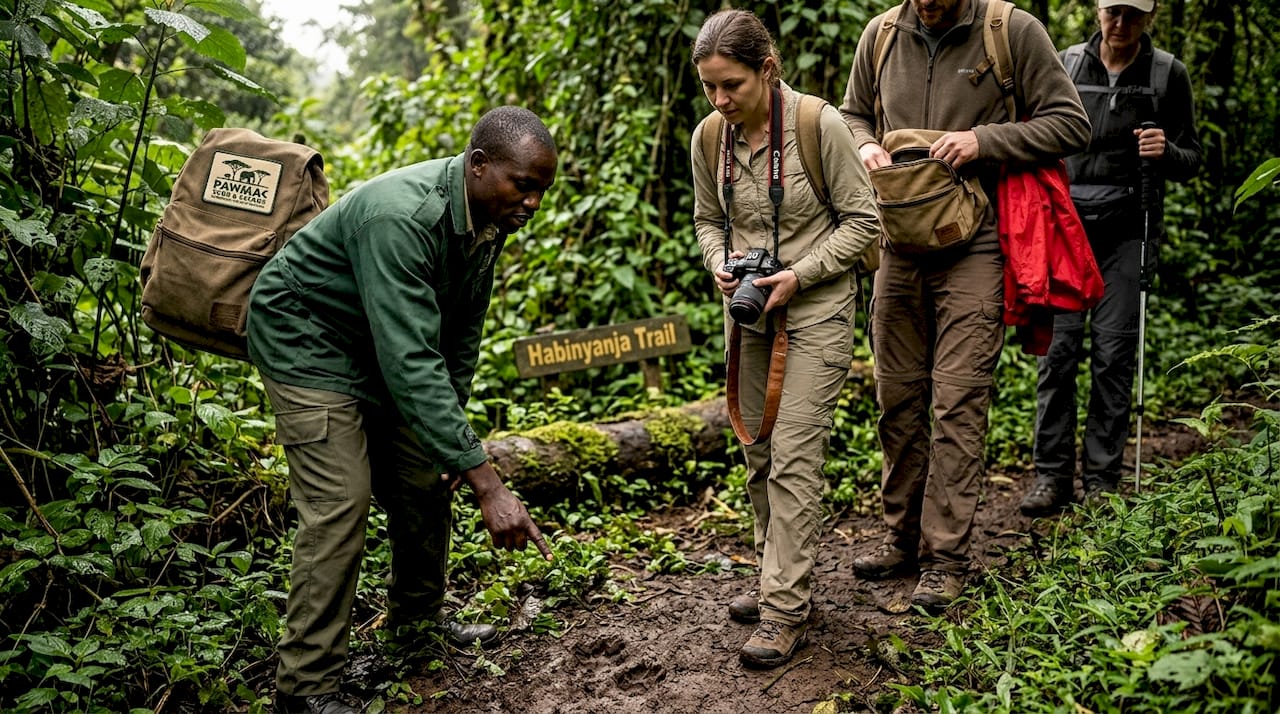
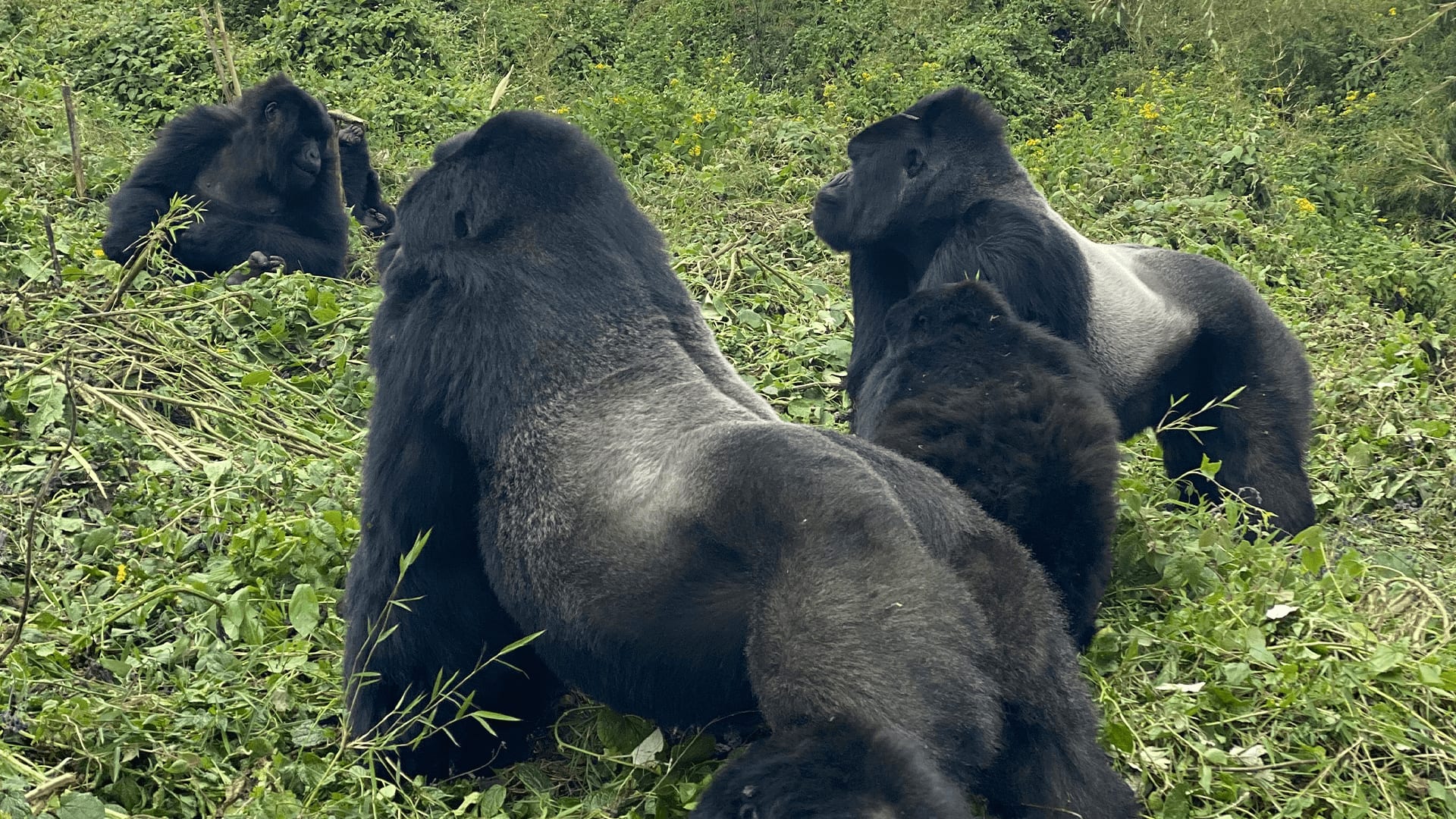
The headline attraction is gorilla trekking. Uganda is home to roughly half of the world’s remaining mountain gorillas, with habituated families in Bwindi Impenetrable Forest and Mgahinga Gorilla National Park. A Uganda gorilla safari takes you into ancient rainforest, often for two to six hours of trekking, before you spend a full hour sitting within meters of a gorilla family. There is no equivalent experience anywhere in East Africa. No vehicle. No traffic. Just you, your guide, and one of our closest relatives in the wild.
Beyond gorillas, Uganda offers:
- Tree-climbing lions in Queen Elizabeth National Park: A behavior seen in only two places on Earth, the other being Tanzania’s Lake Manyara. Watching lions draped across fig tree branches in the Ishasha sector is one of Africa’s most unusual wildlife sightings.
- Chimpanzee tracking in Kibale National Park: The highest density of chimpanzees in East Africa, with habituated communities that allow close, extended observation.
- Classic Big Five game drives: The Uganda Big Five tour covers lions, elephants, buffalo, leopards, and hippos across Queen Elizabeth and Murchison Falls National Parks.
- Murchison Falls: The world’s most powerful waterfall by flow rate, where the entire Nile forces itself through a 7-meter gap in the rock. Boat safaris on the Nile here offer views of hippos, crocodiles, and hundreds of bird species.
Group sizes for gorilla trekking are strictly limited to eight people per habituated gorilla family per day. That policy is in place for conservation reasons, but it also means your encounter is inherently exclusive. Compare that to Ngorongoro, where the same lion pride might be surrounded by 25 vehicles simultaneously.
Pro Tip: PawMac Safaris operates custom-built 4×4 safari vehicles with pop-up roofs and individual seating, designed specifically for Uganda’s varied terrain. Private vehicle hire means your itinerary adapts to what you find in the field, not to a fixed group schedule.
How to choose: Key differences between Ngorongoro and Uganda safaris
Choosing between these two destinations comes down to what you value most in a wildlife experience. Here is a structured framework to help you decide.
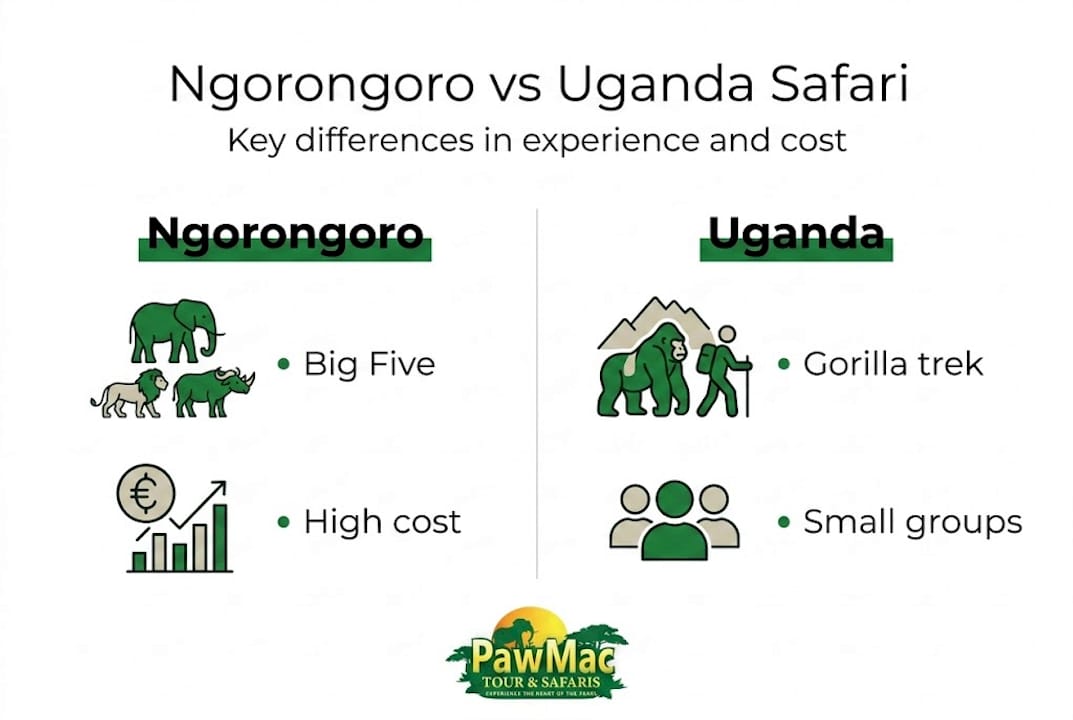
Step 1: Define your priority. If your primary goal is seeing the Big Five in a single, compact location with guaranteed sightings, Ngorongoro delivers. If you want rare, exclusive encounters with primates and a broader range of ecosystems, Uganda is the stronger choice.
Step 2: Set your budget. Ngorongoro’s fees are fixed and high. Uganda’s costs are more flexible, with gorilla permits at $800 per person representing the main premium expense. Overall, a Uganda safari of equivalent quality often costs 20 to 30 percent less than a comparable Tanzania northern circuit trip.
Step 3: Consider your tolerance for crowds. This is the factor most travelers underestimate. Peak-season Ngorongoro can feel genuinely frustrating if you came for solitude. Uganda’s parks, even in high season, rarely produce the vehicle-cluster effect that Ngorongoro is known for.
Step 4: Think about flexibility. Uganda safaris, particularly those booked through a specialist operator, can be customized in ways that Tanzania’s heavily regulated crater cannot. Private routes, extended game drives, and community visits are all easier to arrange.
| Factor | Ngorongoro Crater | Uganda safaris |
|---|---|---|
| Entry cost (per person/day) | $71 + $295/vehicle descent | Varies by park, generally lower |
| Crowding level (peak season) | High | Low to moderate |
| Gorilla trekking | Not available | Available (Bwindi, Mgahinga) |
| Big Five availability | Yes | Yes (Queen Elizabeth, Murchison) |
| Personalization | Limited | High |
| Group size control | Limited | Strict (8 per gorilla group) |
“The travelers who return most satisfied from Africa are almost never the ones who ticked the most famous parks. They are the ones who had one or two encounters that felt completely unrepeatable.” — PawMac Safaris field team
For travelers who want to explore personalized Uganda safari advice, the options for building a truly custom itinerary are genuinely exciting.
Our take: What expert safari planners wish travelers knew
After years of helping international travelers plan East Africa itineraries, the pattern we see at PawMac Safaris is consistent. Travelers who choose a destination based on name recognition alone often return with beautiful photographs and a lingering sense that something was missing. The famous parks deliver on wildlife. They don’t always deliver on experience.
Ngorongoro Crater is extraordinary. We would never tell you otherwise. But the crater’s very success has created conditions that work against the feeling most people are actually chasing: the sense of being alone in wild Africa. That feeling is increasingly rare at Ngorongoro and increasingly accessible in Uganda.
The Uganda safari landscape rewards travelers who prioritize depth over breadth. One hour with a mountain gorilla family in Bwindi changes people in ways that a drive through a crowded crater simply cannot. Our local guides, who have spent years in these forests and parks, bring a level of contextual knowledge that no generalist operator can replicate. That local expertise, combined with small group sizes and custom vehicles, consistently produces the post-trip reviews that matter most: “I didn’t want to leave.”
If exclusivity, personalization, and genuine wildlife immersion are your goals, Uganda is not a compromise. It is the better answer.
Plan your personalized adventure with local safari experts
Ready to move from research to reality? Whether you are drawn to Tanzania’s iconic landscapes or Uganda’s extraordinary primate encounters, the right planning makes all the difference between a good trip and an unforgettable one.

PawMac Safaris specializes in building itineraries that match your exact travel goals, timeline, and budget. Explore the full range of Tanzania tours for those who want to experience the northern circuit alongside Uganda’s highlights. Or browse our complete Uganda safari packages to find the gorilla trek, game drive, or combined adventure that fits your 2026 travel plans. Our team is ready to answer your questions and help you design a safari that feels personal from the first day to the last.
Frequently asked questions
Is Ngorongoro Crater or Uganda better for exclusive wildlife viewing?
Uganda’s lower tourist traffic and personalized tours often provide a more exclusive wildlife viewing experience than Ngorongoro Crater, particularly for primate encounters where group sizes are strictly limited to eight people.
How much does it cost to enter Ngorongoro Crater?
In 2026, entry fees for Ngorongoro Crater are $71 per person per day plus a $295 crater descent fee per vehicle, making it one of the most expensive single-day wildlife experiences in East Africa.
What animals can I see in the Ngorongoro Crater?
You can see the Big Five, including lions, black rhinos, elephants, buffalo, and leopards, along with wildebeest, zebra, flamingos, and over 500 bird species within the compact caldera ecosystem.
Can I combine a Tanzania and Uganda safari into one trip?
Yes, many travelers combine both destinations in a single East Africa itinerary, typically flying between Kilimanjaro or Arusha and Entebbe to experience Tanzania’s northern circuit alongside Uganda’s gorilla trekking and game parks.
When is the best time to visit Ngorongoro Crater for fewer crowds?
The shoulder months of May to June and October to November offer noticeably fewer vehicles on the crater floor, though some tracks may be muddy after the long rains in April and May.
Recommended
- Uganda vs Rwanda gorilla trekking: cost, permits & experiences
- Gorilla & Wildlife Safari Uganda | PawMac Safaris
- Tree Climbing Lions Uganda 2026: Ishasha Safari $2,800
- Uganda Safari Prices – Costs, Permits & Best Safari Packages


