
- 16 Views
- 17 Min Read
- (0) Comment
Planning a safari to Uganda in 2026 means confronting safety questions head on. No major safari-impacting safety incidents have been reported in Uganda since 2023, confirming stable conditions for travelers. You need accurate information on crime, health risks, gorilla trekking safety, and logistics to decide confidently. This article delivers factual answers on Uganda’s safety for safaris, covering political stability, health precautions, permit costs fixed at $800, and practical safety measures for families and solo travelers.
Table of Contents
- Safety Overview In Uganda Safaris 2026
- Crime And Security Realities For Safari Travelers
- Health Risks And Practical Prevention For Uganda Safaris
- Gorilla Trekking Safety Protocols And Ranger Protection
- 2026 Cost Breakdown For Safe Uganda Safari Logistics
- Gorilla Trekking Sectors Comparison And Safety Considerations
- Ground Transport Safety And The African Massage Reality
- Best Seasonal Timing For Safe And Comfortable Uganda Safaris
- Safety For Families And Solo Travelers On Uganda Safaris
- Common Misconceptions About Uganda Safari Safety
- Practical Safety Checklist For Your 2026 Uganda Safari
- Plan Your Uganda Safari With PawMac Safaris
- Frequently Asked Questions About Uganda Safari Safety And Logistics
Key Takeaways
| Point | Details |
|---|---|
| Uganda is safe for safari | No major incidents affecting safari areas since 2023, political stability confirmed. |
| Gorilla trekking permits cost $800 | Fixed fee per person for all sectors in 2026 by Uganda Wildlife Authority. |
| Health precautions are manageable | Yellow fever vaccination required, malaria prevention advised, safe food and water practices essential. |
| Licensed operators enhance safety | Local expertise, certified guides, and proper 4×4 safari vans ensure secure travel. |
| National parks safer than cities | Crime rates in safari zones significantly lower than urban centers like Kampala. |
Safety Overview in Uganda Safaris 2026
Uganda maintains political and social stability without safari-impacting incidents since 2023, making it a reliable destination for wildlife experiences. The government and tourism sector collaborate effectively to protect travelers in national parks. National parks operate under strict security protocols with ranger patrols and visitor monitoring systems.
Local safari operators provide guided routes that avoid any risk zones, ensuring your safety throughout the journey. Crime rates in safari areas like Bwindi Impenetrable National Park, Queen Elizabeth National Park, and Murchison Falls National Park remain far below urban centers. You face minimal risk when traveling with licensed operators who understand terrain, local communities, and security dynamics.
“Safari zones in Uganda benefit from dedicated ranger protection and community partnerships that prioritize tourist safety, creating secure environments distinct from urban crime concerns.”
The official Uganda travel safety advisory confirms that tourists visiting national parks encounter stable conditions. Solo travelers and families report positive experiences when following standard precautions like booking reputable operators, staying in established lodges, and adhering to park regulations. Political stability in 2026 supports tourism infrastructure, with no disruptions anticipated for safari operations.
Crime and Security Realities for Safari Travelers
Crime in Uganda’s safari regions operates on a completely different scale than in cities. Kampala experiences petty theft and pickpocketing, but national parks maintain low crime rates due to controlled access and ranger presence. You should distinguish between urban safety concerns and the protected environment of safari zones.
National parks enforce entry protocols that limit unauthorized access, creating secure perimeters for travelers. Rangers accompany all gorilla trekking groups, providing both wildlife guidance and security. Lodges near parks employ security staff and operate gated premises, adding layers of protection for guests.
- Urban areas require standard precautions: avoid displaying valuables, use secure transport, stay aware of surroundings.
- Safari zones benefit from controlled access, ranger patrols, and monitored visitor movements.
- Licensed operators maintain communication systems for emergency response and real-time security updates.
- Community partnerships around parks create local incentives to protect tourists and report concerns.
Pro Tip: Keep passports and permits in lodge safes, carry only photocopies during treks, and use hotel safes for electronics and cash to minimize loss risk.
Solo travelers, particularly women, report safe experiences when traveling with established operators who provide dedicated guides and maintain communication protocols. Families benefit from the structured nature of safari itineraries, which eliminate uncertainty and ensure supervised activities throughout the trip.
Health Risks and Practical Prevention for Uganda Safaris
Health preparation for Uganda safaris focuses on three areas: vaccinations, malaria prevention, and food and water safety. Yellow fever vaccination is mandatory for entry, verified at immigration with your certificate. Malaria risk exists in safari regions, requiring prophylaxis medications started before travel and continued post-trip.
Malaria prevention combines medication with physical barriers like long sleeves, insect repellent containing DEET, and treated bed nets in lodges. Most safari lodges provide screened accommodations and mosquito nets, reducing exposure during sleep hours. Travelers should consult travel medicine specialists 4 to 6 weeks before departure for tailored advice on medications and vaccinations.
Plan Your Uganda Safari with Local Experts
 WhatsApp Us
| Health Concern | Prevention Measure | Cost Range |
|---|---|---|
| Yellow Fever | Vaccination required for entry | $150 to $250 |
| Malaria | Prophylaxis medication, repellent, nets | $50 to $150 |
| Traveler’s Diarrhea | Bottled water, cooked food only | Minimal |
| Altitude Sickness | Gradual acclimatization in highlands | None |
Food and water safety requires vigilance: drink only bottled or purified water, avoid raw vegetables and unpeeled fruits, and choose well-cooked meals. Safari lodges and reputable camps maintain high hygiene standards, but street food in towns poses higher risk. Carry hand sanitizer and use it before meals, especially during travel days.
Travel insurance covering medical evacuation is essential, as remote safari locations require air transport to Kampala for serious medical needs. Standard policies may exclude adventure activities like gorilla trekking, so verify coverage includes wildlife encounters and hiking. Emergency services in national parks operate through ranger stations and lodge networks, providing rapid response coordination.
Pro Tip: Pack a personal first aid kit with anti-diarrheal medication, antihistamines, pain relievers, and blister treatment for trekking comfort and quick response to minor issues.
Gorilla Trekking Safety Protocols and Ranger Protection
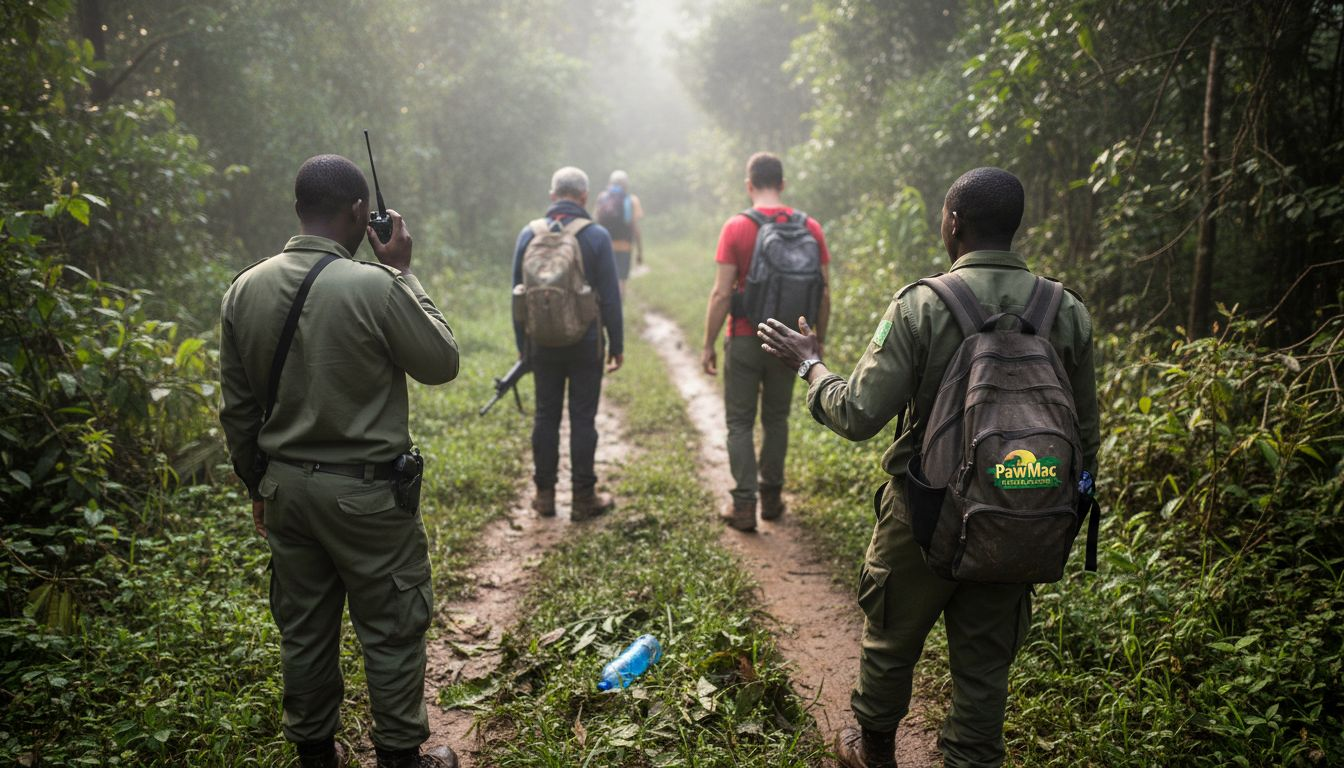
Gorilla trekking in Uganda operates under strict safety protocols managed by armed rangers who accompany every group. Rangers undergo extensive training in wildlife behavior, first aid, and emergency response, ensuring your protection from both animals and terrain hazards. Gorilla trekking permits cost $800 and include ranger escort, park entry, and safety briefings before treks.
Trekking groups limit to 8 visitors per gorilla family per day, reducing environmental impact and maintaining controlled interactions. Pre-trek briefings cover behavior rules: maintain 7 meters distance from gorillas, avoid direct eye contact, move slowly, and follow ranger instructions immediately. These protocols protect both you and the critically endangered mountain gorillas from stress and disease transmission.
- Armed rangers lead and follow trekking groups, monitoring for wildlife threats and providing navigation.
- Porters assist with gear and offer physical support on steep or muddy terrain, enhancing safety and comfort.
- Communication radios connect rangers to park headquarters for emergency coordination and gorilla family location updates.
- Medical screening before treks excludes sick visitors to protect gorillas from human diseases.
Terrain challenges vary by sector but rangers adapt pace to group ability, ensuring no one faces unsafe conditions. Visitors with mobility concerns can request shorter routes or porter assistance for steep sections. Rangers carry first aid supplies and receive training for medical emergencies, providing immediate response capability.
The hour spent observing gorillas occurs under continuous ranger supervision, with guides positioning the group for optimal viewing while maintaining safety distances. Gorillas display calm behavior when groups follow protocols, creating predictable and secure wildlife encounters. No serious injuries to tourists from gorillas have occurred in recent years due to rigorous adherence to these safety systems.
2026 Cost Breakdown for Safe Uganda Safari Logistics
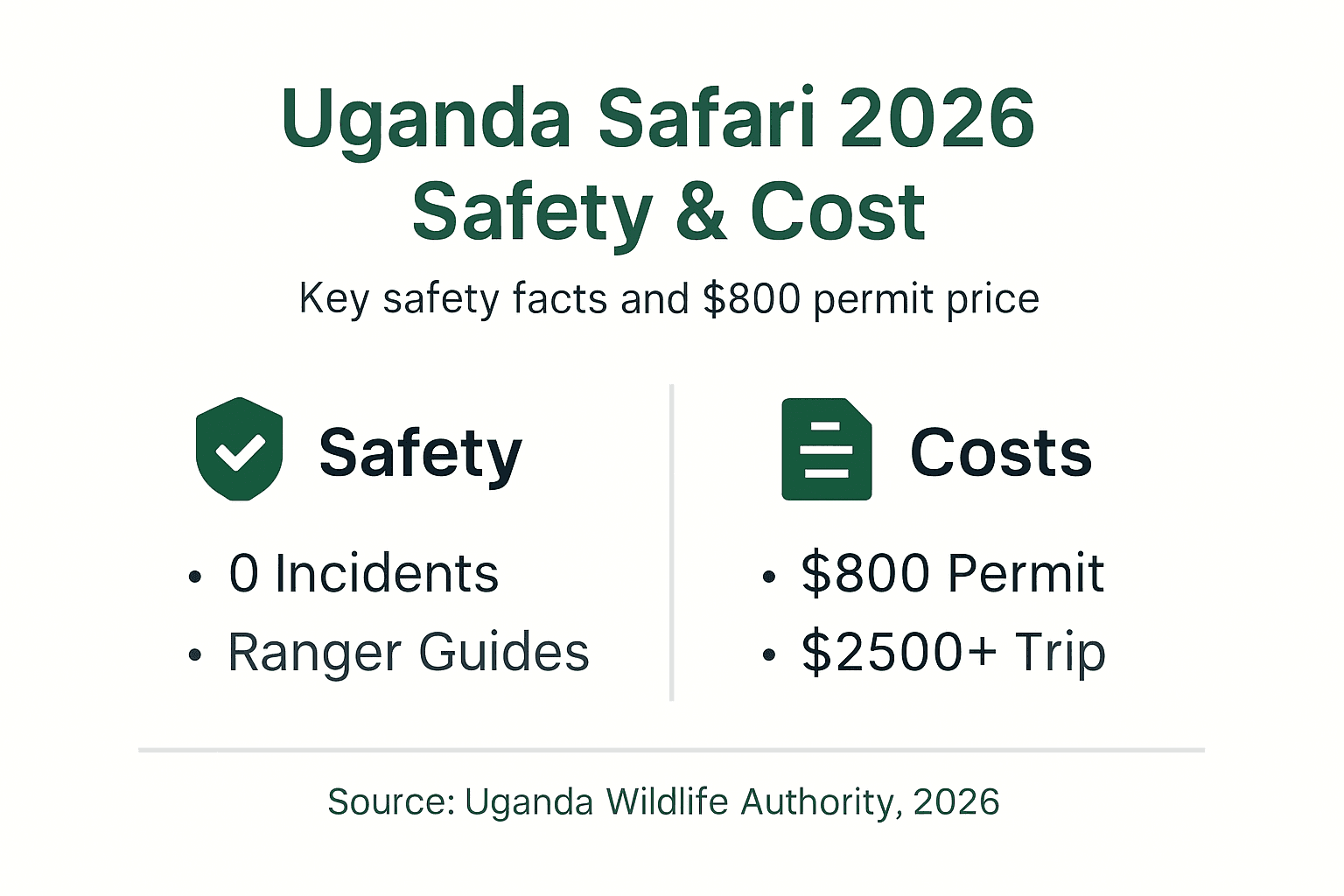
Budgeting accurately for Uganda safaris in 2026 requires understanding fixed and variable costs. Gorilla trekking permits remain the largest single expense at $800 per person for all sectors, paid directly to Uganda Wildlife Authority. This fee includes ranger protection, park access, and conservation funding but excludes transport, lodging, and guide services.
Daily ground transport in customized 4×4 safari vans with pop-up roofs costs $50 to $100, depending on distance and terrain difficulty. These vehicles provide necessary clearance for rough roads and elevated viewing positions for wildlife spotting. Budget lodges near parks charge $100 to $150 per night, mid-range options $200 to $300, and luxury lodges $400 and above.
- Gorilla trekking permit: $800 per person (fixed by Uganda Wildlife Authority)
- Ground transport: $50 to $100 per day (customized 4×4 safari vans)
- Accommodation: $100 to $400+ per night (varies by lodge category)
- Guide fees: $30 to $50 per day (local expertise and safety)
- Park entrance fees: $40 per person per park (separate from permits)
- Porter hire: $15 to $20 for gorilla treks (optional but recommended)
Total safari costs for a 7-day gorilla and wildlife trip range from $2,500 to $5,000 per person, depending on accommodation choices and included activities. Travel insurance adds $100 to $200 but provides essential medical evacuation coverage for remote areas. Booking through licensed operators includes safety benefits like vetted guides, reliable vehicles, and emergency support systems.
Pro Tip: Book gorilla permits at least 3 to 6 months in advance, as daily quotas limit availability and popular months fill quickly, securing both your dates and safety through official channels.
Gorilla Trekking Sectors Comparison and Safety Considerations
Uganda’s four gorilla trekking sectors, Buhoma, Ruhija, Rushaga, and Nkuringo, all charge the same $800 permit fee but differ in crowd levels, terrain difficulty, and safety dynamics. Ruhija and Nkuringo attract fewer visitors, offering more exclusive experiences with less congestion on trails. Buhoma and Rushaga provide better infrastructure and easier access but see higher visitor volumes during peak seasons.
| Sector | Crowd Level | Terrain Difficulty | Infrastructure | Safety Notes |
|---|---|---|---|---|
| Buhoma | High | Moderate | Excellent | Most established, easy ranger access |
| Ruhija | Low | Moderate to High | Good | Remote, excellent ranger presence |
| Rushaga | High | Moderate | Very Good | Well-developed, frequent patrols |
| Nkuringo | Low | High | Good | Steep terrain, strong ranger support |
Terrain difficulty affects safety primarily through physical demands rather than security risks. Nkuringo’s steep slopes require good fitness but rangers adjust pace and provide rest stops as needed. All sectors maintain identical ranger protection protocols regardless of visitor numbers or terrain challenges.
- Choose Ruhija or Nkuringo for fewer crowds and more intimate gorilla encounters with unchanged safety standards.
- Select Buhoma or Rushaga for easier trail access and more lodge options near trailheads.
- All sectors provide armed ranger escort, emergency communication systems, and pre-trek safety briefings.
- Physical fitness matters more than sector choice for safety; assess your ability for steep, muddy hikes honestly.
Sector selection should align with your preference for exclusivity versus infrastructure comfort, as safety measures remain consistent across all options. Rangers in less-visited sectors maintain the same training and equipment standards as busier areas, ensuring uniform protection quality.
Ground Transport Safety and the African Massage Reality
Uganda’s safari roads present rough conditions that locals call the “African massage,” requiring specific vehicle types for safe travel. Only customized 4×4 safari vans with pop-up roofs provide the necessary ground clearance, shock absorption, and structural integrity for these challenging routes. Standard vehicles lack the durability and safety features needed for extended off-road travel.
Skilled local drivers with route knowledge navigate potholes, muddy sections, and steep gradients that challenge even experienced drivers. These professionals understand vehicle capabilities, road conditions, and alternative routes when primary roads become impassable. Driver expertise directly impacts your safety and comfort during long transfer days between parks.
- Customized 4×4 safari vans feature reinforced suspension systems that absorb road impacts and reduce injury risk.
- Pop-up roofs allow standing for wildlife viewing while maintaining vehicle stability and passenger protection.
- Local drivers carry emergency tools, spare parts, and communication devices for breakdown response.
- Seatbelts and secure storage compartments prevent injury from sudden stops or rough terrain jolts.
Pro Tip: Confirm your operator uses properly maintained 4×4 safari vans with recent service records and certified drivers before booking, as vehicle quality significantly affects both safety and trip enjoyment.
Transfer times between parks often exceed GPS estimates due to road conditions, requiring realistic scheduling to avoid night driving. Traveling after dark increases accident risk on poorly lit roads with unpredictable obstacles. Reputable operators plan itineraries with daylight buffer time, prioritizing safe arrival over rushed schedules.
The “African massage” creates discomfort but rarely causes serious safety issues when proper vehicles and drivers handle the journey. Expect bumpy rides, pack cushions for comfort, and trust that certified operators maintain vehicles to safety standards that protect you throughout ground transport segments.
Best Seasonal Timing for Safe and Comfortable Uganda Safaris
Seasonal timing affects both safety and comfort for Uganda safaris in 2026. Dry seasons from June to September and December to February offer optimal conditions for gorilla trekking and wildlife viewing. Trails remain firmer, reducing slip and fall risks during steep hikes. Wildlife concentrates around water sources, improving visibility and reducing time spent tracking animals.
Rainy seasons from March to May and October to November create muddy, slippery trails that increase physical difficulty and minor injury risk. Roads deteriorate, extending transfer times and raising vehicle breakdown probability. However, rainy seasons reduce visitor numbers, offering more exclusive experiences for travelers comfortable with challenging conditions.
- Dry seasons provide safer trekking conditions with firm trails and better footing on steep sections.
- Wildlife viewing improves during dry months as animals gather at predictable water points.
- Rainy seasons require more physical exertion, waterproof gear, and flexible scheduling for weather delays.
- Permits remain available during wet months, offering cost savings through lower lodge rates and reduced competition.
Packing strategies shift with seasons: dry months need lightweight layers and dust protection, while rainy seasons demand waterproof jackets, gaiters, and quick-dry clothing. Safety implications remain minimal across seasons when traveling with experienced operators who adjust routes and timing for weather conditions.
Pro Tip: Book dry season safaris 6 to 9 months ahead for permit availability and preferred lodges, or choose shoulder months like June or January for good weather with slightly lower crowds and competitive rates.
Safety for Families and Solo Travelers on Uganda Safaris
Families traveling to Uganda for safaris benefit from structured itineraries that eliminate uncertainty and provide age-appropriate activities. Children aged 15 and above qualify for gorilla trekking permits, ensuring experiences match physical capabilities. Lodges offer family accommodations with secure compounds, allowing children freedom within safe boundaries.
Solo travelers, including women, report positive safety experiences when booking through licensed operators who provide dedicated guides and maintain regular communication. Group safaris offer social interaction while maintaining professional oversight throughout the trip. Private safaris give solo travelers flexibility with personalized attention from guides who ensure safety and comfort.
- Families should verify minimum age requirements for activities: 15 for gorilla trekking, 12 for chimp tracking.
- Solo travelers gain safety through constant guide presence, lodge security, and operator communication systems.
- Women traveling alone face no additional risks in safari zones beyond standard precautions for any destination.
- Licensed operators conduct background checks on guides and drivers, providing vetted staff for all client interactions.
Lodge security includes perimeter fencing, night guards, and escort services for evening movements within properties. Staff members understand family and solo traveler needs, adjusting service delivery to match comfort levels and safety concerns. Emergency protocols exist for medical issues, with guides trained in first response and evacuation coordination.
Cultural norms in Uganda respect tourists, with local communities around parks viewing visitors as economic partners rather than targets. This creates hospitable environments where families and solo travelers experience genuine welcome alongside robust safety measures. Your primary safety responsibility involves choosing reputable operators and following their guidance throughout the safari.
Common Misconceptions About Uganda Safari Safety
Travelers often assume all safari destinations carry identical risks, but Uganda’s specific context requires accurate understanding. Political stability since 2023 contradicts outdated perceptions based on historical events from decades past. Permit fees remain fixed at $800 by Uganda Wildlife Authority, eliminating price gouging risks and ensuring transparent costs.
Another misconception suggests that any 4×4 vehicle suffices for safari roads, but only customized safari vans with reinforced suspension and pop-up roofs provide adequate safety. Standard SUVs lack the ground clearance and structural modifications needed for Uganda’s challenging terrain. Booking permits through unofficial sources risks invalid documents that park authorities reject at trailheads, wasting money and missing once-in-a-lifetime gorilla encounters.
- Uganda’s current safety record contradicts outdated information from conflicts that ended years ago.
- Permit pricing remains uniform across all operators and sectors at $800, with no legitimate discounts or markups.
- Vehicle type significantly impacts safety; only proper 4×4 safari vans meet Uganda’s road demands.
- Unofficial permit sources sell invalid documents that authorities reject, requiring legitimate booking through Uganda Wildlife Authority channels.
- Health risks prove manageable with standard vaccinations and malaria prevention, not requiring exotic preparations.
Pro Tip: Verify operator credentials through Uganda Tourism Board registration and read recent reviews focusing on safety aspects before committing to any safari booking.
Practical Safety Checklist for Your 2026 Uganda Safari
Preparing for Uganda safaris requires systematic attention to safety details that protect you throughout the journey. Comprehensive travel insurance covering medical evacuation, trip cancellation, and adventure activities forms your financial safety net. Booking licensed operators ensures vetted guides, proper vehicles, and emergency response capabilities.
- Secure comprehensive travel insurance including medical evacuation and adventure activity coverage.
- Book gorilla permits through licensed operators or directly from Uganda Wildlife Authority 3 to 6 months ahead.
- Complete required yellow fever vaccination and obtain certificate at least 10 days before travel.
- Start malaria prophylaxis as prescribed, typically 1 to 2 weeks before departure.
- Pack first aid supplies: anti-diarrheal medication, pain relievers, antihistamines, blister treatment.
- Verify operator uses customized 4×4 safari vans and employs certified drivers with local route knowledge.
- Register with your embassy and share detailed itinerary with family or friends for emergency contact.
- Download offline maps and carry backup communication devices for areas with limited cell service.
- Arrange secure storage at lodges for passports, extra cash, and electronics not needed during day activities.
- Confirm lodge security features: perimeter fencing, night guards, safe deposit boxes in rooms.
Pro Tip: Create digital copies of passport, permits, insurance policy, and vaccination certificates stored in cloud access for instant retrieval if physical documents are lost or stolen during travel.
This checklist transforms safety from abstract concern into concrete action steps you complete before departure. Each item addresses specific risks that comprehensive preparation eliminates or minimizes, allowing you to focus on wildlife experiences rather than worry about preventable problems.
Plan Your Uganda Safari with PawMac Safaris
Uganda safari safety in 2026 depends on choosing operators who understand local logistics, maintain proper vehicles, and prioritize traveler protection throughout every trip stage. PawMac Safaris specializes in secure, well-planned Uganda experiences that handle permits, ground transport in certified 4×4 safari vans, and expert local guides who know the terrain and safety protocols inside out.
We coordinate all logistics so you focus on gorillas and wildlife rather than safety concerns or booking confusion. Our comprehensive Uganda safari guide walks you through every planning detail, while our Uganda safari packing guide ensures you bring exactly what conditions demand. Book early to secure permits during optimal seasons and customize your itinerary around your safety priorities and adventure preferences. Explore our PawMac Safaris Uganda safari tours to see how we deliver safe, unforgettable gorilla trekking and wildlife experiences across Uganda’s premier national parks.
Frequently Asked Questions About Uganda Safari Safety and Logistics
How safe is Uganda for safari travelers in 2026?
Uganda maintains excellent safety for safari travelers, with no major safari-impacting incidents reported since 2023. National parks operate under strict security with ranger patrols and controlled access that keep crime rates far below urban areas. Licensed operators provide experienced guides and proper vehicles that ensure safe travel throughout your trip. Review the official Uganda safety advisory for current conditions confirming stable tourism environments in 2026.
What are the exact costs for gorilla trekking permits in Uganda in 2026?
Gorilla trekking permits cost exactly $800 per person for all sectors in 2026, set by Uganda Wildlife Authority with no variation by operator. Additional daily costs include ground transport at $50 to $100, accommodations from $100 to $400 depending on lodge category, and guide fees around $30 to $50. Booking permits 3 to 6 months in advance secures availability during peak seasons when daily quotas fill quickly.
Which gorilla trekking sectors should I choose based on crowds and terrain?
Ruhija and Nkuringo offer fewer crowds and more exclusive experiences but present steeper, more physically demanding terrain. Buhoma and Rushaga provide easier access with better infrastructure but attract higher visitor numbers during dry seasons. All gorilla trekking sectors maintain identical $800 permit fees and ranger safety protocols. Choose based on your preference for exclusivity versus infrastructure comfort and your physical fitness for steep, muddy hikes that can last 2 to 6 hours.
Recommended
- Why Uganda Safari Tourism Matters: $800 Gorilla Permits Fund Conservation
- Gorilla Trekking Permit Uganda: Cost & Booking (2026)
- Gorilla Trekking in Uganda: Cost, Permits & Tours 2026
- Gorilla Trekking Uganda 2026 – Permits, Prices & Best Safaris