Many travelers wrongly believe gorilla permit fees fund NGOs, but understanding fee management clarifies tourism’s impact. In 2026, every $800 gorilla trekking permit goes entirely to Uganda Wildlife Authority (UWA) to support conservation, anti-poaching patrols, and local communities. Knowing how tourism drives Bwindi’s protection and choosing the right trekking sector requires understanding logistics, costs, and practical planning. This guide clarifies permit allocation, sector differences, transport realities, and booking strategies to prepare you for an efficient Uganda safari experience.
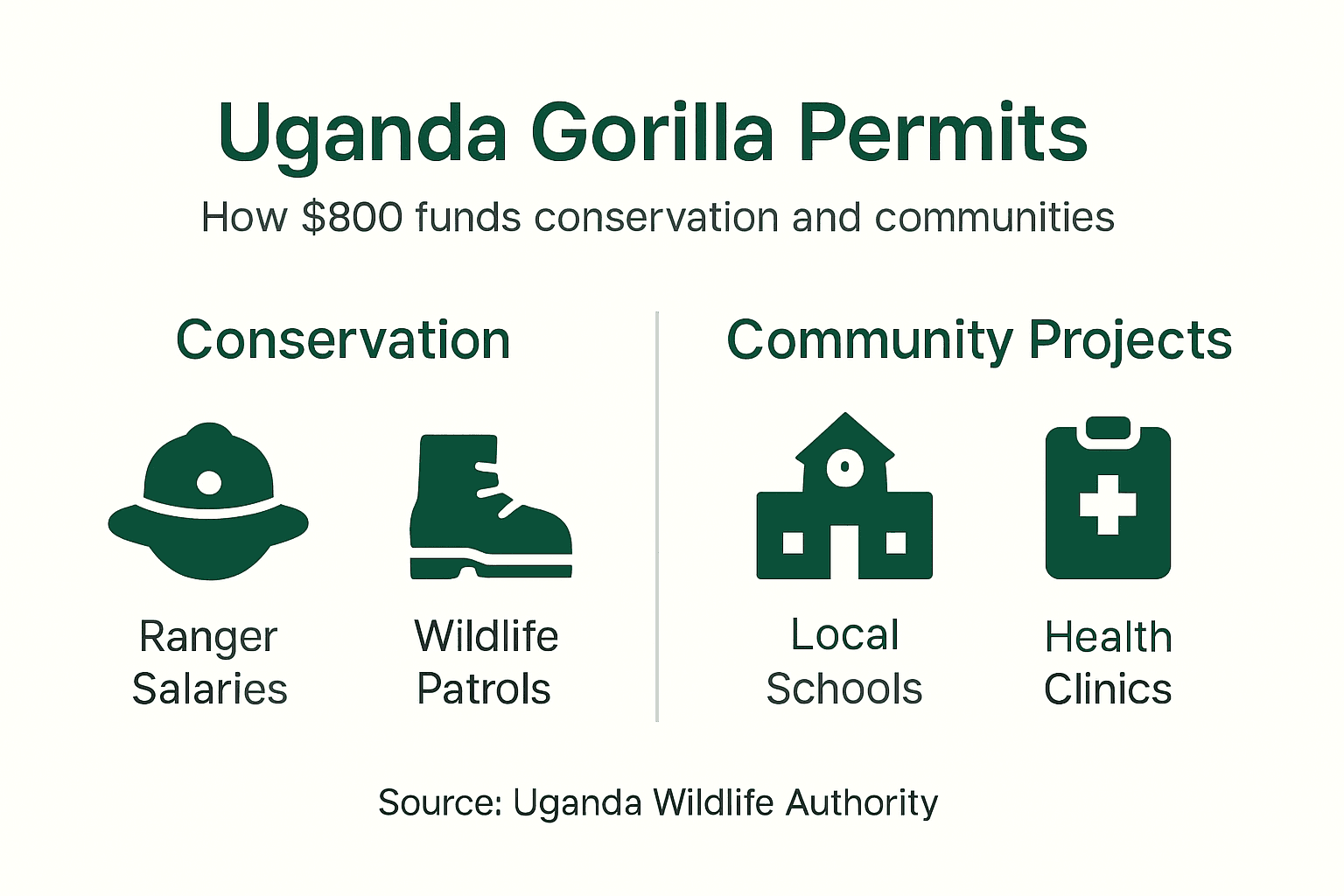
100% of gorilla permit fees are managed by Uganda Wildlife Authority to fund anti-poaching, veterinary care, and community projects.
Sector Selection
Bwindi’s four trekking sectors (Buhoma, Ruhija, Rushaga, Nkuringo) vary significantly in terrain difficulty and elevation for 2026 planning.
Essential Transport
Customized 4×4 Safari Vans with pop-up roofs navigate rugged roads safely while enabling wildlife viewing during transfers.
Advance Booking
Secure permits 6 to 12 months ahead because gorilla family limits restrict daily trekking slots.
Community Impact
More than 50% of tourism income supports local education, healthcare, and infrastructure near Bwindi and Mgahinga parks.
The Core of Uganda Safari Tourism: Gorilla Permits and Conservation Funding
In 2026, a gorilla trekking permit costs $800 for foreign non-residents, and Uganda Wildlife Authority manages 100% of these fees for direct conservation use. This revenue structure funds critical park operations including anti-poaching units, veterinary interventions for injured gorillas, ranger salaries, and habitat monitoring. UWA allocates funds without intermediaries, meaning your permit directly supports boots-on-the-ground conservation work.
Fees also finance community projects around Bwindi Impenetrable National Park. Local schools receive educational materials and teacher training programs. Health clinics gain medical supplies and infrastructure improvements. Villages access clean water projects and road maintenance funded by tourism revenue. These investments reduce human-wildlife conflict by improving living conditions and creating economic alternatives to subsistence farming.
UWA enforces strict limits: only eight visitors per gorilla family daily. This cap prevents stress on habituated groups while maintaining sustainable tourism. Each family undergoes years of habituation before accepting trekkers, and veterinary teams monitor health continuously. Permit fees cover these long-term conservation investments, ensuring gorilla populations remain stable and protected.
Pro Tip: Confirm your permit booking directly through licensed operators who coordinate with UWA, ensuring legitimate transactions and accurate trek assignments.
Choosing Your Gorilla Trekking Sector: Buhoma, Ruhija, Rushaga, Nkuringo
Bwindi’s four sectors differ substantially in terrain, elevation, and trek difficulty, requiring careful sector selection based on fitness levels. Buhoma sits at approximately 1,600 meters elevation in the northern sector, offering the gentlest terrain for beginners. Trails here feature moderate slopes with well-maintained paths. Buhoma hosts four habituated gorilla families and provides easier logistics for travelers prioritizing comfort.
Ruhija occupies the eastern sector at roughly 2,300 meters, delivering scenic landscapes with moderate trek challenges. This sector suits travelers with average fitness seeking beautiful views alongside gorilla encounters. Ruhija has four gorilla families spread across rolling hills requiring 2 to 5 hours of trekking depending on family location. The cooler temperatures at this elevation demand layered clothing.
Rushaga in the southern sector balances challenge with high gorilla density, hosting eight habituated families. Trek difficulty ranges from moderate to strenuous depending on assigned family. Rushaga’s terrain includes steep slopes and dense vegetation, appealing to adventurous trekkers comfortable with longer hikes. This sector offers the highest probability of securing permits during peak seasons due to family abundance.
Nkuringo represents the most physically demanding sector at approximately 2,100 meters in the southwestern region. Nkuringo’s steep, challenging terrain requires excellent fitness and prior trekking experience. Trails descend sharply into valleys before ascending to gorilla locations. Only experienced trekkers should select Nkuringo, but the dramatic landscapes and intimate encounters reward the effort.
Sector
Elevation
Difficulty
Gorilla Families
Best For
Buhoma
~1,600m
Easy
4
First-time trekkers, comfort seekers
Ruhija
~2,300m
Moderate
4
Scenic views, average fitness
Rushaga
~1,700m
Moderate to Hard
8
High availability, adventurous travelers
Nkuringo
~2,100m
Very Hard
2
Experienced trekkers, extreme challenges
Match your sector choice to realistic fitness assessments. Overestimating ability leads to exhausting experiences, while underestimating limits your adventure potential.
Practical Ground Transport for Safari Logistics: 4×4 Safari Vans and ‘African Massage’
Uganda’s road conditions demand customized 4×4 Safari Vans with pop-up roofs for safe, efficient park access. Standard vehicles cannot handle the rough, unpaved roads leading to Bwindi’s sectors. Heavy rains create muddy conditions requiring four-wheel drive capability and high clearance. Our 4×4 vans navigate these challenges while keeping you comfortable during long transfers.
Pop-up roofs transform transport into wildlife viewing opportunities. During drives from Kampala or Entebbe to Bwindi (approximately 8 to 10 hours), you spot antelope, birds, and primates through open roof hatches. This feature turns necessary travel time into safari experiences, maximizing your wildlife exposure. The roofs also improve airflow in warm conditions, enhancing comfort during extended drives.
Expect the “African massage” during these journeys. This local term describes the bumpy, vibrating sensation from uneven road surfaces. Potholes, gravel sections, and rural tracks create continuous motion inside the vehicle. Experienced drivers minimize discomfort by adjusting speed and choosing optimal routes, but some roughness remains unavoidable. Accepting this reality as part of authentic safari logistics helps set appropriate expectations.
4×4 vans accommodate up to seven passengers plus gear, making them cost-effective for groups.
Expert local drivers know seasonal road conditions and alternative routes during repairs.
Vehicle maintenance follows strict safety protocols to prevent breakdowns in remote areas.
Cushioned seats and suspension systems reduce fatigue during full-day transfers.
Pro Tip: Bring a neck pillow and wear supportive shoes during long drives to reduce strain from road vibrations, especially on the return journey when fatigue accumulates.
Timing, Booking, and Practical Tips for Efficient Safari Planning
Secure gorilla permits 6 to 12 months before your intended trek date because slots fill rapidly during peak seasons. June through September and December through February represent high-demand periods when families and international travelers concentrate bookings. Waiting until 2 or 3 months before departure risks permit unavailability, forcing itinerary changes or sector compromises.
Low seasons (March through May, October through November) offer potential discounts and greater flexibility. Rainy conditions increase during these months, making trails muddier and treks more challenging. However, gorillas remain active year-round, and experienced trekkers often prefer quieter periods with fewer tourists. Budget-conscious travelers benefit from lower accommodation rates and occasional permit promotions during off-peak windows.
Contact licensed operators immediately after deciding on trek dates to check permit availability.
Confirm sector preferences based on fitness assessments and terrain research.
Book accommodations near your assigned sector to minimize pre-trek drive times.
Pack long socks to wear over trousers, preventing red ant bites during forest walks.
Plan for 4:00 AM wake-ups on trek days since briefings start at 7:00 AM.
Weather stability matters for trek enjoyment. June through August provides the driest conditions with clearer trails, though cooler temperatures at higher elevations require layered clothing. December through February offers warm, relatively dry weather ideal for photography. Rainy months bring lush vegetation and fewer crowds but demand waterproof gear and mental preparation for slippery paths.
Pro Tip: Wear long socks pulled over your trouser cuffs and tuck them in securely to create a barrier against red ants commonly found on low vegetation along trails.
Political Stability and Its Impact on Safari Operations
Bwindi Impenetrable National Park sits approximately 460 kilometers southwest of Kampala, geographically isolated from political centers. This distance insulates safari operations from urban political activities during election cycles or government transitions. Uganda Wildlife Authority operates as an autonomous statutory body, maintaining consistent park management regardless of political changes in the capital.
Historical data confirms safari continuity through multiple election periods since 2001. Permit issuance, ranger deployments, and trekking schedules remained unaffected during past political events. UWA’s operational independence ensures funding streams from conservation fees flow directly to park needs without political interference. Rangers maintain daily patrols and tourist safety protocols without disruption.
Travelers planning 2026 trips should expect stable operations year-round. Park infrastructure, including ranger stations and trail maintenance, continues under UWA management separate from political cycles. International conservation partnerships provide additional operational support, further stabilizing long-term management. Your trek date selection can focus on weather and permit availability rather than political considerations.
Economic Impact of Safari Tourism on Ugandan Communities
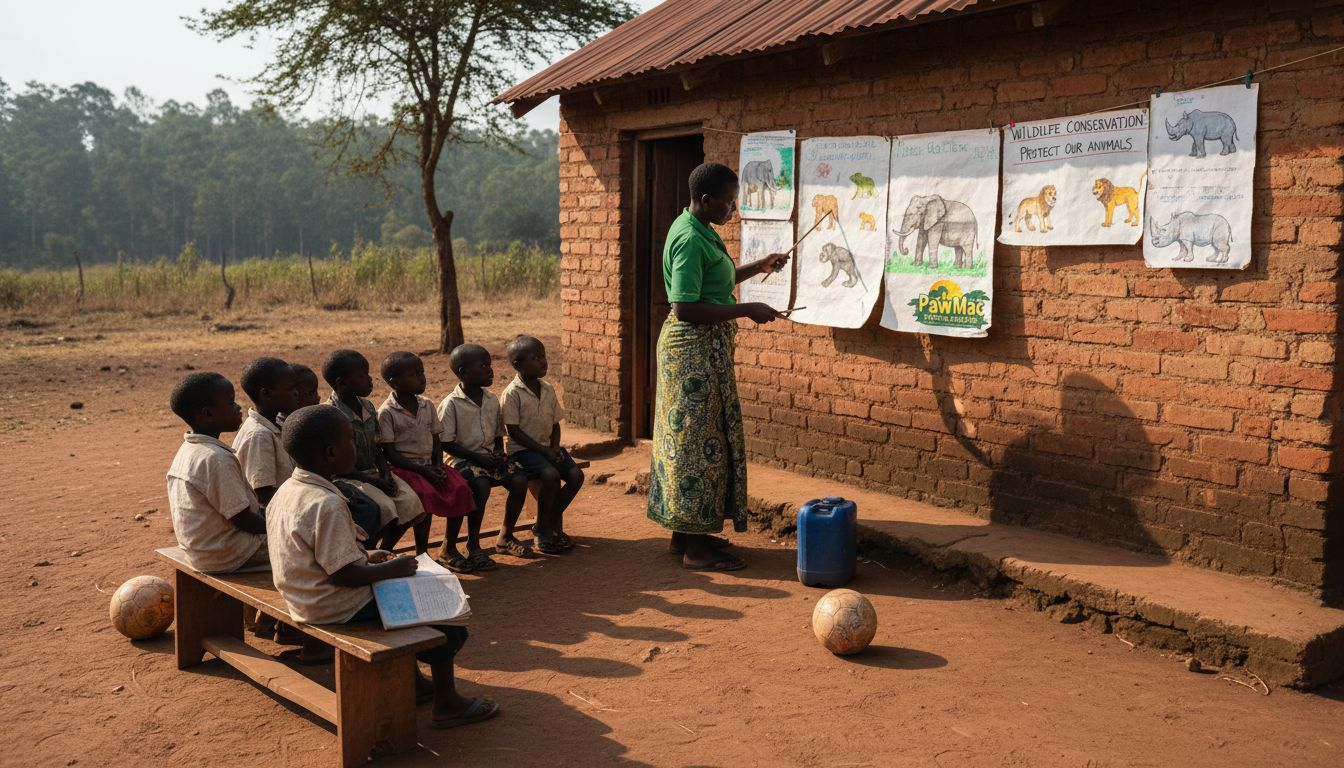
Tourism income funds schools, clinics, water projects, and roads in villages surrounding Bwindi and Mgahinga parks. UWA allocates over 50% of tourism revenue to community development programs managed through local councils. These investments create tangible improvements: new classroom blocks accommodate growing student populations, health centers receive essential medicines, and improved roads reduce travel time to markets.
Rural communities near parks traditionally relied on subsistence agriculture with limited income opportunities. Safari tourism introduced employment as porters, guides, lodge staff, and craft vendors. A single gorilla family trek employs 15 to 20 porters daily at $15 to $25 per person. Craft cooperatives sell handmade baskets and textiles to tourists, generating supplemental household income. These economic alternatives reduce pressure on forest resources and wildlife.
Direct spending by tourists amplifies community benefits. Lodge bookings, restaurant meals, and cultural visits inject cash into local economies. Villages near popular sectors experience higher income levels and improved infrastructure compared to remote areas. This economic link between conservation and prosperity builds community support for wildlife protection, creating sustainable incentives to preserve gorilla habitats.
“Community members now understand that protecting gorillas protects their children’s education and family healthcare. Tourism created this connection between conservation and daily life improvements.”
Education initiatives funded by tourism improve literacy rates in park-adjacent villages.
Healthcare access expanded through mobile clinics and medicine supplies.
Clean water projects reduce waterborne diseases affecting rural populations.
Road improvements enable faster emergency response and market access.
Common Misconceptions About Safari Tourism and Permits
Permit fees do not fund NGOs but go to UWA for park management and conservation activities. This widespread misconception confuses travelers who assume international organizations manage gorilla protection. In reality, UWA operates as a Ugandan government agency with direct authority over all national parks. No portion of your $800 permit flows to external NGOs, though some conservation groups partner with UWA on specific research projects using separate funding.
Another myth suggests last-minute permit booking remains feasible for flexible travelers. Peak season permits (June through September, December through February) sell out 6 to 9 months in advance. Even low season availability tightens within 3 months of trek dates. Assuming easy last-minute access leads to disappointment and rushed alternative planning. Proactive booking 6 to 12 months ahead prevents these complications.
Many travelers believe all trekking sectors offer similar experiences with interchangeable difficulty levels. Terrain and elevation vary dramatically between Buhoma, Ruhija, Rushaga, and Nkuringo, creating vastly different physical demands. Selecting a sector without researching elevation profiles and trail characteristics risks mismatched fitness-to-difficulty pairings. Understanding these differences enables appropriate sector choices aligned with your abilities.
Myth: Safari operators inflate permit costs for profit. Fact: The $800 fee is set by UWA and non-negotiable.
Myth: Gorilla families can be visited anytime. Fact: Eight-visitor daily limits per family require advance coordination.
Myth: Rainy season treks are impossible. Fact: Treks occur year-round with proper waterproof gear.
Myth: All guides provide equal expertise. Fact: Experienced guides significantly improve wildlife spotting and safety.
Expert Insider Tips for a Smooth Gorilla Trekking Experience
Wear long socks pulled over your trouser legs to prevent red ant bites during forest treks. These aggressive ants climb vegetation along trails and bite exposed skin or ankles. Tucking trousers into socks creates a physical barrier, dramatically reducing bite incidents. Experienced guides recommend this simple technique, yet many first-time trekkers overlook it and suffer painful bites.
Select your trekking sector based on honest fitness assessments and prior hiking experience. Overestimating endurance leads to exhausting treks that diminish enjoyment. If you rarely hike or have knee issues, choose Buhoma’s gentler terrain. Experienced trekkers comfortable with steep ascents gain rewarding challenges in Nkuringo. Matching sector difficulty to realistic ability levels ensures positive experiences.
Prepare mentally for the “African massage” during long drives to Bwindi. Accepting bumpy roads as authentic safari logistics reduces frustration when encountering rough sections. Bring neck support, stay hydrated, and view the journey as part of the adventure rather than an inconvenience. Experienced travelers embrace these realities, understanding that remote gorilla habitats require challenging access.
Pack lightweight, moisture-wicking clothing for humid rainforest conditions and layering at higher elevations.
Bring waterproof gear including jackets and pack covers regardless of season.
Use trekking poles to improve stability on steep, muddy trails.
Wear broken-in hiking boots with ankle support and aggressive tread.
Carry energy snacks and 2 liters of water per person for treks lasting 2 to 6 hours.
Local guides and drivers possess invaluable knowledge about current trail conditions, gorilla family locations, and safety protocols. Their expertise reduces risks and enhances wildlife encounters. Trust their advice on pacing, rest stops, and group positioning during treks. This local knowledge transforms challenging hikes into manageable adventures with higher success rates.
Pro Tip: Request porter assistance even if you’re physically fit because supporting local employment benefits communities while reducing your fatigue for better gorilla observation once located.
Plan Your Uganda Safari with Expert Support
Preparing for your 2026 gorilla trek requires detailed planning beyond permit booking. Our comprehensive Uganda Safari Packing Guide covers essential clothing, gear, and health items specific to rainforest trekking conditions. You’ll learn exactly what to pack for different sectors and seasons, avoiding unnecessary items while ensuring critical supplies.
Understanding 2026 gorilla permit costs and booking procedures helps you budget accurately and secure slots before peak season fills. We explain UWA’s allocation system, payment timelines, and sector assignment processes. Our complete Uganda safari guide combines gorilla trekking with other wildlife experiences across multiple parks, maximizing your adventure within available time and budget. These resources provide boots-on-the-ground insights you need for efficient planning and realistic expectations.
Frequently Asked Questions
What are the current gorilla permit fees in 2026?
Gorilla permits cost exactly $800 for foreign non-residents in 2026, with discounted rates of $700 during low seasons (April, May, November). Uganda Wildlife Authority sets these fees, and all revenue funds conservation efforts, anti-poaching patrols, and community development projects. No negotiation exists on permit pricing, as UWA standardizes costs across all booking channels.
How early should I book my gorilla trekking permit?
Book permits 6 to 12 months before your intended trek date to secure availability, especially for peak seasons (June through September, December through February). Slots fill rapidly because only eight visitors per gorilla family trek daily. Waiting until 2 or 3 months before departure often results in sold-out dates or limited sector choices, forcing itinerary adjustments.
Which Bwindi sector should I choose for my first trek?
Buhoma suits first-time trekkers with its gentler terrain at lower elevation (~1,600 meters) and well-maintained trails. If you have average fitness and want scenic variety, Ruhija offers moderate challenges with beautiful landscapes. Avoid Nkuringo for your first trek unless you regularly hike steep terrain, as its demanding slopes and high elevation require significant endurance and experience.
Are the safari roads very rough, and how to prepare?
Uganda’s roads to Bwindi include long unpaved sections creating the “African massage” experience of continuous bumps and vibrations. Prepare by bringing neck support, staying hydrated, and accepting this reality as part of authentic safari logistics. Our customized 4×4 Safari Vans with experienced drivers minimize discomfort, but some roughness remains unavoidable on remote routes to gorilla sectors.
How does safari tourism help local Ugandan communities?
Tourism revenue funds education, healthcare, clean water, and infrastructure in villages near Bwindi and Mgahinga parks. UWA allocates over 50% of permit fees to community development programs. Local employment as porters, guides, and lodge staff creates income alternatives to subsistence farming. These economic benefits build community support for conservation, linking gorilla protection directly to improved living standards and family welfare.
To provide the best experiences, we use technologies like cookies to store and/or access device information. Consenting to these technologies will allow us to process data such as browsing behavior or unique IDs on this site. Not consenting or withdrawing consent, may adversely affect certain features and functions.
Functional
Always active
The technical storage or access is strictly necessary for the legitimate purpose of enabling the use of a specific service explicitly requested by the subscriber or user, or for the sole purpose of carrying out the transmission of a communication over an electronic communications network.
Preferences
The technical storage or access is necessary for the legitimate purpose of storing preferences that are not requested by the subscriber or user.
Statistics
The technical storage or access that is used exclusively for statistical purposes.The technical storage or access that is used exclusively for anonymous statistical purposes. Without a subpoena, voluntary compliance on the part of your Internet Service Provider, or additional records from a third party, information stored or retrieved for this purpose alone cannot usually be used to identify you.
Marketing
The technical storage or access is required to create user profiles to send advertising, or to track the user on a website or across several websites for similar marketing purposes.



 UWA enforces strict limits: only eight visitors per gorilla family daily. This cap prevents stress on habituated groups while maintaining sustainable tourism. Each family undergoes years of habituation before accepting trekkers, and veterinary teams monitor health continuously. Permit fees cover these long-term conservation investments, ensuring gorilla populations remain stable and protected.
Pro Tip: Confirm your permit booking directly through licensed operators who coordinate with UWA, ensuring legitimate transactions and accurate trek assignments.
UWA enforces strict limits: only eight visitors per gorilla family daily. This cap prevents stress on habituated groups while maintaining sustainable tourism. Each family undergoes years of habituation before accepting trekkers, and veterinary teams monitor health continuously. Permit fees cover these long-term conservation investments, ensuring gorilla populations remain stable and protected.
Pro Tip: Confirm your permit booking directly through licensed operators who coordinate with UWA, ensuring legitimate transactions and accurate trek assignments.
 Rural communities near parks traditionally relied on subsistence agriculture with limited income opportunities. Safari tourism introduced employment as porters, guides, lodge staff, and craft vendors. A single gorilla family trek employs 15 to 20 porters daily at $15 to $25 per person. Craft cooperatives sell handmade baskets and textiles to tourists, generating supplemental household income. These economic alternatives reduce pressure on forest resources and wildlife.
Direct spending by tourists amplifies community benefits. Lodge bookings, restaurant meals, and cultural visits inject cash into local economies. Villages near popular sectors experience higher income levels and improved infrastructure compared to remote areas. This economic link between conservation and prosperity builds community support for wildlife protection, creating sustainable incentives to preserve gorilla habitats.
Rural communities near parks traditionally relied on subsistence agriculture with limited income opportunities. Safari tourism introduced employment as porters, guides, lodge staff, and craft vendors. A single gorilla family trek employs 15 to 20 porters daily at $15 to $25 per person. Craft cooperatives sell handmade baskets and textiles to tourists, generating supplemental household income. These economic alternatives reduce pressure on forest resources and wildlife.
Direct spending by tourists amplifies community benefits. Lodge bookings, restaurant meals, and cultural visits inject cash into local economies. Villages near popular sectors experience higher income levels and improved infrastructure compared to remote areas. This economic link between conservation and prosperity builds community support for wildlife protection, creating sustainable incentives to preserve gorilla habitats.