

- 205 Views
- 11 Min Read
- (0) Comment
Finding the right gear for an adventure in Uganda can feel complicated when gorilla trekking and Big Five game drives demand completely different approaches. For travelers passionate about conservation and authentic wildlife experiences, packing smart ensures both your comfort and the safety of Uganda’s stunning national parks. This guide highlights the essential clothing and gear choices needed for trekking the misty forests of Bwindi Impenetrable National Park and exploring open savannas in Queen Elizabeth National Park, so your journey starts with purpose and confidence.
Table of Contents
- Step 1: Assess Essential Safari Needs For Uganda
- Step 2: Select Clothing And Gear For Gorilla Trekking
- Step 3: Pack Smart For Big Five Game Drives
- Step 4: Check Compliance With Park And Permit Rules
Quick Summary
| Key Point | Explanation |
|---|---|
| 1. Assess Your Safari Needs | Understand your specific safari type, destination, and season to guide your packing choices effectively. |
| 2. Choose Proper Trekking Gear | For gorilla trekking, emphasize waterproof boots, breathable clothing, and insect protection for comfort. |
| 3. Prepare for Game Drives | Pack binoculars and comfortable clothing in neutral tones for optimal wildlife observation during game drives. |
| 4. Check Park Regulations | Verify permit requirements and prohibited items to ensure compliance and avoid issues at park entrances. |
| 5. Document Your Essentials | Carry physical copies of permits and vaccination records in a waterproof holder to prevent loss during your trip. |
Step 1: Assess Essential Safari Needs for Uganda
Before you pack a single item, take time to understand what your Uganda safari actually demands. Your specific needs depend on your destination, travel season, activity level, and comfort expectations. Getting this right transforms your packing from guesswork into purposeful preparation.
Start by identifying your safari type and location. Are you trekking mountain gorillas in the misty forests of Bwindi Impenetrable National Park? Searching for Big Five wildlife in Queen Elizabeth National Park? Tracking chimpanzees through dense vegetation? Each destination and activity carries different physical demands and environmental conditions. Gorilla trekking, for example, requires serious hiking boots, layered clothing, and waterproof gear because you’ll be navigating steep, wet terrain at high elevation.
Next, determine your travel dates and seasonal conditions. Uganda’s rainy seasons (March-May and September-November) mean muddy trails, high humidity, and afternoon downpours. Dry seasons (January-February and June-August) offer better visibility for wildlife spotting but can mean cooler mornings and bright sun exposure. The seasons directly impact what clothing, footwear, and protective gear you’ll need most.
Consider your physical fitness level and camping style. Will you spend nights in luxury lodges with full amenities or comfortable mid-range accommodations? Are you an experienced hiker comfortable with challenging terrain, or newer to safari activities? Your answers shape everything from the ruggedness of your gear to how much extra comfort items you should bring. Understanding Uganda safari options and planning details helps clarify what different experiences actually involve.
Create a checklist of non-negotiable items based on your specific itinerary. Gorilla trekking demands sturdy hiking boots, rain protection, and insect repellent. Big Five safaris require binoculars, sun protection, and camera equipment. Long vehicle drives need neck pillows and entertainment. Write down activities you’ve committed to, then identify what each one requires.
Your packing list should reflect your actual itinerary, not a generic safari. Matching gear to your specific activities prevents overpacking while ensuring you have everything you truly need.
Pro tip: Contact your safari operator early to ask specific questions about terrain difficulty, weather forecasts for your dates, and lodge facilities, then use their answers to finalize your essential items list.
Step 2: Select Clothing and Gear for Gorilla Trekking
Gorilla trekking demands specific clothing and gear choices because you’re hiking through one of Africa’s most challenging environments. The right selections protect you from mud, rain, insects, and unpredictable weather while keeping you comfortable during physically demanding hours on steep forest trails.
Start with your foundation layer. Moisture-wicking long-sleeved shirts prevent sweat from cooling your skin in humid conditions while protecting your arms from thorns and insects. Cotton absorbs moisture and stays wet, so choose synthetic or merino wool blends instead. Long trekking trousers made from breathable, waterproof material are non-negotiable because you’ll be wading through mud and wet vegetation constantly. Regular pants become heavy and uncomfortable when soaked.
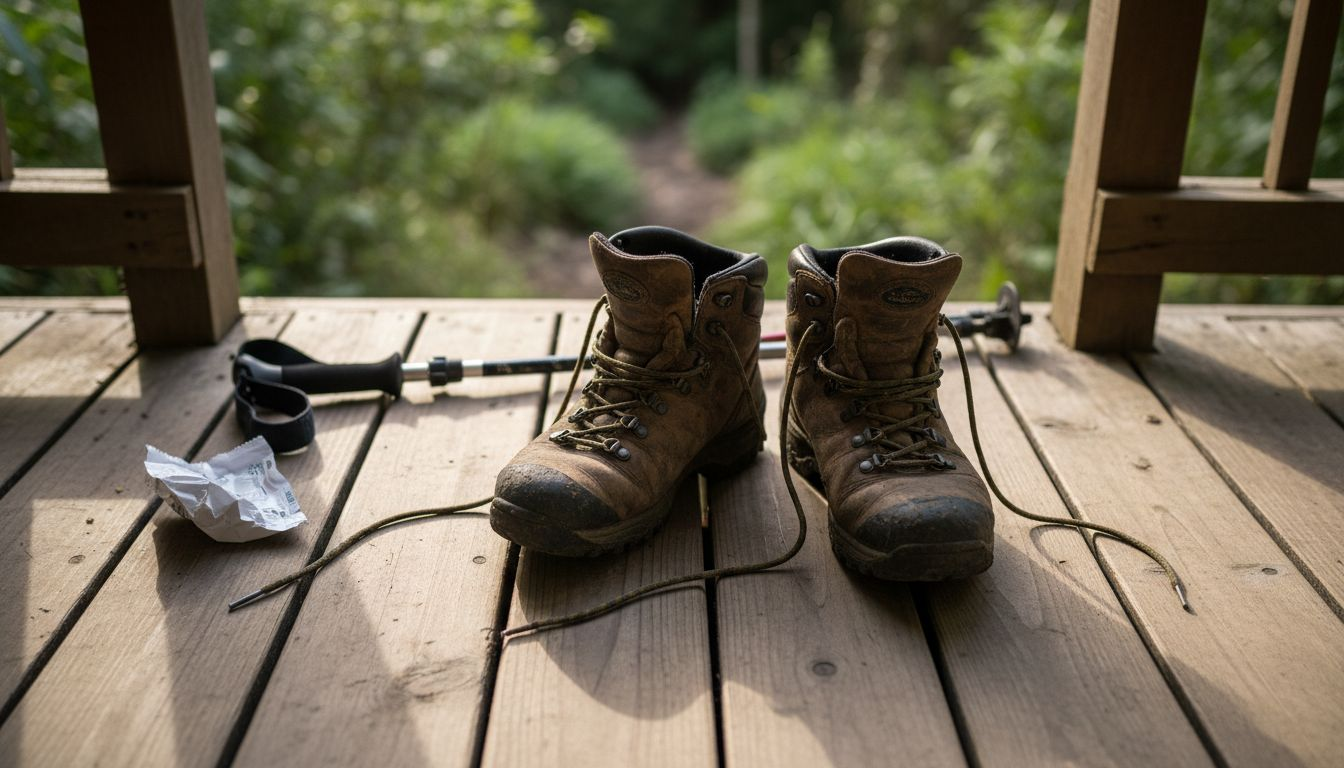
Your footwear makes or breaks your trekking experience. Invest in sturdy waterproof hiking boots with proper ankle support because the terrain is steep, slippery, and unforgiving. Cheap boots lead to blisters, twisted ankles, and miserable days. Waterproof gaiters worn over your boots and lower pant legs keep mud and debris out of your socks during creek crossings and muddy sections.
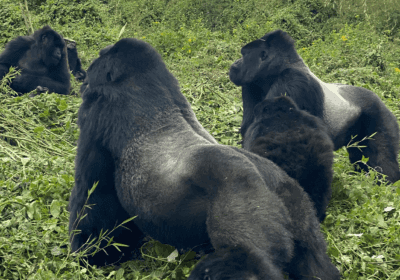
Plan Your Uganda Safari with Local Experts
 WhatsApp Us
Weather protection is critical. A high-quality waterproof jacket handles sudden downpours that occur regularly in gorilla habitat. Lightweight rain trousers provide additional coverage without excessive bulk. Layering becomes essential at higher elevations where mornings feel chilly before hiking warms you up. Many trekkers bring what to wear for gorilla trekking guides to reference specific fabric recommendations.
Don’t overlook specialized protective gear. Gardening gloves protect your hands when pushing through dense vegetation and sharp vegetation. Insect repellent and sun protection are crucial. Carry a lightweight backpack with essentials, plus a hat for sun exposure during breaks.
Proper footwear and waterproof outer layers prevent 80 percent of trekking discomfort. Invest in quality here, not in fancy accessories.
Pro tip: Break in your hiking boots at least two weeks before your trek by wearing them on daily walks, and bring blister treatment supplies just in case.
Step 3: Pack Smart for Big Five Game Drives
Game drives demand a completely different packing approach than gorilla trekking. You’ll spend hours sitting in vehicles observing wildlife from a distance, so your focus shifts from protection against terrain to comfort, visibility, and photography readiness.
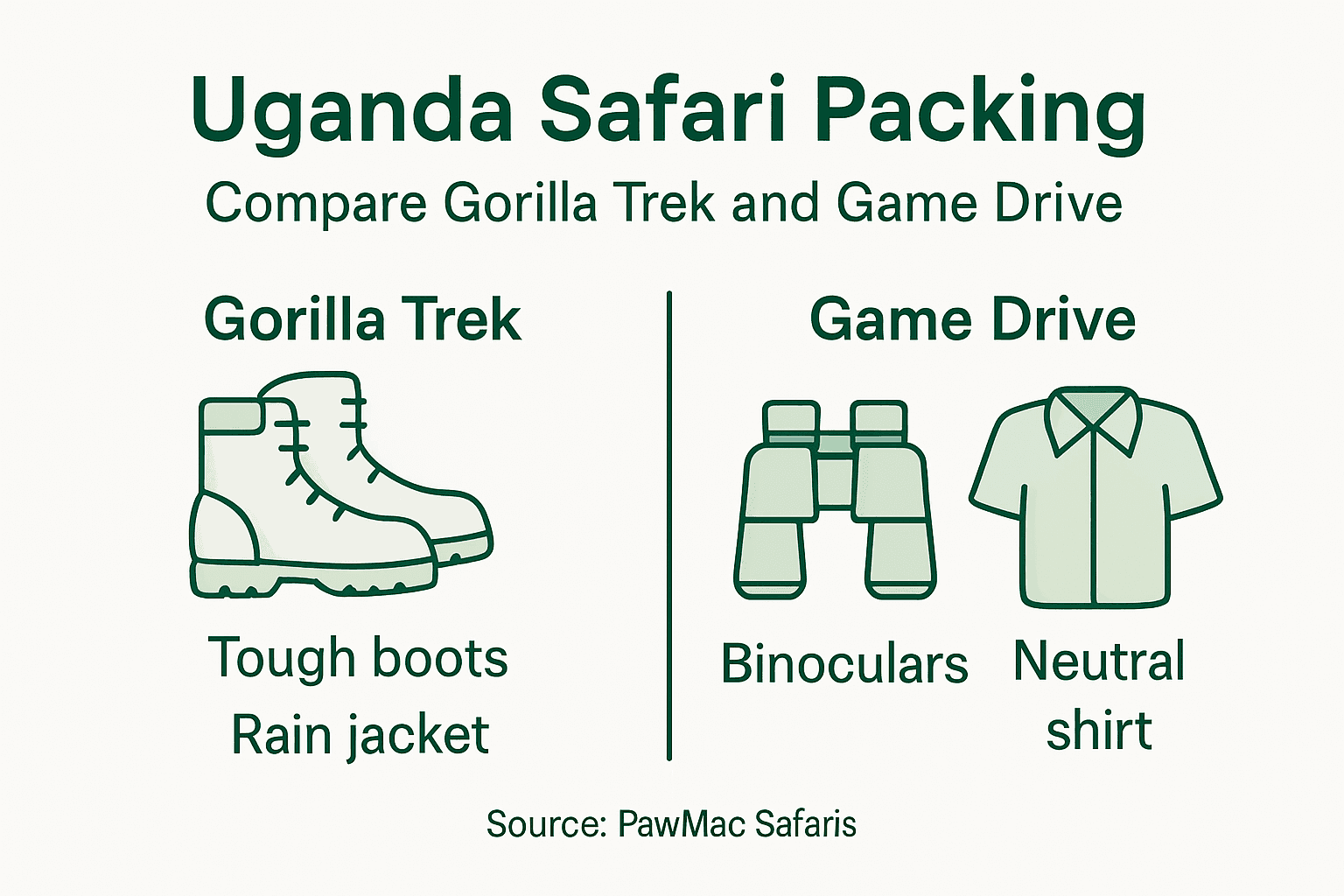
Prioritize binoculars and camera equipment. Quality binoculars transform your safari experience by revealing animal details invisible to the naked eye. Bring a camera with a good zoom lens or a smartphone with telephoto capability. Many travelers regret not packing better optics because distant lions and leopards become memorable only through magnification.
Clothing takes a different angle for game drives. Neutral colors like khaki, tan, and muted greens help you blend into the landscape rather than startle wildlife. Leave bright whites, reds, and bold patterns at home. You’ll sit for extended periods, so layered, breathable clothing remains important because vehicle interiors can feel cold from air conditioning while early morning air feels crisp.
Comfort items become priorities on long drives. Pack a neck pillow or travel pillow for those early 5 a.m. departures when you’re drowsy during the vehicle journey. Sunscreen prevents brutal burn since you’re exposed to intense equatorial sun for hours. A wide-brimmed hat provides shade while allowing binoculars and cameras to work freely.
Bring entertainment and practical essentials for downtime. Understanding what to expect during game drives helps you pack accordingly. Carry snacks, water, and a small notebook to document wildlife sightings. Wet wipes handle dusty conditions between meals.
Consider your vehicle and lodge situation. Mid-range and luxury accommodations provide most basics, but budget safaris may require you to bring your own toiletries and towels. Ask your operator beforehand.
Game drive success depends more on preparation and timing than on fancy gear. The best camera is the one you have with you.
Pro tip: Pack a small dry bag inside your main luggage to protect electronics from dust and sudden rain during open-roof game drives.
Here’s a quick comparison of essential gear needed for gorilla trekking versus Big Five game drives in Uganda:
| Item Focus | Gorilla Trekking Needs | Big Five Game Drive Needs |
|---|---|---|
| Footwear | Waterproof hiking boots | Comfortable closed shoes |
| Clothing Colors | Neutral but rugged layers | Neutral, earth-tone layers |
| Weather Protection | Waterproof jacket, gaiters | Wide-brim hat, sunscreen |
| Extra Essentials | Insect repellent, gloves | Binoculars, camera, pillow |
| Ideal Pack Size | Compact, light backpack | Small day pack for comfort |
Step 4: Check Compliance with Park and Permit Rules
Before you step foot in Uganda’s national parks, compliance with regulations isn’t optional. Park rules exist to protect wildlife, preserve ecosystems, and ensure visitor safety. Your packing choices must align with these requirements, or you’ll face entry denials and wasted travel investment.
Start by understanding permit requirements. Gorilla permits cost around $800 per person and are issued by the Uganda Wildlife Authority for specific trek dates. Big Five game drive permits operate differently depending on which park you visit. These aren’t suggestions—they’re legal requirements you must secure weeks in advance. Your safari operator handles most paperwork, but verify your permits are confirmed before departure.
Documentation is non-negotiable. You’ll need valid identification and vaccination records including proof of yellow fever vaccination. Some parks require additional health certifications. Carry physical copies of your permits, passport, and vaccination cards in a waterproof document holder—digital copies alone won’t suffice at entry points.
Pack only essentials permitted by park regulations. Most parks prohibit drones, certain types of cameras with professional equipment, and large quantities of personal items. Single-use plastics are increasingly restricted to protect wildlife. Contact your operator about specific restrictions for your chosen parks.
Follow strict trekking duration and group size rules. Gorilla permits specify exact trek times and maximum group sizes for habituation and safety reasons. You cannot extend treks beyond permitted hours or split from your guide. These rules directly affect your packing choices—longer permitted treks require more water and snacks than shorter ones.
Understand photography and recording policies. Some parks restrict commercial photography or video recording. Check restrictions before bringing expensive equipment that might be confiscated.
Compliance isn’t bureaucratic burden—it’s how Uganda sustains its wildlife populations and tourism reputation.
Pro tip: Photograph your permit documents, vaccination cards, and passport information page before departure, then email them to yourself as digital backup in case physical documents are lost or damaged.
Use this table to check key park and permit requirements before your Uganda safari:
| Requirement | Why It Matters | Notes for Travelers |
|---|---|---|
| Gorilla Permit | Required for trekking access | Arrange months in advance |
| Vaccination Proof | Health and entry requirement | Yellow fever documentation |
| Banned Items | Protects wildlife and ecosystem | No drones or single-use plastics |
| Paper Documents | Needed at park gates | Carry waterproof copies |
Prepare for Your Uganda Safari with Confidence and Expert Guidance
Packing for a Uganda safari involves navigating specific challenges like selecting the right gear for gorilla trekking or preparing for comfortable Big Five game drives. From understanding the demands of rugged terrain and unpredictable weather to complying with strict park regulations and permit requirements, many travelers feel overwhelmed trying to create a perfect itinerary and packing list. This guide highlights crucial pain points such as choosing waterproof boots, securing gorilla permits, and bringing the right equipment to fully enjoy Uganda’s wild treasures.
At PawMac Safaris, we specialize in removing these uncertainties by offering personalized safari packages crafted around your unique interests and comfort levels. Whether you are focused on exploring Bwindi Impenetrable National Park’s mountain gorillas, embarking on thrilling Big Five safaris in Queen Elizabeth National Park, or combining cultural encounters with wildlife adventure, we take care of logistics like permit acquisition, expert guides, and tailored packing advice. Our deep local knowledge ensures you experience everything Uganda offers safely and memorably.
Ready to transform your jungle trek or game drive into a seamless, exhilarating journey? Discover our expertly designed tours and practical travel tips at PawMac Safaris. Learn how to dress smart for gorilla trekking and what to expect on game drives by visiting our detailed guides on gorilla trekking and game drives. Your unforgettable East African safari begins with thoughtful preparation and trusted support—start planning your wildlife adventure today.
Frequently Asked Questions
What should I include in my packing list for gorilla trekking?
To pack for gorilla trekking, include sturdy waterproof hiking boots, moisture-wicking long-sleeved shirts, and breathable waterproof trousers. Start by creating a checklist based on your specific itinerary, noting down non-negotiable items like insect repellent and rain gear.
How can I prepare for the weather while packing for a Uganda safari?
To prepare for the weather, check the seasonal conditions of your travel dates and pack layers that can adapt to temperature changes. Include a high-quality waterproof jacket and lightweight rain trousers to handle unexpected downpours typical in Uganda’s gorilla habitats.
What are the essential items for a Big Five game drive?
For a Big Five game drive, pack binoculars, a camera with a zoom lens, and layered breathable clothing in neutral colors. Bring comfort items like a neck pillow and sunscreen to enhance your experience during long hours in the vehicle.
How do I ensure compliance with park rules and regulations?
To comply with park rules, verify your permits and have valid identification ready for entry to the parks. Make a list of items prohibited in the park, like drones and large quantities of personal items, to avoid any hassles when you arrive.
What kind of footwear is best for gorilla trekking compared to game drives?
For gorilla trekking, invest in sturdy waterproof hiking boots that provide ankle support for challenging terrain. In contrast, comfortable closed shoes are suitable for game drives, where the focus is less on ruggedness and more on spending long periods seated in a vehicle.
Recommended
- Uganda Safari Guide: Gorilla Trekking, Wildlife & Planning
- Prepare for Gorilla Trekking in Uganda (2026) Checklist
- 5-Day Uganda Primate Safari | PawMac Safaris
- What to Wear for Gorilla Trekking in Uganda | PawMac Safaris
Article generated by BabyLoveGrowth