
- 31 Views
- 10 Min Read
- (0) Comment
Many travelers assume the park entrance fee covers all activities at Queen Elizabeth National Park, but that’s incorrect. You’ll need separate permits for boat cruises, chimpanzee tracking, and vehicle access. This guide breaks down 2026 costs, optimal visit timing, ground transport requirements, and sector highlights so you can plan your safari with complete clarity on what each permit includes and what you’ll pay at the gate.
Table of Contents
- Cost Breakdown Of Permits And Fees In 2026
- Best Timing And Seasons To Visit Queen Elizabeth National Park
- Ground Logistics: Transport And Road Conditions Inside Queen Elizabeth National Park
- Sectors And Wildlife Highlights Of Queen Elizabeth National Park
- Is Queen Elizabeth National Park Right For Your Safari? Decision Filters For Travelers
- Plan Your 2026 Queen Elizabeth National Park Safari With PawMac Safaris
Key takeaways
| Point | Details |
|---|---|
| Entry fees by category | Foreign non-residents pay $40, foreign residents $30, East African citizens UGX 20,000 per day |
| Best wildlife seasons | Dry months January to February and June to September offer clearest animal sightings |
| Vehicle requirements | Customized 4×4 safari vans with professional suspension handle rough terrain and improve comfort |
| Sector specialization | Ishasha for tree-climbing lions, Kasenyi for savannah game, Kazinga Channel for boat safaris |
| Annual pass eligibility | Work permits required for foreign residents, valid IDs for East African citizens only |
Cost breakdown of permits and fees in 2026
Entry fees in 2026 are $40 per adult per day for foreign non-residents, $30 for foreign residents, and UGX 20,000 for East African citizens. Children ages 5 to 15 receive 50% discounts across all categories. Under-5s enter free.
The standard entrance fee grants access to the park but excludes activities. Activities like boat cruises require separate fees beyond the base $40 gate charge. The Kazinga Channel boat cruise costs $30 per person. Chimpanzee tracking in Kyambura Gorge runs $50 per permit.
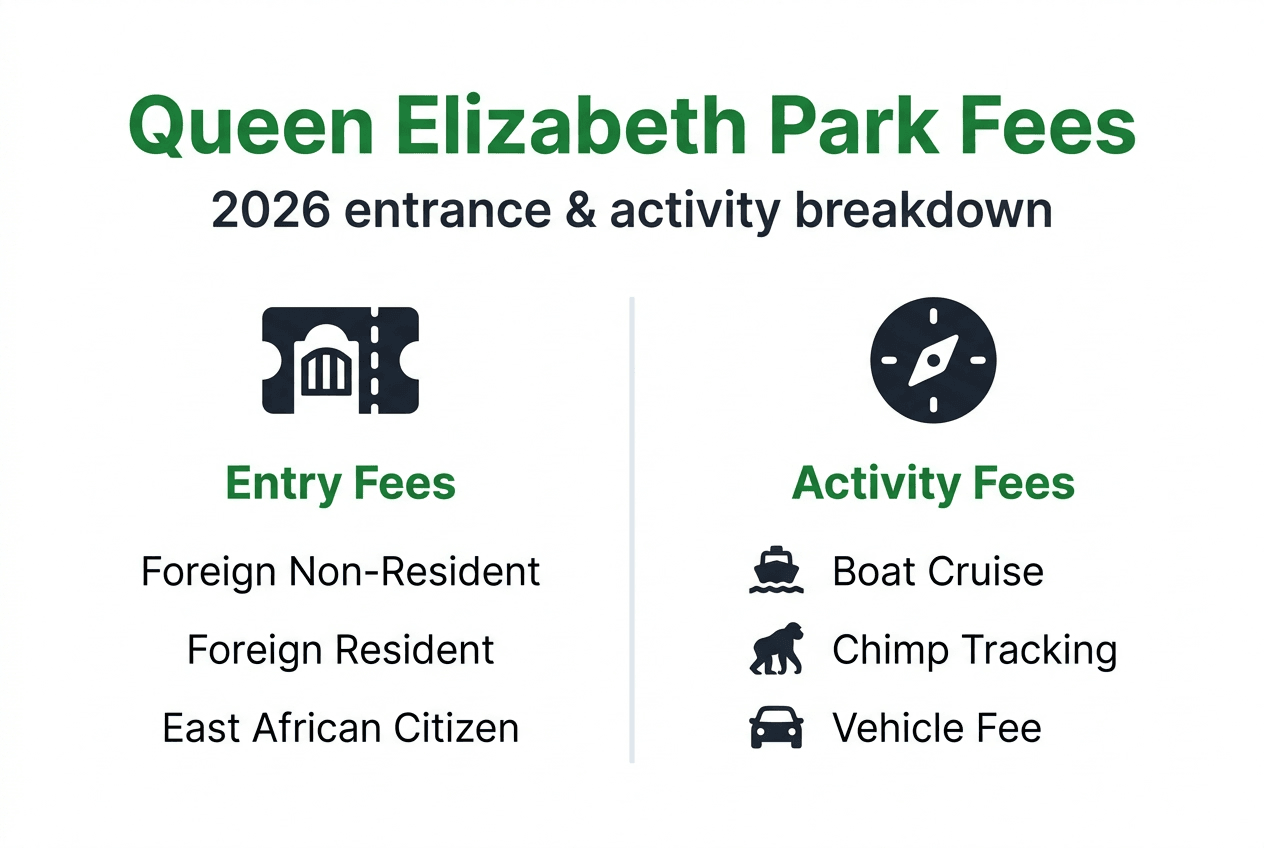
Vehicles pay daily rates based on type. Saloon cars (2WD sedans) pay UGX 20,000, four-wheel drives pay UGX 30,000, and registered tour company vehicles pay UGX 50,000. These charges apply per vehicle per day, separate from passenger entrance fees.
Annual passes require residency proof like work permits for foreign residents or government-issued IDs for East African citizens. Foreign non-residents cannot purchase annual passes regardless of visit frequency. Annual access costs $200 for foreign residents and UGX 100,000 for East African citizens, covering unlimited park entries but not activity fees.
Pro Tip: Budget separately for each activity beyond the gate fee. Travelers booking 3-day big five safaris should confirm which permits are included in package pricing versus paid on arrival.
Here’s a breakdown of common costs:
| Fee Type | Foreign Non-Resident | Foreign Resident | East African Citizen |
|---|---|---|---|
| Daily entry (adult) | $40 | $30 | UGX 20,000 |
| Daily entry (child 5-15) | $20 | $15 | UGX 10,000 |
| Kazinga boat cruise | $30 | $30 | $30 |
| Chimpanzee tracking | $50 | $50 | $50 |
| Vehicle (4×4) | UGX 30,000 | UGX 30,000 | UGX 30,000 |
| Annual pass | Not available | $200 | UGX 100,000 |
Cross-reference your itinerary against park tariffs and activity fees to avoid gate surprises. Permits are non-refundable once purchased.
Best timing and seasons to visit queen elizabeth national park
Dry seasons from January to February and June to September deliver the clearest wildlife visibility. Sparse vegetation concentrates animals near permanent water sources like the Kazinga Channel, making game drives and boat safaris more productive.
Rain from March to May and October to November turns park roads muddy. Vehicle access to remote areas like Ishasha becomes challenging, and some tracks close temporarily. Wet conditions reduce animal predictability as herbivores disperse across the landscape.
Plan Your Uganda Safari with Local Experts
 WhatsApp Us
Plan your visit during dry months for safer road conditions and higher predator activity. Lions hunt more visibly when prey congregates at waterholes. Bird migrations peak in November through April, offering 600+ species for enthusiasts willing to handle wet terrain.
Pro Tip: Book accommodations 3 to 4 months ahead for June through September visits. Lodges near Mweya Peninsula and Ishasha fill quickly during peak dry season.
Key timing factors:
- January to February: Peak dry season with maximum game visibility
- June to September: Second dry season, ideal for tree-climbing lions in Ishasha
- March to May: Heavy rains, limited road access, lower crowds
- October to November: Short rains, good birding, unpredictable animal movements
Refer to the Uganda safari guide 2026 for regional weather patterns affecting cross-park itineraries.
Ground logistics: transport and road conditions inside queen elizabeth national park
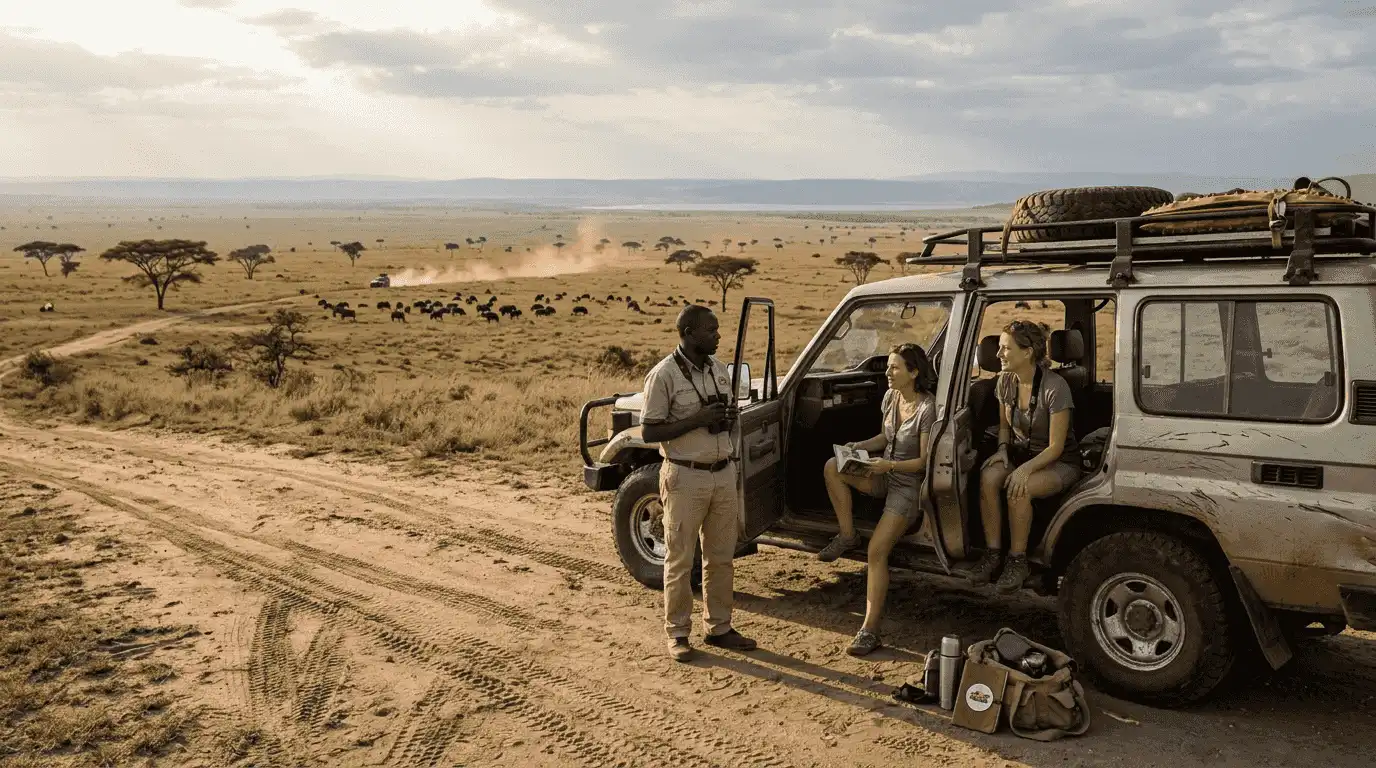
Customized 4×4 safari vans with professional suspension are essential for navigating Queen Elizabeth’s terrain. Standard sedans lack the clearance for rocky tracks and waterlogged sections during rainy periods. Pop-up roofs on safari vans enable 360-degree game viewing without leaving the vehicle.
Park roads vary from graded murram to rough two-track trails. The Kasenyi sector maintains better surfaces suitable for game drives year-round. Ishasha’s southern circuits feature loose sand and exposed roots, demanding skilled drivers and reinforced vehicle suspension.
Vehicle fees apply daily regardless of entry time. A 4×4 pays UGX 30,000 per day, while tour company vehicles registered with Uganda Wildlife Authority pay UGX 50,000. Receipts are checked at sector gates, so retain all payment slips.
Expect bumpy conditions even in dry months. Washboard surfaces and potholes are common on main tracks. Skilled drivers adjust speed to minimize discomfort and maximize wildlife spotting opportunities. Plan 3 to 4 hours for drives between Mweya and Ishasha sectors.
Essential transport considerations:
- 4×4 vehicles mandatory for Ishasha sector and rainy season access
- Pop-up roofs standard for unobstructed photography and game viewing
- Professional drivers improve safety on technical terrain and animal encounters
- Daily vehicle fees separate from passenger entrance charges
- Fuel stations available only outside park boundaries at Katunguru and Kasese
Check Uganda safari prices and permits for transport inclusions in guided packages. Self-drivers should verify vehicle specifications with rental agencies before booking, confirming suspension type and roof configuration match park requirements outlined in the self-driver’s guide Queen Elizabeth NP.
Sectors and wildlife highlights of queen elizabeth national park
Queen Elizabeth National Park divides into distinct sectors, each offering specialized wildlife experiences. Kasenyi Plains in the northeast feature open savannah ideal for spotting Uganda kob, buffalo herds, and hunting lions. Morning game drives yield the highest predator activity.
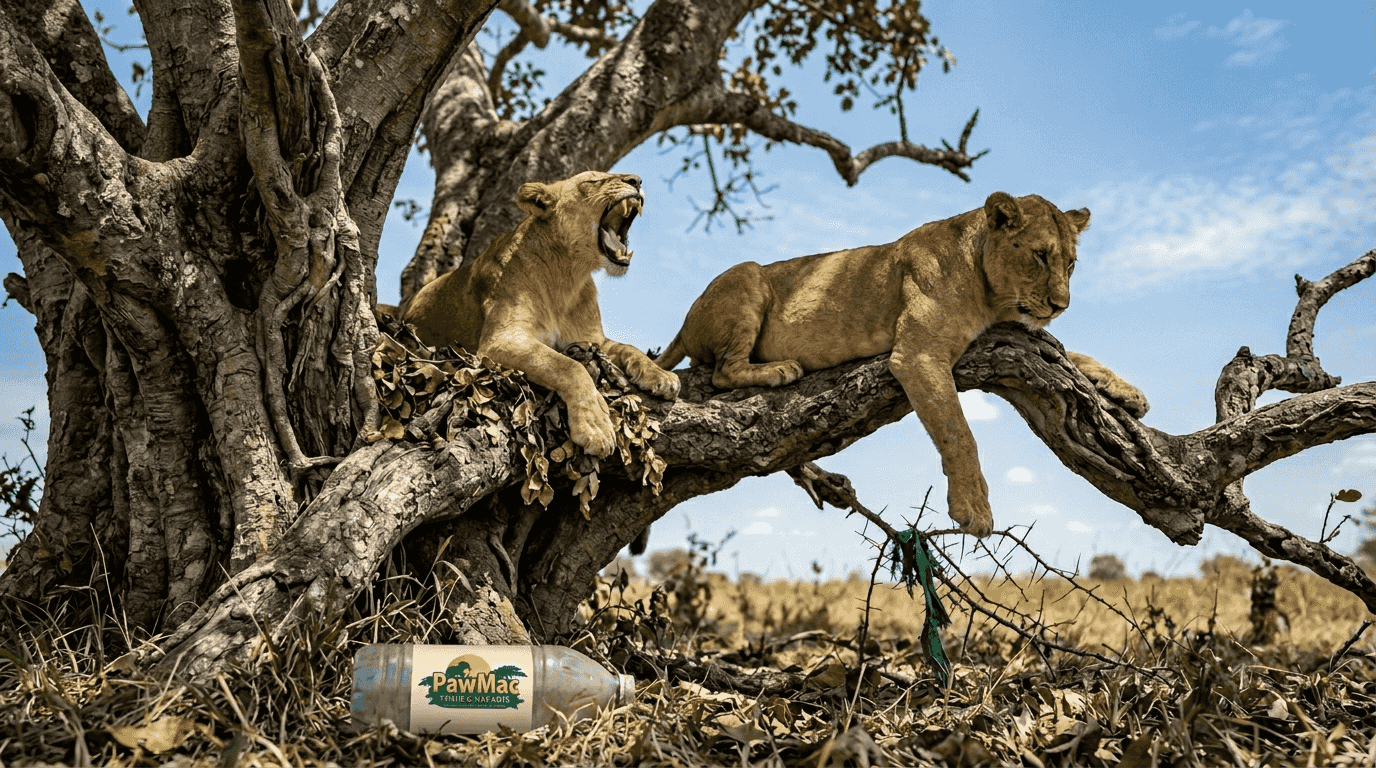
Ishasha sector in the south is famous for rare tree-climbing lions resting in fig trees during midday heat. The behavior is unique among African lion populations. Rough terrain requires 4×4 vehicles and adds 2 to 3 hours travel time from Mweya headquarters.
Kyambura Gorge, locally called the “Valley of Apes,” offers chimpanzee tracking near Queen Elizabeth with permits at $50 per person. The forested ravine contrasts sharply with surrounding savannah. Success rates for chimp sightings average 70% depending on troop movements.
Kazinga Channel connects Lake Edward and Lake George, hosting the park’s densest hippo concentration and 60+ mammal species coming to drink. Two-hour boat safaris depart from Mweya Jetty at 11:00 and 15:00 daily. Expect close encounters with elephants, buffalo, and Nile crocodiles along the 32-kilometer waterway.
No rhinos live in Queen Elizabeth National Park. The closest rhino experience is Ziwa Rhino Sanctuary, 5 hours north near Nakasongola. The park completed the Big Five roster until poaching eliminated rhinos in the 1980s.
| Sector | Primary Wildlife | Terrain Type | Access Difficulty |
|---|---|---|---|
| Kasenyi Plains | Lions, Uganda kob, buffalo | Open savannah | Easy, graded roads |
| Ishasha | Tree-climbing lions, topi | Mixed woodland | Moderate, 4×4 required |
| Kyambura Gorge | Chimpanzees, forest primates | Tropical forest ravine | Moderate, hiking involved |
| Kazinga Channel | Hippos, crocodiles, water birds | Wetland/shoreline | Easy, boat access |
| Mweya Peninsula | Elephants, leopards (nocturnal) | Savannah and acacia | Easy, paved sections |
Match your interests to sectors when planning daily itineraries. Tree-climbing lion sightings in Ishasha require patience and flexible timing, as cats move between fig trees unpredictably.
Is queen elizabeth national park right for your safari? decision filters for travelers
Queen Elizabeth suits travelers seeking diverse ecosystems in one park. You’ll encounter savannah game, forest primates, wetland birds, and aquatic mammals within a compact 1,978 square kilometers. This variety appeals to first-time safari-goers wanting comprehensive East African wildlife exposure.
The park is not ideal if rhinos top your must-see list. Plan a separate Ziwa Rhino Sanctuary visit to complete Big Five sightings. Terrain ranges from smooth to very rough depending on sector, so travelers sensitive to vehicle motion should focus on Kasenyi and Mweya areas, avoiding Ishasha’s technical tracks.
Families with young children benefit from shorter drive times between sectors and lodge-based boat safaris requiring no hiking. Chimpanzee tracking tours in Kyambura involve steep descents into the gorge, unsuitable for travelers with mobility limitations.
Frequent visitors staying multiple weeks should evaluate annual pass value. Foreign residents saving $200 annually need at least 7 days of park visits to break even against daily $30 fees. Activity charges still apply per visit.
Best for travelers who:
- Want tree-climbing lions without traveling to Tanzania’s Lake Manyara
- Prioritize boat safaris alongside traditional game drives
- Seek primate experiences supplementing savannah wildlife
- Have 3 to 5 days for thorough sector exploration
- Accept moderate terrain challenges for unique sightings
Not ideal if you:
- Require rhino sightings as non-negotiable
- Prefer only smooth, paved park roads
- Cannot allocate time for separate activity permits
- Need guaranteed daily chimpanzee encounters (70% success rate)
- Focus exclusively on Big Five photography
Pro Tip: Combine Queen Elizabeth with Kibale Forest National Park for comprehensive primate tracking. The parks sit 2.5 hours apart, allowing efficient multi-park Uganda safari tours within one week.
Evaluate your physical comfort with extended 4×4 travel and activity-specific fitness requirements. Kazinga boat cruises suit all fitness levels, while Kyambura chimpanzee tracking demands moderate cardiovascular endurance for gorge hiking.
Plan your 2026 queen elizabeth national park safari with PawMac Safaris
You now understand Queen Elizabeth’s fee structure, seasonal timing, transport requirements, and sector specializations. Turning this knowledge into a seamless safari requires local expertise and logistical coordination that PawMac Safaris provides for every Uganda itinerary.
Our team arranges all permits, from park entrance to chimpanzee tracking Uganda in Kyambura Gorge, eliminating gate confusion and payment delays. We deploy only customized 4×4 safari vans with professional suspension and pop-up roofs, ensuring comfort on Ishasha’s rough tracks while maximizing your wildlife photography angles. Skilled drivers familiar with animal movements position you for tree-climbing lion sightings and optimize Kazinga Channel timing.
Whether you’re planning focused 3-day Big Five safaris or extended multi-park circuits, we handle accommodation bookings near priority sectors and coordinate activity schedules to avoid crowds. Contact PawMac Safaris Uganda for custom 2026 quotes that bundle permits, transport, and expert guiding into transparent, all-inclusive pricing.
FAQ
What documents do I need to prove eligibility for an annual pass at Queen Elizabeth National Park?
Foreign residents need work permits and East African citizens require government-issued IDs to purchase annual passes. Foreign non-residents cannot buy annual passes regardless of documentation. Bring original permits or IDs to the park headquarters for verification before payment.
Are rhinos found in Queen Elizabeth National Park?
No rhinos live in Queen Elizabeth National Park. Poaching eliminated the population in the 1980s, and no reintroduction program currently exists. Visit Ziwa Rhino Sanctuary in Nakasongola District for guaranteed rhino tracking, located 5 hours north of the park.
What type of vehicles are recommended for travel inside the park?
Customized 4×4 safari vans with professional suspension are essential for park terrain. Pop-up roofs enable unobstructed game viewing and photography. Standard sedans lack clearance for Ishasha sector and rainy season conditions, risking vehicle damage and passenger discomfort.
When is the best time of year to visit Queen Elizabeth National Park for wildlife viewing?
Dry seasons from January to February and June to September offer optimal wildlife viewing. Animals concentrate near water sources like Kazinga Channel as vegetation thins, improving sightings. Predator activity increases during these months as prey becomes more visible and predictable.
Recommended
- Uganda Safari Guide 2026: Gorilla Permits & Logistics
- How to book a discounted gorilla safari in Uganda 2026
- Gorilla Trekking in Uganda: Cost, Permits & Tours 2026
- Gorilla Trekking Permit Uganda: Cost & Booking (2026)