


- 78 Views
- 18 Min Read
- (0) Comment
Uganda’s Pearl of Africa title is more than a romantic nickname. It is a practical way to understand why travelers choose Uganda when they want a safari that feels varied, personal, and deeply connected to place. Within one carefully planned journey, you can move from Lake Victoria’s gentle shores to the thunder of Murchison Falls, from chimpanzee forests in Kibale to gorilla country in Bwindi, and from the open plains of Queen Elizabeth National Park to the remote wilderness of Kidepo Valley.
The name endures because Uganda combines rarity with accessibility. Mountain gorillas live in misty forests, chimpanzees call from fig trees, lions rest in branches in Ishasha, the Nile cuts through dramatic landscapes, and communities along the safari route add depth that no wildlife checklist can capture. If you are beginning your planning, PawMac Safaris’ Uganda safari guide is a helpful companion to this overview.

Where the phrase Pearl of Africa came from
The phrase Pearl of Africa is most closely associated with Winston Churchill, who traveled through Uganda in 1907 and later wrote about the country in his 1908 book, My African Journey. His writing helped popularize the idea of Uganda as a place of exceptional beauty, variety, and natural abundance.
Churchill did not create Uganda’s beauty. He simply put into words what many travelers still feel when they see the country properly. The pearl metaphor matters because a pearl is small enough to hold, but valuable far beyond its size. Uganda has a similar quality. It is not the largest safari destination on the continent, yet it contains an extraordinary range of landscapes, wildlife, cultures, and water systems within one compact country.
That is why the name still feels accurate in 2026. Uganda is not just a place with good scenery. It is a destination where rainforest, savanna, lakes, mountains, rivers, primates, Big Five wildlife, birds, and culture can be woven into one coherent safari route.
Why the nickname still fits Uganda today
Uganda’s appeal is not based on one famous attraction. The country is called the Pearl of Africa because many rare qualities overlap in one destination. Travelers do not have to choose between gorilla trekking and classic game drives, or between water safaris and cultural encounters. Uganda allows all of these experiences to sit side by side.
| What gives Uganda its Pearl of Africa identity | Where travelers experience it | Why it matters |
|---|---|---|
| Mountain gorillas | Bwindi Impenetrable National Park and Mgahinga Gorilla National Park | One of the world’s most meaningful wildlife encounters |
| Chimpanzees and other primates | Kibale Forest, Budongo, Kyambura Gorge, Kalinzu, Mgahinga | Exceptional primate diversity in natural forest habitats |
| Nile River drama | Jinja and Murchison Falls National Park | Adventure, history, boat safaris, and dramatic scenery |
| Classic savanna wildlife | Murchison Falls, Queen Elizabeth, Kidepo Valley, Lake Mburo | Lions, elephants, buffalo, giraffes, antelopes, and more |
| Rhino conservation | Ziwa Rhino Sanctuary | Completes a Uganda Big Five route when combined with key parks |
| Birdlife | Mabamba Swamp, Queen Elizabeth, Murchison Falls, Kibale, Bwindi | More than 1,060 recorded bird species across varied habitats |
| Mountains and highlands | Rwenzori Mountains, Mgahinga, southwestern Uganda | Alpine trekking, volcano scenery, and cool highland landscapes |
| Cultural richness | Kampala, Bigodi, Batwa communities, Ankole, Karamoja, Busoga | Human stories that make safari travel more meaningful |
This combination is the heart of Uganda’s identity. Many destinations are famous for a single landscape or flagship animal. Uganda is different because its strength is concentration. A well-designed itinerary can shift from papyrus wetland to rainforest, from crater lake to savanna, from cultural market to gorilla trail, without leaving the country.
Uganda’s landscapes are unusually diverse
One reason Uganda is called the Pearl of Africa is the dramatic variety of its landscapes. The country sits across the Equator, but elevation changes give it a remarkably comfortable climate in many regions. Entebbe, Kampala, Fort Portal, Kabale, and the southwestern highlands all feel different, even though they can be connected within a single safari.
Start near Lake Victoria, Africa’s largest lake by area, and you find a softer side of Uganda: gardens, fishing communities, papyrus wetlands, and the calm arrival atmosphere of Entebbe. Move east to Jinja and the Nile becomes the story, with boat rides, rafting, and riverside relaxation. Travel north to Murchison Falls and the river turns powerful, forcing its way through a narrow rock cleft before spreading into wildlife-rich banks.
Southwestern Uganda offers another world. The hills around Kabale and Kisoro are green, terraced, and cool. Bwindi Impenetrable National Park feels ancient and enclosed, with steep forest trails, tangled vegetation, and morning mist. Nearby Mgahinga Gorilla National Park adds volcanic scenery and the chance to combine gorilla trekking with golden monkey tracking.
Plan Your Uganda Safari with Local Experts
 WhatsApp Us
The Rwenzori Mountains, known historically as the Mountains of the Moon, bring yet another layer. These high mountains contain unusual vegetation zones, from montane forest to giant lobelias and alpine moorland. For trekkers, they show that Uganda is not only a safari destination, but also a serious mountain destination.
Then there is Kidepo Valley National Park in Uganda’s northeast, where broad plains, rocky outcrops, and distant mountain horizons create one of the country’s most remote and rewarding wilderness experiences. Kidepo is a reminder that the Pearl of Africa is not only lush and green. It also has wild, open, low-crowd safari country for travelers willing to go farther.
Mountain gorillas are Uganda’s rarest safari jewel
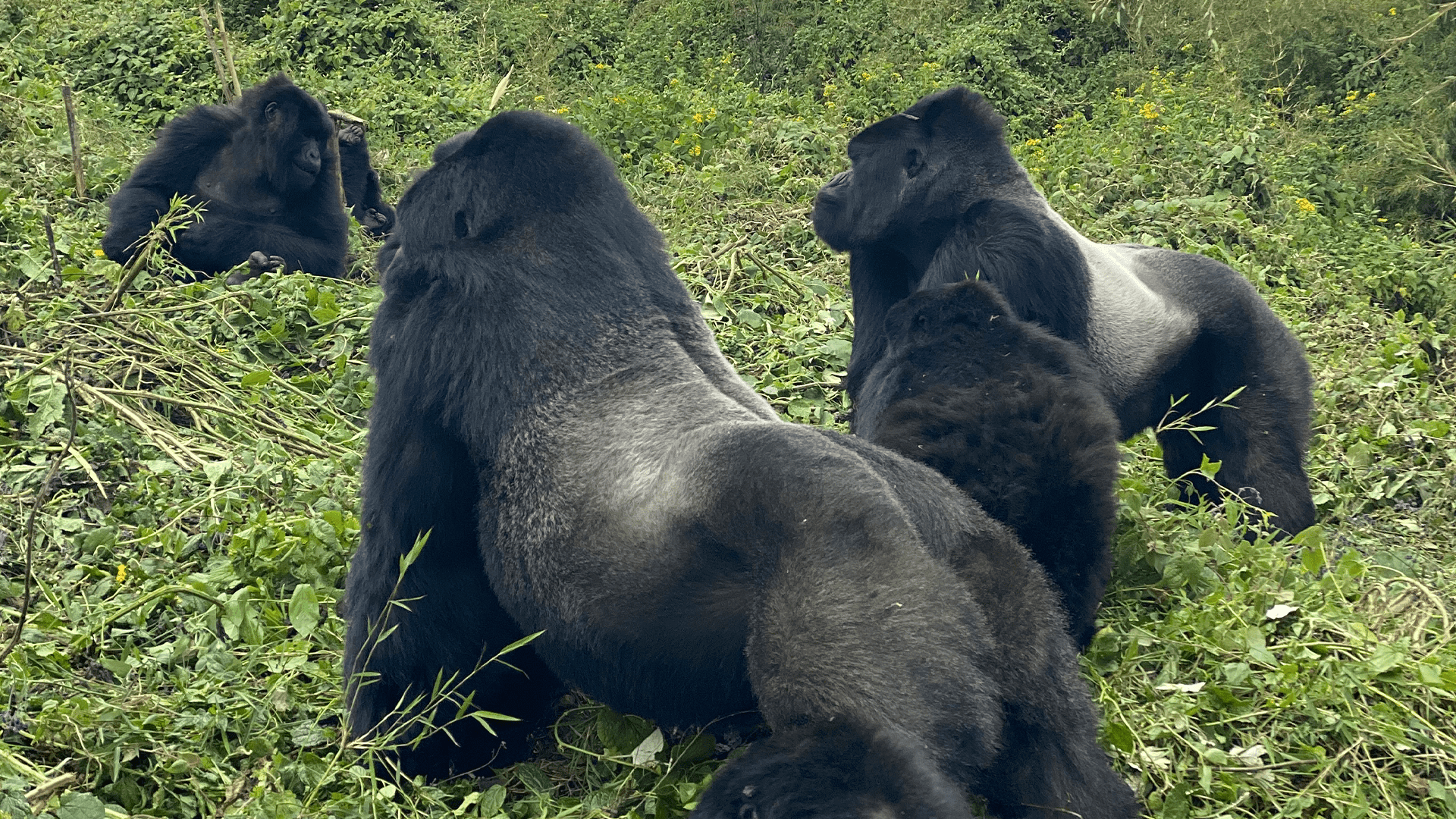
For many international travelers, gorilla trekking is the experience that first brings Uganda to mind. Uganda protects mountain gorillas in two national parks: Bwindi Impenetrable National Park and Mgahinga Gorilla National Park. Bwindi is especially important because of its size, biodiversity, and multiple trekking sectors: Buhoma, Ruhija, Rushaga, and Nkuringo.
A gorilla trek is not a drive-by sighting. It is a guided forest experience led by Uganda Wildlife Authority ranger teams and trackers who understand gorilla movements, terrain, and safety rules. Treks can take a few hours or most of the day depending on the gorilla family location, trail conditions, and the fitness of the group. Once the gorillas are found, visitors usually spend one regulated hour with them.
For 2026 planning, the Uganda gorilla permit for foreign non-residents is USD 800. Travelers must be at least 15 years old, and responsible viewing rules are strict. These include maintaining distance, following ranger instructions, avoiding trekking when ill, and limiting time around the gorillas. Those rules protect both visitors and the gorillas, whose health can be affected by human diseases.
The experience is one of the clearest reasons Uganda deserves the Pearl of Africa name. Seeing a mountain gorilla family in its natural forest habitat is rare, emotional, and conservation-linked. Permit revenue helps fund protection, ranger operations, and community benefits around the parks. For practical details, see PawMac Safaris’ complete guide to gorilla trekking in Uganda.
Uganda is also a primate powerhouse
Gorillas may be the headline, but Uganda’s primate story is much broader. Kibale Forest is one of the best places in Uganda for chimpanzee tracking, and it is widely known for its rich primate diversity. A morning in Kibale can include the calls of chimpanzees, sightings of red colobus monkeys, black-and-white colobus monkeys, red-tailed monkeys, and a forest atmosphere that feels completely different from the savanna parks.
Chimpanzee tracking is more active and vocal than gorilla trekking. Chimps move quickly, feed in fruiting trees, and communicate loudly across the forest. In Kibale, travelers often begin at Kanyanchu Visitor Centre before entering the forest with trained guides. For 2026 planning, chimpanzee permits are a key cost to account for, especially when combining Kibale with gorilla trekking in Bwindi.
Mgahinga adds another primate highlight: golden monkey tracking. These active, colorful monkeys live in bamboo and montane forest habitat near the Virunga volcanoes. A traveler who includes Kibale, Bwindi, and Mgahinga can experience chimpanzees, mountain gorillas, and golden monkeys in one Uganda itinerary.
This depth matters. Uganda is not simply a place where primates exist. It is one of the most rewarding destinations for travelers who want structured, ranger-led primate encounters in natural habitats, supported by conservation rules and experienced local guidance.
Classic safari wildlife completes the picture
The Pearl of Africa nickname would not feel complete without Uganda’s savanna wildlife. Murchison Falls National Park, Queen Elizabeth National Park, Kidepo Valley National Park, and Lake Mburo National Park each offer a different style of game viewing.
Murchison Falls is powerful and varied. The northern bank is known for game drives where travelers may see elephants, buffalo, giraffes, lions, hartebeests, oribi, and many bird species. The boat cruise toward the base of the falls adds hippos, crocodiles, riverbank elephants, and close views of the Nile’s force.
Queen Elizabeth National Park is one of Uganda’s most diverse safari landscapes. The Kasenyi plains are strong for classic game drives, the Kazinga Channel is excellent for boat safaris, Kyambura Gorge offers chimpanzee tracking, and the Ishasha sector is famous for tree-climbing lions. Few parks in Uganda combine so many safari styles in one destination.
Kidepo Valley is for travelers who want remoteness, wide views, and a feeling of space. It takes more planning to reach, but the reward is a wilder atmosphere and fewer vehicles. Lake Mburo, closer to Kampala and Entebbe than the larger parks, works well for shorter trips, walking safaris, zebras, impalas, and relaxed scenic game viewing.
Uganda can also deliver a Big Five route when Ziwa Rhino Sanctuary is included for rhino tracking, alongside parks such as Murchison Falls and Queen Elizabeth for lions, elephants, buffalo, and leopards. If the Big Five are a priority, itinerary design matters because rhinos are not found in Uganda’s main national parks. They are tracked at Ziwa as part of a conservation-focused visit.
The Nile gives Uganda a dramatic natural centerpiece
Uganda’s relationship with the Nile is another reason the Pearl of Africa name feels earned. The river is not just a line on the map. It shapes experiences from Jinja to Murchison Falls.
In Jinja, travelers visit the Source of the Nile area, take boat rides, and often add adventure activities. It is a natural opening or closing chapter for a safari, especially for travelers who want a lighter, active experience before or after national parks.
At Murchison Falls, the Nile becomes more dramatic. The river squeezes through a narrow gap before dropping powerfully into the gorge below. The sound, spray, and scale of the falls create one of Uganda’s most memorable landscapes. A boat safari to the base of the falls and a visit to the top of the falls show two different sides of the same natural force.
Uganda’s lakes also add to the pearl identity. Lake Victoria, Lake Albert, Lake Edward, Lake George, Lake Bunyonyi, and the crater lakes around Fort Portal all contribute to the country’s scenic variety. These waters shape birdlife, local livelihoods, transport history, and the slower moments that make a safari feel complete.
Birdlife adds color, sound, and surprise
Uganda is exceptional for birdwatching, with more than 1,060 recorded bird species. That number matters, but the real joy is how birding fits into almost every safari day. You do not need to be a specialist to appreciate a fish eagle calling over the water, bee-eaters flashing along a track, or kingfishers hovering over a channel.
For serious birders, Uganda is rich because habitats change quickly. Papyrus wetlands can produce the sought-after shoebill, especially around Mabamba Swamp. Forests such as Bwindi and Kibale offer Albertine Rift species and other forest birds. Queen Elizabeth and Murchison Falls add waterbirds, raptors, savanna species, and migratory visitors depending on the season.
Birding also rewards slower travel. A traveler rushing from one major animal sighting to the next may miss the finer details that make Uganda special. A patient guide can turn a transfer, lodge garden, wetland canoe ride, or boat cruise into a memorable birding experience.
Culture turns a beautiful safari into a meaningful journey
Uganda’s Pearl of Africa identity is not only about landscapes and animals. The human side of travel is central. Uganda is home to many communities, languages, traditions, foods, music styles, and histories. A safari that includes respectful cultural experiences often feels richer than one focused only on wildlife.
In Kampala, travelers can learn about Buganda history, visit markets, explore religious landmarks, and understand how Uganda’s capital connects modern life with older traditions. Around Kibale, Bigodi community experiences show how wetlands, tourism, crafts, and local livelihoods can work together. Near Bwindi and Mgahinga, Batwa cultural experiences can add important context when handled respectfully and through community-benefiting arrangements.
In western Uganda, Ankole cattle culture offers insight into pastoral heritage, while northeastern Uganda introduces travelers to the distinct landscapes and traditions of Karamoja. Around Queen Elizabeth, salt lake visits and fishing community experiences reveal how people live alongside protected landscapes.
The key is to avoid treating culture as a quick photo stop. The best cultural tours are guided, consent-based, locally connected, and paced with respect. PawMac Safaris can help integrate these experiences into a safari without making the itinerary feel crowded. For deeper planning, read about cultural tours in Uganda.
Uganda’s climate supports year-round travel
Uganda’s position near the Equator gives it a year-round travel appeal, but altitude and rainfall patterns create important regional differences. The country generally has two drier periods, December to February and June to September, and two wetter periods, March to May and October to November. Conditions vary by region, and rain can occur even in dry months, especially in forested areas.
Dry seasons are popular for gorilla trekking, chimpanzee tracking, and game drives because trails are often easier and wildlife may gather closer to water sources. Wet seasons can bring lush scenery, fewer crowds, dramatic skies, and excellent birding. Photographers often appreciate the green landscapes, softer light, and reduced dust.
| Travel season | Common advantages | Planning note |
|---|---|---|
| December to February | Good trekking conditions, strong wildlife viewing, popular holiday period | Book permits and lodges early |
| March to May | Lush landscapes, fewer travelers, possible value opportunities | Expect muddy forest trails and flexible routing needs |
| June to September | Peak safari period, favorable conditions for many parks | High demand for gorilla permits and prime lodges |
| October to November | Green scenery, birding interest, quieter atmosphere | Rain gear and 4×4 planning are important |
The best time depends on what you value most. Gorilla trekking is possible throughout the year, but trail comfort, permit availability, lodge choice, and photography goals should influence your decision. PawMac Safaris’ guide to the best time to visit Uganda for safari and gorilla trekking can help you match timing to priorities.
The Pearl of Africa is practical, not just poetic
Some destinations sound beautiful in theory but become difficult when logistics are poorly planned. Uganda’s advantage is that its highlights can be connected through sensible safari circuits, especially with expert local planning.
Most international travelers arrive through Entebbe International Airport. From there, common routes can connect Murchison Falls and Ziwa Rhino Sanctuary in the north, Kibale and Queen Elizabeth in the west, and Bwindi or Mgahinga in the southwest. Domestic flights can reduce long road transfers for some itineraries, while private 4×4 vehicles allow flexibility, luggage comfort, and scenic stops.
Distances matter. Entebbe to Murchison Falls can take much of a day depending on routing and stops. Kibale to Queen Elizabeth is more manageable and scenic. Queen Elizabeth to Bwindi varies depending on the selected gorilla sector. Entebbe to Bwindi by road is usually a long full-day drive, so many travelers break the route or fly closer to the southwest when budget allows.
Packing also needs to reflect Uganda’s variety. A traveler may need lightweight clothing for warm savanna afternoons, a fleece for cool highlands, waterproof layers for forest trekking, and sturdy footwear for mud and uneven trails. Fashion-friendly sneakers can work for airport days and Kampala evenings, and if you are traveling from New Zealand you might already browse exclusive sneakers in NZ before departure, but gorilla and chimpanzee trails require broken-in hiking boots with good grip.
This is where local safari planning becomes valuable. PawMac Safaris designs Uganda itineraries around permits, park geography, accommodation location, transfer times, guide expertise, and guest comfort. The goal is not just to include famous names on paper, but to make the journey work smoothly on the ground.
How many days do you need to experience Uganda properly?
You can experience a glimpse of Uganda in a short trip, but the Pearl of Africa is best understood with enough time to move between habitats without rushing. A 3-day gorilla trek can be powerful, but it shows only one part of the country. A 7-day itinerary can combine gorillas with wildlife. A 10 to 14-day journey gives the nickname room to make sense.
| Trip length | Best for | Possible Uganda focus |
|---|---|---|
| 3 to 4 days | Travelers with limited time | Gorilla trekking in Bwindi or Mgahinga, or Murchison Falls wildlife |
| 5 to 7 days | First-time safari travelers | Gorillas plus Queen Elizabeth, Kibale, Lake Mburo, or Murchison Falls |
| 8 to 10 days | Balanced Uganda safari | Gorillas, chimpanzees, boat safari, game drives, and cultural stops |
| 11 to 14 days | Deeper Pearl of Africa journey | Murchison Falls, Kibale, Queen Elizabeth, Bwindi or Mgahinga, Lake Mburo, and optional Jinja or Kidepo |
| 15 days or more | Slow travel, photography, specialist interests | Kidepo, Rwenzori, birding, cultural routes, extra trekking, or relaxed lodge time |
For most travelers, 10 to 12 days is an excellent balance. It allows time for gorilla trekking, chimpanzee tracking, Queen Elizabeth or Murchison Falls, a boat safari, and meaningful cultural stops. A 14-day itinerary provides a fuller picture and is especially worthwhile for photographers, birders, families, and travelers who dislike rushed transfers.
Experiencing the Pearl of Africa responsibly
Uganda’s beauty depends on protection. Gorilla forests, wetlands, savannas, and mountain ecosystems are all vulnerable to pressure from population growth, habitat change, illegal resource use, and poorly managed tourism. Responsible travel is not an optional extra. It is part of what keeps Uganda’s safari experiences possible.
For gorilla and chimpanzee tracking, follow ranger instructions carefully. Keep the required distance, avoid flash photography, do not trek when sick, keep voices low, and never try to influence animal behavior for a photo. In savanna parks, remain in the vehicle unless your guide says otherwise, never feed wildlife, and avoid blocking animal movement.
Responsible travel also includes choosing experiences that benefit local communities. Community walks, cultural tours, porter hiring, locally owned accommodations, and ethical craft purchases can help ensure tourism value reaches people living near protected areas. Conservation works best when communities see real benefits from protecting wildlife.
PawMac Safaris builds Uganda safari experiences with local guide knowledge, professional planning, comfortable 4×4 vehicles, and flexible package options. Whether you want a luxury gorilla safari, a family-friendly wildlife route, a photography-focused journey, or a carefully priced adventure, local expertise helps ensure the Pearl of Africa is experienced with respect and depth.
Frequently Asked Questions
Who first called Uganda the Pearl of Africa? The phrase is most closely associated with Winston Churchill, who traveled through Uganda in 1907 and later praised the country’s beauty and variety in his 1908 travel writing. The name has remained popular because it still reflects Uganda’s extraordinary mix of landscapes, wildlife, and culture.
Why is Uganda called the Pearl of Africa? Uganda is called the Pearl of Africa because it brings together rare wildlife, lush forests, dramatic rivers, lakes, mountains, savannas, birdlife, and cultural richness within one relatively compact country. Few destinations offer mountain gorillas, chimpanzees, Big Five routes, Nile scenery, and meaningful community experiences in one itinerary.
Is Uganda’s Pearl of Africa nickname only about gorillas? No. Mountain gorillas are one of Uganda’s greatest highlights, but the nickname is broader. It also refers to the Nile, Murchison Falls, Queen Elizabeth National Park, Kibale Forest, Kidepo Valley, Lake Victoria, the Rwenzori Mountains, birdlife, cultural diversity, and the country’s green, varied scenery.
What is the best way to experience the Pearl of Africa? The best way is to plan a multi-park Uganda safari that includes at least one primate experience, one savanna wildlife park, one boat safari, and one cultural or community visit. For many travelers, a 10 to 14-day itinerary gives the most rewarding balance.
When is the best time to visit Uganda? Uganda can be visited year-round. The drier months from December to February and June to September are popular for trekking and game drives. The wetter months can be excellent for lush scenery, birding, photography, and fewer crowds, but travelers should prepare for muddy trails and flexible routing.
How far in advance should I book gorilla trekking in Uganda? For peak travel months, booking 6 to 12 months ahead is wise, especially if you need specific Bwindi sectors or preferred lodges. For other periods, 3 to 6 months can work, but earlier is still safer because gorilla permits are limited.
Plan your Pearl of Africa safari with PawMac Safaris
Reading about Uganda explains the nickname. Experiencing it well requires the right route, permits, guides, vehicle, timing, and pace. PawMac Safaris specializes in personalized Uganda safari planning, from gorilla trekking and chimpanzee tracking to Big Five routes, cultural tours, photography safaris, and family-friendly adventures.
If you want your Uganda journey to reflect the full meaning of the Pearl of Africa, start with expert local guidance. Explore more Uganda planning resources at PawMac Safaris and let a professional team help shape a safari that matches your travel style, comfort level, budget, and wildlife priorities.


