


- 316 Views
- 12 Min Read
- (0) Comment
For travelers drawn to wild Uganda, the real magic of a safari goes far beyond spotting rare gorillas or relaxing at a luxury lodge. Planning each detail—from permit procurement to on-ground transport—requires expert coordination that most visitors never see. Safari operators become the backbone of your experience, managing the complex web of permits, vehicle movements, and accommodations behind every smooth, personalized safari adventure. Discover what makes their role essential to a seamless, responsible journey.
Table of Contents
- What Safari Operators Do in Travel Logistics
- Types of Safari Services and Trip Customization
- Managing Permits, Transport, and Accommodation
- Ensuring Safety, Compliance, and Conservation
- Cost Transparency and Avoiding Common Pitfalls
Key Takeaways
| Point | Details |
| Safari Operators Manage Complex Logistics | They handle transportation, accommodation, permits, and guiding services to ensure a hassle-free experience for travelers. |
| Coordination is Crucial for a Smooth Safari | Effective operators synchronize permits, transport, and lodging to avoid disruptions and provide a seamless adventure. |
| Customization Enhances Safari Experience | Operators tailor itineraries based on individual interests, fitness levels, and preferences to create unique journeys. |
| Transparency in Costs is Essential | Operators should provide clear itemized quotes to help travelers understand what is included and avoid unexpected expenses. |
What Safari Operators Do in Travel Logistics
Safari operators manage far more than just booking a game drive. They coordinate every detail that turns your trip into a seamless adventure, from accommodations to permit arrangements and on-ground logistics. Think of them as the backbone connecting you to your wildlife experience.
At their core, safari operators handle the procurement, movement, and storage of equipment, information, and resources required to run operations smoothly. This includes managing complex travel logistics across multiple suppliers and locations. Without this coordination, gorilla permits wouldn’t sync with flight arrivals, guides wouldn’t be briefed on your preferences, and your stay would feel chaotic rather than carefully orchestrated.
Core Operational Responsibilities
Operators manage a multi-layered network of services:
- Transportation coordination: Arranging ground transfers, and in-country vehicle movements between parks
- Accommodation bookings: Matching lodges or camps to your budget and preferences across Bwindi, Kibale, Murchison Falls, and Queen Elizabeth
- Permit procurement: Securing gorilla permits ($800 with the Uganda Wildlife Authority) and other park clearances
- Guide assignment: Connecting you with experienced trackers and naturalists familiar with specific park sectors
- Activity scheduling: Timing your trekking, boat cruises, and wildlife drives around seasonal patterns and group availability
- Guest services management: Handling dietary needs, altitude concerns, mobility support, and emergency protocols
Operators essentially link holidaymakers and accommodations through a network of intermediaries, ensuring that what you booked matches reality on the ground.
Why Coordination Matters
Each component depends on the others. Your gorilla permit for Rushaga sector is worthless if your flight lands after the 6 AM trek briefing. Your lodge upgrade doesn’t help if vehicle availability isn’t confirmed. Effective operators anticipate these friction points and build buffers into timelines.
For Uganda operations specifically, operators navigate vehicle availability, guide licenses, park regulations, and seasonal rainfall that affects road access. They’re solving logistics puzzles daily.
Smooth safari logistics mean you focus on gorillas, not logistics—which is why choosing an operator familiar with Uganda’s specific challenges matters.
Local operators based in Uganda reduce response times and maintain ongoing relationships with park management, lodge staff, and transport providers. This creates faster problem-solving when schedules shift or unexpected situations arise.
Here’s a summary of how proper coordination impacts your safari experience:
| Coordination Area | If Managed Well | If Mismanaged |
| Permit Synchronization | Permits are ready on arrival | Missed treks, lost activities |
| Transport Scheduling | Timely transfers, no delays | Missed connections, stress |
| Accommodation Organization | Seamless check-ins, comfort | Overbooked, distant lodges |
| Guide & Activity Planning | Personalized, efficient experience | Disorganized, rushed visits |
Pro tip: Before booking, ask operators how they handle permit delays —their answer reveals whether they’ve built contingency planning into their logistics structure.
Types of Safari Services and Trip Customization
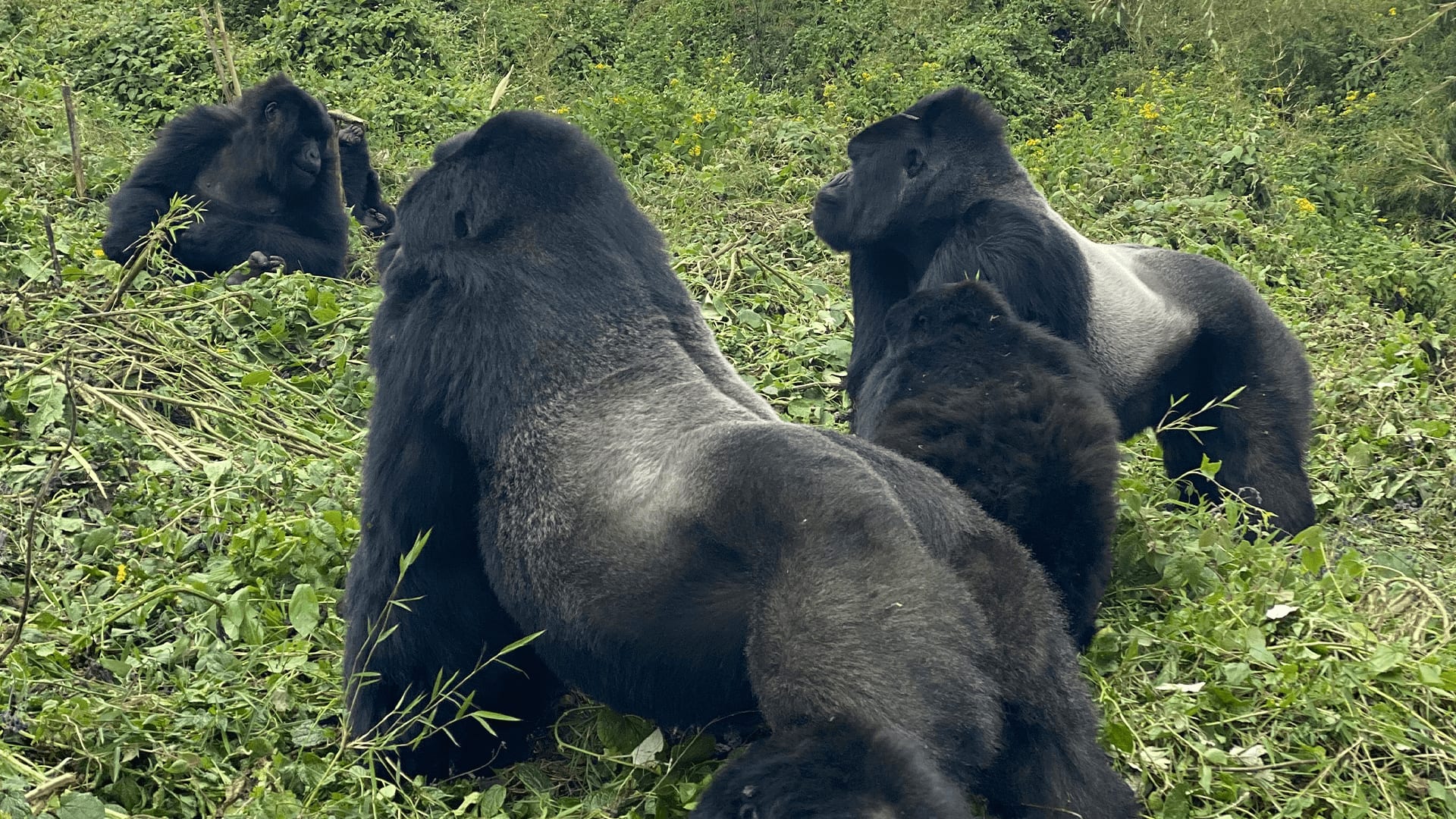
Uganda safaris aren’t one-size-fits-all. Your experience depends entirely on what you choose—and good operators make dozens of choices available. Whether you want guided gorilla treks in Bwindi, boat cruises on the Nile, or photography-focused wildlife drives, the service type shapes everything from your daily schedule to your final memories.
Plan Your Uganda Safari with Local Experts
 WhatsApp Us
Core Safari Service Types
Guided safaris with specialized activities form the foundation of most Uganda trips. Operators can structure your experience around specific interests:
Use this table to quickly compare core safari service types and who they best suit:
| Service Type | Ideal For | Typical Experience |
| Guided Game Drives | Wildlife enthusiasts | Classic big game viewing |
| Walking Safaris | Active travelers | Close-up nature insight |
| Gorilla Trekking | Adventure seekers | Hiking, primate tracking |
| Boat Cruises | Birdwatchers, families | River wildlife viewing |
- Guided game drives: Vehicle-based wildlife viewing with expert trackers in Queen Elizabeth and Murchison Falls
- Walking safaris: On-foot exploration in select areas, offering closer encounters and naturalist education
- Gorilla and chimpanzee trekking: Guided hiking to habituated groups in Bwindi and Kibale forests
- Boat cruises: Nile River trips, crater lake explorations, and waterside wildlife observation
- Photography safaris: Extended dawn-to-dusk drives prioritizing light and animal behavior for serious photographers
- Night game-viewing: Specialized evening drives to spot nocturnal species rarely seen during day hours
Customization Options That Matter
Once you choose service types, operators tailor the trip to your needs. This means selecting accommodation style, activity pace, group size, and duration. Budget matters—luxury lodges cost triple what mid-range camps charge—but so does your physical ability, travel timeline, and specific wildlife interests.
For example, your gorilla trek could be in Ruhija sector (easier terrain) versus Rushaga (steeper), depending on fitness level. Your lodge could be near the park gate or nestled in remote wilderness. Your driving schedule could pack five wildlife drives daily or include cultural village visits and rest time.
Customization isn’t about luxury—it’s about creating an itinerary that actually matches how you travel, not how operators assume you travel.
Operators familiar with Uganda understand local variables: which sectors have better habituated gorilla groups this season, whether roads are passable after rain, which guides speak your language, and which lodges accommodate dietary restrictions. This regional expertise transforms generic itineraries into experiences tailored to reality.
When choosing an operator, ask how they customize trips. Do they ask detailed questions about your fitness, interests, and travel pace? Do they offer multiple accommodation options? Can they adjust activity types based on wildlife sightings?
Pro tip: Tell your operator your “must-see” priority (gorillas, Big Five, photography, birdwatching) early—they’ll design the itinerary around guaranteeing that experience rather than trying to cram everything in.
Managing Permits, Transport, and Accommodation
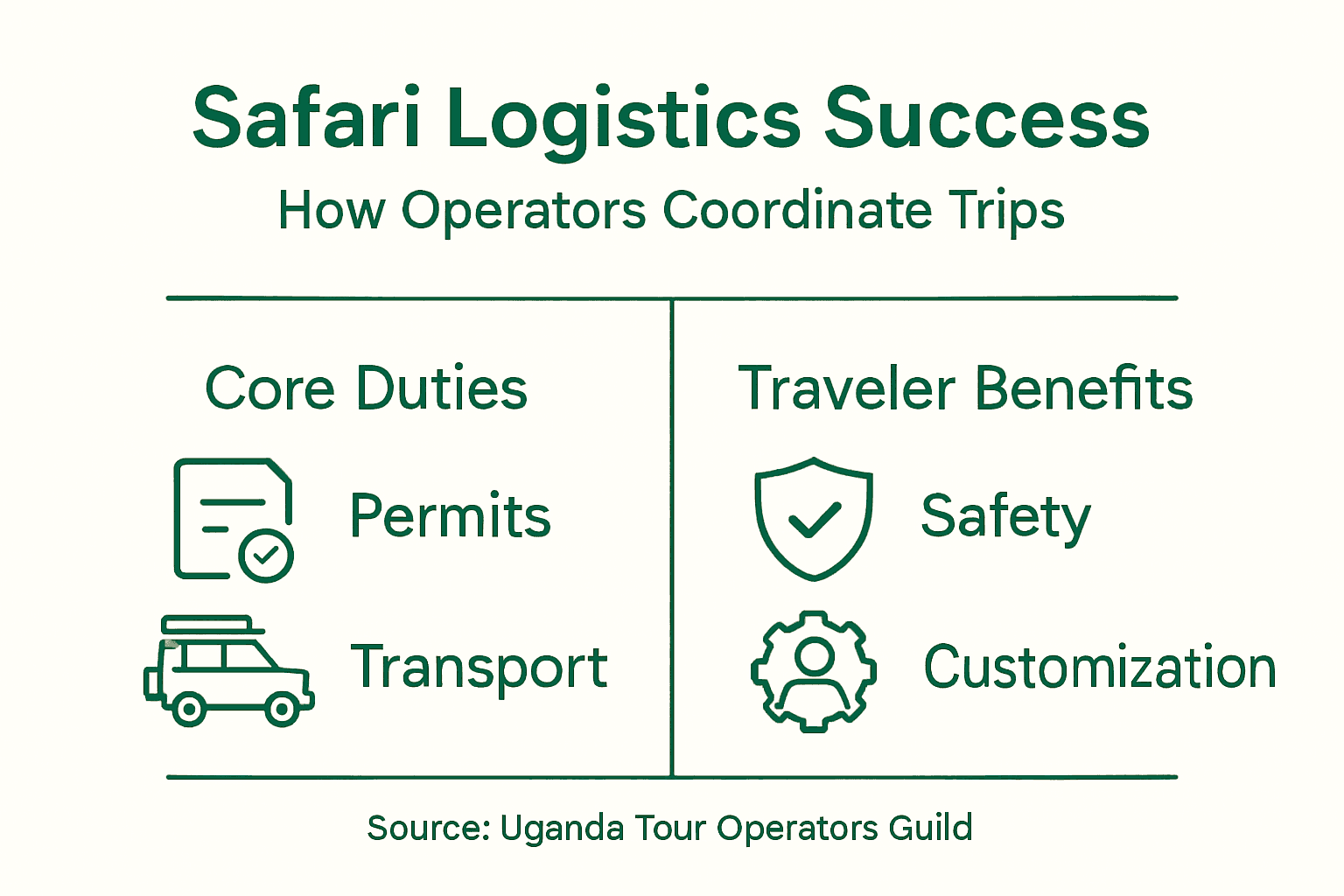
Three logistical pillars determine whether your safari runs smoothly or falls apart: permits, transport, and accommodation. Safari operators juggle all three simultaneously across multiple locations, timelines, and regulatory requirements. Get one wrong, and your entire trip derails.
Permit Management
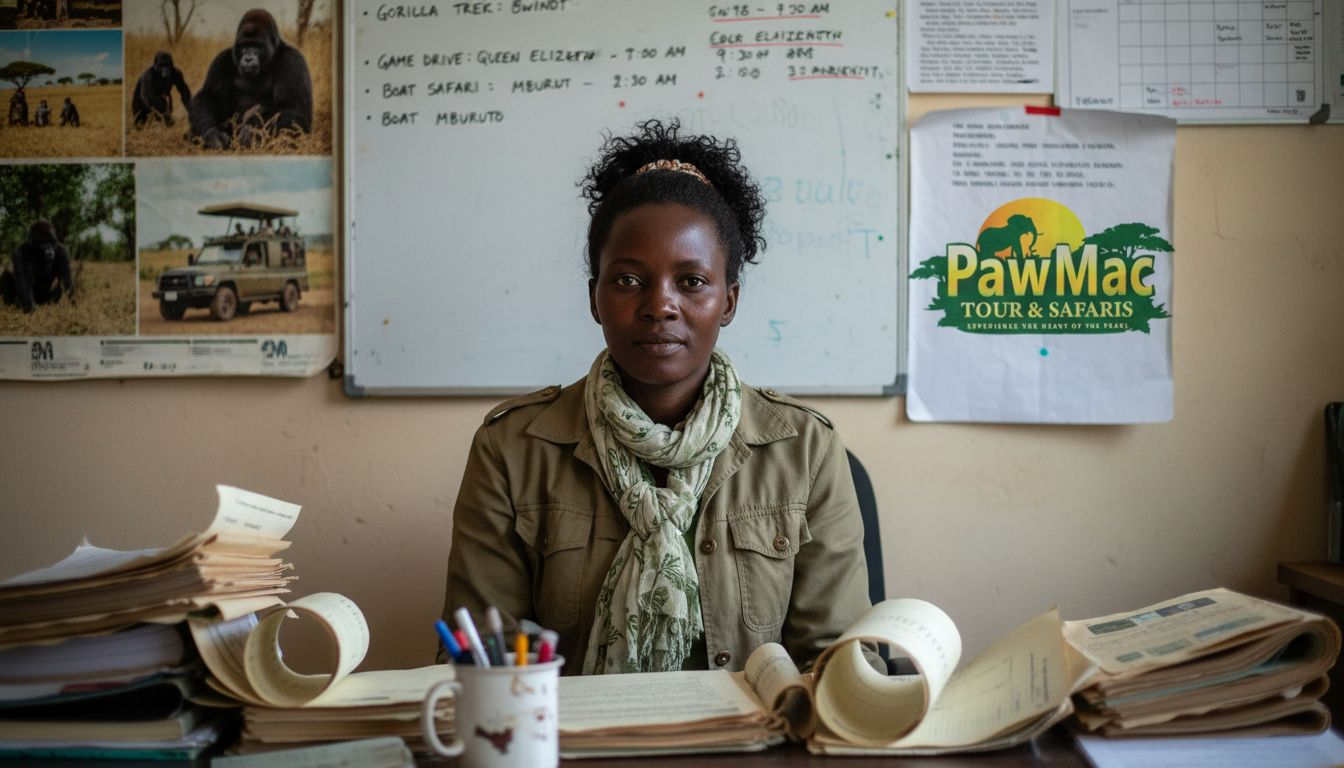
Permits are non-negotiable. Uganda’s protected areas require legal entry authorization, and the most critical is the gorilla permit ($800 through Uganda Wildlife Authority). Operators handle the paperwork, payment processing, and confirmation coordination with park management.
Beyond gorilla permits, operators secure:
- Park entry permits for Queen Elizabeth, Kibale, and Murchison Falls
- Vehicle movement permits between parks
- Photography permits if you’re shooting commercially
- Special activity clearances for night drives or walking safaris
Operators manage permit coordination across local authorities to ensure compliance with protected area regulations. Without proper permits, you cannot legally trek to gorillas.
Transport Coordination
Getting you between Entebbe, Bwindi, Kibale, and Murchison requires orchestrating multiple transport modes. Operators arrange:
- Domestic air transfers: Flights from Entebbe to airstrips near Bwindi or Murchison (essential for time efficiency)
- Ground transfers: Vehicle pickups at airports, transfers between parks, and daily safari vehicle assignments
- Vehicle logistics: Ensuring properly maintained 4×4 vehicles with experienced drivers are available for your exact travel dates
Transport timing is critical. Your Entebbe arrival must align with domestic flight departures; your lodge arrival must coordinate with permit timing and gorilla trek scheduling. A single delay cascades through the entire itinerary.
Accommodation Arrangements
Uganda offers accommodation across all price points: budget campsites, comfortable mid-range lodges, and luxury bush camps with private pools. Operators reserve beds across multiple lodges and camps to match your budget and location needs.
Accommodation selection affects daily experience. A lodge 2 kilometers from Queen Elizabeth’s launch site means easy river cruises; one 45 minutes away requires early starts. Operators know which lodges offer best value, which have reliable electricity in remote areas, and which serve quality meals for dietary restrictions.
Operators managing permits, transport, and accommodation aren’t just booking services—they’re solving a three-dimensional puzzle where every piece depends on the others.
When these three elements misalign, travelers face missed permits, delayed flights, or arrivals to lodges without confirmed reservations. Local operators build relationships with park officials, transport companies, and lodge managers, enabling faster problem-solving when issues arise.
Pro tip: Request a detailed itinerary timeline from your operator showing permit dates, and lodge check-in windows—this reveals whether they’ve actually coordinated these three elements or just booked them separately.
Ensuring Safety, Compliance, and Conservation
Safety isn’t an afterthought in safari operations—it’s foundational. Good operators balance visitor safety with environmental responsibility and legal compliance. This means adhering to park regulations, protecting wildlife, and supporting communities that live alongside protected areas.
Your safety depends on operators following established protocols. During gorilla treks, guides maintain distance regulations to protect both you and the animals. Vehicle operators respect speed limits on park roads. Camp staff follow sanitation standards. These aren’t suggestions—they’re legal requirements that operators enforce daily.
Safety and Compliance Standards
Operators must adhere to multiple safety frameworks:
- Wildlife protection laws: Enforcing distance minimums, photography restrictions, and ethical viewing practices
- Vehicle safety: Regular maintenance checks, experienced drivers, and speed compliance on park roads
- Health protocols: Emergency medical supplies, communication systems, and evacuation procedures
- Accommodation standards: Fire safety, water quality, and sanitation in lodges and camps
- Guide certifications: Verification that trackers and naturalists hold proper licenses and training
Operators play a vital role in adhering to environmental laws while balancing safety protocols within protected areas. This dual responsibility ensures you’re protected while ecosystems remain intact.
Cost Transparency and Avoiding Common Pitfalls
Safari costs can spiral quickly if you don’t understand what’s included and what isn’t. The gorilla permit is $800, but that’s just one line item. Operators who hide costs create frustrated travelers; transparent ones build trust and repeat bookings. Knowing what to expect prevents budget shock when you receive your final invoice.
Many travelers book based on a quoted price, then encounter unexpected charges mid-trip. This happens because operators fail to itemize costs clearly upfront. Uganda safari budgeting requires understanding fixed costs, variable costs, and what’s genuinely included in your package.
Understanding Cost Breakdown
Hidden costs often include vehicle entry permits, conservation zone fees, and meals excluded from packages. Here’s what typically costs extra in Uganda operations:
- Gorilla permit: $800 per person (mandatory, non-refundable)
- Park entry fees: Queen Elizabeth, Kibale, Murchison Falls (varies by destination)
- Vehicle permits: Moving between parks incurs movement fees
- Meals not included: Breakfast and dinner covered, but lunch often extra
- Activity surcharges: Night drives, walking safaris, or boat cruises beyond standard package
- Accommodation upgrades: Selecting premium lodges over mid-range options
- Tips and gratuities: Not included but expected for guides and staff
- Travel insurance: Optional but strongly recommended
A good operator provides itemized quotes showing each cost category. You see the gorilla permit, park fees, accommodation, meals, activities, and transportation separately.
Red Flags in Pricing
When operators quote vague packages like “all-inclusive safari for $3,500,” ask detailed questions. Vague pricing hides problems.
Red flags include:
- Refusing to itemize costs
- Quoting prices “without permits” then adding them later
- Unclear what meals are included
- No written confirmation of accommodation quality or location
- Hidden activity fees
- Vague “miscellaneous” charges
Transparent pricing means you know exactly what you’re paying for—and what surprises might still arrive.
Good operators clarify whether quotes are per person or total, which currency applies, and payment terms. They explain why costs vary by season and accommodation choice. They answer cost questions without defensiveness.
Uganda’s gorilla permit price is fixed at $800, but everything else fluctuates. Park fees increase seasonally. Flight prices vary by booking timing. Lodge rates shift based on demand. A transparent operator explains these variables and shows how they affect your total cost.
Pro tip: Request a detailed quote in writing listing every cost category, then ask “Is there anything else I’ll pay during the trip?”—their answer reveals whether they’ve actually thought through the full itinerary.
Experience Seamless Safari Logistics With PawMac Safaris
Managing complex travel logistics is the heart of a successful Uganda safari. From securing your vital gorilla permits to coordinating accommodations, and expert guides, every detail matters. The challenge is ensuring every element aligns perfectly so you focus on unforgettable wildlife moments instead of stressful arrangements. PawMac Safaris understands these unique demands and navigates Uganda’s travel intricacies with precision and local expertise.
Choose a safari operator who solves this logistical puzzle for you. We offer personalized safari packages designed around your interests and fitness level, carefully synchronizing permits, transportation, and accommodations to guarantee a smooth experience. Explore our range of options including gorilla trekking, Big Five safaris, and river cruises crafted to match your pace and preferences.

Ready to leave travel stresses behind and fully immerse yourself in Uganda’s wild wonders? Visit Our Safaris to discover how PawMac Safaris brings expert planning, and authentic wildlife encounters together in one seamless package. Don’t wait to secure your spot. Plan your perfect Uganda safari today and experience the difference true logistical mastery makes.
Frequently Asked Questions
What are the main responsibilities of safari operators in trip logistics?
Safari operators manage all aspects of your safari, including transportation coordination, accommodation bookings, permit procurement, guide assignment, activity scheduling, and guest services management to ensure a seamless adventure.
How do safari operators ensure the synchronization of permits and transport?
Operators anticipate potential logistical issues by coordinating timelines for permit procurement, flight arrivals, and transportation schedules, ensuring that everything aligns to prevent delays or missed opportunities.
What customization options do safari operators offer for safari trips?
Operators allow travelers to customize their safari experiences based on service types, accommodation preferences, activity pace, group size, and personal interests, ensuring the itinerary matches individual travel styles.
How do safari operators contribute to safety and conservation during trips?
Good operators follow strict safety protocols to protect both travelers and wildlife, comply with environmental laws, and engage in conservation efforts that support local communities and sustainable tourism practices.
Recommended
- Safari Travel Insurance: What You Must Know | PawMac Safaris
- Book Your Uganda Safari | PawMac Safaris
- Top 7 Reasons to Choose a Local Uganda Safari Tour Operator
- African Safari Destinations | PawMac Safaris


