


- 102 Views
- 10 Min Read
- (0) Comment
TL;DR:
- Uganda’s seasons influence trail conditions, permit availability, and wildlife viewing experiences.
- Peak dry seasons offer firm trails and predictable game, while wet seasons provide lush scenery and fewer crowds.
- Booking permits and accommodations early during peak times ensures better availability and savings.
Most travelers assume that because Uganda sits on the equator, every month delivers the same safari. Temperatures are stable year-round at 20 to 30°C due to Uganda’s equatorial location and altitude, so the logic seems reasonable. But that stability is where the similarity ends. Seasons here shape everything from trail conditions and gorilla permit availability to lodge rates and crowd levels. Whether you’re tracking mountain gorillas through Bwindi Impenetrable Forest or scanning the savanna in Queen Elizabeth National Park, timing your visit with purpose can transform a good safari into an unforgettable one. This guide breaks down exactly what changes across Uganda’s seasons and how to use that knowledge to your advantage.
Table of Contents
- Understanding Uganda’s travel seasons
- How seasons affect wildlife viewing opportunities
- Seasonal considerations for booking permits and accommodations
- Maximizing your safari: Choosing the best season for your priorities
- Our take: Challenging the ‘only go in dry season’ myth
- Start planning your Uganda safari with expert guidance
- Frequently asked questions
Key Takeaways
| Point | Details |
|---|---|
| Dry vs. wet season impact | Your wildlife sightings, permit prices, and crowds all change depending on when you go. |
| Booking timelines vary | Peak season requires booking gorilla permits months ahead, while off-peak allows more flexibility. |
| Personal goals matter | The best time for your Uganda safari depends on whether you prioritize wildlife, weather, or savings. |
| Expert advice pays off | Travel experts can help you navigate seasons for the richest safari experience. |
Understanding Uganda’s travel seasons
Uganda operates on two primary dry seasons and two rainy seasons each year, unlike destinations with a single, predictable wet or dry period. The main dry season runs from June through August, and a shorter dry spell covers December through February. The main wet season spans March through May, with a shorter rainy period from September through November. These aren’t dramatic monsoon shifts, but they matter significantly for safari logistics.
Here’s a quick comparison of what each season looks like on the ground:
| Season | Months | Conditions | Permit lead time |
|---|---|---|---|
| Peak dry | June to August | Clear trails, high demand | 4 to 6 months ahead |
| Short dry | December to February | Good visibility, moderate crowds | 2 to 4 months ahead |
| Long wet | March to May | Lush vegetation, muddy trails | 1 to 3 months ahead |
| Short wet | September to November | Occasional rain, quieter parks | 1 to 2 months ahead |
The best time to visit Uganda depends heavily on your priorities. During peak season, Uganda’s national parks fill quickly, gorilla permits sell out months in advance, and lodge rates climb. Wet season brings the opposite: more availability, quieter trails, and noticeably lower prices.
Key differences between Uganda’s travel seasons:
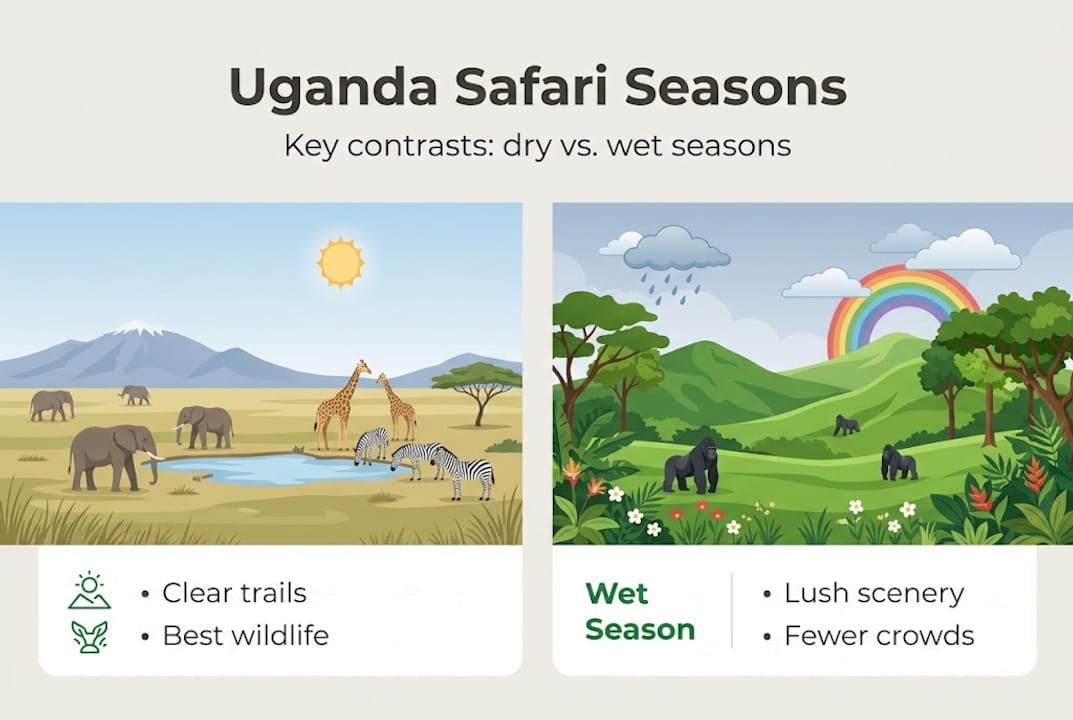
- Dry season: Firmer trails, easier game viewing, higher demand
- Wet season: Lush scenery, fewer visitors, better deals on permits and lodges
- Shoulder months: A blend of both, offering good conditions without peak crowds
- Permits: Peak season requires booking 4 to 6 months in advance; shoulder and low season only 1 to 3 months
Quick stat: Gorilla permits in Uganda cost $800 per person year-round, but the ability to secure one changes dramatically based on when you plan to go.
Understanding this framework is step one. The next layer is seeing how these conditions actually affect your wildlife encounters.
How seasons affect wildlife viewing opportunities
With the season patterns clear, how do they actually impact your wildlife encounters? The answer varies by the type of wildlife you’re hoping to see.
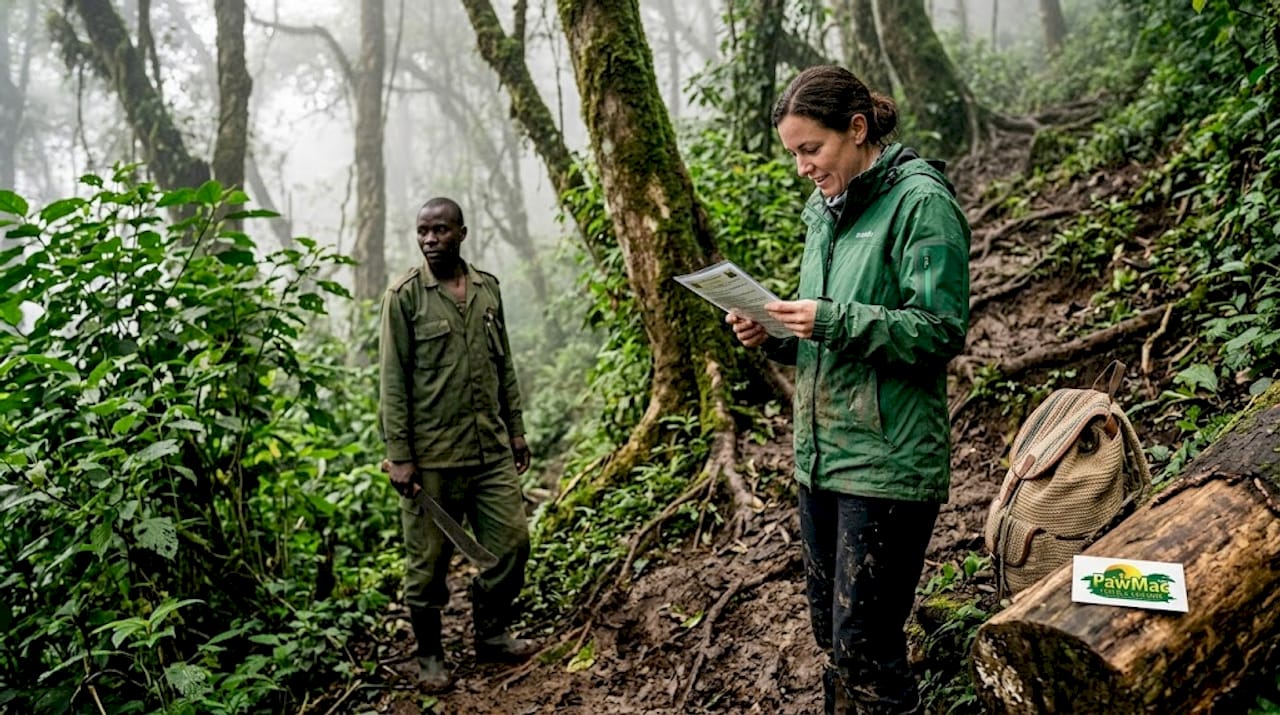
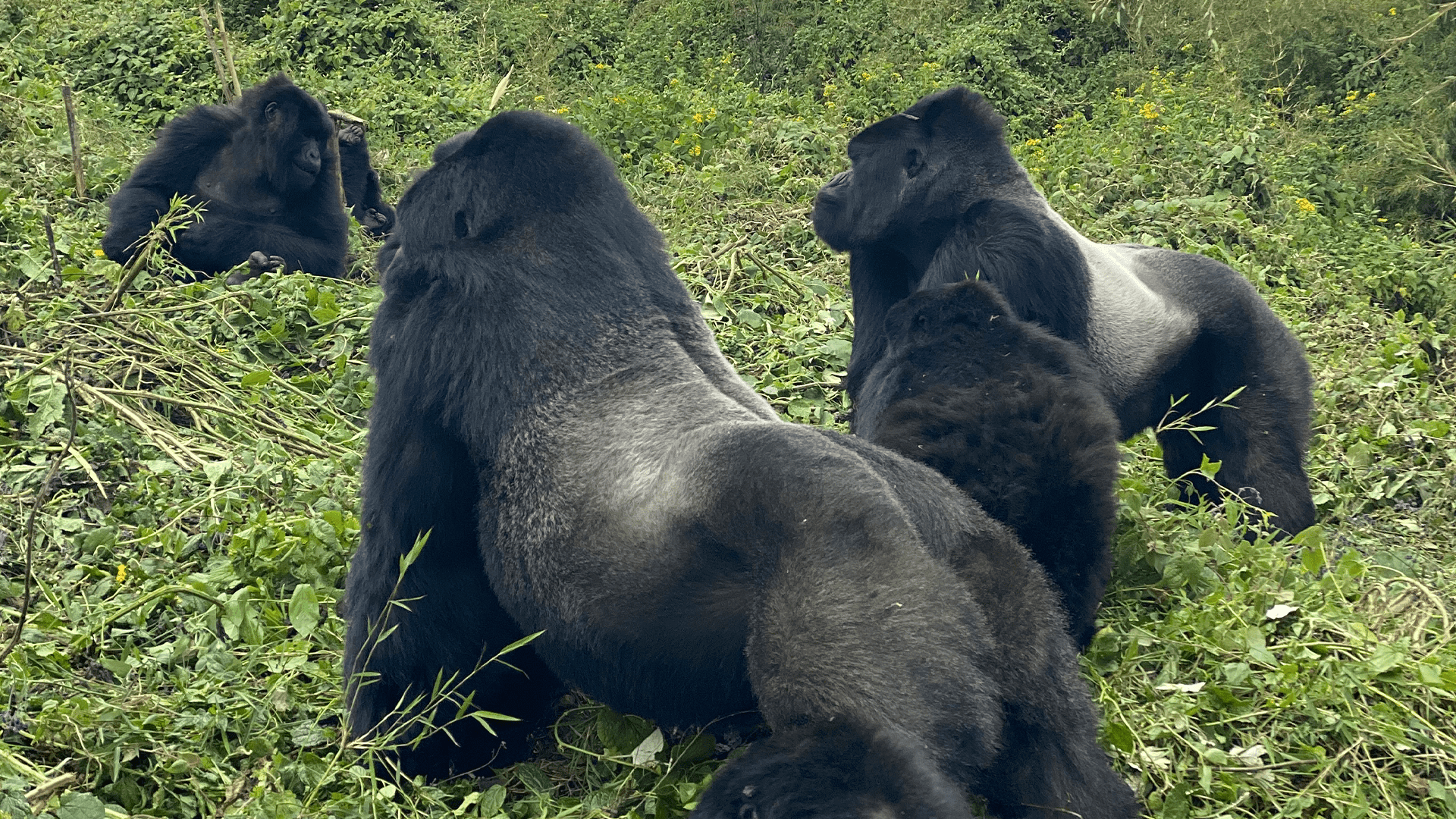
For gorilla trekking in Bwindi or Mgahinga, the experience is possible year-round. Mountain gorillas don’t migrate, so a habituated gorilla family will be somewhere in the forest no matter when you visit. But the quality of the trek changes. During dry months, forest floors are firmer, slopes are less slippery, and guides can move through dense vegetation more efficiently. In wet months, trails become muddy and steep ascents require more physical effort.
| Viewing factor | Dry season | Wet season |
|---|---|---|
| Trail conditions | Firm and accessible | Muddy, more challenging |
| Vegetation density | Thinner, better visibility | Lush, denser cover |
| Wildlife concentration | High near water sources | More dispersed |
| Crowd levels | Higher | Lower |
| Bird diversity | Good | Excellent for migratory species |
For savanna wildlife in Queen Elizabeth and Murchison Falls National Parks, wet seasons make permits easier to secure and there’s better value overall, but animals spread out more across the landscape when water is plentiful everywhere. During dry months, wildlife concentrates near rivers and waterholes, making game drives more productive. Elephant herds, lions, and buffalo are easier to locate when their movement patterns become more predictable.
Plan Your Uganda Safari with Local Experts
 WhatsApp Us
Bird life tells a different story. Uganda hosts over 1,000 bird species, and the wet season draws migratory birds from Europe and Central Africa, making it a dream for serious birders.
Pro Tip: If you’re combining gorilla trekking with savanna game drives in a single trip, the short dry season from December through February offers strong conditions for both activities without the intense competition of peak June to August.
Here’s what changes by season for wildlife spotting:
- Dry season: Best for predictable game drive sightings and easier gorilla treks
- Wet season: Best for birdwatching, photography of lush landscapes, and quieter experiences
- Year-round: Gorilla trekking in Uganda is available throughout, though trail difficulty varies
- Shoulder months: Often underrated, with decent conditions and lighter crowds
For travelers wanting to plan their gorilla permits logistics carefully, season is perhaps the most critical variable to understand before any other detail.
Seasonal considerations for booking permits and accommodations
Wildlife isn’t the only aspect affected. Seasons also shape how you plan and book your trip, often more dramatically than people expect.
Gorilla permits are issued by the Uganda Wildlife Authority and are strictly limited to eight visitors per habituated gorilla family per day. Supply is fixed, but demand surges in June, July, and August. During those peak months, book gorilla permits 4 to 6 months ahead to guarantee availability. For the shoulder or low season, one to three months out is usually sufficient, though earlier is always safer.
Top lodges near Bwindi, such as those in Buhoma or Nkuringo, follow similar booking patterns. Premium properties fill their peak-season dates quickly, and last-minute arrivals often find limited options or inflated rates through third-party resellers. Planning early protects your preferred experience.
Here’s a practical booking strategy by season:
- Identify your travel window first. Decide your dates before anything else, as this anchors every other booking decision.
- Secure your gorilla permit immediately. Once dates are set, apply for permits through the Uganda Wildlife Authority or a licensed operator. This step cannot wait.
- Book your lodges next. Use your permit date to choose nearby accommodation and lock in rates before they rise.
- Arrange transportation. Road conditions vary by season, so plan your transfers accordingly. Wet season may require 4×4 vehicles on certain routes.
- Build in flexibility. Add buffer days, especially in wet season when road delays can affect connections.
Pro Tip: Check our discounted gorilla safari tips for ways to reduce overall trip costs without sacrificing the quality of your experience.
“The ideal safari balances permit security with value. Booking at the right time for your season can save hundreds of dollars without compromising wildlife access.”
For those exploring traveling on a budget, Uganda’s low and shoulder seasons provide a genuine window to experience world-class wildlife at a fraction of peak costs. Our full gorilla permit guide covers the exact steps for securing your permit whether you’re traveling peak or off-peak.
Maximizing your safari: Choosing the best season for your priorities
So, which season fits your travel goals best? The answer depends on what matters most to you, and there’s no universally correct choice.
Dry season (June to August, December to February) is ideal for:
- First-time safari travelers who want predictable, comfortable conditions
- Families with children who benefit from dry trails and reliable game drives
- Travelers combining gorilla trekking with savanna wildlife in a single itinerary
- Anyone who values certainty and is willing to pay and plan ahead
Wet season (March to May, September to November) is ideal for:
- Serious photographers who want dramatic skies, vivid greenery, and dramatic lighting
- Birding enthusiasts targeting migratory species that only appear during rainy months
- Budget-conscious travelers who want more for their money without sacrificing core experiences
- Solo travelers or couples seeking quiet, intimate encounters with wildlife and fewer tour groups on the same trail
Dry season brings higher costs but optimal wildlife visibility; wet season offers quieter parks and more value. Both statements are true, and the best choice is the one that aligns with your specific travel goals.
Pro Tip: Shoulder months, specifically late November and late May, often hit a sweet spot where conditions are improving, crowds have thinned, and prices haven’t fully shifted yet. These narrow windows are worth watching closely when planning.
For a full breakdown of timing strategies by park and activity, our Uganda safari planning resource covers the details specific to Bwindi, Queen Elizabeth, Murchison Falls, and Mgahinga in one place.
Our take: Challenging the ‘only go in dry season’ myth
Here’s a perspective most travel guides won’t tell you plainly: the obsession with dry season is partly a marketing habit, not always a reflection of what makes a safari meaningful.
The travelers who visit Bwindi in April, when morning mist rolls through the valley and the forest glows intensely green, often describe those moments as more emotionally powerful than any clear-sky trek in July. Yes, the trail is muddier. Yes, the permit was easier to get. And yes, the lodge rate was lower. But the gorilla family was just as present, just as awe-inspiring, and the forest felt entirely theirs.
At PawMac Safaris, we’ve seen too many travelers delay their dream trip because they missed peak season and assumed the rest of the year wasn’t worth it. That assumption costs people real experiences. Uganda’s off-peak months are not a consolation prize. They’re a different kind of reward.
If you’re open to rethinking your timing, explore Uganda’s gorilla trekking advantages across all seasons before locking in your dates.
Start planning your Uganda safari with expert guidance
Ready to make the most of Uganda’s safari seasons? At PawMac Safaris, we specialize in building itineraries that work with each season’s strengths, not against them. Whether you’re targeting the golden light of dry-season game drives or the lush intimacy of a wet-season gorilla trek, our team knows exactly how to time your experience for maximum impact.

Explore our full range of Uganda safari tour options and find a package matched to your goals. From permit booking to lodge selection, we handle the logistics so you can focus on the experience. Browse our gorilla trekking experiences or view the complete collection of Uganda wildlife tours to start planning today.
Frequently asked questions
Is it better to book a Uganda safari in the dry season?
The dry season offers the best wildlife viewing conditions and firmer trekking trails, but peak season means higher prices and gorilla permits that require booking months in advance. Off-peak seasons offer genuine value without sacrificing the core experience.
How far in advance should I buy gorilla permits for peak season?
For the June to August peak period, book permits 4 to 6 months in advance to secure your spot. Demand is high, and limited permits per family group means availability disappears fast.
Are wildlife sightings guaranteed regardless of season in Uganda?
No wildlife sighting is ever guaranteed, but dry season improves spotting chances significantly as sparser vegetation and water scarcity concentrate animals in predictable locations. Gorillas, however, can be tracked successfully in any season.
Do prices for safaris and lodges in Uganda drop outside peak season?
Yes. Shoulder and low season bring better value across permits, lodge rates, and overall packages, making off-peak travel an excellent strategy for budget-aware travelers who still want a premium experience.
Recommended
- Uganda Safari Tours – Gorilla Trekking & Wildlife Safaris
- Top advantages of guided safaris in Uganda for 2026
- Best Uganda safari lodges 2026: wildlife adventures guide
- Uganda safari extensions into Tanzania: maximize adventure


