


- 45 Views
- 11 Min Read
- (0) Comment
TL;DR:
- Uganda offers a unique safari experience with mountain gorillas, diverse ecosystems, and abundant birdlife. Planning ahead for permits, timing, and terrain is essential to maximize wildlife encounters and support conservation efforts. Local-guided, purpose-built safaris provide an immersive, responsible journey through Uganda’s rich natural heritage.
Uganda does not get the attention it deserves. Most travelers think of East Africa and picture the Serengeti. But a wildlife Uganda safari delivers something fundamentally different: mountain gorillas in mist-shrouded rainforests, the Nile thundering through a narrow gorge, and over 1,080 bird species sharing space with chimpanzees, elephants, and lions. Uganda hosts more than half the world’s endangered mountain gorillas. No other country on the continent offers this particular combination of primate encounters and classic savannah wildlife in one journey. This guide covers every major park, the real costs for 2026, and everything you need to plan a safari that goes well beyond the ordinary.
Table of Contents
- Key Takeaways
- Wildlife Uganda Safari: Top Destinations
- Gorilla trekking permits, rules, and 2026 costs
- Planning your Uganda safari experience in 2026
- Beyond gorillas: boat safaris, chimps, and rare birds
- My honest take on Uganda as a wildlife destination
- Plan your Uganda safari with PawMac Safaris
- FAQ
Key Takeaways
| Point | Details |
|---|---|
| Gorilla permits cost $800 in 2026 | Foreign non-residents pay $800 per person; book early as permits sell out months ahead. |
| Uganda has unmatched biodiversity | Over 1,080 bird species and multiple primate species make Uganda exceptional for wildlife viewing. |
| Multiple parks maximize your experience | Combining Murchison Falls, Queen Elizabeth, and Bwindi gives you savannah, river, and forest ecosystems. |
| Dry seasons are the best time to visit | June through September and December through February offer optimal wildlife viewing conditions. |
| 4×4 Safari Vans are the right transport | Uganda’s park terrain requires purpose-built 4×4 Safari Vans for safe, comfortable game drives. |
Wildlife Uganda Safari: Top Destinations
Uganda’s national parks are not interchangeable. Each one offers a distinct ecosystem and a different set of wildlife encounters. Understanding what each park does best helps you build an itinerary that covers real ground.
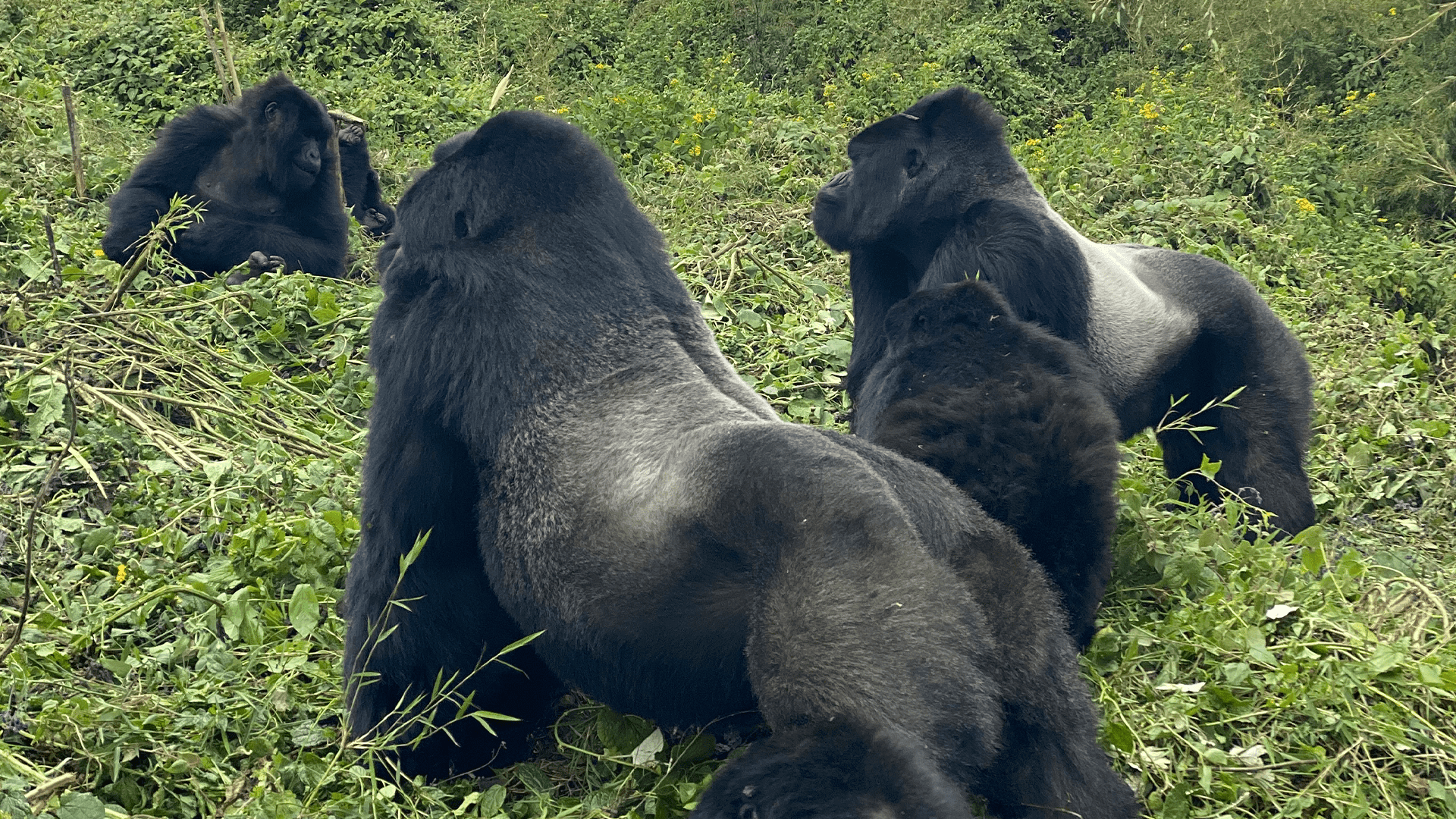
Bwindi Impenetrable National Park and Mgahinga Gorilla National Park are the crown jewels of any Uganda safari experience. Bwindi alone protects around 400 mountain gorillas across its four sectors: Buhoma, Ruhija, Rushaga, and Nkuringo. The forest is genuinely impenetrable in places, with steep ridges and dense undergrowth that make every trek feel earned. Mgahinga, smaller and often quieter, sits on the slopes of the Virunga volcanoes and also offers golden monkey tracking as an alternative primate encounter.
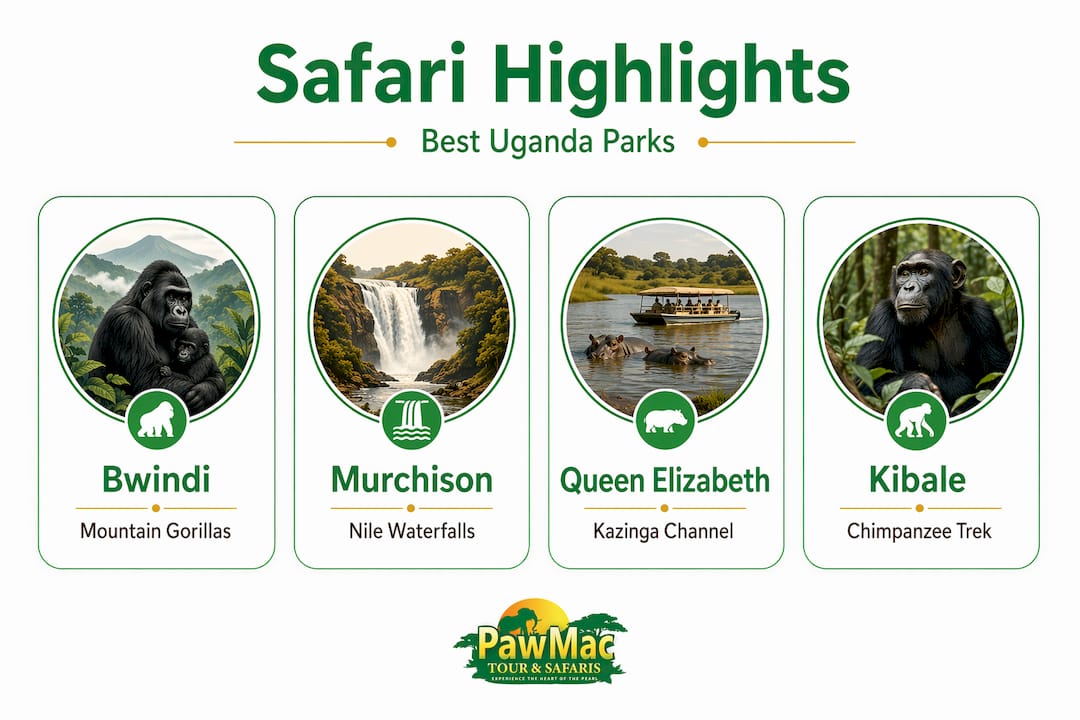
Murchison Falls National Park is Uganda’s largest park, and it earns that title. The Nile plunges 140 feet through a narrow gorge in one of the most dramatic natural spectacles on the continent. The park supports elephants, lions, giraffes, hippos, crocodiles, and the rare shoebill stork. A standard day here combines a morning game drive north of the Nile with an afternoon boat safari to the base of the falls, where wildlife congregates along the riverbanks in remarkable numbers.
Queen Elizabeth National Park delivers variety in a compact area. The famous Kazinga Channel boat safari runs between Lakes George and Edward and is consistently one of the best Uganda animal viewing experiences anywhere on the continent. Hippos, elephants, and African buffalo wade and graze along the shoreline while hundreds of bird species fill the air above them.
Here is a quick reference for Uganda’s major safari parks:
| Park | Signature Wildlife | Best Activity |
|---|---|---|
| Bwindi Impenetrable NP | Mountain gorillas | Gorilla trekking |
| Murchison Falls NP | Elephants, lions, shoebill stork | Game drive + boat safari |
| Queen Elizabeth NP | Hippos, crocodiles, tree-climbing lions | Kazinga Channel boat trip |
| Kibale Forest NP | Chimpanzees, red colobus | Chimp trekking |
| Mgahinga Gorilla NP | Mountain gorillas, golden monkeys | Golden monkey tracking |
Beyond the big parks, Kibale Forest National Park and the Kyambura Gorge within Queen Elizabeth offer chimpanzee tracking experiences that rival gorilla trekking in their intensity. Kibale holds the highest density of primates in East Africa, with 13 species recorded within a single forest.
Pro Tip: If your schedule allows only one add-on to gorilla trekking, choose the Kazinga Channel boat safari at Queen Elizabeth. The density of animals along that shoreline on a quiet morning is extraordinary, and you’ll photograph hippos at eye level from just a few meters away.
Gorilla trekking permits, rules, and 2026 costs
Gorilla trekking is the defining experience of a best wildlife safari Uganda itinerary, and it requires careful planning to get right. Permits are the first thing to understand.
Plan Your Uganda Safari with Local Experts
 WhatsApp Us
The Uganda Wildlife Authority uses a tiered pricing structure for 2026:
- Foreign non-residents (FNR): $800 per person per trek, which includes park entrance fees for the day.
- East African foreign residents: $700 per person.
- East African Community citizens: Approximately UGX 300,000 per person.
The trekking itself operates under strict rules designed to protect the gorillas. Groups are capped at 8 visitors per habituated gorilla family per day, and each visit is limited to one hour once contact is made. That hour, surrounded by a habituated family going about their morning in dense forest, is unlike anything else in wildlife tourism.
Health compliance is non-negotiable. Trekkers showing symptoms of illness, including colds, coughs, or any contagious condition, are denied access on the day of their trek. This is not bureaucratic inconvenience. Mountain gorillas share 98% of human DNA and are highly susceptible to human respiratory diseases. The biosecurity rules exist to keep these animals alive.
Practical preparation for the trek matters more than most guides acknowledge:
- Wear long sleeves and long pants regardless of temperature. Stinging nettles and insects are relentless.
- Carry gaiters or wear high-ankle boots. The terrain is steep and muddy in the wet season.
- Hire a porter at the trailhead. They carry your bag, stabilize you on difficult terrain, and the income supports local communities directly.
- Follow ranger instructions without delay. Avoiding loud noises and sudden movements significantly improves the quality of your encounter.
- Book your permit at least six months ahead for the June through September peak season.
Pro Tip: Request the Rushaga or Nkuringo sectors in Bwindi for a slightly less trafficked experience. Buhoma gets the most visitors due to its proximity to the main gate, but the gorilla encounters across all sectors are equally extraordinary.
For a full breakdown of 2026 permit costs and booking steps, the gorilla trekking permit guide from PawMac Safaris covers the complete process.
Planning your Uganda safari experience in 2026
Getting the timing, transport, and budget right makes the difference between a good trip and a great one.
Best times to visit
Uganda has two dry seasons that offer optimal wildlife viewing conditions:
- June to September: The primary dry season. Vegetation thins out, making animals easier to spot on game drives. Gorilla trails are more manageable without deep mud.
- December to February: A shorter dry window with excellent conditions, particularly in Queen Elizabeth and Murchison Falls.
The wet seasons (March to May and October to November) are not without appeal. The forests are lush, bird life is at its peak, and mid-range safari costs for three days in Queen Elizabeth National Park can drop noticeably. However, some trails become very challenging, and wildlife is more dispersed.
Transport and budget planning
All park terrain in Uganda requires purpose-built 4×4 Safari Vans. Standard vehicles cannot handle the laterite roads inside Murchison Falls or the steep tracks leading to Bwindi. Every PawMac Safaris itinerary uses 4×4 Safari Vans with pop-up roofs for unobstructed game viewing.
Here is a realistic budget comparison for different safari styles:
| Safari Style | Typical Daily Cost (per person) | Notes |
|---|---|---|
| Budget / Adventure | $150 to $250 | Basic lodges, shared 4×4 Safari Van |
| Mid-Range | $300 to $500 | Comfortable lodges, private guide |
| Luxury | $600 and above | Premium lodges, exclusive game drives |
Gorilla permits add $800 per person on top of any accommodation and transport costs. Booking as a group of 4 to 6 people significantly reduces the per-person cost of vehicle hire and guide fees.
A classic 10-day Uganda national parks safari combines three to four nights in Murchison Falls, three nights in Queen Elizabeth, and three nights in Bwindi. This itinerary covers savannah, wetland, river, and montane forest ecosystems in a single trip.
Pro Tip: Book your gorilla permit before you finalize any other part of the itinerary. Permits are the most constrained resource in Uganda safaris. Once you have your permit date confirmed, build the rest of the trip around it.
Beyond gorillas: boat safaris, chimps, and rare birds
A Uganda safari wildlife guide that focuses only on gorillas misses half the story. The wildlife adventures in Uganda extend across water, forest, and open savannah in ways that consistently surprise first-time visitors.
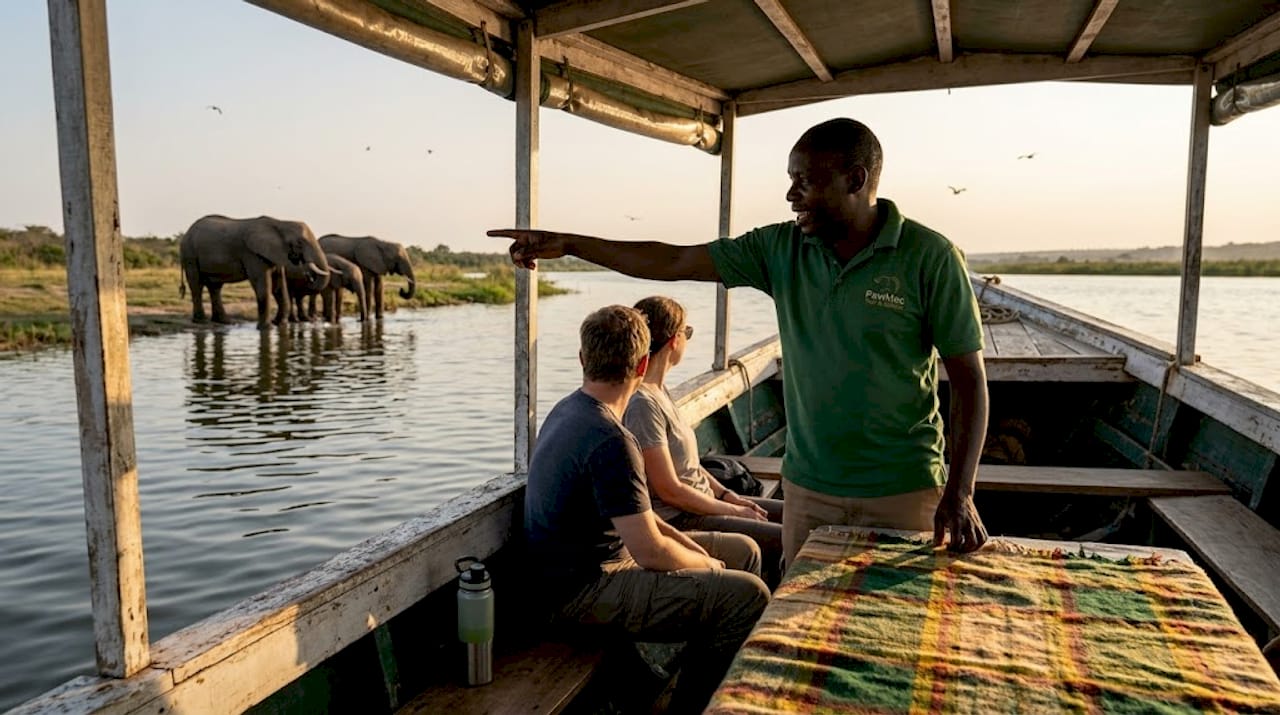
The Kazinga Channel boat safari is the best example. The channel connects two lakes inside Queen Elizabeth National Park, and the slow movement along the shoreline reveals animal behavior that game drives simply cannot capture. Hippos yawn and sparr in the shallows. Elephants wade chest-deep to cool off. African fish eagles call from fever trees overhead. The best boat safaris move deliberately, spending time at each concentration of animals rather than covering distance for its own sake.
Chimpanzee tracking in Kibale Forest and Kyambura Gorge deserves its own planning consideration:
- Kibale tracking departs at 8:00 AM and 2:00 PM, with morning sessions generally more productive.
- Kyambura Gorge offers a smaller chimp community inside a dramatic rift valley forest, combining geological scenery with primate viewing.
- Groups are limited in size, similar to gorilla trekking, and permits should be secured in advance.
- For a complete breakdown of Uganda’s primate tracking options, the primate tracking guide covers all species and locations.
Uganda’s birdwatching credentials deserve particular attention. With over 1,080 recorded species, the country holds more bird species than most of continental Europe. The shoebill stork, one of Africa’s most sought-after birds, is found in the wetlands around Murchison Falls and in the Mabamba Swamp near Kampala. Serious birders should add a half-day at Mabamba to any Kampala arrival or departure day.
The golden monkey trek at Mgahinga rounds out the primate experiences beautifully. These bright-faced, high-altitude primates move fast through bamboo forest and require patience to observe well. Early morning starts increase your chances of a long and rewarding encounter.
My honest take on Uganda as a wildlife destination
I’ve spent years guiding and planning safaris across Uganda, and I still find myself surprised by how consistently the country delivers. Not because every trek goes perfectly, but because the raw material here is extraordinary. When you sit ten meters from a silverback mountain gorilla in Bwindi, no amount of preparation fully captures what that moment feels like.
What I’ve learned is that the travelers who get the most out of a wildlife Uganda safari are the ones who resist the urge to rush. The instinct is to pack in as many parks as possible. But Queen Elizabeth’s Kazinga Channel rewards patience. Murchison Falls rewards combining the boat trip to the falls base with a full game drive, not treating them as checkboxes.
I also think the conservation dimension of this safari matters more than most travelers realize. The gorilla trekking rules are strict for a reason. These are critically endangered animals, and every rule that feels inconvenient is protecting something irreplaceable. When you hire a local porter, eat at a local guesthouse, or book through a Uganda-based operator, that money stays in the communities that live alongside these parks. That connection between tourism and conservation is what keeps gorilla habitats intact.
My advice: plan early, be honest about your fitness level for trekking, and give each park at least two full days. Uganda rewards those who show up slowly and stay present.
— Paweł
Plan your Uganda safari with PawMac Safaris
PawMac Safaris is Uganda-based, and that matters. Local expertise means knowing which Bwindi sector has the most active gorilla families this season, which lodge gives you the best Kazinga Channel access, and how to handle permit paperwork without delays. Every itinerary includes 4×4 Safari Vans with experienced local guides who know these parks intimately.

Whether you are looking for a focused gorilla trekking experience or a full multi-park wildlife safari in Uganda, PawMac Safaris builds itineraries around your dates, group size, and budget. Booking is straightforward: contact the team via WhatsApp with your dates, confirm gorilla permit availability, and pay the $800 FNR permit deposit to secure your slot with UWA. The balance is settled on arrival. Browse the full range of Uganda wildlife tours or reach out directly for a personalized 2026 quote tailored to your group.
FAQ
How much does a wildlife Uganda safari cost in 2026?
A mid-range Uganda safari costs roughly $300 to $500 per person per day, covering accommodation, guides, and transport. Gorilla trekking permits add $800 per foreign non-resident on the day of the trek.
What is the best time for a safari in Uganda?
The dry seasons from June to September and December to February offer the best wildlife viewing conditions, with easier trekking trails and better visibility on game drives.
How many people can trek with mountain gorillas at once?
Groups are strictly limited to 8 visitors per habituated gorilla family per day, with a maximum one-hour encounter once contact is made.
What wildlife can you see in Uganda beyond gorillas?
Uganda animal viewing includes chimpanzees, golden monkeys, elephants, lions, hippos, crocodiles, and over 1,080 bird species. The shoebill stork is one of the most sought-after sightings in the country.
Do gorilla trekking permits include park entrance fees?
Yes. The $800 permit fee for 2026 covers park entrance for the day of your trek, so no separate entrance fee is charged on trekking day.
Recommended
- Best Uganda safari lodges 2026: wildlife adventures guide
- PawMac Safaris Uganda: Your 2026 Wildlife Guide
- Must-See National Parks in Uganda for Wildlife 2026
- Wildlife photography tours Uganda 2026: permits & gear guide


