


- 63 Views
- 16 Min Read
- (0) Comment
A great Uganda safari can look effortless from the outside: your guide arrives on time, the gorillas are reached safely, the lodge knows your dietary needs, and your vehicle is positioned just as a lion steps into golden light. In reality, that smooth experience is the result of dozens of decisions made before and during the trip.
A tour guide safari expert does far more than drive you from one national park to another. In Uganda, the guide is your route strategist, wildlife interpreter, safety adviser, timekeeper, cultural bridge, and practical problem solver. The best guides understand how Bwindi’s gorilla sectors differ, why Kibale chimpanzee permits must align with transfer times, when Queen Elizabeth’s Ishasha sector is worth the detour, and how weather can change road conditions in a single afternoon.
For travelers investing in Uganda’s premium experiences, especially gorilla trekking, chimpanzee tracking, Big Five game drives, boat safaris, and cultural encounters, the guide’s expertise can determine whether the trip feels rushed and confusing or deeply rewarding.
Why Uganda Makes Safari Guiding Especially Important
Uganda is compact compared with many safari destinations, but it is not a simple point-to-point destination. A classic itinerary may begin in Entebbe, continue to Ziwa Rhino Sanctuary, move north to Murchison Falls, cross west toward Kibale Forest, descend to Queen Elizabeth National Park, and finish with gorilla trekking in Bwindi or Mgahinga. That route combines highways, rural roads, ferry crossings, forest tracks, park gates, timed permits, and long transfer days.
A guide who knows Uganda well does not simply follow a map. They understand the rhythm of the country. They know when to leave Entebbe to avoid Kampala traffic, which lodge location best suits a specific gorilla sector, how early to arrive for the Uganda Wildlife Authority briefing, and where animals often move when temperatures rise.
This matters because Uganda’s top experiences are highly regulated and time-sensitive. A gorilla permit is attached to a specific date and trekking area. Chimpanzee tracking in Kibale has scheduled briefing times. Boat safaris on the Nile or Kazinga Channel depart at set times. Park entry fees and activity permits need coordination. A delay in one place can affect the next two days if the itinerary is not built properly.
That is why guided safari planning in Uganda is less about convenience and more about precision.
What a Safari Guide Does Before You Arrive
The most valuable work often starts weeks or months before your plane lands at Entebbe International Airport. At this stage, a tour guide safari expert helps turn your wish list into a realistic, well-paced Uganda journey.
Clarifies Your Travel Goals
Not every traveler wants the same safari. Some want the highest chance of seeing mountain gorillas and chimpanzees. Others prioritize photography, luxury lodges, family comfort, birdwatching, or a balance of wildlife and cultural experiences. A good guide or safari planning team asks practical questions before recommending a route.
They will want to understand your fitness level, preferred accommodation style, travel month, budget range, dietary needs, medical considerations, photography goals, and tolerance for long road transfers. This is especially important for gorilla trekking in Bwindi, where hikes can range from relatively manageable to strenuous depending on gorilla location, trail conditions, and sector.
Builds the Route Around Real Travel Conditions
On paper, two parks may appear close. On the ground, road surfaces, weather, traffic, park gates, and terrain can change the timing significantly. A Uganda safari guide helps create a route that respects both your time and your energy.
Plan Your Uganda Safari with Local Experts
 WhatsApp Us
For example, travelers sometimes try to combine too many parks into a short trip. A guide may advise adding an extra night in Queen Elizabeth National Park instead of rushing to Bwindi after a morning boat cruise. Or they may recommend flying one sector of the journey if a luxury traveler wants to reduce time on the road and arrive fresher for gorilla trekking.
For first-time visitors, this guidance prevents a common mistake: booking an itinerary that looks impressive but feels exhausting.
Coordinates Gorilla and Chimpanzee Permits
Uganda’s primate experiences are among the strongest reasons travelers come to the country. They are also among the easiest to mismanage without local knowledge.
For 2026 planning, foreign non-resident gorilla trekking permits are commonly budgeted at USD 800 per person. The Gorilla Habituation Experience is higher, commonly budgeted at USD 1,500 per person, and availability is limited. Kibale chimpanzee tracking permits are commonly budgeted around USD 250 per foreign non-resident, depending on current authority rates and activity type.
A safari expert helps with three critical details:
- Matching your permit date to the correct park and sector
- Aligning your lodge location with the assigned trekking area
- Building enough travel time around the permit so you do not risk missing the briefing
This is especially important in Bwindi, where Buhoma, Ruhija, Rushaga, and Nkuringo are not interchangeable once you are on the ground. A lodge that looks close on a general map may be hours away from your assigned briefing point.
For deeper planning, PawMac Safaris also provides detailed Uganda-focused resources such as its guide to gorilla trekking in Uganda, which explains sectors, permits, timing, and preparation.
How a Guide Protects Your Budget
A Uganda safari is a meaningful investment. The role of the guide and safari planner is not only to create a beautiful itinerary, but also to help you understand where your money goes.
Many travelers focus on the headline price, yet the true cost of a safari is shaped by permits, park fees, fuel, vehicle type, accommodation level, guide services, meals, boat cruises, domestic flights, porter support, tips, and seasonal lodge rates. A guide with local knowledge helps you avoid paying for unnecessary backtracking or poorly placed lodges.
| Safari cost component | Typical 2026 planning consideration | Why expert guidance matters |
|---|---|---|
| Gorilla trekking permit | Around USD 800 per foreign non-resident | Must match date, sector, and lodge location |
| Gorilla habituation permit | Around USD 1,500 per foreign non-resident | Limited availability and needs careful routing |
| Chimpanzee tracking permit | Around USD 250 per foreign non-resident in Kibale | Briefing times affect transfer planning |
| Private 4×4 vehicle and fuel | Varies by route length and group size | Long routes can increase fuel and driver-guide costs |
| Mid-range accommodation | Often USD 180 to USD 350 per room per night | Location matters as much as comfort level |
| Luxury accommodation | Often USD 500 to USD 1,200+ per room per night | Seasonal availability and lodge access affect value |
| Porter for gorilla trek | Commonly budget USD 15 to USD 25+ plus tip | Supports comfort and benefits local communities |
| Tips and personal expenses | Varies by trip length and service style | Best planned in cash before remote travel |
For a private Uganda safari that includes gorilla trekking, travelers often budget from roughly USD 2,200 to USD 3,500 per person for shorter budget to mid-range trips, and USD 4,500 to USD 10,000+ per person for longer or luxury itineraries. Exact pricing depends heavily on travel dates, lodge category, group size, permits, and whether domestic flights are included.
If your safari is connected to a business incentive, research trip, photography assignment, or deductible travel category in your home country, it is wise to organize records before departure and consult a qualified adviser such as expert tax and accounting services for guidance relevant to your situation.
What a Guide Does During the Safari
Once the trip begins, your guide becomes the person who connects the plan to the reality on the ground. This is where local expertise becomes visible hour by hour.
Manages Timing From Arrival to Departure
Uganda safaris often begin with an airport pickup in Entebbe. A professional guide checks arrival details, helps with luggage, confirms the first transfer, and briefs you on the days ahead. This may sound simple, but timing is one of the biggest factors in safari comfort.
Your guide decides when to leave the lodge for a game drive, how much time to allow for a park gate, when to pause for a viewpoint, and when to move on so you do not miss a boat cruise or briefing. On long transfer days, they know where to stop for clean facilities, reliable meals, and safe rest breaks.
Interprets Wildlife Behavior
A great guide does not just point and say, “There is an elephant.” They explain what the elephant is doing, why a herd is moving toward water, how buffalo respond to predators, why lions may rest in fig trees in Ishasha, and what bird calls can reveal about nearby activity.
In Uganda, this interpretive skill is especially valuable because the habitats shift dramatically. You may move from open savanna in Murchison Falls to riverine forest along the Nile, then to crater lakes near Queen Elizabeth, then to dense rainforest in Kibale or Bwindi. Each environment requires different fieldcraft.
A skilled guide watches tracks, dung, broken branches, alarm calls, wind direction, weather, light, and animal movement. They also communicate with park rangers and other trusted local contacts while still respecting ethical guiding standards and park rules.
Keeps Wildlife Viewing Safe and Ethical
Safety on safari is not only about avoiding danger. It is about understanding animal space and respecting regulations. In Uganda, guides help travelers follow rules around gorillas, chimpanzees, elephants, hippos, crocodiles, lions, buffalo, and other wildlife.
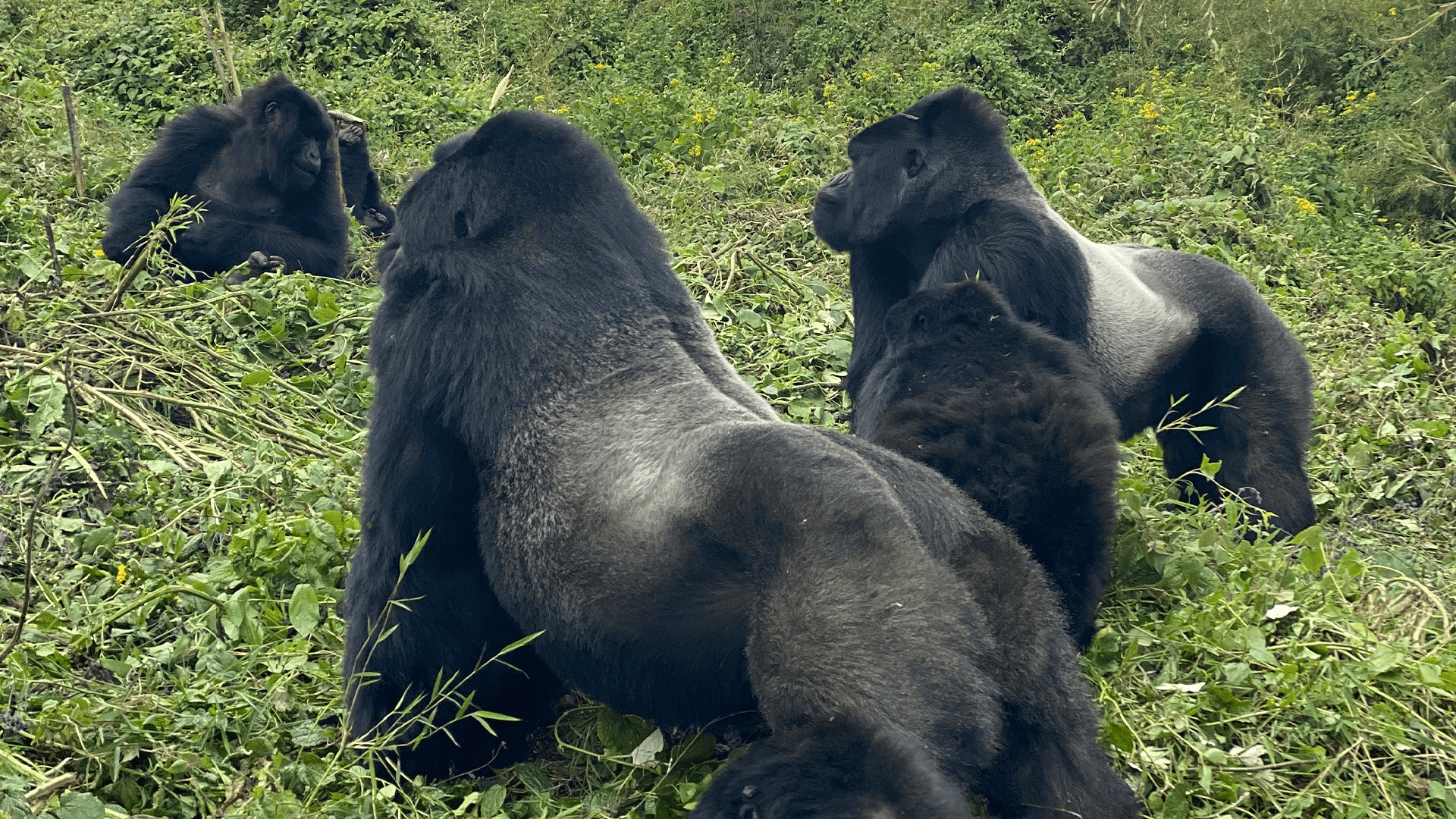
During gorilla trekking, Uganda Wildlife Authority rangers lead the forest encounter, but your safari guide prepares you before the trek and helps ensure you arrive ready. They remind you about masks where required, distance rules, quiet behavior, no flash photography, and the one-hour viewing limit for standard treks.
On game drives, the guide controls vehicle positioning. Ethical positioning matters. A responsible guide does not harass animals, block their path, crowd sightings, or encourage risky behavior for a photograph. The goal is a powerful wildlife experience that protects both guests and animals.
Park-by-Park: What Expert Guiding Changes in Uganda
The guide’s role changes depending on where you are. Uganda’s best safari destinations require different skills, and a strong guide adapts accordingly.
| Uganda destination | What travelers usually want | What a safari guide expert actually does |
|---|---|---|
| Bwindi Impenetrable National Park | Mountain gorilla trekking | Aligns permit sector, lodge, briefing time, fitness expectations, porter support, and gear preparation |
| Mgahinga Gorilla National Park | Gorillas, golden monkeys, volcano scenery | Plans around limited permits, border-area logistics, altitude, and compact but steep terrain |
| Kibale Forest | Chimpanzee tracking and primates | Coordinates Kanyanchu briefing times, forest etiquette, Bigodi Wetland add-ons, and transfer timing |
| Queen Elizabeth National Park | Game drives, Kazinga Channel, Ishasha lions | Chooses sectors strategically, times boat safaris, and balances Kasenyi, Mweya, Kyambura, and Ishasha |
| Murchison Falls National Park | Big game, Nile boat safari, waterfall | Plans ferry or bridge logistics, north-bank game drives, boat departures, and waterfall viewpoints |
| Ziwa Rhino Sanctuary | Rhino tracking on foot | Coordinates tracking timing, walking rules, and route placement between Entebbe and Murchison Falls |
| Kidepo Valley National Park | Remote wilderness and low crowds | Manages long-distance access, fuel, supplies, lodge timing, and realistic multi-day pacing |
| Jinja and the Nile | Adventure, culture, river experiences | Connects activities with safe transfers, vetted timing, and wider Uganda safari routing |
This is why two travelers can visit the same parks but have very different experiences. The difference often lies in timing, routing, interpretation, and small decisions made by the guide throughout the day.
The Guide as a Cultural Bridge
Uganda is not only a wildlife destination. It is a country of languages, kingdoms, communities, food traditions, music, markets, farming landscapes, and sacred places. A good guide helps travelers experience that human side respectfully.
This can include explaining greetings, helping you understand cultural etiquette, introducing community-led experiences, translating where appropriate, and advising when photography is or is not suitable. Around Bwindi, Kibale, Kidepo, Lake Mburo, and Kampala, cultural visits can add depth to the safari when handled with respect and proper context.
Without a guide, visitors can easily pass through communities without understanding what they are seeing. With a thoughtful guide, the journey between parks becomes part of the experience rather than empty transit time.
The Guide as a Problem Solver
Even the best-designed Uganda safari must allow for the realities of travel. Rain may slow a forest road. A domestic flight may be delayed. Wildlife may move farther than expected. A guest may need a rest day. A ferry schedule may change. A road section may require a detour.
This is where a guide’s calm judgment matters. Rather than leaving you to solve issues in an unfamiliar place, the guide adjusts the plan, contacts lodges, confirms activities, checks road conditions, and recommends the best option.
In premium travel, problem solving should feel almost invisible. Guests may only notice that the day still works. Behind the scenes, the guide may have reorganized departure times, moved a lunch stop, reconfirmed the lodge, and changed the game-drive loop to protect the experience.
What a Safari Guide Cannot Control
A trustworthy guide is also honest about limits. No one can guarantee exact wildlife sightings, the duration of a gorilla trek, perfect weather, or a specific animal pose for photography. Uganda’s wilderness is not staged, and that is part of its power.
A guide cannot make gorillas stay close to the trail, force lions into trees, guarantee leopard sightings, or prevent rain in Bwindi. What they can do is improve your chances, prepare you properly, manage risks, and help you understand what is happening when nature does not follow the schedule.
This honesty is important. The best safari experiences are built on realistic expectations, not exaggerated promises.
How PawMac Safaris Approaches Guided Uganda Trips
PawMac Safaris focuses on expert-guided Uganda safari planning with strong local knowledge, personalized itineraries, and practical coordination. For travelers, that means the trip is built around the details that matter: permits, park routing, 4×4 transport, lodge placement, activity timing, comfort level, and the style of experience you want.
A PawMac Safaris guided trip can include gorilla trekking, chimpanzee tracking, Big Five-focused routes, cultural tours, adventure activities, and custom safari packages across Uganda’s leading national parks. The value is not only in having a guide in the vehicle. It is in having a team that understands how each decision affects the next part of the journey.
For example, a traveler combining Kibale, Queen Elizabeth, and Bwindi needs more than a list of attractions. They need to know whether to track chimpanzees in the morning or afternoon, where to sleep before crossing to Ishasha, how to avoid a rushed gorilla-trek arrival, and which travel day should remain flexible in case conditions change.
That level of planning is what separates a generic safari from a well-guided Uganda journey.
How to Get the Best From Your Safari Guide
A professional guide brings expertise, but the traveler also plays a role in making the safari successful. Clear communication helps the guide tailor the experience in real time.
Before and during your trip, share the following honestly:
- Your fitness level and any mobility concerns
- Your wildlife priorities, such as gorillas, lions, birds, elephants, or photography
- Your preferred pace, including whether you enjoy early mornings
- Dietary needs, allergies, and medical considerations
- Your comfort level with long drives or remote areas
- Your photography goals and equipment needs
During the safari, ask questions. Uganda’s guides often carry deep knowledge of wildlife behavior, local history, conservation, and culture. The more curious you are, the richer the journey becomes.
Also, follow guide and ranger instructions even when the reason is not immediately obvious. In wildlife areas, small decisions often come from experience: where to stand, when to stay quiet, when to return to the vehicle, and when to give animals more space.
Is a Guided Safari Worth It in Uganda?
For most first-time visitors, the answer is yes. A guided safari is especially valuable if your trip includes gorilla trekking, chimpanzee tracking, multiple parks, family travel, luxury lodges, photography goals, or limited vacation time.
Self-drive travel can work for highly experienced travelers with more time, strong navigation confidence, and tolerance for uncertainty. But Uganda’s best experiences depend on permits, timing, local road knowledge, and park-specific regulations. A guide reduces friction and helps you focus on the reason you came: seeing Uganda’s wildlife and landscapes with context, safety, and confidence.
If you are comparing travel styles, PawMac Safaris has also explored the practical differences between guided safari tours and self-drive in Uganda, including cost, logistics, safety, and wildlife-viewing considerations.
Frequently Asked Questions
Is a tour guide safari expert the same as a driver? No. A safari driver may focus mainly on transport, while a tour guide safari expert manages interpretation, timing, safety, park logistics, route decisions, wildlife behavior, and guest experience. In Uganda, the difference is especially important for gorilla trekking, chimpanzee tracking, and multi-park itineraries.
Can a safari guide guarantee that I will see gorillas or Big Five animals? A guide cannot guarantee wild animal sightings, but they can greatly improve your chances through timing, local knowledge, permit planning, ethical tracking, and communication with park teams. Gorilla trekking in Uganda has a high success rate, but trek duration and exact conditions vary.
Does my safari guide go with me during gorilla trekking? Uganda Wildlife Authority rangers lead the actual gorilla trek in the forest. Your safari guide prepares you beforehand, ensures you reach the correct briefing point on time, helps coordinate documents and logistics, and supports you before and after the trek.
How much does a guided Uganda safari cost in 2026? Costs vary by duration, group size, accommodation level, season, permits, and transport style. Shorter gorilla and wildlife safaris may start around USD 2,200 to USD 3,500 per person, while longer luxury itineraries can reach USD 6,000 to USD 10,000+ per person. Gorilla permits alone are commonly budgeted at USD 800 per foreign non-resident.
What should I tell my guide before the trip? Share your fitness level, medical considerations, dietary needs, wildlife priorities, photography interests, preferred accommodation style, and budget range. The more accurate your information, the better your guide can shape the itinerary.
Is a private guide better than a group safari guide? A private guide offers more flexibility, personal attention, and pacing control, which is valuable for families, photographers, seniors, honeymooners, and luxury travelers. Group safaris can reduce costs, but they require more compromise on timing and interests.
Plan Your Uganda Safari With Real Local Expertise
A Uganda safari is not just a sequence of park visits. It is a carefully timed journey through rainforests, savannas, rivers, crater landscapes, and communities. The right guide helps every part work together, from permits and lodges to wildlife encounters and meaningful cultural context.
If you want your 2026 Uganda safari planned with local precision, professional guiding, transparent budgeting, and personalized care, PawMac Safaris can help design a trip around your interests, comfort level, and travel dates.
Start planning your custom Uganda safari with PawMac Safaris and travel with guides who understand the Pearl of Africa from the ground up.


