


- 9 Views
- 17 Min Read
- (0) Comment
Uganda rewards curious first-time visitors with a rare combination: mountain gorillas in misty forests, classic savannah game drives, powerful waterfalls, crater lakes, warm hospitality, and manageable safari routes when planned well. For many travelers, Uganda feels less crowded and more personal than better-known safari destinations, yet it delivers some of Africa’s most memorable wildlife encounters.
If you are researching Uganda for tourists for the first time, the most important thing to know is that this is a destination where logistics matter. Permits, road distances, park choices, health preparation, and lodge style all shape the quality of your trip. With the right planning, Uganda can be comfortable, safe, deeply immersive, and surprisingly varied within a single itinerary.
Table of Contents
- Why Uganda is exceptional for first-time tourists
- Gorilla trekking is the signature experience
- Uganda is more diverse than many first-time visitors expect
- Entry requirements, arrival, and first-night planning
- Visa, passport, and health documents
- Why Entebbe is usually your first stop
- Best places to visit in Uganda for a first safari
- Bwindi Impenetrable National Park
- Queen Elizabeth National Park
- Kibale Forest National Park
- Murchison Falls National Park
- How much Uganda costs for tourists in 2026
- Permit fees that shape your budget
- Realistic safari budget ranges
- Best time to visit Uganda
- Health, safety, and everyday practicalities
- What to pack for Uganda
- Safari etiquette and cultural respect
- How to choose the right Uganda itinerary
- Frequently Asked Questions
- Plan your first Uganda safari with confidence
Why Uganda is exceptional for first-time tourists
Uganda is often called the Pearl of Africa because it offers unusually rich variety in a compact, landlocked country. A first-time visitor can trek through highland rainforest in search of mountain gorillas, cruise the Nile below Murchison Falls, track chimpanzees in Kibale, watch elephants on the savannah, and meet communities whose traditions are tied closely to the landscape.
Unlike destinations built almost entirely around open plains, Uganda combines forest, wetlands, mountains, lakes, rivers, and savannah. This means your itinerary can change dramatically from day to day. One morning you may be walking under dense forest canopy listening for chimpanzee calls. The next evening, you may be watching hippos surface during a boat safari at sunset.
Gorilla trekking is the signature experience
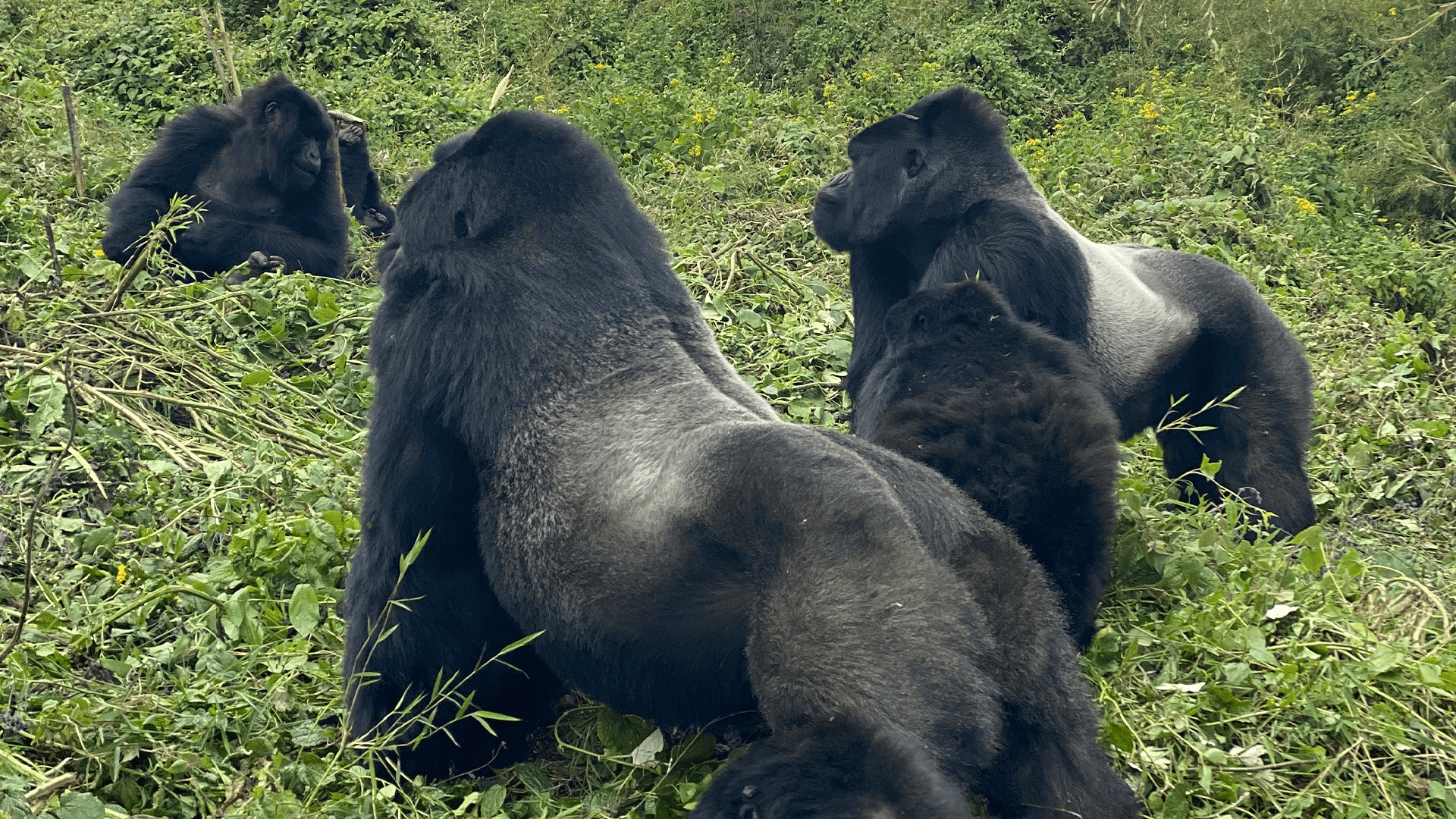
For most first-time tourists, gorilla trekking is the main reason to visit Uganda. The experience usually takes place in Bwindi Impenetrable National Park or Mgahinga Gorilla National Park. After an early briefing, you enter the forest with trained ranger guides and trackers, then spend up to one hour with a habituated gorilla family once they are located.
The trek can be moderate or challenging depending on the gorillas’ location, rainfall, trail conditions, and your assigned sector. Some treks take under two hours, while others can take most of the day. This unpredictability is part of what makes the encounter so powerful. You are not viewing animals in a staged environment. You are entering their habitat under strict conservation rules.
If gorillas are the centerpiece of your trip, read more about what to expect on gorilla trekking in Uganda before you travel. It will help you understand the briefing, walking conditions, porter support, photography rules, and the emotional rhythm of the day.
Uganda is more diverse than many first-time visitors expect
A common mistake is planning Uganda as a quick gorilla add-on. That approach misses much of the country’s value. Uganda is one of the best places in Africa to combine primates with traditional wildlife viewing, especially for travelers who want both intimate forest experiences and classic safari landscapes.
A well-designed first trip might include Bwindi for gorillas, Kibale for chimpanzees, Queen Elizabeth National Park for game drives and boat safaris, and either Murchison Falls or Lake Mburo depending on available time. With 10 to 12 days, visitors can experience a strong cross-section of Uganda without rushing every transfer.
Entry requirements, arrival, and first-night planning
Most international tourists arrive through Entebbe International Airport, located near Lake Victoria. Entebbe is calmer than Kampala and is often the best place to recover after a long flight before starting a safari circuit.
Your first 24 hours matter more than many travelers realize. A late arrival followed immediately by a long drive can make the beginning of your safari feel exhausting. A smoother approach is to spend your first night in Entebbe, meet your guide the next morning, check documents, exchange or withdraw cash, and begin the route rested.
Plan Your Uganda Safari with Local Experts
 WhatsApp Us
Visa, passport, and health documents
Many travelers need to apply online for a Uganda tourist visa before arrival. The standard single-entry tourist visa is commonly budgeted at about USD 50, though travelers should always confirm the latest official requirements before applying. Your passport should usually be valid for at least six months beyond your arrival date and have blank pages for immigration stamps.
Uganda also requires a valid yellow fever vaccination certificate for entry. In addition, travelers should speak with a travel health professional about malaria prevention, routine vaccines, personal medications, and insurance that covers safari activities and evacuation if needed.
For a step-by-step overview of the application process, document preparation, and common mistakes to avoid, PawMac Safaris has a dedicated Uganda visa process guide for safari travelers.
Why Entebbe is usually your first stop
Entebbe is not just an airport location. It is a practical soft landing for first-time visitors. Depending on your schedule, you can visit the botanical gardens, relax by Lake Victoria, or take a short excursion before the safari begins. It is also easier to organize airport transfers, early departures, and pre-safari briefings from Entebbe than from a busy city hotel in Kampala.
Kampala can be worthwhile if you are interested in culture, food, markets, religious landmarks, and contemporary Ugandan city life. However, traffic can be heavy, so it should be planned intentionally rather than treated as a quick detour.
Best places to visit in Uganda for a first safari
Uganda has many rewarding destinations, but first-time tourists should prioritize parks that match their interests, fitness level, travel style, and available days. The goal is not to collect as many parks as possible. The goal is to create a route that feels rich without becoming a blur of long drives.
| Destination | Best for | Typical stay | First-time planning note |
|---|---|---|---|
| Bwindi Impenetrable National Park | Gorilla trekking, forest scenery, birding | 2 to 3 nights | Choose the right trekking sector before confirming lodges |
| Queen Elizabeth National Park | Game drives, boat safari, varied landscapes | 2 nights | Combines well with Bwindi and Kibale |
| Kibale Forest National Park | Chimpanzee tracking, forest walks, crater lakes | 2 nights | Permits should be secured early in peak periods |
| Murchison Falls National Park | Nile boat safari, waterfall views, big game | 2 to 3 nights | Excellent for travelers who want dramatic scenery and wildlife |
| Lake Mburo National Park | Short safari, zebras, walking safaris | 1 to 2 nights | Useful stop between western Uganda and Entebbe |
Bwindi Impenetrable National Park
Bwindi is the heart of Uganda’s gorilla trekking experience. The park is divided into sectors, including Buhoma, Ruhija, Rushaga, and Nkuringo. These sectors are not interchangeable from a logistics standpoint. A lodge in the wrong sector can create unnecessary early morning transfers or make your trek difficult to coordinate.
First-time tourists should pay close attention to where their permit is issued and where their lodge is located. This is one reason working with a Uganda-based specialist matters. The permit, lodge, driving route, and trekking expectations need to fit together.
Queen Elizabeth National Park
Queen Elizabeth National Park is one of Uganda’s most versatile safari stops. It offers savannah game drives, crater scenery, the Kazinga Channel boat safari, and access to the Ishasha sector, known for tree-climbing lions when sightings are favorable.
Wildlife viewing can include elephants, buffalo, hippos, crocodiles, antelope, and many bird species. Predator sightings vary with season, movement patterns, and local conditions, so it is best to approach the park as a layered wildlife and landscape experience rather than a guaranteed checklist.
Kibale Forest National Park
Kibale is Uganda’s premier chimpanzee tracking destination. The forest is alive with sound, from primate calls to birdlife, and the tracking experience is usually more accessible than gorilla trekking, though it still requires walking on forest trails.
Chimpanzees move quickly, feed actively, vocalize loudly, and interact in complex groups. This makes the encounter very different from gorilla trekking. Many travelers find that doing both creates a fuller understanding of Uganda’s primate heritage.
Murchison Falls National Park
Murchison Falls offers one of Uganda’s most dramatic landscapes. The Nile squeezes through a narrow rock gap before dropping with immense force, and the surrounding park supports elephants, giraffes, buffalo, lions, hippos, crocodiles, and abundant birdlife.
For first-time tourists, Murchison is especially rewarding because it combines game drives with a boat safari and waterfall viewing. It can be included in longer circuits or as a shorter safari from Entebbe or Kampala if gorilla trekking is not part of the trip.

How much Uganda costs for tourists in 2026
Uganda can serve budget-conscious travelers, midrange safari guests, and high-end luxury clients, but it is important to understand what drives the cost. The biggest variables are gorilla and chimpanzee permits, lodge category, private vehicle logistics, domestic flights, seasonality, and how many parks you include.
International flights are usually not included in safari package estimates. Most quoted safari budgets are per person sharing, based on two travelers in a room, and may change depending on group size. Solo travelers should expect higher per-person costs because vehicle, guide, and fuel costs are not shared.
Permit fees that shape your budget
For 2026 planning, international tourists should generally budget around USD 800 for a Uganda gorilla trekking permit. Gorilla habituation experiences, where available, cost substantially more and are often budgeted around USD 1,500 per person. Chimpanzee tracking in Kibale is commonly budgeted around USD 250 for international visitors, while other chimpanzee sites may have different rates.
Park entry fees, ranger activities, boat safaris, and community visits also add to the final cost. These fees support conservation, park operations, and local employment, so they are not simply administrative extras. They are part of what makes Uganda’s protected-area tourism possible.
| Cost item | Typical 2026 planning estimate | Notes for tourists |
|---|---|---|
| Gorilla trekking permit | About USD 800 per international visitor | Book early, especially for June to September and December to February |
| Gorilla habituation | About USD 1,500 per person | Limited availability and longer forest time |
| Kibale chimpanzee tracking | About USD 250 per international visitor | Peak dates can sell out |
| Uganda tourist visa | About USD 50 | Apply online before travel when required |
| Park entry | Often around USD 40 to USD 45 per adult per day | Varies by park and visitor category |
| Boat safari activities | Often USD 30 to USD 50+ per person | Depends on park, operator, and schedule |
| Porter for gorilla trekking | Often USD 15 to USD 25+ | Highly recommended and supports local livelihoods |
Realistic safari budget ranges
A short budget safari with gorilla trekking can still cost more than travelers expect because the gorilla permit alone is a major fixed expense. Luxury safaris rise sharply because top lodges in gorilla regions and prime wildlife areas have limited rooms, high operating costs, premium guiding, and strong seasonal demand.
| Safari style | Typical length | Estimated budget per person sharing | What usually affects the price |
|---|---|---|---|
| Budget private or small-group safari | 5 to 7 days | USD 2,200 to USD 3,800 | Simple lodges, road transfers, one gorilla permit |
| Midrange Uganda safari | 8 to 10 days | USD 4,000 to USD 6,500 | Comfortable lodges, gorillas, chimpanzees, multiple parks |
| Luxury safari | 8 to 12 days | USD 7,000 to USD 15,000+ | High-end lodges, premium rooms, domestic flights, private guiding |
| Ultra-luxury or special-interest trip | 10+ days | USD 15,000+ | Exclusive lodges, specialist guides, photography focus, added charter logistics |
Season also matters. Peak travel periods typically create more pressure on lodge availability and permit inventory. Booking late can force travelers into higher-priced rooms or less efficient routing. Early planning is especially important if you want a premium lodge near a specific gorilla trekking sector.
Best time to visit Uganda
Uganda is a year-round destination, but the experience changes with rainfall patterns. The drier months, often from June to September and December to February, are popular because forest trails can be less muddy and wildlife viewing may be easier in some savannah areas. These months also tend to attract more travelers, so permits and preferred lodges should be booked well in advance.
The wetter months can still be excellent, especially for photographers, birders, and travelers who appreciate lush landscapes. Rain usually does not mean nonstop downpours every day. It often arrives in bursts, followed by clearer conditions. However, forest treks can be more slippery, and some rural roads may take longer after heavy rain.
For gorilla trekking, there is no month that guarantees an easy hike. Even in drier periods, Bwindi is a rainforest. Good boots, gaiters, walking poles, and a realistic attitude are more important than chasing a supposedly perfect date.
Health, safety, and everyday practicalities
Uganda is welcoming to tourists, and guided safaris are generally well structured when organized by experienced professionals. The safest trips are built around reliable transfers, vetted lodges, knowledgeable driver-guides, sensible routing, and clear communication.
First-time visitors should not treat safety as an afterthought. Travel insurance, medication planning, secure document storage, and realistic road schedules all contribute to a smoother safari. If you want a deeper practical overview, review PawMac Safaris’ guide to safe travel in Uganda before finalizing your plans.
Health preparation should begin several weeks before departure. Ask a qualified travel health professional about malaria prevention, yellow fever certification, routine vaccines, stomach medication, insect repellent, and any personal prescriptions. Bring enough medication for the entire trip, plus a small buffer in case of delays.
Money is another practical detail. The Ugandan shilling is the local currency, but many safari packages are quoted in US dollars. Bring clean, newer USD notes if carrying cash, as older or damaged bills may be rejected. Credit cards are accepted in some lodges and urban settings, but cash is still useful for tips, porters, small purchases, and community visits.
Electricity in Uganda is generally 240V, and the common plug type is Type G, the same three-pin style used in the United Kingdom. Power banks are useful during long drives and in remote areas. Mobile data can be good in towns and variable in parks, so do not expect constant connectivity.
A useful rule for tourists is to evaluate service providers before you travel, not after you land. Clear communication, transparent processes, and visible trust signals matter in any specialist industry, whether you are comparing safari planners or even a professional service such as a healthcare marketing agency in Louisville. For a Uganda safari, look for responsive planning, realistic route advice, clear inclusions, and a team that explains tradeoffs honestly.
What to pack for Uganda
Packing well can make your safari significantly more comfortable. Uganda’s conditions vary by altitude and habitat, so you need clothing that works for warm savannah afternoons, cool forest mornings, rain showers, and dusty drives.
For safari clothing, choose neutral colors such as olive, khaki, beige, brown, and muted green. Avoid bright white for game drives because it shows dust quickly, and avoid dark blue or black in areas where biting insects may be more noticeable. Lightweight long sleeves and long trousers help with sun and insect protection.
Essential items for first-time tourists include:
- Broken-in hiking boots with good grip for gorilla and chimpanzee tracking.
- Lightweight rain jacket or poncho for forest activities.
- Garden gloves or trekking gloves for gripping vegetation during gorilla trekking.
- Daypack for water, snacks, camera gear, medication, and rain protection.
- Binoculars for birds, primates, and distant wildlife.
- Insect repellent, sunscreen, lip balm, and basic personal first-aid supplies.
- Soft-sided luggage if your itinerary includes domestic flights or tight vehicle packing.
- Copies of passport, visa approval, travel insurance, vaccination certificate, and permits.
Do not overpack formal clothing. Uganda safaris are generally relaxed, even at luxury lodges. Comfort, layering, and practicality matter more than fashion. A fleece or light jacket is useful in highland areas, especially around Bwindi and Mgahinga.
Safari etiquette and cultural respect
Uganda’s tourism experience depends on respect for wildlife, guides, local communities, and conservation rules. In national parks, always follow ranger instructions. Never pressure a guide to drive off-track where it is not allowed, crowd animals, or ignore distance rules for a photograph.
During gorilla trekking, visitors are usually asked to keep a minimum distance from gorillas, avoid flash photography, speak quietly, and turn away if coughing or sneezing. If you feel unwell before a gorilla trek, tell your guide. Mountain gorillas are vulnerable to human illnesses, so honesty is part of responsible travel.
Cultural respect is equally important. Ask before photographing people, dress modestly in villages and community settings, and listen more than you assume. Many travelers find that community visits, local meals, craft demonstrations, and conversations with guides become some of the most memorable parts of the trip.
Tipping is appreciated but should be handled respectfully. Common safari tipping ranges vary, but many travelers budget around USD 10 to USD 20 per guest per day for a professional driver-guide, plus separate tips for lodge staff, porters, and activity guides. Higher-end trips may involve higher tipping budgets, especially when service is exceptional.
How to choose the right Uganda itinerary
Your ideal route depends on what you most want to experience. A rushed itinerary can look exciting on paper but feel tiring on the ground. Uganda’s roads are scenic, but distances are real. A good planner balances wildlife ambition with comfort, especially for first-time visitors.
If you have 5 to 6 days, focus on one or two major goals, such as gorilla trekking in Bwindi plus Lake Mburo or Queen Elizabeth. If you have 7 to 9 days, you can create a strong western Uganda circuit with gorillas, chimpanzees, savannah wildlife, and boat safaris. If you have 10 to 14 days, you can add Murchison Falls, more cultural depth, birding, or a slower luxury pace.
| Trip length | Best-fit itinerary style | What to expect |
|---|---|---|
| 4 to 5 days | Short gorilla-focused safari | Best if gorillas are the priority and time is limited |
| 6 to 8 days | Gorilla trek plus Queen Elizabeth or Kibale | Good balance of primates and wildlife |
| 9 to 11 days | Classic Uganda safari circuit | Gorillas, chimpanzees, game drives, boat safaris, scenic drives |
| 12 to 14 days | Comprehensive first-time Uganda journey | More relaxed pace with Murchison Falls, culture, and added wildlife time |
For premium travelers, domestic flights can reduce long road sections, especially between Entebbe and western Uganda. However, road travel also reveals Uganda’s countryside, farms, markets, hills, and daily life. The best choice depends on your comfort level, budget, and travel goals.
PawMac Safaris specializes in personalized Uganda safari planning with local knowledge, expert guides, comfortable 4×4 vehicles, and flexible options from budget-conscious trips to high-end private journeys. For first-time tourists, that local planning support can be the difference between a route that merely works and a safari that feels seamless.
Frequently Asked Questions
Is Uganda good for first-time tourists? Yes. Uganda is excellent for first-time tourists who want wildlife, gorilla trekking, friendly local hospitality, and varied landscapes. The key is to plan with realistic driving times, secure permits early, and use experienced local guides.
How many days do I need for a Uganda safari? A short gorilla-focused safari can work in 4 to 5 days, but 8 to 12 days is better for a first-time visitor who wants gorillas, chimpanzees, savannah wildlife, and boat safaris without rushing.
Is Uganda expensive for tourists? Uganda can be moderate or expensive depending on your safari style. Gorilla permits, chimpanzee permits, private vehicles, and lodge category are the main cost drivers. A midrange 8 to 10 day safari with gorillas and chimpanzees often requires several thousand dollars per person excluding international flights.
Do tourists need a visa for Uganda? Many tourists need a Uganda visa and should apply online before travel when required. A standard tourist visa is commonly budgeted at about USD 50, but requirements can change, so confirm before departure.
Is gorilla trekking difficult in Uganda? It can be moderate or challenging. Trek difficulty depends on terrain, rain, altitude, and where the gorilla family is located that day. Hiring a porter, wearing proper boots, and training with uphill walks before travel can make the experience more comfortable.
Can I see the Big Five in Uganda? Uganda offers excellent big game viewing, including elephants, buffalo, lions, and leopards in key parks. Rhinos are protected in a dedicated sanctuary rather than roaming freely in the major national parks, so Big Five-focused itineraries need to be planned carefully.
Plan your first Uganda safari with confidence
Uganda is not a destination to plan casually if you want the best experience. Permits must align with lodges, routes must account for real road conditions, and each park should earn its place in your itinerary. When planned well, Uganda offers one of Africa’s most rewarding first-time safari journeys, combining rare primates, powerful landscapes, warm culture, and exceptional guiding.
PawMac Safaris helps first-time visitors design Uganda safaris around their travel dates, budget, comfort level, and must-see experiences. Whether your priority is gorilla trekking, chimpanzee tracking, Big Five-style wildlife viewing, cultural immersion, or a luxury private journey, expert local planning will help you arrive prepared and travel with confidence.


