


- 18 Views
- 16 Min Read
- (0) Comment
Uganda is one of the rare safari destinations where a single journey can move from misty gorilla forest to open savannah, Nile waterways, chimpanzee habitat, volcanic crater lakes, and community-led cultural encounters. That variety is why African safari excursions in Uganda feel less like a standard game-viewing circuit and more like a sequence of highly distinct wildlife experiences.
For travelers planning 2026 safari travel, the strongest Uganda itineraries are built around carefully chosen excursions rather than rushed park-hopping. Gorilla permits must be secured early, chimpanzee tracking has fixed time slots, boat safaris work best at certain hours, and remote parks like Kidepo need enough time to justify the journey. With expert local planning, each excursion can add depth rather than simply filling a day.
Table of Contents
- What Makes Uganda’s African Safari Excursions Different?
- The Standout Safari Excursions to Build Around
- How to Match Uganda Excursions to Your Travel Style
- 2026 Cost Guide for Uganda Safari Excursions
- Sample Excursion-Based Uganda Safari Routes
- Planning Logistics: Permits, Seasons, Roads, and Vehicles
- Responsible Safari Excursions in Uganda
- Frequently Asked Questions
- Plan African Safari Excursions in Uganda with PawMac Safaris
What Makes Uganda’s African Safari Excursions Different?
Uganda stands out because its best excursions are not all variations of the same activity. In one itinerary, you can trek on foot through ancient rainforest for mountain gorillas, follow chimpanzee vocalizations through Kibale Forest, cruise below Murchison Falls on the Nile, search for lions in Queen Elizabeth National Park, track rhinos on foot at Ziwa Rhino Sanctuary, and finish with a cultural encounter led by local communities.
That combination gives Uganda a layered safari identity. A classic savannah game drive is still part of the experience, but it is not the whole story. The strongest itineraries combine vehicle-based wildlife viewing with walking, boating, primate tracking, birding, photography, and cultural interpretation. This is especially valuable for travelers who want more than a checklist of animals.
Another advantage is the intensity of the encounters. Gorilla trekking and chimpanzee tracking are guided, regulated, permit-based experiences with limited daily visitor numbers. This creates a more focused and conservation-aware style of safari. When planned properly, these excursions also help travelers understand Uganda’s habitats, from montane rainforest and papyrus wetlands to riverine woodland and dry savannah.
If you are still comparing Uganda against broader safari options, PawMac Safaris has also outlined why African tours and safaris in Uganda offer such a distinctive mix of primates, big game, boat safaris, and cultural experiences.
The Standout Safari Excursions to Build Around
The best Uganda safaris are usually built around a few anchor excursions, then supported by well-timed game drives, scenic transfers, rest periods, and cultural stops. The following experiences are among the most memorable for high-intent travelers planning a serious Uganda journey.
| Excursion | Best destination in Uganda | Typical duration | Best for |
|---|---|---|---|
| Gorilla trekking | Bwindi Impenetrable National Park or Mgahinga Gorilla National Park | Half day to full day | Once-in-a-lifetime primate encounters |
| Chimpanzee tracking | Kibale Forest National Park | 3 to 5 hours | Active forest wildlife viewing |
| Nile boat safari | Murchison Falls National Park | 2 to 3 hours | Hippos, crocodiles, elephants, birds, waterfall scenery |
| Big game drives | Murchison Falls, Queen Elizabeth, Kidepo Valley | Morning or afternoon | Lions, elephants, buffalo, giraffes, antelope |
| Rhino tracking | Ziwa Rhino Sanctuary | 1.5 to 3 hours | Completing a Uganda Big Five route |
| Shoebill birding | Mabamba Swamp | Half day | Specialist birding and photography |
| Cultural excursions | Bwindi region, Karamoja, western Uganda communities | 2 hours to full day | Heritage, storytelling, music, crafts, food, local insight |
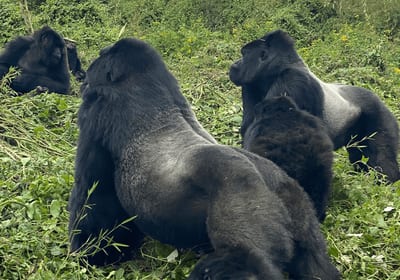
Gorilla trekking in Bwindi or Mgahinga is the signature Uganda excursion. The experience begins with a ranger briefing, then continues into forest terrain where tracking time can vary depending on gorilla movement, trail conditions, and the assigned family. Once located, visitors spend a regulated time with the gorillas, usually one hour, observing behavior at close but controlled distance. For 2026 planning, foreign non-resident gorilla permits are commonly budgeted at about USD 800 per person, subject to the latest Uganda Wildlife Authority tariff at the time of booking.
Chimpanzee tracking in Kibale Forest offers a very different energy. Chimpanzees are louder, faster, and more dynamic than gorillas, so the excursion often feels active and unpredictable. Kibale is widely preferred for reliable sightings and strong guiding infrastructure. Foreign non-resident chimpanzee tracking permits are commonly budgeted at about USD 250 per person for Kibale, while habituation-style experiences cost more and require extra time.
The Nile boat safari in Murchison Falls National Park is one of Uganda’s most rewarding water-based excursions. The cruise toward the base of the falls can reveal hippos, Nile crocodiles, buffalo, elephants along the banks, kingfishers, fish eagles, and sometimes giraffes near the riverine edges. The boat perspective is especially valuable for photographers because wildlife is often seen at eye level, with the river and escarpments adding scale.
Game drives in Murchison Falls, Queen Elizabeth, and Kidepo Valley bring Uganda’s savannah credentials into focus. Murchison Falls is excellent for Rothschild’s giraffes, elephants, buffalo, lions, hartebeest, and Uganda kob. Queen Elizabeth is known for varied landscapes, the Kazinga Channel, crater areas, and the possibility of seeing tree-climbing lions in the Ishasha sector. Kidepo Valley is more remote and logistically demanding, but it offers a wilder, less crowded safari atmosphere.
Plan Your Uganda Safari with Local Experts
 WhatsApp Us
Rhino tracking at Ziwa Rhino Sanctuary is a strategic excursion for travelers who want a Uganda Big Five route. Since rhinos are not currently free-ranging inside Uganda’s major national parks in the same way as elephants or buffalo, Ziwa often becomes the important northern route stop between Kampala or Entebbe and Murchison Falls. The experience is typically done on foot with trained guides and is best placed early in the itinerary.
Shoebill excursions around Mabamba Swamp are ideal for birders and travelers with a free morning or afternoon near Entebbe. The shoebill is one of Uganda’s most sought-after birds, and a canoe-based wetland outing can add a quiet, specialist dimension to a safari that is otherwise focused on larger mammals.
Cultural and community-led excursions should not be treated as filler activities. In the Bwindi region, cultural visits can introduce travelers to local history, forest-edge livelihoods, music, craft traditions, and conservation realities. In northeastern Uganda, Karamoja-focused excursions can add a powerful cultural layer when planned respectfully and with enough context.

How to Match Uganda Excursions to Your Travel Style
Not every excursion suits every traveler. A strong Uganda safari is not simply the longest list of activities. It is the right sequence, at the right pace, with the right level of comfort and guiding.
Luxury travelers often benefit from fewer bases, longer stays, private guiding, and premium lodge locations. For example, a high-end itinerary might include two nights in Murchison Falls, two nights in Kibale, two nights in Queen Elizabeth or Ishasha, and two to three nights in Bwindi. This pacing reduces fatigue and allows time for scenic drives, private meals, spa time where available, and unhurried photography. If you are evaluating the premium end of the market, this guide to what an Africa luxury safari in Uganda typically includes gives useful context on private guiding, lodges, permits, and comfort standards.
Families usually need a softer rhythm. Gorilla trekking has age restrictions, and chimpanzee tracking also requires children to meet minimum age rules. For families with younger children, boat safaris, shorter game drives, rhino tracking where appropriate, community visits, nature walks, and lodge-based activities may be more practical. A family safari should also consider drive times, meal flexibility, swimming pools where available, and the ability to rest between major excursions.
Photographers should prioritize timing and positioning. Morning game drives are often better for light and predator activity, while boat safaris can be excellent in the afternoon when animals come toward water. Gorilla trekking photography requires preparation for low-light forest conditions, humidity, and strict ranger instructions. A private vehicle is strongly recommended for serious photographers because it allows better control over pace and positioning.
Birders should slow down. Uganda’s birdlife is exceptional, but sightings improve when the itinerary allows time in wetlands, forest edges, papyrus channels, and savannah habitats. Mabamba, Kibale, Queen Elizabeth, Murchison Falls, Semuliki, and Bwindi can all be included depending on target species and trip length.
Adventure-focused travelers can combine safari excursions with activities such as forest walks, hiking, white-water experiences near the Nile, or crater lake exploration. The key is to avoid placing demanding adventure activities immediately before gorilla trekking, since arriving tired can reduce enjoyment on the most important day of the trip.
2026 Cost Guide for Uganda Safari Excursions
Uganda offers a wide range of safari budgets, but the most important costs are not always the nightly lodge rates. Permits, private transport, fuel, park entry, activity fees, guiding, and route design all affect the final price. Gorilla and chimpanzee permits are especially important because they are paid per person and are often non-negotiable once secured.
The figures below are realistic planning ranges for 2026 discussions, but travelers should confirm final costs during booking because official tariffs, lodge rates, fuel prices, and seasonal offers can change.
| Cost item | Typical planning range for foreign non-resident travelers | Notes |
|---|---|---|
| Gorilla trekking permit | About USD 800 per person | Essential for Bwindi or Mgahinga, book early |
| Kibale chimpanzee tracking permit | About USD 250 per person | Premium chimp destination with strong sighting reputation |
| National park entry | Often about USD 40 to USD 45 per person per day | Varies by park and visitor category |
| Boat safari activity | Often about USD 30 to USD 50+ per person | Depends on park, operator, and private versus shared option |
| Rhino tracking | Often about USD 50+ per person | Check current sanctuary rates when planning |
| Mid-range lodge | About USD 180 to USD 350 per person per night | Seasonal variation is common |
| Luxury lodge | About USD 400 to USD 1,500+ per person per night | Top suites and exclusive properties can exceed this |
| Private 4×4 safari vehicle with guide | Often about USD 250 to USD 450+ per day before variables | Fuel, distance, vehicle type, and inclusions affect pricing |
For a private 8 to 10 day Uganda safari with gorilla trekking, chimpanzee tracking, savannah game drives, and boat safari activities, many travelers should expect a mid-range budget from roughly USD 3,500 to USD 6,000+ per person, depending on season, lodge category, routing, and group size. Luxury versions can rise from roughly USD 7,000 to USD 12,000+ per person, especially when using premium lodges, fly-in segments, private experiences, and upgraded rooms.
Budget-conscious travelers can reduce costs by choosing simpler lodges, traveling in shoulder seasons, sharing a vehicle with companions, and limiting premium permit-based activities. However, removing gorilla trekking or chimpanzee tracking may change the entire purpose of a Uganda itinerary, so it is often better to reduce accommodation spend than to cut the defining excursions.
Sample Excursion-Based Uganda Safari Routes
The right Uganda route depends on the number of days available and the experiences that matter most. Rather than trying to cover every park, it is usually better to build the itinerary around two or three high-value excursions and give them enough breathing room.
| Trip length | Best excursion focus | Suggested route style | Traveler profile |
|---|---|---|---|
| 5 to 6 days | Gorilla trekking plus Lake Bunyonyi or Queen Elizabeth | Entebbe to Bwindi, optional scenic extension | Time-limited travelers focused on gorillas |
| 7 to 8 days | Gorillas, chimps, and Queen Elizabeth | Entebbe, Kibale, Queen Elizabeth, Bwindi | First-time Uganda safari travelers |
| 9 to 10 days | Primate tracking, Kazinga Channel, Murchison Falls | Entebbe, Murchison, Kibale, Queen Elizabeth, Bwindi | Balanced wildlife and primate itinerary |
| 12 to 14 days | Full Uganda highlights with Kidepo or extra birding | Northern and western Uganda circuit | Repeat safari travelers and serious wildlife guests |
A 5 to 6 day gorilla-focused safari is best for travelers who primarily want the mountain gorilla experience. This type of itinerary usually requires efficient routing, early permit confirmation, and careful management of drive times. Adding Lake Bunyonyi can create a scenic recovery night after trekking.
A 7 to 8 day primate and savannah safari is one of the most practical Uganda options. It can combine Kibale chimpanzee tracking, Queen Elizabeth National Park, the Kazinga Channel boat safari, and gorilla trekking in Bwindi. This route gives travelers a strong sense of Uganda’s variety without becoming too rushed.
A 9 to 10 day Uganda highlights safari can add Murchison Falls and possibly Ziwa Rhino Sanctuary, creating a stronger Big Five framework. This is a good fit for travelers who want gorillas and chimps but also want elephants, giraffes, lions, buffalo, hippos, crocodiles, and powerful Nile scenery.
A 12 to 14 day specialist itinerary can include Kidepo Valley, deeper birding, extra gorilla trekking, a chimpanzee habituation-style experience, or more cultural time. This length is ideal for travelers who want Uganda to be the main destination, not an add-on.
This is where customization matters. PawMac Safaris designs private Uganda safari packages around the traveler’s priorities, budget, pace, and preferred comfort level. For deeper planning context, the article on tailored safari packages in Uganda explains why flexible design often works better than fixed group departures.
Planning Logistics: Permits, Seasons, Roads, and Vehicles
Uganda safari excursions depend on logistics. A gorilla trek cannot simply be moved like a casual activity if permits are sold out. Chimpanzee tracking times matter. Boat departures have schedules. Some road transfers are long, and conditions can vary after rain. Premium planning is about anticipating these details before they affect the guest experience.
For most travelers, the best safari months are during the drier seasons, commonly June to September and December to February. These months often bring more manageable trekking conditions and strong wildlife viewing around water sources. That said, Uganda is a year-round safari destination, and greener months can offer lush landscapes, fewer visitors in some areas, and interesting birding. Rain is possible at any time, especially in forest regions, so good footwear and lightweight rain protection are always sensible.
Permit timing is one of the biggest factors. Gorilla permits should be secured as early as possible, especially for peak travel months, premium lodge availability, and travelers with fixed dates. In Bwindi, sector selection matters because the trekking sector should match the lodge location. A poor match can add unnecessary early-morning driving before a demanding trek.
Road logistics also shape the itinerary. Uganda’s major safari routes are rewarding but can involve long drives. A comfortable 4×4 safari vehicle, experienced local guide, and realistic daily pacing make a major difference. Travelers used to self-driving in other destinations should understand that Uganda’s road conditions, park tracks, traffic patterns, and remote-area navigation are best handled by professionals, especially on a premium wildlife itinerary.
For international travelers dealing with vehicle administration before departure from Europe, it is wise to complete paperwork well in advance, including documents such as an official Certificate of Conformity online where relevant. Once in Uganda, however, most safari guests are better served by a locally prepared, driver-guided 4×4 rather than trying to manage safari routing independently.
Packing should be excursion-specific. Gorilla and chimpanzee tracking require sturdy walking shoes, long trousers, moisture-wicking layers, garden gloves for gripping vegetation, insect repellent, and a small daypack. Boat safaris require sun protection, a camera strap, and a light layer for wind. Game drives are more comfortable with neutral clothing, binoculars, and dust protection for camera gear.

Responsible Safari Excursions in Uganda
Responsible travel is not a decorative extra in Uganda. It is central to the long-term future of gorilla trekking, chimpanzee conservation, protected wetlands, and community support around national parks. Premium travelers should expect their safari to follow rules carefully and to treat local people, wildlife, and landscapes with respect.
For gorilla and chimpanzee excursions, responsible behavior includes maintaining ranger-directed distance, avoiding trekking when ill, keeping voices low, never using flash where prohibited, and accepting that wildlife behavior cannot be controlled for photography. These rules protect both visitors and animals, especially primates that can be vulnerable to human illness.
Community excursions should be arranged through respectful local channels, with clear benefit to host communities. A meaningful cultural visit is not a performance staged without context. It should include interpretation, fair compensation, and sensitivity around photography, sacred spaces, and local expectations.
Waste reduction also matters. Travelers should avoid single-use plastics where possible, carry refillable bottles when safe and practical, and follow lodge guidance on water and energy use. In remote parks, responsible driving is equally important. Guides should remain on designated tracks where required, avoid crowding wildlife, and maintain calm positioning around animals.
The best Uganda excursions leave travelers with exceptional memories while also reinforcing the value of conservation. That is one reason expert guiding matters. A good guide does more than locate wildlife. They interpret behavior, explain ecosystems, manage safety, and help guests understand the conservation story behind each encounter.
Frequently Asked Questions
What are the best African safari excursions in Uganda? The most distinctive Uganda excursions include gorilla trekking in Bwindi or Mgahinga, chimpanzee tracking in Kibale, Nile boat safaris in Murchison Falls, game drives in Queen Elizabeth or Kidepo Valley, rhino tracking at Ziwa, shoebill birding at Mabamba, and community-led cultural visits.
How much should I budget for a Uganda safari in 2026? A private mid-range Uganda safari with gorillas, chimps, game drives, and boat safaris often starts around USD 3,500 to USD 6,000+ per person for 8 to 10 days. Luxury versions can range from about USD 7,000 to USD 12,000+ per person depending on lodges, season, routing, and inclusions.
Is gorilla trekking worth the permit cost? Yes, for most travelers it is the defining Uganda safari experience. The permit cost supports regulated access, ranger operations, conservation, and local tourism value. Because daily permits are limited, early booking is strongly recommended.
How many days do I need for Uganda safari excursions? Five to six days can work for a gorilla-focused trip, but 8 to 10 days is better for combining gorillas, chimps, savannah wildlife, and a boat safari. Travelers who want Kidepo Valley, extra birding, or a slower luxury pace should consider 12 to 14 days.
Can Uganda offer a Big Five safari? Yes, Uganda can deliver a Big Five-focused route when rhino tracking at Ziwa is combined with parks such as Murchison Falls and Queen Elizabeth. Lions, elephants, buffalo, and leopards are found in national park settings, while rhinos are typically experienced at Ziwa Rhino Sanctuary.
What is the best time of year for Uganda safari excursions? The drier months from June to September and December to February are popular for trekking and wildlife viewing. Uganda can still be rewarding in greener months, especially for birding, photography, and travelers seeking fewer crowds in some areas.
Plan African Safari Excursions in Uganda with PawMac Safaris
The strongest Uganda safaris are built with precision: the right permits, the right park sequence, the right vehicle, the right lodge locations, and enough time for each excursion to feel meaningful. PawMac Safaris brings expert local guiding and professional planning to personalized Uganda itineraries, from budget-conscious adventures to luxury wildlife journeys.
Whether you want gorilla trekking as the centerpiece, a Big Five route through Murchison Falls and Ziwa, a primate-rich itinerary through Kibale and Bwindi, or a slower premium safari with cultural depth, PawMac Safaris can help shape the route around your travel dates, comfort expectations, and budget. Start with the excursions that matter most, then build a Uganda safari that stands out for all the right reasons.


