


- 299 Views
- 13 Min Read
- (0) Comment
2026 Limited Dates
Gorilla Trekking Uganda Tours
Join our local PawMac Safaris guides for Bwindi & Mgahinga gorilla trekking. We handle your complete planning + booking.
TL;DR:
- Yes, mountain gorillas eat bamboo, but only seasonally and mainly as tender shoots in specific bamboo-zone home ranges.
- Their diet consists of roughly 80–86% leaves, stems, and shoots, reflecting their highly specialized folivorous (leaf-eating) nature.
- During wet seasons, they seek out tender bamboo shoots, which they peel to consume the soft inner pith.
- Understanding their seasonal feeding behaviors and digestive adaptations enhances the wildlife experience by revealing gorillas’ social interactions and movements during treks.
Most travelers heading into Bwindi Impenetrable Forest picture gorillas munching on bamboo the way a giant panda does. The reality is more interesting. Do gorillas eat bamboo? Yes, but it is one piece of a far more varied and seasonally driven gorilla diet than most people expect. Understanding what gorillas actually eat, when they eat bamboo, and why it matters changes how you experience every moment of a trek through Uganda’s mist-shrouded forests. This guide gives you the full picture before you set foot on the trail.
Table of Contents
- What do gorillas eat in Uganda’s forests?
- How and when do gorillas eat bamboo?
- Comparing mountain gorilla and lowland gorilla diets
- What does gorillas’ bamboo feeding behavior mean for travelers?
- Why understanding gorilla diets deepens your wildlife experience
- Plan your Uganda gorilla trekking adventure with PawMac Safaris
- Frequently asked questions
Key Takeaways
| Point | Details |
|---|---|
| Bamboo seasonal food | Mountain gorillas eat bamboo shoots mainly during Uganda’s wet seasons when new shoots grow. |
| Folivorous diet | Roughly 80–86% of their daily intake consists of leaves, stems, and shoots. |
| Selective feeding | Gorillas methodically peel bamboo to eat the soft pith, avoiding the woody stalks. |
| Diet varies by habitat | Mountain gorillas rely heavily on fibrous plants; lowland gorillas are highly frugivorous (fruit-eating). |
| Habitat specific | Bamboo foraging is most prominent in Mgahinga and specific higher-elevation zones of Bwindi. |
What do gorillas eat in Uganda’s forests?
Mountain gorillas are adapted for a high-volume, fibrous diet. Their large digestive system helps them process tough plant material that would be difficult for many primates to use efficiently. This adaptation explains why leaves, stems, pith and other fibrous foods can sustain mountain gorillas in Uganda’s high-altitude forests even when fruit is limited. A useful way to understand the scale of a mountain gorilla’s diet is by total daily plant intake, not bamboo alone. A fully grown silverback may consume roughly 30 kg of vegetation in a day. That total can include leaves, stems, pith, bark, roots, herbs and seasonal shoots; bamboo is only one possible component when tender shoots are locally available. Mountain gorillas are primarily folivores. That means leaves, stems, bark, and shoots form the backbone of their diet—accounting for approximately 80% to 86% of their nutritional intake—rather than fruit. This is a meaningful distinction from many other primates, and it shapes everything about how gorilla families move through the forest and how much time they spend feeding each day. To process this highly fibrous diet, mountain gorillas possess a specialized, large-capacity digestive tract adapted for fermenting and breaking down tough vegetation. A fully grown silverback consumes roughly 30 to 35 kg of plants daily. That is the weight of a large suitcase, consumed every single day. It explains why gorillas spend the majority of their waking hours eating or moving toward food. What makes gorilla feeding behavior genuinely fascinating is how selective it is. Gorillas do not graze indiscriminately. They identify specific plant parts, often choosing young leaves over mature ones, or targeting the soft pith inside a stem rather than the tough outer layers. Here is a breakdown of the core components of a mountain gorilla’s diet in Uganda:- Bamboo shoots: A seasonal favorite, consumed primarily during wet months when new growth is tender.
- Wild celery, bedstraw, and ferns: Year-round staples found across the forest floor and mid-canopy zones.
- Thistles and nettles: Consumed despite their spines, which gorillas handle with practiced ease.
- Tree bark and roots: Particularly important during dry seasons as fallback foods when other sources are less available.
- Seasonal fruits (e.g., wild figs): Eaten opportunistically when available, though not a primary food source at high altitudes.
- Insects and larvae: Occasionally consumed (forming less than 2% of the diet), though gorillas are not active hunters.
How and when do gorillas eat bamboo?
Seasonal feeding patterns extend beyond bamboo. Wet-season plant growth can make young leaves, herbs and shoots more readily available, while changing fruiting cycles and drier conditions can increase the importance of bark, roots and other dependable fallback foods. The March–May and September–November bamboo windows are useful planning guides, but rainfall and local plant growth determine the exact timing each year. Bamboo feeding is range-specific as well as seasonal. Gorillas are most likely to eat bamboo shoots when a family’s current home range includes bamboo habitat and fresh shoots have emerged. This means bamboo is not a guaranteed sighting on every Bwindi trek: availability differs by forest area, recent rainfall, shoot growth and the movements of the habituated family being tracked. Bamboo is not a constant in the gorilla diet. It is a seasonal prize, highly localized to specific habitats. In Uganda, bamboo foraging is especially prominent in Mgahinga Gorilla National Park and specific higher-elevation sectors of Bwindi Impenetrable Forest. New bamboo shoots emerge primarily during Uganda’s two wet seasons, roughly March through May and again from September through November. During these windows, bamboo shoots are soft, high in water content, and packed with nutrients that gorillas actively seek out.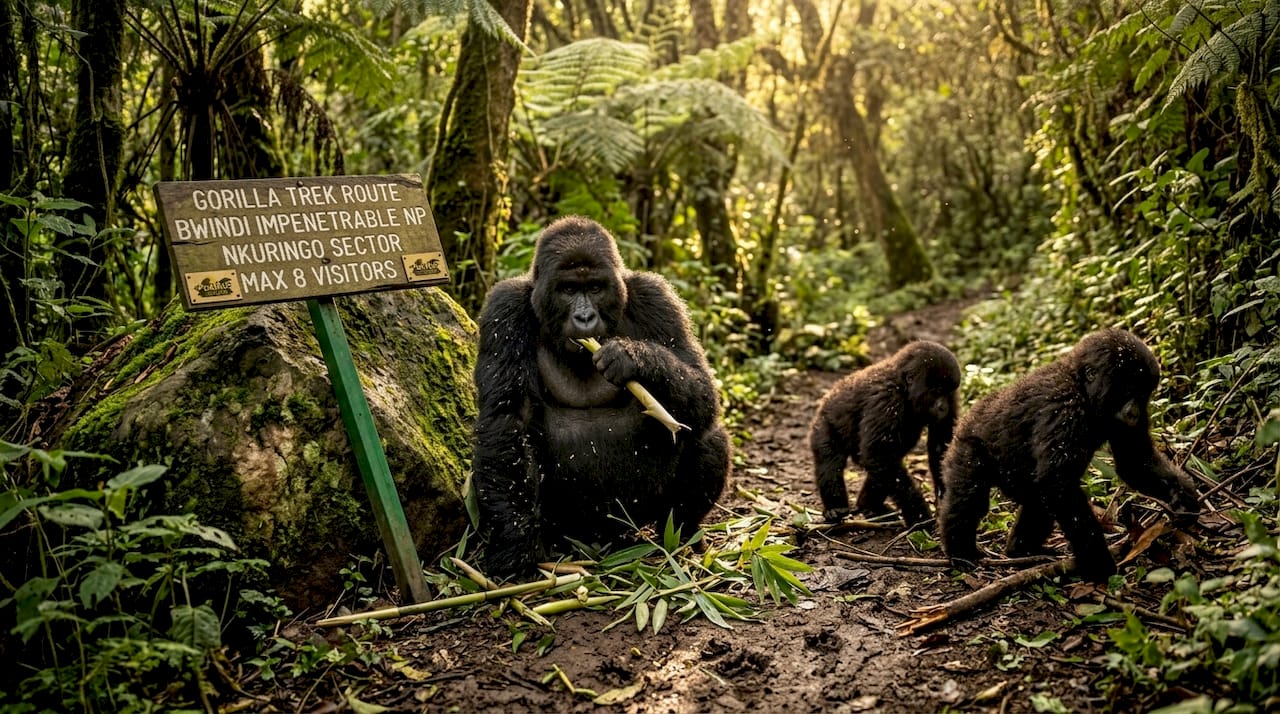 Bamboo shoots are a preferred seasonal food, and gorilla groups often shift their home ranges toward bamboo-rich zones during those months. This range-shifting behavior is something your trekking guide will track closely, because it affects where a habituated gorilla family will be found on any given morning.
Here is how gorillas actually feed on bamboo when the shoots are available:
Bamboo shoots are a preferred seasonal food, and gorilla groups often shift their home ranges toward bamboo-rich zones during those months. This range-shifting behavior is something your trekking guide will track closely, because it affects where a habituated gorilla family will be found on any given morning.
Here is how gorillas actually feed on bamboo when the shoots are available:
- Locating the shoot: Gorillas identify young shoots emerging from the ground, often using their hands to feel for the right texture and firmness. They ignore the mature, woody stalks.
- Gripping and pulling: They grip the base of the shoot and apply controlled pressure to snap or pull it free.
- Peeling the outer layers: The tough outer sheaths are stripped away methodically, one layer at a time.
- Eating the soft pith: The inner core, pale and moist, is the target. This is what gorillas actually consume, not the fibrous outer casing.
- Moving to the next shoot: Feeding is unhurried and deliberate. A gorilla may spend 20 to 30 minutes on a single patch of shoots before moving on.
“Watching a silverback work through a stand of bamboo shoots is one of the most quietly extraordinary things you will see on a trek. There is no urgency, no competition. Just focused, methodical feeding that tells you everything about how these animals have learned to live.”Pro Tip: If you are trekking during the wet season and your guide mentions the family has been spotted near a bamboo zone, pay close attention during the encounter. You may witness the full peeling and feeding sequence, which is one of the most distinctive gorilla behaviors you can observe. Knowing how to prepare for gorilla trekking in Uganda helps you get far more from your one permitted hour with the gorillas.
Comparing mountain gorilla and lowland gorilla diets
The key dietary contrast is foliage versus fruit. Mountain gorillas are primarily folivorous: leaves, stems, shoots and other fibrous plants form the base of their diet, while fruit is opportunistic at high elevations. Lowland gorillas generally have access to more fruit-rich forest and are therefore more frugivorous, which helps explain why bamboo is far less important to them. The question of whether gorillas eat bamboo becomes more nuanced when you compare gorilla subspecies. Not all gorillas have the same relationship with bamboo, and the differences come down almost entirely to habitat, elevation, and fruit availability. Mountain gorillas rely mainly on foliage and bamboo due to their high-altitude forests, making them strictly folivorous. Uganda’s mountain gorillas in Bwindi and Mgahinga live between 1,500 and 4,000 meters above sea level. At those elevations, fruit-bearing trees are sparse. The forest is dense with fibrous vegetation, which is exactly what mountain gorillas have adapted to process. In contrast, western lowland gorillas live in tropical rainforests below 1,000 meters and are highly frugivorous. Fruit makes up a massive portion of their diet, and they rarely, if ever, rely on bamboo.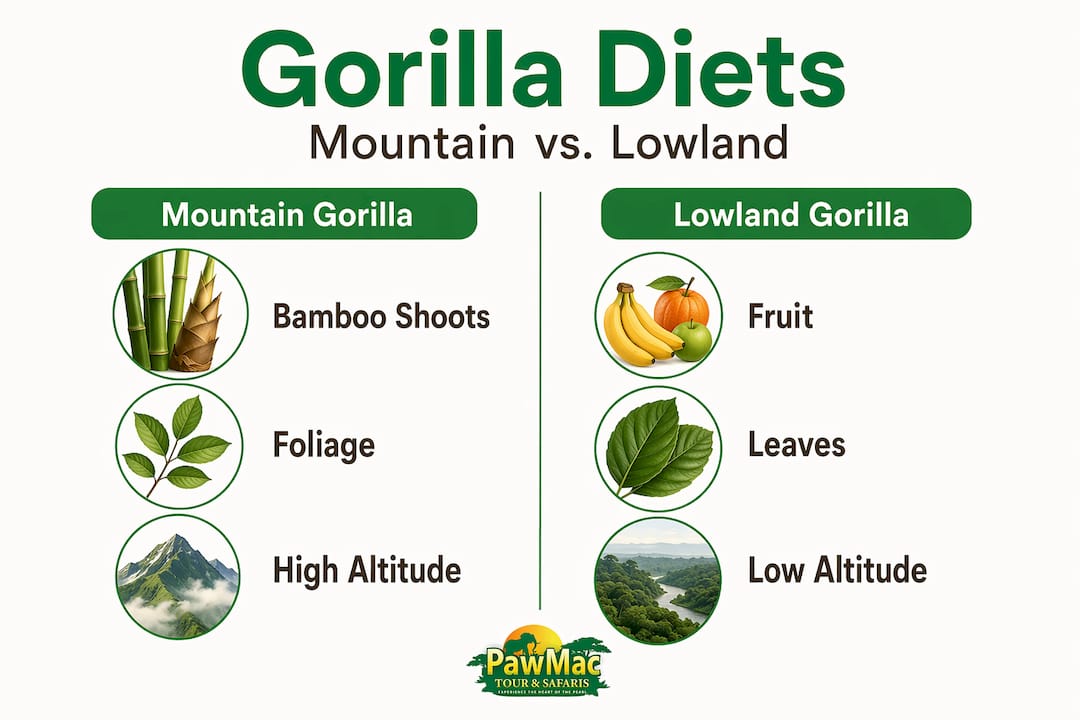
| Feature | Mountain gorillas (Uganda) | Western lowland gorillas |
|---|---|---|
| Primary habitat | High-altitude montane forest | Lowland tropical rainforest |
| Diet classification | Folivorous (leaves, stems, pith) | Frugivorous (fruit-heavy) |
| Bamboo in diet | Seasonal but significant | Rare or absent |
| Fruit consumption | Low, opportunistic | High, year-round |
| Elevation range | 1,500 to 4,000 m | Below 1,000 m |
- Mountain gorillas have physically adapted with larger gut capacities to digest large volumes of fibrous plant matter, including bamboo.
- Bamboo preferences of gorillas at high altitude reflect genuine nutritional need, not just availability.
- Lowland gorillas in fruit-rich forests have less evolutionary pressure to rely on tough fibrous plants as fallback foods.
What does gorillas’ bamboo feeding behavior mean for travelers?
Feeding patches can influence how a gorilla encounter unfolds. When a family finds a productive patch of shoots or foliage, individuals may remain nearby while they feed, rest, groom and monitor younger group members. In contrast, scattered foods can lead to more gradual movement through the vegetation. Your guide follows recent signs and ranger information, but the family’s feeding decisions ultimately determine the route and pace of the trek. Knowing the bamboo feeding calendar gives you a real planning advantage. The best times to see gorillas feeding on bamboo shoots are during the wet seasons when bamboo is fresh and most abundant. That means March to May and September to November are the windows when you are most likely to witness this specific behavior. Here is how to use this knowledge to plan a better trek:- Book during wet season windows if witnessing bamboo feeding is a priority. March to May is particularly productive in Mgahinga Gorilla National Park, where bamboo zones are extensive.
- Ask your guide about recent family movements before the trek begins. If the habituated family has been ranging toward bamboo zones, your guide will know and can set realistic expectations.
- Slow down during feeding encounters. Bamboo feeding is unhurried. Gorillas peel, chew, and rest. Resist the urge to photograph constantly and spend time simply watching the behavior unfold.
- Watch for social dynamics during feeding. Younger gorillas often observe and imitate adults during bamboo feeding sessions. This is learned behavior, not instinct, and it is remarkable to witness.
- Pack for wet conditions. Wet season treks mean muddy trails and rain. Waterproof boots, a rain cover for your pack, and layered clothing are non-negotiable.
Why understanding gorilla diets deepens your wildlife experience
Here is something worth saying plainly: most first-time trekkers arrive expecting drama. A charging silverback, a dramatic display, constant movement. What they find instead is a family quietly eating. And for those who do not understand what they are watching, that can feel anticlimactic. It should not. Gorillas’ slow, selective feeding is a window into their complex social life and survival strategy, often missed by tourists expecting constant activity. The pace of feeding is not laziness. It is evolutionary precision. A gorilla that burns fewer calories while consuming maximum nutrition survives better at high altitude. Every unhurried peel of a bamboo shoot reflects millions of years of adaptation. There is also a social dimension that most visitors miss entirely. Watch who eats first. Watch whether juveniles are allowed near a good bamboo patch or gently redirected. Notice whether a mother pauses feeding to groom her infant. These are not random behaviors. They are expressions of hierarchy, care, and social bonds that define the group’s cohesion. When you understand what gorillas eat and why their feeding behavior looks the way it does, you stop watching a scene and start reading a story. That shift, from passive observer to informed witness, is what separates a memorable trek from a genuinely transformative one.Plan your Uganda gorilla trekking adventure with PawMac Safaris
Ready to see Uganda’s mountain gorillas in their natural habitat, including during bamboo feeding season? PawMac Safaris specializes in gorilla trekking experiences timed to Uganda’s seasonal rhythms, so you get the most from every hour in the forest.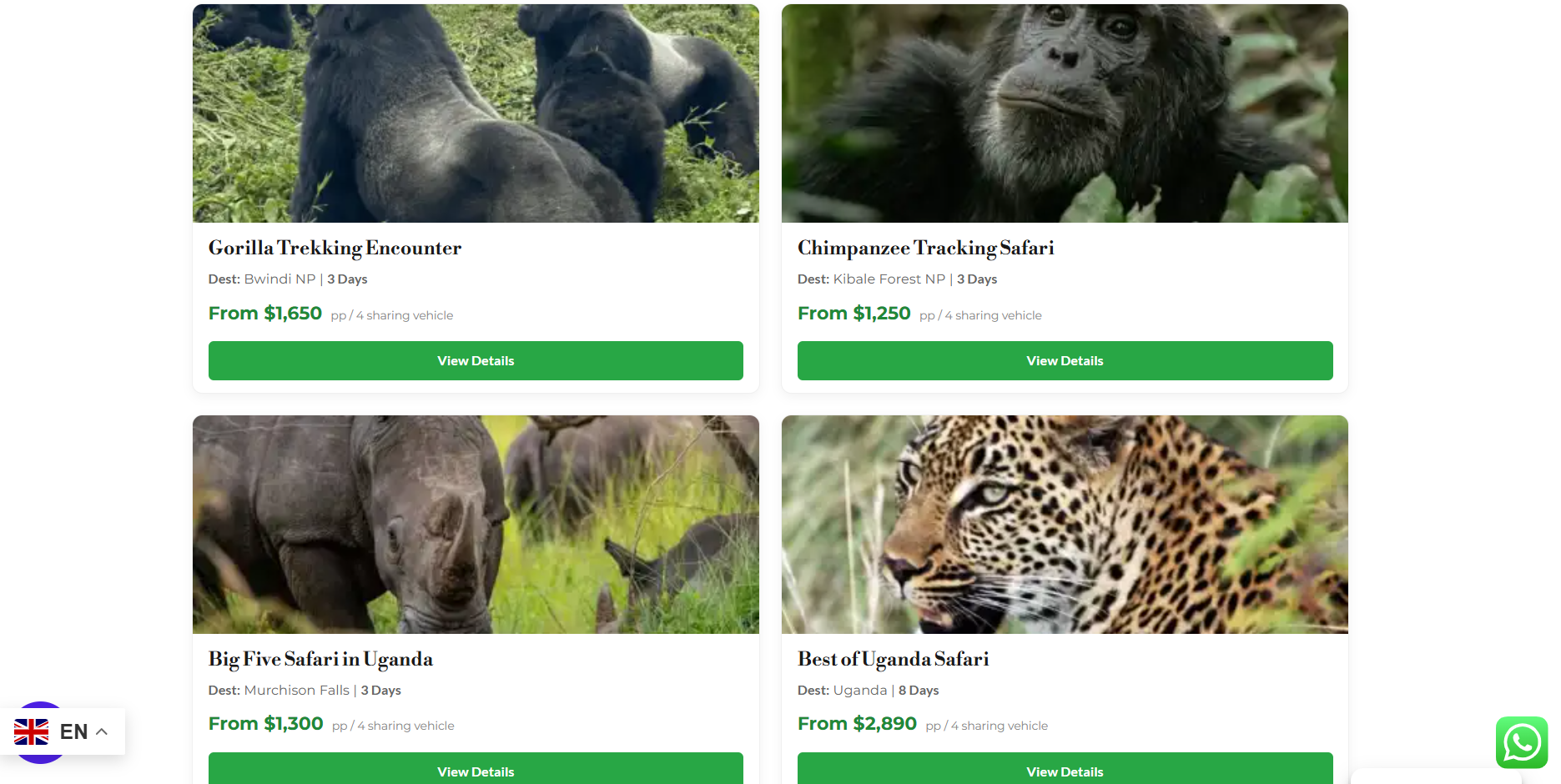 Our 5-day primate safari is designed for travelers who want more than a single encounter. It pairs gorilla trekking with other primate experiences across Uganda’s most rewarding parks. All packages include comfortable 4×4 Safari Vans, Uganda Wildlife Authority permits, and expert local guides who know exactly where habituated families range during each season.
Browse our full range of gorilla trekking experiences or explore all Uganda wildlife tours to find the right fit. Contact PawMac Safaris to get your 2026 quote and secure your gorilla permit before availability closes.
Our 5-day primate safari is designed for travelers who want more than a single encounter. It pairs gorilla trekking with other primate experiences across Uganda’s most rewarding parks. All packages include comfortable 4×4 Safari Vans, Uganda Wildlife Authority permits, and expert local guides who know exactly where habituated families range during each season.
Browse our full range of gorilla trekking experiences or explore all Uganda wildlife tours to find the right fit. Contact PawMac Safaris to get your 2026 quote and secure your gorilla permit before availability closes.


