


- 93 Views
- 11 Min Read
- (0) Comment
TL;DR:
- Uganda offers a diverse 14-day safari experience featuring mountain gorillas, chimpanzees, and iconic landscapes. Proper planning and ethical travel choices ensure conservation support and meaningful community impact. Longer itineraries foster deeper understanding, responsible tourism, and sustainable benefits for local communities and wildlife.
Uganda earns its nickname. The 14 day Pearl of Africa tour is widely regarded as the most complete way to experience a country that packs mountain gorillas, tree-climbing lions, the source of the Nile, and over 1,000 bird species into a single destination. But planning this journey is genuinely complex. Gorilla permits sell out months in advance, park combinations require careful routing, and ethical travelers need to know their money is actually reaching the wildlife and communities it should support. This guide walks you through every step, from booking to the final game drive, so you arrive prepared and leave with a clear conscience.
Table of Contents
- What makes the Pearl of Africa unique for wildlife and gorilla tours?
- Essential preparations: permits, packing, and planning for your adventure
- Step-by-step: 14 day Pearl of Africa tour itinerary and daily highlights
- Making your journey matter: sustainability, conservation, and local community impact
- Why a 14 day Uganda tour is the gold standard for ethical safari travel
- Book your ethical 14 day Pearl of Africa adventure
- Frequently asked questions
Key Takeaways
| Point | Details |
|---|---|
| Choose ethical operators | Request documentation of conservation and community support for your tour. |
| Book permits early | Secure gorilla and wildlife permits several months in advance for best availability. |
| Follow a diverse itinerary | A well-planned 14 day tour showcases Uganda’s top wildlife, culture, and conservation sites. |
| Prioritize local impact | Select tours and experiences that directly benefit local people and preserve habitats. |
| Commit to responsible travel | Practice sustainability—leave a positive mark on Uganda’s wildlife and communities. |
What makes the Pearl of Africa unique for wildlife and gorilla tours?
Uganda sits at the intersection of East and Central Africa, which is why its biodiversity is so strikingly dense. In 14 days, a well-planned Pearl of Africa itinerary can take you from the mist-shrouded slopes of Bwindi Impenetrable Forest to the wide savanna channels of Queen Elizabeth National Park and the thundering cascade of Murchison Falls. Few countries on the continent offer that range in a single trip.
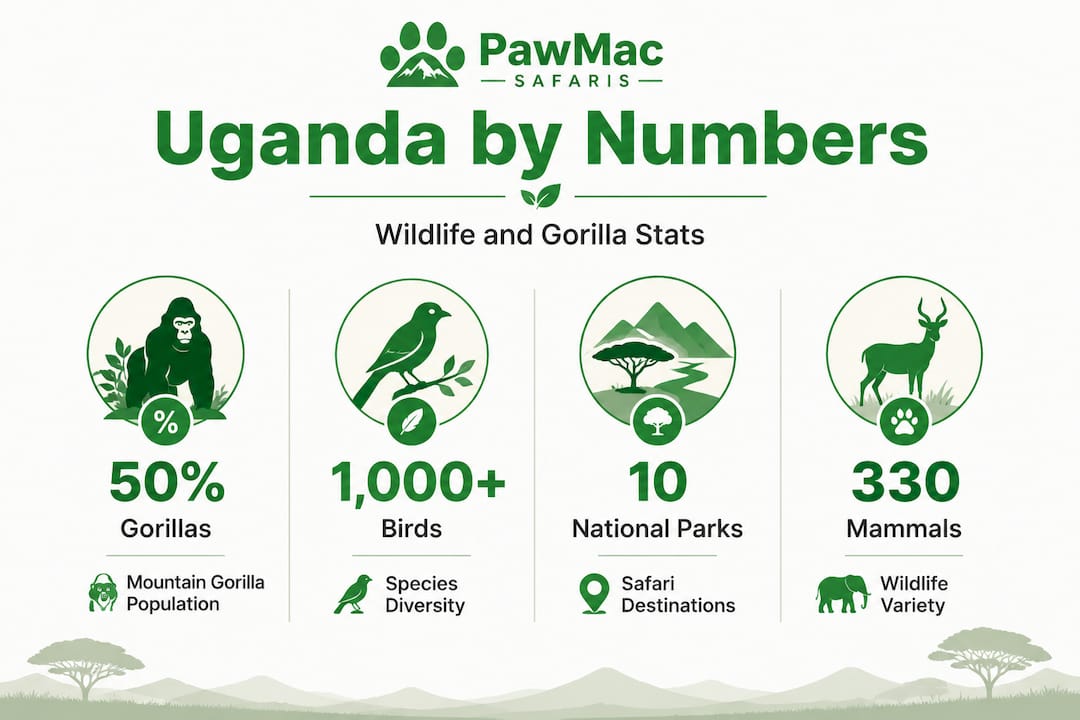
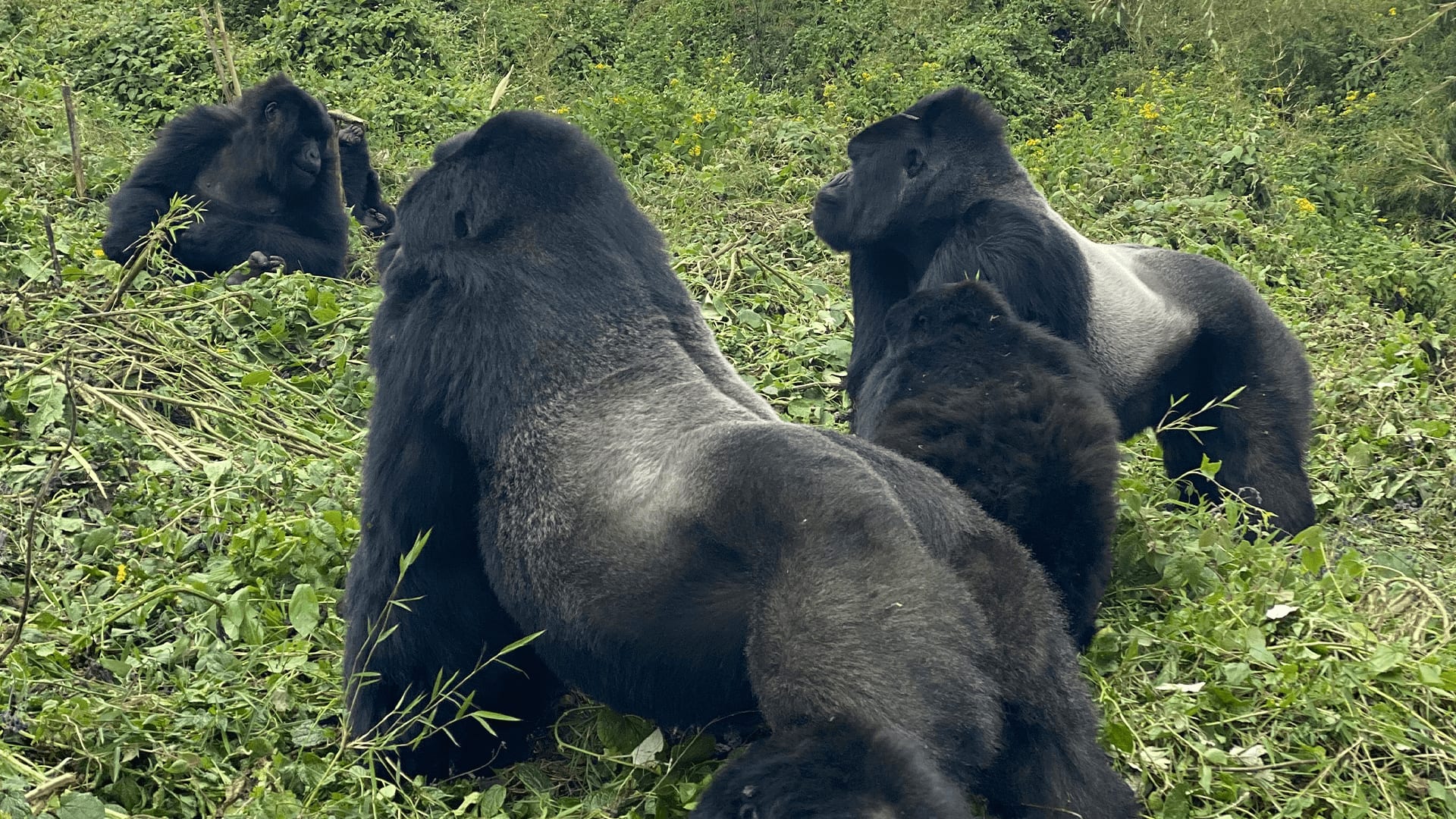
The wildlife encounters here are genuinely rare. Uganda is home to roughly half of the world’s remaining mountain gorillas, all protected within habituated gorilla families in Bwindi and Mgahinga. Beyond gorillas, you can track chimpanzees in Kibale Forest, spot the elusive shoebill stork in Mabamba Swamp, and watch lions that have adapted to sleeping in fig trees along the Kazinga Channel. These are not manufactured safari experiences. They are encounters shaped by decades of conservation work and community partnership.
What you can expect to see across a 14 day Uganda safari
| Region | Key wildlife | Signature experience |
|---|---|---|
| Bwindi Impenetrable Forest | Mountain gorillas | Gorilla trekking with a habituated family |
| Kibale National Park | Chimpanzees, red colobus | Chimpanzee habituation trek |
| Queen Elizabeth NP | Elephants, hippos, lions | Kazinga Channel boat cruise |
| Murchison Falls NP | Big Five, Nile crocodiles | Falls hike and Nile launch cruise |
| Mabamba Swamp | Shoebill stork, kingfishers | Early morning canoe birding |
Uganda also leads East Africa in community-integrated tourism. A significant portion of gorilla permit revenue flows directly to local communities surrounding the parks. Ethical safari destinations in Uganda are structured so that local guides, lodge staff, and village cooperatives all benefit from visitor spending. Conservation benefit and community support is a recognized benchmark for responsible travel, and Uganda’s model is one of the most cited examples in the region.
Key reasons Uganda stands apart for African wildlife tours:
- Mountain gorilla trekking is available year-round in two separate parks
- Over 1,060 bird species recorded, more than any other country in Africa per square kilometer
- Chimpanzee habituation experiences allow full-day contact with wild primates
- Community tourism programs are embedded directly into park management
- African safari destinations in Uganda offer genuine off-the-beaten-path access that more crowded safari circuits cannot replicate
Essential preparations: permits, packing, and planning for your adventure
Now that you know what makes Uganda extraordinary, let’s look at the nuts and bolts of getting ready for the journey.
The single most important booking task is securing your gorilla trekking permit. In 2026, Uganda Wildlife Authority (UWA) gorilla permits are priced at $800 per person for foreign non-residents. These permits are limited to eight trekkers per habituated gorilla family per day, and Bwindi alone has over 19 habituated families. Demand still outpaces availability during peak season (June through September and December through January), so booking at least three to six months ahead is strongly advised. Gorilla trekking permits in Uganda are significantly more affordable than in neighboring countries, which makes the 14 day Uganda safari a compelling value proposition for serious wildlife travelers.
Permit and preparation checklist
- Book gorilla permits at least three to six months before travel, especially for June to September
- Secure chimpanzee habituation permits for Kibale (around $250 per person) if included in your itinerary
- Arrange travel insurance that covers medical evacuation and trip interruption
- Get yellow fever vaccination (mandatory for entry into Uganda)
- Pack layered clothing for altitude changes between Bwindi (around 2,300 meters) and lowland parks
- Bring sturdy waterproof hiking boots for forest trekking and savanna game drives
- Carry USD cash for tips, community market purchases, and any on-site fees
Packing comparison: forest trekking vs. savanna game drives
| Item | Forest trekking | Savanna game drives |
|---|---|---|
| Clothing color | Neutral greens and browns | Khaki and earth tones |
| Footwear | Waterproof ankle-support boots | Comfortable closed-toe shoes |
| Rain gear | Waterproof jacket, gaiters | Light rain poncho |
| Optics | Not needed close-up | Binoculars essential |
| Insect protection | Long sleeves, repellent | Repellent, light layers |
Choosing an ethical operator matters as much as packing the right gear. Travelers should receive documentation proving conservation and community benefit, not just marketing claims. Ask your operator directly: what percentage of your fees goes to local communities? Which specific conservation programs do you fund? Verified reviews and transparent impact reports are the standard you should expect.
Pro Tip: Request a written breakdown of how your tour fee is allocated before you pay any deposit. Operators genuinely committed to sustainability will provide this without hesitation.
Plan Your Uganda Safari with Local Experts
 WhatsApp Us
Detailed Uganda safari planning resources can help you cross-check itineraries and identify operators who meet ethical benchmarks.
Step-by-step: 14 day Pearl of Africa tour itinerary and daily highlights
With your paperwork in order and bags packed, here’s how your adventure unfolds, day by day, region by region.
A well-structured 14 day African adventure balances driving time, wildlife intensity, and rest. The routing below minimizes backtracking and maximizes time in the field.
- Day 1: Arrive in Entebbe. Transfer to lakeside lodge on Lake Victoria. Evening orientation briefing.
- Day 2: Morning shoebill canoe trip at Mabamba Swamp. Afternoon drive to Kibale National Park.
- Day 3: Full-day chimpanzee habituation experience in Kibale Forest. This is a six to eight hour immersive trek alongside researchers.
- Day 4: Morning chimp tracking (standard permit). Afternoon drive to Queen Elizabeth National Park.
- Day 5: Full game drive through Kasenyi Plains. Afternoon Kazinga Channel boat cruise (hippos, elephants, buffalo).
- Day 6: Early morning game drive. Option: Ishasha sector for tree-climbing lions. Drive to Bwindi.
- Day 7: Gorilla trekking day. Trek duration varies from one to six hours depending on gorilla family location. One full hour with the gorillas upon encounter.
- Day 8: Optional second gorilla trek or community walk with local Batwa guides.
- Day 9: Drive north toward Murchison Falls National Park. Afternoon game drive.
- Day 10: Morning game drive (lions, giraffes, elephants, Cape buffalo). Afternoon Nile launch cruise to the base of Murchison Falls.
- Day 11: Hike to the top of Murchison Falls. Delta boat trip for shoebill sightings.
- Day 12: Final morning game drive. Drive to Ziwa Rhino Sanctuary for white rhino tracking on foot.
- Day 13: Cultural tour in Uganda: visit a local community project, traditional craft cooperative, or school program supported by your operator.
- Day 14: Return to Entebbe. Optional Entebbe Botanical Gardens walk. Departure.
“Responsible travel reviews check for local and environmental benefit as part of their verification process.”
Pro Tip: On gorilla trekking days, start the briefing at 7:30 a.m. sharp and eat a full breakfast beforehand. Treks can run long, and energy levels matter more than most travelers expect.
The advantages of guided safaris in Uganda are especially clear on a 14 day itinerary. An experienced local guide reads animal behavior, knows ranger networks across parks, and adjusts routes based on real-time wildlife movement data.
Making your journey matter: sustainability, conservation, and local community impact
After seeing where and how your time is spent, let’s look at how your choices as a traveler shape real outcomes.
Every gorilla permit purchased contributes directly to Uganda Wildlife Authority’s community revenue sharing program, which channels a portion of park fees to villages surrounding Bwindi and Mgahinga. This funding supports schools, health centers, and agricultural projects. It also gives communities a direct financial reason to protect gorilla habitat rather than convert it to farmland. The numbers are significant: gorilla permits fund conservation and local development programs that would otherwise have no reliable funding source.
What to look for in a genuinely sustainable Uganda tour operator:
- Published community benefit reports or third-party impact audits
- Local guide employment at all levels, including senior leadership
- Partnerships with lodges that source food locally and manage waste responsibly
- Transparent permit fee handling with receipts from Uganda Wildlife Authority
- Connections to community projects you can visit and verify in person
“Travelers should check for verified, review-based evidence of conservation and local impact, as per Responsible Travel.”
Impact snapshot: where your tour spending goes
A $800 gorilla permit alone generates meaningful revenue for UWA’s conservation programs. When combined with lodge fees, guide wages, community market purchases, and cultural tour fees, a single traveler on a 14 day tour can inject between $4,000 and $8,000 into the local economy, depending on accommodation tier. Luxury Uganda holidays at higher-end lodges often include built-in community contributions, making the impact even more direct.
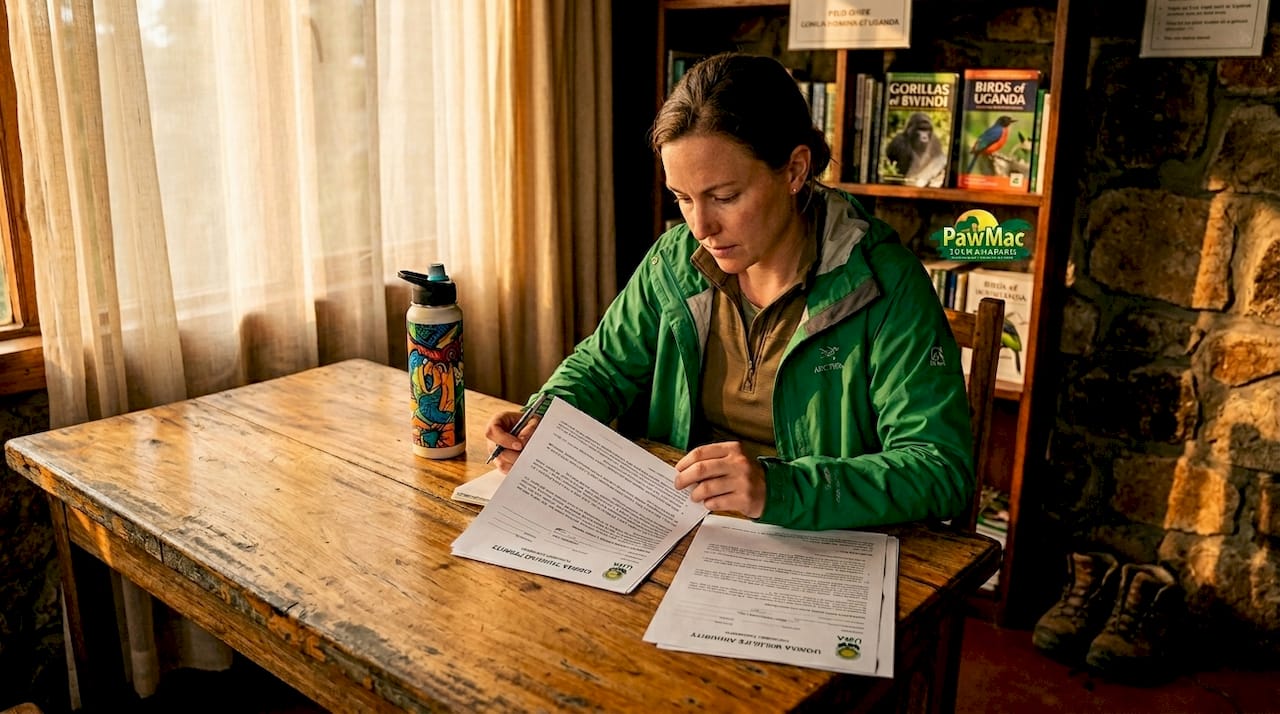
Sustainable safari practices go beyond permit fees. They include respecting minimum distance rules with gorillas (seven meters), not feeding wildlife, staying on designated trails, and choosing operators who actively train guides in low-impact trekking methods.
Why a 14 day Uganda tour is the gold standard for ethical safari travel
Here is an uncomfortable truth about short safari trips: they often deliver the highlight reel without the context. A three-day gorilla trek is thrilling. But it rarely gives you enough time to understand the landscape you’re moving through, the communities that live alongside the parks, or the conservation challenges that make each encounter possible. Travelers who rush through Uganda often leave with great photos and very little understanding of what they actually witnessed.
A 14 day Pearl of Africa tour changes that equation. With two weeks, you move slowly enough to notice things. You spend a full day with chimpanzees, not just an hour. You take a cultural tour in Uganda that isn’t a staged performance but a genuine exchange. You visit Ziwa Rhino Sanctuary and learn why white rhinos were reintroduced to Uganda after local extinction. These details accumulate into something that short trips simply cannot produce: genuine understanding.
There is also a practical conservation argument. Longer tours distribute visitor spending across more communities and more park zones. They support a wider range of local businesses. They reduce the pressure on single high-traffic sites. Responsible safari advice consistently points to itinerary length as one of the most underrated factors in measuring real travel impact.
The travelers who get the most from Uganda are not the ones who moved fastest. They are the ones who stayed long enough to let the country reveal itself.
Book your ethical 14 day Pearl of Africa adventure
Ready to experience Uganda with real impact and meaning? PawMac Safaris designs every itinerary around Ugandan-led expertise, verified community partnerships, and ethical wildlife encounters. Whether you’re drawn to gorilla trekking in Bwindi, the big game of Murchison Falls, or the cultural depth of a community visit, every day of your journey is built with purpose.

Explore Uganda wildlife safaris that are fully customized to your travel dates, group size, and conservation priorities. Browse Uganda safari tours to compare itinerary options and accommodation tiers. For the centerpiece of any Pearl of Africa itinerary, review our gorilla trekking experiences and secure your permit before availability closes for 2026.
Contact PawMac Safaris via WhatsApp with your travel dates to receive a personalized quote and confirm gorilla permit availability for your preferred dates.
Frequently asked questions
How difficult is gorilla trekking in Uganda?
Gorilla trekking is moderately challenging, involving hikes through dense forest terrain that can last anywhere from one to six hours, but most healthy adults complete the trek successfully with proper footwear and a reasonable fitness level.
What proof should I request to ensure my safari supports conservation?
Ask your operator for documentation or verified reviews showing specific conservation and community impact, which is a standard recommended by Responsible Travel for any ethical wildlife tour.
When should I book gorilla and wildlife permits for a 14 day Uganda tour?
Book gorilla permits at least three to six months in advance, particularly for peak travel months from June through September, to avoid missing out on available family groups.
Are 14 day tours more sustainable than shorter safaris?
Longer tours typically spread visitor spending across more communities and park zones, and immersive tours have greater verified impact on conservation and local economic development than quick, high-traffic visits.
What is included in a standard 14 day Pearl of Africa tour package?
A well-structured package typically includes park entry fees, gorilla trekking permits, accommodation, meals, a 4×4 Safari Van with a professional guide, and scheduled community or cultural visits throughout the itinerary.
Recommended
- Your ideal 14 day Pearl of Africa tour guide
- Discover Uganda’s Animals: Safaris & Gorilla Trekking Guide
- 15 Days Ultimate Uganda Safari | PawMac Safaris
- Uganda safari itinerary: 7 day gorilla and wildlife route


