


- 45 Views
- 18 Min Read
- (0) Comment
Uganda is one of the rare safari destinations where a single itinerary can move from rainforest primates to open savanna, papyrus wetlands, volcanic foothills, and powerful Nile landscapes. That variety is exactly why choosing the right wildlife tours in Uganda matters. A good itinerary is not simply a list of parks. It is a carefully paced route that balances permits, drive times, activity intensity, lodge standards, seasonal conditions, and the kind of encounters you most want to remember.
For many travelers, gorilla trekking is the anchor. But Uganda becomes far richer when you add the right supporting experiences: chimpanzee tracking in Kibale, boat safaris on the Nile or Kazinga Channel, rhino tracking at Ziwa, night drives, walking safaris, shoebill excursions, and remote game viewing in Kidepo Valley. The best combinations depend on how many days you have, your budget, your fitness level, and whether your priority is photography, families, rare species, or premium comfort.
Below is a practical, itinerary-focused guide to the wildlife tours worth adding to your Uganda safari in 2026, with realistic cost context and planning notes to help you decide what deserves space in your route.
How to choose the right wildlife tours in Uganda
The strongest Uganda itineraries are built around contrast. If you spend one day on foot in a dense rainforest, the next major wildlife experience should ideally feel different, perhaps a savanna game drive, a boat safari, or a wetland birding excursion. This keeps the journey immersive without making it repetitive.
A well-designed route also respects geography. Uganda looks compact on a map, but road travel between major safari regions can be long. Bwindi Impenetrable National Park, Kibale National Park, Queen Elizabeth National Park, Murchison Falls National Park, Kidepo Valley National Park, and Lake Mburo National Park each reward time on the ground. Trying to rush through too many regions can reduce the quality of your sightings and increase fatigue.
Use this quick comparison as a starting point:
| Wildlife tour | Best for | Typical time needed | 2026 budget notes |
|---|---|---|---|
| Gorilla trekking in Bwindi or Mgahinga | Once-in-a-lifetime primate encounters | 2-3 nights in the region | Gorilla permit is typically USD 800 for foreign non-residents |
| Chimpanzee tracking in Kibale | Active rainforest wildlife and vocal primates | 1-2 nights | Kibale chimp tracking permit is typically USD 250 for foreign non-residents |
| Murchison Falls game drives and Nile boat safari | Elephants, giraffes, lions, buffalo, Nile scenery | 2-3 nights | Park fees, boat fees, vehicle, guide, and lodge category shape cost |
| Queen Elizabeth and Kazinga Channel | Hippos, elephants, buffalo, birds, possible lions | 2 nights | Excellent value when paired with Kibale or Bwindi |
| Kidepo Valley safari | Remote wilderness and dramatic landscapes | 3 nights minimum | Higher cost due to distance or domestic flight logistics |
| Lake Mburo walking or boat safari | Shorter routes, zebras, impalas, relaxed pacing | 1 night | Useful first or last safari stop between Entebbe and western Uganda |
| Shoebill and wetland excursions | Birders, photographers, unusual species | Half day to full day | Costs vary by boat, guide, access point, and group size |
For a park-by-park planning perspective, PawMac Safaris has also published a helpful guide to the must-see national parks in Uganda for wildlife, which pairs well with this itinerary shortlist.
1. Gorilla trekking in Bwindi or Mgahinga
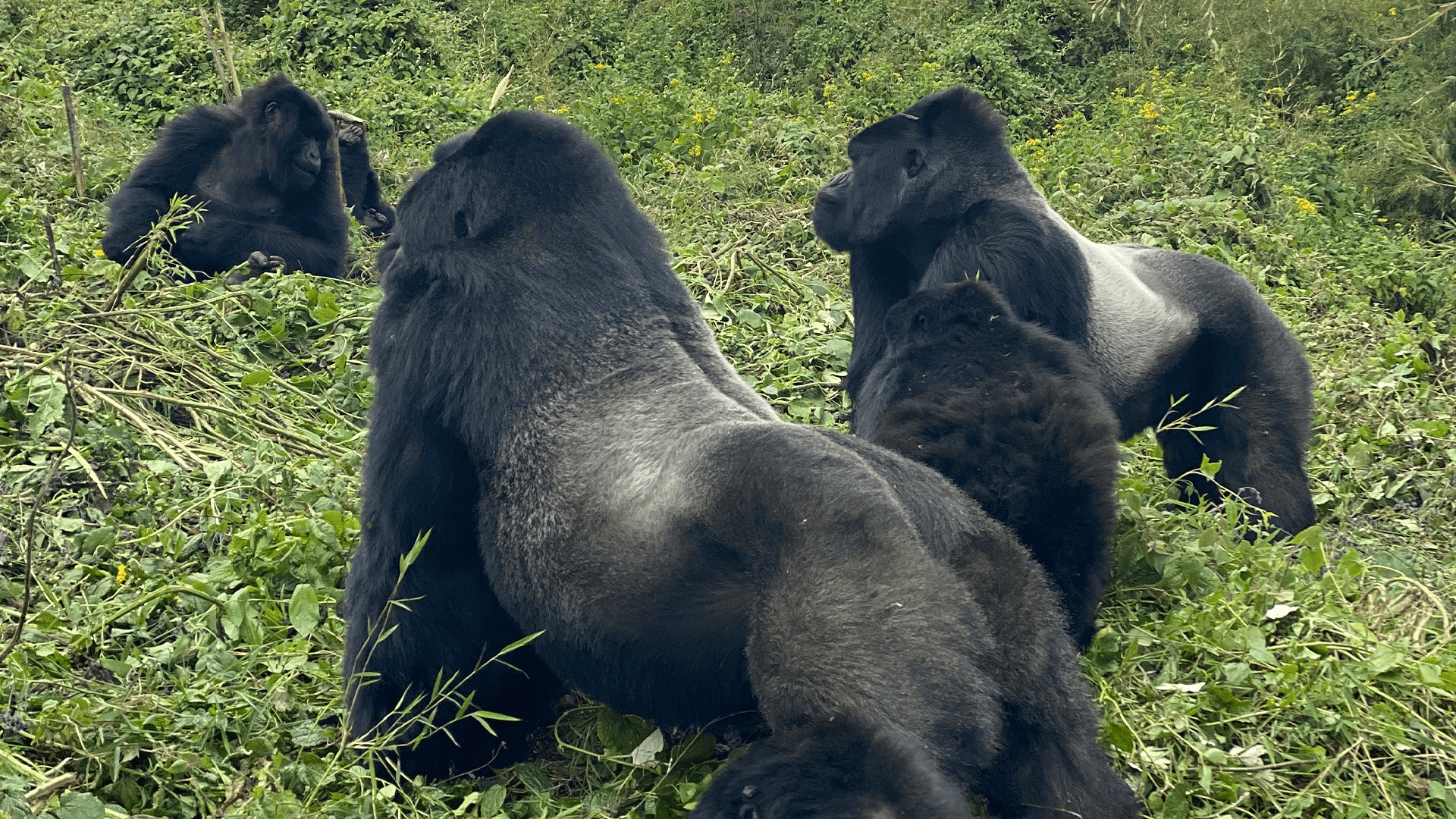
Gorilla trekking is the most iconic wildlife tour in Uganda, and for good reason. Spending a regulated hour with a habituated mountain gorilla family is intimate, emotional, and unlike a vehicle-based safari. The experience is carefully managed by Uganda Wildlife Authority rangers, with limited permits issued per gorilla group each day.
Bwindi Impenetrable National Park is the main gorilla trekking destination, with several trekking sectors including Buhoma, Ruhija, Rushaga, and Nkuringo. Each sector has its own terrain, lodge options, and logistical implications. Mgahinga Gorilla National Park, near the Virunga volcanoes, offers a more compact and scenic alternative, often appealing to travelers who like volcanic landscapes and want to combine gorillas with golden monkey tracking.
For 2026 planning, the gorilla permit is typically USD 800 per person for foreign non-residents, USD 700 for foreign residents, and lower rates for eligible East African citizens. This permit cost is separate from accommodation, transport, meals, porter fees, tips, and any optional activities.
Expect the trek to take anywhere from two to six hours, sometimes longer depending on where the gorillas are that day. The actual viewing time with the gorillas is usually limited to one hour. Fitness helps, but you do not need to be an athlete. What matters most is honest preparation, good footwear, rain protection, patience, and allowing enough nights in the area so the experience does not feel rushed.
Plan Your Uganda Safari with Local Experts
 WhatsApp Us
Budget-wise, Bwindi can be shaped for different travel styles. Comfortable midrange lodges may fall roughly in the USD 250-500 per person per night range depending on season and inclusions, while premium and luxury forest lodges can rise to USD 700-1,500+ per person per night. Budget guesthouses can cost less, but location, comfort, and transfer time to the trekking briefing point should be considered carefully.
Add this tour if you want Uganda’s headline wildlife experience and are willing to build the rest of the itinerary around permit availability.
2. Chimpanzee tracking in Kibale National Park
If gorillas provide quiet intensity, chimpanzees bring energy, sound, speed, and drama. Kibale National Park is Uganda’s premier chimpanzee tracking destination and one of the best places in the country to experience a thriving rainforest primate ecosystem.
A typical chimpanzee tracking excursion begins with a briefing, then a guided forest walk led by trained rangers and trackers. Once the chimpanzees are located, viewing is usually limited to one hour. The experience can be exhilarating because chimpanzees are highly mobile. They may feed in fig trees, move across the forest floor, vocalize loudly, groom, or interact socially in ways that reveal complex group behavior.
For 2026, the Kibale chimpanzee tracking permit is typically USD 250 per foreign non-resident. Chimpanzee habituation experiences, when available, cost more and require a longer time commitment. Travelers should book early for peak months, especially June to September and December to February.
Kibale pairs naturally with Queen Elizabeth National Park. The road connection is practical, and the shift from rainforest to crater lakes and savanna makes the journey feel varied. Nearby Bigodi Wetland Sanctuary is also worth adding for birds, monkeys, community-guided walks, and a softer activity after the intensity of chimp tracking.
Choose Kibale if you want a primate experience that feels active and educational. It is also an excellent choice for travelers who want to compare gorilla and chimpanzee behavior in the same Uganda itinerary.
3. Murchison Falls game drives and Nile boat safari
Murchison Falls National Park is one of the most complete wildlife tour additions in Uganda because it combines classic game drives with the Nile. The park’s northern savanna supports elephants, giraffes, buffalo, lions, hartebeest, oribi, Uganda kob, and many bird species. The river adds hippos, crocodiles, waterbirds, and dramatic scenery.
The boat safari to the base of Murchison Falls is often a highlight. As the Nile narrows and powers through a rocky gorge, the landscape becomes more than a backdrop. It becomes part of the safari story. Travelers interested in wildlife photography often appreciate the boat’s low angle for hippos, crocodiles, elephants near the banks, and birds in flight.
A well-paced Murchison itinerary usually includes an early morning game drive, an afternoon boat safari, and, if time allows, a visit to the top of the falls. The most rewarding stays are usually two or three nights. One night is possible, but it rarely does justice to the park.
Murchison is also useful for travelers who want a Big Five style Uganda itinerary. Rhinos are not found roaming freely inside Uganda’s main savanna parks, so itineraries often add Ziwa Rhino Sanctuary en route between Entebbe or Kampala and Murchison Falls. This creates the opportunity to combine rhino tracking with lions, elephants, buffalo, and leopards in the wider safari route.
Costs vary significantly based on lodge level and transport. Park entry fees for foreign non-residents are commonly around USD 40-45 per person per 24 hours in Uganda’s major parks, while boat trips, ranger activities, ferry logistics, private vehicle use, fuel, and guiding are additional cost factors. For private safaris, the vehicle and guide are not just transport expenses. They are central to the quality of the experience.
4. Queen Elizabeth National Park and the Kazinga Channel
Queen Elizabeth National Park is one of Uganda’s most versatile wildlife destinations. Its strength is diversity: open plains, crater scenery, wetlands, forests, lakes, and the famous Kazinga Channel. It is especially convenient for travelers building a western Uganda circuit with Kibale and Bwindi.
The Kazinga Channel boat safari is the park’s signature experience. It is one of the most reliable places in Uganda to see large numbers of hippos, along with buffalo, elephants, crocodiles, pelicans, kingfishers, fish eagles, and many other water-associated species. The concentration of wildlife near the water can be exceptional in drier periods.
Game drives in the Kasenyi plains offer chances for lions, Uganda kob, buffalo, elephants, warthogs, and hyenas. In the southern Ishasha sector, travelers may search for tree-climbing lions. Sightings are never guaranteed, but the experience adds a strong sense of anticipation to the route between Queen Elizabeth and Bwindi.
Queen Elizabeth is a smart addition if you want a varied safari without extreme remoteness. It works especially well for travelers with 7-10 days who want primates, savanna, and boat-based wildlife without adding the longer journey to Kidepo.

5. Kidepo Valley National Park for remote wilderness
Kidepo Valley National Park is for travelers who want Uganda at its wildest and least crowded. Located in the far northeast, Kidepo is remote, dramatic, and visually distinct from the more frequently visited western circuit. Its broad valleys, rugged hills, and open grasslands create a sense of space that feels deeply cinematic.
Wildlife may include buffalo, elephants, lions, giraffes, zebras, hartebeest, jackals, hyenas, ostriches, and seasonal concentrations of plains game. The park is also known for strong predator potential, although sightings depend on time, conditions, and the skill of your guide.
Kidepo is not the cheapest add-on. Road transfers are long, so many premium travelers choose scheduled or chartered domestic flights when available. Flights can add several hundred dollars per person per sector, and remote lodge operations often cost more due to logistics. For this reason, Kidepo makes the most sense on a 12-14 day Uganda itinerary, or as a focused fly-in extension for travelers who have already experienced gorillas and western Uganda.
The payoff is exclusivity. Vehicle density is usually low, the landscapes are immense, and the safari rhythm feels unhurried. If you are seeking a premium wilderness extension rather than simply another park, Kidepo deserves serious consideration.
6. Lake Mburo for walking safaris, zebras, and gentle pacing
Lake Mburo National Park is smaller than Uganda’s major savanna parks, but that is part of its appeal. It is often used as a first or last safari stop because it lies conveniently between Entebbe or Kampala and the southwest. It is also a refreshing change of pace after longer gorilla drives.
The park is known for zebras, impalas, elands, topis, buffalo, warthogs, hippos, and rich birdlife. Because Lake Mburo has no resident lions in the way larger predator parks do, guided walking safaris are a major attraction. Experiencing wildlife on foot changes your attention. Tracks, dung, alarm calls, wind direction, and distance suddenly matter more.
Boat trips on Lake Mburo can add hippos, crocodiles, African fish eagles, and lakeside scenery. Some travelers also enjoy horseback safari experiences offered by specialist providers in the area, although availability and suitability should be confirmed in advance.
Lake Mburo is particularly good for families, repeat safari travelers, and anyone who wants a softer landing before more intense activities like gorilla trekking. It also helps break up long drives, which can improve the overall comfort of a Uganda itinerary.
7. Shoebill and wetland wildlife tours
Uganda’s wetlands add a completely different layer to a wildlife safari. The shoebill is the headline species for many birders, but wetland tours are not only for specialists. The slow movement through papyrus channels, the calls of waterbirds, and the possibility of seeing one of Africa’s most unusual birds make these excursions memorable even for casual wildlife enthusiasts.
Mabamba Swamp, near Entebbe, is one of the most practical shoebill excursions because it can often be added at the beginning or end of a safari. This makes it valuable for travelers with a spare morning before an international flight, provided timing works safely. Bigodi Wetland near Kibale is another excellent wetland experience, especially when combined with chimpanzee tracking.
Costs vary depending on the access point, private transfers, canoe or boat arrangements, guide fees, and group size. As a planning estimate, a guided wetland excursion may add roughly USD 50-150+ per person, excluding longer private transfers where applicable.
Wetland tours are especially rewarding for photographers. If image-making is a major part of your trip, it is worth reviewing PawMac Safaris’ Uganda wildlife photography safari guide before finalizing your route, because boat position, light direction, and departure time can strongly affect results.
8. Night drives and nocturnal wildlife experiences
Most first-time safari travelers focus on daylight sightings, but Uganda’s nocturnal activity can be just as fascinating. Night drives, where permitted and properly guided, may reveal species and behavior that are rarely seen during the day. Possibilities include bush babies, genets, civets, nightjars, owls, hyenas, leopards, and hunting behavior.
Not every park allows night drives in the same way, and rules can change. These activities should always be arranged through the correct park authorities and with qualified guides. The experience is not about racing around with a spotlight. Done well, it is a patient, ethical search for wildlife while minimizing disturbance.
Night activities are best added when you have at least two nights in a park. If you arrive late, rush a game drive, do a night drive, and leave the next morning, the experience can feel exhausting. But when placed after a relaxed afternoon and before a slower following morning, it can become a highlight.
9. Rhino tracking at Ziwa for a fuller Big Five itinerary
Ziwa Rhino Sanctuary is an important addition for travelers who specifically want a Big Five themed Uganda safari. Since rhinos are not part of the standard wildlife experience in Uganda’s main national parks, Ziwa fills that gap in a controlled conservation setting.
The activity is typically conducted on foot with guides and rangers. It is not the same as viewing rhinos from a vehicle in an open savanna park. The walking element adds immediacy and helps visitors understand the conservation work behind the experience.
Ziwa is most often added on the route to or from Murchison Falls National Park. This makes logistical sense and avoids adding a separate travel day. Activity fees change over time, but travelers should commonly budget around USD 50+ per adult for rhino tracking, with transport and guiding costs handled separately as part of the wider safari plan.
Add Ziwa if seeing rhinos matters to your personal checklist, or if you want a conservation-focused stop that breaks up the journey to Murchison Falls.
Suggested Uganda itinerary combinations by trip length
The right wildlife tours depend heavily on how many days you have. The table below gives realistic combinations without overloading the route.
| Trip length | Strong wildlife combination | Who it suits |
|---|---|---|
| 5-6 days | Bwindi gorilla trekking plus Lake Mburo | Travelers focused on gorillas with limited time |
| 7-8 days | Kibale chimpanzees, Queen Elizabeth, Bwindi gorillas | First-time visitors wanting primates and savanna |
| 9-10 days | Murchison Falls, Kibale, Queen Elizabeth, Bwindi | Travelers wanting Nile scenery, primates, and big game |
| 11-12 days | Murchison, Kibale, Queen Elizabeth, Bwindi, Lake Mburo | A well-rounded classic Uganda wildlife circuit |
| 13-14+ days | Add Kidepo Valley or a deeper Mgahinga extension | Premium travelers, photographers, and repeat safari guests |
If you also want community context, food traditions, music, craft, or heritage experiences, consider adding one or two carefully chosen cultural stops rather than treating culture as an afterthought. PawMac Safaris explains this well in its guide to cultural tours in Uganda that add meaning to your safari.
Budget planning for wildlife tours in Uganda
Uganda can be planned as a comfortable midrange safari, a high-end private journey, or a luxury fly-in experience. The largest cost drivers are permits, accommodation level, vehicle and guide arrangements, internal flights, season, and how remote your itinerary becomes.
For 2026, use these broad planning figures as a starting point, not as a final quote:
| Cost item | Typical planning range or note |
|---|---|
| Gorilla trekking permit | Usually USD 800 per foreign non-resident |
| Kibale chimpanzee tracking permit | Usually USD 250 per foreign non-resident |
| Major park entry fees | Commonly around USD 40-45 per foreign non-resident per 24 hours |
| Budget accommodation | Often from about USD 80-180 per person per night, depending on location and inclusions |
| Midrange accommodation | Often about USD 250-500 per person per night in key safari areas |
| Luxury accommodation | Often USD 700-1,500+ per person per night in premium gorilla or remote safari areas |
| Domestic flights | Can add several hundred dollars per person per sector |
| Porter for gorilla trekking | Often a modest extra cost and highly recommended |
| Tips | Discretionary, but should be planned for guides, rangers, lodge staff, and porters |
Season also affects cost. June to September and December to February are popular because conditions are often favorable for trekking and game viewing, although Uganda remains a year-round destination. Peak periods can bring higher lodge demand and tighter permit availability. March to May and parts of November may offer better value at some properties, but travelers should be prepared for wetter conditions and occasional road challenges.
Families and long-haul travelers should also plan non-safari logistics early so the holiday itself feels calm. For example, if your Uganda safari is part of a larger international transition and you are moving onward with children, specialized services such as rental and school relocation support in Australia can help separate those practical decisions from your safari planning.
What to book early for a 2026 Uganda safari
The most time-sensitive pieces are gorilla permits, chimpanzee permits, and premium lodges in small-capacity areas. Bwindi lodges near preferred trekking sectors can sell out during high-demand months. This matters because staying far from your assigned briefing point may mean very early starts and longer transfers on mountain roads.
You should also book early if you want:
- A specific gorilla trekking sector in Bwindi.
- Luxury lodges with limited rooms.
- A private vehicle and senior local guide during peak season.
- Domestic flights to reduce long road transfers.
- Specialist photography pacing or family-friendly routing.
- Kidepo Valley, where logistics require more careful coordination.
The best itineraries are not simply the most expensive. They are the ones where each day has a purpose, the drive times are realistic, and your guide has enough flexibility to respond to conditions on the ground.
Frequently Asked Questions
What are the best wildlife tours in Uganda for first-time visitors? The strongest first-time combination is usually gorilla trekking in Bwindi, chimpanzee tracking in Kibale, a Kazinga Channel boat safari in Queen Elizabeth, and game drives in either Queen Elizabeth or Murchison Falls. With more time, add Ziwa Rhino Sanctuary or Lake Mburo.
How many days do I need for a good Uganda wildlife itinerary? A focused gorilla itinerary can work in 5-6 days, but 8-12 days is much better if you want primates, savanna wildlife, and boat safaris. For Kidepo Valley or a slower luxury route, plan 13-14 days or more.
Is gorilla trekking worth the permit cost? For most travelers, yes. The permit supports regulated conservation and gives you access to one of the world’s rarest wildlife encounters. The cost is significant, so it is best to build the itinerary carefully around the trek rather than treating it as a rushed add-on.
Can I see the Big Five in Uganda? You can plan a Big Five style itinerary in Uganda by combining rhino tracking at Ziwa with savanna parks such as Murchison Falls or Queen Elizabeth for elephants, buffalo, lions, and possible leopards. Sightings of leopards and lions are never guaranteed.
When is the best time for wildlife tours in Uganda? June to September and December to February are popular for trekking and game viewing. Wetter months can still be rewarding, with greener landscapes and fewer visitors in some areas, but road conditions and trekking trails may be more challenging.
Do I need a private guide for Uganda wildlife tours? A professional local guide greatly improves the experience, especially on multi-park routes. They manage timing, road conditions, park procedures, wildlife behavior, and lodge coordination. For activities such as gorilla trekking and chimpanzee tracking, official ranger guides are also required.
Plan your Uganda wildlife itinerary with PawMac Safaris
The best wildlife tours in Uganda are not one-size-fits-all. A honeymoon itinerary, a family safari, a photographer’s route, and a high-comfort primate expedition should all be designed differently.
PawMac Safaris helps travelers build personalized Uganda safaris with expert local guidance, professional planning, comfortable 4×4 vehicles, and flexible options across budget, midrange, and luxury travel styles. Whether you want gorilla trekking, chimpanzee tracking, Big Five focused wildlife, cultural depth, or a premium multi-park route, the right plan starts with understanding your priorities.
To begin shaping your 2026 Uganda safari, explore PawMac Safaris at pawmacsafaris.com and start planning a route that gives every wildlife experience the time, context, and comfort it deserves.


