


- 120 Views
- 13 Min Read
- (0) Comment
TL;DR:
- Uganda is renowned for its high concentration of wildlife, including half of the world’s mountain gorillas and over 1,000 bird species. The country offers unique experiences such as tree-climbing lions, glaciers near the equator, and the famous Rolex street food, reflecting its rich culture and natural diversity. Technological advances and cultural traditions are driving a vibrant, innovative, and accessible travel scene that fosters deeper connections with visitors.
Uganda surprises nearly every traveler who arrives expecting a typical African safari. The fun facts of Uganda stretch far beyond the Big Five playbook, revealing a country with mist-shrouded rainforests, the world’s most endangered great apes, a street food named after a luxury watch, and mountains that carry permanent glaciers just miles from the equator. Winston Churchill called it ‘The Pearl of Africa’ for a reason, and once you start peeling back the layers, it becomes clear why that nickname still holds.
Table of Contents
- Key takeaways
- 1. Fun facts of Uganda: the culture is layered and alive
- 2. Bwindi and the mountain gorillas
- 3. Tree-climbing lions of Queen Elizabeth National Park
- 4. Over 1,000 bird species in one country
- 5. The Nile River begins here
- 6. The Rwenzori Mountains: glaciers at the equator
- 7. Uganda is not a traditional ‘Big Five’ destination, and that’s the point
- 8. The ‘Rolex’ is a cultural institution
- 9. Pack the right colors: tsetse flies have strong preferences
- 10. Satellite internet is testing Uganda as a frontier
- 11. Mato oput: healing through tradition in northern Uganda
- 12. Quick-reference: Uganda fun facts by category
- Why these facts change the way you travel
- See Uganda’s fun facts come to life with PawMac Safaris
- FAQ
Key takeaways
| Point | Details |
|---|---|
| Uganda hosts half the world’s gorillas | Bwindi Impenetrable National Park shelters roughly 400 to 450 mountain gorillas, more than anywhere else on Earth. |
| Street food named after a luxury watch | The beloved ‘Rolex’ is a rolled chapati stuffed with egg and vegetables, costing about 20 US cents. |
| Over 1,000 bird species recorded | With 1,073+ bird species, Uganda ranks among Africa’s top birdwatching destinations. |
| Mountains with glaciers near the equator | Margherita Peak in the Rwenzori Mountains reaches 16,762 feet, carrying permanent ice almost on the equator. |
| One of the world’s youngest populations | Uganda’s median age of 15 to 17 years shapes every aspect of its culture, energy, and street life. |
1. Fun facts of Uganda: the culture is layered and alive
Uganda is home to more than 56 recognized ethnic groups, each carrying its own language, music, and ceremonial traditions. The official language is English, but Luganda functions as the widely spoken lingua franca in the central region. In the north, Acholi and Langi are common. In the southwest, Runyankole and Rukiga dominate. For a traveler, this means even a single road trip across the country feels like crossing cultural borders.
Social customs reward attentiveness. Greeting elders with a slight bow and both hands extended shows deep respect, and sitting cross-legged in the presence of senior community members is considered disrespectful. Many communities also interpret yawning without covering the mouth as a rude gesture, even a sign of disrespect toward whoever is speaking.
Religious diversity adds another layer. Uganda practices Christianity, Islam, and indigenous spiritual traditions with remarkable tolerance. Catholic and Protestant churches often sit within walking distance of a mosque in the same trading center. Festivals tied to the Muslim calendar, Christian holidays, and traditional kingdom ceremonies all coexist throughout the year.
The youthful population drives a creative, fast-moving street culture. With a median age of around 15 to 17 among its 45.9 million residents, Uganda buzzes with entrepreneurship, music, and innovation in ways that older-demographic countries rarely match.
- Greetings are taken seriously. A handshake held slightly longer than usual signals warmth and trust.
- Dress modestly when visiting villages or religious sites, covering shoulders and knees.
- Accepting food or drink offered by a host is considered polite. Refusing without explanation can cause offense.
- Local music genres like Afrobeats-influenced ‘Afro-pop Uganda’ and traditional Kadodi drumming coexist on the same Kampala playlist.
Pro Tip: Learn two or three words of Luganda before you arrive. ‘Webale’ means thank you and ‘Oli otya’ means how are you. Locals light up the moment they hear a visitor trying.
2. Bwindi and the mountain gorillas
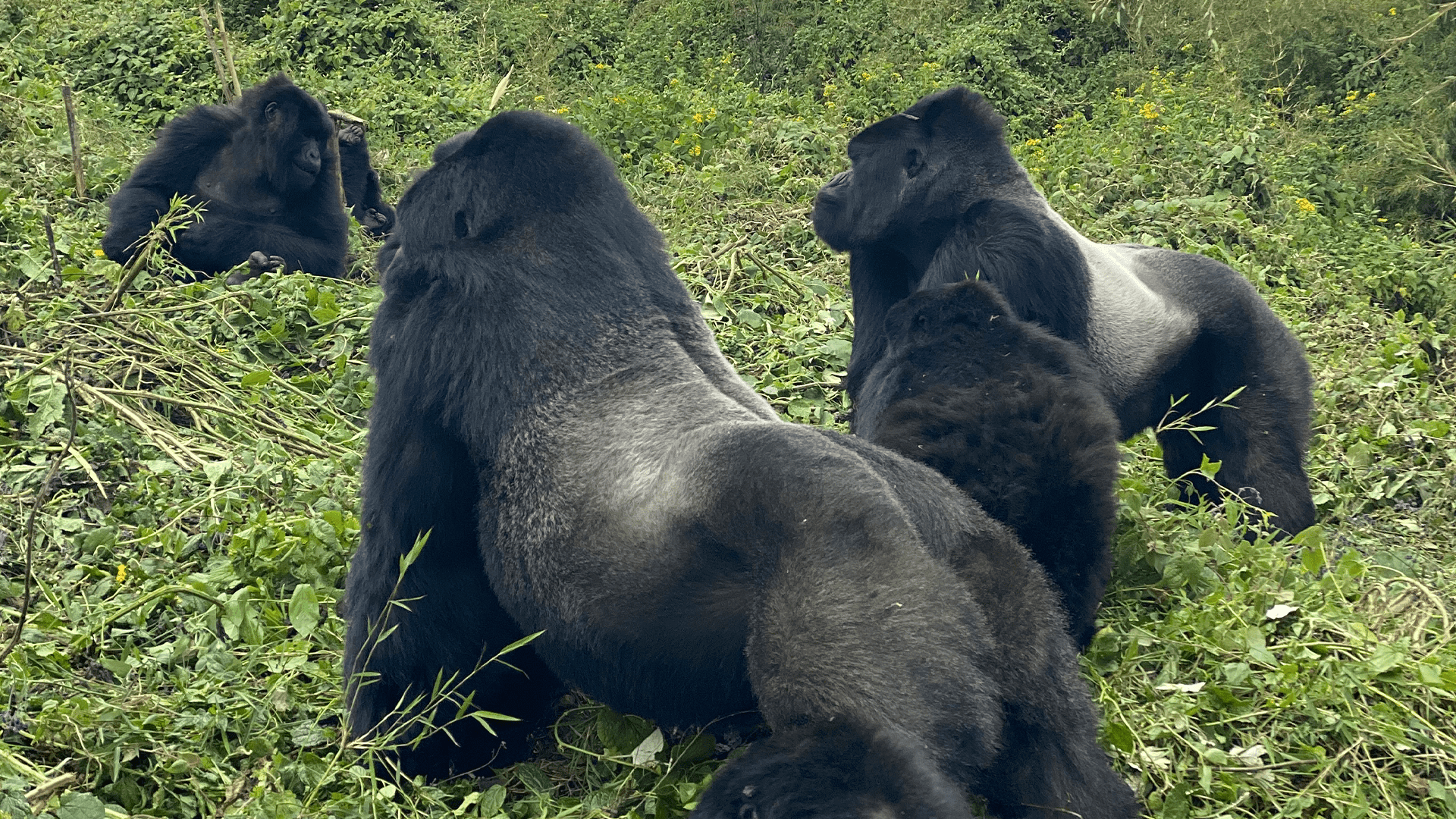
No list of interesting facts about Uganda would be complete without this: Bwindi Impenetrable National Park shelters roughly half the world’s remaining mountain gorillas. That is not a marketing claim. It is a conservation reality. With approximately 400 to 450 individuals living within Bwindi’s dense canopy, Uganda holds the single most concentrated population of this critically endangered species on the planet.
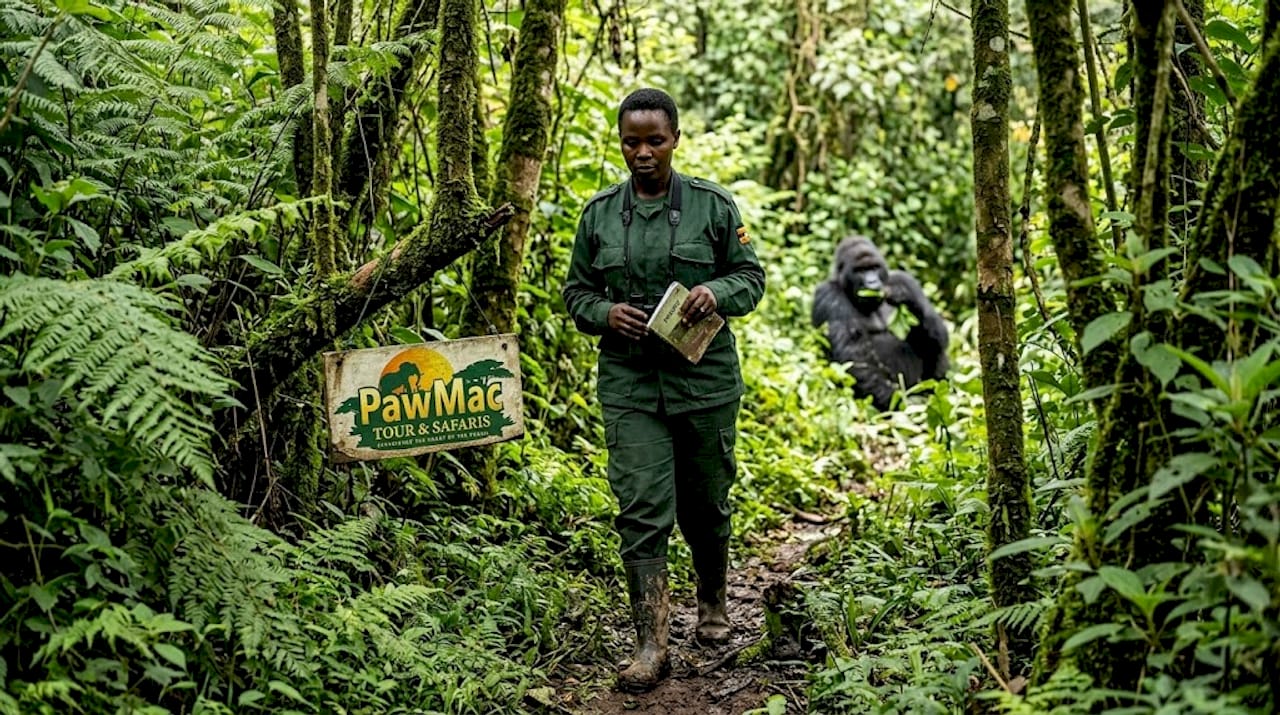
Gorilla trekking permits cost $800 per person per day, a fee that flows directly into Uganda Wildlife Authority conservation budgets and community programs. The trek itself can last anywhere from one hour to eight hours depending on where the habituated gorilla family is located that morning. You spend exactly one hour in the gorillas’ presence once your group reaches them. That hour routinely ranks among travelers’ most profound wildlife experiences, anywhere in the world.
For deeper planning on what to expect, the gorilla trekking guide at PawMac Safaris walks through everything from fitness preparation to what to pack.
3. Tree-climbing lions of Queen Elizabeth National Park
Most lions avoid trees. The lions of the Ishasha sector in Queen Elizabeth National Park did not get that message. This population routinely sprawls across the branches of giant fig trees, sometimes with three or four individuals draped across the same tree at different heights. The behavior is genuinely rare across Africa, observed in only a handful of locations worldwide.
Plan Your Uganda Safari with Local Experts
 WhatsApp Us
Scientists believe the tree-climbing behavior helps these lions escape ground-level insects, catch a breeze in the heat, and get a better vantage point for spotting prey. Whatever the reason, seeing a 300-pound lion lounging 20 feet above the ground is a sight that stops every safari vehicle cold. PawMac Safaris covers the full story of Uganda’s rare wildlife, including Ishasha’s lions, in detail.
4. Over 1,000 bird species in one country
Uganda geography facts rarely get the attention they deserve when it comes to birds. The country records more than 1,073 bird species, which represents roughly 11 percent of the world’s total bird species within a country smaller than Oregon. The African green broadbill, the shoebill stork, and the great blue turaco are three iconic species that draw serious birders from every continent.
The shoebill stork deserves special mention. Standing nearly five feet tall with a prehistoric-looking bill the size of a shoe, it waits motionless in papyrus swamps for hours before snapping up lungfish. Mabamba Swamp near Lake Victoria is the most reliable place on Earth to find one.
Pro Tip: Book a dedicated birdwatching morning at Bigodi Wetland Sanctuary near Kibale Forest. It’s community-run, affordable, and consistently delivers 50+ species in a single walk.
5. The Nile River begins here
The Victoria Nile exits Lake Victoria at Jinja, making Uganda the true starting point of the world’s longest river. From there, the Nile crosses the entire country, powering through Murchison Falls National Park before entering Sudan. At Murchison Falls, the Nile forces through a 7-meter gap with such violence that the roar carries for miles. The resulting plume and rainbow above the gorge is one of East Africa’s most dramatic natural sights.
Standing at the top of Murchison Falls and watching the entire force of the Nile compress through a gap narrower than a doorway puts the power of this river into immediate physical perspective.
6. The Rwenzori Mountains: glaciers at the equator
The Rwenzori Mountains, known historically as the “Mountains of the Moon,” carry something that defies geographic logic. Margherita Peak reaches 16,762 feet above sea level and holds permanent glaciers despite sitting almost exactly on the equator. The range straddles the border between Uganda and the Democratic Republic of Congo, and its upper slopes support a surreal ecosystem of giant heathers, lobelias the size of trees, and mossy forests that feel more like another planet than sub-Saharan Africa.
Trekking the Rwenzoris is demanding, technical, and deeply rewarding for experienced hikers seeking Uganda geography facts they can experience firsthand.
7. Uganda is not a traditional ‘Big Five’ destination, and that’s the point
Here is a unique fact Uganda offers that most safari destinations cannot: the highest concentration of primate species in East Africa. Kibale Forest National Park alone hosts 13 primate species, including chimpanzees, red colobus monkeys, and L’Hoest’s monkeys. Uganda doesn’t need to compete with southern African plains for lions and elephants. It has built its reputation on encounters that feel intimate and rare.
The absence of mass-market safari crowds means your game drive in Queen Elizabeth National Park or your forest walk in Kibale delivers something genuinely personal.
8. The ‘Rolex’ is a cultural institution
One of the most delightful fun facts of Uganda for first-time visitors is discovering that ordering a ‘Rolex’ at a roadside stall has nothing to do with fine Swiss watchmaking. The Rolex is Uganda’s most beloved street food: a chapati rolled around a freshly fried egg, sliced cabbage, tomatoes, and sometimes onions. The name comes from ‘rolled eggs,’ compressed into ‘rolex’ somewhere in the 1990s.
It costs about 20 US cents, fills you completely, and is cooked fresh in under three minutes. Vendors operate from charcoal stoves across every major city and trading center. There is now an annual Rolex festival celebrating the dish, with vendors competing across more than two dozen filling variations. This single food item has driven youth entrepreneurship at a meaningful scale across Uganda.
9. Pack the right colors: tsetse flies have strong preferences
One of the more unexpected interesting facts Uganda offers for practical travelers is this: tsetse flies are strongly attracted to dark blue and black clothing. The reason is biological. Tsetse flies track large mammals partly through color contrast, and dark colors mimic the shade patterns of their natural hosts.
Wearing khaki, olive, tan, or light earth tones does more than help you blend into the bush for wildlife photography. It genuinely reduces your exposure to tsetse bites in certain park areas, particularly around Murchison Falls and parts of Queen Elizabeth National Park.
“The single most practical thing you can do before a Uganda safari is leave the dark clothes at home. Light earth tones protect you and, as a bonus, your wildlife photos will thank you.”
10. Satellite internet is testing Uganda as a frontier
Uganda is quietly becoming a proving ground for next-generation satellite internet connectivity. Starlink provisional licensing and direct-to-cell satellite trials have advanced significantly, marking one of the more surprising fascinating Uganda trivia points for tech-minded travelers. Remote lodges and forest camps that once operated on intermittent mobile data are now trialing reliable broadband.
This shift matters for travelers because it changes what remote Uganda can offer. Real-time communication from Bwindi, live wildlife photography uploads from the field, and reliable contact with your operator mid-itinerary are all becoming realistic expectations rather than pleasant surprises.
11. Mato oput: healing through tradition in northern Uganda
Northern Uganda’s Acholi communities practice a reconciliation ceremony called ‘mato oput,’ which translates roughly as ‘drinking the bitter root.’ The ceremony involves structured dialogue, confession of wrongdoing, communal acknowledgment of harm, and symbolic sharing of a bitter drink made from the oput plant. It is an indigenous form of restorative justice that predates modern legal frameworks by centuries.
For travelers who venture to Gulu or Kitgum in the north, participating in or witnessing cultural demonstrations tied to this tradition offers insight into how communities process and heal collective trauma. It stands as one of the most profound cultural facts of Uganda that rarely appears in standard travel guides.
12. Quick-reference: Uganda fun facts by category
| Category | Stand-out fact | Best experienced at |
|---|---|---|
| Wildlife | Tree-climbing lions and mountain gorillas | Ishasha sector, Bwindi Impenetrable Park |
| Culture | Rolex street food for 20 US cents | Kampala, Jinja, any trading center |
| Geography | Glaciers at the equator on Margherita Peak | Rwenzori Mountains National Park |
| Birdlife | 1,073+ species in one country | Mabamba Swamp, Kibale, Bwindi |
| Rivers | Nile forces through a 7-meter gap | Murchison Falls National Park |
| Social quirk | Avoid blue/black clothing in tsetse zones | Murchison Falls, Queen Elizabeth NP |
| Innovation | Satellite internet trials at remote lodges | Bwindi, northern Uganda camps |
Pro Tip: If you have two weeks, combine a gorilla trek in Bwindi, a chimp habituation experience in Kibale, and a Murchison Falls boat cruise. That itinerary hits wildlife, culture, and geography in a single trip without redundancy.
Why these facts change the way you travel
I’ve spent years working within Uganda’s safari circuit, and what genuinely separates Uganda from other destinations is not any single animal or waterfall. It’s the density of surprise. Most places have one or two signature experiences. Uganda stacks them.
What I find travelers consistently underestimate is how the country’s youthful energy, that median age of 15 to 17, shapes everything they encounter. Markets move fast. Creativity is everywhere. Street culture is warm, spontaneous, and sharply funny. No wildlife briefing prepares you for it, but it becomes one of the most memorable parts of the trip.
I’ll also say this directly: Uganda’s reputation as a challenging destination is outdated. The parks are well-managed, the roads to the major sites are dramatically improved, and operators like PawMac Safaris have refined the logistics to where a first-time visitor can travel with full confidence. The quirky cultural facts, the dress-code advice, the Rolex ritual: learning these before you arrive doesn’t just make you a more respectful guest. It makes every interaction land better. That depth of connection is what turns a safari into a genuine experience.
— Paweł
See Uganda’s fun facts come to life with PawMac Safaris
Reading about tree-climbing lions and gorillas in mist-shrouded rainforests is one thing. Standing 15 feet from a silverback or watching a lion yawn from a fig tree branch is something entirely different.

PawMac Safaris designs personalized Uganda itineraries that bring every category of these fascinating Uganda trivia highlights into real, lived experience. From gorilla trekking permits in Bwindi to boat cruises at Murchison Falls, every detail is handled by a team with deep local knowledge and Uganda Wildlife Authority expertise. Travel is in comfortable 4×4 safari vans. Guides are Ugandan-trained specialists.
To build your 2026 itinerary, explore the full range of Uganda safari tours or contact PawMac Safaris directly for a personalized quote that matches your dates, budget, and interests. The 3-day Murchison Falls safari is a perfect entry point for first-timers. For gorilla trekking specialists, the Bwindi gorilla experiences are available year-round with expert permit guidance.
FAQ
What is Uganda known as, and why?
Uganda earned the nickname ‘The Pearl of Africa’ from Winston Churchill, reflecting its extraordinary concentration of wildlife, equatorial lakes, rainforests, and mountain ecosystems in a single compact country.
How many mountain gorillas live in Uganda?
Bwindi Impenetrable National Park shelters roughly 400 to 450 mountain gorillas, representing approximately half of the world’s total remaining mountain gorilla population.
What is a ‘Rolex’ in Uganda?
A Rolex in Uganda is a popular street food consisting of a chapati rolled around a fried egg with vegetables. The name comes from ‘rolled eggs’ and the snack costs about 20 US cents.
Why should travelers avoid dark blue and black clothing in Uganda?
Tsetse flies are strongly attracted to dark colors, particularly blue and black. Wearing light earth tones like khaki and tan reduces bite exposure in national park areas such as Murchison Falls and Queen Elizabeth National Park.
How many bird species does Uganda have?
Uganda has recorded over 1,073 bird species, making it one of the most biodiverse birdwatching destinations in Africa and the world relative to its land area.


