


- 125 Views
- 17 Min Read
- (0) Comment
A Uganda jungle safari is one of the rare African journeys where rainforest and savannah can sit in the same itinerary. In a single well-planned trip, you can trek through the steep, misty forests of Bwindi to spend an hour with mountain gorillas, then move north or west for lions, elephants, buffalo, giraffes, hippos, crocodiles, and rhinos.
That combination is what makes Uganda so compelling for travelers who want more than a classic game drive. The country is compact enough for a 7 to 10 day journey, yet varied enough to feel like several ecosystems stitched together by one expert route. The planning challenge is not whether Uganda has enough to offer, but how to sequence the parks, permits, driving days, lodges, and seasonal conditions so the trip feels seamless rather than rushed.
This guide explains how to build a Uganda jungle safari around gorilla trekking and big game, with practical insight on where to go, what permits cost in 2026, how long to spend in each region, and what budget levels make sense for different travel styles.
What a Uganda jungle safari really includes
The word jungle often brings to mind deep tropical forest, but Uganda safari planning is more nuanced. The best journeys usually combine rainforest, woodland, wetlands, river systems, crater lakes, and open savannah. That is why Uganda works so well for travelers who want both intimate primate encounters and wide-open big game viewing.
In practical terms, your jungle safari will usually be built around two core experiences. The first is gorilla trekking in Bwindi Impenetrable National Park or Mgahinga Gorilla National Park. The second is big game viewing in parks such as Murchison Falls, Queen Elizabeth, Kidepo Valley, Lake Mburo, and the rhino sanctuary at Ziwa.
| Safari element | Best Uganda locations | Main experience | Planning note |
|---|---|---|---|
| Mountain gorillas | Bwindi, Mgahinga | Guided forest trek and one hour with a gorilla family | Permit required, minimum age 15 |
| Chimpanzees | Kibale, Kyambura, Budongo | Forest tracking with vocal, fast-moving primates | Kibale is the strongest classic choice |
| Big cats | Queen Elizabeth, Murchison Falls, Kidepo Valley | Lions, leopards, and occasional tree-climbing lion sightings | Sightings vary by season and guiding quality |
| Elephants and buffalo | Murchison Falls, Queen Elizabeth, Kidepo Valley | Classic big game drives and boat safaris | Excellent when paired with river activities |
| Rhinos | Ziwa Rhino Sanctuary | Guided rhino tracking on foot | Essential for a true Uganda Big Five route |
| Giraffes | Murchison Falls, Kidepo Valley, Lake Mburo | Savannah game viewing | Uganda is known for Nubian giraffes |
The key is to avoid treating the trip as a checklist. Gorilla trekking is physically different from a game drive, and forest days have a different pace from savannah days. A strong itinerary gives each ecosystem enough time to deliver its best moments.
The best places for gorillas on a Uganda jungle safari
Bwindi Impenetrable National Park
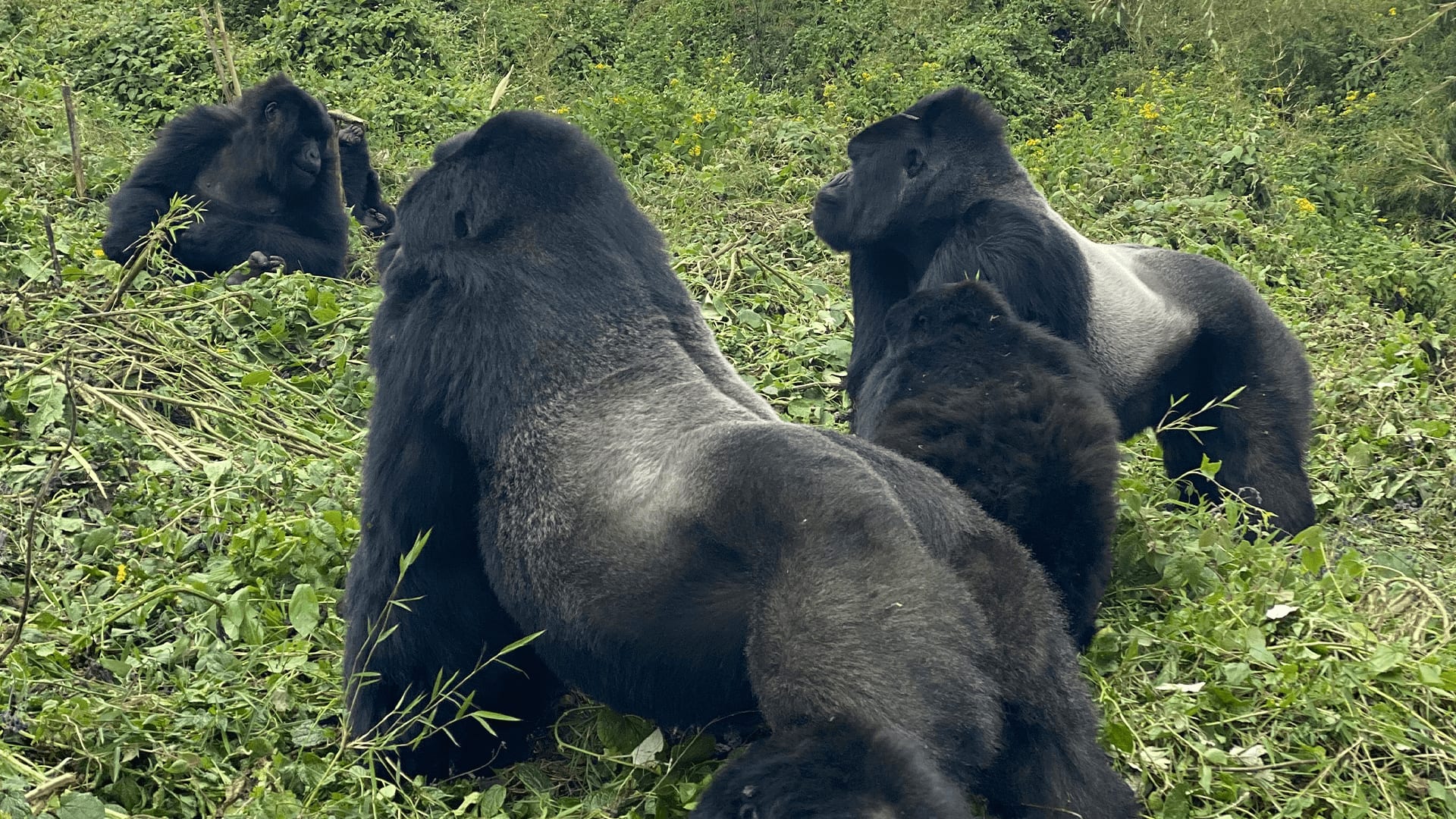
Bwindi is Uganda's signature gorilla trekking destination and one of the most important reasons high-intent travelers choose the country. The forest is ancient, steep, humid, and dense, with ridgelines that often disappear into mist. It is not a zoo-like encounter. You are walking through a living rainforest with Uganda Wildlife Authority rangers and trackers who monitor gorilla family movements each morning.
Bwindi has several trekking sectors, including Buhoma, Ruhija, Rushaga, and Nkuringo. Each sector has its own logistics, lodge options, road access, and trekking character. Buhoma is one of the most established sectors, Ruhija is scenic and often convenient for routing from Queen Elizabeth, while Rushaga and Nkuringo in the south are excellent for deeper forest immersion and access to multiple gorilla groups.
A typical gorilla trekking day begins with a morning briefing. Trekkers are assigned to gorilla groups according to permit availability, ranger planning, and sometimes fitness considerations. The trek itself may take under two hours or most of the day, depending on where the gorillas have moved. Once your group reaches the gorillas, the standard viewing time is one hour.
Mgahinga Gorilla National Park
Mgahinga is smaller than Bwindi but deeply rewarding, especially for travelers who want volcanic scenery and a quieter feel. It sits in southwestern Uganda near the Virunga volcanoes and also offers golden monkey tracking. Because Mgahinga has fewer gorilla permits than Bwindi, availability can be limited, but the experience can feel beautifully intimate when it fits the route.
For most first-time travelers, Bwindi remains the default choice because of permit volume and lodge variety. Mgahinga becomes especially attractive when paired with Kisoro, the Batwa cultural trail, golden monkeys, or a southern Uganda itinerary with a slower pace.
Plan Your Uganda Safari with Local Experts
 WhatsApp Us
How gorilla trekking works in 2026
Gorilla trekking is tightly regulated to protect the gorillas and the forest. Uganda's rules are designed to reduce stress on the animals and keep visitors safe. Travelers should expect a serious conservation experience, not a casual walk.
Important gorilla trekking guidelines include:
- Trekkers must be at least 15 years old.
- A gorilla permit is required and should be secured before finalizing lodges.
- Groups are limited, commonly to 8 visitors per habituated gorilla family per day.
- Visitors spend one hour with the gorillas once the family is reached.
- Anyone feeling ill should not trek, as gorillas are vulnerable to human respiratory infections.
- Rangers will explain the current viewing distance, which may vary by official guidance and field conditions.
Porters are strongly recommended, even for fit travelers. A porter can carry your daypack, help on muddy slopes, and turn a demanding hike into a more comfortable experience. Hiring a porter also provides direct income to communities around the park, which strengthens the link between tourism and conservation.
Where to see big game in Uganda
Uganda's big game areas are distinct, and choosing the right mix matters. For a gorilla and big game safari, the strongest routes usually include at least one major savannah park and, if the Big Five is a priority, Ziwa Rhino Sanctuary.
Murchison Falls National Park
Murchison Falls is one of Uganda's most rewarding big game parks because it combines open savannah, the Nile River, riverbank wildlife, and the dramatic falls themselves. Game drives on the northern bank can produce elephants, buffalo, giraffes, lions, hyenas, hartebeest, oribi, and sometimes leopard. Boat safaris toward the base of the falls offer hippos, crocodiles, waterbirds, and elephants along the banks.
This park works especially well at the beginning of a safari because it delivers a strong classic wildlife experience before the itinerary continues toward Kibale, Queen Elizabeth, or Bwindi. Travelers who want a deeper look at safari pacing, vehicle time, and wildlife strategy can explore PawMac Safaris' detailed guide to game drives in Uganda.
Queen Elizabeth National Park
Queen Elizabeth is one of Uganda's most diverse safari parks. The Kasenyi plains are known for lions and Uganda kob, while the Kazinga Channel is excellent for boat-based viewing of hippos, crocodiles, buffalo, elephants, and waterbirds. The Ishasha sector in the south is famous for tree-climbing lions, although sightings are never guaranteed.
Queen Elizabeth is also logistically useful because it sits between Kibale and Bwindi. This makes it a natural bridge for itineraries that combine chimpanzee tracking, savannah wildlife, and gorilla trekking.
Kidepo Valley National Park
Kidepo is Uganda's remote wilderness prize. It is far from the standard southwestern circuit, but that distance is part of its appeal. The landscapes are expansive, the light is dramatic, and the park often feels less crowded than more accessible safari destinations. Wildlife can include lions, elephants, buffalo, giraffes, zebras, and large herds moving through broad valleys.
Kidepo is best for travelers with 10 to 14 days, a higher budget, or an appetite for remote wilderness. It can be reached by road with long travel days or by scheduled and charter flights, depending on budget and timing.
Ziwa Rhino Sanctuary
Rhinos are not found roaming Uganda's national parks in the same way as elephants or lions. For travelers who want the Big Five in Uganda, Ziwa Rhino Sanctuary is the key stop. The experience is usually guided on foot and pairs naturally with the drive between Entebbe or Kampala and Murchison Falls.
A route that includes Ziwa, Murchison Falls, Queen Elizabeth, and Bwindi can deliver an excellent blend of rhinos, big cats, elephants, buffalo, giraffes, hippos, crocodiles, and mountain gorillas.
Recommended Uganda jungle safari routes
Your ideal route depends on how much time you have, how much driving you tolerate, and whether gorillas are the highlight or one part of a broader wildlife journey.
| Trip length | Best for | Suggested route style | What to expect |
|---|---|---|---|
| 7 days | Travelers short on time | Entebbe, Murchison or Queen Elizabeth, Bwindi, Entebbe | Fast but rewarding, with gorillas and one major big game area |
| 8 to 10 days | Most first-time safari travelers | Ziwa, Murchison Falls, Kibale or Queen Elizabeth, Bwindi | Strong balance of Big Five elements, chimps, and gorillas |
| 11 to 12 days | Wildlife-focused travelers | Murchison, Kibale, Queen Elizabeth, Bwindi, Lake Mburo | More relaxed pacing and better habitat variety |
| 13 to 14 days | Premium or repeat travelers | Add Kidepo or extra gorilla sector nights | Remote wilderness, richer photography time, fewer rushed transfers |
A 10 day itinerary is often the sweet spot. It gives enough time for Ziwa and Murchison, a chimpanzee tracking option in Kibale, a Queen Elizabeth or Ishasha segment, and gorilla trekking in Bwindi. If budget allows, adding a second gorilla trek can be worthwhile because each gorilla family, forest sector, and weather day feels different.
2026 Uganda safari costs and permit planning
Uganda is often described as better value than some neighboring gorilla destinations, but a high-quality gorilla and big game safari still requires realistic budgeting. Costs are shaped by permits, vehicle and fuel logistics, guide expertise, lodge category, park fees, boat cruises, domestic flights, and seasonality.
As of recent Uganda Wildlife Authority tariff structures used for 2026 planning, international travelers should budget around the following. Fees can change, so final quotes should always be confirmed at booking.
| Cost item | 2026 planning estimate | Notes |
|---|---|---|
| Gorilla trekking permit | About $800 per foreign non-resident | Required for Bwindi or Mgahinga gorilla trekking |
| Gorilla habituation experience | About $1,500 per foreign non-resident | Limited availability, longer experience in Bwindi |
| Kibale chimpanzee tracking permit | About $250 per foreign non-resident | One of Uganda's premier chimp tracking experiences |
| National park entrance | Often around $40-$50 per person per day | Varies by park, residency, and tariff updates |
| Boat safari activity | Often around $30-$40+ per person | Common in Murchison Falls and Queen Elizabeth |
| Porter for gorilla trek | Commonly $15-$25+ | Highly recommended, paid locally |
| Tips for safari guide | Commonly $10-$25 per traveler per day | Depends on group size and service level |
Full safari budgets vary widely, but these ranges are useful for planning:
| Travel style | Estimated budget per person sharing | Typical inclusions |
|---|---|---|
| Budget private or small-group safari | $2,800-$4,200 for 7 to 8 days | Simple lodges, road routing, gorilla permit, key activities |
| Comfortable midrange safari | $4,500-$6,800 for 8 to 10 days | Strong lodges, private 4×4, guide, permits, boat safaris |
| Luxury road safari | $7,500-$12,000+ for 9 to 12 days | Premium lodges, refined pacing, excellent guiding, more inclusions |
| Luxury fly-in or hybrid safari | $10,000-$18,000+ | Domestic flights, top lodges, reduced road time, premium logistics |
The gorilla permit is usually the single most important fixed cost. Luxury lodges near Bwindi can also change the total significantly, especially in peak travel months. A premium room in a high-end forest lodge may cost several times more than a comfortable midrange lodge, but the value can be real for travelers who want fewer transfers, better views, excellent food, spa-style comfort, and a calm setting before or after a strenuous trek.
Travelers coordinating a high-value safari remotely should also think carefully about secure document handling, payment verification, and communication systems. It is similar to how businesses assess reliable partners for managed IT, cloud, and cybersecurity standards for regional operations, because dependable digital processes reduce risk when important bookings, permits, and identity documents are involved.

Best time for a Uganda jungle safari
Uganda is a year-round safari destination, but the experience changes by season. The drier months, typically June to September and December to February, are popular because forest trails may be less muddy and wildlife can be easier to find around water sources. These months are excellent for gorilla trekking, photography, and classic game drives, but they also bring stronger demand for permits and premium lodges.
The wetter periods, often March to May and October to November, can be beautiful and underrated. Forests are lush, birding can be excellent, and some lodges may offer better value. The tradeoff is that roads and trails can be more challenging, especially in mountainous areas around Bwindi. For travelers with flexible expectations and good gear, green season can still be deeply rewarding.
For gorillas specifically, there is no bad month in the simple sense. The gorillas are present all year. The difference is trekking comfort, road conditions, and lodge availability. For big game, dry-season visibility is often stronger, although Uganda's mixed habitats mean wildlife sightings remain possible across the calendar.
How to combine gorillas, chimps, and big game without rushing
The mistake many travelers make is underestimating road time. Uganda's landscapes are beautiful, but distances can feel longer than they look on a map because of mountain roads, park tracks, ferry timings, and rural traffic. A well-designed itinerary uses travel days intelligently instead of stacking too many activities together.
Common drive-time planning estimates include Entebbe to Murchison Falls in about 5 to 6 hours depending on stops, Murchison to Kibale in about 6 to 8 hours, Kibale to Queen Elizabeth in about 2 to 3 hours, Queen Elizabeth to Bwindi in about 4 to 6 hours depending on the gorilla sector, and Bwindi back to Entebbe in about 8 to 10 hours by road.
Domestic flights can reduce fatigue, especially for luxury travelers or families. Flights to airstrips serving Kihihi, Kisoro, Kasese, Murchison, or Kidepo can make the itinerary smoother, but they add cost and require careful luggage planning. A hybrid itinerary, road in one direction and fly back at the end, is often a strong premium option.
If chimpanzees are important, Kibale Forest is the classic addition. A morning chimpanzee trek can pair well with Bigodi Wetland, crater lakes, and a onward transfer to Queen Elizabeth. If the itinerary is short, however, it may be better to prioritize gorillas and one big game region rather than forcing chimps into an already compressed route.
Accommodation choices: what your budget really changes
In Uganda, lodge choice affects more than the room. It influences drive times, meal quality, sleep quality, views, guiding coordination, and how rested you feel before major activities. This matters most around Bwindi, where a poorly matched lodge and gorilla sector can create unnecessary early starts and long transfers on steep roads.
Budget lodges and guesthouses can be clean, friendly, and practical, often costing roughly $70-$180 per person per night depending on location and meal plan. Midrange safari lodges commonly fall around $180-$450 per person per night and usually offer a strong balance of comfort, location, and service. Luxury properties may range from about $500 to $1,200+ per person per night, while ultra-premium or fly-in focused experiences can exceed that depending on exclusivity and inclusions.
For a premium Uganda jungle safari, the best value is not always the most expensive lodge. It is the lodge that sits in the right place for your permit, reduces transfer stress, supports excellent guiding, and fits the tone of your trip. A honeymoon couple, a wildlife photographer, a family with teenagers, and a group of active retirees may all need different lodge strategies.
Packing and field comfort for gorilla forests and savannah parks
Packing for Uganda requires flexibility because forest trekking and savannah game drives ask for different gear. In Bwindi or Mgahinga, you need sturdy waterproof hiking boots, long trousers, gaiters or long socks, a lightweight rain jacket, gloves for gripping vegetation, and a small daypack. On game drives, neutral layers, sun protection, binoculars, and a warm layer for early mornings are more important.
Avoid overpacking, especially if domestic flights are included. Soft-sided luggage is easier to load into safari vehicles and aircraft. A small dry bag or waterproof pouch is useful for passports, permits, camera batteries, and medication. For a more detailed checklist, PawMac Safaris has a dedicated Uganda safari packing guide focused on gorilla treks and Big Five game drives.
Health preparation should be handled well before departure. Travelers should consult a travel clinic about malaria prevention, routine vaccinations, and current Uganda entry requirements. Yellow fever documentation has historically been important for Uganda travel, and rules can be updated, so it is wise to verify before flying.
Responsible safari etiquette in Uganda
The privilege of seeing mountain gorillas comes with responsibility. Stay quiet near the gorillas, follow ranger instructions, avoid sudden movements, and never attempt to touch wildlife. If a gorilla moves close, remain calm and let the ranger guide your response. Photography is allowed, but flash should not be used.
On game drives, responsible behavior is equally important. Do not pressure guides to drive off-track where it is prohibited, crowd predators, shout at animals, or block other vehicles. Uganda's safari appeal is partly its sense of space and authenticity. Protecting that atmosphere benefits wildlife, guides, local communities, and future travelers.
Cultural encounters should also be approached respectfully. Community visits, craft purchases, village walks, and storytelling experiences can add depth to a safari when they are arranged ethically and not treated as performances. PawMac Safaris emphasizes local knowledge and guided planning, which helps travelers choose experiences that feel genuine and beneficial.
Who is a Uganda jungle safari best for?
A gorilla and big game safari in Uganda is ideal for travelers who want active adventure without sacrificing comfort. It suits people who are excited by the idea of walking in rainforest, not just sitting in a vehicle. It also suits wildlife lovers who want variety: primates, predators, elephants, river life, birds, and dramatic landscapes.
It may not be the right choice for travelers who want only ultra-short transfers or completely predictable wildlife sightings. Gorilla trekking requires patience, fitness, and respect for weather conditions. Big cat sightings depend on natural movement patterns. Roads can be bumpy. Rain can arrive quickly. But for travelers who value authenticity, Uganda delivers a rare kind of safari depth.
The strongest trips are planned around your priorities. If gorillas are the dream, secure permits first and build the route around the right sector. If the Big Five is the goal, include Ziwa and at least one major savannah park. If comfort is essential, consider fewer parks, better lodges, and perhaps a domestic flight. If photography matters, slow down the pace and add extra nights in key locations.
Frequently Asked Questions
Is Uganda good for a jungle safari? Yes. Uganda is one of Africa's best destinations for a jungle safari because it combines mountain gorilla rainforests with savannah big game parks, river safaris, chimpanzee forests, wetlands, and volcanic landscapes in one country.
How many days do I need for gorillas and big game in Uganda? A 7 day trip can work if you focus carefully, but 8 to 10 days is better for most travelers. This gives you enough time for gorilla trekking, a major big game park, and possibly chimpanzee tracking or rhino tracking without excessive rushing.
How much does a Uganda gorilla permit cost in 2026? For planning purposes, foreign non-resident travelers should budget about $800 per person for a standard gorilla trekking permit. Fees can change, so your safari planner should confirm the current tariff before booking.
Can I see the Big Five in Uganda? Yes, but you need the right route. Lions, leopards, elephants, and buffalo are found in Uganda's national parks, while rhinos are typically seen at Ziwa Rhino Sanctuary. A Big Five focused itinerary should include Ziwa plus strong savannah game viewing areas.
Is gorilla trekking physically difficult? It can be moderate to challenging depending on weather, altitude, terrain, and gorilla movement. Some treks are relatively short, while others involve steep, muddy forest slopes. Travelers should prepare with walking fitness and hire a porter for support.
Should I book one or two gorilla treks? If budget and time allow, two gorilla treks can be excellent. The second trek increases your chance of different behavior, lighting, photography conditions, and forest atmosphere. For many travelers, however, one trek is still a life-changing highlight.
When should I book a Uganda jungle safari for 2026? For peak travel months, especially June to September and December to February, booking 6 to 12 months ahead is wise. Gorilla permits and premium lodges can sell out, particularly for preferred Bwindi sectors.
Plan your Uganda jungle safari with PawMac Safaris
A successful Uganda jungle safari depends on details: the right gorilla sector, realistic drive times, well-matched lodges, skilled local guiding, secured permits, comfortable 4×4 vehicles, and a route that balances adventure with rest.
PawMac Safaris designs expert-guided Uganda safari experiences for travelers who want gorilla trekking, Big Five wildlife, chimpanzee tracking, cultural encounters, and personalized planning. Whether you prefer a comfortable midrange journey or a premium private safari, the team can help shape a route around your dates, budget, fitness level, and wildlife priorities.


