


- 31 Views
- 18 Min Read
- (0) Comment
For many travelers, the dream starts with a simple search: where to see gorillas in Africa. The answer, however, is more nuanced than choosing a country on a map. Gorilla trekking depends on the type of gorilla you want to see, how accessible the destination is, what permits cost, how reliable the tourism infrastructure is, and what else you can experience before or after the trek.
If your search began with the phrase 'gorilla africa', Uganda should move quickly to the top of your shortlist. It is one of the few countries where travelers can see endangered mountain gorillas in the wild, and it offers something many destinations cannot match: world-class gorilla trekking alongside chimpanzee tracking, savannah game drives, boat safaris, cultural encounters, and flexible safari styles for both premium and budget-conscious travelers.
Uganda does not simply offer a gorilla trek. It offers a complete safari journey through the Pearl of Africa, supported by expert local guiding, strong conservation frameworks, and a choice of rainforest sectors that suit different travel styles.
Gorilla trekking in Africa: the short answer
Gorillas live in several parts of Africa, but not every gorilla destination is equally practical for travelers. The classic, highly sought-after gorilla trekking experience usually means seeing mountain gorillas, which are found only in Uganda, Rwanda, and the Democratic Republic of Congo. Other countries offer western lowland gorilla experiences, but these are generally more remote, logistically complex, and less connected to a broader safari circuit.
| Destination | Gorilla experience | Why travelers choose it | Planning reality |
|---|---|---|---|
| Uganda | Mountain gorillas in Bwindi Impenetrable National Park and Mgahinga Gorilla National Park | Best overall balance of value, biodiversity, safari add-ons, and trekking variety | Sector choice matters, and drives can be long unless you use domestic flights |
| Rwanda | Mountain gorillas in Volcanoes National Park | Short transfer from Kigali and a highly polished luxury lodge scene | Gorilla permits are significantly more expensive, and the safari circuit is narrower |
| Democratic Republic of Congo | Mountain gorillas in Virunga landscapes | Dramatic scenery and strong conservation importance | Security, border logistics, and park access can be variable and require extra caution |
| Republic of Congo, Gabon, Cameroon, Central African Republic | Western lowland gorillas | Remote rainforest expeditions for specialist travelers | More complex logistics, fewer conventional safari combinations, and higher expedition demands |
This is why Uganda leads for many serious safari travelers. It offers the rare mountain gorilla encounter, but it does not force you to choose between primates and a wider wildlife safari. You can trek gorillas in Bwindi, track chimpanzees in Kibale, search for lions and elephants in Queen Elizabeth or Murchison Falls, cruise past hippos on the Kazinga Channel, and end with a slower cultural or lakeside stay.
Why Uganda leads for gorilla trekking in Africa
Uganda’s advantage is not based on one factor. It comes from the way permit value, park diversity, wildlife combinations, local expertise, and itinerary flexibility work together.
Uganda offers exceptional permit value
For 2026 planning, Uganda’s standard gorilla trekking permit for foreign non-residents is generally USD 800 per person, while Rwanda’s gorilla permit is commonly USD 1,500 per person. Permit prices can change, so travelers should always confirm current rates before booking, but the gap is significant.
For a couple, Uganda can save around USD 1,400 on permits alone compared with Rwanda. That budget can be redirected into a better lodge, a private 4×4 safari vehicle, an extra night in Bwindi, chimpanzee tracking in Kibale, or a domestic flight to reduce road travel.
This does not mean Uganda is a budget-only choice. Uganda also has premium lodges, private guiding, fly-in safari options, and high-end tailor-made itineraries. The difference is that Uganda gives travelers more control over where their money goes.
Uganda has two mountain gorilla parks
Uganda is home to mountain gorillas in Bwindi Impenetrable National Park and Mgahinga Gorilla National Park. Bwindi is the better-known destination, famous for its ancient rainforest, multiple trekking sectors, and high number of habituated gorilla families. Mgahinga is smaller, quieter, and set against the dramatic Virunga volcanoes near the borders with Rwanda and the Democratic Republic of Congo.
This gives Uganda a major advantage. Travelers are not locked into one trailhead, one lodge zone, or one style of trek. A well-planned Uganda gorilla safari can match your fitness level, comfort expectations, photography goals, available time, and broader route through the country.
Plan Your Uganda Safari with Local Experts
 WhatsApp Us
Uganda combines gorillas with the country’s best wildlife
A gorilla trek is often the emotional highlight of a safari, but it does not have to be the only highlight. Uganda is one of the few destinations where you can combine rainforest primates and classic safari wildlife in one logical itinerary.
A strong Uganda route may include:
- Gorilla trekking in Bwindi or Mgahinga
- Chimpanzee tracking in Kibale Forest
- Tree-climbing lions and elephants in Queen Elizabeth National Park
- Boat safaris on the Kazinga Channel or River Nile
- Rhino tracking at Ziwa Rhino Sanctuary
- Giraffes, buffalo, crocodiles, hippos, and plains wildlife in Murchison Falls or Lake Mburo
- Cultural encounters with local communities around the gorilla highlands
If you want to compare how these safari styles fit together, PawMac Safaris has a Uganda-focused guide to Africa safari packages compared through a Uganda lens.
Where to see gorillas in Uganda
Uganda’s gorilla trekking is centered on two parks, but the experience changes depending on the sector you choose. This is where many travelers make costly planning mistakes. A gorilla permit is not just a general Uganda permit. It is usually tied to a specific park sector, so your lodge, route, driving time, and next destination must align with that location.
For a deeper Uganda-only sector breakdown, see this guide on where to see gorillas in Uganda. Below is the strategic overview.
| Uganda gorilla area | Best for | Access and routing | Planning note |
|---|---|---|---|
| Buhoma, Bwindi | First-time trekkers, established lodge choice, classic Bwindi history | Often accessed via Kihihi airstrip or road routes from Queen Elizabeth National Park | Popular and competitive, so permits and premium lodges should be booked early |
| Ruhija, Bwindi | Quieter trekking, highland scenery, convenient links to Queen Elizabeth and Kabale | Higher elevation roads, often cooler and misty | Good for travelers who want a less crowded feel without being too remote |
| Rushaga, Bwindi | Gorilla habituation experiences, more gorilla group options, flexible routing from Kisoro | Works well with Lake Bunyonyi, Kisoro, and southern routes | One of the best sectors for travelers wanting more permit availability options |
| Nkuringo, Bwindi | Dramatic views, challenging hikes, premium remote feel | Steeper terrain and more demanding access | Excellent for active travelers, but not ideal if you want the easiest trek |
| Mgahinga Gorilla National Park | Volcanic scenery, golden monkeys, quieter atmosphere | Accessed via Kisoro, with beautiful highland landscapes | Fewer gorilla groups than Bwindi, so availability must be checked carefully |
Bwindi Impenetrable National Park
Bwindi is the heart of Uganda’s gorilla trekking reputation. Its name is accurate: the forest is dense, steep, green, humid, and intensely alive. This is not a staged wildlife viewing platform. You walk into a real rainforest with Uganda Wildlife Authority rangers, trackers, and local porters, following signs of gorilla movement until your assigned group is located.
Bwindi’s strength is variety. Buhoma offers a classic and well-established gorilla trekking base. Ruhija is cooler, quieter, and scenic. Rushaga has strong permit availability and is the main area associated with Uganda’s gorilla habituation experience. Nkuringo is more demanding but exceptionally beautiful, with big views across the forested highlands.
Mgahinga Gorilla National Park
Mgahinga is Uganda’s smallest national park, but it delivers a powerful sense of place. The park sits in the Virunga volcanic range, where bamboo, montane forest, and open slopes create a different mood from Bwindi. Mgahinga is especially attractive for travelers who want gorillas, golden monkeys, and dramatic landscapes in one compact area.
Because Mgahinga has fewer gorilla trekking options than Bwindi, it requires careful planning. When permits align, however, it can feel more intimate and less busy than the better-known Bwindi sectors.
What a Uganda gorilla trek actually feels like
A typical trekking day begins early. After breakfast at your lodge, you transfer to the park briefing point, where rangers explain safety rules, gorilla behavior, trekking etiquette, and group allocations. Visitors are then assigned to gorilla families based on permit availability, fitness level, and ranger guidance.
Treks can last under two hours or extend much longer, depending on where the gorillas moved overnight. Mountain gorillas are wild animals, so no ethical operator can promise an easy hike. The terrain may include muddy slopes, thick vegetation, slippery roots, and humid forest paths. Porters are strongly recommended, not only because they help carry your daypack and support you on difficult sections, but also because porter work provides direct community income around the parks.
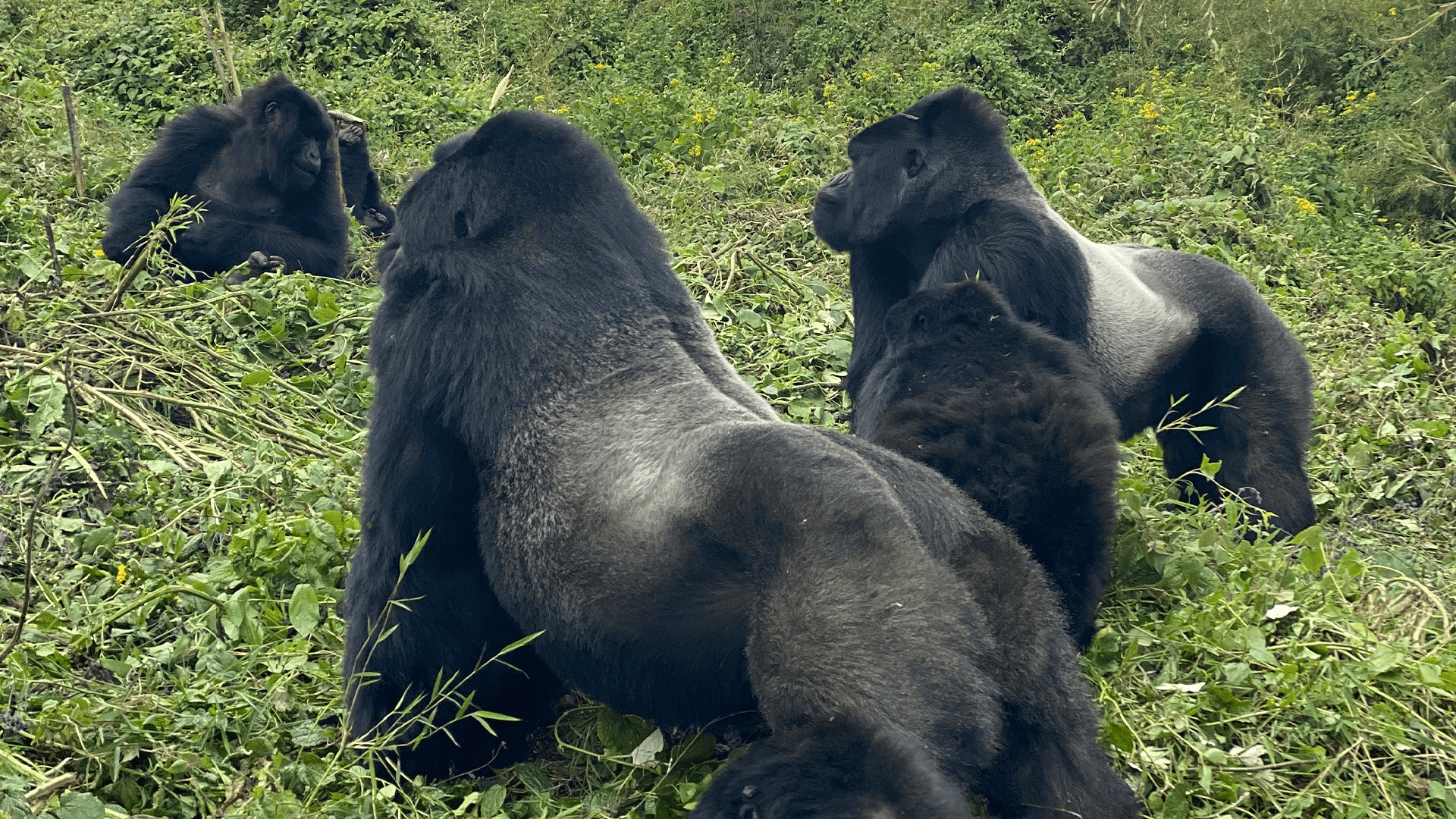
Once your group reaches the gorillas, the standard viewing time is one hour. That hour can feel both quiet and overwhelming. You may watch a silverback resting, juveniles tumbling through vegetation, mothers feeding infants, or the family slowly moving through the forest. Flash photography is not allowed, and visitors must follow ranger instructions at all times.
Uganda also offers a gorilla habituation experience in the Rushaga area of Bwindi. This is different from standard trekking. It is longer, more expensive, and designed for a smaller number of visitors to spend more time with gorillas that are being carefully habituated to human presence under professional supervision. For serious wildlife photographers or primate enthusiasts, it can be one of Uganda’s most rewarding premium experiences.
How much does it cost to see gorillas in Uganda in 2026?
The gorilla permit is the most visible cost, but it is only one part of the full safari budget. Travelers also need to account for accommodation, private guiding, park access, fuel, vehicle quality, domestic flights if used, meals, porter tips, and the overall number of days in the itinerary.
| Cost item | Typical 2026 planning range | Notes |
|---|---|---|
| Standard Uganda gorilla trekking permit | Around USD 800 for foreign non-residents | Confirm the current Uganda Wildlife Authority tariff before booking |
| Gorilla habituation permit | Around USD 1,500 for foreign non-residents | Usually associated with Rushaga in Bwindi and limited availability |
| Kibale chimpanzee tracking permit | Around USD 250 for foreign non-residents | A strong add-on for travelers building a primate-focused itinerary |
| Budget to mid-range 3 to 4 day gorilla safari | Often around USD 1,250 to USD 2,500 per person sharing | Depends heavily on lodge level, transport, season, and group size |
| Luxury 3 to 5 day gorilla safari | Often around USD 3,000 to USD 6,000+ per person sharing | Premium lodges and fly-in logistics can increase the total significantly |
| 8 to 10 day Uganda safari with gorillas, chimps, and wildlife | Often around USD 3,500 to USD 7,500+ per person sharing | A strong range for travelers who want a complete Uganda experience |
| High-end fly-in or luxury private safari | Often USD 8,000 to USD 15,000+ per person | Best for travelers prioritizing time efficiency, top lodges, and private pacing |
These ranges are planning estimates, not fixed prices. Final costs depend on the travel season, lodge availability, permit dates, vehicle requirements, number of travelers, and how much comfort you want in remote areas. Premium travelers should think in terms of total value rather than headline price. The same due diligence mindset applies to other major lifestyle decisions, such as comparing curated UAE opportunities through specialist off-plan property investment guidance before committing capital.
For gorilla trekking specifically, the lowest quote is not always the best choice. A poorly matched lodge can add hours of driving on trekking day. A weak vehicle can make remote roads uncomfortable. A rushed itinerary can leave you exhausted before the most important wildlife experience of the trip. PawMac Safaris plans Uganda gorilla safaris around permit location, route logic, guide quality, and the comfort level that fits each traveler.
Best Uganda gorilla safari itineraries by travel style
A Uganda gorilla safari can be short and focused, or it can become the centerpiece of a much larger wildlife journey. The right itinerary depends on your time, budget, and tolerance for long drives.
3 to 4 days: gorillas only
This is the shortest practical option for travelers who mainly want to trek gorillas. You fly into Entebbe, connect by road or domestic flight toward Bwindi or Mgahinga, trek the next day, and return afterward. It works best for travelers with limited time, but it leaves little room for delays, weather changes, or deeper exploration.
A domestic flight to Kihihi or Kisoro can make the itinerary more comfortable, especially for premium travelers. Road transfers are possible, but they are long and should not be underestimated.
5 to 6 days: gorillas plus highland scenery or Queen Elizabeth
This is often a better minimum for travelers who want a richer Uganda experience without committing to a long safari. You can combine Bwindi with Lake Bunyonyi, the Ishasha sector of Queen Elizabeth National Park, or a boat safari on the Kazinga Channel.
This style gives the trip more breathing room. It also allows you to experience Uganda’s landscapes beyond the forest, from terraced highlands to open savannah and crater lakes.
8 to 10 days: gorillas, chimps, and classic wildlife
This is one of the strongest Uganda safari formats. A well-designed route may include Murchison Falls, Kibale Forest, Queen Elizabeth National Park, and Bwindi. You can track chimpanzees, cruise the Nile or Kazinga Channel, search for elephants and lions, and finish with gorillas in the highlands.
For many travelers, this is where Uganda clearly surpasses a single-destination gorilla trip. The gorilla trek remains the emotional peak, but the journey builds through multiple ecosystems.
12 days or more: Uganda in depth
With 12 or more days, Uganda becomes a deeply varied safari destination. You can add Lake Mburo, Kidepo Valley, Semuliki, extra cultural time, birding, or a slower lodge rhythm. This is ideal for repeat Africa travelers, photographers, honeymooners, and guests who prefer not to rush between parks.

When is the best time to see gorillas in Uganda?
Gorilla trekking in Uganda is possible year-round. The gorillas do not migrate out of the forest, and permits are issued across the seasons. The main difference is trail condition, lodge demand, photography light, and traveler comfort.
| Season | Trekking conditions | Budget and availability considerations |
|---|---|---|
| June to September | Generally drier, popular for trekking and wildlife | High demand, permits and premium lodges sell out earlier |
| December to February | Another relatively drier period, good for holiday travel | Festive dates can be expensive and competitive |
| March to May | Wetter, greener, and quieter | Some lodges may offer better value, but trails can be muddy |
| October to November | Short rains, lush forest, fewer travelers than peak months | Good for flexible travelers who do not mind rain risk |
Dryer months are popular because trails may be less muddy, but rainforest weather is never fully predictable. Even in the dry season, you should pack rain protection, waterproof hiking boots, gaiters, and quick-dry clothing. In the wetter months, the forest can be spectacularly green and atmospheric, but you need to be comfortable with mud and slower hiking.
For peak season travel, especially June to September and late December to early January, it is wise to book gorilla permits 6 to 12 months ahead. Last-minute permits sometimes exist, especially in quieter months, but relying on them can force you into a less convenient sector or lodge.
Why Uganda beats the single-experience mindset
The strongest reason Uganda leads is that it does not treat gorillas as an isolated attraction. Uganda allows travelers to build a complete journey around gorillas, with each day adding a different layer of wildlife, landscape, and culture.
In Rwanda, many travelers experience an efficient and luxurious gorilla trek, but the broader safari extension often requires more careful add-ons. In the Democratic Republic of Congo, the landscapes are extraordinary, but access and security considerations can complicate planning. In western lowland gorilla destinations, the expeditions can be fascinating, but they are usually more specialized and less suited to first-time safari travelers.
Uganda sits in the rare middle ground. It is adventurous without being inaccessible, premium without being limited to ultra-luxury budgets, and wildlife-rich without forcing travelers into a one-note itinerary. That is why PawMac Safaris often recommends Uganda for travelers who want their gorilla trek to be part of something bigger.
For a more focused argument on current travel planning, you can also read why Uganda is the best gorilla trekking destination in 2026.
Responsible gorilla trekking: what travelers need to know
Seeing gorillas in the wild is a privilege, not a casual attraction. Mountain gorilla tourism is highly regulated because gorillas are vulnerable to human disease and habitat pressure. Responsible trekking protects the animals, supports conservation funding, and helps nearby communities benefit from tourism.
Key rules and expectations include:
- Minimum trekking age is generally 15 years
- Viewing time is limited to one hour for standard trekking
- Visitor numbers per gorilla group are restricted
- Flash photography is not allowed
- Travelers who are visibly ill may be refused trekking for gorilla health reasons
- Rangers may ask visitors to wear masks or maintain extra distance where appropriate
- Feeding, touching, or approaching gorillas is strictly prohibited
A responsible safari operator should explain these rules before you reach the forest, not only at the park briefing. PawMac Safaris also encourages travelers to use local porters where possible. Hiring a porter is practical on steep terrain, but it is also one of the most direct ways to ensure communities around the park benefit from conservation tourism.
Choosing the right Uganda gorilla safari style
There is no single best Uganda gorilla safari for everyone. The best itinerary is the one that matches your expectations honestly.
A luxury traveler may prefer domestic flights, high-end lodges near the correct trekking sector, private guiding, and a slower pace. This reduces fatigue and gives more time to enjoy the forest setting before and after the trek.
A mid-range traveler may choose a private 4×4 road safari, comfortable lodges, and a route that combines Bwindi with Queen Elizabeth or Kibale. This often offers the strongest value for travelers who want comfort without unnecessary excess.
A budget-conscious traveler can still have an excellent gorilla experience, but should avoid cutting the wrong corners. The permit cost is fixed, and very low prices usually mean savings are coming from accommodation, vehicle standards, route pacing, or guide quality. For a once-in-a-lifetime trek, reliable logistics matter.
PawMac Safaris specializes in custom Uganda safari packages, from gorilla-focused short trips to longer private wildlife journeys. The goal is not simply to get you to the park gate. It is to match your permit, lodge, route, guide, vehicle, and wider safari plan so the entire journey works smoothly.
Common mistakes to avoid when planning a gorilla safari in Uganda
The most expensive gorilla safari mistakes usually happen before the trip begins. Travelers often focus on the permit first, then realize later that their lodge is too far away, their transfer is too long, or their itinerary leaves no recovery time.
Avoid these common errors:
- Booking a gorilla permit without confirming the exact trekking sector
- Choosing accommodation based only on price, not distance from the briefing point
- Underestimating road travel times between Entebbe, Queen Elizabeth, Kibale, and Bwindi
- Planning the gorilla trek immediately after a long international arrival without enough rest
- Comparing Uganda and Rwanda only by permit price, instead of total itinerary value
- Forgetting that peak season permits and the best lodges can sell out months ahead
- Packing casual walking shoes instead of proper waterproof hiking boots
A well-planned Uganda gorilla safari feels adventurous, but not chaotic. The logistics should be carefully handled in the background so you can focus on the experience itself.
Frequently Asked Questions
Where is the best place to see gorillas in Africa? Uganda is the best all-round choice for many travelers because it offers mountain gorilla trekking in Bwindi and Mgahinga, competitive permit value, strong safari combinations, and flexible itinerary styles. Rwanda is convenient and premium, while other gorilla destinations can be more logistically complex.
Is Uganda or Rwanda better for gorilla trekking? Uganda is usually better for travelers who want value, trekking variety, and a wider wildlife safari. Rwanda is strong for travelers who prioritize a short transfer from Kigali and are comfortable with a higher permit cost. For a fuller safari experience, Uganda often leads.
How much is a gorilla permit in Uganda in 2026? For 2026 planning, Uganda’s standard gorilla trekking permit for foreign non-residents is generally around USD 800 per person. Gorilla habituation is usually around USD 1,500 per person. Always confirm current tariffs before booking, since official rates can change.
Can I see gorillas and the Big Five in Uganda? Yes, with the right itinerary. Uganda combines gorilla trekking with wildlife areas such as Murchison Falls, Queen Elizabeth National Park, Lake Mburo, and Ziwa Rhino Sanctuary. A longer route can include gorillas, chimpanzees, elephants, lions, buffalo, rhinos, hippos, giraffes, and many bird species.
How difficult is gorilla trekking in Uganda? Difficulty varies by sector, weather, gorilla movement, and your fitness level. Some treks are relatively moderate, while others involve steep, muddy, and uneven rainforest terrain. Porters are highly recommended, and travelers should prepare with proper boots, rain gear, and a reasonable level of fitness.
How far in advance should I book a Uganda gorilla safari? For peak travel months, book 6 to 12 months in advance if possible. This is especially important if you want a specific Bwindi sector, a premium lodge, a private guide, or a wider itinerary including chimpanzee tracking and savannah parks.
Is gorilla habituation in Uganda worth it? Gorilla habituation can be worth it for photographers, primate enthusiasts, and travelers who want more time in the presence of gorillas. It costs more than standard trekking and is more limited, but it offers a deeper and longer forest experience when availability fits your route.
Plan your Uganda gorilla safari with PawMac Safaris
Uganda leads because it gives travelers more than a gorilla sighting. It delivers rainforest trekking, expert guiding, flexible safari design, meaningful conservation value, and the chance to combine gorillas with Uganda’s best wildlife and landscapes.
If you want a Uganda safari planned with local expertise, clear logistics, and the right balance of comfort, value, and adventure, PawMac Safaris can help design a personalized gorilla trekking and wildlife itinerary around your travel dates, budget, and preferred safari style.


