


- 68 Views
- 21 Min Read
- (0) Comment
Safari travel in Uganda is rewarding because it is unusually varied. In one well-planned journey, you can trek mountain gorillas in Bwindi Impenetrable National Park, track chimpanzees in Kibale Forest, cruise the Nile below Murchison Falls, look for lions and elephants in Queen Elizabeth National Park, and finish with a gentler walking or boat safari in Lake Mburo.
The challenge is not deciding whether Uganda is worth it. The challenge is building a route that respects permits, road distances, lodge locations, seasons, and budget. Uganda looks compact on a map, but a smart safari itinerary is planned around real travel time, not straight-line distance.
This guide explains the practical side of safari travel in Uganda for 2026 planning: what it costs, when to go, and which routes make the most sense for different trip lengths and comfort levels.
Table of Contents
- Why Safari Travel in Uganda Rewards Careful Planning
- Uganda is compact but travel times matter
- Permits and lodge location shape the whole trip
- Uganda Safari Costs in 2026: What to Budget
- Permit costs that shape your budget
- Accommodation and vehicle costs
- Sample Uganda safari budgets by trip length
- Best Time for Safari Travel in Uganda
- Dry season advantages
- Green season advantages
- When to book for permits and premium lodges
- Smart Uganda Safari Routes by Trip Length
- 5 to 6 days: Gorilla trekking with a short wildlife extension
- 8 to 10 days: Gorillas chimps and classic savannahs
- 12 to 14 days: The complete western Uganda circuit
- 15 days or more: Add Kidepo or a slower luxury pace
- How to Match Route Budget and Travel Style
- Fly-in safari versus private road safari
- Choosing the right gorilla sector
- Balancing premium comfort with time in the field
- Practical Booking Tips Before You Confirm
- Frequently Asked Questions
- Plan Safari Travel in Uganda With PawMac Safaris
Why Safari Travel in Uganda Rewards Careful Planning
Uganda is one of Africa's strongest safari destinations for travelers who want more than a single wildlife experience. It combines primates, savannah wildlife, wetlands, crater lakes, river systems, mountains, and cultural encounters within one country. That diversity is the reason Uganda feels so rich, but it is also why planning matters.
A rushed itinerary can turn exceptional destinations into long transfers and short lodge stays. A smart itinerary does the opposite. It uses the geography of western and northern Uganda to create a smooth progression from Entebbe to national parks, avoids unnecessary backtracking, and places the highest-value experiences at the right point in the journey.
Uganda is compact but travel times matter
Most Uganda safaris start and end around Entebbe, the country's main international gateway. From there, travelers usually move west or northwest toward the parks. The classic route may include Murchison Falls, Kibale Forest, Queen Elizabeth, Bwindi, and Lake Mburo. On paper, this looks simple. On the ground, it requires intelligent pacing.
Road journeys can be scenic and rewarding, but they are not always fast. A 250-kilometer drive may take longer than expected because of towns, speed limits, roadworks, mountain roads, park tracks, and weather. This is why private safari planning in Uganda often uses two-night stays in major parks rather than constant one-night stops.
The most comfortable trips allow time for early morning game drives, afternoon boat safaris, forest walks, and unhurried transfers. If you want a premium experience, the goal should not be to visit the maximum number of parks. The goal should be to spend enough time in the right places.
Permits and lodge location shape the whole trip
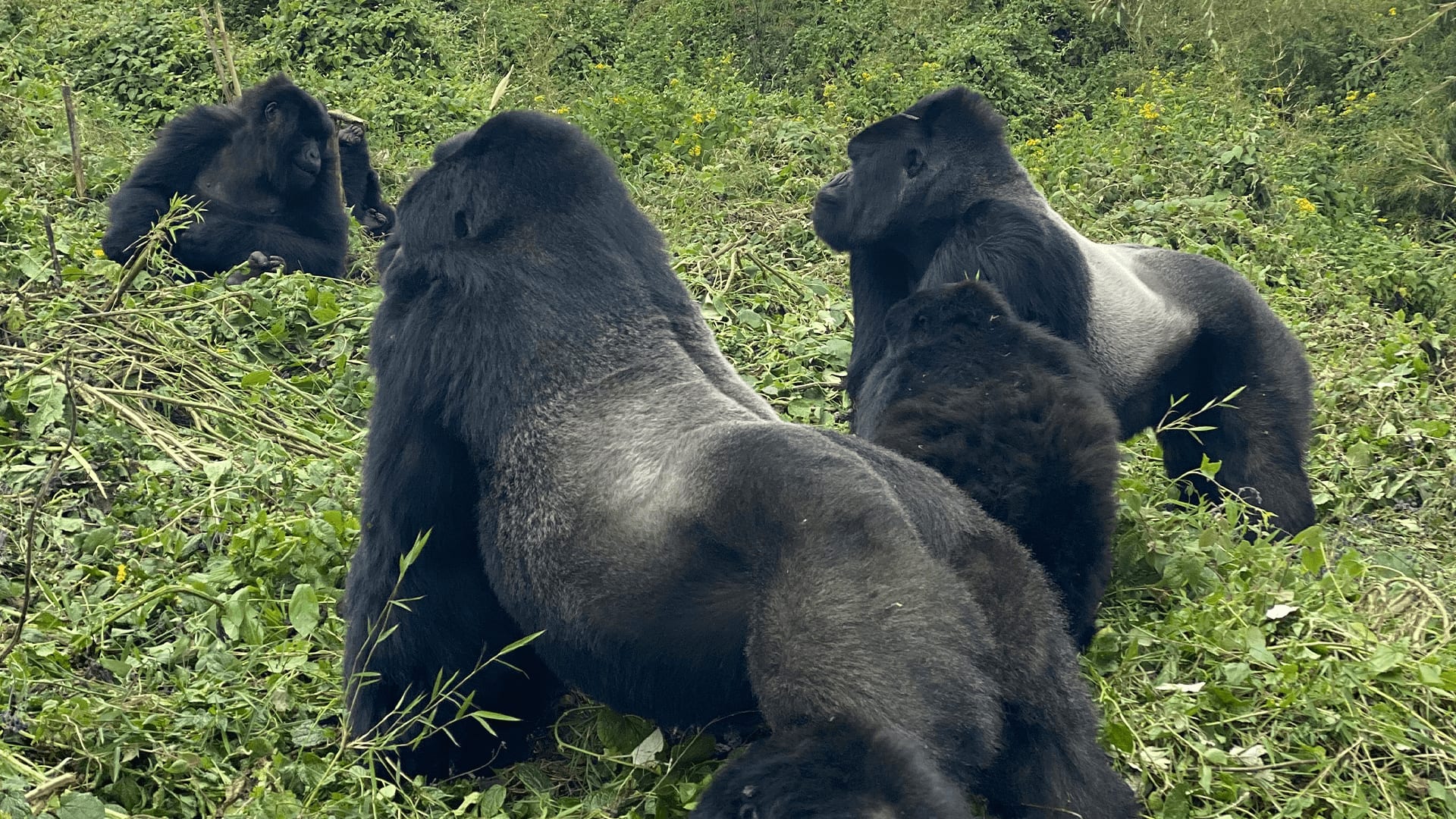
Gorilla trekking is the best example of why Uganda safari travel must be planned precisely. A gorilla permit is issued for a specific date and trekking area. In Bwindi, the main sectors include Buhoma, Ruhija, Rushaga, and Nkuringo. Mgahinga Gorilla National Park is another excellent gorilla trekking option near Kisoro.
This matters because the wrong lodge location can create unnecessary early starts or long drives on mountain roads. If your permit is for Rushaga, staying near Buhoma is not practical. If your route enters Bwindi from Queen Elizabeth, Buhoma or Ruhija may be more efficient depending on permit availability and lodge choice. If you are flying into Kisoro, Rushaga, Nkuringo, or Mgahinga may make better logistical sense.
The same principle applies to chimpanzee tracking in Kibale, boat safari timings in Queen Elizabeth and Murchison Falls, and domestic flight schedules. Before confirming accommodation, your guide or safari planner should check the activity times, permit sectors, and route flow together.
Plan Your Uganda Safari with Local Experts
 WhatsApp Us
Uganda Safari Costs in 2026: What to Budget
Uganda can work for value-conscious travelers, comfort-focused couples, families, and high-end luxury guests. The largest cost differences come from permits, accommodation category, private transport, domestic flights, season, and whether you are traveling solo or sharing costs.
The ranges below are planning estimates for 2026 safari travel in Uganda. They are usually calculated per person sharing, with international flights excluded. Actual quotes vary by travel date, lodge availability, room category, group size, vehicle type, and final permit fees at the time of booking.
For a deeper breakdown of permit fees, safari inclusions, and package cost drivers, PawMac Safaris has a dedicated guide to Uganda safari prices, costs, permits, and package options.
Permit costs that shape your budget
Permits are one of the clearest fixed costs in a Uganda safari. They are also among the first items that should be secured because availability is limited, especially in peak months.
| Experience or fee | Typical 2026 planning cost | Planning note |
|---|---|---|
| Gorilla trekking permit for foreign non-residents | $800 per person | Valid for one trek on a specific date and sector, subject to availability |
| Gorilla habituation experience | Around $1,500 per person | Limited availability, longer forest experience, usually planned far in advance |
| Kibale chimpanzee tracking permit for foreign non-residents | Around $250 per person | Morning and afternoon tracking slots may be available |
| Major savannah park entry | Often around $40-$45 per person per 24 hours | Varies by park and visitor category, vehicle and activity fees are separate |
| Boat safari in major parks | Often around $30-$50+ per person | Depends on park, boat type, schedule, and operator arrangements |
| Rhino tracking extension | Fee varies and should be confirmed before booking | Often added to a Murchison Falls route when operational and available |
Gorilla permits are the most important budget item for many travelers. A couple trekking once in Uganda should plan $1,600 for gorilla permits alone before accommodation, transport, meals, guiding, and park fees are added. If the itinerary also includes chimpanzee tracking in Kibale, add another estimated $500 for two foreign non-resident travelers.
Foreign residents and East African citizens may have different permit rates. Fees can also change, so your safari quote should always confirm the latest applicable tariff before payment.
Accommodation and vehicle costs
Accommodation in Uganda ranges from simple safari lodges to refined boutique properties and high-end wilderness lodges. In gorilla trekking areas, prices often rise because lodges are smaller, locations are remote, and demand is strong.
| Cost category | Typical planning range | What it usually means |
|---|---|---|
| Value or budget lodge | $80-$180 per person sharing per night | Simple comfort, practical locations, limited luxury extras |
| Comfortable midrange lodge | $180-$350 per person sharing per night | Ensuite rooms, good meals, strong guiding access, better service consistency |
| Premium or luxury lodge | $450-$900+ per person sharing per night | Better locations, refined rooms, stronger hospitality, often scenic settings |
| High-end luxury lodge | $1,000-$2,000+ per person sharing per night | Top-tier service, exclusivity, premium views, elevated dining and guiding access |
| Private 4×4 vehicle with driver-guide | Roughly $180-$350+ per vehicle per day | Cost varies by route, fuel, vehicle type, guide level, and group size |
| Domestic scheduled flight | Roughly $250-$450+ per person one way | Useful for Bwindi, Kidepo, Murchison, or time-sensitive luxury itineraries |
A private road safari usually becomes better value when two or more people travel together because vehicle and guide costs are shared. Solo travelers pay more per person unless they join a scheduled group departure, where available.
Domestic flights increase the budget but can improve comfort significantly. A fly-in gorilla safari can reduce long road transfers, which is valuable for travelers with limited time, honeymooners, older guests, and families who prefer fewer hours on the road.
Sample Uganda safari budgets by trip length
The following ranges are realistic planning bands, not fixed package prices. They assume a professionally guided Uganda safari with private transport or carefully arranged logistics. International flights, visas, travel insurance, premium drinks, personal expenses, and tips are usually not included unless specifically stated.
| Safari style and length | Value to midrange planning range | Premium to luxury planning range | Typical highlights |
|---|---|---|---|
| 5 to 6 days | $1,900-$3,200 per person | $3,800-$7,500+ per person | Gorilla trekking plus Lake Mburo, Queen Elizabeth, or a fly-in forest focus |
| 8 to 10 days | $3,600-$6,500 per person | $7,500-$14,000+ per person | Gorillas, Kibale chimps, Queen Elizabeth, and scenic western Uganda |
| 10 to 12 days | $4,800-$8,500 per person | $9,500-$18,000+ per person | Murchison Falls, Kibale, Queen Elizabeth, Bwindi, and Lake Mburo |
| 12 to 14 days | $5,800-$10,000 per person | $12,000-$25,000+ per person | A complete western circuit with slower pacing and stronger lodge choices |
| 15 days or more | $7,000-$12,000+ per person | $15,000-$30,000+ per person | Western Uganda plus Kidepo, extra gorilla time, or a more exclusive pace |
The fastest way to reduce cost is not always to remove a park. Sometimes the better move is to adjust lodge category, travel in shoulder season, use a road transfer instead of a domestic flight, or reduce one premium activity while keeping the route intact.
The fastest way to improve comfort is to remove one destination and add nights to the most important parks. A two-night stay in Bwindi is the minimum for most gorilla trekkers. Three nights can be better if you want two treks, a buffer against fatigue, or time for community and forest-edge experiences.
Best Time for Safari Travel in Uganda
Uganda is a year-round safari destination. Mountain gorillas and chimpanzees can be tracked throughout the year, and savannah parks remain active across seasons. The best time depends on your tolerance for rain, your budget, your wildlife priorities, and how far ahead you can book.
| Period | Safari conditions | Best for | Budget and availability note |
|---|---|---|---|
| January to February | Generally drier and warm, good trekking conditions | Gorillas, chimps, photography, general wildlife | Strong demand, especially around New Year and school holidays |
| March to May | Wetter green season, lush landscapes, heavier forest trails | Birding, lower crowds, value-focused travelers | Some lodges may offer better availability or seasonal value |
| June to September | Popular dry season, excellent all-round safari window | Gorilla trekking, wildlife drives, family travel | Peak demand, permits and top lodges should be booked early |
| October to November | Short rains, green scenery, mixed conditions | Photographers, birders, flexible travelers | Often a good balance of value and availability |
| December | Festive travel, improving conditions, busy holiday period | Families, couples, premium holiday safaris | Book early for Christmas and New Year travel |
Dry season advantages
The main dry season periods, especially June to September and parts of December to February, are popular for good reason. Forest trails are often more manageable, savannah grass may be shorter, and wildlife can be easier to locate near water sources.
Dry season is particularly attractive for first-time safari travelers because it reduces some logistical uncertainty. It is also a strong choice for photographers who want clearer light and for guests who prefer less mud on trekking trails.
However, dry season does not mean no rain. Bwindi and Kibale are tropical forests, so showers can happen at any time. A lightweight waterproof jacket, gaiters, quick-dry clothing, and waterproof protection for cameras are sensible in every month.
Green season advantages
The wetter months can be excellent for travelers who value atmosphere, fewer vehicles, and rich landscapes. Uganda's forests and crater regions are especially beautiful in green season. Birding can be outstanding, and the soft light after rain can create excellent photography conditions.
The tradeoff is that trails may be slippery, some roads can be slower, and trekking can feel more physically demanding. For guests with knee concerns or limited mobility, drier months are usually more comfortable.
Green season can also create better value in some lodges, although gorilla and chimpanzee permits remain major fixed costs. If your dates are flexible and you prefer a quieter experience, March to May or October to November may be worth considering.
When to book for permits and premium lodges
For June to September and late December travel, plan 6 to 12 months ahead whenever possible. This is especially important for gorilla trekking permits, specific Bwindi sectors, family rooms, top luxury lodges, and private guides.
For March to May or October to November, 3 to 6 months can sometimes be workable, but last-minute planning still carries risk if your preferred gorilla sector or lodge is limited. If your trip includes Kidepo, domestic flights, or high-end lodges, earlier planning remains the safer option.

Smart Uganda Safari Routes by Trip Length
A smart Uganda route follows a logical line through the country. It avoids crisscrossing the same roads, matches gorilla permits to the correct sector, and gives each major park enough time to deliver its best experiences.
If you want a more route-specific comparison, PawMac Safaris also explains how to evaluate safari tours in Uganda by route, budget, and travel style.
| Route concept | Typical length | Best for | Main planning caution |
|---|---|---|---|
| Entebbe, Lake Mburo, Bwindi, Entebbe | 5 to 6 days | Gorilla-focused travelers with limited time | Long return drive unless using flights or careful pacing |
| Entebbe, Kibale, Queen Elizabeth, Bwindi, Lake Mburo | 8 to 10 days | Primates plus savannah without going too far north | Gorilla sector must match the direction of travel |
| Entebbe, Murchison Falls, Kibale, Queen Elizabeth, Bwindi, Lake Mburo | 10 to 12 days | First-time travelers wanting Uganda's classic western circuit | Requires discipline with lodge nights to avoid rushing |
| Entebbe, Kidepo, Murchison Falls, western parks | 12 to 15+ days | Experienced travelers seeking remoteness and dramatic landscapes | Best with flights or enough days for long drives |
5 to 6 days: Gorilla trekking with a short wildlife extension
A 5 to 6 day Uganda safari should not try to include everything. The strongest focus is gorilla trekking, supported by one lighter wildlife destination or a fly-in structure.
A practical road version might start in Entebbe, overnight near Lake Mburo, continue to Bwindi for two nights, and return with a final stop to break the drive. Lake Mburo works well because it is located between Entebbe and southwestern Uganda, offers a softer introduction to safari, and can include game drives, boat activities, or guided walking where conditions allow.
A more premium version may use flights between Entebbe and Kihihi or Kisoro, reducing road time and allowing more comfort around Bwindi or Mgahinga. This is often the better choice for honeymooners, older travelers, or anyone with only a few days but a strong desire to trek gorillas.
Budget expectation: many 5 to 6 day gorilla-focused trips begin around $1,900-$3,200 per person in value to midrange style, including one gorilla permit. Premium and luxury versions can easily move above $4,000-$7,500 per person depending on lodge and flight choices.
8 to 10 days: Gorillas chimps and classic savannahs
For many travelers, 8 to 10 days is the most efficient Uganda safari length. It allows you to combine three major experiences without pushing too hard: chimpanzee tracking in Kibale, savannah wildlife and boat safari time in Queen Elizabeth, and gorilla trekking in Bwindi or Mgahinga.
A sensible flow is Entebbe to Kibale, then Queen Elizabeth, then Bwindi, then Lake Mburo or a return flight depending on budget and comfort. This route gives you forest, crater scenery, the Kazinga Channel, mountain landscapes, and a realistic gorilla trekking experience.
The main choice is whether to include Murchison Falls. It is possible in some 10 day itineraries, but adding it can create a faster pace. If Murchison is a priority, consider extending to 11 or 12 days, or accept fewer nights elsewhere.
Budget expectation: many 8 to 10 day private safaris sit around $3,600-$6,500 per person in value to midrange style, including gorilla and chimpanzee permits. Luxury versions often range from $7,500-$14,000+ per person, especially with premium lodges or flights.
12 to 14 days: The complete western Uganda circuit
A 12 to 14 day safari is the classic choice for travelers who want Uganda's biggest highlights without feeling rushed. The route often begins with Murchison Falls National Park, continues to Kibale Forest, moves through Queen Elizabeth National Park, then finishes with Bwindi or Mgahinga and Lake Mburo before returning to Entebbe.
Murchison Falls adds a powerful Nile experience, strong chances for elephants, giraffes, buffalo, antelope, and predators, plus a boat safari toward the base of the falls. If rhino tracking is available and confirmed, it can also be added en route, helping create a broader Big Five style Uganda safari when combined with other parks.
Kibale then shifts the focus to primates, while Queen Elizabeth adds the Kazinga Channel, crater scenery, and classic game drives. Bwindi delivers the emotional highlight for many guests: time in the forest with mountain gorillas. Lake Mburo works well as a final, gentler stop before Entebbe.
Budget expectation: a well-built 12 to 14 day private safari often ranges from $5,800-$10,000 per person in midrange comfort, and $12,000-$25,000+ per person in luxury style. The final number depends heavily on lodge selection and whether flights are used.
15 days or more: Add Kidepo or a slower luxury pace
With 15 days or more, you have two strong options. The first is to add Kidepo Valley National Park, one of Uganda's most remote and dramatic safari landscapes. Kidepo is excellent for travelers who value wilderness, open scenery, buffalo herds, lions, and a sense of isolation. Because it is far from the standard western circuit, it works best with domestic flights or a carefully paced road route through northern Uganda.
The second option is to keep the western circuit but slow it down. This can be the better luxury decision. Instead of adding more destinations, you add more depth: three nights in Bwindi, two nights in Kibale, two or three nights in Murchison, and carefully chosen lodges that make the safari feel restful rather than packed.
For high-end travelers, this slower approach often produces a better safari than a longer list of parks. You have more time for private guiding, better photography windows, spa or lodge downtime, community visits, and second chances if weather affects an activity.
How to Match Route Budget and Travel Style
The right Uganda safari is not the same for every traveler. A photographer, a family with teenagers, a honeymoon couple, and a solo primate enthusiast may all choose different routes even with similar budgets. The best plan starts with your main priority, then builds the route around it.
If gorillas are the non-negotiable highlight, secure the permit sector first and build outward. If Big Five style wildlife is the priority, include Murchison Falls and a rhino tracking extension when available. If comfort is the priority, reduce long drives with flights and choose lodges close to activity starting points.
Fly-in safari versus private road safari
A private road safari is the most common and flexible way to experience Uganda. It gives you a dedicated driver-guide, scenic transitions between regions, and the ability to stop for viewpoints, markets, lunch breaks, and photography. It is also often better value for couples and small groups.
A fly-in safari is ideal when time is limited or comfort is the top priority. Flights to airstrips serving Bwindi, Murchison, Kidepo, or other regions can reduce long road days. The tradeoff is higher cost, stricter luggage limits, schedule dependence, and the need for ground transfers at each end.
Many premium Uganda safaris use a hybrid approach. For example, you might drive through Kibale and Queen Elizabeth, then fly out after gorilla trekking. Or you might fly to Kidepo, then continue by road into Murchison. The best structure depends on dates, budget, and availability.
Choosing the right gorilla sector
Bwindi is not a single-entry destination. Its sectors are spread across mountainous terrain, and road transfers between sectors can take hours. This is why your gorilla sector affects the entire itinerary.
Buhoma can work well when approaching from Queen Elizabeth's northern side. Ruhija can be useful for certain road circuits between Queen Elizabeth and southwestern Uganda. Rushaga and Nkuringo are strong options when routing through Kisoro or combining with southern scenic areas. Mgahinga is a compelling alternative for travelers using Kisoro and looking for a different gorilla trekking setting.
The key rule is simple: do not buy a gorilla permit in isolation. Permit date, permit sector, lodge location, arrival route, and onward route should be planned together.
Balancing premium comfort with time in the field
Luxury safari travel in Uganda is not only about the lodge rate. It is about how the itinerary feels each day. A premium trip should minimize unnecessary early departures, avoid repeated one-night stays, and place you near the best starting points for activities.
This is where local planning matters. Just as travelers in other countries often rely on destination specialists such as SAT Mexico Tours and Travel for handpicked experiences and local logistics, Uganda safari travel benefits from on-the-ground expertise that understands park geography, permit rules, seasonal road conditions, and lodge standards.
For the best balance, prioritize two or three exceptional experiences rather than trying to fit every possible activity into one trip. A private boat safari, a second gorilla trek, a better-located lodge, or one extra night in Kibale may create more value than adding another distant park.
Practical Booking Tips Before You Confirm
Before confirming safari travel in Uganda, review the itinerary line by line. The most important question is not only what is included, but whether the sequence is realistic.
Check that gorilla and chimpanzee permits are included if you expect them to be part of the price. Confirm the exact gorilla sector before paying for lodges. Ask how long each transfer is expected to take, and whether travel times are based on real road conditions rather than map estimates.
Clarify whether park fees, boat safaris, game drives, airport transfers, drinking water in the vehicle, meals, and domestic flights are included. Also check whether the quote assumes per person sharing, whether a single supplement applies, and what happens if permit availability changes before payment is completed.
Health and documentation should be handled early. Travelers usually need a valid passport, visa arrangements, travel insurance, and health preparations such as yellow fever documentation where applicable. Your medical provider should advise on malaria prevention and personal health precautions before travel.
Tipping is discretionary, but it should be budgeted. Many travelers plan tips for their driver-guide, lodge staff, porters, and activity teams. Hiring a porter for gorilla trekking is also strongly recommended, both for practical support on steep trails and for the local income it provides.
Finally, plan arrival and departure timing carefully. After a long international flight, an overnight in Entebbe is often more comfortable than driving immediately to a distant park. On the final day, avoid scheduling a very long drive that arrives too close to your international departure time.
For travelers who want to reduce uncertainty, PawMac Safaris can align permits, routing, lodges, and guiding into a personalized Uganda safari plan based on your dates, budget, and preferred comfort level.
Frequently Asked Questions
What is the average cost of safari travel in Uganda? A professionally planned private Uganda safari often ranges from about $250-$650 per person per day in value to midrange style before some premium upgrades, while luxury trips can range from $750-$1,500+ per person per day. Gorilla and chimpanzee permits are major fixed costs, with gorilla permits for foreign non-residents typically around $800 per person in 2026 planning.
How many days do I need for a Uganda safari? Five to six days can work for a gorilla-focused trip, but 8 to 10 days is better for combining gorillas, chimpanzees, and savannah wildlife. A 12 to 14 day route is ideal for travelers who want Murchison Falls, Kibale, Queen Elizabeth, Bwindi, and Lake Mburo without rushing.
What is the best month for safari travel in Uganda? June to September and December to February are among the most popular windows because conditions are generally drier. March to May and October to November can still be rewarding, especially for birding, green scenery, lower crowds, and potentially better lodge availability.
Is the gorilla permit included in Uganda safari prices? It depends on the quote. Many full safari packages include the gorilla permit, but you should always confirm this in writing. Also confirm the permit date, trekking sector, visitor category, and cancellation terms before payment.
Should I drive or fly between parks in Uganda? Road safaris offer flexibility, scenery, and better value, especially for couples and small groups. Fly-in safaris cost more but save time and improve comfort, particularly for Bwindi, Kidepo, or shorter luxury itineraries.
Can Uganda work for a luxury safari? Yes. Uganda has premium lodges, private guiding, domestic flight options, exclusive forest settings, and high-value wildlife experiences. The best luxury itineraries usually focus on smart pacing, excellent lodge locations, and fewer rushed transfers rather than simply adding more parks.
Plan Safari Travel in Uganda With PawMac Safaris
Safari travel in Uganda is at its best when the route, permits, timing, and budget are designed together. PawMac Safaris creates personalized Uganda safari experiences with expert local guides, comfortable 4×4 vehicles, gorilla trekking planning, chimpanzee tracking, Big Five style wildlife routes, cultural experiences, and flexible comfort levels from budget-conscious to luxury.
If you are planning a 2026 Uganda safari, start with your ideal travel month, trip length, preferred comfort level, and must-see experiences. PawMac Safaris can then shape those priorities into a practical route that protects your time and maximizes the quality of each day in the Pearl of Africa.
Begin planning with PawMac Safaris and turn your Uganda safari idea into a clear, costed, and expertly guided journey.


