


- 55 Views
- 19 Min Read
- (0) Comment
Choosing the right route is the difference between a smooth, rewarding Uganda safari and a trip that feels rushed, expensive, and logistically awkward. Uganda is compact compared with many safari destinations, but its best wildlife experiences are spread across rainforest, savanna, wetlands, volcanic highlands, and remote northern wilderness. The smartest safari tours are not built around ticking off every famous park. They are built around your priorities, your time, your budget, and the realities of permits, road transfers, and lodge availability.
For most travelers, the route decision starts with one question: what is the main reason you are coming to Uganda? If your dream is gorilla trekking, Bwindi or Mgahinga must anchor the itinerary. If you want chimpanzees, Kibale Forest should be central. If you want a Big Five-style route, you need to include Ziwa Rhino Sanctuary plus strong savanna parks such as Murchison Falls and Queen Elizabeth. If you want low crowds and dramatic wilderness, Kidepo Valley changes the entire shape of the journey.
This guide explains how to choose a Uganda safari route with practical timing, cost, comfort, and wildlife considerations, so you can plan with confidence before requesting a custom itinerary from PawMac Safaris.
Start With Your Anchor Experience
Every strong Uganda safari route has an anchor experience. This is the activity or destination that determines the rest of the itinerary. Trying to choose hotels, travel dates, and transfer routes before identifying that anchor often leads to unnecessary costs or missed permits.
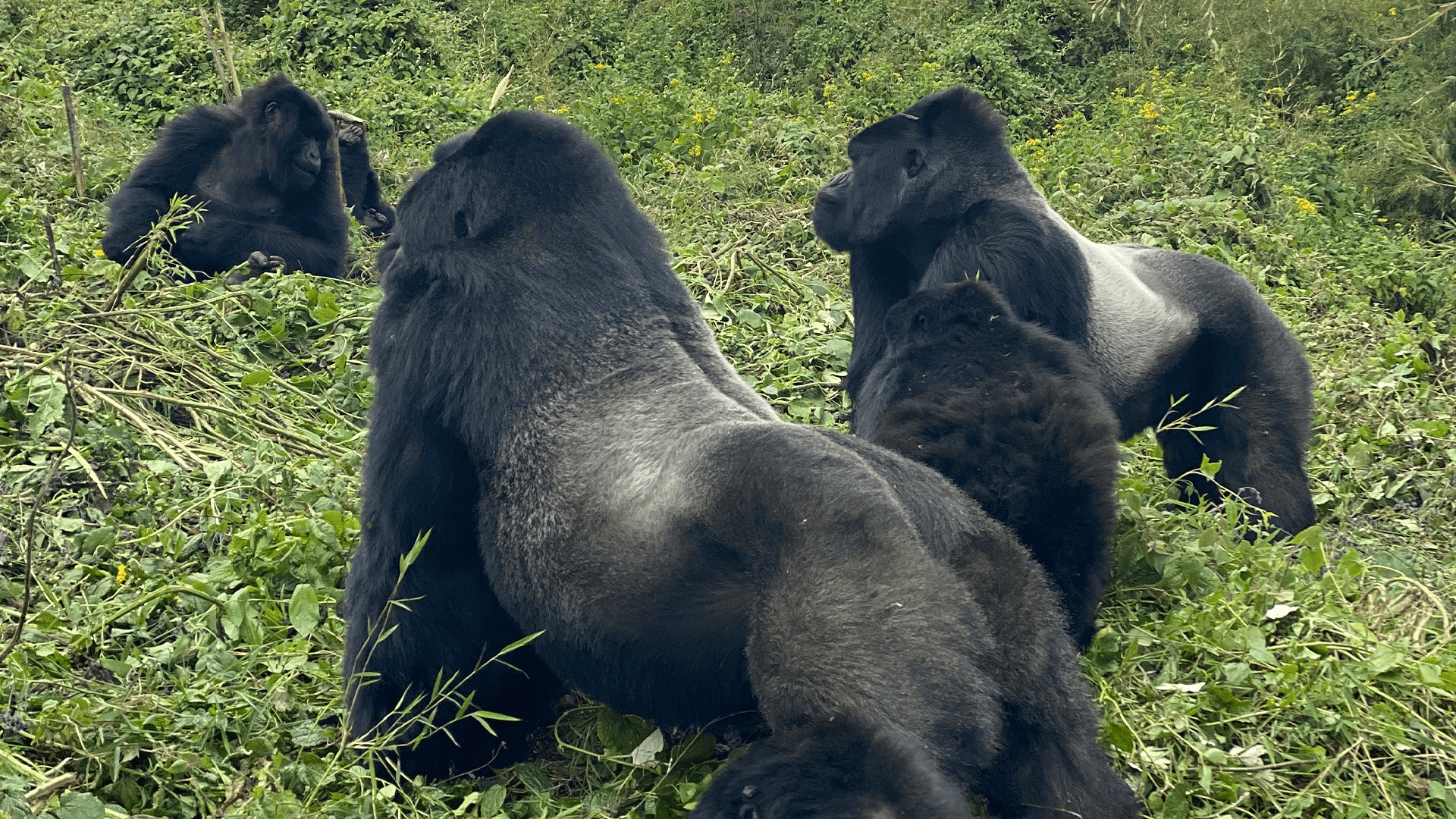
For many visitors, the anchor is gorilla trekking in Bwindi Impenetrable National Park or Mgahinga Gorilla National Park. In 2026, a standard gorilla trekking permit for foreign non-residents is typically USD 800 per person, while the Gorilla Habituation Experience in Bwindi is significantly more expensive, commonly budgeted around USD 1,500 per person. These permits are date-specific and sector-specific, which means your accommodation and transfers must match the trekking location.
For primate-focused travelers, Kibale Forest is often the anchor because it is Uganda’s strongest chimpanzee tracking destination. Kibale chimpanzee tracking permits are commonly budgeted around USD 250 for foreign non-residents, subject to current Uganda Wildlife Authority updates. Kibale also combines naturally with Queen Elizabeth National Park, making it an efficient middle section in many western Uganda routes.
For classic wildlife, Murchison Falls National Park and Queen Elizabeth National Park are the most common anchors. Murchison offers powerful Nile scenery, giraffes, elephants, lions, buffalo, hippos, crocodiles, and excellent boat safaris. Queen Elizabeth is known for the Kazinga Channel, diverse habitats, and the Ishasha sector’s tree-climbing lions. Travelers who specifically want all Big Five animals should include Ziwa Rhino Sanctuary, since Uganda’s rhinos are tracked there rather than in the main national parks.
If your priority is remote wilderness, Kidepo Valley National Park becomes the anchor. It is one of Uganda’s most dramatic safari landscapes, but it requires more time, more fuel, or a fly-in budget. Kidepo is not an easy add-on to a short gorilla trip. It works best for travelers with at least 8 to 12 days or those willing to use domestic flights.
Understand Uganda’s Safari Geography Before Choosing a Route
Uganda safari routes usually begin and end around Entebbe International Airport, with Kampala often included depending on arrival time, departure time, or cultural interests. From there, most itineraries move west, northwest, southwest, or northeast.
The most efficient safari planning principle is simple: avoid zigzagging across the country. Uganda’s parks are connected by scenic but time-consuming roads. A map may make distances look short, but road conditions, traffic near Kampala, ferry schedules, park tracks, weather, and mountain terrain all affect timing.
Typical planning transfer estimates include:
Plan Your Uganda Safari with Local Experts
 WhatsApp Us
| Route segment | Typical road time | Planning note |
|---|---|---|
| Entebbe or Kampala to Murchison Falls via Ziwa | 5-7 hours | Works well as a first wildlife stop and rhino tracking day |
| Entebbe or Kampala to Kibale Forest | 5-6 hours | A strong start for primate and western circuit routes |
| Kibale to Queen Elizabeth | 2-3 hours | One of Uganda’s most efficient park-to-park connections |
| Queen Elizabeth to Bwindi | 4-6 hours | Timing depends heavily on the Bwindi sector booked |
| Bwindi to Lake Mburo | 4-6 hours | Useful for breaking the long return to Entebbe |
| Lake Mburo to Entebbe | 4-5 hours | Good final-night location for many western routes |
| Entebbe or Kampala to Bwindi by road | 8-10 hours | Possible for short gorilla tours, but tiring |
| Kampala or Murchison area to Kidepo | 7-12 hours | Best with extra days or a fly-in plan |
Domestic flights can reduce fatigue, especially for luxury travelers, seniors, photographers carrying heavy equipment, or families with children. Flights to airstrips such as Kihihi, Kisoro, Kasese, Pakuba, or Kidepo can save many hours, but they add meaningful cost. Scheduled domestic sectors often add several hundred dollars per person, while private charters can cost considerably more depending on aircraft, routing, and group size.
Match the Route to Your Trip Length
Your available time is the biggest filter. A 4-day Uganda safari can be excellent, but it should not try to do what a 12-day route does. A premium safari is not defined only by lodge category. It is also defined by pacing, comfort, and the quality of time spent in each ecosystem.
| Trip length | Best route style | Best for | What to avoid |
|---|---|---|---|
| 3-4 days | Murchison Falls and Ziwa, or a focused gorilla trek | Short breaks, one major highlight | Combining too many distant parks |
| 5-6 days | Gorilla trek with Lake Mburo or Queen Elizabeth, or Kibale and Queen Elizabeth | Travelers with limited time who still want variety | Adding Kidepo or both Murchison and Bwindi by road |
| 7-8 days | Bwindi, Queen Elizabeth, Kibale, and Lake Mburo | First-time Uganda visitors focused on primates and wildlife | One-night stays in every park |
| 9-11 days | Murchison, Kibale, Queen Elizabeth, Bwindi, and Lake Mburo | Balanced gorilla, chimpanzee, Nile, and savanna safari | Underestimating permit and lodge coordination |
| 12-14 days | Full Pearl of Africa route with Ziwa, Murchison, Kibale, Queen Elizabeth, Bwindi, and Lake Mburo | Travelers wanting depth, comfort, and varied habitats | Cutting key parks to single rushed nights |
| 15+ days | Add Kidepo, Rwenzori Mountains, Jinja, or cultural extensions | Repeat visitors, photographers, adventurers, luxury slow travel | Treating remote extensions as afterthoughts |
A 7-day route can work beautifully if designed carefully, but it should have clear priorities. For example, a 7-day gorilla and wildlife route may include Entebbe, Murchison Falls, Bwindi, and Lake Mburo, or it may focus on Kibale, Queen Elizabeth, Bwindi, and Lake Mburo. Trying to include Murchison, Kibale, Queen Elizabeth, Bwindi, Lake Mburo, and Jinja in one week will usually feel rushed.
For a deeper look at a realistic one-week structure, see PawMac Safaris’ guide to a 7-day Uganda safari itinerary.
Route Option 1: The Western Primate and Wildlife Circuit
The western circuit is one of the most popular choices for first-time Uganda travelers because it combines rainforest primates, savanna wildlife, crater lakes, boat safaris, and mountain scenery without extreme detours.
A typical route looks like this: Entebbe, Kibale Forest, Queen Elizabeth National Park, Bwindi or Mgahinga, Lake Mburo, then back to Entebbe.
This route is especially strong for travelers who want gorilla trekking and chimpanzee tracking in one safari. Kibale gives you a high-quality chimpanzee experience, Queen Elizabeth adds game drives and the Kazinga Channel boat cruise, Bwindi or Mgahinga provides gorillas, and Lake Mburo breaks the return journey with zebras, impalas, elands, boat rides, and optional walking safaris.
The western route is best with 8 to 10 days. It can be done in 7 days, but that requires disciplined lodge placement and limited downtime. If you are traveling in peak months, especially June to September or December to February, gorilla permits and the best lodges should be arranged well in advance.
Budget guidance for this route varies widely. A private mid-range 8 to 10-day safari with gorilla and chimpanzee permits often falls into a broad range of USD 3,200 to USD 6,500 per person, depending on group size, accommodation, season, and inclusions. Luxury versions can exceed USD 8,000 to USD 12,000 per person when premium lodges, domestic flights, private experiences, and upgraded rooms are included.
This route is ideal if your answer to “why Uganda?” is: gorillas, chimpanzees, and a varied wildlife safari without wasting days on unnecessary transfers.
Route Option 2: The Big Five and Nile Safari Route
If your priority is classic wildlife and dramatic river scenery, the Big Five and Nile route should be high on your list. This route usually begins with Ziwa Rhino Sanctuary, then continues to Murchison Falls National Park. From there, you can return to Entebbe for a shorter trip or continue toward Kibale, Queen Elizabeth, and Bwindi for a longer journey.
A shorter version might be Entebbe, Ziwa, Murchison Falls, and Entebbe. This is one of the strongest 3 to 4-day safari tours for travelers who do not have enough time for gorilla trekking. It offers rhino tracking, game drives, a Nile boat cruise, and the thunderous waterfall that gives the park its name.
A longer version connects Murchison Falls with Kibale, Queen Elizabeth, Bwindi, and Lake Mburo. This produces a fuller Uganda route, combining rhinos, lions, elephants, buffalo, giraffes, chimpanzees, gorillas, and boat safaris.
For travelers comparing Big Five possibilities, PawMac Safaris has a detailed planning resource on Big 5 tours in Uganda.
Budget-wise, a 3-day Murchison and Ziwa safari may start around USD 750 to USD 1,500 per person for budget to mid-range shared or private arrangements, depending on group size and lodge category. A more complete 9 to 12-day Big Five, primate, and gorilla route can range from about USD 3,800 to USD 8,500 per person in mid-range to upper-mid-range style, with luxury versions going higher.
This route is ideal if your anchor is: rhinos, elephants, giraffes, lions, Nile landscapes, and a strong Uganda wildlife foundation before adding primates.
Route Option 3: The Gorilla-Focused Route
A gorilla-focused route is best for travelers who have limited time or who view mountain gorilla trekking as the main purpose of the trip. The simplest version is Entebbe to Bwindi or Mgahinga and back. However, because the road journey is long, adding Lake Bunyonyi, Lake Mburo, or a flight sector can make the experience more comfortable.
A typical 4 or 5-day route may include Entebbe, Bwindi, Lake Bunyonyi or Lake Mburo, and Entebbe. If using flights, travelers may fly from Entebbe to Kihihi or Kisoro, depending on the gorilla sector, then continue by road to the lodge.
The most important rule is to match your gorilla permit sector with your lodge. Bwindi has four main trekking sectors: Buhoma, Ruhija, Rushaga, and Nkuringo. A permit in one sector does not mean you can casually stay in another sector and arrive on time. Some sector-to-sector drives can take several hours on mountain roads.
For permit details, costs, age limits, and booking steps, use this guide to gorilla trekking permits in Uganda.
A 3-day gorilla safari is possible, but it is compact and involves long transfers unless flights are used. A 4 or 5-day version is more comfortable and gives you better recovery time after the trek. Typical 3 to 5-day gorilla safari budgets range from around USD 1,200 to USD 3,500 per person, with the USD 800 permit forming a major portion of the cost. Luxury fly-in gorilla safaris can rise significantly, especially when premium lodges near Bwindi or Mgahinga are used.
This route is ideal if your anchor is: one unforgettable gorilla trek with minimal extra park time.
Route Option 4: The Remote Kidepo Wilderness Route
Kidepo Valley National Park is for travelers who value space, scenery, and low visitor density. It sits in Uganda’s far northeast and feels very different from the western circuit. The open valleys, rugged mountains, dry savanna, and cultural encounters in the Karamoja region create a powerful wilderness experience.
The challenge is access. Kidepo is not a quick detour. Overland routes require long drives, and the best itineraries often break the journey through Murchison Falls, Gulu, or other northern stops. Fly-in safaris are more comfortable but increase the budget.
A strong Kidepo route may be Entebbe, Murchison Falls, Gulu or Kitgum, Kidepo, then return by road or flight. With enough time, Kidepo can also be combined with the western circuit, but this is best for 14 to 18-day itineraries or private luxury trips.
A Kidepo-focused safari can suit photographers, second-time Uganda travelers, honeymooners wanting exclusivity, and guests who dislike crowded game drive areas. However, it is not the best choice if you only have 5 or 6 days and your top priority is gorilla trekking.
To explore this destination in more depth, see PawMac Safaris’ Kidepo Valley safari guide.
This route is ideal if your anchor is: remote wilderness, dramatic landscapes, and a safari experience away from the standard circuit.
Route Option 5: The Family-Friendly Uganda Route
Family safari planning is different because transfer length, lodge layout, swimming pools, food flexibility, safety, and downtime matter as much as wildlife density. Uganda is excellent for families, but the route must respect children’s energy levels and age restrictions.
The biggest practical limitation is gorilla trekking. The minimum age for gorilla trekking in Uganda is 15 years. Families with younger children can still enjoy Queen Elizabeth, Murchison Falls, Lake Mburo, Jinja, cultural activities, boat safaris, and selected nature walks, but gorilla trekking will not be available to younger travelers.
A family-friendly route often works best with fewer stops and more two-night stays. Lake Mburo is useful because it is relatively accessible from Entebbe and offers a gentler safari pace. Murchison Falls works well for families because it combines game drives with boat safaris and the waterfall experience. Queen Elizabeth can be excellent for older children due to the Kazinga Channel, varied wildlife, and Ishasha extension.
For families with teenagers, a western route including Kibale, Queen Elizabeth, and Bwindi can be outstanding, especially if the itinerary includes rest time before and after primate activities.
This route is ideal if your anchor is: safe, comfortable pacing with wildlife variety and minimal transfer fatigue.
Budget: What Actually Changes the Cost of a Route?
Two travelers can visit the same parks for very different prices. The route affects cost because it determines distance, fuel, guide days, permit needs, lodge category, vehicle type, and whether flights are required.
The biggest cost drivers are:
- Gorilla permits, especially if more than one trek is included
- Chimpanzee tracking or habituation permits
- Lodge category and location, particularly near Bwindi, Queen Elizabeth, and Murchison Falls
- Private versus shared vehicle arrangements
- Long-distance routing, especially Kidepo or cross-country combinations
- Domestic flights, charter flights, or premium transfer solutions
- Peak-season lodge demand in June to September and December to February
A realistic planning table for 2026 looks like this:
| Safari style | Typical per-person planning range | What it usually includes |
|---|---|---|
| Budget group safari | USD 180-280 per day before major permits | Simpler lodges, shared transport, efficient routing |
| Private mid-range safari | USD 300-550 per day before major permits | Comfortable lodges, private guide, 4×4 vehicle, flexible pacing |
| Upper mid-range private safari | USD 550-900 per day before major permits | Better lodge locations, more comfort, stronger pacing and guiding |
| Luxury ground safari | USD 900-1,500+ per day before major permits | Premium lodges, private guiding, refined service, fewer compromises |
| Fly-in or ultra-luxury safari | USD 1,200-2,500+ per day before major permits | Domestic flights or charters, top lodges, high personalization |
These ranges are planning estimates, not fixed prices. A short safari with a gorilla permit may have a high daily average because the permit is concentrated into only a few days. A longer safari may have a lower daily average but a higher total trip cost.
For a broader pricing breakdown, compare your route idea with PawMac Safaris’ guide to Uganda safari prices.
Season: How Timing Changes the Best Route
Uganda can be visited year-round, but the best route for June may not be the best route for April. Dry seasons, generally December to February and June to September, are popular for gorilla trekking, chimpanzee tracking, and savanna game drives. Trails are usually more manageable, and wildlife viewing can be easier around water sources. These months also bring stronger demand, so permits and lodges should be booked early.
Wet seasons, generally March to May and October to November, can offer lush scenery, lower visitor numbers, excellent birding, and sometimes better lodge value. However, road conditions and forest trails can be more challenging. A wet-season route should avoid overly tight transfer days and should use experienced local drivers with reliable 4×4 vehicles.
Photographers may prefer green-season landscapes and dramatic skies. Families often prefer drier months because logistics are simpler. Budget travelers may find better value in shoulder and low seasons, especially when flexible with lodge category and travel dates.
The main point is that season should shape the route, not just the packing list. During wetter months, it is wise to reduce one-night stays, allow more transfer buffers, and avoid unnecessary detours.
Common Route-Planning Mistakes to Avoid
The first mistake is trying to see all of Uganda in too few days. A route with six parks in seven days may look impressive on paper, but it often means long drives, late arrivals, and limited time in the places you came to experience.
The second mistake is booking a gorilla permit before confirming the correct lodge area. Bwindi sector alignment is essential. A cheaper lodge is not a saving if it creates a difficult pre-dawn transfer or risks missing the trekking briefing.
The third mistake is choosing a safari only by headline price. A low quote may exclude key permits, park fees, boat cruises, meals, fuel surcharges, or airport transfers. Always compare inclusions line by line.
The fourth mistake is underestimating the value of a professional local guide. In Uganda, guiding is not just about naming animals. A strong guide manages timing, road conditions, ranger briefings, park gates, weather changes, cultural etiquette, and wildlife behavior. If you are comparing guided travel with independent driving, this guide to guided safari tours vs self-drive in Uganda will help clarify the tradeoffs.
The fifth mistake is overlooking cancellation terms and insurance. High-value trips often involve non-refundable permits, deposits, and seasonal lodge policies. Corporate groups, destination wedding parties, and travelers making large international deposits may also want independent professional advice on contract language, liability, or compliance obligations. Firms with commercial and compliance experience, such as Henlin Gibson Henlin, illustrate the kind of legal diligence some complex international travelers may seek before committing to major arrangements.
How PawMac Safaris Helps Choose the Right Route
PawMac Safaris designs Uganda safari tours around practical local knowledge rather than generic map-based itineraries. The planning process starts with your priorities: gorilla trekking, chimpanzee tracking, Big Five wildlife, birding, photography, family travel, culture, adventure, luxury comfort, or budget control.
From there, the route is shaped around permit availability, lodge location, transfer timing, seasonal conditions, and your preferred level of comfort. This is especially important in Uganda because small planning errors can have large consequences. A mismatched Bwindi sector, an unrealistic Kidepo add-on, or a late arrival into a park can reduce the quality of the entire safari.
PawMac Safaris’ strengths are especially valuable for travelers who want customized safari packages, expert local guides, comfortable 4×4 vehicles, and flexible pricing options. Whether you are planning a premium gorilla and wildlife journey, a budget-conscious private safari, a family route, or a longer Pearl of Africa itinerary, the route should feel intentional from the first day to the last.
Quick Decision Framework: Which Uganda Route Is Right for You?
Use this table as a final route filter before requesting a quote.
| Your priority | Best route choice | Suggested duration |
|---|---|---|
| Gorillas with limited time | Entebbe, Bwindi or Mgahinga, Lake Mburo or Lake Bunyonyi, Entebbe | 4-5 days |
| Gorillas and chimps | Entebbe, Kibale, Queen Elizabeth, Bwindi, Lake Mburo, Entebbe | 7-10 days |
| Big Five and Nile scenery | Entebbe, Ziwa, Murchison Falls, optional Queen Elizabeth or Bwindi | 4-10 days |
| First-time balanced Uganda safari | Murchison, Kibale, Queen Elizabeth, Bwindi, Lake Mburo | 10-12 days |
| Luxury and reduced driving | Fly-in sectors for Bwindi, Queen Elizabeth, Murchison, or Kidepo | 5-12 days |
| Remote wilderness | Murchison and Kidepo, or fly-in Kidepo extension | 8-14 days |
| Family safari | Murchison, Queen Elizabeth, Lake Mburo, optional Jinja | 6-10 days |
| Photography safari | Kibale, Queen Elizabeth, Bwindi, Murchison, optional Kidepo | 10-15 days |
If you are unsure, the safest first-time Uganda route is usually a western circuit with Kibale, Queen Elizabeth, Bwindi, and Lake Mburo, or a longer version that begins with Ziwa and Murchison Falls. These routes deliver the strongest blend of wildlife diversity, manageable logistics, and iconic Uganda experiences.
Frequently Asked Questions
What is the best safari route in Uganda for first-time visitors? The best all-round route is usually Entebbe, Kibale Forest, Queen Elizabeth National Park, Bwindi Impenetrable National Park, Lake Mburo, and back to Entebbe. With 10 to 12 days, you can add Ziwa Rhino Sanctuary and Murchison Falls for a richer Big Five and Nile experience.
How many days do I need for safari tours in Uganda? A short safari can be done in 3 to 5 days if focused on one region, such as Murchison Falls or Bwindi. For gorillas, chimpanzees, game drives, and boat safaris, 8 to 12 days is much better. For Kidepo, Rwenzori, or a complete Pearl of Africa route, plan 12 to 15+ days.
Should I choose Bwindi or Mgahinga for gorilla trekking? Bwindi has more trekking sectors and generally more permit availability, while Mgahinga offers a smaller, scenic volcanic setting. The right choice depends on permit availability, your wider route, accommodation style, and whether you want to add golden monkey tracking.
Can I see the Big Five in Uganda? Yes, but you need the right route. Rhinos are tracked at Ziwa Rhino Sanctuary, while lions, leopards, elephants, and buffalo can be seen in parks such as Murchison Falls and Queen Elizabeth. Sightings are never guaranteed, but expert guiding and good routing improve your chances.
Is it better to drive or fly between Uganda safari parks? Driving is more affordable and allows scenic stops, but it takes time. Flying is excellent for luxury travelers, seniors, tight schedules, or routes involving Bwindi, Murchison, Queen Elizabeth, or Kidepo. Many premium itineraries combine road transfers and domestic flights.
When should I book gorilla permits for my Uganda route? For peak seasons, book 6 to 12 months ahead when possible. Gorilla permits are limited, date-specific, and sector-specific. Late booking can force route compromises, higher lodge costs, or less convenient trekking sectors.
What is the most common mistake when choosing a Uganda safari route? The most common mistake is trying to include too many parks in too few days. A well-paced Uganda safari with fewer stops usually delivers better wildlife viewing, better rest, and better value than a rushed checklist route.
Plan Your Uganda Safari Route With PawMac Safaris
The right route should match your wildlife priorities, comfort level, travel dates, budget, and pace. PawMac Safaris helps travelers design personalized Uganda itineraries that connect gorilla trekking, chimpanzee tracking, Big Five safaris, cultural tours, and adventure activities with realistic logistics and transparent planning.
If you are comparing safari tours and want a route that avoids wasted transfer days, mismatched permits, and hidden costs, start with a custom consultation. Share your travel dates, group size, preferred comfort level, and must-see experiences, and PawMac Safaris will help shape the Uganda safari route that fits your journey best.


