


- 59 Views
- 20 Min Read
- (0) Comment
Travelers searching for the best African safari packages for gorilla and Big Five encounters are usually looking for one rare combination: close rainforest primate trekking and classic savannah wildlife in a single, well-planned journey. Uganda is one of the strongest answers to that search because it brings mountain gorillas, chimpanzees, lions, elephants, buffalo, leopards, rhinos, Nile boat safaris, and rich cultural encounters into one highly rewarding destination.
For 2026 planning, the right package is not simply the longest or most expensive itinerary. It is the one that balances permit availability, gorilla trekking sectors, driving time, park selection, lodge comfort, seasonal conditions, and your appetite for adventure. This guide compares the strongest Uganda safari package styles for gorilla trekking and Big Five viewing, with realistic cost expectations and practical routing advice.
Table of Contents
- Why Uganda Is the Smart Choice for Gorilla and Big Five Safaris
- What the Best Package Should Include
- Best Uganda Safari Package Styles for Gorilla and Big Five
- Package 1: 7 to 8 Days Essential Gorilla and Big Five Safari
- Package 2: 10 to 11 Days Gorillas, Chimps, and Big Five
- Package 3: 12 to 14 Days Premium Uganda Wildlife Circuit
- Package 4: 5 to 6 Days Flying Gorilla and Big Five Add-On
- Cost Breakdown for 2026 Planning
- Permit and Activity Costs
- Typical Package Budget Ranges
- Best Parks and Routes for Each Wildlife Goal
- When to Travel for Gorilla Trekking and Big Five Viewing
- Luxury, Mid-Range, and Budget: Which Level Fits Your Trip
- Booking Logistics Travelers Often Underestimate
- How PawMac Safaris Builds Personalized Uganda Safari Packages
- Frequently Asked Questions
- Plan Your Uganda Gorilla and Big Five Safari
Why Uganda Is the Smart Choice for Gorilla and Big Five Safaris
Uganda is not just an alternative safari destination. It is one of the few places where a traveler can combine mountain gorilla trekking with a credible Big Five route without turning the trip into a complicated multi-country expedition. The country’s strength is variety: misty rainforest in Bwindi Impenetrable National Park, chimpanzee habitat in Kibale Forest, savannah plains in Queen Elizabeth National Park and Murchison Falls National Park, rhino tracking at Ziwa Rhino Sanctuary, and dramatic river safaris along the Nile.
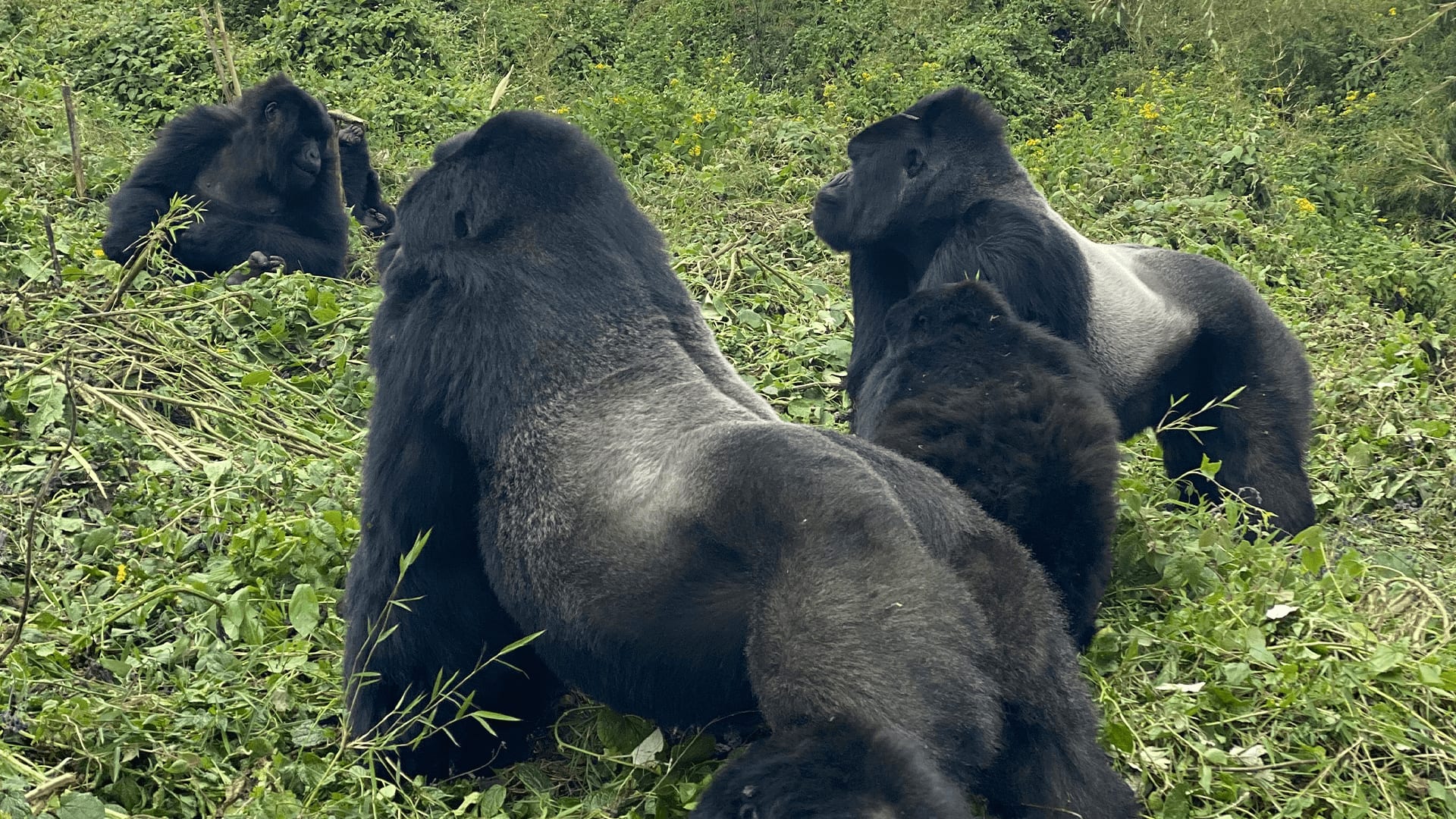
The gorilla experience is the centerpiece for many high-intent travelers. Uganda protects mountain gorillas in Bwindi Impenetrable National Park and Mgahinga Gorilla National Park, with Bwindi offering multiple trekking sectors including Buhoma, Ruhija, Rushaga, and Nkuringo. The sector matters because it affects where you sleep, how long you drive, and how efficient your route becomes after the trek.
For Big Five viewing, Uganda requires smart route design. Rhinos are tracked at Ziwa Rhino Sanctuary, usually as part of the journey to or from Murchison Falls National Park. Lions, leopards, elephants, and buffalo are then pursued in the major savannah parks, with Murchison Falls and Queen Elizabeth offering the most common route pairings. If you want to understand the meaning and origin of the classic wildlife list before choosing your route, PawMac Safaris explains the concept in this guide to what a Big Five safari means.
What makes Uganda especially powerful is that the safari does not feel repetitive. A typical route can move from walking with rhinos to a Nile boat cruise below Murchison Falls, then to chimpanzee tracking in Kibale, predator drives in Queen Elizabeth, tree-climbing lion territory in Ishasha, and finally a gorilla trek in Bwindi. That diversity is why many seasoned travelers consider Uganda a more layered safari than a standard game-drive-only itinerary.
What the Best Package Should Include
A strong Uganda gorilla and Big Five package should be built around logistics first, then luxury. Beautiful lodges matter, but they cannot compensate for a poorly arranged permit, an unrealistic drive, or a night booked in the wrong gorilla sector. The best packages are carefully sequenced so that each transfer supports the wildlife goal of the next day.
At minimum, your package should account for permits, professional guiding, park entries, safari vehicle quality, accommodation location, and contingency time. Gorilla permits in particular should be secured early because daily availability is limited and each permit is tied to a specific trekking area.
| Package element | Why it matters in Uganda | What to check before booking |
|---|---|---|
| Gorilla trekking permit | Confirms your place for a regulated trek in Bwindi or Mgahinga | Permit date, trekking sector, traveler names, and passport details |
| Rhino tracking stop | Completes the Big Five route when paired with savannah parks | Whether Ziwa Rhino Sanctuary is logically placed between Entebbe and Murchison |
| Private 4×4 safari vehicle | Road comfort is important on long transfers and game tracks | Pop-up roof, experienced driver-guide, fuel inclusion, and luggage space |
| Lodge location | A lodge far from the gate can create very early starts and fatigue | Distance to gorilla briefing point, park gate, and boat landing |
| Boat safari planning | Nile and Kazinga Channel cruises often produce superb elephant, hippo, and bird sightings | Cruise time, park schedule, and how it fits with game drives |
| Chimpanzee tracking option | Adds another major primate experience to the route | Kibale permit availability and whether the route allows enough time |
| Flexibility | Weather, wildlife movement, and road conditions can affect timing | Whether the itinerary has realistic transfer days and expert local support |
For premium travelers, the best package also protects the rhythm of the trip. A rushed safari may look efficient on paper but feel exhausting on the ground. Uganda rewards travelers who allow enough time for sunrise drives, boat cruises, slow forest mornings, and lodge downtime between major activities.
Best Uganda Safari Package Styles for Gorilla and Big Five
There is no single best itinerary for every traveler. The strongest package depends on your available days, comfort level, budget, wildlife priorities, and whether you prefer road-based immersion or selective domestic flights. The following package styles show how Uganda can be structured for different traveler profiles while keeping gorilla trekking and Big Five viewing at the center.
Package 1: 7 to 8 Days Essential Gorilla and Big Five Safari
This is the shortest realistic package for travelers who want mountain gorillas and the Big Five without reducing the trip to a checklist. It usually starts in Entebbe, continues to Ziwa Rhino Sanctuary for rhino tracking, then moves to Murchison Falls National Park for lions, elephants, buffalo, leopards, giraffes, Nile boat safari, and the waterfall experience. From there, the route continues toward Queen Elizabeth National Park or directly toward Bwindi depending on the selected lodge standard and available time.
Plan Your Uganda Safari with Local Experts
 WhatsApp Us
A 7 to 8 day route is best for travelers who are comfortable with longer drives and do not require extensive downtime. It works well for couples, photographers with limited leave, and visitors adding Uganda to a broader travel schedule. However, it can be tight if you also want chimpanzee tracking in Kibale, so expectations must be managed.
Typical cost planning for a private 7 to 8 day package ranges from about $3,200 to $7,000 per person sharing for budget to solid mid-range comfort, including the gorilla permit in many land packages. Luxury versions can rise to $7,500 to $13,000 or more per person depending on lodge selection, domestic flight use, and exclusivity.
Package 2: 10 to 11 Days Gorillas, Chimps, and Big Five
For many travelers, this is the sweet spot. A 10 to 11 day Uganda safari allows the route to breathe while still covering the major highlights: Ziwa Rhino Sanctuary, Murchison Falls, Kibale Forest, Queen Elizabeth National Park, Ishasha, and Bwindi. It also gives space for chimpanzee tracking, which adds a completely different primate encounter from gorilla trekking.
The route often flows from Entebbe to Ziwa and Murchison, then south-west through the crater lake region and Kibale, into Queen Elizabeth for Kazinga Channel and game drives, onward to Ishasha for tree-climbing lion territory, and finally to Bwindi for gorillas. Some itineraries finish with Lake Bunyonyi or Lake Mburo to soften the final return to Entebbe.
This package is ideal for first-time Uganda travelers who want depth without overextending. It also gives guides more room to adjust game drive timing, which matters because predators are not seen on command. A 10 to 11 day mid-range private safari commonly falls between $7,000 and $10,500 per person sharing, while luxury versions can move from $11,000 to $18,000 or more.
Package 3: 12 to 14 Days Premium Uganda Wildlife Circuit
A 12 to 14 day package is the strongest choice for travelers who want Uganda to feel expansive, not compressed. It can include the classic western circuit plus extra nights in high-value wildlife areas, a second gorilla trek, gorilla habituation where available, more time in Ishasha, or selective domestic flights to reduce fatigue.
For the most exclusive wilderness feel, some premium travelers consider adding Kidepo Valley National Park, known for dramatic landscapes and strong savannah atmosphere. This addition requires careful planning because it increases distance, cost, and flight requirements, but it can be excellent for travelers who want a more remote Uganda safari after covering gorillas and the main Big Five route.
A premium 12 to 14 day circuit can range widely. Comfortable mid-range versions may start around $9,500 per person sharing, while high-end itineraries with top lodges, multiple permits, private guiding, and domestic flights can exceed $15,000 to $25,000 per person. The value lies in pacing, exclusivity, and the ability to experience Uganda’s different ecosystems with less pressure.
Package 4: 5 to 6 Days Flying Gorilla and Big Five Add-On
A 5 to 6 day package is possible, but it should be treated as a specialist add-on rather than the ideal first-choice safari. To combine gorillas and the Big Five in this timeframe, domestic flights and a highly disciplined route are usually needed. The goal is to reduce road fatigue and focus on a small number of high-impact experiences.
One version pairs rhino tracking and Murchison Falls with a flight or fast connection toward Bwindi. Another version prioritizes gorilla trekking and adds a compact savannah experience, but this may not deliver a full Big Five result unless Ziwa is included. Travelers choosing this option should be honest about trade-offs.
This package often costs more per day because flights, tight transfers, and premium logistics carry a price. It can still be worthwhile for executives, honeymooners with limited time, or travelers connecting from another itinerary who want Uganda’s signature gorilla experience without missing the Big Five ambition.
| Package style | Best for | Core parks and stops | Main advantage | Main trade-off |
|---|---|---|---|---|
| 7 to 8 days essential | Travelers with limited time | Ziwa, Murchison Falls, Queen Elizabeth or Bwindi | Covers gorillas and Big Five goal efficiently | Longer drives and less downtime |
| 10 to 11 days complete | First-time Uganda safari travelers | Ziwa, Murchison, Kibale, Queen Elizabeth, Bwindi | Best balance of primates, big game, and pacing | Higher total cost than shorter routes |
| 12 to 14 days premium | Luxury and in-depth travelers | Western circuit plus optional Kidepo or second gorilla trek | Strongest wildlife depth and comfort | Requires more budget and calendar time |
| 5 to 6 days flying add-on | Time-poor premium travelers | Bwindi plus Ziwa and selected savannah park | High-impact short safari | Expensive per day and less flexible |
Cost Breakdown for 2026 Planning
Uganda safari pricing is shaped by permits, accommodation level, vehicle logistics, season, group size, and route length. A private safari for two people costs more per person than a small group because the vehicle, guide, and fuel are shared by fewer travelers. Conversely, joining a small private group can reduce land costs while preserving comfort.
The figures below are planning estimates for 2026 and should be reconfirmed before deposit because permit tariffs, lodge rates, fuel costs, and exchange rates can change. They are useful for understanding what drives the budget and for comparing packages realistically.
Permit and Activity Costs
| Cost item | 2026 planning estimate for foreign non-residents | Notes |
|---|---|---|
| Gorilla trekking permit | $800 per person | Required for one standard trek in Bwindi or Mgahinga, with one hour near the gorillas after locating them |
| Gorilla habituation experience | About $1,500 per person | Limited availability, usually for travelers wanting a longer gorilla research-style experience |
| Kibale chimpanzee tracking permit | About $250 per person | Kibale is Uganda’s flagship chimpanzee tracking destination |
| Chimpanzee habituation experience | About $300 per person | Longer and more immersive than standard chimp tracking where available |
| Ziwa rhino tracking | Often around $50 per person | Rates can vary by residency status and sanctuary policy |
| Savannah park entry | Often around $40 to $45 per adult per day | Applies to major national parks and may vary by park and traveler category |
| Boat safari | Often around $30 to $40 per person | Popular on the Nile in Murchison and Kazinga Channel in Queen Elizabeth |
| Domestic flight sector | Commonly $250 to $450 or more per person one way | Depends on routing, season, baggage rules, and availability |
Gorilla and chimpanzee permits are major cost anchors, but they are also the reason many travelers choose Uganda. These experiences are tightly regulated to protect wildlife, limit visitor pressure, and support conservation. A well-designed package should show clearly whether permits are included in the quoted price and which permits are being used.
Typical Package Budget Ranges
| Private Uganda safari length | Budget to basic comfort | Mid-range comfort | Luxury and high-end | Usual inclusions to confirm |
|---|---|---|---|---|
| 7 to 8 days | $3,200 to $4,800 per person sharing | $4,800 to $7,000 per person sharing | $7,500 to $13,000+ per person sharing | Gorilla permit, vehicle, guide, park fees, meals, accommodation |
| 10 to 11 days | $4,800 to $7,000 per person sharing | $7,000 to $10,500 per person sharing | $11,000 to $18,000+ per person sharing | Gorilla permit, chimp permit, boat safaris, multiple parks |
| 12 to 14 days | $6,500 to $9,500 per person sharing | $9,500 to $14,500 per person sharing | $15,000 to $25,000+ per person sharing | Longer routing, premium lodges, possible flights, added activities |
International flights, travel insurance, visas, premium drinks, some tips, laundry, and optional upgrades are often excluded from safari land packages. Single travelers should also expect a supplement because lodge rooms and vehicle costs are not shared in the same way.
The most common mistake is comparing two package prices without comparing what is inside them. A lower quote may exclude permits, use distant lodges, compress transfer days, or omit key activities such as the Nile boat cruise or chimpanzee tracking. A higher quote may include better located lodges, stronger guiding, private routing, and time-saving flights.
Best Parks and Routes for Each Wildlife Goal
A Uganda package should be built around specific wildlife goals rather than park names alone. If your priority is gorillas, the route must protect your Bwindi or Mgahinga date. If your priority is the Big Five, the route must include Ziwa and enough savannah time. If your priority is photography, you may need fewer destinations and more repeat drives in the right locations.
| Wildlife goal | Best Uganda locations | Practical route note |
|---|---|---|
| Mountain gorillas | Bwindi Impenetrable National Park, Mgahinga Gorilla National Park | Match your lodge to the correct trekking sector to avoid long pre-dawn transfers |
| Rhinos | Ziwa Rhino Sanctuary | Usually placed between Entebbe and Murchison Falls for efficient routing |
| Lions | Murchison Falls, Queen Elizabeth, Ishasha, Kidepo | Ishasha is known for tree-climbing lion sightings, but sightings are never guaranteed |
| Leopards | Murchison Falls, Queen Elizabeth, Kidepo, Lake Mburo | Early morning and late afternoon drives improve chances |
| Elephants and buffalo | Murchison Falls, Queen Elizabeth, Kidepo | Boat safaris can produce excellent elephant and buffalo viewing near water |
| Chimpanzees | Kibale Forest, Budongo, Kyambura Gorge, Kalinzu | Kibale is the strongest choice for a high-quality chimpanzee tracking focus |
| Boat safari wildlife | Nile at Murchison Falls, Kazinga Channel in Queen Elizabeth | Excellent for hippos, crocodiles, elephants, buffalo, and waterbirds |
For route-specific detail, PawMac Safaris has a dedicated guide to Big 5 tours in Uganda with parks, costs, and best routes. That resource is especially useful if you are deciding between Murchison-first and Queen Elizabeth-first itineraries.

When to Travel for Gorilla Trekking and Big Five Viewing
Uganda is a year-round safari destination, but seasons affect comfort, photography, lodge demand, and road conditions. Gorilla trekking happens throughout the year because the forests are always alive, but trails can be steeper and muddier during wetter months. Savannah viewing is often easier in drier months because animals concentrate around water sources and grass may be lower.
| Season | Safari conditions | Best suited for | Planning advice |
|---|---|---|---|
| June to September | Drier, popular, strong trekking and game drive conditions | First-time visitors, families, premium travelers | Book permits and top lodges early, especially for July and August |
| December to February | Generally dry and warm, good wildlife visibility | Holiday travelers, photographers, honeymooners | Christmas and New Year space can sell out far ahead |
| March to May | Wetter, lush landscapes, fewer visitors | Value-focused travelers and repeat visitors | Trails can be muddy, but scenery is beautiful and availability may improve |
| October to November | Short rains, green landscapes, mixed conditions | Flexible travelers seeking quieter parks | Pack properly for rain and allow sensible transfer timing |
If gorilla trekking is the main purpose of the trip, permit availability should guide your travel dates as much as weather. During peak months, the best lodges near the preferred trekking sectors can fill quickly. For a premium 2026 safari, planning 6 to 12 months ahead is sensible, particularly if you want luxury lodges, a specific gorilla sector, or two gorilla treks.
Luxury, Mid-Range, and Budget: Which Level Fits Your Trip
Uganda can be designed for different comfort levels, but the difference is not only about room quality. Safari category affects lodge location, food and beverage standards, vehicle exclusivity, guiding depth, transfer comfort, and how much fatigue you feel between parks.
| Travel level | Accommodation style | Estimated lodge cost pattern | Best for | Watch-outs |
|---|---|---|---|---|
| Budget to basic | Simple lodges, guesthouses, permanent tents | Often $80 to $180 per person per night | Adventurous travelers prioritizing wildlife over luxury | May involve simpler rooms, less privacy, and longer drives to gates |
| Mid-range | Comfortable lodges with ensuite rooms and good locations | Often $180 to $450 per person per night | Couples, families, and first-time safari travelers | Quality varies, so location and recent standards matter |
| Upper mid-range | Boutique lodges and stronger service levels | Often $450 to $900 per person per night | Travelers wanting comfort without top-tier pricing | Popular properties can sell out in peak months |
| Luxury | Premium lodges with high service standards and exceptional settings | Often $900 to $1,500+ per person per night | Honeymooners, private groups, premium travelers | Total trip cost rises quickly, especially with flights and extra permits |
Budget travelers can still have excellent wildlife experiences because the animals are not reserved for luxury guests. However, comfort becomes important on longer Uganda routes because transfers can be full-day journeys. Mid-range packages often deliver the best value, while luxury packages are ideal for travelers who want stronger lodge experiences, fewer compromises, and seamless pacing.
For gorilla trekking specifically, lodge location is critical at every budget level. A beautiful lodge in the wrong sector can create a difficult morning before one of the most important activities of the trip. This is why expert local planning matters more in Uganda than many travelers expect.
Booking Logistics Travelers Often Underestimate
The first underestimated detail is drive time. Uganda’s landscapes are magnificent, but road journeys between major parks can be long. Entebbe to Murchison via Ziwa can take most of a day with activities included. Murchison to Kibale or Queen Elizabeth can also be a long transfer. Queen Elizabeth to Bwindi may take 4 to 6 hours or more depending on sector, road conditions, and stops.
The second detail is gorilla sector planning. Bwindi is not one single gate. Buhoma, Ruhija, Rushaga, and Nkuringo sit in different areas, and your lodge should match your permit sector. A package that simply says Bwindi without naming the sector is incomplete for serious planning.
The third detail is physical preparation. Gorilla trekking does not require elite athletic ability, but it can involve steep, muddy, uneven forest terrain. Hiring a porter is strongly recommended, not only for carrying your daypack but also for support on difficult sections. Porters are commonly available for a modest fee, often around $20, plus optional tip, and the income supports local communities.
Travel documents and health requirements also deserve early attention. Travelers should check passport validity, Uganda visa requirements, yellow fever certificate rules, travel insurance, and any medical guidance relevant to forest trekking and remote travel. If you are leaving a home or business unattended during a long safari, pre-trip security planning can add peace of mind. Dutch travelers, for example, can review professional alarm, camera, access-control, and surveillance options through Locked Safe Holland before departure.
Packing should reflect both rainforest and savannah conditions. Lightweight neutral clothing, a waterproof jacket, broken-in hiking boots, long socks for tucking trousers, gardening-style gloves for gripping vegetation, insect repellent, sunscreen, binoculars, and a soft-sided daypack are all practical. For domestic flights, check baggage limits carefully because safari aircraft can have stricter weight rules than international airlines.
If you want an additional planning overview that connects rainforest trekking with big game routes, PawMac Safaris also offers a detailed Uganda jungle safari guide for gorillas and big game.
How PawMac Safaris Builds Personalized Uganda Safari Packages
PawMac Safaris specializes in expert-guided Uganda wildlife and gorilla trekking tours, with personalized planning rooted in local knowledge. That matters because the best Uganda safari packages are not assembled by simply placing famous parks in a line. They are shaped by permit availability, road conditions, guest fitness, wildlife goals, lodge standards, and the traveler’s preferred pace.
For some guests, the right answer is a luxury gorilla and Big Five safari with carefully selected lodges and optional flights. For others, it is a mid-range private route that uses comfortable accommodation, a reliable 4×4 vehicle, and smart sequencing to maximize wildlife without unnecessary cost. Budget-conscious travelers can also build memorable safaris when expectations are clear and core experiences such as gorilla trekking, rhino tracking, and key game drives are protected.
A well-planned PawMac Safaris itinerary can include gorilla trekking, chimpanzee tracking, Big Five routes, cultural tours, adventure activities, and flexible package design. The value is in matching the trip to the traveler, not forcing every guest into the same route.
Frequently Asked Questions
Can I see gorillas and the Big Five in one Uganda safari package? Yes. A well-designed Uganda route can combine gorilla trekking in Bwindi or Mgahinga with rhino tracking at Ziwa and savannah wildlife viewing in parks such as Murchison Falls and Queen Elizabeth. The key is allowing enough time for both rainforest and savannah experiences.
How many days do I need for a Uganda gorilla and Big Five safari? The shortest realistic option is usually 7 to 8 days, but 10 to 11 days is better for a balanced trip that also includes chimpanzee tracking. A 12 to 14 day itinerary is ideal for premium travelers who want a slower pace, extra wildlife time, or additional destinations.
How much does a gorilla and Big Five Uganda safari cost in 2026? A private safari often starts around $3,200 to $4,800 per person sharing for a shorter budget package, while strong mid-range 10 to 11 day trips commonly range from $7,000 to $10,500 per person sharing. Luxury itineraries can exceed $15,000 per person depending on lodges, flights, and extra permits.
Is the Uganda gorilla permit included in safari packages? It depends on the quote. Many complete land packages include the gorilla permit, but you should always confirm this in writing. Also confirm the trekking date, sector, and whether the price includes one permit or multiple gorilla experiences.
When should I book my 2026 gorilla trekking permit? For peak months such as June to September and December to February, booking 6 to 12 months ahead is wise. Early booking is especially important for luxury travelers who want specific lodges near a preferred Bwindi sector.
Is Uganda suitable for luxury safari travelers? Yes. Uganda offers high-end lodge options, private guiding, scenic flights on selected routes, exceptional primate experiences, and premium wildlife circuits. The most successful luxury itineraries prioritize pacing and lodge location rather than simply adding more destinations.
Plan Your Uganda Gorilla and Big Five Safari
The best African safari packages for gorilla and Big Five travelers are not generic. In Uganda, the strongest itineraries are precise, locally informed, and built around the realities of permits, park geography, wildlife behavior, and comfort on the road.
If you are planning a 2026 Uganda safari, PawMac Safaris can help you shape a private route around your travel dates, budget level, lodge preferences, and wildlife priorities. Whether you want a luxury gorilla trekking journey, a balanced mid-range Big Five circuit, or a custom family safari, expert local planning will make the difference between a busy trip and a truly memorable one.
Start with your ideal travel month, number of days, and comfort level, then build the route around Uganda’s greatest strengths: mountain gorillas, chimpanzees, the Big Five, Nile landscapes, and warm local hospitality.


