


- 110 Views
- 13 Min Read
- (0) Comment
TL;DR:
- The Big Five refers to Africa’s most dangerous and resilient animals, originally named by hunters, now symbols of conservation. Uganda offers multiple parks where travelers can authentically experience these species while supporting ecological protection efforts. Responsible tourism, informed planning, and community engagement are essential to ensure the survival and future enjoyment of these iconic animals.
Most travelers assume the “Big Five” simply refers to Africa’s largest animals. That assumption misses the real story entirely. The term carries a dramatic history rooted in danger, survival, and the raw power of wildlife, and today it defines some of the most thrilling safari experiences on the planet. Uganda, known as the Pearl of Africa, offers a remarkable opportunity to witness all five of these legendary species across its diverse national parks and sanctuaries. This guide explains what the Big Five truly are, where to find them in Uganda, what a safari actually looks and feels like, and how you can travel in a way that protects these animals for future generations.
Table of Contents
- Understanding the Big Five: Definition, history, and why they matter
- Where to see the Big Five in Uganda: Top parks and travel tips
- What to expect on a Big Five safari: Experience, challenges, and safety
- Responsible safaris: How to support conservation and travel ethically
- Why the Big Five safari experience in Uganda is more important than ever
- Ready for your own Big Five safari?
- Frequently asked questions
Key Takeaways
| Point | Details |
|---|---|
| Meaning of Big Five | The Big Five refers to lion, leopard, elephant, rhinoceros, and Cape buffalo, chosen for their difficulty and danger, not their size. |
| Uganda’s Big Five Destinations | Uganda offers some of Africa’s best Big Five experiences in parks like Murchison Falls and at Ziwa Rhino Sanctuary. |
| Responsible Tourism Matters | Ethical safaris protect endangered species and benefit local communities, making your choice of tour operator crucial. |
| Sightings are not guaranteed | Not all Big Five species are easy to find—leopards are elusive and rhinos are only in select reserves. |
| Safety is essential | Following your guide’s instructions, especially near Cape buffalo, ensures a safe and memorable safari adventure. |
Understanding the Big Five: Definition, history, and why they matter
The phrase “Big Five” was not coined by conservationists or wildlife photographers. It was created by big-game hunters in the colonial era who identified the five African animals most dangerous and difficult to pursue on foot. Those five species are the lion, leopard, African elephant, rhinoceros, and Cape buffalo. Each animal earned its place through a combination of raw aggression, unpredictability, physical strength, and sheer resilience under pressure.
Today, the term has been completely reclaimed by the conservation and wildlife tourism industries. These five species now symbolize the richness of Africa’s ecosystems and the urgency of protecting them. For safari travelers, spotting all five animals on a single trip is considered a major achievement, and it remains the gold standard goal for wildlife enthusiasts visiting the continent.
Here is a quick breakdown of what makes each animal unique:
- Lion: The apex land predator, living and hunting in social prides. Lions are most active at dawn and dusk, giving early morning game drives a strong advantage.
- Leopard: Solitary, nocturnal, and masters of camouflage. Spotting a leopard in the wild is genuinely rare, and experienced guides consider it one of the most rewarding sightings.
- African elephant: The largest land animal on Earth. Elephants are highly intelligent, deeply social, and capable of complex emotional responses to their environment.
- Rhinoceros: Both black and white rhino species face critical endangerment from decades of relentless poaching. In Uganda, rhinos are found exclusively at Ziwa Rhino Sanctuary.
- Cape buffalo: Unpredictable, powerfully built, and widely regarded as the most dangerous of the five. Cape buffalo cause more human fatalities than any other Big Five animal, with leopards close behind due to their nocturnal habits and near-perfect camouflage.
For a richer exploration of all five species and their behaviors, the ultimate guide to the Big Five provides excellent additional detail. You can also explore Big Five mammals in Uganda for a Uganda-specific overview of each species.
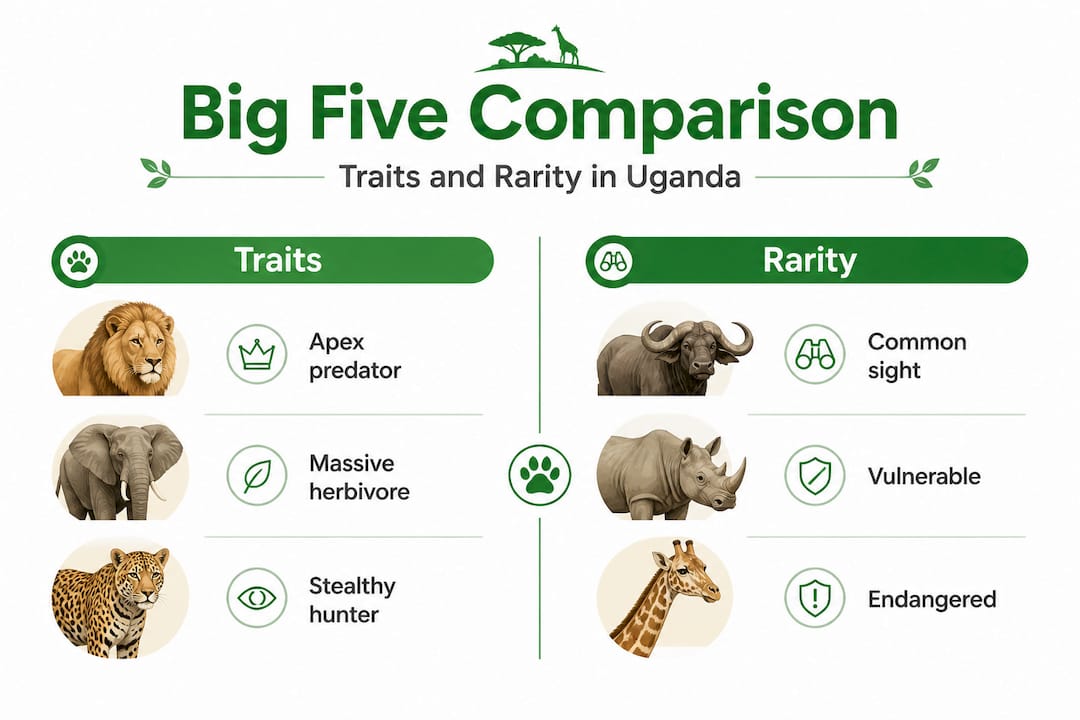
Comparison: The Big Five at a glance
| Animal | Key trait | Threat level | Rarity in Uganda |
|---|---|---|---|
| Lion | Apex predator, social | Vulnerable | Moderate |
| Leopard | Nocturnal, elusive | Vulnerable | High |
| African elephant | Largest land animal | Endangered | Common |
| Rhinoceros | Critically endangered | Critically endangered | Very rare |
| Cape buffalo | Most dangerous | Least concern | Common |
Understanding these distinctions helps you set realistic expectations and appreciate just how special each sighting truly is.
Where to see the Big Five in Uganda: Top parks and travel tips
Uganda surprises many first-time safari travelers. It is far more than just gorilla trekking, though that experience alone is extraordinary. The country’s northern and western savanna landscapes hold impressive concentrations of Big Five wildlife, spread across three main destinations.
Uganda’s top Big Five destinations
| Park or sanctuary | Animals present | Best season | Signature feature |
|---|---|---|---|
| Murchison Falls National Park | Lion, elephant, Cape buffalo, leopard | June to September | Nile River wildlife cruises |
| Queen Elizabeth National Park | Lion, elephant, Cape buffalo, leopard | December to February | Tree-climbing lions of Ishasha |
| Ziwa Rhino Sanctuary | Rhinoceros | Year-round | Uganda’s only wild rhino population |
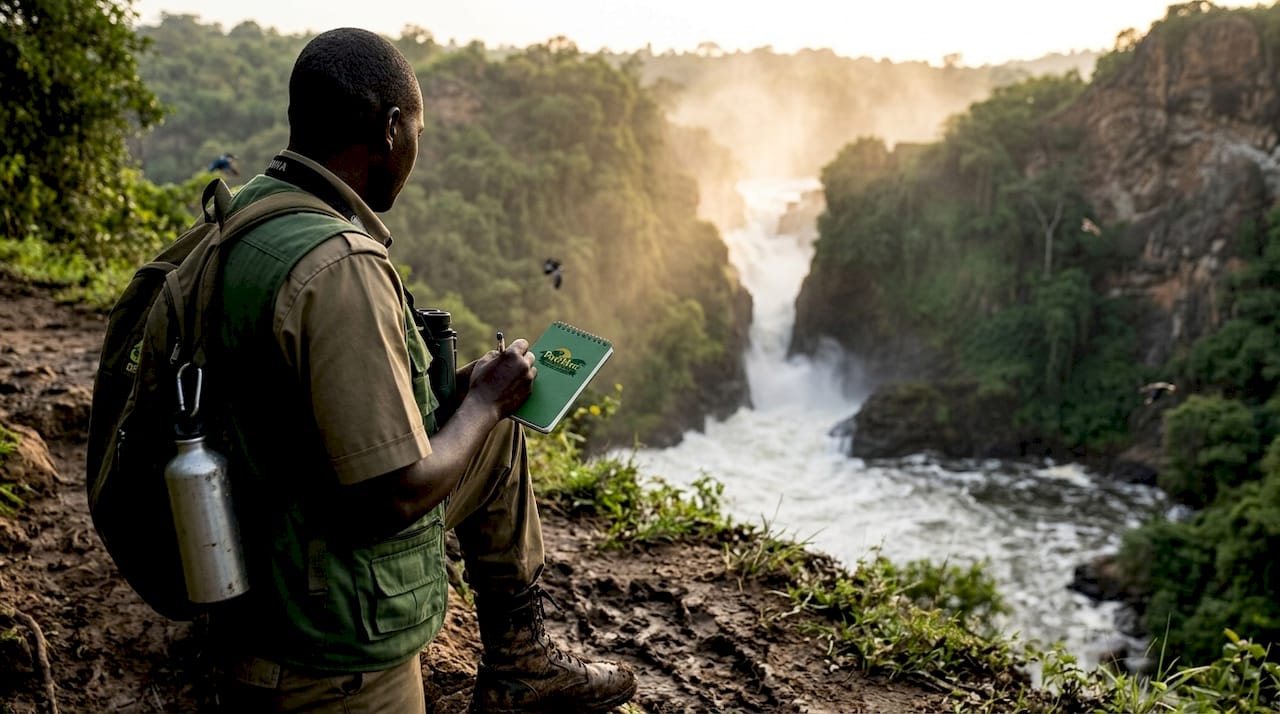
Murchison Falls, Uganda’s largest national park, sits in the northwest and delivers dramatic landscapes where the Nile forces itself through a narrow gorge before cascading 43 meters below. Game drives here regularly produce sightings of elephants in large herds, Cape buffalo in the hundreds, and lions resting in the open savanna. Leopards are present but require patience and an experienced guide to locate.
Plan Your Uganda Safari with Local Experts
 WhatsApp Us
Queen Elizabeth National Park in western Uganda offers a different texture. Its famous Ishasha sector is home to tree-climbing lions, a genuinely rare behavior seen in only a handful of locations worldwide. Elephant populations here are substantial, and buffalo are everywhere. Leopards are occasionally spotted near Kasenyi and along the Kazinga Channel banks during boat cruises.
Ziwa Rhino Sanctuary is not a national park but plays an essential role in any complete Big Five experience in Uganda. It is the country’s only location where wild rhinos roam, and dedicated ranger-led tracking walks bring visitors face to face with these ancient animals on foot. The sanctuary’s focused conservation model gives rhinos the best possible protection against poaching.
Steps for planning an effective Big Five safari in Uganda
- Choose your parks strategically. Combine Murchison Falls and Queen Elizabeth for lions, elephants, buffalo, and leopards. Add Ziwa Sanctuary to complete the Big Five list.
- Time your visit well. The dry seasons from December to February and June to September offer the best game viewing as animals concentrate around water sources.
- Book a knowledgeable guide. Local expertise makes an enormous difference. Guides who know animal movement patterns, preferred resting spots, and behavioral cues dramatically increase your sighting success.
- Pack the right camera gear. A telephoto lens of at least 300mm gives you the reach needed for sharp wildlife images from a safe vehicle distance.
- Start early. Most animals are most active in the first two hours after sunrise. Afternoon drives from 3:00 PM onward are also productive.
- Stay multiple nights. A single day rarely produces all Big Five encounters. Three to four nights across parks gives you far better odds.
For a well-structured introduction to planning, the Big Five in Uganda guide walks through logistics clearly. You can also explore key Uganda Big Five insights for practical depth, or browse the 3-day Big Five safari itinerary if you want a ready-made starting point.
Pro Tip: Leopards are most frequently spotted at dusk from vehicles positioned near rocky outcrops and riverine forests. Ask your guide specifically about known leopard territories within the park rather than relying on luck alone.
What to expect on a Big Five safari: Experience, challenges, and safety
A safari is not a zoo visit with a guarantee of every animal at every turn. That unpredictability is actually what makes it extraordinary. Understanding what a typical day looks like, and where the real challenges lie, helps you arrive with the right mindset.
A typical safari day in Uganda
- 5:30 AM: Wake-up call, light breakfast, and departure for the morning game drive before full sunrise.
- 6:00 to 9:00 AM: Peak game drive hours. Lions and leopards are most active, elephants are moving between water and feeding grounds, and the light is stunning for photography.
- 9:00 AM to noon: Return to camp or lodge for a full breakfast, rest, and optional guided nature walks or cultural visits.
- 3:00 to 6:30 PM: Afternoon game drive. Buffalo are often seen in large groups during this window, and Nile river cruises at Murchison Falls frequently produce elephant and hippo sightings in dramatic golden light.
- Evening: Dinner, debrief with your guide, and early rest ahead of the next morning’s drive.
Realistic expectations for sightings
Lions and elephants are generally reliable sightings across Uganda’s top parks. Cape buffalo appear in such large numbers that encounters are almost inevitable. Leopards are genuinely rare, and even experienced guides sometimes go days without a confirmed sighting. Rhinos require a specific visit to Ziwa Sanctuary and are best tracked on foot with rangers, which adds a thrilling and intimate dimension to the experience.
“The Cape buffalo is widely considered the most dangerous of the Big Five, responsible for more hunter fatalities than any other species on the list.”
Safety on safari
Safety on a Big Five safari depends almost entirely on following your guide’s instructions without exception. Never stand or lean out of the vehicle without explicit permission. Stay inside the vehicle whenever animals are nearby, especially Cape buffalo, which can charge without obvious warning. Maintain a respectful distance from all animals, including elephants, which may mock charge when they feel threatened.
Most safari-related incidents occur when travelers ignore these basic protocols. The good news is that well-managed parks in Uganda maintain clear regulations, and professional guides carry extensive experience in reading animal behavior before danger develops.
For ideas on elevated safari experiences that pair comfort with safety, explore luxury safari experiences and detailed guidance on Uganda safari game drives.
Pro Tip: Always ask your guide whether there are any known aggressive animals in the area before beginning a walking safari. This simple question can be the difference between a thrilling walk and a dangerous situation.
Responsible safaris: How to support conservation and travel ethically
Seeing the Big Five is a privilege. Protecting them is a responsibility. Rhinos represent the most urgent case. Rhinos are critically endangered primarily due to relentless poaching driven by demand for their horns in certain international markets. Uganda’s Ziwa Rhino Sanctuary exists because of deliberate reintroduction efforts and ongoing community protection programs. Without continued support, that progress is fragile.
The main pillars of responsible safari travel
- Choose ethical operators. Work with companies that hold legitimate licenses, employ local guides, and contribute directly to park management and conservation funds.
- Support local communities. Choose community-based lodges and buy local crafts. Tourism money that circulates within communities gives those communities a direct incentive to protect wildlife rather than view it as a threat.
- Respect park regulations. Stay on designated roads, follow distancing rules, and never feed wild animals. These rules exist to protect both animals and visitors.
- Contribute to conservation programs. Some operators offer optional donations to wildlife protection foundations at checkout. These contributions fund anti-poaching patrols, veterinary care, and habitat restoration.
Easy ways to leave a positive impact
- Carry a reusable water bottle and avoid single-use plastics in parks.
- Avoid purchasing souvenirs made from wildlife products such as ivory, horn, or animal skins.
- Respect local cultural sites and photography guidelines when visiting communities near parks.
- Share your experience authentically on social media, raising awareness about conservation challenges.
- Ask your operator which percentage of your fee goes directly to conservation or community programs.
Uganda’s rhino reintroduction story at Ziwa Sanctuary stands as real evidence that ethical tourism works. From zero rhinos in the wild in the early 2000s to a growing population today, the sanctuary’s model shows what is possible when governments, operators, and travelers commit to protection over profit. For a complete framework of ethical travel choices, the responsible safari tips guide covers the full picture in actionable detail.
Why the Big Five safari experience in Uganda is more important than ever
Here is something most safari articles never say directly: your trip is not just about what you see. It is about what happens because you showed up.
The conservation funding model in Uganda is deeply tied to tourism revenue. When travelers book ethical safaris, pay park entry fees, and choose responsible operators, that money flows into ranger salaries, anti-poaching equipment, community development programs, and habitat protection. When travelers stop coming, or when they choose unregulated operators to save money, that pipeline dries up fast.
Rhinos in Uganda make this point with startling clarity. Ziwa Sanctuary’s rhino population exists today because of sustained investment from conservation-focused tourism. Every tracking walk fee, every lodge night, every park entry ticket contributes to keeping rangers employed and poachers deterred. The connection between your travel choices and a rhino’s survival is not abstract. It is direct and measurable.
What most travelers also miss is the community dimension. Villages surrounding Uganda’s national parks have historically had complicated relationships with wildlife. Elephants raid crops. Hippos damage irrigation systems. Lions occasionally take livestock. When those communities receive genuine economic benefits from wildlife tourism, through jobs, revenue sharing, and market access, their perspective on wildlife protection shifts. The elephant that once meant crop loss becomes an asset worth protecting.
We at PawMac Safaris see this dynamic play out every season. Travelers who engage deeply with local guides, stay at community lodges, and ask questions about conservation come away changed. And the communities they touched benefit long after the vehicle drives back to the airstrip. Explore deeper Big Five safari insights for more on how Uganda’s model works in practice.
The Big Five safari is not a passive experience. It is participation in something urgent and meaningful. That framing is not marketing language. It is the honest reality of wildlife conservation in 2026.
Ready for your own Big Five safari?
Planning a Big Five safari in Uganda is straightforward when you work with experts who know these parks intimately. PawMac Safaris builds customized itineraries across Murchison Falls, Queen Elizabeth, and Ziwa Rhino Sanctuary, ensuring you see as much as possible within your available time.

Browse the full range of Uganda wildlife tours to see ready-made options or request something fully personalized. If you want to start with Uganda’s most iconic landscapes, explore the detailed Uganda safari packages page, or go straight to the popular Murchison Falls safari itinerary, which combines river cruises with open savanna game drives for a well-rounded introduction to Uganda’s Big Five wildlife.
Frequently asked questions
Which animals make up the Big Five?
The Big Five are the lion, leopard, African elephant, rhinoceros, and Cape buffalo, a grouping originally defined by big-game hunters and now celebrated in wildlife conservation.
Why are rhinos so hard to see on a Big Five safari?
Rhinos are critically endangered from decades of intensive poaching and are only found in protected reserves like Uganda’s Ziwa Rhino Sanctuary, making dedicated tracking visits essential.
Is it safe to go on a Big Five safari?
Safaris are very safe when you follow your professional guide’s instructions at all times, particularly around Cape buffalo, which is considered the most dangerous of the five species due to its unpredictable charges.
What is the best time of year to see the Big Five in Uganda?
The dry seasons from December to February and June to September offer the clearest game viewing conditions, as reduced vegetation and concentrated water sources make animals far easier to locate.
How can travelers practice ethical safari tourism?
Choose licensed operators with transparent conservation contributions, stay at community-based lodges, follow all park regulations, and avoid purchasing any products derived from wildlife.
Recommended
- Discover the Big Five: Your Ultimate Guide to Africa’s Safari Icons
- Big Five Animals in Uganda: 5 Key Safari Insights (2026)
- The Big Five Mammals in Uganda | Safari Guide
- Uganda vs Kenya safari: choosing the best wildlife destination
- 10-Day Morocco Signature Tour | Luxury & Adventure


