


- 3 Views
- 22 Min Read
- (0) Comment
Uganda’s most memorable safari moments often begin when the engine is switched off. A classic game drive is still an essential part of seeing lions, elephants, buffalo, giraffes, leopards, and antelope, but Uganda offers a deeper style of wildlife travel: tracking primates through rainforest, approaching rhinos on foot, watching hippos from a boat, searching papyrus channels for shoebill, and listening to nocturnal species after sunset.
For travelers planning a Uganda safari in 2026, these experiences add texture, exclusivity, and emotional impact. They also require better planning than a simple park drive. Permits sell out, walking activities need ranger coordination, boat timings affect photography, and premium lodges can fill quickly in peak months. This guide explains the best wildlife experiences in Uganda beyond the standard game drive, with practical routing, cost expectations, and planning advice from a local safari perspective.
Table of Contents
- Why Go Beyond the Standard Game Drive
- The Wildlife Experiences That Change How You See Uganda
- Gorilla Trekking in Bwindi and Mgahinga
- Chimpanzee Tracking and Habituation in Kibale
- Boat Safaris on the Nile and Kazinga Channel
- Rhino Tracking on Foot at Ziwa Rhino Sanctuary
- Walking Safaris in Lake Mburo and Kidepo
- Night Wildlife Drives Where Permitted
- Shoebill and Specialist Birding Encounters
- Primate and Forest Walks Beyond the Headliners
- How to Combine These Experiences in a Practical Itinerary
- A 7 to 9 Day First-Time Uganda Route
- A 10 to 14 Day Premium Uganda Route
- Budgeting for Wildlife Experiences in Uganda
- What to Pack and Prepare Before You Arrive
- Timing, Permits, and Booking Strategy for 2026
- How PawMac Safaris Designs These Experiences Properly
- Frequently Asked Questions
- Plan a Uganda Safari With More Than Game Drives
Why Go Beyond the Standard Game Drive
A daytime game drive gives you range. You cover open savannah, scan for predators, follow elephant herds, and learn how Uganda’s ecosystems fit together. It is the backbone of many safaris, especially in Murchison Falls National Park, Queen Elizabeth National Park, Kidepo Valley National Park, and Lake Mburo National Park.
But the most distinctive wildlife experiences in Uganda are often more intimate. In Bwindi Impenetrable National Park, you read broken stems and fresh nests before meeting mountain gorillas at close range. In Kibale National Park, chimpanzee calls echo through the canopy before the group appears. On the Nile, elephants and crocodiles are not distant shapes on the horizon, they are part of the river scene around you.
This is why a strong Uganda itinerary should not simply stack park drives from morning to evening. It should vary pace, angle, and habitat. If you want a broader inspiration list before building your route, PawMac Safaris also covers top wildlife adventures in Uganda beyond game drives in a complementary guide.
The practical advantage is just as important as the emotional one. Uganda’s parks reward travelers who move between rainforest, wetland, savannah, escarpment, crater lake country, and river systems. Each activity gives access to species and behavior you are unlikely to see well from a vehicle alone.
| Experience | Best Uganda locations | Typical activity level | Planning note |
|---|---|---|---|
| Gorilla trekking | Bwindi, Mgahinga | Moderate to challenging | Permit required, limited daily availability |
| Chimpanzee tracking | Kibale, Kyambura, Budongo | Moderate | Morning and afternoon tracking options vary by location |
| Boat safari | Murchison Falls, Kazinga Channel, Lake Mburo | Easy | Best light is usually morning or late afternoon |
| Rhino tracking on foot | Ziwa Rhino Sanctuary | Easy to moderate | Works well en route to or from Murchison Falls |
| Walking safari | Lake Mburo, Kidepo | Moderate | Must be ranger-led and weather-aware |
| Shoebill search | Mabamba Swamp, selected Nile wetlands | Easy to moderate | Early starts improve chances |
| Night wildlife activity | Selected parks and concessions | Easy | Only where officially permitted and ranger-supported |
The Wildlife Experiences That Change How You See Uganda
The following experiences are not replacements for game drives. They are what make a Uganda safari feel layered rather than predictable. The key is choosing the right combination for your fitness level, budget, travel season, and time available.
Gorilla Trekking in Bwindi and Mgahinga
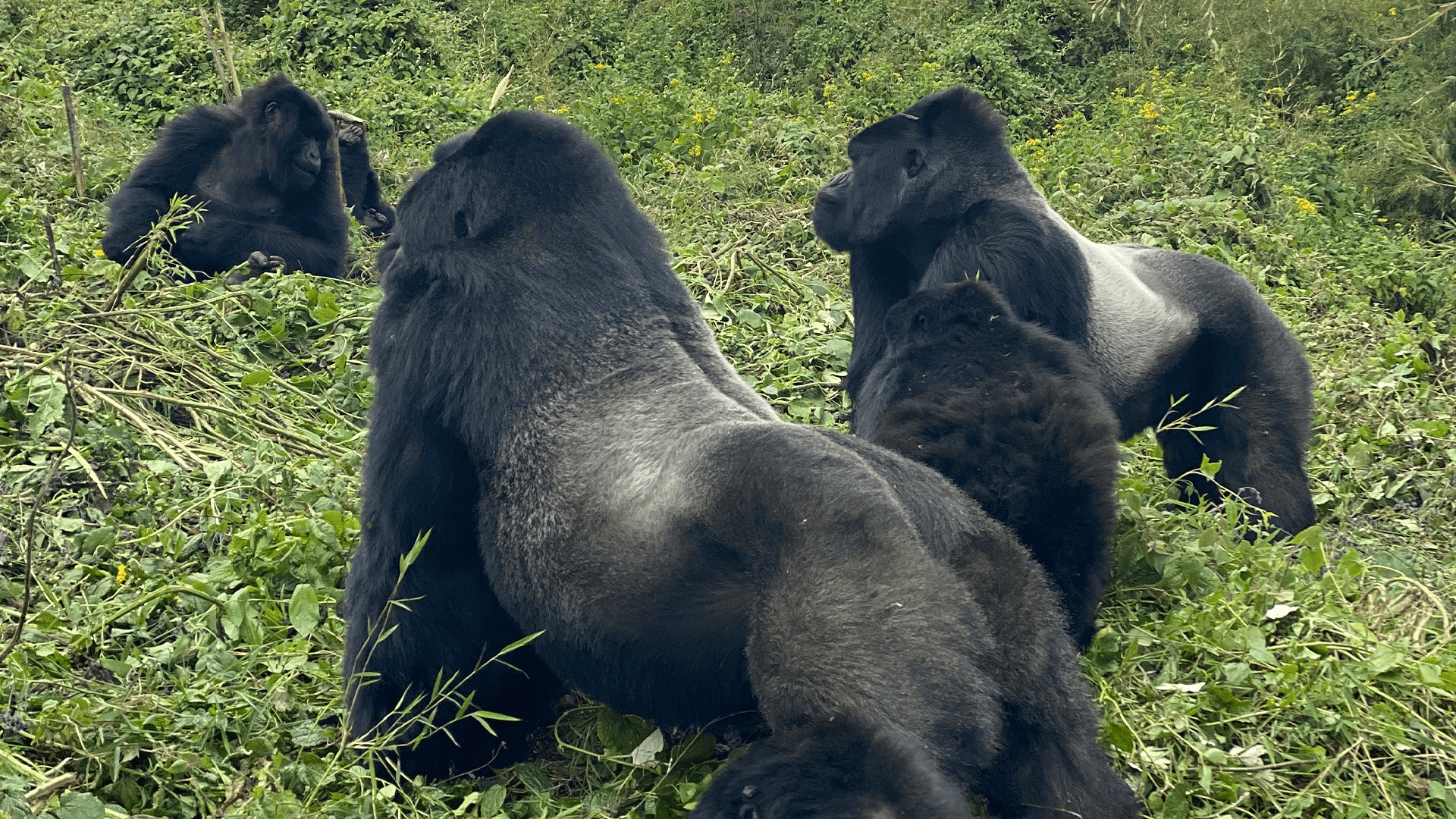
Gorilla trekking is Uganda’s signature wildlife encounter, and it deserves careful planning. Bwindi Impenetrable National Park has several trekking sectors, including Buhoma, Ruhija, Rushaga, and Nkuringo. Mgahinga Gorilla National Park offers a different setting, with volcanic slopes and a smaller, more compact trekking environment when permits and conditions align.
A standard gorilla trek usually begins early in the morning with a ranger briefing. Trekkers are assigned to a gorilla family group based on permit allocation, operational decisions, and sometimes walking ability. The trek may take a couple of hours or most of the day, depending on where the gorillas are feeding and how the terrain behaves after rain.
As of 2026, Uganda gorilla permits for foreign non-residents are generally planned at about USD 800 per person per trek. This is the permit cost only. It does not include accommodation, road transfers, domestic flights, porter support, meals, tips, or the rest of the safari logistics. Gorilla habituation experiences, when available, cost significantly more and have even tighter availability.
Premium travelers should treat gorilla trekking as a two-night minimum stay in the correct sector, not as a quick stop. Staying close to the correct briefing point reduces early-morning stress and protects the experience from long road transfers. It is also wise to consider a porter, even if you are fit. Porters help with balance, bags, and muddy sections, while also supporting the communities around the park.
Plan Your Uganda Safari with Local Experts
 WhatsApp Us
The finest gorilla trekking itineraries usually include at least one buffer night in the region. This allows you to recover, add a second trek if budget permits, enjoy a cultural visit, or explore nearby forest trails without turning the trip into a race across Uganda.
Chimpanzee Tracking and Habituation in Kibale
If gorilla trekking is quiet, grounded, and deeply emotional, chimpanzee tracking is energetic. Kibale National Park is Uganda’s classic chimpanzee destination because of its high primate diversity and well-established tracking operations. The forest can feel alive from the first few minutes, with calls, movement in the canopy, and the constant sense that wildlife is nearby even when hidden.
Chimpanzee tracking is usually shorter and less physically demanding than some gorilla treks, although forest conditions still matter. Groups move with trained guides and rangers, listening for vocalizations and signs of feeding. Once chimpanzees are located, visitors typically have a regulated viewing period.
For 2026 planning, Kibale chimpanzee tracking permits for foreign non-residents are commonly budgeted at around USD 250 per person. Chimpanzee habituation experiences are usually higher, often planned around USD 300 per person, subject to current official tariffs and availability. Habituation is more immersive, with longer time in the forest and a stronger focus on behavior, movement, and research-style observation.
The best itineraries do not rush Kibale. A two-night stay allows time for chimpanzee tracking, Bigodi Wetland Sanctuary or another community-linked nature walk, and onward travel to Queen Elizabeth National Park without exhausting the day. This is especially valuable for travelers who care about photography, birding, or primates beyond the main encounter.
Boat Safaris on the Nile and Kazinga Channel
Uganda’s boat safaris are among the most underrated wildlife experiences in the country. They change your perspective immediately. Instead of viewing water from the road, you move through the habitat itself, watching animals come to drink, cool down, hunt, or rest.
In Murchison Falls National Park, the Nile boat safari toward the base of the falls is dramatic. Hippos gather in pods, crocodiles bask along the banks, and elephants may appear beside the river. The approach to the falls adds landscape power to the wildlife viewing, with the Nile forcing itself through a narrow gap before exploding into the lower river.
The Nile Delta cruise is different. It is calmer, broader, and especially interesting for birders and travelers hoping for shoebill opportunities in the right conditions. It also offers a slower rhythm, which often suits photographers who want behavior rather than just sightings.
In Queen Elizabeth National Park, the Kazinga Channel connects Lake Edward and Lake George. This boat safari is famous for dense concentrations of hippos, buffalo, elephants, crocodiles, waterbirds, and fishing village scenes. It is one of the best activities in Uganda for travelers who want excellent wildlife viewing without strenuous walking.
Scheduled boat safaris are often budgeted around USD 30 to USD 45 per person, depending on the park, operator type, and current tariffs. Private boat arrangements cost more but can be worthwhile for families, photographers, or luxury travelers who want better control over timing and positioning. If photography is a major goal, pair river activities with a route designed around light, patience, and vehicle positioning, similar to the planning principles in PawMac Safaris’ guide to wildlife photography safaris in Uganda.

Rhino Tracking on Foot at Ziwa Rhino Sanctuary
Rhino tracking at Ziwa Rhino Sanctuary adds a completely different dimension to a Uganda safari. Uganda’s rhino conservation story is significant, and Ziwa is the primary place where travelers can track rhinos on foot with trained guides and rangers.
This activity is often routed between Kampala or Entebbe and Murchison Falls National Park. It breaks up the journey and adds an important Big Five component before continuing north. Tracking is done carefully, with strict instructions on distance, movement, and positioning. The experience is not about getting close at any cost, it is about observing responsibly in a conservation setting.
A typical rhino tracking activity may take 1.5 to 3 hours depending on where the rhinos are located. For budget planning, travelers often estimate about USD 50 per person for the tracking activity, though exact rates should always be confirmed at booking because sanctuary fees can change.
This is one of the best examples of why Uganda works well for travelers who want more than passive viewing. You are not simply ticking off a species. You are learning how conservation, land management, security, and tourism support a living population.
Walking Safaris in Lake Mburo and Kidepo
Walking safaris sharpen your senses. You notice tracks, dung, feathers, termite mounds, browse lines, alarm calls, and wind direction. You also understand scale differently. A zebra, buffalo, giraffe, or antelope viewed on foot feels very different from the same animal seen from a vehicle.
Lake Mburo National Park is one of Uganda’s best-known walking safari locations. Its landscape of acacia woodland, open grassland, wetland, and rolling hills makes it suitable for guided walking in specific areas. The park is also often included near the end of western Uganda circuits because it breaks the long road journey between Bwindi or Queen Elizabeth and Entebbe.
Kidepo Valley National Park, in Uganda’s far northeast, offers a wilder and more remote walking experience when arranged with proper ranger support. Kidepo is not a casual add-on. It requires more time, better logistics, and usually a higher budget, but it rewards travelers with a powerful sense of space and solitude.
Guided walks in Uganda’s parks are commonly budgeted around USD 20 to USD 40 per person, depending on the park and current tariff. The real cost, however, is time. A walking safari should not be squeezed between a late transfer and an afternoon departure. It works best when you have a settled night nearby and can start at a sensible hour.
Night Wildlife Drives Where Permitted
A night drive is technically still a vehicle activity, but it is not a standard daytime game drive. The entire mood changes after sunset. Species that hide in the heat may emerge, predators become more active, and the bush becomes a world of sound, reflection, and movement.
Night activities in Uganda must be arranged only where permitted and with the correct ranger or authorized guide support. They are never an excuse to disturb wildlife or drive irresponsibly. When done properly, they can reveal bush babies, genets, civets, owls, nightjars, porcupines, hyenas, and sometimes predator behavior that is rarely seen during the day.
Travelers should budget roughly USD 30 to USD 50 per person for many organized night activities, though pricing varies by park, lodge arrangement, and official tariff. Bring a warm layer, because evening temperatures can drop quickly after a hot afternoon, especially in open vehicles.
Shoebill and Specialist Birding Encounters
Uganda is one of Africa’s most rewarding birding destinations, with more than 1,000 recorded bird species. The shoebill is the headline species for many visitors, but it is only part of the story. Papyrus endemics, forest species, raptors, bee-eaters, kingfishers, turacos, hornbills, and waterbirds can turn an ordinary transfer day into a serious wildlife experience.
Mabamba Swamp near Entebbe is one of the most practical shoebill locations, especially for travelers with limited time at the beginning or end of a safari. Searches are usually done by canoe with local guides who understand the channels, papyrus edges, and feeding zones. Murchison’s Nile Delta is another important shoebill area, often combined with a longer northern Uganda route.
Shoebill-focused activities are best started early. Light is better, temperatures are cooler, and bird activity is generally stronger. A private canoe and specialist guide arrangement can cost more than a basic excursion, but for serious birders it is often worth it. Many travelers budget roughly USD 50 to USD 120 per person for a well-organized shoebill outing near Entebbe, depending on transport, guiding, group size, and boat arrangement.

Primate and Forest Walks Beyond the Headliners
Gorillas and chimpanzees receive most of the attention, but Uganda’s forest experiences go much further. Mgahinga Gorilla National Park offers golden monkey tracking, an excellent addition for travelers already visiting the southwestern volcano region. Kibale and nearby forest corridors can reveal black-and-white colobus, red-tailed monkeys, grey-cheeked mangabeys, L’Hoest’s monkeys, and a rich mix of forest birds.
Community-linked wetland and forest walks around Kibale, including Bigodi-style experiences, are valuable because they connect wildlife viewing with local livelihoods. These walks are typically gentler than gorilla trekking and can be excellent for families, birders, and travelers who want a slower day between major activities.
Costs for these smaller forest and wetland experiences vary widely. Some community walks may be budgeted from about USD 20 to USD 40 per person, while specialized primate activities can cost more depending on the park and permit category. The main planning point is not just price, it is placement. A forest walk after chimpanzee tracking can be wonderful. The same walk after a long transfer on rough roads may feel like too much.
How to Combine These Experiences in a Practical Itinerary
The art of planning wildlife experiences in Uganda is sequencing. Uganda’s roads, parks, and habitats reward smart pacing. The goal is not to do every possible activity. The goal is to combine the right experiences in a way that protects energy, improves wildlife chances, and keeps the safari comfortable.
A strong route usually balances three elements: primates, savannah wildlife, and water or walking activities. Travelers who focus only on gorillas may miss the Nile, the Kazinga Channel, rhino tracking, and Uganda’s exceptional birdlife. Travelers who focus only on savannah parks may miss the rainforest encounters that make Uganda so distinctive.
Game drives still matter in this mix. The difference is that they become part of a wider wildlife rhythm rather than the only activity. If you are comparing classic vehicle-based viewing with a broader safari design, PawMac Safaris’ guide to game drives in Uganda and Big Five safari routes explains where daytime drives fit best.
A 7 to 9 Day First-Time Uganda Route
A well-planned 7 to 9 day Uganda safari can include several experiences beyond game drives, but it requires discipline. You should not attempt to include every region. For most first-time travelers, the strongest route is a western circuit with one or two carefully chosen additions.
| Day range | Area | Best beyond-game-drive experience | Planning comment |
|---|---|---|---|
| 1 | Entebbe | Optional Mabamba shoebill search | Best if arrival timing allows a relaxed start |
| 2 to 3 | Murchison Falls area | Ziwa rhino tracking, Nile boat safari | Combines conservation, river wildlife, and savannah viewing |
| 4 to 5 | Kibale | Chimpanzee tracking, wetland walk | Two nights improves comfort and wildlife focus |
| 6 | Queen Elizabeth | Kazinga Channel boat safari | Works well between Kibale and Bwindi |
| 7 to 8 | Bwindi or Mgahinga | Gorilla trekking | Stay in the correct sector for your permit |
| 9 | Lake Mburo or Entebbe | Walking safari if routing permits | Useful break on the return journey |
This kind of itinerary is suitable for travelers who want diversity without adding too many internal flights or very remote regions. It can be built at midrange, upper-midrange, or luxury level depending on lodge choices and vehicle style.
A 10 to 14 Day Premium Uganda Route
With 10 to 14 days, Uganda opens up considerably. You can add a second gorilla trek, include golden monkeys, slow down in Kibale, or extend to Kidepo Valley National Park for a remote wilderness experience.
A premium route might begin with Mabamba or a calm Entebbe arrival night, continue to Murchison Falls with rhino tracking at Ziwa, move through Kibale and Queen Elizabeth, then finish with Bwindi, Mgahinga, and Lake Mburo. Alternatively, travelers with a larger budget can use domestic flights to connect distant regions and reduce road fatigue.
The biggest advantage of a longer safari is not simply adding more parks. It is better timing. You can choose morning activities when wildlife is active, build in rest after gorilla trekking, and avoid arriving at premium lodges too late to enjoy them.
For luxury travelers, this matters. A high-end lodge is not only a bed. It is part of the safari experience, with views, food, guiding, service, and recovery time between demanding activities. If the itinerary is too rushed, you pay for premium hospitality but barely experience it.
Budgeting for Wildlife Experiences in Uganda
Uganda offers flexible safari pricing, but the best wildlife experiences have real fixed costs. Gorilla and chimpanzee permits, park entry, ranger-led activities, boats, fuel, professional guiding, and quality lodging all shape the final budget.
For 2026 planning, these are realistic cost expectations for many international travelers. Exact rates should always be confirmed before booking because official tariffs, lodge rates, and seasonal offers can change.
| Cost item | Indicative 2026 planning range | Notes |
|---|---|---|
| Gorilla trekking permit | About USD 800 per person | Foreign non-resident permit estimate, per trek |
| Kibale chimpanzee tracking permit | About USD 250 per person | Permit only, subject to current tariff |
| Chimpanzee habituation | About USD 300 per person | Longer forest experience, limited availability |
| Scheduled boat safari | About USD 30 to USD 45 per person | Private boats cost more |
| Rhino tracking at Ziwa | About USD 50 per person | Confirm current sanctuary rates |
| Guided walking safari | About USD 20 to USD 40 per person | Varies by park and arrangement |
| Shoebill excursion | About USD 50 to USD 120 per person | Depends on transport, boat, guide, and group size |
| Major park entry | Often around USD 40 per adult per 24 hours | Vehicle and activity fees may be separate |
| Midrange safari lodging | About USD 180 to USD 350 per person per night | Varies by meal plan, season, and location |
| Luxury safari lodging | About USD 450 to USD 1,200+ per person per night | Premium gorilla and wilderness lodges can exceed this |
As a broad planning guide, a private midrange Uganda safari may often fall around USD 350 to USD 650 per person per day, depending heavily on group size and routing. A luxury private safari can range from about USD 700 to USD 1,500+ per person per day, especially when premium lodges, multiple permits, private boats, and domestic flights are included.
The largest cost variables are lodge level, number of travelers sharing the vehicle, gorilla permit count, domestic flight use, and how remote the route becomes. Kidepo, for example, can be exceptional, but it usually raises the budget because of distance, flight logistics, or longer vehicle time.
The most common budgeting mistake is underestimating transfers. Uganda’s highlights are spread across different habitats, and a comfortable safari requires a reliable 4×4 vehicle, fuel, an experienced guide, and realistic drive times. A cheaper itinerary that ignores road fatigue often becomes more expensive in comfort lost.
What to Pack and Prepare Before You Arrive
Packing for Uganda should reflect varied habitats. A single safari can include cool highland forest, warm savannah, wetland boat trips, dusty tracks, and muddy trails. Good preparation improves comfort and can make demanding activities feel much easier.
Bring clothing that is practical rather than overly technical. Neutral colors work well in savannah parks, while long sleeves and long trousers help in forests and wetlands. For gorilla and chimpanzee tracking, waterproof hiking shoes with grip are more important than fashion. Gaiters can be useful in muddy conditions, and garden-style gloves help when holding vegetation on steep trails.
Essential items include:
- Lightweight rain jacket for forest conditions and sudden showers
- Comfortable hiking shoes already broken in before travel
- Long trousers and long-sleeved shirts for trekking and insect protection
- Binoculars, ideally one pair per traveler rather than one pair per vehicle
- Dry bag or waterproof cover for camera gear during boat trips
- Sunscreen, insect repellent, hat, and refillable water bottle
- Small cash notes for porter support, local tips, and community activities
Fitness preparation matters most for gorilla trekking. You do not need to be an athlete, but you should be comfortable walking for several hours on uneven ground. If you have knee issues, limited mobility, or concerns about altitude and slopes, tell your safari planner early. The correct gorilla sector, lodge location, porter support, and pacing can make a major difference.
Timing, Permits, and Booking Strategy for 2026
Uganda is a year-round safari destination, but timing influences comfort, availability, and cost. The drier months, often from June to September and December to February, are popular for gorilla trekking and savannah wildlife viewing. Trails may be easier, visibility can be better, and travelers often prefer the conditions.
The wetter or green-season months can still be excellent, especially for photographers and birders. Landscapes are lush, migratory birds may be present at certain times, and some lodges may have better availability. Forest activities can be muddier, but rain does not mean wildlife disappears. In fact, some travelers prefer the quieter feel of these months.
For remaining 2026 departures and early 2027 planning, the biggest constraint is often not choosing what to do, but securing the right permits and rooms in the right places. Gorilla permits are tied to specific dates and sectors. Premium lodges near popular briefing points can fill quickly, especially for peak travel months.
A smart booking strategy is to secure gorilla permits first, then build the rest of the route around them. After that, chimpanzee permits, premium lodge space, domestic flights if needed, and special activities such as private boat safaris or specialist birding can be confirmed. This order protects the most limited experiences.
Travelers should also avoid planning too tightly around international flight arrival days. Uganda rewards a calm first night in Entebbe or Kampala, especially if you are arriving late. Starting a long road transfer immediately after an overnight flight can reduce enjoyment and increase fatigue before the safari has properly begun.
How PawMac Safaris Designs These Experiences Properly
A safari beyond standard game drives needs more than a list of activities. It needs local sequencing, honest drive-time planning, permit knowledge, and guides who understand how to adapt each day without losing the structure of the route.
PawMac Safaris specializes in expert-guided Uganda wildlife and gorilla trekking tours, with custom safari packages shaped around each traveler’s goals, budget, and preferred comfort level. That may mean a luxury gorilla and primate route, a balanced midrange family safari, a Big Five-focused journey with Ziwa and Murchison, or a slower itinerary built around photography, birds, and walking experiences.
The value of local planning becomes clear in small decisions. Which gorilla sector matches your lodge and fitness level? Should you choose the Murchison Falls base cruise or Delta cruise? Is Lake Mburo worth adding as a walking safari stop on the return to Entebbe? Would a private boat improve your photographic opportunities? Is a domestic flight worth the added cost for your dates?
These are not generic questions. They determine whether your safari feels smooth, personal, and memorable, or rushed and tiring. With professional planning, comfortable 4×4 vehicles, experienced local guides, and flexible package design, PawMac Safaris helps travelers experience Uganda with depth rather than simply moving from one sighting to the next.
Frequently Asked Questions
What are the best wildlife experiences in Uganda beyond game drives? The strongest options include gorilla trekking in Bwindi or Mgahinga, chimpanzee tracking in Kibale, Nile and Kazinga Channel boat safaris, rhino tracking at Ziwa Rhino Sanctuary, guided walking safaris in Lake Mburo or Kidepo, shoebill searches in wetland areas, and night wildlife activities where permitted.
How much does gorilla trekking in Uganda cost in 2026? For foreign non-residents, Uganda gorilla trekking permits are generally planned at about USD 800 per person per trek in 2026. This is only the permit fee. Your total safari cost also depends on accommodation, vehicle, guide, transfers, meals, park fees, porter support, and any additional activities.
Can I combine gorilla trekking, chimpanzees, and boat safaris in one Uganda itinerary? Yes. A well-designed 8 to 12 day route can combine Kibale chimpanzee tracking, Queen Elizabeth’s Kazinga Channel, Bwindi or Mgahinga gorilla trekking, and either Murchison Falls or Lake Mburo. The key is avoiding rushed transfers and booking permits in the right sequence.
Are walking safaris in Uganda safe? Walking safaris are safe when arranged in approved areas with trained guides or armed rangers and when travelers follow instructions. They should never be done independently inside wildlife areas. Safety depends on location, weather, animal movement, guide judgment, and visitor behavior.
When should I book Uganda wildlife experiences for peak season? For peak months, especially June to September and December to February, it is wise to book gorilla permits and premium lodges as early as possible. Six to twelve months ahead is ideal for high-demand dates, though shorter-notice trips may still work with flexible routing and lodge choices.
Plan a Uganda Safari With More Than Game Drives
Uganda is not a destination to experience from one angle only. The country’s real strength is variety: rainforest primates, river wildlife, rhino conservation, papyrus wetlands, crater landscapes, remote savannah, and guided encounters that bring you closer to the details of the wild.
If you want a safari that goes beyond the standard game drive while staying practical, comfortable, and well-paced, PawMac Safaris can help you design a personalized Uganda itinerary around your travel dates, budget, fitness level, and must-see wildlife experiences. The result is a safari that feels less like a checklist and more like a complete journey through the Pearl of Africa.


