


- 9 Views
- 20 Min Read
- (0) Comment
Mountain gorilla trekking in Uganda is one of the most powerful wildlife experiences in Africa, but the quality of your trip depends heavily on choosing the right route, understanding the real costs, and preparing properly for steep forest terrain. Uganda offers two main gorilla trekking destinations, Bwindi Impenetrable National Park and Mgahinga Gorilla National Park, each with different access routes, trekking conditions, lodge styles, and budget implications.
Table of Contents
- Where Mountain Gorilla Trekking Happens in Uganda
- Route Options by Sector
- Best Travel Routes to the Trailheads
- Mountain Gorilla Trekking Uganda Cost in 2026
- How to Choose the Right Route for Your Budget and Fitness
- Preparation Before You Travel
- What Happens on Trekking Day
- Best Time to Go
- Sample Itineraries
- Responsible Trekking Rules
- Frequently Asked Questions
- Plan Your Uganda Gorilla Trekking Safari
Where Mountain Gorilla Trekking Happens in Uganda
Uganda is home to more than half of the world’s remaining mountain gorillas, and trekking takes place only in protected highland forests in the southwest of the country. The two destinations are Bwindi Impenetrable National Park and Mgahinga Gorilla National Park.
Bwindi is the larger and more established gorilla trekking destination. It has multiple trailhead sectors spread across the forest, which gives travelers more flexibility when choosing lodge style, travel route, terrain difficulty, and safari combinations. Bwindi is especially strong for travelers who want a classic Uganda gorilla safari with several route options.
Mgahinga is smaller, quieter, and visually dramatic, with volcanic slopes and views toward the Virunga range. It has fewer trekking permits than Bwindi, so availability can be more limited, but it offers a beautifully intimate setting for travelers who prefer a less busy trailhead.
It is important to understand that gorilla trekking routes are not like fixed hiking trails where you select one path months in advance. Your permit is booked for a park and sector, then Uganda Wildlife Authority ranger teams assign visitors to gorilla families on the morning of the trek. The final walking route depends on where the gorillas moved overnight, the fitness level of the trekking group, and ranger guidance.
For a deeper look at the overall experience, including the briefing, forest walk, and one-hour gorilla encounter, PawMac Safaris has also prepared a practical guide on what to expect on gorilla trekking in Uganda.
Route Options by Sector
Bwindi has four main trekking sectors: Buhoma, Ruhija, Rushaga, and Nkuringo. Mgahinga uses the Ntebeko trailhead. Each option can deliver an extraordinary gorilla encounter, but the surrounding logistics feel different.
| Trekking area | Best suited for | Typical terrain | Access notes | Planning insight |
|---|---|---|---|---|
| Buhoma, northern Bwindi | First-time trekkers, classic lodges, safari combinations | Forested slopes with variable difficulty | Often accessed via Kihihi airstrip, Queen Elizabeth National Park, or the Entebbe to Mbarara route | Good for combining gorillas with Ishasha tree-climbing lions and Queen Elizabeth wildlife |
| Ruhija, eastern Bwindi | Travelers seeking quieter routes and scenic highland views | Cool, elevated forest with moderate to demanding hikes | Works well from Kabale, Lake Bunyonyi, or Queen Elizabeth routes | A strong middle-ground option for scenery, comfort, and access |
| Rushaga, southern Bwindi | Permit availability, gorilla habituation options, flexible lodge choices | Dense forest, rolling ridges, and occasional steep sections | Commonly reached via Kisoro, Kabale, or a fly-in to Kisoro airstrip | Often offers the widest permit availability because of several habituated gorilla families |
| Nkuringo, southwestern Bwindi | Active travelers, photographers, premium views | Steeper terrain and dramatic ridgelines | Best accessed via Kisoro, Lake Mutanda, or southern Uganda routing | Excellent for travelers comfortable with tougher hikes and rewarding scenery |
| Mgahinga, Ntebeko | Travelers wanting a quieter volcanic setting | Bamboo and montane forest on volcanic slopes | Accessed through Kisoro, with lodges around Kisoro and Lake Mutanda | Limited permit numbers make early planning especially important |
Buhoma is often favored by travelers who want a well-established gorilla base with a smoother safari flow. It pairs naturally with Queen Elizabeth National Park, especially the Ishasha sector, where visitors often look for tree-climbing lions before continuing to Bwindi.
Ruhija sits at higher elevation and offers a cooler, quieter atmosphere. It is convenient for travelers coming from Kabale or Lake Bunyonyi and can also work well after a Queen Elizabeth safari. The forest views are superb, and the sector is popular with travelers who want fewer crowds without choosing the most strenuous terrain.
Rushaga is one of the most flexible sectors for permit availability. It is also the area most associated with the gorilla habituation experience, subject to permit availability and current Uganda Wildlife Authority operations. Standard gorilla trekking gives you one hour with a habituated family, while habituation experiences offer longer ranger-led time with a group undergoing the habituation process.
Nkuringo is spectacular but physically more demanding. The landscape around Nkuringo and Lake Mutanda is one of Uganda’s most beautiful highland scenes, but the trekking can involve steep descents and climbs. For fit travelers, this sector can be deeply rewarding.
Plan Your Uganda Safari with Local Experts
 WhatsApp Us
Mgahinga is a strong choice for travelers who want fewer vehicles, volcanic views, and a compact gorilla trekking experience near Kisoro. Because permit numbers are limited, it works best when booked early and planned with flexibility.
Best Travel Routes to the Trailheads
Most Uganda gorilla trekking safaris begin in Entebbe, where Uganda’s main international airport is located. From Entebbe or Kampala, travelers usually reach Bwindi or Mgahinga by road in a comfortable 4×4 vehicle or by scheduled domestic flight to the nearest airstrip.
The classic road route from Entebbe to Bwindi travels through central and western Uganda, passing towns such as Masaka, Mbarara, Kabale, and Kisoro depending on the final sector. This is a long but scenic drive, usually best broken with stops such as the Equator, Lake Mburo National Park, or Lake Bunyonyi.
For Buhoma and parts of northern Bwindi, many itineraries connect through Queen Elizabeth National Park. This is one of the best routes for travelers who want gorillas plus savannah wildlife. A well-paced safari might begin with game drives and a boat cruise in Queen Elizabeth, continue through Ishasha, then proceed to Buhoma for gorilla trekking.
For Rushaga, Nkuringo, and Mgahinga, southern routing through Kabale, Kisoro, and Lake Mutanda is common. This region is mountainous, beautiful, and slower to drive than the map suggests. A professional driver-guide and suitable 4×4 vehicle make a real difference, especially during the rainy season.
Fly-in safaris reduce driving time significantly. Kihihi airstrip is commonly used for Buhoma and northern Bwindi, while Kisoro airstrip is convenient for Rushaga, Nkuringo, and Mgahinga. Domestic flights are especially useful for luxury travelers, honeymooners, older guests, or anyone with limited vacation time. Road transfers are still required from the airstrip to your lodge, and timing should be coordinated carefully with flight schedules and trekking permit dates.
A Kigali access route into southwestern Uganda can also be used by some travelers, but the focus remains Uganda’s gorilla parks, permits, guides, and lodging. If you prefer a safari that is entirely within Uganda, Entebbe is the most natural entry point and allows you to add Ugandan wildlife destinations before or after the gorilla trek.
Mountain Gorilla Trekking Uganda Cost in 2026
The biggest fixed cost in mountain gorilla trekking Uganda itineraries is the gorilla permit. For 2026 planning, foreign non-resident travelers should budget USD 800 per person for a standard Uganda gorilla trekking permit. Foreign residents are typically lower, while East African citizens pay in Uganda shillings. Always confirm the current tariff at the time of booking, because permit fees and conservation tariffs can be updated.
A gorilla permit includes park entry for the trekking activity, ranger guiding, security support inside the forest, and one hour with the gorillas once your group reaches them. It does not include accommodation, transport, meals outside the trek arrangements, porter fees, tips, visas, travel insurance, or personal expenses.
| Cost item | 2026 planning estimate | Notes |
|---|---|---|
| Standard gorilla trekking permit for foreign non-residents | USD 800 per person | Book early for preferred sectors and dates |
| Gorilla habituation experience | Around USD 1,500 per person for foreign non-residents | Limited availability, usually in southern Bwindi, subject to current allocation |
| Porter support | Around USD 15 to USD 25 per trek | Highly recommended, especially in wet or steep terrain |
| Walking stick | Often provided by lodges or available locally | Useful on muddy descents and steep climbs |
| Uganda tourist visa | Often budgeted at USD 50 | Confirm current requirements before travel |
| Tips for ranger team, trackers, lodge staff, and driver-guide | Variable, often USD 10 to USD 30 plus per service day depending on service level | Discretionary but appreciated |
| Mid-range lodge near Bwindi or Mgahinga | Roughly USD 180 to USD 450 per room per night | Varies by sector, season, and meal plan |
| Luxury lodge near Bwindi or Mgahinga | Roughly USD 600 to USD 1,500 plus per room per night | Premium lodges can exceed this in peak season |
For a full safari package, the total price depends on your travel style, group size, routing, accommodation level, and whether you travel by road or air. As a realistic planning range, a 3-day Uganda gorilla trekking safari by road often starts from about USD 1,250 to USD 1,800 per person on a budget or simple mid-range basis when two people share. More comfortable mid-range trips commonly fall between USD 1,900 and USD 3,000 per person. Luxury gorilla safaris can range from USD 3,200 to USD 5,500 plus by road, while fly-in luxury itineraries can exceed USD 4,500 to USD 8,000 per person depending on lodge choice and season.
Solo travelers should budget more because vehicle, guide, and fuel costs are not shared. Private safaris are standard for many premium Uganda itineraries, but the per-person price improves significantly when two to six travelers share transport.
Season also affects cost. Gorilla permits have fixed conservation value, but lodges may price differently across peak and shoulder seasons. June to September and December to February tend to be more in demand. March to May and parts of November can offer better lodge value, although trekking conditions may be wetter.
For travelers comparing detailed permit costs, inclusions, and planning scenarios, PawMac Safaris has a dedicated guide to gorilla trekking in Uganda 2026 permits and prices.
How to Choose the Right Route for Your Budget and Fitness
The best route is not always the cheapest or shortest. A successful Uganda gorilla safari balances permit availability, road time, lodge comfort, physical ability, and the other parks you want to include.
If you want the most convenient classic route, Buhoma is a strong choice. It works well with Queen Elizabeth National Park and has a long-established safari infrastructure. It is not always the easiest trek physically, because gorillas move freely, but the overall travel logistics are comfortable.
If you want a quieter highland atmosphere, consider Ruhija. It is scenic, cool, and often fits well into itineraries using Kabale or Lake Bunyonyi. Travelers who enjoy mountain landscapes without necessarily choosing the most strenuous sector often appreciate Ruhija.
If your main concern is permit availability, Rushaga is often practical because it has several habituated gorilla families. It also works well for travelers considering the gorilla habituation experience, though those permits must be secured early.
If you are fit and want dramatic scenery, Nkuringo deserves attention. The trekking can be challenging, but the landscapes around Nkuringo and Lake Mutanda are outstanding. This is a good option for active travelers, photographers, and honeymooners who value views as much as comfort.
If you want a quieter volcanic setting, Mgahinga is excellent when permits are available. It combines well with Lake Mutanda, Kisoro, golden monkey tracking, and volcano hiking. Because its permit supply is smaller, it is best for travelers who can plan ahead or accept flexible dates.

Preparation Before You Travel
Good preparation protects your time, budget, health, and comfort. Gorilla trekking is not a casual zoo-style visit. It is a guided forest expedition in a protected mountain ecosystem, and the better prepared you are, the more relaxed the experience becomes.
Start with permits. Gorilla permits are limited, date-specific, and sector-specific. For peak travel months, booking 3 to 6 months ahead is a sensible minimum. For luxury lodges, small groups, holidays, or gorilla habituation experiences, earlier is better. Once your permit is secured, your lodge and transport should be aligned to the same sector. A common planning mistake is booking a beautiful lodge that is too far from the assigned trekking sector.
Passport and entry documents also matter. Your passport should normally be valid for at least six months beyond arrival, and you should check Uganda’s current visa and health certificate requirements before departure. If you need to settle legal, corporate, or government-related paperwork before an international trip, handle it before paying for non-refundable safari services. For example, Colombia-based travelers dealing with administrative or public contracting issues may want to consult Diana Ordoñez Abogada before locking in major travel dates.
Fitness preparation should begin at least several weeks before travel. You do not need to be an elite athlete, but you should be comfortable walking on uneven ground for several hours. The forest can be muddy, humid, steep, and slippery. Training walks with hills, stairs, or light hiking boots are more useful than gym workouts alone.
Packing should prioritize comfort and protection rather than fashion. Neutral outdoor clothing is best. Avoid bright colors, heavy perfumes, and delicate fabrics that snag easily on vegetation.
- Lightweight long-sleeved shirt and long trousers for forest protection
- Waterproof hiking boots with ankle support and good grip
- Gaiters or long socks to protect against mud and insects
- Rain jacket or poncho, even in the dry season
- Small daypack with water, snacks, camera gear, and personal medication
- Gardening-style gloves for gripping branches and vines
- Insect repellent, sunscreen, and a reusable water bottle
- Soft camera bag or dry bag for wet conditions
- Face mask if required at the briefing or near gorillas
Hiring a porter is one of the smartest decisions you can make. Porters carry your daypack, help on slippery sections, and provide valuable support on steep terrain. The fee is modest in the context of the whole safari and directly benefits local communities around the parks.
Travel insurance is strongly recommended. It should cover medical evacuation, trip interruption, baggage delays, and adventure activities where applicable. If you are doing a fly-in safari, ensure the policy covers schedule changes caused by weather or operational delays.
For step-by-step planning, including when to choose your sector and how permits fit into the booking sequence, see PawMac Safaris’ guide on how to book gorilla trekking in Uganda.
What Happens on Trekking Day
A typical gorilla trekking day starts early. You wake before sunrise, have breakfast at the lodge, collect your packed lunch or snack, and drive to the park briefing point. Arrival is usually around 7:00 to 7:30 a.m., depending on lodge distance and sector procedures.
At the briefing, Uganda Wildlife Authority staff explain the rules, safety procedures, and conservation importance of gorilla trekking. Visitors are then placed into small trekking groups. A maximum of eight visitors is allowed per habituated gorilla family per day for standard trekking. The minimum trekking age is 15 years.
Rangers consider fitness levels when assigning groups, but no one can guarantee an easy or short hike. Mountain gorillas move through their natural habitat, and trackers locate them based on where they nested the previous night and how they have moved since morning.
The trek itself may take less than two hours or most of the day. Some guests find gorillas relatively quickly, while others walk through thick vegetation, across ridges, or down into valleys. This uncertainty is part of the experience and one reason preparation matters.
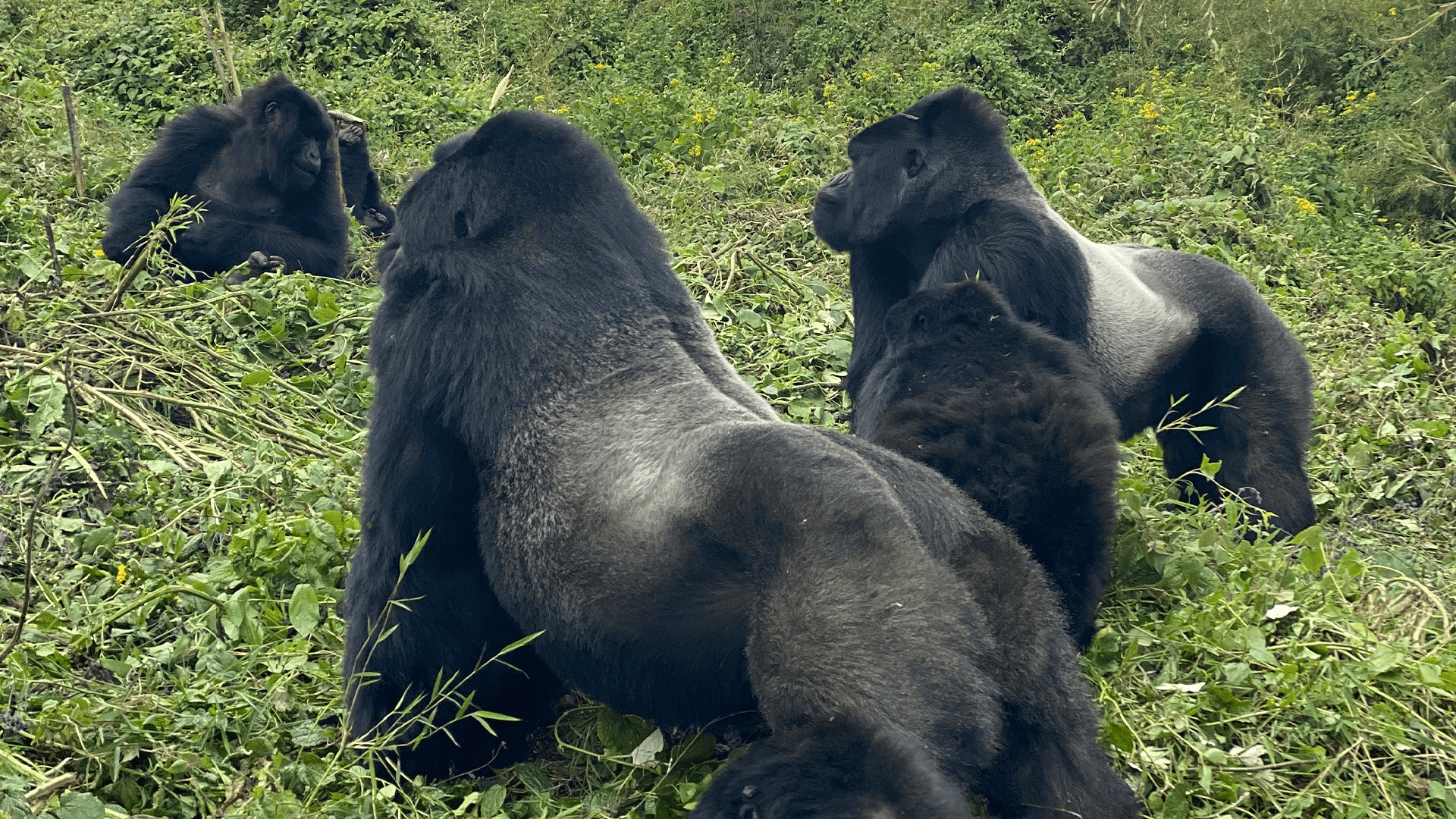
When your group reaches the gorillas, you usually have one hour with them. That hour can feel both peaceful and intense. You may watch a silverback resting, juveniles playing, mothers feeding infants, or family members grooming in the undergrowth. Rangers manage distance, positioning, and behavior so the encounter remains safe for both visitors and gorillas.
Photography is allowed, but flash is not. Bring enough battery power and memory, because cold mountain mornings and repeated shooting can drain equipment quickly. Keep your camera ready, but do not experience the entire hour through a lens. Some of the most memorable moments happen when you simply stand still and observe.
After the encounter, your group returns to the trailhead. Many trekkers receive a certificate, then transfer back to the lodge for lunch, rest, or an evening by the fire. A massage, warm shower, and slow dinner are especially welcome after a demanding trek.
Best Time to Go
Uganda gorilla trekking is available year-round, and the forests remain lush in every season. The best time depends on your priorities. Dry months usually offer easier walking conditions, while wetter months can mean richer forest atmosphere, fewer visitors, and possible lodge value.
| Travel period | Trekking conditions | Cost and availability insight | Best for |
|---|---|---|---|
| June to September | Generally drier, popular, good for broader Uganda safaris | High demand, book permits and lodges early | First-time visitors, families with teens, premium safari combinations |
| October to November | Transitional to wetter conditions | Some lodge flexibility may appear outside peak weeks | Travelers who accept rain for quieter trails |
| December to February | Often drier and popular around holidays | Strong demand, especially late December and early January | Holiday travel, honeymooners, photography |
| March to May | Wetter, muddier, lush forest | Potentially better lodge availability and value | Flexible travelers, repeat visitors, birders, photographers who like moody forest light |
Even during drier months, Bwindi and Mgahinga are mountain rainforests. Rain can occur at any time. Pack waterproof layers regardless of season.
If you are combining gorillas with savannah parks such as Queen Elizabeth, Murchison Falls, or Lake Mburo, dry seasons can make wildlife viewing more predictable around water sources. If you are adding chimpanzee tracking in Kibale, the experience is also available year-round, but trails may be wetter during rainy months.
Sample Itineraries
The right itinerary depends on how much of Uganda you want to experience beyond the gorilla trek. A short trip can focus entirely on Bwindi or Mgahinga, while a longer safari can combine primates, Big Five wildlife, landscapes, and cultural encounters.
| Itinerary length | Route concept | Best suited for | Planning notes |
|---|---|---|---|
| 3 days | Entebbe or Kampala to Bwindi, trek, return | Travelers with limited time | Long road transfers unless upgraded to flights, best with realistic expectations |
| 4 days | Entebbe to Lake Bunyonyi or Bwindi, trek, relaxed return | Travelers wanting better pacing | More comfortable than a 3-day road safari and allows recovery time |
| 5 days | Queen Elizabeth National Park plus Bwindi | Wildlife and gorilla combination | Strong route for game drives, boat cruise, Ishasha, and gorilla trekking |
| 7 days | Kibale chimpanzees, Queen Elizabeth, Bwindi | Primate-focused safari with savannah wildlife | Excellent balance of chimpanzee tracking, gorillas, and classic Uganda wildlife |
| 8 to 10 days | Murchison Falls, Kibale, Queen Elizabeth, Bwindi, Lake Bunyonyi | First-time Uganda safari travelers | Best for a fuller Uganda journey with varied landscapes and wildlife |
A 3-day gorilla trek is possible, but it can feel rushed by road because the drive to southwestern Uganda is long. For comfort, 4 days is often the better minimum. If your budget allows, a fly-in itinerary can make a short trip feel much more relaxed.
A 5-day safari combining Queen Elizabeth and Bwindi is one of the most efficient ways to add wildlife without overextending the schedule. A 7-day route with Kibale, Queen Elizabeth, and Bwindi is even stronger for travelers who want chimpanzees and gorillas in one journey.
For active travelers, Uganda also offers mountain and volcano hikes that pair beautifully with primate safaris. Mgahinga volcano hikes, Lake Mutanda walks, and highland trails around Bwindi can add depth without shifting the focus away from Uganda.
Responsible Trekking Rules
Mountain gorilla trekking is a privilege built on conservation discipline. The rules are designed to reduce stress and disease risk for gorillas while allowing tourism revenue to support protection and local livelihoods.
Keep the required distance from gorillas, follow ranger instructions, and avoid sudden movements. If a gorilla approaches, remain calm and let the ranger guide the situation. Never attempt to touch a gorilla, even if it comes close.
Do not trek if you are sick. Gorillas are vulnerable to human respiratory infections, so even a mild cold can be a serious risk. If you feel unwell before trekking day, inform your guide or the park authorities.
Flash photography is not allowed. Eating, drinking, and smoking near gorillas are also prohibited. If you need to cough or sneeze, turn away and cover your mouth. Rangers may ask visitors to wear masks depending on current health protocols.
Stay with your group and keep voices low. The forest is not only home to gorillas, but also birds, monkeys, forest elephants in some areas, insects, and delicate plant life. Responsible behavior keeps the experience safe and respectful.
Community support is part of responsible travel. Hiring porters, buying locally made crafts, respecting cultural visits, and booking with experienced Uganda-based safari planners all help ensure gorilla tourism benefits the people living closest to the parks.
Frequently Asked Questions
How much does mountain gorilla trekking in Uganda cost in 2026? Foreign non-resident travelers should budget USD 800 per person for a standard gorilla trekking permit. A full 3-day safari often ranges from about USD 1,250 to USD 3,500 plus per person depending on accommodation, group size, transport, and travel style. Luxury and fly-in safaris cost more.
Which is better for gorilla trekking, Bwindi or Mgahinga? Bwindi offers more sectors, more permits, and wider lodge choice, making it the most flexible option for many travelers. Mgahinga is smaller, quieter, and highly scenic, but permit availability is more limited.
How hard is gorilla trekking in Uganda? Difficulty varies from moderate to strenuous. The trek can take one to six hours or more depending on gorilla movement and terrain. Steep slopes, mud, altitude, and dense vegetation are common, so basic fitness and proper boots are important.
Can I choose the easiest gorilla trekking route? You can choose a sector that suits your comfort level, but no route can be guaranteed easy because gorillas move daily. At the briefing, rangers consider fitness and try to allocate groups appropriately where possible.
When should I book my Uganda gorilla permit? For peak months, book at least 3 to 6 months ahead. For luxury lodges, Christmas and New Year travel, gorilla habituation, or specific sectors such as Mgahinga and Nkuringo, booking earlier is strongly recommended.
Is a porter necessary for gorilla trekking? A porter is not mandatory, but it is highly recommended. Porters help carry your daypack, assist on slippery or steep sections, and provide direct income to local communities around the gorilla parks.
What should I wear for gorilla trekking in Uganda? Wear long trousers, a long-sleeved shirt, waterproof hiking boots, rain protection, and neutral outdoor colors. Gloves, gaiters, and a small daypack are also useful for muddy forest trails.
Plan Your Uganda Gorilla Trekking Safari
A successful Uganda gorilla trekking safari is built around the right permit, the right sector, the right lodge, and a route that respects your time, budget, and fitness. The permit is only one part of the journey. Transport, road conditions, lodge location, trekking sector, porter support, and safari pacing all shape the final experience.
PawMac Safaris plans expert-guided Uganda gorilla trekking tours with local knowledge, professional logistics, comfortable 4×4 vehicles, and flexible safari styles from budget-conscious to luxury. Whether you want a focused 3 or 4-day gorilla trek, a primate safari with chimpanzee tracking, or a longer Uganda wildlife journey, the best time to plan is before permits and preferred lodges become limited.
To make the most of mountain gorilla trekking in Uganda, start with your travel month, preferred comfort level, and how many days you can spend in the country. PawMac Safaris can then help match your route to the right gorilla sector and build a safari that feels smooth, responsible, and unforgettable.


