


- 33 Views
- 20 Min Read
- (0) Comment
Game drives reveal Uganda’s savannah wildlife, but trekking tours bring you into the forest, onto the escarpments, and closer to the country’s most remarkable encounters. On foot, Uganda becomes more intimate: the sound of chimpanzees calling through Kibale, the stillness before a mountain gorilla appears in Bwindi, the thrill of tracking rhinos with a ranger, and the cool mist around Sipi Falls.
For 2026 safari planning, the best approach is not to add every trek possible. It is to choose the right trekking tours for your fitness level, travel season, budget, and overall route. This guide compares Uganda’s strongest trekking experiences, explains realistic costs, and shows how to combine them with classic safari highlights without rushing the journey.
Table of Contents
- Why add trekking tours to a Uganda safari?
- Quick comparison of the best trekking tours in Uganda
- Gorilla trekking in Bwindi Impenetrable National Park
- Gorilla trekking in Mgahinga Gorilla National Park
- Chimpanzee trekking in Kibale National Park
- Chimpanzee trekking in Kyambura Gorge and Budongo Forest
- Rhino tracking at Ziwa Rhino Sanctuary
- Rwenzori foothill and nature trekking
- Sipi Falls and Mount Elgon trekking
- How to choose the right trekking tours for your safari style
- Budgeting permits, guides, lodges, and transport
- Sample Uganda safari itineraries with trekking tours
- Packing and preparation tips for Uganda trekking tours
- Frequently Asked Questions
- Plan your Uganda trekking safari with PawMac Safaris
Why add trekking tours to a Uganda safari?
Uganda is one of the few safari destinations where walking-based wildlife encounters are not a side activity. They are often the main reason travelers come. A well-designed Uganda safari can combine primate trekking, rhino tracking, boat safaris, game drives, scenic walking routes, and cultural encounters in one country without losing depth.
Trekking tours also change the pace of a safari. Instead of viewing wildlife only from a vehicle, you move through the habitat with rangers and expert local guides. You learn how tracks, sounds, feeding signs, weather, and terrain shape each encounter. This is especially valuable in Uganda’s forests, where the wildlife experience is often sensory before it becomes visual.
The key is sequencing. Gorilla trekking should not be squeezed between long road transfers with no recovery time. Chimpanzee trekking is more rewarding when you understand the forest ecology and plan around morning activity patterns. Rhino tracking works beautifully as a northern route stop toward Murchison Falls. Rwenzori and Sipi treks add scenery and altitude, but they require different footwear, pacing, and expectations than primate tracking.
For premium travelers, trekking tours also help create a more private and meaningful safari rhythm. You can balance high-comfort lodges and private 4×4 transfers with active mornings, scenic afternoons, and unhurried evenings.
Quick comparison of the best trekking tours in Uganda
The table below gives a practical overview of Uganda trekking tours worth considering. Costs are realistic planning ranges for foreign nonresidents in 2026, but permits and fees can change, so final quotes should always be confirmed during booking.
| Trekking tour | Best for | Typical time on foot | Fitness level | Key planning cost |
|---|---|---|---|---|
| Bwindi gorilla trekking | Iconic mountain gorilla encounter | 2 to 6 hours, plus 1 hour with gorillas | Moderate to challenging | Gorilla permit about $800 per person |
| Mgahinga gorilla trekking | Gorilla trekking with volcano scenery | 2 to 5 hours, plus 1 hour with gorillas | Moderate | Gorilla permit about $800 per person |
| Kibale chimpanzee trekking | Reliable chimp sightings and rich rainforest | 2 to 4 hours | Easy to moderate | Chimp permit about $250 per person |
| Kyambura Gorge chimp trekking | Dramatic gorge scenery near Queen Elizabeth | 2 to 3 hours | Moderate | Often about $100 per person |
| Budongo chimp trekking | Forest trekking near Murchison Falls | 2 to 4 hours | Easy to moderate | Often about $130 per person |
| Ziwa rhino tracking | On-foot rhino encounter en route north | 1.5 to 3 hours | Easy to moderate | Often about $50 per person |
| Rwenzori foothill trekking | Alpine scenery, waterfalls, local communities | Half-day to multi-day | Moderate to strenuous | Park, guide, and logistics vary widely |
| Sipi Falls and Mount Elgon trekking | Waterfalls, coffee country, scenic trails | Half-day to 2 days | Easy to moderate | Local guide fees often $15 to $30+, plus activity costs |
If your safari has only one trekking element, choose gorilla trekking. If you have 7 to 10 days, combine gorillas with chimpanzees and savannah wildlife. If you have 10 to 14 days, add rhino tracking, Rwenzori foothills, Sipi Falls, or Mgahinga golden monkey tracking for a more complete Uganda journey.
Gorilla trekking in Bwindi Impenetrable National Park
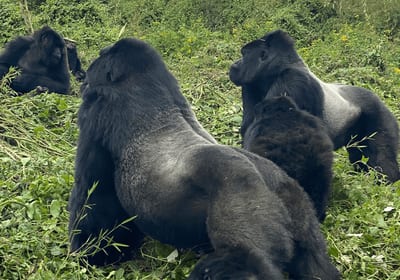
Bwindi Impenetrable National Park is Uganda’s flagship trekking destination and one of the most important mountain gorilla habitats in the world. The experience is carefully managed: small groups, trained ranger guides, a pre-trek briefing, and a strict one-hour viewing period once the gorilla family is located.
Bwindi has several trekking sectors, including Buhoma, Ruhija, Rushaga, and Nkuringo. Each sector has a different personality. Buhoma is one of the most established areas with a strong lodge base and forest atmosphere. Ruhija sits at higher elevation and can work well for birding-focused travelers. Rushaga offers multiple gorilla families and is often a strong choice for itinerary flexibility. Nkuringo is known for steep terrain and dramatic views, making it rewarding but physically demanding.
A Uganda gorilla permit is typically about $800 per person for foreign nonresidents in 2026. Foreign resident and regional rates may differ. The permit covers the guided gorilla trek and the one-hour gorilla viewing period, but it does not include accommodation, transport, porter fees, tips, meals, or personal gear.
Plan Your Uganda Safari with Local Experts
 WhatsApp Us
For travelers who want a deeper primate experience, gorilla habituation in the Rushaga area is sometimes available at a higher permit cost, often around $1,500 per person for foreign nonresidents. It offers longer time in the field with researchers, rangers, and a gorilla group undergoing habituation. Availability is limited, so it should be planned early.
Bwindi trekking can be physically demanding because of steep slopes, thick vegetation, rain, and muddy trails. However, many travelers in reasonable health complete it successfully with patience, proper boots, and porter support. Hiring a porter is strongly recommended. It supports local livelihoods and gives you practical help with your daypack and balance on slippery sections.
For a deeper look at route planning, permits, and package options, PawMac Safaris has a dedicated guide to top gorilla trekking packages in Uganda.
Gorilla trekking in Mgahinga Gorilla National Park
Mgahinga Gorilla National Park is smaller than Bwindi, but it delivers a distinctive trekking experience. The park sits in Uganda’s far southwest within the Virunga volcanic landscape, with views shaped by Mount Gahinga, Mount Muhabura, and Mount Sabyinyo. The scenery feels open, dramatic, and volcanic compared with Bwindi’s dense rainforest.
Mgahinga is best known for the Nyakagezi gorilla family, although gorilla availability should always be confirmed when planning. The trekking structure is similar to Bwindi: briefing, ranger-led tracking, and one hour with the gorillas after contact. The permit cost is generally the same as Bwindi for gorilla trekking, around $800 per person for foreign nonresidents.
What makes Mgahinga especially valuable is the ability to pair gorilla trekking with golden monkey tracking. Golden monkeys are agile, photogenic, and endemic to the Albertine Rift region. The tracking experience is usually shorter and less intense than gorilla trekking, with permits often around $100 per person for foreign nonresidents.
Mgahinga also works well for travelers who want a quieter southwestern Uganda safari, especially when combined with Lake Bunyonyi, cultural experiences around Kisoro, or a scenic route into Bwindi. It is an excellent choice for repeat safari travelers or anyone who values landscapes as much as wildlife.
Chimpanzee trekking in Kibale National Park
Kibale National Park is Uganda’s leading chimpanzee trekking destination. The forest is rich, green, and alive with primate activity, and sightings are generally strong compared with many other chimp habitats. The experience begins with a briefing before travelers enter the forest with ranger guides to locate a habituated chimpanzee community.
Chimpanzee trekking is usually more fast-moving than gorilla trekking. Chimps may feed quietly in fig trees, move rapidly through the canopy, vocalize loudly, or descend near the trail. Once located, viewing time is typically limited to one hour. Photography can be rewarding, but the forest light changes quickly, so a camera that performs well in shade is helpful.
The Kibale chimpanzee trekking permit is commonly around $250 per person for foreign nonresidents in 2026. A chimpanzee habituation experience may also be available at a higher cost, often around $300 per person for foreign nonresidents. Habituation is longer, more immersive, and better suited to travelers with a serious interest in primates, research, and forest behavior.
Kibale combines naturally with Queen Elizabeth National Park, the crater lakes region, and Bigodi community experiences. A good itinerary might include chimpanzee trekking in the morning, a relaxed crater lake visit or community walk in the afternoon, then continue toward Queen Elizabeth for game drives and a Kazinga Channel boat safari.
For many travelers, Kibale is the most efficient way to add a high-quality trekking tour to a wider Uganda safari because it fits neatly between western Uganda’s savannah and gorilla routes.
Chimpanzee trekking in Kyambura Gorge and Budongo Forest
Kibale is the premier chimpanzee trekking location, but Kyambura Gorge and Budongo Forest can be excellent additions depending on your route.
Kyambura Gorge lies in the Queen Elizabeth National Park area and feels visually dramatic. You descend from open savannah into a green gorge where riverine forest shelters chimpanzees, birds, and smaller wildlife. Sightings are less predictable than Kibale, but the setting is memorable and the activity fits well into a Queen Elizabeth itinerary. Permit costs are often lower than Kibale, commonly around $100 per person for foreign nonresidents.
Budongo Forest is a strong option for travelers heading to or from Murchison Falls National Park. The forest offers chimpanzee trekking in a beautiful mahogany-rich environment and can be integrated with game drives, the Nile boat safari, and the top of Murchison Falls. Chimpanzee tracking costs in Budongo are often around $130 per person, though final pricing depends on the managing authority and current arrangements.
The decision comes down to priorities. Choose Kibale for reliability and a classic primate-focused experience. Choose Kyambura for scenery and convenience near Queen Elizabeth. Choose Budongo if your route is built around Murchison Falls and northern Uganda.
Rhino tracking at Ziwa Rhino Sanctuary
Rhino tracking at Ziwa Rhino Sanctuary is one of Uganda’s most distinctive walking wildlife encounters. It is not a long mountain trek, but it is absolutely one of the best on-foot safari experiences to add to a Uganda itinerary. Travelers walk with trained ranger guides through the sanctuary to observe southern white rhinos at a safe distance.
Ziwa is especially useful because of its location between Kampala or Entebbe and Murchison Falls National Park. Rather than treating the drive north as a transfer day, you can turn it into a meaningful conservation-focused experience. Tracking often takes 1.5 to 3 hours depending on rhino location, weather, and walking pace.
A realistic planning cost is often around $50 per person for foreign visitors, excluding transport, meals, and any additional activities. The walking is generally easier than gorilla trekking, but the heat can be significant, so a wide-brimmed hat, water, sunscreen, and neutral clothing are important.
Rhino tracking is also the final piece for travelers hoping to experience Uganda’s Big Five when combined with lion, leopard, elephant, and buffalo sightings in national parks such as Murchison Falls and Queen Elizabeth. It works particularly well on 8 to 10-day safaris that include Murchison, Kibale, Queen Elizabeth, and Bwindi.

Rwenzori foothill and nature trekking
The Rwenzori Mountains are often associated with serious multi-day mountaineering, but you do not need to summit Margherita Peak to appreciate their beauty. For safari travelers, foothill and nature treks around the Rwenzori region can add waterfalls, forest trails, river valleys, community landscapes, and views of one of Africa’s most atmospheric mountain ranges.
This is a different kind of trekking tour from gorilla or chimpanzee tracking. Wildlife is not the central guarantee. The reward is scenery, altitude, vegetation zones, and the feeling of entering a mountain landscape that contrasts sharply with Uganda’s savannah parks and rainforests.
Shorter Rwenzori treks can be added near Kasese, often before or after Queen Elizabeth National Park. More ambitious hikers may consider 2 to 4-day routes, while serious trekkers can plan longer expeditions. Costs vary widely because the final price depends on park entry, guide arrangements, porters, route length, meals, camping or lodge choices, and transport.
For planning purposes, expect park-related fees, guiding, porter support, and logistics to add substantially more than a casual day walk. A simple nature walk might be modest, while a multi-day Rwenzori trek can become a major safari component costing several hundred to several thousand dollars depending on comfort level and duration.
The Rwenzori foothills are best for travelers who already know they enjoy active travel. If your main goal is wildlife, prioritize gorillas and chimpanzees first. If you want Uganda’s landscapes to be as memorable as its animals, the Rwenzori region deserves serious consideration.
Sipi Falls and Mount Elgon trekking
Sipi Falls, on the slopes of Mount Elgon in eastern Uganda, offers some of the country’s most accessible scenic trekking. The classic Sipi experience links waterfalls, village paths, coffee-growing landscapes, caves, viewpoints, and cool highland air. It is a strong choice for travelers who want an active but less intense alternative to major mountain trekking.
A half-day or full-day Sipi Falls walk can be adjusted to your pace. Some routes are gentle, while others involve steeper paths, wet rocks, and uneven ground. Local guide fees often begin around $15 to $30 per person for shorter walks, while additional activities such as abseiling, coffee tours, or longer Mount Elgon routes carry separate costs.
Mount Elgon trekking can also be developed into multi-day routes for travelers who want a more remote hiking experience. Compared with gorilla trekking, this region is usually less permit-driven and more flexible, but it still requires good planning, especially if entering protected park areas or arranging longer guided treks.
Sipi works best before or after Jinja, Kidepo Valley extensions, or eastern Uganda road circuits. It is not the most efficient add-on for every classic western Uganda safari, but for travelers with 12 days or more, it can bring a refreshing highland contrast.
How to choose the right trekking tours for your safari style
The best trekking tours for your Uganda safari depend on what you want the trip to feel like. A honeymoon itinerary may prioritize gorilla trekking, premium lodges, scenic flights where available, and unhurried stays. A family itinerary with older teens may combine chimpanzees, rhinos, boat safaris, and one carefully chosen gorilla trek. A photographer may want extra time in Bwindi or Kibale rather than too many one-night stops.
Start with the non-negotiables. For most first-time Uganda travelers, gorilla trekking is the anchor. From there, decide whether chimpanzee trekking is important enough to include Kibale, whether you want Big Five context through Ziwa and Murchison Falls, and whether scenic trekking such as Rwenzori or Sipi is worth the extra routing.
Fitness matters, but it should not discourage you too quickly. Gorilla trekking can be adjusted to some degree by assigning travelers to groups based on fitness and gorilla family location, although this is never guaranteed. Porters make a real difference. Chimpanzee trekking is generally easier, though chimps can move quickly. Rhino tracking is usually the most accessible of the major wildlife trekking tours.
Season also matters. The drier months, especially June to September and December to February, are popular because trails are generally easier and wildlife viewing in savannah parks can be strong. The wetter months can mean muddier trekking, but they also bring lush landscapes, fewer crowds in some areas, and beautiful forest atmosphere. In Uganda, rain is possible in any month, especially in rainforest and mountain regions.
If you are trying to balance trekking with classic game drives, boat cruises, and wildlife viewing, this guide to wildlife tours in Uganda worth adding to your itinerary can help you compare the wider safari options.
Budgeting permits, guides, lodges, and transport
Trekking tours are often the most permit-sensitive part of a Uganda safari. They also shape where you sleep, how long you need in each region, and what level of vehicle and guide support is appropriate.
The biggest single cost is usually the gorilla permit. At about $800 per person for foreign nonresidents, it can represent a significant share of the itinerary cost. Chimpanzee trekking in Kibale, often around $250 per person, is the next major primate permit for many travelers. Rhino tracking, golden monkey tracking, and scenic guided walks are usually lower-cost additions, but they still need to be budgeted.
| Cost item | Realistic 2026 planning range | Notes |
|---|---|---|
| Gorilla trekking permit | About $800 per person | Foreign nonresident rate, subject to official updates |
| Gorilla habituation permit | About $1,500 per person | Limited availability, usually in the Bwindi region |
| Kibale chimpanzee trekking permit | About $250 per person | Strong option for reliable chimp trekking |
| Kibale chimpanzee habituation | About $300 per person | Longer and more research-focused than standard tracking |
| Mgahinga golden monkey tracking | About $100 per person | Excellent add-on near Mgahinga and Kisoro |
| Rhino tracking at Ziwa | About $50 per person | Useful addition en route to Murchison Falls |
| Porter for gorilla trekking | Often $15 to $25+ | Strongly recommended and locally beneficial |
| Mid-range safari lodges | Often $150 to $350 per room or per person, depending on property | Season, location, and meal plan affect pricing |
| Luxury safari lodges | Often $500 to $1,500+ per person per night | Premium gorilla lodges can exceed this in peak periods |
| Private 4×4 safari vehicle with driver-guide | Often $180 to $350+ per day before route-specific variables | Fuel, distance, vehicle type, and guide arrangements affect final cost |
Accommodation near gorilla sectors can vary dramatically. A budget guesthouse may be simple and practical, while a luxury lodge near Bwindi can become one of the most expensive parts of the safari. Premium travelers should book early for peak season because the best rooms near preferred trekking sectors can sell out months ahead.
Transport is another major planning factor. Uganda road distances can be longer than they appear on a map. A private 4×4 with an experienced local guide is not just a comfort upgrade. It improves timing, safety, luggage handling, park logistics, and the overall flow of a multi-region safari.
For high-end travelers, domestic flights may reduce long road transfers on selected routes, especially between Entebbe and western Uganda airstrips. However, flights have luggage limits, schedule considerations, and transfer costs at both ends. A custom plan should compare time saved against total cost and safari rhythm.
Sample Uganda safari itineraries with trekking tours
A 7-day primate-focused Uganda safari can work well for travelers with limited time. It might begin in Entebbe, continue to Kibale for chimpanzee trekking, move through Queen Elizabeth National Park for a boat safari and game drive, then finish in Bwindi for gorilla trekking before returning to Entebbe. This is active and rewarding, but it should be carefully paced to avoid too many long transfer days.
An 8 to 10-day classic Uganda safari allows a better balance. You can travel from Entebbe to Ziwa for rhino tracking, continue to Murchison Falls for game drives and the Nile boat safari, then route southwest to Kibale for chimpanzees, Queen Elizabeth for savannah wildlife, and Bwindi for gorillas. This is one of the most complete ways to combine trekking tours with Uganda’s wider wildlife circuit.
A 10 to 12-day premium primate and scenery itinerary can slow the pace. Spend two nights in Kibale, two nights in Queen Elizabeth, two or three nights near Bwindi or Mgahinga, and add Lake Bunyonyi, Rwenzori foothills, or a cultural experience depending on your interests. This style is ideal for travelers who prefer fewer lodge changes and more time to absorb each region.
A 12 to 14-day active Uganda itinerary can include gorilla trekking, chimpanzee trekking, rhino tracking, Rwenzori foothill trails, Sipi Falls, and major wildlife parks. This is best for travelers who enjoy walking and do not want the safari to be centered only on vehicle-based wildlife viewing.
Cultural experiences can also add depth between trekking days. Batwa experiences near Bwindi, Bigodi community walks near Kibale, coffee tours around Sipi, and heritage experiences around Kampala or Jinja can make the journey feel more connected to Uganda’s people, not only its wildlife.
Packing and preparation tips for Uganda trekking tours
The right gear can make the difference between a difficult trek and a comfortable one. Uganda’s trekking environments include rainforest, volcanic slopes, highland trails, open sanctuary land, and muddy village paths. Pack for changing conditions rather than a single climate.
For gorilla and chimpanzee trekking, lightweight long sleeves and long trousers help protect against scratches, insects, and nettles. Waterproof hiking boots with good ankle support are highly recommended, especially in Bwindi, Mgahinga, and the Rwenzori foothills. A breathable rain jacket is essential because forest weather can shift quickly.
Useful trekking items include:
- Waterproof hiking boots that are already broken in
- Long trousers, long-sleeved shirts, and a light fleece for cool mornings
- Gardening-style gloves for gripping vegetation during steep forest sections
- A small daypack with water, snacks, rain protection, and personal medication
- Insect repellent, sunscreen, sunglasses, and a wide-brimmed hat
- Cash for porters, tips, local purchases, and small activity fees
- A camera with weather protection and enough memory cards or batteries
Do not underestimate hydration. Even cooler forest treks can be humid, and rhino tracking at Ziwa may be hot. Carry enough water and accept packed snacks or lunch when your guide recommends it.
Health and age rules also matter. Gorilla trekking is generally restricted to travelers aged 15 and above. Chimpanzee trekking age limits are commonly lower, often around 12 and above, depending on the specific activity and authority. Travelers with mobility concerns should discuss them early so the itinerary can be designed around suitable sectors, porter support, and realistic trekking expectations.
Finally, book key permits early. For peak months, gorilla permits should ideally be secured several months in advance, and 6 to 12 months ahead is wise for premium travelers with fixed dates, preferred lodges, or specific sectors.
Frequently Asked Questions
What is the best trekking tour to add to a Uganda safari? Gorilla trekking in Bwindi or Mgahinga is the top choice for most travelers because it offers one of the world’s rarest wildlife encounters. If your itinerary allows, add chimpanzee trekking in Kibale for a broader primate safari.
How much does gorilla trekking cost in Uganda in 2026? A Uganda gorilla trekking permit is typically about $800 per person for foreign nonresidents. This does not include accommodation, transport, porter fees, tips, or other safari costs.
Is chimpanzee trekking worth adding if I already have gorilla trekking? Yes. Gorilla trekking is slower and more intimate, while chimpanzee trekking is often more energetic, vocal, and behavior-rich. The two experiences feel very different and complement each other well.
How difficult are Uganda trekking tours? Difficulty varies. Rhino tracking is usually easy to moderate. Chimpanzee trekking is generally moderate, though chimps can move quickly. Gorilla trekking can be moderate to challenging depending on terrain, weather, and gorilla location.
When is the best time for trekking tours in Uganda? June to September and December to February are popular because trails are often drier. However, Uganda is a year-round destination, and wetter months can offer lush scenery, fewer crowds in some areas, and excellent forest atmosphere.
Should I hire a porter for gorilla trekking? Yes, hiring a porter is strongly recommended. It helps with your bag and balance on muddy or steep trails, and it directly supports local communities around the park.
Plan your Uganda trekking safari with PawMac Safaris
The best Uganda safari is not built by adding activities at random. It is designed around timing, permits, terrain, lodge location, road distances, and the kind of experience you want to remember years from now.
PawMac Safaris plans expert-guided Uganda safari journeys with gorilla trekking, chimpanzee tracking, Big Five wildlife routes, cultural tours, comfortable 4×4 vehicles, and flexible safari styles from budget-conscious to luxury. Whether you want one signature trek or a fully active itinerary across Uganda’s forests, mountains, and national parks, local planning makes every day smoother.
To start designing a route that matches your dates, budget, fitness level, and travel style, connect with PawMac Safaris and plan your Uganda trekking safari with confidence.


