


- 2 Views
- 18 Min Read
- (0) Comment
Uganda is one of the rare safari destinations where a single journey can combine mountain gorillas, chimpanzees, tree-climbing lions, rhinos, elephants, hippos, shoebills and classic savannah game without losing the feeling of intimacy. The wildlife of Uganda is not just diverse, it is unusually accessible when your route is planned around the right habitats, seasons and permits.
This guide focuses on where to see Uganda’s most sought-after wildlife best, what each park does especially well, and how to budget realistically for a high-quality safari in 2026. It is designed for travelers who want more than a checklist, with practical route logic, permit context and expert planning insight from PawMac Safaris.
Table of Contents
- Why Uganda Is Exceptional for Wildlife
- Habitats That Change Quickly
- Best Seasons for Wildlife Viewing
- Wildlife of Uganda: Quick Guide to Where to Go
- Mountain Gorillas: Bwindi and Mgahinga
- Chimpanzees and Forest Primates: Kibale, Budongo, Kyambura and Kalinzu
- Big Game and Predators: Murchison Falls, Queen Elizabeth and Kidepo
- Murchison Falls National Park
- Queen Elizabeth National Park
- Kidepo Valley National Park
- Rhinos, Antelopes and Smaller Parks Worth Adding
- Ziwa Rhino Sanctuary
- Lake Mburo National Park
- Semuliki, Mabamba and Wetland Wildlife
- Budgeting for a Uganda Wildlife Safari
- Permit and Activity Cost Guide
- Safari Length and Budget Ranges
- How to Choose the Best Route for Your Interests
- Responsible Wildlife Viewing in Uganda
- Frequently Asked Questions
- Plan Your Uganda Wildlife Safari With PawMac Safaris
Why Uganda Is Exceptional for Wildlife
Uganda’s strength is variety within a relatively compact safari circuit. In one carefully paced itinerary, you can move from rainforest trails to crater lakes, papyrus wetlands, open plains, river systems and volcanic highlands. That variety explains why Uganda supports 350-plus mammal species and more than 1,060 bird species, including some of the most desired sightings on the continent.
The country is especially strong for travelers who want close, guided encounters rather than only vehicle-based game viewing. Gorilla trekking in Bwindi Impenetrable National Park or Mgahinga Gorilla National Park is done on foot with expert ranger teams. Chimpanzee tracking in Kibale Forest places you inside the forest ecosystem rather than watching from a road. Boat safaris on the Nile and Kazinga Channel bring hippos, crocodiles, elephants and waterbirds within excellent viewing range while maintaining responsible distance.
Habitats That Change Quickly
Uganda’s western and northern safari routes are naturally efficient because habitats shift quickly. The forested slopes of Bwindi hold mountain gorillas, forest birds and smaller primates. Kibale’s rainforest is a stronghold for chimpanzees and other primates. Queen Elizabeth National Park combines savannah, crater lakes, wetlands and the Ishasha plains. Murchison Falls National Park adds the Nile corridor and giraffe-rich northern plains. Kidepo Valley National Park, in Uganda’s far northeast, offers the country’s most remote wilderness atmosphere.
This habitat diversity is why Uganda works so well for private and tailor-made safaris. You are not simply choosing one park. You are building a sequence of ecosystems, each selected for a different wildlife reward.
Best Seasons for Wildlife Viewing
Uganda is a year-round wildlife destination, but the dry seasons from December to February and June to September are generally the most popular for gorilla trekking, chimpanzee tracking and savannah game drives. Trails are often firmer, wildlife is easier to spot around water sources, and road conditions are more predictable. These months also carry stronger demand, so gorilla permits and the best lodges should be secured early.
The wetter months from March to May and October to November can still be rewarding, especially for photography, birding and travelers who prefer greener scenery. Forest treks may be muddier, but the atmosphere is beautiful and some lodges offer more flexible seasonal value. For a deeper month-by-month breakdown, PawMac Safaris has a detailed guide to the best time to visit Uganda for wildlife safaris.
Wildlife of Uganda: Quick Guide to Where to Go
The best Uganda safari routes are designed around priority species. If mountain gorillas are essential, Bwindi or Mgahinga must anchor the itinerary. If you want chimps, Kibale is usually the strongest choice. If Big Five ambitions matter, Ziwa Rhino Sanctuary should be combined with Murchison Falls, Queen Elizabeth or Kidepo.
| Wildlife or experience | Best place in Uganda | Best activity | Planning note |
|---|---|---|---|
| Mountain gorillas | Bwindi Impenetrable National Park, Mgahinga Gorilla National Park | Gorilla trekking | Permit required, minimum age is 15 |
| Chimpanzees | Kibale Forest National Park | Chimpanzee tracking or habituation | Book early in peak season |
| Tree-climbing lions | Ishasha sector, Queen Elizabeth National Park | Game drive | Sightings are never guaranteed, but Ishasha is the classic area |
| Elephants and buffalo | Murchison Falls, Queen Elizabeth, Kidepo | Game drives and boat safaris | Excellent along waterways and open plains |
| Rhinos | Ziwa Rhino Sanctuary | Ranger-guided tracking | Often added en route to Murchison Falls |
| Hippos and crocodiles | Kazinga Channel, Nile in Murchison Falls | Boat safari | One of Uganda’s most reliable wildlife experiences |
| Shoebill | Mabamba Swamp, Murchison Delta, Semuliki wetlands | Canoe or boat birding | Best with a specialist birding guide |
| Golden monkeys | Mgahinga Gorilla National Park | Golden monkey tracking | Pairs well with gorilla trekking |
| Zebras, impalas and elands | Lake Mburo National Park | Game drive, walking safari or boat trip | Ideal near the end of a western Uganda route |
Mountain Gorillas: Bwindi and Mgahinga
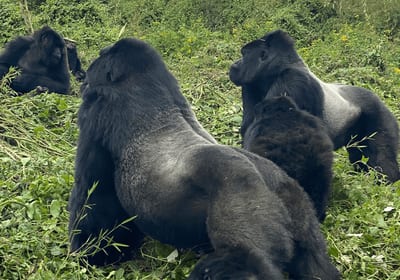
For many travelers, mountain gorillas are the defining reason to visit Uganda. The encounter is intimate, tightly regulated and emotionally powerful. Treks begin early with a ranger briefing, after which small groups enter the forest with trackers. Once a habituated gorilla family is located, visitors usually spend one hour in their presence, observing feeding, grooming, movement and family behavior.
Bwindi Impenetrable National Park is Uganda’s primary gorilla trekking destination, with several trekking sectors that suit different routes and travel styles. Buhoma in the north works well for itineraries linking Queen Elizabeth’s Ishasha sector with Bwindi. Ruhija is excellent for highland views and birding. Rushaga offers a larger number of trekking options and is commonly used for gorilla habituation experiences. Nkuringo is known for steeper terrain and dramatic scenery.
Plan Your Uganda Safari with Local Experts
 WhatsApp Us
Mgahinga Gorilla National Park is smaller but exceptional when the route fits. It sits in the Virunga volcanic landscape and also offers golden monkey tracking, making it a strong choice for travelers who want a more layered primate experience in southwestern Uganda.
Permit costs are a major planning factor. As a realistic 2026 planning guide, recent Uganda Wildlife Authority tariffs have placed gorilla trekking permits for foreign non-residents at about USD 800 per person, with gorilla habituation experiences around USD 1,500 per person. Tariffs can change, so final quotes should always be confirmed at the time of booking. Premium travelers should also consider the value of staying close to the correct trekking sector, since long pre-dawn transfers can make an already demanding day harder.
A good gorilla trek plan includes a porter, rain protection, broken-in hiking boots, long trousers, gaiters or long socks, water, snacks and a flexible mindset. Some treks take under two hours. Others can take much longer depending on the gorilla family’s location, terrain and weather.
Chimpanzees and Forest Primates: Kibale, Budongo, Kyambura and Kalinzu
Chimpanzee tracking is more vocal, faster moving and socially dynamic than gorilla trekking. The forest may begin quietly, then suddenly fill with pant-hoots, branch movement and calls echoing through the canopy. Uganda is one of the best countries for this experience because several forests can be integrated into strong safari routes.
Kibale Forest National Park is the premier choice for chimpanzees. It has high sighting reliability, excellent guiding infrastructure and a rich primate environment that may also include red colobus monkeys, black-and-white colobus monkeys, red-tailed monkeys, grey-cheeked mangabeys and olive baboons. Kibale is also close to Bigodi Wetland Sanctuary, crater lake scenery and Queen Elizabeth National Park, making it logistically valuable.
Budongo Forest, near Murchison Falls, is a strong option when the northern route is central to the itinerary. Kyambura Gorge in Queen Elizabeth National Park is dramatic and atmospheric, with steep forested walls cutting into the savannah landscape. Sightings there can be less predictable than Kibale, but the setting is memorable. Kalinzu Forest, near Queen Elizabeth, can be a cost-conscious alternative, depending on current operations and permit availability.
For budgeting, Kibale chimpanzee tracking has recently been priced around USD 250 per foreign non-resident adult, while chimpanzee habituation experiences are higher. Other sites may cost less, but the overall value depends on sighting chances, route efficiency and guide quality. PawMac Safaris can help match the site to the traveler’s expectations rather than simply choosing the cheapest permit.
Big Game and Predators: Murchison Falls, Queen Elizabeth and Kidepo
Uganda’s savannah parks provide the classic game drive dimension of a safari, but each park has a different personality. Murchison Falls is excellent for giraffes, elephants, buffalo, lions, leopards, antelope and Nile-based boat safaris. Queen Elizabeth is the most varied, with the Kazinga Channel, crater landscapes and Ishasha’s famous lions. Kidepo is the wildest and most remote, rewarding travelers who want space, rugged scenery and fewer vehicles.
Murchison Falls National Park
Murchison Falls National Park is Uganda’s largest national park and one of the most complete wildlife destinations in the country. The Nile cuts through the park, creating a powerful river corridor where animals gather to drink and graze. North of the river, open plains support giraffes, buffalo, elephants, Jackson’s hartebeest, oribi, Uganda kob and predators such as lions and leopards.
The boat safari to the base of Murchison Falls is a signature experience. Hippos crowd the river shallows, crocodiles bask along the banks, and elephants often feed near the water. The falls themselves add drama, as the Nile forces through a narrow rock gap before exploding into a turbulent pool below. For many travelers, combining morning game drives with an afternoon boat safari delivers the strongest wildlife rhythm.
Murchison is also commonly paired with Ziwa Rhino Sanctuary, which allows travelers to build a Uganda Big Five route without major backtracking.
Queen Elizabeth National Park
Queen Elizabeth National Park is Uganda’s most ecologically varied savannah park. The Kazinga Channel, which links Lake Edward and Lake George, is one of the best places in Uganda for reliable hippo, crocodile, buffalo, elephant and waterbird viewing. The channel boat safari is especially valuable for photographers because sightings are often close, steady and at eye level.
The Ishasha sector in the south is famous for tree-climbing lions. The behavior is not unique to Uganda, but Ishasha is one of the best places in the country to look for lions resting in fig trees during the heat of the day. The wider park can also produce leopard, hyena, Uganda kob, warthog, bushbuck and impressive birdlife.
Queen Elizabeth fits naturally between Kibale and Bwindi, which is why it appears in many well-balanced Uganda safari itineraries. It gives travelers a savannah chapter between two major primate experiences.
Kidepo Valley National Park
Kidepo Valley National Park is for travelers who value wilderness, big landscapes and a stronger sense of remoteness. Located in northeastern Uganda, Kidepo requires more time, careful logistics or a fly-in approach, but the reward is a safari atmosphere that feels far removed from busier circuits.
The Narus Valley is the core wildlife area, with buffalo herds, elephants, giraffes, zebras, hartebeest, oribi, lions and occasional leopard sightings. Kidepo is also associated with species that are rare or localized elsewhere in Uganda, including ostrich and cheetah, although sightings of rarer predators should never be treated as guaranteed.
For premium travelers, Kidepo works best with at least three nights in the area. Rushing the park undermines the value of getting there. It is best treated as a highlight for a longer Uganda safari rather than an add-on squeezed into a short trip.

Rhinos, Antelopes and Smaller Parks Worth Adding
The most satisfying Uganda wildlife itineraries often include smaller reserves and wetlands alongside the headline parks. These places add species variety, reduce long driving days and create more textured safari memories.
Ziwa Rhino Sanctuary
Ziwa Rhino Sanctuary is the key place to see rhinos in Uganda. Rhinos are not currently free-ranging in Uganda’s national parks in the same way as elephants, lions or buffalo, so Ziwa plays an important role in Big Five safari planning. Tracking is ranger-guided and usually done on foot, offering a very different perspective from a vehicle-based game drive.
Ziwa is especially practical on the road between Kampala or Entebbe and Murchison Falls National Park. Adding it to the route can turn a transfer day into a meaningful wildlife experience. Rhino tracking fees are often in the range of USD 50 to USD 60 per adult, but travelers should confirm current rates when booking.
Lake Mburo National Park
Lake Mburo National Park is compact, scenic and useful at the beginning or end of a western Uganda safari. It is the best place in Uganda for relaxed sightings of zebras and impalas, and it also supports elands, topis, buffalo, hippos, crocodiles, warthogs and a strong range of birds.
Because Lake Mburo has fewer dangerous predators than Uganda’s larger savannah parks, it offers a different style of safari activity, including guided walking safaris in designated areas. It is also a valuable stop for travelers who do not want the final drive from Bwindi back to Entebbe to feel too long.
Semuliki, Mabamba and Wetland Wildlife
Uganda’s wetlands are essential for birders and for travelers who want species beyond the typical safari checklist. Mabamba Swamp, near Entebbe, is one of the most accessible places to search for the shoebill, a prehistoric-looking bird that is among Uganda’s most sought-after sightings. A canoe excursion here can fit well at the start or end of an itinerary.
Semuliki National Park and the Semuliki Valley offer a different wildlife flavor, with forest birds, hot springs, primates and Central African influenced species. The area suits experienced birders and repeat safari travelers who want a more specialized Uganda route.
Budgeting for a Uganda Wildlife Safari
Uganda can be planned in budget-conscious, midrange or luxury styles, but wildlife-focused itineraries should never be priced on accommodation alone. Permits, park fees, private guiding, vehicle quality, fuel, internal flights, boat safaris and the exact trekking sectors all affect the final cost.
The biggest fixed costs are usually gorilla and chimpanzee permits. Premium lodges near Bwindi, Queen Elizabeth, Kibale, Murchison and Kidepo can also significantly shift the budget, particularly in peak months. The most efficient way to control cost without weakening the experience is to design the route carefully, avoiding unnecessary backtracking and selecting lodges that match the activity locations.
Permit and Activity Cost Guide
The following ranges are realistic planning references for 2026, not a substitute for a confirmed quote. Official tariffs and lodge rates can change, and availability affects final pricing.
| Cost item | Typical 2026 planning range | Why it matters |
|---|---|---|
| Gorilla trekking permit | About USD 800 per foreign non-resident | Essential for Bwindi or Mgahinga gorilla trekking |
| Gorilla habituation experience | About USD 1,500 per foreign non-resident | Longer, more specialized gorilla experience in limited areas |
| Kibale chimpanzee tracking permit | About USD 250 per foreign non-resident | Core cost for Uganda’s top chimpanzee destination |
| Major savannah park entry | Often USD 40 to USD 50 per adult per day | Applies in parks such as Murchison Falls, Queen Elizabeth and Kidepo |
| Shared boat safari | Often USD 30 to USD 45 per person | Key for Kazinga Channel and Murchison Falls wildlife viewing |
| Rhino tracking at Ziwa | Often USD 50 to USD 60 per adult | Completes a Uganda Big Five focused route |
| Luxury lodge night | Roughly USD 600 to USD 1,500-plus per person in top locations | Strongly affects premium safari budgets |
Travelers should also budget for tips, drinks not included in lodge packages, travel insurance, visas, optional community visits, laundry and porter fees. Porters for gorilla trekking are strongly recommended, both for comfort and for direct local benefit.
Safari Length and Budget Ranges
Private Uganda safaris are usually quoted per person sharing, excluding international flights. The following ranges are broad but useful for qualification before a detailed itinerary is built.
| Safari style | Typical length | Midrange private safari | Luxury private safari | Best for |
|---|---|---|---|---|
| Primate focused | 6 to 8 days | USD 3,200 to USD 6,000 | USD 6,500 to USD 11,000 | Gorillas, chimps and one savannah park |
| Classic Uganda wildlife circuit | 10 to 11 days | USD 4,800 to USD 8,500 | USD 9,000 to USD 16,000 | Ziwa, Murchison, Kibale, Queen Elizabeth and Bwindi |
| Comprehensive Uganda safari | 12 to 14 days | USD 7,000 to USD 12,000 | USD 14,000 to USD 24,000-plus | Adds Kidepo, Lake Mburo, fly-in options or slower pacing |
Season affects pricing in two main ways. Peak months increase pressure on the best lodges and permits, while green season can create better value in selected properties. Fly-in safaris raise the budget but can be worthwhile for Kidepo, Bwindi or travelers who want to reduce long road transfers.
How to Choose the Best Route for Your Interests
The right Uganda route starts with your top priority. If gorillas are non-negotiable and time is short, build the safari around Bwindi or Mgahinga, then add Kibale or Queen Elizabeth if the schedule allows. If you want the strongest mix of primates and classic wildlife, a route linking Murchison Falls, Kibale, Queen Elizabeth and Bwindi is hard to beat. If you want remote wilderness, add Kidepo and give it enough nights.
First-time Uganda travelers often do well with 10 to 12 days. That length allows a natural flow from Entebbe to Ziwa and Murchison, then onward to Kibale, Queen Elizabeth, Bwindi and Lake Mburo before returning to Entebbe. Travelers with only 7 to 8 days should make sharper choices rather than trying to include every highlight. A rushed itinerary may look impressive on paper, but it can reduce time in the field.
Photography travelers should prioritize private vehicles, flexible departure times, unhurried stays and lodges close to the main activity zones. The PawMac Safaris guide to wildlife photography safaris in Uganda explains how route design changes when light, positioning and patience matter as much as species lists.
Some guests also want the safari to feel restorative, especially after a demanding period of work, grief or burnout. Uganda’s quiet lodges, forest walks and slower premium routes can offer space to breathe, but travel is not a replacement for clinical care. Travelers dealing with deeper stress, trauma or addiction may benefit from specialist private support such as personalized support for stress and recovery before or after a major journey.
For travelers comparing activity combinations, PawMac Safaris also covers wildlife tours in Uganda worth adding to your itinerary, including how to combine trekking, game drives, boat safaris and cultural experiences without overloading the route.
Responsible Wildlife Viewing in Uganda
Responsible wildlife viewing protects the animals, the parks and the quality of the guest experience. In Uganda, this is especially important for primate tourism because gorillas and chimpanzees are vulnerable to human illness and stress. Visitors should not trek when sick, should respect ranger instructions and should maintain the required distance whenever possible.
For gorillas and chimpanzees, avoid flash photography, keep voices low and do not eat near the animals. In savannah parks, vehicles should stay on approved tracks unless ranger rules allow otherwise. A good guide understands animal behavior and knows when to wait, when to move and when to give wildlife space.
PawMac Safaris builds safaris around expert local guiding, professional planning and respect for Uganda’s conservation rules. That approach improves sightings, but it also ensures that wildlife encounters remain sustainable for future travelers and beneficial to nearby communities.
Frequently Asked Questions
What is the best place to see the wildlife of Uganda? There is no single best place for every species. Bwindi and Mgahinga are best for mountain gorillas, Kibale is best for chimpanzees, Murchison Falls is excellent for giraffes, elephants and Nile wildlife, Queen Elizabeth is best for Kazinga Channel and Ishasha lions, and Ziwa is best for rhinos.
Can you see the Big Five in Uganda? Yes, but rhinos require a visit to Ziwa Rhino Sanctuary. Lions, leopards, elephants and buffalo can be seen in national parks such as Murchison Falls, Queen Elizabeth and Kidepo, while rhino tracking is done separately at Ziwa.
How many days do you need for a Uganda wildlife safari? Seven to eight days can cover gorillas, chimpanzees and one savannah park if planned carefully. Ten to twelve days is better for a classic Uganda circuit, while twelve to fourteen days allows a richer route with Kidepo, Lake Mburo or slower luxury pacing.
Is gorilla trekking in Uganda worth the permit cost? For most wildlife travelers, yes. The permit supports regulated access, ranger operations and conservation, while the experience itself is one of the most memorable wildlife encounters available in Uganda. The key is to plan the trek with the right sector, lodge location and fitness expectations.
When should I book Uganda gorilla and chimpanzee permits? For peak travel months, book as early as possible, often 6 to 12 months ahead for premium routes or specific trekking sectors. Last-minute permits may be available in some seasons, but relying on them can limit route quality.
Is Uganda suitable for luxury wildlife safaris? Yes. Uganda has high-end lodges in key wildlife regions, private guiding options, fly-in possibilities and exclusive-feeling experiences. Luxury planning is especially valuable when combining gorilla trekking, chimpanzees, savannah parks and remote destinations such as Kidepo.
Plan Your Uganda Wildlife Safari With PawMac Safaris
The best way to experience Uganda’s wildlife is with a route designed around your priorities, travel pace and budget. PawMac Safaris plans expert-guided gorilla trekking, chimpanzee tracking, Big Five routes, cultural extensions and tailor-made wildlife safaris using local knowledge and carefully selected logistics.
If you want to turn Uganda’s best wildlife encounters into a seamless private itinerary, contact PawMac Safaris to start planning a safari built around the animals, parks and level of comfort that matter most to you.


