


- 10 Views
- 17 Min Read
- (0) Comment
A wildlife tour guide on a Uganda safari does far more than drive from one national park to another. In a country where a single itinerary can include gorilla trekking in Bwindi Impenetrable National Park, chimpanzee tracking in Kibale, boat safaris on the Kazinga Channel, and Big Five wildlife routes through Murchison Falls National Park, your guide becomes the person who turns a complex journey into a smooth, safe, and deeply meaningful experience.
The best guides combine field knowledge, route planning, wildlife behavior, guest care, and calm decision-making. They know when to leave the lodge before sunrise, how to interpret fresh tracks, which briefing point matches your gorilla permit, how to handle muddy road conditions, and when to slow the day down so you actually enjoy the journey. For travelers planning a premium Uganda safari in 2026, understanding what a wildlife tour guide does helps you choose the right operator, budget realistically, and appreciate the expertise behind every successful sighting.
Table of Contents
- The wildlife tour guide's role before safari day
- Route design, permits, and timing
- Guest preparation and expectation setting
- On the road in Uganda: driver, navigator, and fixer
- Vehicle readiness and road judgment
- How a guide improves wildlife viewing inside the parks
- Tracking, interpretation, and park knowledge
- Gorilla trekking and chimpanzee tracking support
- Safety, responsible conduct, and park etiquette
- Budget control: what a guide helps you understand
- Estimated Uganda safari costs a guide helps manage
- Hospitality details that make the safari feel seamless
- How to choose the right wildlife tour guide in Uganda
- Frequently asked questions
- Plan your Uganda safari with PawMac Safaris
The wildlife tour guide's role before safari day
A strong safari begins long before the first game drive. A professional Uganda wildlife tour guide studies the itinerary, checks the movement between parks, reviews activity times, confirms guest needs, and prepares for the realities of Ugandan roads, weather, and park operations.
This preparation matters because Uganda safari logistics are highly specific. Gorilla permits are tied to dates and trekking sectors. Chimpanzee tracking has scheduled briefing times. Boat safaris operate on fixed departures. Some lodges sit close to park gates, while others require an early departure to reach the activity on time. A guide who understands these details protects the quality of the entire trip.
Route design, permits, and timing
In Uganda, route design is not just about drawing a line on a map. A skilled guide and safari planning team consider drive times, road surfaces, fuel stops, park gate opening hours, permit locations, guest fitness, and seasonal conditions. For example, the journey from Entebbe to Murchison Falls National Park can take around 5 to 7 hours depending on traffic, stops, and routing. Queen Elizabeth National Park to Bwindi can take roughly 5 to 7 hours depending on the gorilla sector and road conditions. Bwindi back to Entebbe can require 8 to 10 hours or more, which is why some travelers choose domestic flight options for comfort.
Permits are especially important. For 2026 planning, Uganda gorilla trekking permits for foreign non-residents are commonly budgeted at US$800 per person, while Kibale chimpanzee tracking permits are commonly budgeted at US$250 per person. These are significant fixed costs, and they must match the correct date, park, and traveler category. A guide helps ensure you wake up in the right place, arrive at the correct briefing point, and understand the timing before the activity begins.
A guide also helps avoid overloading the itinerary. Uganda rewards travelers who give each destination enough time. Rushing from park to park can turn a premium safari into a long road transfer with wildlife squeezed in between. The guide's local judgment helps balance ambition with comfort.
Guest preparation and expectation setting
Before a safari activity, the guide explains what to wear, what to carry, how early to depart, and what to expect. For gorilla trekking, this may include long trousers, waterproof hiking boots, a rain jacket, garden gloves, insect repellent, drinking water, snacks, and a small daypack. For game drives, it may include a light jacket for cool mornings, sun protection for late morning, binoculars, and patience.
Expectation setting is equally important. Wildlife is not staged. Lions may be active at dawn and hidden by midday. Leopards may remain in thick cover. Gorillas are located by experienced trackers, but the walk can be short, moderate, or physically demanding depending on the group's movement. A professional guide prepares guests honestly, which makes the experience more enjoyable and less stressful.
If you are still deciding which activities to combine, PawMac Safaris has a helpful guide to wildlife experiences in Uganda beyond the standard game drive that shows how gorilla trekking, chimpanzee tracking, boat safaris, rhino tracking, walking safaris, and night drives can fit into one well-paced itinerary.
On the road in Uganda: driver, navigator, and fixer
On many Uganda safaris, the guide is also the safari driver-guide. This role requires much more than basic driving ability. Uganda's best wildlife destinations are spread across different regions, with a mix of highways, town traffic, laterite roads, mountain roads, park tracks, ferry crossings, and seasonal muddy sections.
Plan Your Uganda Safari with Local Experts
 WhatsApp Us
A guide manages the rhythm of the road. They know where to stop for clean washrooms, where to refuel before a remote section, when to leave early to avoid city congestion, and when a scenic stop is worth adding. They also know when to keep moving because a delayed transfer could affect a permit, boat cruise, or lodge check-in.
A good guide reads guests as carefully as they read the road. If travelers are tired after an international flight, the guide may keep the first transfer calm and direct. If photographers want golden-hour opportunities, the guide plans departure times around light. If a family is traveling with children, the guide builds in sensible breaks without losing the safari's pace.
Vehicle readiness and road judgment
Uganda safari vehicles must be prepared for long distances and varied terrain. Before departure, a responsible guide checks tire condition, tire pressure, spare tires, jack, coolant, oil, lights, drinking water, first-aid supplies, and luggage security. This is not a minor detail. A tire issue on the wrong road can cost hours, and a late arrival can affect a high-value activity such as gorilla trekking.
The importance of correct wheels and road readiness is familiar even outside safari travel. A specialist such as a dedicated wheel and rim supplier shows how much vehicle performance depends on matching wheels, load, and conditions. On a Uganda safari, that same principle becomes practical and immediate: the vehicle must be ready for national park tracks, gravel roads, wet-season mud, and long transfer days.
Road judgment also means knowing when not to push. During heavy rain, a guide may wait, change route, or adjust the plan. In a park, they may avoid tracks that could damage the vehicle or disturb wildlife. This measured approach is one reason expert-guided safaris feel smoother than self-planned trips.
How a guide improves wildlife viewing inside the parks
A guide cannot command wildlife to appear, but they can dramatically improve your chances of meaningful sightings. Uganda's parks are rich and varied, and each one rewards different skills. Murchison Falls National Park offers open savannah, the Nile, giraffes, elephants, buffalo, lions, and powerful river scenery. Queen Elizabeth National Park combines Kasenyi plains, crater landscapes, the Kazinga Channel, and the Ishasha sector, known for its tree-climbing lions. Lake Mburo National Park is excellent for zebra, impala, eland, boat safaris, and guided walking experiences. Kibale and Bwindi require forest awareness, patience, and respect for ranger-led tracking systems.
The guide's value lies in interpretation. Instead of simply saying there is an elephant, a good guide explains why the herd is moving, how the matriarch leads, why younger bulls behave differently, and what body language signals caution. Instead of only identifying a bird, they may explain habitat, migration, call patterns, and how Uganda's ecosystems support such exceptional birdlife.
Tracking, interpretation, and park knowledge
Tracking in Uganda is a combination of observation, memory, and local communication. A guide looks for fresh dung, tracks, alarm calls, broken vegetation, dust movement, resting spots, and predator behavior. They also understand the daily rhythm of animals. Lions often rest as temperatures rise. Hippos leave water at night to graze and return by day. Elephants may move toward water in hotter hours. Buffalo can be unpredictable when separated from a herd.
Park knowledge is highly specific. In Queen Elizabeth National Park, a guide may choose Kasenyi for classic savannah wildlife, the Kazinga Channel for dense concentrations of hippos and waterbirds, and Ishasha when the itinerary allows time to search for lions in fig trees. In Murchison Falls, the guide balances game drives north of the Nile with a boat safari toward the falls and, when appropriate, a visit to the top of the falls for the dramatic force of the river.
A guide also manages vehicle positioning. The best guides do not rush, block animals, or chase sightings. They position the vehicle for visibility, light, safety, and respect. This is especially important for photographers, but it improves the experience for every traveler.
Gorilla trekking and chimpanzee tracking support
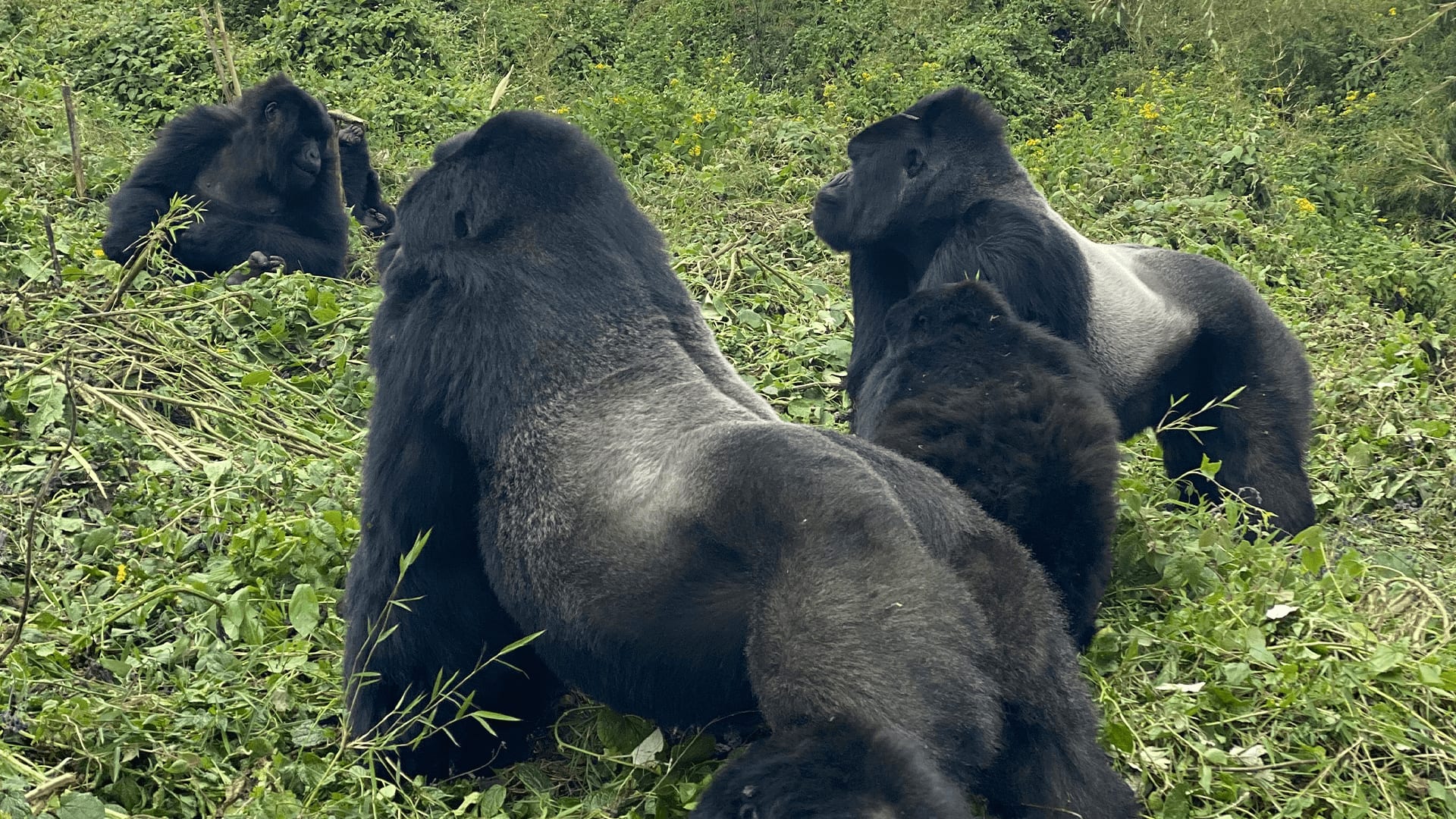
Gorilla trekking and chimpanzee tracking are among Uganda's most sought-after wildlife experiences, and they are also among the most regulated. A safari guide does not replace Uganda Wildlife Authority rangers or official trackers. Instead, the guide supports the experience before and after the ranger-led activity, making sure guests arrive prepared, on time, and in the right mindset.
For gorilla trekking, the guide confirms the permit details, departure time, breakfast arrangement, packed lunch where needed, passport or identification requirements, and transfer to the correct briefing point. This is particularly important in Bwindi Impenetrable National Park because trekking sectors such as Buhoma, Ruhija, Rushaga, and Nkuringo are not interchangeable at the last minute. Booking a lodge far from the assigned sector can create unnecessary early starts or difficult transfers.
For chimpanzee tracking in Kibale National Park, the guide helps guests reach the briefing point, understand forest conditions, and plan the rest of the day. Chimpanzees move quickly, vocalize loudly, and often create a more dynamic forest experience than gorillas. The guide helps guests understand the difference so expectations are realistic.

During these primate activities, the official ranger sets the rules in the forest. Travelers should expect guidelines such as keeping a safe distance from gorillas, avoiding trekking when sick, wearing a mask where required, speaking quietly, not eating near primates, avoiding flash photography, and respecting the one-hour viewing limit for gorillas. A professional guide reinforces these standards because ethical conduct protects both wildlife and guests.
Safety, responsible conduct, and park etiquette
Safety on a Uganda safari is not only about avoiding danger. It is about making calm, well-informed decisions all day. A guide knows when guests can stand, when they must remain seated, when silence matters, and when an animal's body language suggests the vehicle should stay still or move away slowly.
Elephants, buffalo, hippos, and primates all require respect. An elephant flaring its ears, a buffalo staring from cover, or a hippo standing away from water is not a photo opportunity to push closer. A trained guide reads these cues and keeps the encounter safe without creating fear.
Responsible conduct also includes protecting habitats and local communities. Guides keep vehicles on permitted tracks, discourage littering, manage noise, respect village privacy, and encourage appropriate cultural etiquette. If you want a deeper safety and ethics checklist before traveling, PawMac Safaris has published practical responsible safari tips for Uganda that complement what your guide will explain on the ground.
A guide also protects the guest experience by managing group behavior. On shared activities, one impatient traveler can affect the mood of everyone. A good guide communicates clearly and politely, helping the group maintain the patience and respect that Uganda's wildlife encounters deserve.
Budget control: what a guide helps you understand
A safari guide is not a substitute for transparent pre-trip pricing, but a good guide helps travelers understand where the money goes and how daily decisions affect value. Uganda safari costs are shaped by permits, accommodation level, vehicle and fuel, park fees, guide services, domestic flights, meals, and seasonal demand.
The biggest mistake travelers make is comparing safari quotes without understanding what is included. One itinerary may appear cheaper because it excludes gorilla permits, uses lodges far from activity points, omits park fees, or underestimates transfer times. Another may cost more but include better routing, stronger guiding, closer lodges, and fewer logistical risks.
A guide helps protect value during the safari itself. Efficient routing saves fuel and time. Smart departure times improve sightings without adding extra nights. Good communication with lodges reduces delays. Sensible pacing can make a mid-range itinerary feel polished and a luxury itinerary feel truly premium.
Estimated Uganda safari costs a guide helps manage
The figures below are realistic planning ranges for many international travelers considering Uganda in 2026. Final pricing depends on residency category, season, availability, lodge selection, group size, exchange rates, and Uganda Wildlife Authority tariff updates.
| Cost item | Typical 2026 planning range | How a guide helps |
|---|---|---|
| Gorilla trekking permit | About US$800 per foreign non-resident traveler | Confirms date, sector, briefing point, and timing |
| Kibale chimpanzee tracking permit | About US$250 per foreign non-resident traveler | Coordinates briefing arrival and forest expectations |
| Private safari vehicle, fuel, and driver-guide | Often US$250 to US$450 per day depending on route and vehicle setup | Manages road time, comfort, safety, and park access |
| Budget to lower mid-range lodging | About US$80 to US$180 per person per night | Helps match location to activities and early starts |
| Mid-range to upper mid-range lodging | About US$180 to US$450 per person per night | Balances comfort, access, and itinerary flow |
| Luxury and high-end lodges | About US$500 to US$1,500+ per person per night | Protects the premium experience through timing and coordination |
| Domestic flight add-ons | Often several hundred dollars per person per sector | Reduces long drives when comfort or time is the priority |
| Porter support for gorilla trekking | Commonly budget US$15 to US$25 plus a discretionary tip | Encourages support that helps guests and benefits local livelihoods |
| Safari guide gratuity | Often US$10 to US$20 per guest per day, adjusted for service level | Reflects the guide's daily responsibility and expertise |
These numbers show why a capable wildlife tour guide is central to value. On a Uganda safari, the most expensive day is not always the day with the highest lodge rate. It may be the day attached to a rare permit, a long transfer, or a once-in-a-lifetime primate encounter. Good guiding protects those moments.
Hospitality details that make the safari feel seamless
The visible part of guiding is wildlife interpretation. The invisible part is hospitality. A professional guide checks whether guests have enough water, whether packed breakfasts are ready, whether dietary requests have reached the lodge, whether luggage is secure, and whether the day's pace fits the group.
Small details matter on Uganda safari routes. A guide may know the best time to stop at the equator crossing without losing daylight, when to pause for a scenic crater view, where to buy forgotten batteries, or how to help a guest who underestimated the altitude and terrain of a gorilla trek. These details do not always appear on an itinerary, but they shape the memory of the trip.
For photographers, guides help by anticipating light and behavior. They may turn the vehicle gently for a better angle, switch off the engine to reduce vibration, or wait quietly while an animal settles. For birders, they slow down and listen. For families, they translate complex wildlife behavior into stories children can follow. For premium travelers, they maintain privacy, smooth pacing, and calm professionalism.
Cultural context is another part of the role. Uganda's landscapes are home to communities with distinct languages, food traditions, livelihoods, and histories. A guide helps guests engage respectfully, whether visiting a community project, passing through a trading center, or joining a cultural experience near a national park.
How to choose the right wildlife tour guide in Uganda
Choosing the right guide starts with choosing a Uganda-focused safari company that values professional guiding rather than treating it as an afterthought. A strong guide should understand wildlife, safety, guest comfort, logistics, and ethical conduct. They should communicate clearly, avoid exaggerated promises, and know how to adapt when weather, road conditions, or wildlife movement changes the plan.
Before booking, ask practical questions that reveal the quality of the guiding approach:
- Is the itinerary designed around realistic Uganda drive times and park activity schedules?
- Are gorilla and chimpanzee permits included, and are the trekking sectors clearly matched to the lodges?
- Will the safari use a private 4×4 vehicle with an experienced Uganda safari driver-guide?
- How does the guide manage early departures, packed meals, park briefings, and boat safari timings?
- What happens if rain, road conditions, or delayed flights affect the itinerary?
- Are the quoted costs transparent about permits, park fees, fuel, accommodation, meals, and optional activities?
- Does the company emphasize responsible wildlife viewing and respect for Uganda Wildlife Authority rules?
PawMac Safaris builds Uganda safari experiences around local knowledge, expert-guided wildlife encounters, gorilla trekking logistics, comfortable 4×4 travel, and personalized planning. That combination matters because Uganda is not a destination where the best moments happen by accident. They happen when planning, field skill, and hospitality work together.
For a broader look at why professional guiding improves the safari experience, you can also read PawMac Safaris' article on the role of safari guides in Uganda, which expands on safety, logistics, and wildlife tracking in the field.
Frequently asked questions
What is the difference between a wildlife tour guide and a park ranger in Uganda? A wildlife tour guide usually travels with you throughout the safari, managing logistics, driving, interpretation, guest care, and daily timing. A park ranger is an official authority for specific protected activities such as gorilla trekking, chimpanzee tracking, walking safaris, and some park experiences. On regulated activities, the ranger leads the encounter while your safari guide supports preparation and coordination.
Can a wildlife tour guide guarantee animal sightings? No ethical guide can guarantee wild animal sightings. What a good guide can do is improve your chances through timing, tracking knowledge, habitat understanding, communication with park teams where appropriate, and patient fieldcraft.
Does the guide accompany travelers during gorilla trekking? It depends on the arrangement and park procedures. In all cases, Uganda Wildlife Authority rangers lead gorilla trekking. Your safari guide ensures you arrive at the correct briefing point with the right permit and preparation. If the guide accompanies the group, they still follow the ranger's instructions in the forest.
How much should I tip a Uganda safari guide? Many travelers budget around US$10 to US$20 per guest per day for a safari guide, adjusted for group size, trip length, service quality, and personal preference. For high-end private safaris, guests sometimes tip more when the guide has delivered exceptional service.
Is a guide necessary for a luxury Uganda safari? Yes. Luxury in Uganda is not only about lodges. It is about timing, privacy, comfort, activity coordination, and the quality of interpretation. A skilled guide ensures that premium accommodation, rare permits, and wildlife experiences work together smoothly.
How does a guide help with safari costs? A guide helps protect value by avoiding poor routing, reducing unnecessary delays, coordinating activity times, explaining optional expenses, and ensuring high-value experiences such as gorilla trekking and chimpanzee tracking are handled correctly.
Plan your Uganda safari with PawMac Safaris
A wildlife tour guide is the difference between simply visiting Uganda's parks and truly understanding them. From permit-sensitive gorilla trekking days to dawn game drives, forest tracking, boat safaris, cultural encounters, and long scenic transfers, the guide is the professional who keeps the experience safe, efficient, ethical, and memorable.
If you are planning a Uganda Safari 2026 and want expert local guidance, personalized routing, clear cost planning, and professional support from start to finish, PawMac Safaris can help design a safari that fits your travel style, budget, and wildlife priorities.


