


- 134 Views
- 10 Min Read
- (0) Comment
TL;DR:
- Responsible safari in Uganda requires strict adherence to wildlife rules, including maintaining 7 meters distance.
- Choosing ethical operators with transparent conservation and community programs maximizes positive impact.
- Practical steps like wearing masks, minimizing noise, and avoiding feeding help protect wildlife and support sustainability.
Choosing a responsible safari in Uganda sounds straightforward until you realize how many operators use the word “ethical” without backing it up. Uganda’s mist-shrouded rainforests and open savannas are home to some of the world’s most endangered primates, and the decisions you make before and during your trip have real consequences for wildlife and local communities. Regulations set the baseline, but genuine responsibility goes further. This guide gives you the tools to understand Uganda Wildlife Authority (UWA) rules, minimize your personal footprint, identify authentic operators, and select experiences that create lasting positive impact.
Table of Contents
- Understand and follow Uganda’s wildlife rules
- Minimize your impact: practical on-the-ground tips
- Spotting and avoiding greenwashing: ethical safari operators
- Choose experiences that benefit wildlife and communities
- Why responsible safari travel means asking tough questions
- Plan your responsible safari with trusted experts
- Frequently asked questions
Key Takeaways
| Point | Details |
|---|---|
| Follow national park rules | Respect minimum distances and mandatory procedures to keep wildlife—and yourself—safe. |
| Minimize your footprint | Simple on-the-ground choices, like not using flash and masking up, have big impacts. |
| Choose ethical operators | Verify claims and select safari companies with transparent conservation and community support. |
| Support local communities | Safaris regulated by UWA and community-led experiences share economic and conservation benefits. |
Understand and follow Uganda’s wildlife rules
Let’s begin by laying out the non-negotiable rules every visitor must know before stepping into Uganda’s parks. The Uganda Wildlife Authority enforces a clear set of standards, and they exist for one reason: to protect both animals and people.
Here are the core rules every responsible traveler must follow:
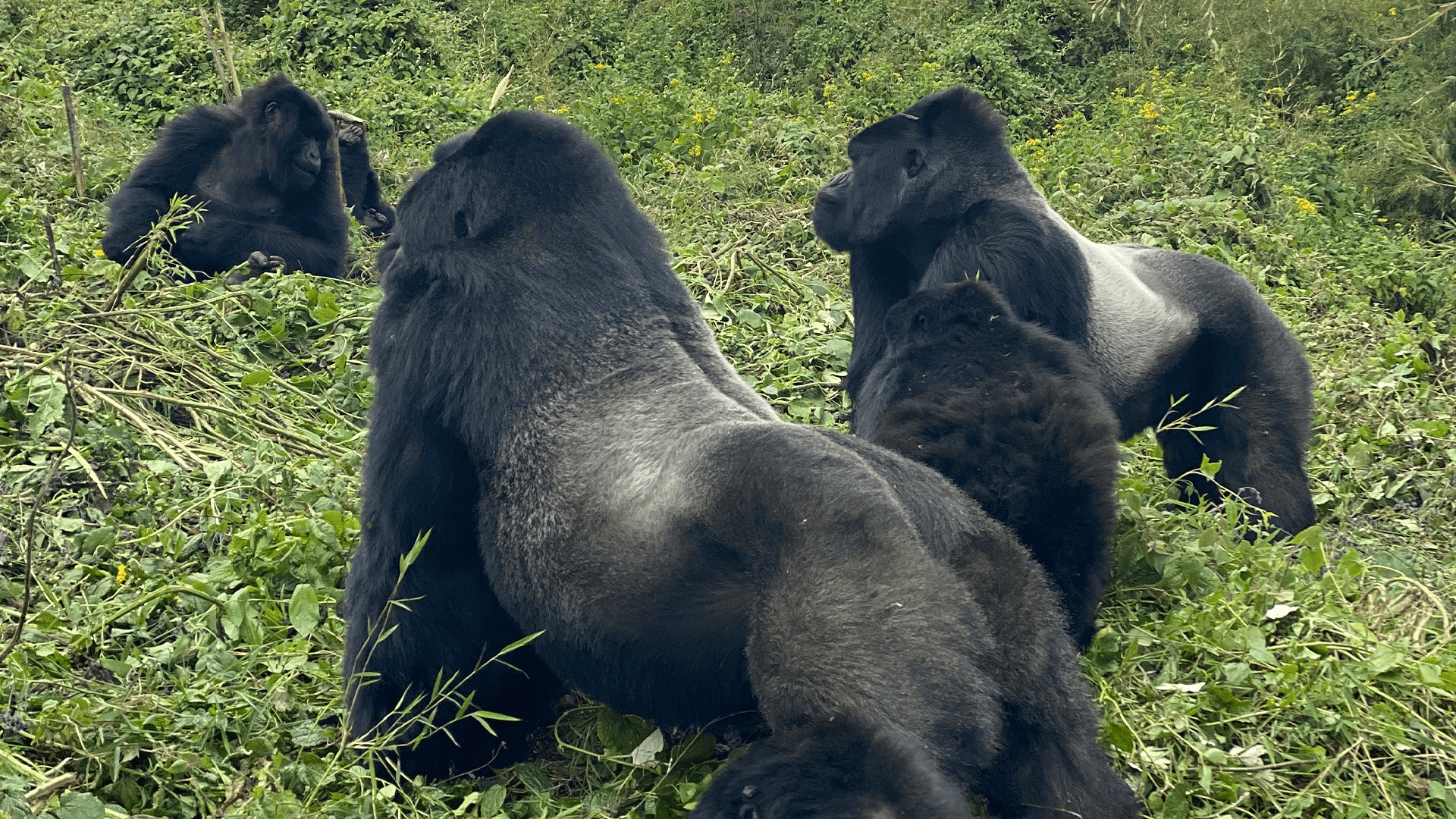
- Keep at least 7 meters from gorillas and chimpanzees. The 7-meter minimum distance is a firm UWA regulation, not a suggestion. Closing that gap increases disease transmission risk and causes measurable stress in habituated gorilla families.
- Stay in your safari vehicle during game drives unless a ranger explicitly instructs otherwise. Stepping out near large mammals is dangerous and disrupts natural behavior.
- Limit time with any gorilla group to one hour. Extended exposure stresses the animals and increases the risk of human-to-primate disease transfer.
- Trek in groups of eight or fewer. UWA caps primate trekking groups at eight visitors to reduce noise, stress, and the cumulative health risk to the animals.
- Follow ranger instructions at all times. Rangers read animal behavior in real time. Their guidance overrides any personal preference or photo opportunity.
These rules are not bureaucratic formalities. Mountain gorillas share roughly 98% of human DNA, which makes them highly susceptible to common human illnesses like colds and flu. A single sick visitor who ignores the distance rule can introduce a respiratory virus into a gorilla family with potentially fatal results.
For a broader look at how these regulations fit into the full safari experience, the Uganda safari guide on the PawMac Safaris website covers park-specific rules across Bwindi, Queen Elizabeth, and Murchison Falls.
Pro Tip: Arrive at the park briefing on time and listen carefully. Rangers cover updated rules, current animal locations, and behavioral cues that will make your trek safer and more rewarding.
Breaking these rules has consequences beyond a fine. Animal distress can cause a habituated gorilla group to abandon its territory, making future treks impossible. Disease transmission has historically caused deaths within gorilla families. Responsible behavior is not optional; it is the foundation of ethical wildlife tourism.
Minimize your impact: practical on-the-ground tips
Beyond following rules, there are essential ways to actively minimize your impact while in Uganda’s wild spaces. Small personal choices add up across thousands of annual visitors.
Here is a practical checklist for every day in the field:
- Wear a face mask during all primate trekking. This is required by UWA and is one of the most effective barriers against disease transmission.
- Do not trek if you are sick. Even mild symptoms can be dangerous to gorillas and chimpanzees. Reputable operators will reschedule your permit if you fall ill.
- No flash photography, ever. Flash startles animals, disrupts natural behavior, and can cause a gorilla to charge. Adjust your camera to a high ISO setting for low-light forest conditions instead.
- Never feed or touch wildlife. Feeding creates dependency and alters natural foraging behavior. Touching risks disease transfer in both directions.
- Keep noise to a minimum. Loud voices and sudden sounds stress animals and reduce your chances of meaningful sightings.
- Pack out every piece of litter. Uganda’s forests are not waste disposal sites. Everything you carry in must leave with you.
Pro Tip: Before your trek, switch your camera to manual or aperture-priority mode with ISO 1600 or higher. Dense forest canopy blocks most natural light, and a well-exposed shot without flash is both better photography and better wildlife ethics. More camera-specific advice is available in these wildlife photography tips.
Plan Your Uganda Safari with Local Experts
 WhatsApp Us
The mask requirement deserves special emphasis. Gorillas have no immunity to many common human pathogens. A simple surgical mask worn consistently throughout the one-hour visit is a low-cost, high-impact protective measure that every visitor can and must take seriously.
Spotting and avoiding greenwashing: ethical safari operators
Choosing the right safari operator is just as important as your own behavior. Here’s how to spot ethical ones and identify the red flags.
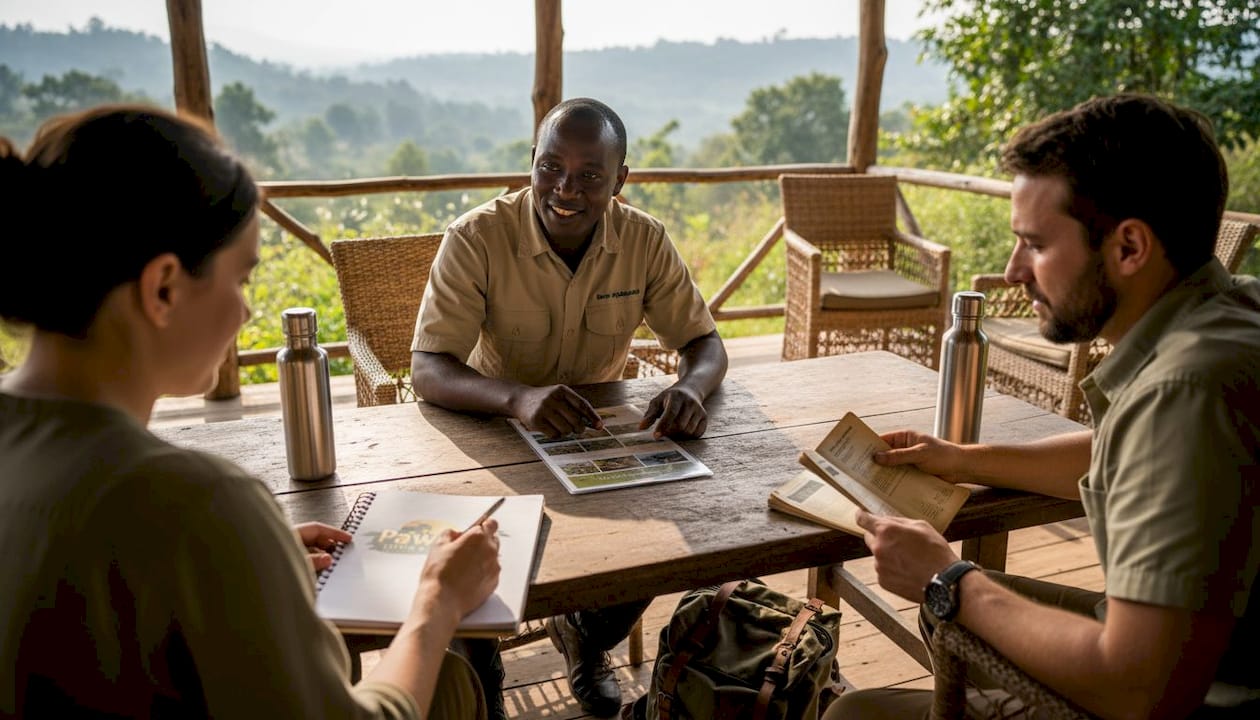
Greenwashing (the practice of marketing a product as environmentally responsible without genuine evidence) is a growing problem in the safari industry. Vague claims like “eco-friendly” or “conservation-focused” without specific, verifiable programs are warning signs, not selling points.
Red flags to watch for:
- Promises of “guaranteed sightings” or direct animal contact
- Vague conservation claims with no named partner organizations or measurable outcomes
- No mention of UWA regulations or permit requirements
- Pricing that seems too low to cover legitimate permit fees
Signs of a genuinely ethical operator:
- Transparent, named conservation partnerships
- Clear community benefit programs with specific villages or cooperatives named
- Strict adherence to UWA group size and time limits
- Honest communication about what is and is not possible
| Operator claim | Genuine indicator | Red flag |
|---|---|---|
| “We support conservation” | Named partner, measurable outcomes | No details provided |
| “Eco-certified lodge” | Verified third-party certification | Self-declared only |
| “Guaranteed gorilla sighting” | Not offered (no guarantees in wildlife) | Offered as a selling point |
| “Community benefit” | Named village, revenue percentage stated | Vague, unverifiable |
The advantages of guided safaris with UWA-regulated operators extend beyond safety. Certified guides contribute to ranger training funds and community outreach programs that directly support conservation outcomes.
“Not all ‘ethical’ safari claims reflect reality. Travelers who verify transparency and avoid operators making vague or unverifiable promises are the ones driving genuine industry change.”
Ask direct questions before booking. A trustworthy operator will welcome scrutiny. One that deflects or offers only marketing language is telling you something important.
Choose experiences that benefit wildlife and communities
The final and most empowering step is choosing experiences that truly benefit Uganda’s wildlife and its people.
Not all regulated activities are created equal in terms of sustainability impact. Research published in peer-reviewed literature benchmarks Kibale National Park at a high sustainability score of 76 to 100%, partly because its revenue-sharing model channels tourism income directly into conservation and neighboring community programs. That is the standard to look for.
Here are four steps to maximize your positive impact:
- Select UWA-regulated activities. Gorilla trekking, chimpanzee habituation, guided game drives, and bird watching all operate under frameworks that fund park management and ranger salaries.
- Ask how revenue is distributed. Operators who can explain what percentage of permit fees and tour costs reaches conservation programs and local communities are demonstrating genuine accountability.
- Combine wildlife experiences with community-led visits. Village tours, artisan markets, and cultural programs in areas adjacent to national parks provide direct income to families who might otherwise see wildlife as a threat to their livelihoods.
- Choose lodges with verified sustainability practices. Accommodation that sources food locally, employs community members, and manages waste responsibly multiplies your positive impact well beyond the trek itself.
| Activity | Conservation benefit | Community benefit |
|---|---|---|
| Gorilla trekking | Permit fees fund UWA and ranger patrols | Revenue sharing with border communities |
| Chimpanzee habituation | Supports long-term behavioral research | Local guide employment |
| Guided game drives | Funds anti-poaching operations | Lodge staff employment |
| Village cultural tours | Reduces human-wildlife conflict incentives | Direct household income |
Understanding how gorilla permits fund conservation puts the $800 permit fee in sharp perspective. It is not a tourist tax; it is the primary funding mechanism for protecting one of the world’s most endangered great apes. Pairing that with a stay at one of the best safari lodges that prioritize local employment creates a compounding positive effect.
Why responsible safari travel means asking tough questions
Even with all these strategies in place, there is a deeper layer to responsible safari travel that few people discuss openly. Regulations set the minimum standard. True responsibility means going further and being willing to ask uncomfortable questions.
Who actually benefits from your visit? Is it the gorilla family, the ranger’s family in the adjacent village, or primarily a foreign-owned operator’s shareholders? Asking this question before you book is not cynicism; it is consumer advocacy.
Not all regulated experiences are equally ethical. A tour can comply with every UWA rule and still channel most of its revenue away from Uganda. The regulations protect animals from immediate harm, but they do not guarantee that your money supports long-term conservation or community resilience.
At PawMac Safaris, we believe the travelers who change the industry are the ones who research, question, and hold operators accountable. That is not extra effort; it is the price of genuine luxury safari redefined as an experience that leaves Uganda better than it found it. The most memorable safaris are the ones where you know, with confidence, that your presence made a positive difference.
Plan your responsible safari with trusted experts
Ready to travel responsibly in Uganda? Working with an operator that is genuinely committed to ethical practices makes every step of the process more straightforward and more impactful.

PawMac Safaris builds every itinerary around UWA regulations, verified conservation partnerships, and community benefit programs. Whether you are exploring Uganda wildlife tours across multiple parks, booking gorilla trekking experiences in Bwindi Impenetrable Forest, or planning a Murchison Falls safari along the Nile, our team provides the local expertise and ethical framework to ensure your visit creates lasting positive impact. Contact us to start planning a safari that is as responsible as it is unforgettable.
Frequently asked questions
What is the safest distance to maintain from gorillas and chimpanzees?
You must keep at least 7 meters away from gorillas and chimpanzees at all times to protect them from human-transmitted diseases and behavioral stress.
How can I tell if a safari company is genuinely ethical?
Look for transparent, named conservation partnerships and community programs, and avoid any company that promises guaranteed sightings or direct animal contact, as these are classic greenwashing signals.
Is it mandatory to wear a mask during gorilla trekking?
Yes, face masks are required by UWA during all gorilla trekking to prevent the transmission of human respiratory illnesses to the gorillas.
How do my safari choices support conservation and local communities?
Choosing regulated, sustainability-benchmarked safaris, like those in Kibale at 76 to 100% sustainability, channels permit revenue and tour fees directly into conservation programs and community income.
Can I take photos with a flash during safari in Uganda?
No, flash photography is prohibited during primate trekking and strongly discouraged throughout all wildlife encounters, as it causes distress and can trigger defensive behavior in animals.
Recommended
- Essential wildlife photography tips for safaris in Uganda
- Role of safari guides in Uganda: 50% safer wildlife encounters
- Top tips for a safe and fun family safari in Uganda
- African wildlife photography tour guide Uganda safaris 2026


