


- 134 Views
- 13 Min Read
- (0) Comment
TL;DR:
- Many travelers overlook Kidepo Valley, despite it being one of East Africa’s most remote and rewarding wildlife parks. Accessible mainly by overland drive or charter flight, Kidepo offers exceptional wildlife diversity with minimal tourist presence, creating a private safari experience. Planning requires careful route, timing, and accommodation choices, all supported by expert guidance to maximize personal and immersive encounters.
Most international travelers planning a Uganda safari tour book Queen Elizabeth or Murchison Falls and never hear much about Kidepo. That’s a serious oversight. A Kidepo Valley safari puts you in one of East Africa’s most remote, least-visited, and most rewarding wildlife parks, where lions walk across open savanna without a single other tourist vehicle in sight. The challenge has always been access. This guide breaks down everything you need to know: how to get there, what you’ll see, when to go, where to stay, and how to build a truly personalized experience in Kidepo Valley National Park.
Table of Contents
- Understanding Kidepo Valley National Park: location, landscape, and wildlife
- How to access Kidepo Valley safari: routes, travel times, and transport options
- Planning your Kidepo safari game drives and activities for a personalized experience
- When to visit and what to prepare for your Kidepo Valley safari adventure
- Accommodation and safari service highlights: options in Kidepo and what’s included
- Why Kidepo Valley safari offers unmatched personalized wilderness encounters
- Book your personalized Kidepo Valley safari with PawMac Safaris
- Frequently asked questions
Key Takeaways
| Point | Details |
|---|---|
| Remote location | Kidepo Valley is Uganda’s far northeast park offering uniquely remote and pristine safari experiences. |
| Access options | You can reach Kidepo by 8-10 hour 4×4 road trip or a quicker charter flight to an on-site airstrip. |
| Best seasons | Dry seasons from June–September and December–March provide optimal wildlife viewing and road conditions. |
| Guided game drives | Hiring Uganda Wildlife Authority ranger guides significantly enhances wildlife sightings and safety. |
| Personalized experiences | Kidepo’s low visitor numbers allow tailored, intimate wildlife and cultural encounters unmatched in busier parks. |
Understanding Kidepo Valley National Park: location, landscape, and wildlife
Kidepo Valley National Park sits in Uganda’s far northeast Karamoja region, bordering South Sudan and Kenya and stretching roughly 700 km from Kampala. That distance is part of what keeps crowds away. It’s also what makes the landscape feel so strikingly untouched.
The park is divided by two main valleys, each with its own character. The Narus Valley holds permanent water sources, which is why wildlife concentrates there year-round. You’ll find lions, elephants, buffaloes, and zebras gathering near water holes throughout the dry season, often with no other visitors around. The Kidepo Valley in the north is drier, dominated by towering borassus palms and a harsher, more dramatic terrain that feels closer to southern Sudan than Uganda.
Beyond the game drives, the Kanangorok Hot Springs stand out as a genuinely unusual attraction. Located near the Kidepo River in the northern sector, these geothermal springs reach temperatures hot enough to boil an egg. Wildlife, including elephants and baboons, visit the springs regularly, and the surrounding landscape adds a surreal quality to the wildlife viewing experience.
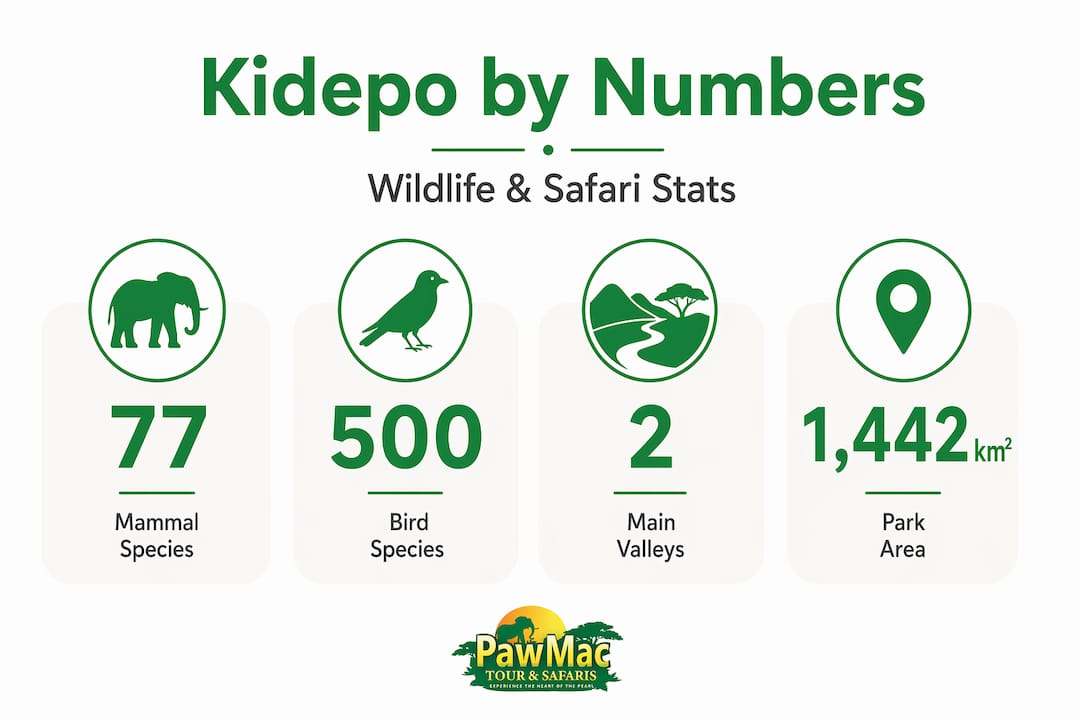
The numbers tell part of the story. Kidepo hosts 77 mammal species and nearly 500 bird species, including lions, elephants, giraffes, cheetahs, ostriches (Uganda’s only wild population), and Burchell’s zebras. That species richness, combined with near-zero tourist density, is what sets Kidepo apart from any other park in Uganda.
Key wildlife species found in Kidepo Valley
| Species category | Notable animals |
|---|---|
| Big cats | Lions, leopards, cheetahs |
| Megafauna | African elephants, buffaloes, hippos |
| Unique to Kidepo | Ostriches, greater and lesser kudu |
| Antelope & plains game | Zebras, eland, Jackson’s hartebeest |
| Primates | Olive baboons, patas monkeys |
| Birds | Nearly 500 species including Abyssinian roller, secretary bird |
For a broader look at what makes Uganda exceptional for wildlife, explore unique wildlife tours in Uganda across the country’s diverse ecosystems.
How to access Kidepo Valley safari: routes, travel times, and transport options
Reaching Kidepo takes planning. The road distance from Kampala is approximately 700 km, and the overland drive takes 8 to 10 hours via the Gulu-Kitgum highway, with the final stretch through Karamoja requiring a capable 4×4 vehicle. The road surface is unpredictable, especially during the wet season, and the last 100 km through the park itself demands high clearance and good tires.
The faster option is a charter flight, which covers the distance in roughly two hours to the Apoka/Lomej airstrip inside the park. Charter flights cost significantly more, but they eliminate road fatigue and deliver you directly to the park’s heart. For travelers combining Kidepo with other northern Uganda destinations or working with limited time, a charter flight is often the smarter investment.
Transport options at a glance
- Overland by 4×4: Best for those who want to experience northern Uganda’s scenery gradually; budget-friendly but time-intensive
- Charter flight: Ideal for time-sensitive itineraries; lands at Apoka airstrip, close to the main safari lodge
- Combination approach: Fly one way, drive the other to see varied landscapes without doubling the road time
- Within the park: All game drives use 4×4 safari vans; self-drive is possible but hiring a UWA ranger is strongly advised for navigation and safety
Pro Tip: If you’re driving overland, start from Kampala no later than 5:00 AM to arrive before dark. The Karamoja stretch is best navigated in daylight, and you’ll want energy left for an evening game drive on arrival.
Plan Your Uganda Safari with Local Experts
 WhatsApp Us
Timing your access matters as much as choosing your route. Read about the best time to visit Uganda for safaris to synchronize your travel window with optimal park conditions.
Planning your Kidepo safari game drives and activities for a personalized experience
Wildlife viewing in Kidepo rewards early risers. Departing for game drives before 7:00 AM consistently produces the best sightings, particularly for lions and cheetahs that are most active in the cooler morning hours. By mid-morning, many species retreat to shade, so those first two hours are precious.
Here’s how to structure a well-rounded Kidepo safari day:
- Early morning game drive (5:30 to 9:00 AM): Focus on the Narus Valley floor, where predators and prey both congregate around water. This is your best window for lion and cheetah sightings.
- Return to camp for breakfast (9:00 to 10:30 AM): Use this time to review sightings with your guide and plan the afternoon.
- Mid-morning birding walk or hot springs visit (10:30 AM to 12:30 PM): Kanangorok Hot Springs and the surrounding bush offer exceptional birding. A UWA ranger guide handles navigation and species identification.
- Afternoon rest during peak heat (12:30 to 3:30 PM): Midday temperatures in Kidepo can be intense. Resting now means you’re alert for the afternoon window.
- Late afternoon game drive (3:30 to 6:30 PM): Head toward the northern Kidepo Valley for giraffe, ostrich, and lesser kudu sightings in the golden light.
- Cultural visit to Karamojong communities (optional, by arrangement): The semi-nomadic Karamojong people have a rich cattle culture and warrior traditions. A community visit adds a dimension to Kidepo safaris that no other Ugandan park can offer.
Pro Tip: Always engage a UWA ranger guide at park headquarters before your first drive. These rangers know individual lion prides by sight, track daily animal movements, and significantly improve your odds of witnessing predator activity.
For context on how Kidepo compares with other Uganda wildlife experiences, see what game drives in Uganda look like across different parks.
When to visit and what to prepare for your Kidepo Valley safari adventure
Timing shapes the entire quality of a Kidepo safari. The dry seasons from June to September and December to March offer the best access and wildlife viewing conditions. During these months, grass is short, the Narus Valley water holes become critical gathering points, and road conditions remain manageable even on the Karamoja stretch.
The wet seasons (April to May and October to November) bring lush scenery and excellent birding as migratory species arrive, but the park tracks become genuinely challenging. Some routes become impassable without experienced local drivers. If you travel during the wet season, budget extra time and ensure your operator has the right vehicles and local knowledge.
What to prepare before your trip
- Park entry permits: Purchased through Uganda Wildlife Authority (UWA); fees apply per person per day and vary by nationality
- Payment methods: Both USD cash and electronic payments (mobile money, card) are accepted at park headquarters for permits and services
- Packing essentials for Kidepo’s conditions:
- Neutral-colored, lightweight long-sleeve clothing for morning and evening coolness
- Broad-brimmed hat and high-SPF sunscreen for open savanna exposure
- Binoculars (at minimum 8×42 magnification) for bird and predator spotting
- Sturdy, closed-toe shoes for walking activities near the hot springs
- Personal first-aid kit and any prescription medications (the nearest hospital is several hours away)
- Headlamp with extra batteries for camp evenings
Seasonal comparison for Kidepo safaris
| Season | Months | Road conditions | Wildlife density at water | Birding quality |
|---|---|---|---|---|
| Dry (primary) | June to September | Good | Very high | Moderate |
| Dry (secondary) | December to March | Good | High | Moderate |
| Wet | April to May | Difficult | Dispersed | Excellent |
| Wet | October to November | Difficult | Dispersed | Excellent |
Plan your visit around your priorities. If dense wildlife at water holes is the goal, a dry-season trip is non-negotiable. For migrant bird species and dramatic green landscapes, a wet-season visit with a capable local operator can be just as rewarding.
Pair this seasonal knowledge with guidance from the best time to visit Uganda for safari and gorilla trekking planning if you’re building a broader Uganda itinerary.
Accommodation and safari service highlights: options in Kidepo and what’s included
Kidepo Valley accommodation options range from one of East Africa’s most celebrated luxury lodges to simple UWA rest camps that put you directly in the heart of the bush.
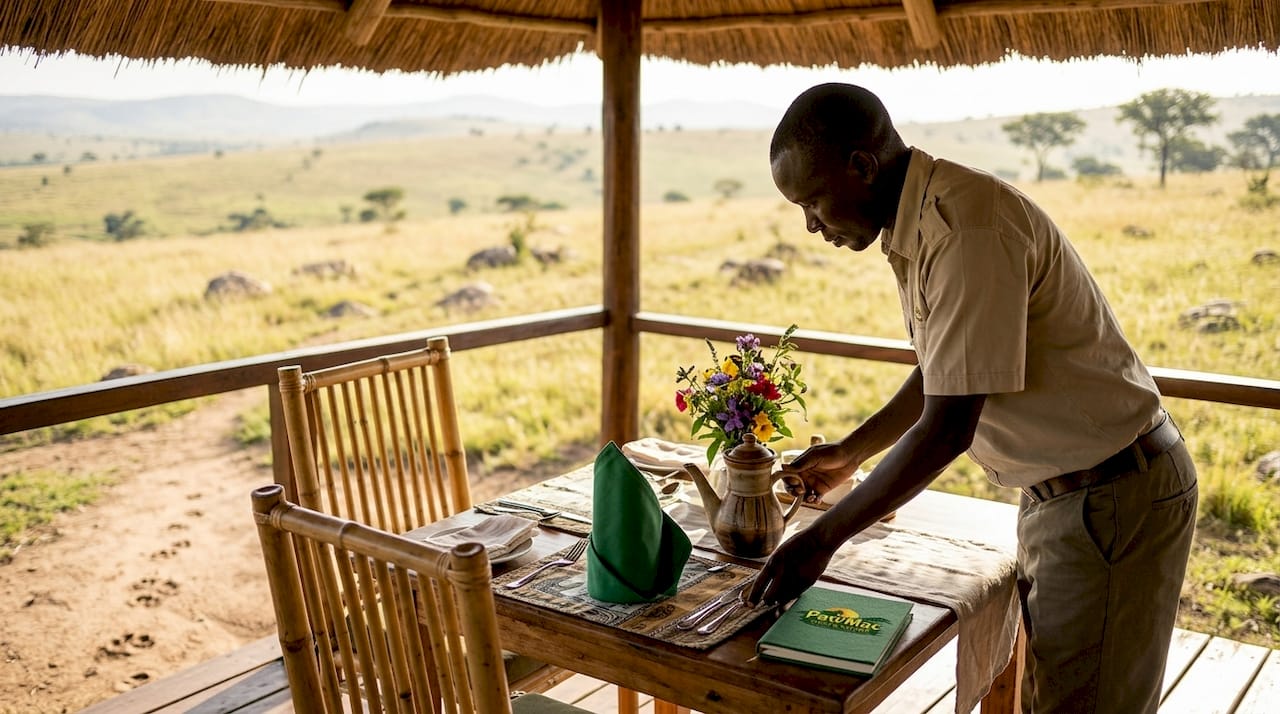
Apoka Safari Lodge is the flagship property inside the park. Built on a rocky outcrop overlooking the Narus Valley, it offers cottages with private plunge pools and sweeping wildlife views from every terrace. It’s genuinely one of Uganda’s finest lodges, and the location means you’re watching elephants from your room before breakfast.
UWA-managed rest camps provide affordable banda-style accommodations and self-catering options near park headquarters. They’re functional and clean, suited for travelers who prioritize spending time in the field over lodge amenities.
Safari packages typically include 4×4 safari van transport within the park, UWA park permits, and guided game drives. More comprehensive packages add airport transfers, cultural visits, and full board at the lodge of your choice. What’s included varies by operator, so confirm every line item before booking.
What to look for in a Kidepo safari package
- 4×4 high-clearance vehicle with pop-up roof for unobstructed wildlife photography
- UWA ranger guide fees included (not always bundled by default)
- Park entry permits per person per day
- Full board or half board meal options at your chosen lodge or camp
- Cultural community visit to Karamojong villages (optional add-on)
- Emergency evacuation plan or insurance guidance for remote area travel
For travelers considering a premium experience, browse luxury safari camps that combine comfort with deep bush immersion.
Why Kidepo Valley safari offers unmatched personalized wilderness encounters
Here’s an honest take that most travel content avoids saying directly. Kidepo’s greatest asset is not its wildlife list. It’s the absence of other people. Kidepo’s low visitation and remote setting create something that no marketing campaign can manufacture: the genuine feeling that you are alone with Africa’s wildlife. That is almost impossible to find in more accessible parks where vehicle queues around lion sightings are the norm.
The remoteness also forces a different kind of safari pacing. You can’t pop in for a half-day and leave. Getting to Kidepo requires commitment, and that commitment filters the visitor pool down to travelers who take wildlife seriously. The result is a park atmosphere that feels like private conservation land.
There’s also a conservation story unfolding right now. Uganda is reintroducing rhinos through translocation to protected areas connected with Kidepo, expanding its wildlife diversity in a way that will reshape the safari offering here within the next few years. Travelers who visit now are witnessing a park at a turning point. That’s rare, and it’s exactly the kind of story that makes a safari more than just a checklist.
What our experience at PawMac Safaris consistently shows is that personalized timing is the variable most travelers underestimate. A three-night stay structured around two morning drives and one afternoon drive, combined with a hot springs excursion and a community visit, yields a deeper connection with Kidepo than a rushed one-night visit with a single game drive. Build your itinerary around depth, not distance covered. Explore tailored safari packages in Uganda to see what a customized approach actually looks like.
Book your personalized Kidepo Valley safari with PawMac Safaris
Planning a Kidepo safari means navigating remote logistics, UWA permits, charter flights, and accommodation choices that can make or break the experience. PawMac Safaris handles every layer of that planning with local expertise built specifically for Uganda.

Our team designs bespoke Uganda wildlife tours that include Kidepo Valley as a headline destination, pairing it with Murchison Falls, gorilla trekking in Bwindi, or chimpanzee tracking in Kibale to create full-country itineraries. Whether you want a fly-in luxury experience at Apoka Safari Lodge or a self-drive adventure with UWA guides, we build the plan around your timeline and priorities. Start with a tailor-made Uganda safari consultation, or reach out directly to contact PawMac Safaris for personalized itinerary advice.
Frequently asked questions
What is the best way to reach Kidepo Valley National Park from Kampala?
You can take an 8 to 10 hour overland drive in a 4×4 vehicle via the Gulu-Kitgum route, or fly by charter to the Apoka airstrip in approximately two hours. The right choice depends on your budget, schedule, and how much of northern Uganda you want to experience on the road.
When is the best time to visit Kidepo Valley for a safari?
The dry seasons from June to September and December to March are ideal because wildlife congregates at permanent water sources and road conditions are manageable. Wet season visits are possible with an experienced local operator and reward birding enthusiasts with excellent migrant sightings.
Are guided game drives better than self-drive safaris in Kidepo?
Hiring a UWA ranger guide is strongly recommended because these rangers track daily animal movements, know individual predator territories, and improve both safety and wildlife spotting success rates considerably.
What wildlife species can I expect to see on a Kidepo Valley safari?
Kidepo hosts over 75 mammal species and nearly 500 bird species, including lions, cheetahs, elephants, giraffes, zebras, and Uganda’s only wild ostriches. Rhino reintroduction efforts are actively expanding the park’s big five credentials.
What should I prepare for when planning a Kidepo Valley safari?
Arrange UWA park permits in advance, carry USD cash and have electronic payment options ready, pack lightweight layers for temperature swings, and confirm your vehicle has genuine 4×4 capability. The nearest medical facilities require several hours of travel, so a personal medical kit and travel insurance with evacuation coverage are non-negotiable.
Recommended
- Discover Uganda’s Animals: Safaris & Gorilla Trekking Guide
- Role of safari guides in Uganda: 50% safer wildlife encounters
- Uganda Safari Guide: Gorilla Trekking, Wildlife & Planning
- Wildlife Photography Safaris: The Essential Uganda Guide


