

- 21 Views
- 12 Min Read
- (0) Comment
TL;DR:
- Rafting on the Nile near Jinja offers some of the most challenging grade 4 and 5 rapids, managed safely by professional guides. Proper preparation, including gear, mindset, and understanding safety protocols, ensures an unforgettable experience. Combining rafting with Uganda safaris creates a comprehensive adventure, best booked through experienced local operators like Pawmacsafaris.
Few experiences in East Africa match the raw adrenaline of Nile river rafting Jinja style. You’re launched into churning, coffee-colored water on one of the world’s most legendary rivers, surrounded by lush riverside forest and the deafening roar of grade 5 rapids. Whether you’ve rafted before or this is your first time gripping a paddle, the Nile near Jinja delivers something that stays with you long after the river spits you out. This guide covers everything you need to know: the river’s character, how to prepare, what to expect on the water, and how to book a trip you’ll actually feel ready for.
Table of Contents
- Key Takeaways
- What you need to know before Nile river rafting Jinja
- How to prepare for your Jinja rafting experience
- Step-by-step: the Jinja rafting experience from start to finish
- Common mistakes to avoid on the Nile rapids
- What to do after your rafting trip in Jinja
- My honest take on what makes Jinja rafting genuinely special
- Plan your Nile rafting trip with Pawmacsafaris
- FAQ
Key Takeaways
| Point | Details |
|---|---|
| Grade 4 and 5 rapids | The Nile near Jinja hosts some of the most demanding commercially rafted rapids on the continent. |
| Guided trips are non-negotiable | Professional rafting guides and rescue kayakers manage safety on every run. |
| Depart early from Kampala | Most transfers leave at 6 or 7 a.m. to reach Jinja in time for a full day on the water. |
| Pack smart and light | Quick-dry clothing, secure sandals, and sun protection are more important than most first-timers realize. |
| Combine with broader Uganda adventures | Rafting pairs naturally with wildlife safaris and gorilla trekking for a full Uganda itinerary. |
What you need to know before Nile river rafting Jinja
Jinja sits about 85 km from Kampala, perched at the point where Lake Victoria feeds the White Nile. This geographic position creates one of the most powerful and consistent stretches of whitewater on the planet. The river doesn’t just trickle here. It surges. The volume and force behind each rapid is what makes Jinja white water rafting so celebrated among serious adventure travelers.
Rapids on this stretch are graded primarily at grade 4 and 5, placing them firmly in the “advanced” category by global standards. Grade 3 means moderate waves with clear channels. Grade 4 means powerful, irregular waves where capsizing is likely. Grade 5 means violent water, limited recovery room, and a genuine physical challenge. The good news is that first-timers can tackle grade 5 rapids with proper guide support, which is exactly what reputable Jinja operators provide.
Seasonality does affect conditions. The river runs highest and fastest between March and May, and again from October through November during Uganda’s rainy seasons. The water volume during these periods intensifies already powerful rapids. The drier months from June to September and December through February offer slightly calmer flows, making them popular with first-time rafters. Both seasons are commercially operated and considered safe with licensed guides.
Here’s what you should know about safety before you book:
- All reputable operators provide personal flotation devices, helmets, and paddle training before launch
- Rescue kayakers position themselves downstream of every major rapid
- Guides read each rapid before entry and signal the team on paddling strategy
- Swim technique in whitewater is briefed on shore. You will float on your back, feet downstream, and wait for kayaker assist
- Avoid swimming in the Nile outside of structured rafting contexts due to currents and river health risks
Pro Tip: Book your Nile rafting trips Jinja-style through operators who specify rescue kayaker ratios. The standard is one rescue kayaker per raft, but stronger operations deploy two on grade 5 sections.
How to prepare for your Jinja rafting experience
Good preparation is the single biggest factor separating a confident rafter from a panicked one. You don’t need to be an athlete, but you do need to arrive ready.
-
Wear the right gear. Quick-dry shorts or leggings and a synthetic top are ideal. Avoid cotton. Bring secure water sandals or old sneakers that can get wet and stay on your feet during a flip. Leave jewelry at your accommodation.
-
Apply sunscreen before you arrive. The equatorial sun in Uganda is intense, and you’ll be on the water for six to eight hours on a full-day trip. Bring a small waterproof tube for reapplication during breaks on shore.
-
Eat a solid breakfast but not a heavy one. You need fuel for paddling. A meal about two hours before launch works well. Avoid fatty or greasy food that might cause nausea when the raft starts rolling in turbulent water.
-
Assess your swimming ability honestly. You don’t need to be a strong swimmer, but you should be comfortable in water and able to follow flotation instructions. If you’re not comfortable, tell your guide before launch.
-
Prepare mentally for going in. Almost every first-timer capsizes at least once. This is not a failure. It’s part of the experience. Rescue kayakers are in position specifically for this moment. Accepting that you will probably swim makes the actual event far less frightening.
-
Understand trip costs before booking. Prices vary by operator and trip length. Full-day trips typically include all safety equipment, guides, a riverside lunch, and transport back to the put-in point. Budget accordingly and compare what is included rather than shopping purely by price.
Pro Tip: Bring a dry bag for your phone and camera, or rent one from your rafting operator. Waterproof action cameras are the only reliable way to capture the rapids without risking your primary device.
Step-by-step: the Jinja rafting experience from start to finish
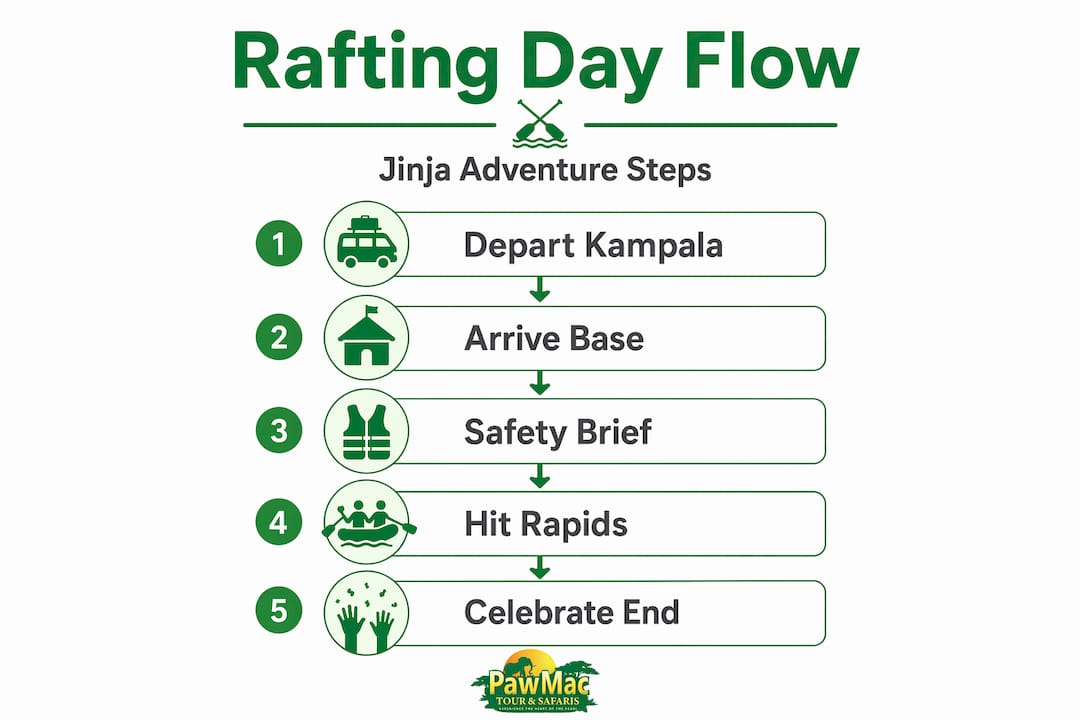
Understanding the full flow of the day removes a lot of pre-trip anxiety. Here’s what a standard full-day rafting experience looks like.
Plan Your Uganda Safari with Local Experts
 WhatsApp Us
Getting to Jinja. Departures typically happen at 6 or 7 a.m. from Kampala for a full day on the water. Pawmacsafaris arranges comfortable 4×4 Safari Van transfers that get your group to the put-in point on time, without the logistical stress of organizing transport independently.
Arrival and check-in. You’ll arrive at the rafting base, complete your registration, sign a safety waiver, and select your gear. This is also the moment to ask questions. No question is too basic here.
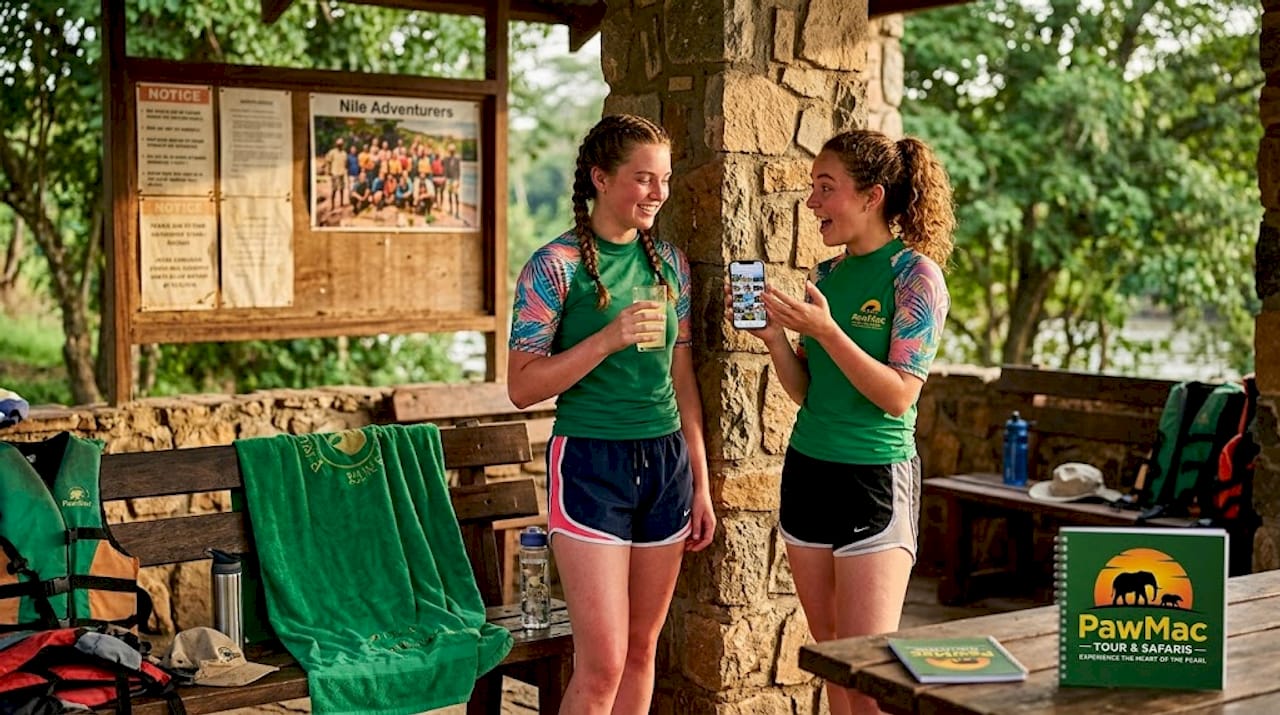
Safety briefing. Before anyone touches a raft, guides run a thorough briefing covering paddle commands, capsize protocol, swim technique, and how to re-enter the raft. Pay attention here more than anywhere else in the day.
On the river. The typical sequence of events once you’re paddling:
- Warm-up on a smaller rapid to build team coordination and test your paddle commands
- First major rapid: this is where the energy shifts and the adrenaline becomes very real
- Mid-river lunch break on a sandy bank. Operators provide a solid meal here
- Afternoon rapids, which are often the most demanding of the day
- Sunset paddle out and transfer back to base
“The initial chaos on the rapids becomes rewarding as you learn to read the river and follow guide cues, making the experience genuinely unforgettable.” This insight from experienced rafters captures exactly why guides tailor the experience intensity based on each group’s comfort level.
Post-rafting. Operators typically provide a celebratory drink at the base. This is also where you can purchase photos and video packages shot by river photographers during the run. Then it’s back to Jinja town or Kampala depending on your itinerary.
Common mistakes to avoid on the Nile rapids
Even well-intentioned rafters make avoidable errors. Here’s what consistently goes wrong and how to sidestep it.
-
Ignoring the safety briefing. Some travelers treat the pre-launch talk as background noise. This is a serious error. The paddle commands your guide gives are what keep the raft moving in the right direction. Miss those, and you become a liability to your team.
-
Holding the paddle incorrectly. Grip too tight and you waste energy. Hold it too loosely and the paddle gets ripped away in a rapid. Guides demonstrate proper grip during the briefing. Ask for a repeat demonstration if you’re unsure.
-
Looking down instead of forward. First-timers naturally look at the water immediately around the raft. Your guide is looking 20 meters ahead. Trust their signals and keep your eyes forward.
-
Neglecting hydration. You’re physically exerting yourself for hours in equatorial heat. The river spray cools you down and masks how much you’re sweating. Drink water at every shore stop, not just when you feel thirsty.
-
Panicking during a flip. Capsizing feels violent in the moment. But rescue kayakers are in position and will reach you within seconds. Float on your back, feet downstream, and wait. Fighting the current exhausts you unnecessarily.
Pro Tip: Inform your guide about any medical conditions, including fear of water or claustrophobia, before the day begins. Guides adjust the intensity based on this information and can position you in the raft for maximum comfort and safety.
What to do after your rafting trip in Jinja
The river deposits you back at base with tired arms, wide eyes, and a very healthy appetite. Jinja rewards you well for the rest of the day.
-
Eat at a riverside spot. Jinja’s dining scene ranges from casual open-air cafes to proper restaurants with Nile views. Most are clustered in the town center and cater specifically to adventure travelers refueling after a day on the water.
-
Try other Nile River adventure sports. Kayaking, bungee jumping over the Nile, and quad biking are all popular adventure activities in Jinja that pair well with a rest-day recovery schedule.
-
Take a boat tour. The Nile boat tours available near Jinja offer a completely different relationship with the river. Calm, scenic, and ideal for the day after rafting when your paddling muscles are recovering.
-
Explore the local market. Jinja’s markets are lively and genuinely interesting, with crafts, fresh produce, and local textiles that give you a real window into the town’s character beyond the river.
-
Rest properly before your next activity. If you’re combining rafting with a gorilla trek or safari in Queen Elizabeth National Park, build in at least one recovery day. Your body will thank you when you’re hiking through dense forest at elevation.
My honest take on what makes Jinja rafting genuinely special
I’ve been on rafting rivers across East Africa. None of them feel like the Nile at Jinja. What sets it apart isn’t just the scale of the rapids, though they are impressive. It’s the quality of the guides.
I’ve seen guides read individual rafters within minutes of meeting them. They know who needs encouragement, who needs a calm voice, and who will thrive if you just point them at the biggest wave and step aside. That tailored approach is genuinely rare in adventure tourism. It’s what allows first-timers and experienced paddlers to share the same raft and both walk away satisfied.
The community around Jinja rafting has also built something special. Riverside culture here is warm, inclusive, and genuinely supportive. You eat lunch with your guides, swap stories with other groups on the bank, and finish the day with a shared sense of accomplishment that transcends ability level.
My strongest advice for first-timers: stop trying to control the river and start working with it. The moment you relax into the flow and trust your guide’s commands, everything clicks. Experienced rafters confirm that this mental shift is exactly when the chaos becomes exhilarating rather than frightening. That’s the moment Jinja rafting becomes unforgettable.
— Paweł
Plan your Nile rafting trip with Pawmacsafaris
Organizing Nile river rafting Jinja logistics on your own is doable. But it’s far easier, safer, and more enjoyable when you have a trusted local operator handling the moving parts. Pawmacsafaris specializes in exactly this kind of end-to-end Uganda adventure planning.
Here’s how the booking process works with Pawmacsafaris:
- Contact via WhatsApp or the website with your dates and activity interests
- Pawmacsafaris confirms availability and rafting package options
- Secure your spot with a deposit (percentage varies based on inclusions)
- Receive confirmation of your rafting day, accommodation, and 4×4 Safari Van transfer
- Prepare your payment: USD cash on arrival or electronic payment accepted
- Receive your final itinerary via WhatsApp before departure
- Arrive ready. Everything else is handled
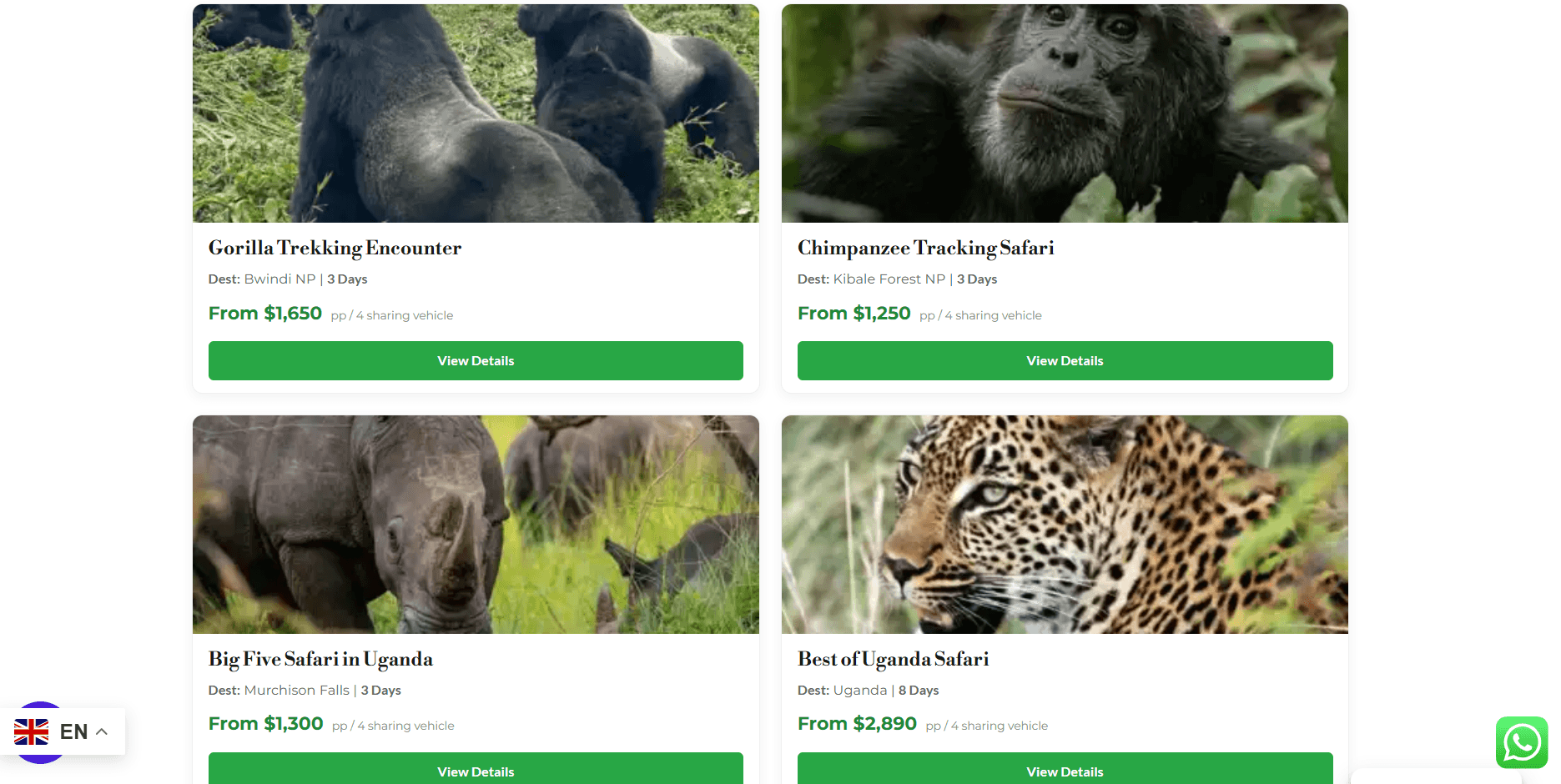
All packages include comfortable 4×4 Safari Van transport from Kampala, quality accommodation options in Jinja, and connections to rafting operators with certified guides. Pawmacsafaris can also bundle your Nile adventure with a Uganda wildlife safari or gorilla trekking experience in Bwindi, creating a full Uganda itinerary that covers the country’s most extraordinary adventures in a single trip. Ready to get started? Request your 2026 quote and get a personalized plan built around your travel dates and interests.
FAQ
What rapids grade is Nile river rafting in Jinja?
The rapids near Jinja are graded primarily at grade 4 and 5, making them some of the most challenging commercially rafted whitewater in Africa. First-timers can participate with full guide support.
How long does a full-day Jinja rafting trip take?
A full-day Nile rafting trip in Jinja typically runs six to eight hours on the water, with transfers from Kampala departing at 6 or 7 a.m. and returning by early evening.
Is Nile rafting in Jinja safe for beginners?
Yes. Reputable operators provide certified guides, rescue kayakers, helmets, and personal flotation devices on every run. Following guide instructions is the most important safety factor for first-time rafters.
What should I bring for a day of Jinja white water rafting?
Bring quick-dry clothing, secure footwear, high-SPF sunscreen, a dry bag for electronics, and a refillable water bottle. Leave valuables and cotton clothing at your accommodation.
Can I combine Nile rafting with a Uganda safari?
Absolutely. Pawmacsafaris builds custom itineraries that pair Jinja rafting with gorilla trekking, chimpanzee tracking, and wildlife drives across Uganda’s national parks.
Recommended
- Jinja, Uganda: Your ultimate guide to Nile adventure
- Uganda Nile Boat Safari: Plan Your Ultimate River Adventure
- Best Uganda safari lodges 2026: wildlife adventures guide
- Top 6 all inclusive Uganda trips 2026