


- 71 Views
- 15 Min Read
- (0) Comment
Choosing between a standard gorilla trek and Uganda's Gorilla Habituation Experience is not a small upgrade decision. It affects your permit budget, trekking sector, physical effort, photography opportunities, and the rhythm of your entire safari. Both experiences are ranger-led, conservation-focused, and centered on Uganda's mountain gorillas, but they are designed for different travelers.
For most first-time visitors, the standard gorilla trek is the best choice because it is more accessible, more widely available, and gives you the iconic one-hour encounter with a fully habituated gorilla family. Habituation is better for travelers who want a deeper, slower, more research-oriented forest day and are comfortable with a higher permit cost, fewer available dates, and more unpredictable gorilla behavior.
This guide compares both options in practical detail so you can choose the right Uganda gorilla experience before permits, lodges, and road transfers are locked in.
Quick answer: which Uganda gorilla experience should you choose?
If you are planning your first gorilla trek in Uganda, choose the standard trek unless you have a strong reason to do habituation. It gives you the classic Bwindi or Mgahinga experience, one hour with gorillas, a lower permit cost, more sector flexibility, and easier itinerary planning.
Choose habituation if gorillas are the main purpose of your trip, you want up to four hours with a semi-habituated group, and you are willing to build your itinerary around limited availability in southern Bwindi.
| Decision point | Standard gorilla trek | Gorilla Habituation Experience |
|---|---|---|
| Best for | First-time visitors, couples, families with eligible teens, mixed-fitness travelers | Wildlife enthusiasts, photographers, returning visitors, naturalist-focused travelers |
| Gorilla time | Up to 1 hour after locating the family | Up to 4 hours after locating the group, subject to ranger guidance |
| Visitor group size | Up to 8 visitors per gorilla family | Up to 4 visitors per habituation group |
| 2026 foreign non-resident permit guide price | USD 800 | Usually USD 1,500, confirm current tariff before booking |
| Main locations | Bwindi sectors and Mgahinga Gorilla National Park | Bwindi Impenetrable National Park, mainly the southern Rushaga area |
| Itinerary flexibility | High | Lower, because availability is more limited |
| Physical demand | Moderate to strenuous, depending on gorilla location and terrain | Often more demanding and slower-paced, with more time in dense forest |
| Encounter style | More predictable viewing of a fully habituated family | More immersive, educational, and less predictable |
The best choice is not simply the longest one. It is the one that matches your expectations, fitness, budget, and safari pace.
What a standard gorilla trek in Uganda includes
A standard gorilla trek is the classic Uganda mountain gorilla experience. It takes place in Bwindi Impenetrable National Park or Mgahinga Gorilla National Park, with Bwindi offering four main trekking sectors: Buhoma, Ruhija, Rushaga, and Nkuringo. Mgahinga offers a smaller, scenic alternative near the Virunga volcanoes.
The day usually starts early at the park headquarters with registration, permit verification, a health check, and a ranger briefing. You are then allocated to a gorilla family based on permit availability, ranger assessment, and sometimes broad fitness considerations. Trackers often move ahead of the trekking group to locate the gorillas and communicate with the ranger team.
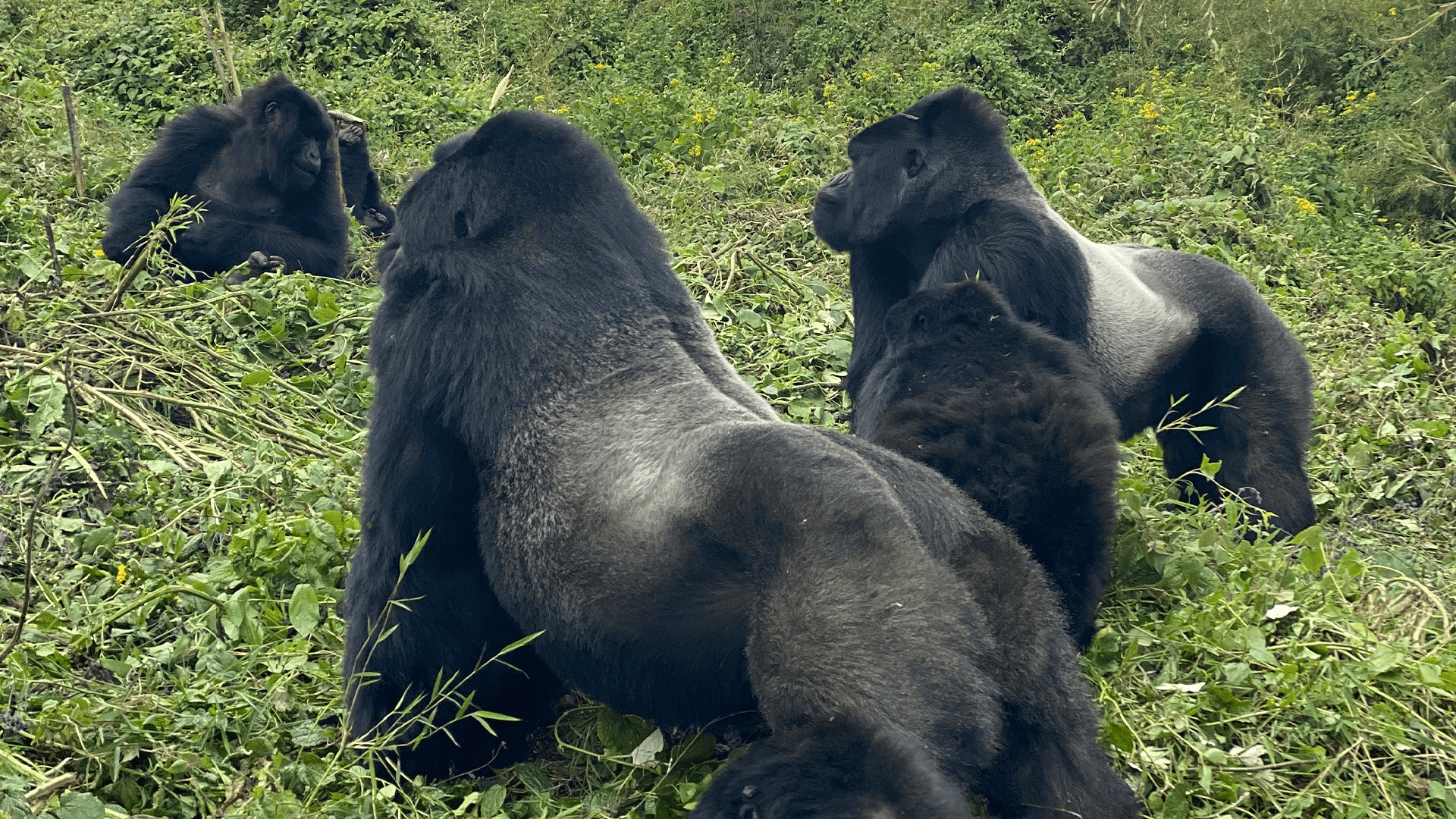
Once your group reaches the gorillas, the permit allows up to one hour in their presence. That hour can feel surprisingly rich. You may watch a silverback resting, juveniles climbing, mothers nursing infants, or the family moving slowly through foliage. The encounter is quiet, controlled, and guided by strict rules that protect the gorillas from stress and disease.
For many travelers, this one-hour meeting is more than enough. The emotional impact is strong, the logistics are manageable, and the rest of the safari can still include chimpanzee tracking in Kibale, tree-climbing lions in Queen Elizabeth National Park, a Nile boat safari in Murchison Falls, or a cultural experience near Bwindi.
For a broader overview of sectors, costs, and planning steps, see PawMac Safaris' guide to gorilla trekking in Uganda.
Plan Your Uganda Safari with Local Experts
 WhatsApp Us

What gorilla habituation means in Uganda
Gorilla habituation is not just a longer gorilla trek. It is a specialized experience connected to the gradual process of getting wild gorillas accustomed to the calm presence of rangers, researchers, trackers, and limited visitors. The purpose is not entertainment. It is conservation management, monitoring, and long-term preparation for carefully regulated tourism.
In Uganda, the Gorilla Habituation Experience is offered in Bwindi Impenetrable National Park, most commonly in the Rushaga area of southern Bwindi. Visitor numbers are much lower than on a standard trek, usually up to four people per group, and the permit allows up to four hours with the gorillas once they are located.
Because the gorillas are still in the habituation process, their behavior can be less predictable. They may move more often, keep more vegetation between themselves and visitors, or show subtle signs that require rangers to adjust your position. This is part of the value of the experience. You are not simply watching a polished wildlife encounter, you are observing the patient fieldwork behind gorilla conservation in Uganda.
Habituation is best for travelers who appreciate slow observation. The reward is not only more time, but more context. You may learn how trackers read broken stems, feeding signs, dung, vocalizations, and movement patterns. You may also gain a deeper understanding of how Uganda balances access, conservation, and community benefit.
If you want to explore the ethical side of this experience in more detail, read PawMac Safaris' guide on how to plan an ethical gorilla habituation experience in Uganda.
Permit costs, availability, and booking pressure
Permit price is one of the clearest differences between the two experiences. For 2026 planning, the standard Uganda gorilla trekking permit for foreign non-residents is commonly budgeted at USD 800. The Gorilla Habituation Experience is usually budgeted at USD 1,500 for foreign non-residents, but travelers should always confirm the current Uganda Wildlife Authority tariff at the time of booking.
These permit fees are controlled by the Uganda Wildlife Authority, not by PawMac Safaris or any safari operator. A reputable local operator helps you secure availability, match the correct sector to the correct lodge, and build the route around the permit date.
| Cost factor | Standard trek | Habituation |
|---|---|---|
| Permit cost | Lower | Higher |
| Accommodation flexibility | More options across Bwindi and Mgahinga | More focused around southern Bwindi |
| Transport planning | Easier to match to different Uganda routes | Requires tighter sector planning |
| Best booking window | 3 to 6 months ahead, longer for peak dates | 6 to 12 months ahead is strongly recommended |
| Budget impact | Easier to combine with other parks | Often becomes the premium focus of the itinerary |
Some recent Uganda tariff periods have included lower standard trekking rates during selected low-season months such as April, May, and November. Because discounts and tariffs can change, do not build your final budget on an assumed promotion without confirmation.
The biggest booking mistake is treating the permit as separate from the lodge. Bwindi is large, mountainous, and divided into sectors. A permit for Rushaga should not be paired casually with a lodge in Buhoma, and a Nkuringo permit should be matched with realistic transfer planning. PawMac Safaris coordinates these details so travelers do not lose time or risk missing a briefing due to poor routing.
Fitness and terrain: which is harder?
Both experiences can be physically demanding. Uganda's gorilla habitat is beautiful, but it is also steep, humid, muddy in places, and densely vegetated. Even a short trek can involve slippery slopes, exposed roots, narrow paths, and changes in altitude.
A standard gorilla trek can last anywhere from a couple of hours to most of the day, depending on where the gorilla family has moved. Rangers often try to allocate groups with some awareness of fitness, but gorilla movement is never controlled. A traveler who expects a gentle forest walk may be surprised by the effort required.
Habituation is usually better suited to travelers with stronger stamina. The day can feel longer because you may spend more time tracking, waiting, repositioning, and moving quietly with the field team. The four-hour viewing allowance also means more time standing, crouching, or walking through vegetation after you reach the gorillas.
You do not need to be an athlete for either option, but you should be honest about your knees, balance, endurance, and comfort in muddy forest conditions. If you are concerned about difficulty, the standard trek gives PawMac Safaris more flexibility to select a suitable sector and pace the itinerary around your ability.
Hiring a porter is highly recommended for both experiences. Porters carry your daypack, help on slippery sections, and provide valuable support to communities around Bwindi and Mgahinga. Even fit travelers often say a porter made the trek safer and more enjoyable.
For training, gear, and health preparation, use this practical checklist on how to prepare for gorilla trekking in Uganda.
Photography and video: one hour versus four hours
Photographers often assume habituation is automatically better because it allows more time. Sometimes it is. Four hours can create opportunities to observe behavior unfolding slowly, adjust settings, wait for better light, and capture a wider story of the forest.
However, more time does not always mean cleaner images. Habituation groups may be less settled. Gorillas may remain behind foliage, move frequently, or stay in darker forest patches. The experience can be more rewarding for documentary-style photography than for travelers who want one perfect portrait.
The standard trek can be surprisingly productive for photography because fully habituated gorilla families are generally more accustomed to calm visitor presence. The one-hour limit creates pressure, but if you are prepared, you can capture powerful images without needing a longer permit.
For either option, plan for low light and moisture. Fast lenses, rain protection, extra batteries, and quiet camera handling matter more than carrying excessive gear. Flash photography is not allowed. Your ranger's instructions always come before the photograph.
How much time should your Uganda itinerary allow?
A gorilla permit may cover one activity, but the experience shapes your entire itinerary. The route from Entebbe or Kampala to Bwindi is long by road, and the best safari plans include buffer time, especially if you are combining gorillas with other Uganda highlights.
| Trip length | Best gorilla choice | Why it fits |
|---|---|---|
| 3 days | Standard trek | Best for a focused Bwindi trip with limited time |
| 4 days | Standard trek, or habituation with careful planning | Allows a more comfortable return journey or sector-specific routing |
| 5 to 6 days | Either option | Good for adding Lake Bunyonyi, Queen Elizabeth, or a second forest activity |
| 7 to 10 days | Either option, with stronger value for habituation | Enough time to combine Bwindi with Kibale, Queen Elizabeth, or Murchison Falls |
| 10 days or more | Habituation becomes easier to justify | The trip has space for rest, road transfers, and deeper wildlife variety |
For a short Uganda safari, the standard gorilla trek is usually the smarter option because it leaves more budget and time for other experiences. For a longer primate-focused journey, habituation can become the centerpiece, especially when paired with chimpanzee tracking in Kibale Forest or a second night near Bwindi.
If you want a balanced route that combines gorillas with broader wildlife, review this 7-day Uganda safari itinerary for ideas on pacing, road transfers, and activity sequencing.
Premium travelers should also think beyond the park days. Smooth airport transfers, luggage timing, and rest before long-haul flights can shape how you feel when you reach Entebbe. If you are connecting from a U.S. city before flying to Uganda, arranging luxury airport transportation at the start of your journey can help keep the overall travel experience seamless.
Which experience is better for different traveler types?
Different travelers value different things. A honeymoon couple may want comfort and certainty. A photographer may want time and patience. A family with older teens may want the most rewarding experience without overcomplicating the route. A returning Uganda visitor may want something more specialized than the classic trek.
Choose the standard gorilla trek if:
- This is your first time seeing mountain gorillas in Uganda.
- You want the best balance of cost, comfort, and impact.
- You have limited safari days or a tighter budget.
- You are combining gorillas with Queen Elizabeth, Kibale, Murchison Falls, or Lake Mburo.
- You prefer a more predictable encounter with a fully habituated gorilla family.
- You want more choice across Bwindi sectors and Mgahinga.
Choose gorilla habituation if:
- Gorillas are the main purpose of your Uganda safari.
- You want more time in the forest and deeper interpretation from the field team.
- You are a photographer, researcher-minded traveler, or serious wildlife enthusiast.
- You are comfortable with a premium permit price.
- You have enough itinerary space to stay near the right Bwindi sector.
- You understand that the encounter may be less predictable than a standard trek.
A simple rule works well: if you want the most iconic Uganda gorilla experience, book the standard trek. If you want the most immersive Uganda gorilla field experience, book habituation.
Responsible gorilla viewing rules apply to both
Whether you choose a standard trek or habituation, Uganda's gorilla rules are strict for good reason. Mountain gorillas are vulnerable to human-borne illness and stress, and tourism only works when visitors respect the system.
You must be at least 15 years old to trek gorillas in Uganda. You should not trek if you have flu symptoms, fever, stomach illness, or any contagious condition. Rangers may ask you to wear a mask near gorillas depending on current protocols, so carry one and follow instructions.
During the encounter, maintain the required distance, keep your voice low, avoid sudden movements, and never eat or drink near the gorillas. Flash photography is prohibited. If gorillas move closer, stay calm and follow the ranger's guidance rather than trying to move independently.
These rules are not formalities. They are part of why Uganda remains one of the world's most respected gorilla trekking destinations. Permit revenue supports conservation work, ranger operations, veterinary monitoring, and community-linked benefits around the parks.
Common mistakes when choosing between trekking and habituation
One of the most common mistakes is choosing habituation only because it sounds more prestigious. A longer permit is not automatically the better experience if you are tired, short on time, or mainly interested in a clear first encounter.
Another mistake is ignoring sector logistics. Bwindi is not a single small entrance gate. The distance between sectors can be significant, and road conditions can affect travel time. Your permit sector should determine your lodge area, not the other way around.
Travelers also underestimate the importance of buffer nights. Arriving near Bwindi late the night before a trek can be stressful, especially after a long road transfer. A well-paced itinerary gives you time to rest, check gear, and arrive at briefing without rushing.
Finally, some travelers pack for a normal safari drive instead of a rainforest hike. Gorilla trekking requires waterproof hiking boots, long trousers, a lightweight rain jacket, gloves for gripping vegetation, insect repellent, and a comfortable daypack. For a full gear breakdown, read the PawMac Safaris Uganda safari packing guide.
How PawMac Safaris helps you choose correctly
PawMac Safaris plans Uganda gorilla safaris around the details that matter on the ground: permit availability, trekking sector, lodge location, road transfer timing, guide assignment, and the traveler's fitness and comfort level. This is especially important when choosing between a standard gorilla trek and habituation, because the wrong sector or rushed itinerary can affect the entire experience.
For travelers who want efficiency, PawMac Safaris can build a focused Bwindi or Mgahinga itinerary with expert local guides and comfortable 4×4 vehicles. For travelers who want a deeper primate journey, the team can combine habituation with chimpanzee tracking, cultural visits, Lake Bunyonyi, Queen Elizabeth National Park, or other Uganda highlights.
The value of local planning is not only booking a permit. It is knowing which route makes sense, which overnight stop reduces fatigue, which sector suits your goals, and how to protect the quality of the experience from arrival in Entebbe to the final transfer.
Frequently Asked Questions
Is gorilla habituation worth the extra cost in Uganda? It is worth it if gorillas are the main focus of your safari and you want a deeper, longer, more educational forest experience. If you are a first-time visitor with limited days, the standard gorilla trek usually delivers better overall value.
Is a standard gorilla trek enough time with the gorillas? For most travelers, yes. One hour with a fully habituated gorilla family is often emotionally powerful and photographically rewarding. The trek itself, briefing, forest walk, and ranger interpretation make the day feel complete.
Where does gorilla habituation take place in Uganda? Gorilla habituation takes place in Bwindi Impenetrable National Park, most commonly in the Rushaga area of southern Bwindi. Availability is limited, so the permit should be secured before confirming accommodation.
Can I do both a standard trek and habituation on one Uganda safari? Yes, if your budget and itinerary allow it. Some travelers book habituation first, then add a standard trek on another day for a different family, sector, or viewing style. This works best on longer Uganda itineraries.
Which option is better for photography? Habituation offers more time, but the gorillas may be less predictable and vegetation can be challenging. A standard trek can produce excellent images because the families are fully habituated. Preparation and ethical patience matter more than permit type.
How early should I book? For peak travel months from June to September and December to February, book as early as possible, ideally 6 to 12 months ahead for habituation and high-demand standard trekking dates. Shorter windows can work in quieter months, but availability is never guaranteed.
Do both experiences have the same age limit? Yes. Uganda gorilla trekking and habituation require visitors to be at least 15 years old. This rule is strictly enforced to protect gorillas and maintain safety standards.
Plan the right Uganda gorilla safari with PawMac Safaris
If you are still unsure whether to choose a standard gorilla trek or habituation, the best next step is to match the permit to your travel style, dates, budget, and fitness level. PawMac Safaris can help you compare real availability, choose the right Bwindi or Mgahinga sector, secure permits, arrange comfortable 4×4 transport, and build a personalized Uganda itinerary around the experience that fits you best.
Contact PawMac Safaris to plan a Uganda gorilla safari that is professionally guided, logistically sound, and designed around what you truly want from the Pearl of Africa.


