


- 61 Views
- 17 Min Read
- (0) Comment
Uganda rewards travelers who want more than a standard wildlife checklist. Within one country, you can track mountain gorillas in misty rainforest, listen to chimpanzees calling through Kibale Forest, watch elephants and buffalo on open savanna, search for tree-climbing lions in Ishasha, cruise past hippos on the Nile, and look for the prehistoric shoebill in wetlands near Entebbe.
If your research began with safari Africa animals, Uganda is one of the most complete answers because its wildlife is spread across forests, rivers, wetlands, lakes, volcanic slopes, and classic savanna parks. The key is knowing which animals live where, how sightings actually happen, and what each experience costs before you build your itinerary.
Why Uganda Is Exceptional for Safari Animals
Uganda is often called the Pearl of Africa, and for wildlife travelers that phrase is more than marketing. The country sits at a meeting point of habitats, which gives visitors a rare combination of primate tracking, Big Five game viewing, birding, boat safaris, and cultural travel within one guided route.
A Uganda safari is not only about driving across open plains. Some of the best animal encounters happen on foot with rangers, by boat along wildlife-rich waterways, or during forest treks where trackers follow fresh signs such as broken stems, dung, vocalizations, and feeding trails. This variety makes Uganda especially rewarding for travelers who want depth, not just distance.
The most important planning point is that different animals require different logistics. Mountain gorillas need a pre-booked trekking permit. Chimpanzee tracking also requires permits, especially in Kibale. Rhinos are usually seen through guided tracking at Ziwa Rhino Sanctuary. Savanna animals such as lions, elephants, buffalo, giraffes, zebras, and antelopes are best seen on early morning and late afternoon game drives in parks such as Murchison Falls, Queen Elizabeth, Kidepo Valley, and Lake Mburo.
Quick Guide to Safari Animals You Can See in Uganda
| Animal or group | Best places in Uganda | How you see them | Key planning note |
|---|---|---|---|
| Mountain gorillas | Bwindi Impenetrable National Park, Mgahinga Gorilla National Park | Ranger-led forest trek | 2026 foreign non-resident permit is commonly USD 800, book early |
| Chimpanzees | Kibale Forest, Budongo Forest, Kyambura Gorge | Guided forest tracking or habituation | Kibale is the top choice for reliable sightings |
| Golden monkeys | Mgahinga Gorilla National Park | Guided bamboo forest trek | Excellent add-on to a Mgahinga gorilla safari |
| Lions | Queen Elizabeth, Murchison Falls, Kidepo Valley | Game drives | Ishasha is famous for tree-climbing lions |
| Leopards | Queen Elizabeth, Murchison Falls, Kidepo, Lake Mburo | Early, late, or night-focused viewing where permitted | Sightings depend heavily on guide skill and timing |
| Elephants | Murchison Falls, Queen Elizabeth, Kidepo Valley | Game drives and boat safaris | Often seen near water in dry months |
| Buffalo | Most major savanna parks | Game drives and boat safaris | Common but still powerful and unpredictable |
| Rhinos | Ziwa Rhino Sanctuary | Guided on-foot tracking | Usually added between Entebbe or Kampala and Murchison Falls |
| Giraffes | Murchison Falls, Kidepo Valley, Lake Mburo | Game drives | Uganda is home to Nubian giraffes |
| Zebras | Lake Mburo, Kidepo Valley | Game drives and walking safaris in approved areas | Lake Mburo is the easiest short-trip option |
| Hippos and crocodiles | Victoria Nile, Kazinga Channel, Lake Mburo | Boat safari | Best photographed from boat cruises |
| Shoebill | Mabamba Swamp, Nile delta areas | Canoe or boat birding trip | Best with a specialist birding guide |
Mountain Gorillas: Uganda’s Most Powerful Wildlife Encounter
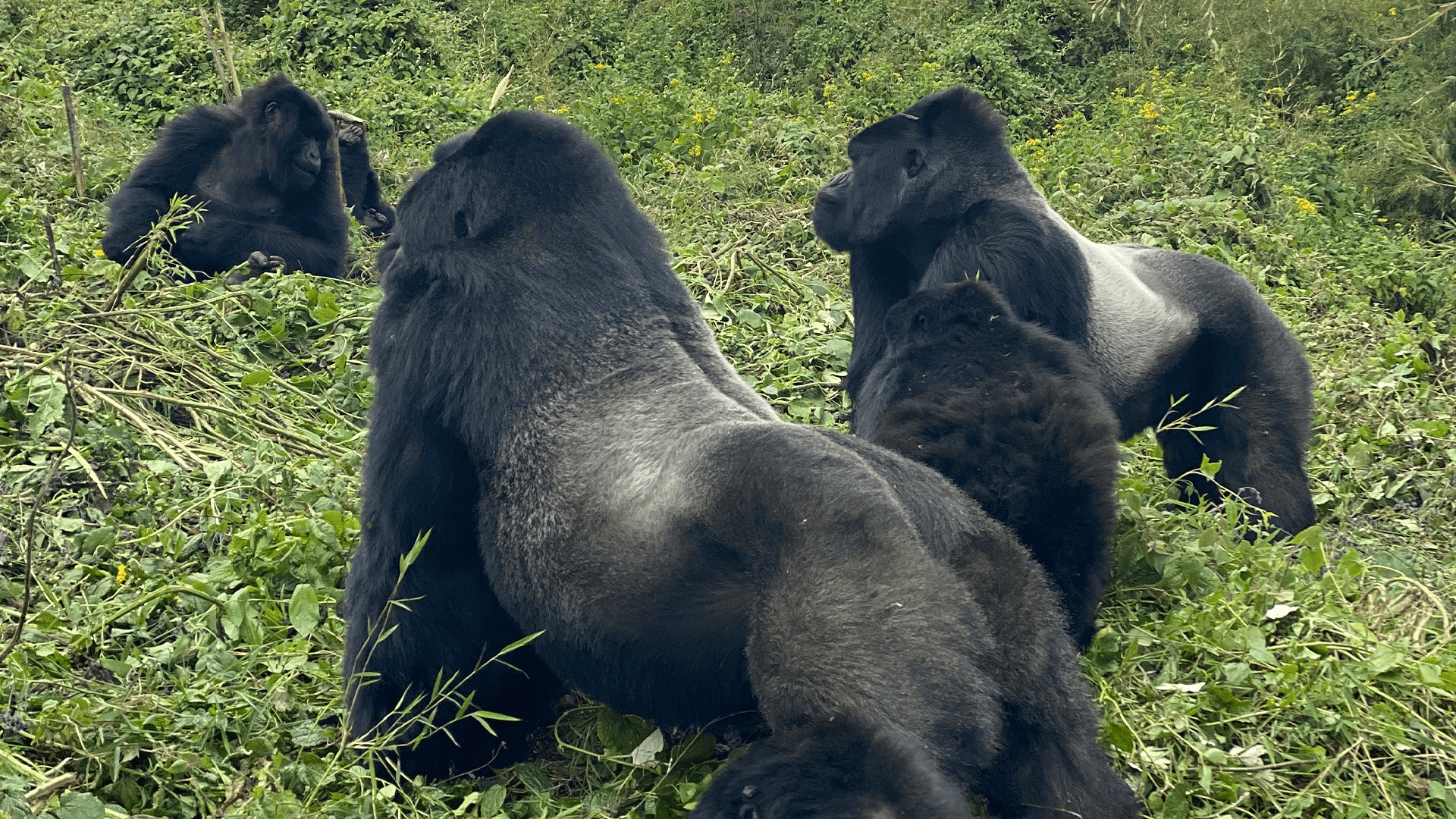
No animal defines Uganda’s safari reputation more strongly than the mountain gorilla. These great apes live only in a small high-altitude region of Africa, and Uganda protects them in Bwindi Impenetrable National Park and Mgahinga Gorilla National Park.
A gorilla trek is not a casual game drive. You attend an early briefing, receive a group allocation, then walk into forest with Uganda Wildlife Authority rangers and trackers. The hike may take less than two hours or most of the day, depending on where the gorilla family moved overnight. Once the group is located, standard trekking allows one regulated hour with the gorillas.
The 2026 gorilla permit for foreign non-residents is widely planned around USD 800 per person. The permit does not usually include transport, accommodation, porter fees, tips, or meals, so travelers should budget realistically. A short 3-day gorilla-focused safari can range from about USD 1,200 to USD 3,500 per person depending on lodge category, vehicle sharing, and route design. A more comfortable 7 to 10 day itinerary combining gorillas with savanna wildlife normally costs more but gives a much fuller Uganda experience.
For deeper planning, see PawMac Safaris’ guide to gorilla trekking in Uganda, especially if you are deciding between Bwindi sectors such as Buhoma, Ruhija, Rushaga, and Nkuringo.
Chimpanzees and Other Primates
Uganda is one of the best places in the world for primate-focused safaris. Kibale Forest is the flagship destination for chimpanzee tracking, with mature tropical forest, multiple primate species, and strong tracking infrastructure around Kanyanchu.
Chimpanzee encounters are very different from gorilla encounters. Gorillas often feed calmly in family groups, while chimpanzees can be louder, faster, and more mobile. You may hear pant-hoots echoing through the forest before you see them. When the group is active, the experience can feel energetic and dramatic, with movement through trees, grooming, feeding, and social interactions.
Plan Your Uganda Safari with Local Experts
 WhatsApp Us
For 2026 planning, Kibale chimpanzee tracking for foreign non-residents is commonly budgeted around USD 250 per permit. Chimpanzee habituation experiences cost more and require more time in the forest, but they can be highly rewarding for travelers who want a longer, research-style day.
Beyond chimpanzees, Uganda offers black-and-white colobus monkeys, red-tailed monkeys, blue monkeys, L’Hoest’s monkeys, grey-cheeked mangabeys, baboons, and golden monkeys in Mgahinga. A well-built primate itinerary may combine Kibale, Bwindi, and Mgahinga for a truly specialized wildlife journey.
Lions, Including Uganda’s Tree-Climbing Lions
Lions are among the most requested safari animals, and Uganda offers several strong viewing areas. Queen Elizabeth National Park is the most famous, especially the Kasenyi plains and the Ishasha sector. Murchison Falls National Park also offers lion sightings on the northern bank, while Kidepo Valley National Park provides a wilder, more remote predator landscape.
Ishasha is especially compelling because of its tree-climbing lions. These lions are often seen resting in large fig and acacia trees, particularly during warmer parts of the day. The behavior is not guaranteed, but when conditions are right, it creates one of Uganda’s most memorable safari scenes.
For travelers building a predator-focused itinerary, the mistake is rushing. One night in a lion area gives you only a narrow chance. Two or three nights in Queen Elizabeth or Murchison Falls gives your guide more flexibility to read tracks, speak with rangers, adjust drive timing, and return to productive zones.
You can explore route ideas in PawMac Safaris’ Queen Elizabeth National Park guide, especially if Ishasha is a priority.
Leopards, Hyenas, and Smaller Predators
Leopards are present in several Ugandan parks, but they are naturally elusive. They are most often seen in the early morning, near dusk, or resting in trees. Queen Elizabeth, Murchison Falls, Kidepo Valley, and Lake Mburo all offer possibilities, though none can guarantee a leopard sighting.
This is where a skilled local guide matters. Leopard viewing often depends on subtle clues: alarm calls from antelopes, fresh tracks, drag marks, favorite fig trees, and knowledge of territories. A rushed drive on the wrong road at the wrong time can miss what an experienced guide would notice.
Spotted hyenas may be seen in Queen Elizabeth, Murchison Falls, and Kidepo Valley. Side-striped jackals, mongooses, genets, civets, and servals are also possible in certain areas, though some are more commonly seen during night drives where permitted by park rules and itinerary design.
Elephants, Buffalo, Rhinos, and Uganda’s Big Five
Uganda can deliver Big Five viewing, but it requires smart routing. Lions, leopards, elephants, and buffalo can be seen in national parks such as Queen Elizabeth and Murchison Falls. Rhinos are not free-ranging inside the main national parks, so travelers usually add Ziwa Rhino Sanctuary for guided rhino tracking.
Elephants in Uganda are often seen near water, in woodland, and along river corridors. Murchison Falls is excellent for elephants, especially when combined with a Nile boat cruise. Queen Elizabeth also offers strong elephant sightings, including along the Kazinga Channel. Buffalo are common in many savanna areas, but their calm appearance should not be misunderstood. They are powerful wild animals and must always be viewed from a safe distance.
Ziwa Rhino Sanctuary is a key conservation stop between central Uganda and Murchison Falls. Rhino tracking is done on foot with trained guides, and the experience adds a meaningful conservation dimension to a Big Five itinerary. If your goal is to see all five, plan your route rather than hoping they will appear in one park.
For a deeper route breakdown, PawMac Safaris has a practical guide to Big Five tours in Uganda.
Giraffes, Zebras, Antelopes, Hippos, and Crocodiles
Uganda’s supporting cast of wildlife is one of the reasons safaris here feel so rich. Nubian giraffes are a highlight in Murchison Falls and Kidepo Valley, and they have also been reintroduced to Lake Mburo. Their height, calm movement, and patterned coats make them a favorite for photographers and families.
Zebras are especially associated with Lake Mburo and Kidepo Valley. Lake Mburo is the easiest zebra destination for shorter itineraries because it is more accessible from Entebbe, Kampala, and western Uganda routes. It is also one of the best places in Uganda for walking safaris in approved areas, making it useful at the beginning or end of a trip.
Antelope diversity is excellent. Uganda kob are common in Queen Elizabeth and Murchison Falls, and they are important prey for lions. You may also see waterbuck, bushbuck, topi, oribi, hartebeest, eland, impala, and duiker depending on the park. Warthogs are common and often entertaining to watch, especially when they trot with tails raised.
Boat safaris bring another animal world into view. Hippos crowd river channels and lakeshores, Nile crocodiles bask on banks, elephants come to drink, buffalo cool off near the water, and fish eagles call overhead. The Kazinga Channel in Queen Elizabeth and the Victoria Nile in Murchison Falls are two of Uganda’s most productive boat safari locations.
Birds: Shoebill, Crowned Crane, Turacos, and More
Even travelers who do not consider themselves birders often become interested in Uganda’s birds within a few days. The country has recorded more than 1,000 bird species, and many are large, colorful, or behaviorally fascinating.
The shoebill is the celebrity bird for many safari travelers. It is usually searched for in wetlands such as Mabamba Swamp near Entebbe or in suitable Nile delta habitats. A shoebill excursion is often done by canoe or small boat with a local birding guide who understands water levels, feeding areas, and timing.
Other standout birds include the grey crowned crane, Uganda’s national bird, African fish eagles, great blue turacos, bee-eaters, kingfishers, saddle-billed storks, hornbills, and sunbirds. Forest birding is strongest in places such as Kibale and Bwindi, while wetland and savanna birding can be excellent in Queen Elizabeth, Murchison Falls, Lake Mburo, and Mabamba.
Best Parks for Specific Safari Animals in Uganda
| Destination | Best for | Recommended time | Why it matters |
|---|---|---|---|
| Bwindi Impenetrable National Park | Mountain gorillas, forest birds, forest mammals | 2 to 3 nights | Uganda’s premier gorilla trekking destination |
| Mgahinga Gorilla National Park | Gorillas, golden monkeys, volcanic scenery | 2 nights | Excellent for combining two primate experiences |
| Kibale Forest | Chimpanzees and primate diversity | 2 nights | Uganda’s strongest chimpanzee tracking hub |
| Murchison Falls National Park | Elephants, giraffes, lions, buffalo, hippos, crocodiles | 2 to 3 nights | Combines game drives with Nile boat safaris |
| Queen Elizabeth National Park | Lions, leopards, elephants, buffalo, hippos, birds | 2 to 4 nights | Offers Kasenyi plains, Kazinga Channel, and Ishasha |
| Kidepo Valley National Park | Remote savanna wildlife, buffalo herds, lions, giraffes | 3 nights or more | Best for travelers wanting wilderness and fewer crowds |
| Lake Mburo National Park | Zebras, impalas, elands, giraffes, birds | 1 to 2 nights | Ideal short stop between western Uganda and Entebbe |
| Ziwa Rhino Sanctuary | Rhinos | Half day to 1 night | Essential for Big Five-focused itineraries |
| Mabamba Swamp | Shoebill | Half day | Excellent birding add-on near Entebbe |
What Can You Realistically See on One Uganda Safari?
A 5 to 6 day trip can include gorillas and one savanna park, but it will feel focused rather than comprehensive. A 7 to 10 day trip is the sweet spot for many travelers because it can combine gorilla trekking, chimpanzees, Queen Elizabeth or Murchison Falls, and possibly Lake Mburo or Ziwa. A 12 to 14 day trip allows a more complete wildlife circuit with less road pressure and stronger chances for predators, birds, and remote landscapes.
Here is a realistic 10-day animal-focused route:
| Day | Route focus | Likely wildlife highlights |
|---|---|---|
| 1 | Entebbe arrival or Mabamba Swamp | Shoebill, wetland birds |
| 2 | Ziwa Rhino Sanctuary and transfer toward Murchison Falls | Rhinos, birds, first savanna wildlife |
| 3 | Murchison Falls game drive and Nile boat safari | Elephants, giraffes, buffalo, lions, hippos, crocodiles |
| 4 | Transfer to Kibale region | Rural scenery, crater landscapes, possible monkeys |
| 5 | Kibale chimpanzee tracking | Chimpanzees, colobus monkeys, forest birds |
| 6 | Queen Elizabeth and Kazinga Channel | Elephants, buffalo, hippos, crocodiles, waterbirds |
| 7 | Ishasha sector | Tree-climbing lions, topi, buffalo, elephants |
| 8 | Transfer to Bwindi | Forest edge birding, mountain scenery |
| 9 | Gorilla trekking | Mountain gorillas and forest wildlife |
| 10 | Lake Mburo or return to Entebbe | Zebras, impalas, elands, giraffes, final birding |
This type of itinerary can be adjusted for photography, families, seniors, luxury lodges, or budget-conscious travelers. The key is not simply adding more parks. It is matching your most desired animals to the correct habitats, permits, lodge locations, and travel times.
Cost Planning for a Uganda Animal Safari in 2026
Uganda safari costs vary widely because permits, vehicle logistics, lodge category, route distance, and season all matter. A low headline price may not include key costs such as gorilla permits, chimpanzee permits, park entry, boat cruises, tips, or airport transfers. A transparent quote should itemize what is included and what is optional.
| Cost item | 2026 planning estimate | Notes |
|---|---|---|
| Gorilla trekking permit | Around USD 800 per foreign non-resident | Required for Bwindi or Mgahinga standard trekking |
| Kibale chimpanzee tracking permit | Around USD 250 per foreign non-resident | Book early during peak travel months |
| Golden monkey tracking | Often budgeted around USD 100 per foreign non-resident | Confirm current tariff before booking |
| Major park entry | Commonly around USD 40 to 45 per person per 24 hours | Subject to Uganda Wildlife Authority tariff updates |
| Boat safari | Often around USD 30 to 40 per person | Varies by park, operator, and route |
| Private guided safari package | About USD 250 to 450 per person per day for many budget to mid-range shared arrangements | Permits may be itemized separately |
| Luxury safari package | Often USD 600 to 1,200+ per person per day | High-end lodges, private guiding, flights, and premium routing increase cost |
| Premium lodge nights | Often USD 500 to 1,500+ per night depending on lodge and season | Rates may be per person sharing or per room, confirm carefully |
For a 7 to 8 day itinerary with gorilla trekking and one or two wildlife parks, many travelers should expect a broad range of about USD 2,000 to USD 4,500+ per person depending on comfort level and group size. A 10 to 12 day private mid-range to luxury route with gorillas, chimpanzees, savanna parks, and boat safaris can range from roughly USD 3,500 to USD 8,000+ per person, with premium luxury itineraries moving higher.
These are planning ranges, not fixed package prices. PawMac Safaris builds custom safari packages from budget to luxury, so the final cost depends on your travel dates, party size, permit availability, lodge choices, vehicle requirements, and the number of premium activities included.
Best Time to See Safari Animals in Uganda
Uganda is a year-round safari destination, but seasons shape comfort and logistics. Dry months, especially December to February and June to September, are popular because tracks are generally easier, vegetation can be lower in savanna parks, and gorilla trekking trails may be less muddy. These months also bring stronger demand, so permits and preferred lodges should be booked early.
Wet seasons, especially March to May and October to November, can be excellent for photography, birding, lush landscapes, and lower crowd levels. Roads and forest trails may be more challenging, so a reliable 4×4 vehicle and experienced guide become even more important. Some low-season savings may be available when officially offered, but never assume discounts without checking current permit rules and lodge policies.
For animal viewing, the best strategy is to match timing to your priorities. If gorillas are the main goal, book the permit first and build everything around it. If predators are the goal, allow more nights in Queen Elizabeth, Murchison Falls, or Kidepo. If birds are the priority, include wetlands, forest, and savanna habitats rather than relying on one park.
Practical Tips for Better Wildlife Sightings
A successful Uganda safari is built on patience, timing, and good field decisions. The following habits can dramatically improve your animal encounters:
- Start game drives early, especially when looking for lions, leopards, hyenas, and active herbivores.
- Stay at least two nights in major wildlife parks when possible, because one game drive is rarely enough.
- Use neutral clothing, quiet voices, and respectful behavior around animals.
- Keep cameras ready before sightings happen, not after the vehicle stops.
- Follow ranger instructions during gorilla, chimpanzee, rhino, and walking activities.
- Add boat safaris where available, since water-based viewing often reveals animals you may miss from roads.
Travel documents also deserve attention. Most safari travelers need a valid passport, Uganda visa or e-visa approval where applicable, Yellow Fever vaccination proof, travel insurance, and permit documentation for regulated activities. For travel businesses and partners managing cross-border or visa workflows, visa and border-crossing administration can help simplify documentation processes, but each traveler should still confirm current entry requirements before departure.
How PawMac Safaris Helps You See More Wildlife
The difference between an average animal checklist and a memorable Uganda safari often comes down to planning. PawMac Safaris uses local knowledge, professional guides, comfortable 4×4 vehicles, and customized routing to connect the right parks, permits, lodges, and activities in a practical sequence.
For example, a gorilla permit must match the correct trekking sector and lodge area. A chimpanzee permit needs to fit the driving schedule from Kibale to your next destination. A Big Five route should include Ziwa Rhino Sanctuary rather than hoping for rhinos elsewhere. A family safari may need shorter drive days and lodges with flexible meal times. A photography safari may need slower pacing, private vehicle use, and more time at sightings.
This is where local planning matters. PawMac Safaris can shape a wildlife-focused itinerary around your target animals, budget, travel dates, fitness level, and accommodation style, from budget-friendly guided trips to premium private safaris.
Frequently Asked Questions
What safari animals can I see in Uganda? Uganda offers mountain gorillas, chimpanzees, golden monkeys, lions, leopards, elephants, buffalo, rhinos, giraffes, zebras, hippos, crocodiles, antelopes, hyenas, and more than 1,000 recorded bird species. The exact animals depend on which parks you visit.
Can I see the Big Five in Uganda? Yes, but you need the right route. Lions, leopards, elephants, and buffalo are found in major savanna parks such as Murchison Falls and Queen Elizabeth. Rhinos are usually seen through guided tracking at Ziwa Rhino Sanctuary.
Are gorillas part of a normal Uganda safari? They can be, but gorilla trekking requires a separate permit and careful planning. The 2026 foreign non-resident permit is commonly budgeted around USD 800, and the trek must be booked for a specific park and sector.
Which Uganda park has the most animals? There is no single best park for every animal. Murchison Falls is excellent for giraffes, elephants, lions, buffalo, hippos, and Nile wildlife. Queen Elizabeth is strong for lions, elephants, buffalo, leopards, hippos, and birds. Bwindi and Mgahinga are essential for gorillas, while Kibale is best for chimpanzees.
How much does a Uganda safari cost in 2026? A short budget or mid-range safari may start around a few hundred dollars per person per day before premium permits, while gorilla-inclusive itineraries often range from about USD 2,000 to USD 4,500+ per person for 7 to 8 days. Luxury private safaris with premium lodges can exceed USD 7,000 to USD 12,000+ per person depending on length and inclusions.
What is the best month to see animals in Uganda? June to September and December to February are popular for drier conditions and easier game viewing. March to May and October to November can still be rewarding for birding, photography, lush scenery, and fewer crowds if you are prepared for rain and muddy tracks.
Plan Your Uganda Wildlife Safari With PawMac Safaris
Uganda gives you the chance to see some of Africa’s most iconic animals in one deeply varied country, from gorillas in rainforest to lions on savanna and shoebills in wetlands. The best results come from matching your target wildlife with the right parks, permits, seasons, lodges, and guiding team.
If you want a custom animal-focused itinerary, PawMac Safaris can help you plan the route, secure key permits, arrange comfortable 4×4 transport, and choose lodges that fit your budget and travel style. Start with a tailored Uganda safari plan at PawMac Safaris and turn your wildlife wish list into a practical, expertly guided journey.


