


- 47 Views
- 22 Min Read
- (0) Comment
Uganda is famous for gorilla trekking, chimpanzee tracking, Big Five game drives, and Nile boat safaris, but the country becomes even more rewarding when you add time on foot. A well-planned hiking day slows the pace, brings you closer to the landscape, and reveals details that are easy to miss from a safari vehicle: forest calls in Bwindi, alpine plants in the Rwenzori Mountains, mist rising over Sipi Falls, or fresh wildlife tracks in Lake Mburo.
The key is choosing the right guided hike for your route, fitness level, budget, and safari goals. Uganda is not a destination where every walk should be improvised. In national parks and wildlife areas, guided hiking tours often require rangers, permits, local trail knowledge, and careful timing around road transfers, lodge locations, and weather.
PawMac Safaris helps travelers combine Uganda safari highlights with guided walking experiences that feel purposeful rather than rushed. Whether you want a short waterfall hike after a boat cruise, a full-day volcano climb, or a serious multi-day mountain trek, Uganda offers excellent options for travelers who want more than game drives alone.
Why Add Hiking Guided Tours to a Uganda Safari?
Hiking changes the rhythm of a safari. Game drives are excellent for covering distance and finding large mammals, but guided walks allow you to notice smaller ecological stories: medicinal plants, bird calls, insect life, forest layers, animal dung, tracks, and how communities live around protected landscapes.
Guided hiking is especially valuable in Uganda because many of the best trails pass through sensitive habitats. Bwindi Impenetrable National Park is a UNESCO World Heritage Site and home to mountain gorillas. Mgahinga Gorilla National Park includes volcanic slopes and rare golden monkey habitat. Rwenzori Mountains National Park has fragile alpine ecosystems, bogs, glaciers, and steep terrain that demand experienced support.
A professional guide also helps you choose hikes that match the rest of your safari. A hard volcano climb the day before gorilla trekking may not be wise for every traveler. A gentler Lake Bunyonyi or Bigodi Wetland walk might be better after a physically demanding forest trek. Good planning protects your energy, your budget, and the quality of the whole Uganda journey.
Quick Comparison: Best Guided Hiking Tours in Uganda
The prices below are realistic planning ranges for 2026, but they should be treated as estimates. Final costs depend on residency status, Uganda Wildlife Authority tariff updates, group size, season, lodge level, transport distance, and whether the hike is part of a full safari package.
| Guided hiking tour | Best safari pairing | Time needed | Difficulty | Typical extra budget per person |
|---|---|---|---|---|
| Rwenzori Mountains trek | Kibale, Queen Elizabeth, Bwindi | 2 to 9 days | Moderate to very hard | US$200 to US$4,500+ |
| Mgahinga volcano hikes | Gorilla trekking, golden monkeys, Lake Bunyonyi | 1 day | Moderate to very hard | US$80 to US$200+ |
| Bwindi forest hikes and gorilla trek | Bwindi or Mgahinga gorilla safari | Half day to full day | Moderate to hard | US$40 to US$100 for nature walks, US$800 for gorilla permit |
| Sipi Falls and Mount Elgon hikes | Jinja, Source of the Nile, eastern Uganda | Half day to 4 days | Easy to hard | US$20 to US$600+ |
| Murchison Falls summit hike | Murchison Falls game drives and Nile boat cruise | 45 to 90 minutes | Easy to moderate | US$15 to US$40+ |
| Kibale and Bigodi guided walks | Chimpanzee tracking, Queen Elizabeth | 2 to 4 hours | Easy to moderate | US$20 to US$70, chimp permit around US$250 |
| Lake Mburo walking safari | Bwindi return route, Entebbe transfer break | 2 to 3 hours | Easy to moderate | US$30 to US$60+ |
| Lake Bunyonyi highland hikes | Post-gorilla rest days, cultural touring | 2 hours to full day | Easy to moderate | US$20 to US$80+ |
| Kidepo and Mount Morungole hike | Remote wildlife safari, cultural extension | Full day to multi-day route | Moderate to hard | Costs mainly depend on transport and route length |
1. Rwenzori Mountains Guided Treks
The Rwenzori Mountains are Uganda’s most dramatic trekking destination. Often called the Mountains of the Moon, this range is known for glaciers near the equator, giant lobelias, bamboo forest, bogs, waterfalls, and high-altitude peaks. It is the best choice for travelers who want a true mountain expedition as part of a Uganda safari.
The Rwenzori experience can be tailored. Not every visitor needs to attempt Margherita Peak on Mount Stanley. Many travelers choose shorter foothill hikes, 3-day lower mountain routes, or 6-day trekking programs that showcase the Rwenzori environment without requiring technical summit ambitions. Travelers with strong mountain experience may consider longer 8 to 10 day summit-focused treks, which require better fitness, altitude awareness, proper gear, and more budget.
The best safari pairing is the western Uganda circuit. Rwenzori access works naturally with Kibale Forest for chimpanzees, Queen Elizabeth National Park for game drives and boat safaris, and Bwindi or Mgahinga for gorilla trekking. This avoids inefficient routing and makes the mountain trek feel like part of a wider Uganda journey rather than a detached side trip.
For budgeting, a short guided foothill experience may add a few hundred dollars once transfers, guiding, park fees, and accommodation are considered. A serious 6-day Rwenzori trek often falls around US$1,200 to US$2,500+ per person depending on route, inclusions, crew, and accommodation standards. Longer Margherita Peak attempts can rise to US$2,500 to US$4,500+ per person, especially when technical equipment, extra nights, and higher support levels are included.
Plan Your Uganda Safari with Local Experts
 WhatsApp Us
If this is your priority, review PawMac Safaris’ Rwenzori Mountains trek as a starting point, then customize around your safari route, fitness, and available travel days.
2. Mgahinga Volcano Hikes
Mgahinga Gorilla National Park is compact, scenic, and excellent for travelers who want a strong hiking day in southwestern Uganda. The park is best known for gorilla trekking and golden monkey tracking, but its volcano hikes are among the finest guided day hikes in the country.
Mount Gahinga is usually the most approachable of the three main volcano hikes. It still requires stamina, but it is generally less punishing than the higher peaks. Mount Sabyinyo is more technical in feel, with ladders, ridges, and steep sections, and is famous for its summit area near the meeting point of Uganda, Rwanda, and the Democratic Republic of Congo. Mount Muhabura is the toughest day hike for many travelers, with a long ascent, high altitude, and big views when weather allows.
These hikes pair beautifully with a gorilla safari in Mgahinga or nearby Bwindi, but sequencing matters. If you are trekking gorillas the next morning, avoid exhausting yourself on a hard volcano climb the previous day. A better plan may be to do gorilla trekking first, then add golden monkey tracking or a volcano hike afterward.
For 2026 planning, budget roughly US$80 to US$200+ per person for a guided volcano day once park entry, ranger or guide arrangements, and logistics are considered. If the hike is part of a private safari with accommodation and 4×4 transport, the overall daily cost will depend much more on lodge level and vehicle routing.
Mgahinga is ideal for active travelers who want hiking, primates, volcanic scenery, and fewer crowds in one compact corner of Uganda.
3. Bwindi Forest Hikes and Gorilla Trekking
Bwindi is not only a gorilla destination. It is one of Uganda’s richest forest landscapes, with steep ridges, river valleys, waterfalls, birds, butterflies, and local community trails. For many travelers, gorilla trekking is the main reason to hike here, but additional guided forest walks can deepen the experience.
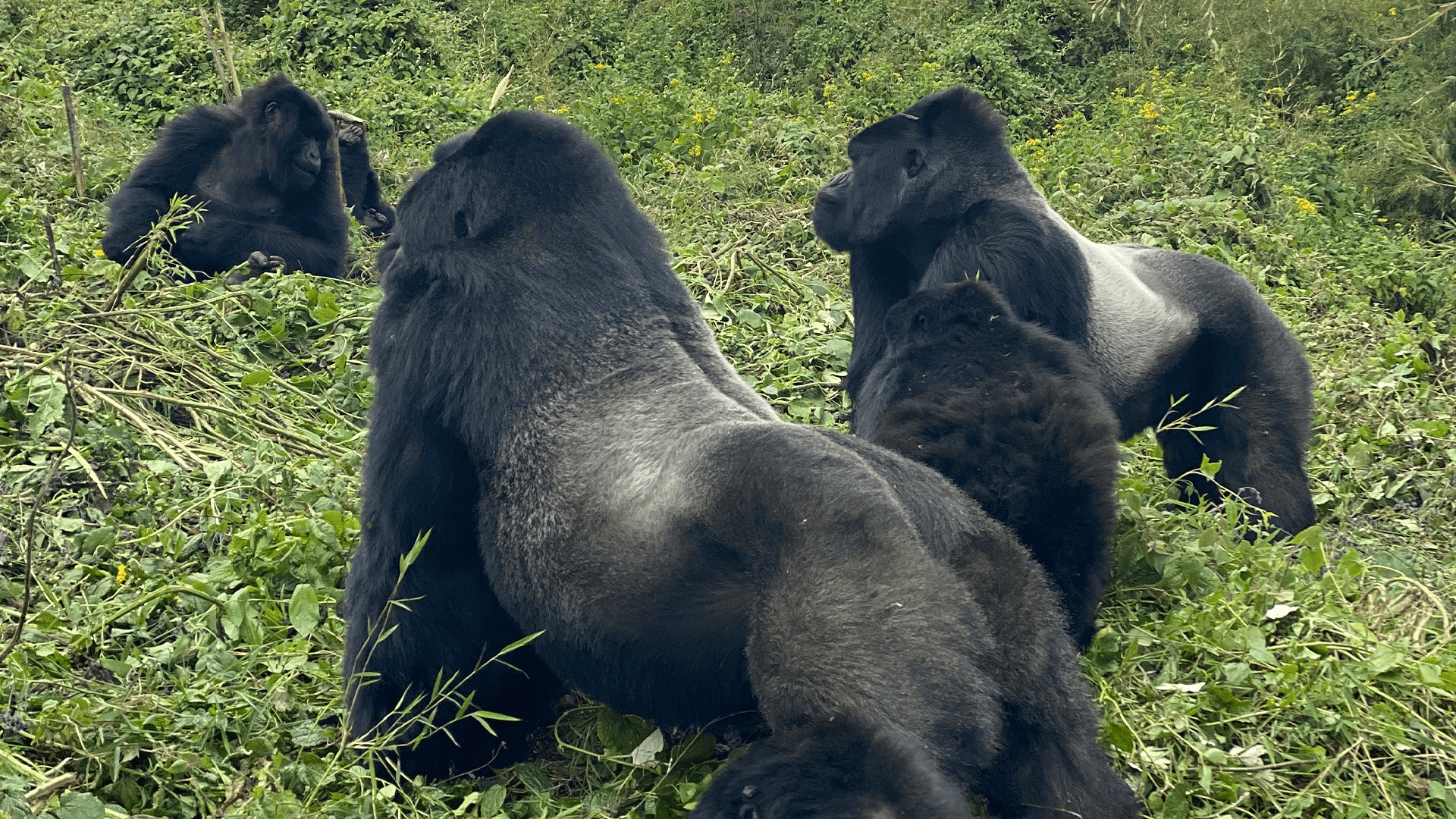
The standard gorilla trek is already a serious guided hike for many visitors. In 2026, the foreign nonresident gorilla permit is US$800 per person. The trek can last anywhere from a couple of hours to most of the day depending on gorilla family location, weather, trail conditions, and sector. The one hour with gorillas is tightly regulated, and ranger guidance is mandatory.
Beyond gorilla trekking, Bwindi offers guided nature walks such as waterfall trails, river walks, birding routes, and sector-to-sector hikes. The Buhoma area is popular for forest and waterfall walks. Ruhija offers excellent birding and higher elevation scenery. Nkuringo and Rushaga are known for steeper terrain and strong gorilla trekking options. Some travelers also enjoy longer guided walks that connect communities and forest edges, creating a more immersive sense of the landscape.
If you want to add a Bwindi hike, first align your gorilla permit sector with your lodge. This is one of the most important logistical details in Uganda safari planning. A lodge in the wrong sector can mean a very early transfer on difficult roads, unnecessary fatigue, and avoidable stress before an expensive permit activity.
For nature walks in and around Bwindi, budget around US$40 to US$100+ per person depending on the route, guide, park arrangements, and whether community activities are included. Porters for gorilla trekking are strongly recommended and usually cost around US$20, with tips appreciated. Hiring a porter makes the hike more comfortable and supports local households around the park.
For a deeper breakdown of permit rules and trek planning, see PawMac Safaris’ guide to gorilla trekking in Uganda.
4. Sipi Falls and Mount Elgon Hiking
Sipi Falls is one of Uganda’s best hiking additions for travelers who want waterfalls, highland views, coffee culture, and a different landscape from the western safari circuit. Located on the slopes of Mount Elgon in eastern Uganda, Sipi is especially rewarding if your itinerary includes Jinja, the Source of the Nile, or a broader eastern Uganda route.
A guided Sipi Falls hike can be short and relaxed or longer and more strenuous. The classic experience links several waterfalls, village paths, gardens, viewpoints, and coffee-growing areas. Trails can be slippery after rain, so good shoes matter even when the hike is not technically difficult.
For more ambitious hikers, Mount Elgon offers multi-day trekking through forest, moorland, caves, caldera scenery, and highland ecosystems. It is generally less crowded than many famous African mountain routes and can be a smart choice for travelers who want a mountain experience without the technical demands of the highest Rwenzori routes.
A Sipi Falls guided day hike is often one of the best-value walking experiences in Uganda, commonly ranging from US$20 to US$60 per person depending on route length, guide arrangements, and group size. Multi-day Mount Elgon treks can range from several hundred dollars upward once park fees, guiding, porters, meals, transfers, and accommodation are included.
This option suits travelers who want a softer hiking experience than the Rwenzori Mountains but still want dramatic scenery and meaningful local interaction.
5. Murchison Falls Top-of-the-Falls Hike
Murchison Falls is one of Uganda’s most powerful safari landscapes. The Nile forces its way through a narrow rock gap, creating a thunderous waterfall that feels completely different from above than it does from a boat.
The guided hike to the top of the falls is one of the best short walking add-ons in Uganda. Many itineraries combine a Nile boat cruise to the base of the falls with a climb to the top, where your driver-guide meets you by vehicle. The walk is not long, but it can be hot, humid, and steep in sections.
This hike is perfect for travelers who are not looking for a full trekking day but still want to feel the force of the landscape on foot. It pairs naturally with game drives on the northern bank of Murchison Falls National Park, where you may see elephants, giraffes, buffalo, lions, hartebeest, and abundant birdlife.
Budget around US$15 to US$40+ per person for the hike component, depending on current tariffs and how it is arranged with the boat activity. Park entry, boat cruise fees, vehicle costs, accommodation, and guide services are usually separate or bundled into the overall safari quote.
Murchison works well near the beginning of a Uganda safari, especially if combined with Ziwa Rhino Sanctuary before continuing west to Kibale, Queen Elizabeth, and Bwindi.
6. Kibale Forest, Bigodi Wetland, and Crater Lake Walks
Kibale is Uganda’s primate capital and one of the best places in Africa for chimpanzee tracking. While chimp tracking is the headline activity, the wider Fort Portal and Kibale region is also excellent for guided forest walks, wetland walks, and crater lake hikes.
Chimpanzee tracking in Kibale is a guided forest experience with a 2026 permit commonly budgeted around US$250 for foreign nonresidents. The walk can be easy or moderately demanding depending on where the chimpanzees are feeding and moving. Unlike gorilla trekking, chimpanzees are often more active and mobile, so expect a different pace and a more energetic forest atmosphere.
Bigodi Wetland Sanctuary is a strong add-on for travelers who want birds, monkeys, community guiding, and a gentler walking pace. It is not a hard hike, but it is one of Uganda’s best examples of how conservation, guiding, and community benefit can work together. The crater lake area near Fort Portal also offers scenic walks with views over volcanic lakes, farms, and rolling hills.
These experiences pair smoothly with Queen Elizabeth National Park because the drive from Kibale to Queen Elizabeth is practical and scenic. A typical itinerary might include Kibale chimp tracking in the morning, Bigodi or a crater walk later, then continue toward Queen Elizabeth the next day.
Budget around US$20 to US$70 per person for community or nature walks, plus the separate chimpanzee permit if tracking is included. Luxury travelers should also factor in lodge costs around US$300 to US$900+ per person per night in higher-end properties, while midrange options often fall around US$150 to US$350 per person per night depending on season and availability.
7. Lake Mburo Walking Safaris
Lake Mburo National Park is one of Uganda’s best places for a guided walking safari. It is often used as a strategic stop between Bwindi and Entebbe, but it deserves more attention than a simple overnight break.
A guided walk in Lake Mburo gives you a chance to see zebra, impala, eland, waterbuck, warthog, birds, and tracks at ground level. It is not a mountain hike, but it is one of the most memorable walking experiences in a savanna setting. Because wildlife is present, walks must be guided and managed carefully.
Lake Mburo is especially useful for travelers who want an active but not exhausting activity after gorilla trekking. It also works well for families, photographers, birders, and travelers who prefer shorter walking experiences rather than long climbs.
Budget around US$30 to US$60+ per person for the walking activity depending on park fees, guide arrangements, and current tariff structures. Accommodation can range from budget-friendly guesthouses outside the park to premium lodges with strong views and private safari atmosphere.
8. Lake Bunyonyi and Kabale Highland Hikes
Lake Bunyonyi is a beautiful post-gorilla retreat, especially for travelers who want a softer day after the intensity of Bwindi or Mgahinga. The hills around the lake offer guided walks through villages, viewpoints, terraced farmland, and lakeside communities.
This is not a big wildlife destination, and that is part of the appeal. After days of early starts, permits, forest rules, and long transfers, Lake Bunyonyi gives your itinerary breathing room. A guided highland walk can be used as a recovery day while still adding cultural and scenic depth.
Short walks may cost around US$20 to US$40 per person, while longer guided routes or combined cultural activities may reach US$60 to US$80+. Lodge costs vary widely, from simple lakeside accommodation to boutique properties with more comfort and privacy.
For honeymooners, families, senior travelers, and anyone who wants to reduce safari fatigue, Lake Bunyonyi is one of the most sensible hiking add-ons in southwestern Uganda.
9. Kidepo Valley and Mount Morungole for Remote Adventurers
Kidepo Valley National Park is Uganda’s wild frontier, far from the busier western circuits. It is best known for open savanna, dramatic mountains, low visitor numbers, buffalo herds, lions, elephants, and striking landscapes. For hikers, the wider Karamoja region and Mount Morungole area can add a powerful cultural and walking dimension.
This is not the easiest add-on logistically. Kidepo requires time, a strong 4×4 plan, and either long overland travel or domestic flight arrangements. The reward is space, remoteness, and a feeling of Uganda at its most untamed.
Because the cost of a Kidepo hiking add-on is driven more by access than the walking fee itself, budget carefully. A 5 to 7 day private Kidepo route can easily run from several thousand dollars per person depending on group size, lodge category, vehicle use, fuel, guiding, and whether flights are included. Luxury options and fly-in arrangements can raise the budget significantly.
Choose this option if you have already covered Uganda’s classic primate and wildlife route, or if your priority is remote landscapes with fewer vehicles.
Which Guided Hiking Tour Fits Your Safari Style?
The best hike is not always the hardest hike. It is the one that improves your itinerary without draining the rest of the trip.
| Traveler style | Best hiking guided tours to consider | Why it works |
|---|---|---|
| First-time Uganda visitor | Bwindi gorilla trek, Murchison Falls summit, Bigodi Wetland | Iconic, manageable, easy to combine with core safari routes |
| Strong hiker | Rwenzori Mountains, Mount Muhabura, Mount Sabyinyo | Challenging terrain and major scenery |
| Family traveler | Lake Bunyonyi, Sipi Falls, Bigodi, Lake Mburo | Flexible pacing and shorter walking options |
| Luxury traveler | Private Bwindi hikes, Rwenzori extensions, Lake Mburo walks | Can be built around premium lodges and private guiding |
| Photographer | Bwindi, Rwenzori, Sipi Falls, Murchison Falls | Strong landscape, forest, waterfall, and wildlife variety |
| Birdwatcher | Ruhija in Bwindi, Bigodi Wetland, Kibale, Lake Mburo | Excellent forest and wetland birding potential |
| Low-crowd traveler | Mgahinga, Mount Elgon, Kidepo | Scenic alternatives with fewer visitors than headline routes |
How to Build Hiking Into a Uganda Safari Route
A common mistake is adding hikes wherever they look attractive on paper. Uganda’s roads, mountain terrain, and park geography make sequencing important. A good route reduces backtracking, protects permit days, and allows enough recovery time between physically demanding activities.
For a classic western Uganda safari, the smoothest route often begins in Entebbe, continues to Ziwa and Murchison Falls, moves toward Kibale, then Queen Elizabeth, Bwindi or Mgahinga, Lake Bunyonyi, Lake Mburo, and back to Entebbe. This route can include the Murchison Falls summit hike, Kibale or Bigodi walks, Bwindi gorilla trekking, Lake Bunyonyi highland walks, and Lake Mburo walking safari without major detours.
For a mountain-focused itinerary, place the Rwenzori Mountains between Kibale and Queen Elizabeth. This works well because Fort Portal, Kasese, Kibale, Rwenzori, and Queen Elizabeth can be linked efficiently. After the mountain trek, continue south to Bwindi for gorillas if your fitness and time allow.
For an eastern Uganda adventure, pair Jinja with Sipi Falls and Mount Elgon. This is excellent for travelers interested in Nile activities, waterfalls, coffee culture, and highland scenery. It is less efficient if you also want Bwindi unless you have enough days for a longer cross-country itinerary.
For a southwest primate and volcano journey, combine Bwindi, Mgahinga, Lake Bunyonyi, and Lake Mburo. This compact route is ideal if gorilla trekking is the centerpiece and you want additional hiking without adding excessive driving.
Cost Planning for Hiking Add-ons in 2026
Hiking costs in Uganda vary widely because some walks are simple community-guided experiences, while others require national park fees, ranger escorts, porters, technical gear, crew support, or remote transport.
| Cost item | Realistic 2026 planning range | Notes |
|---|---|---|
| Gorilla trekking permit | US$800 for foreign nonresidents | Required for Bwindi and Mgahinga gorilla treks |
| Gorilla habituation permit | Around US$1,500 for foreign nonresidents | Longer and more specialized than standard trekking |
| Kibale chimpanzee tracking permit | Around US$250 for foreign nonresidents | Subject to official tariff confirmation |
| Short community or nature walk | US$20 to US$80 | Common around Sipi, Bigodi, Bunyonyi, and village trails |
| National park guided day hike | US$50 to US$200+ | Depends on park entry, guide or ranger fees, and route |
| Multi-day Rwenzori trek | US$1,200 to US$4,500+ | Depends on duration, crew, route, summit plans, and gear |
| Porter support | Around US$15 to US$30+ per day or trek | Varies by activity and local arrangement |
| Midrange lodge | US$150 to US$350+ per person per night | Season and location affect rates |
| Luxury lodge | US$400 to US$1,200+ per person per night | Premium gorilla and wilderness lodges can exceed this |
| Private safari vehicle and guide | Often a major daily cost component | Usually bundled in a full safari quote |
For a 7 to 10 day Uganda safari with gorilla trekking, chimpanzee tracking, wildlife viewing, and two modest hiking add-ons, many travelers should expect a broad range of US$2,800 to US$5,500+ per person for budget to midrange private travel, excluding international flights. Luxury versions can range from US$6,500 to US$12,000+ per person depending on lodge level, domestic flights, private services, and permit choices.
A Rwenzori-focused itinerary with gorillas and wildlife can range from US$4,500 to US$10,000+ per person, especially if it includes a longer mountain trek, higher-end lodges, and private transport. These numbers are estimates, but they help set realistic expectations before you request a tailored quote.
Best Seasons for Hiking in Uganda
For travel later in 2026, the most reliable hiking windows are usually June to September and December to February. Trails are generally drier, visibility is often better, and road conditions are more predictable. These are also popular safari months, so gorilla permits, chimpanzee permits, and preferred lodges should be booked early.
March to May and October to November are wetter, but not automatically bad. Waterfalls are impressive, forests look lush, birding can be excellent, and some lodges may offer better value. The trade-off is mud, slippery trails, slower road transfers, and more need for flexible planning. For Rwenzori trekking, expect rain and wet ground at any time of year, even in the drier months.
If cost is a priority, ask whether any low-season permit or lodge offers apply to your exact travel dates. Some recent Uganda safari pricing structures have included lower-season gorilla permit options, commonly discussed around April, May, and November, but availability and rules must be confirmed at booking.
Fitness, Gear, and Safety Tips
You do not need to be an elite athlete for every hiking guided tour in Uganda, but you should be honest about your fitness. Gorilla trekking, Bwindi sector hikes, volcano climbs, and the Rwenzori Mountains can involve steep, muddy, uneven terrain. Lake Bunyonyi, Bigodi, Sipi short hikes, and Lake Mburo walks can be easier, but they still require good footwear and attention to guide instructions.
Useful gear includes waterproof hiking boots, lightweight long trousers, long-sleeved shirts, a rain jacket, sun protection, insect repellent, a refillable water bottle, daypack, small first aid kit, and trekking poles if you use them. For Bwindi and Mgahinga, gardening gloves or light hiking gloves help when grabbing vegetation on steep muddy slopes. For Rwenzori treks, proper cold-weather layers, waterproof bags, gaiters, and altitude-appropriate clothing are essential.
Travel insurance should cover hiking, emergency medical care, evacuation, and trip interruption. If your itinerary includes high-altitude trekking, confirm that your policy does not exclude the elevation you plan to reach. This is especially important for Rwenzori summit routes.
Good guided travel is also about inclusion and predictability. If someone in your group benefits from clear routines, sensory planning, or structured support, it can help to think in terms of structured activity environments and then share practical preferences with your safari planner, such as shorter walking blocks, quiet lodge choices, private guiding, rest days, and clear morning briefings.
Why Book Hiking Add-ons With PawMac Safaris?
A hiking add-on should not disrupt your safari. It should make the journey richer. PawMac Safaris plans Uganda itineraries with local knowledge, professional guiding, comfortable 4×4 vehicles, and practical coordination around permits, accommodation, park timing, and route conditions.
This is especially important when combining expensive permit activities. A US$800 gorilla permit is tied to a specific date and sector, so the surrounding nights, road transfers, and hiking schedule must be aligned carefully. The same applies to chimpanzee tracking in Kibale, Rwenzori trekking departures, Mgahinga volcano hikes, and remote routes such as Kidepo.
PawMac Safaris can help you decide whether to keep hiking light with Sipi Falls, Bigodi, Lake Mburo, or Lake Bunyonyi, or build a more active safari around the Rwenzori Mountains, Mgahinga volcanoes, and Bwindi forest trails. The goal is not to add as many activities as possible. The goal is to design a Uganda safari that feels balanced, memorable, and realistic.
Frequently Asked Questions
Are hiking guided tours in Uganda safe? Yes, when properly guided and planned. In national parks, hikes are led or supervised by trained guides and rangers where required. Safety depends on following instructions, choosing a route that matches your fitness, wearing proper gear, and booking through a knowledgeable Uganda safari operator.
What is the best hiking tour to add to a first Uganda safari? For most first-time visitors, the best add-ons are the Bwindi gorilla trek, Murchison Falls summit hike, Bigodi Wetland walk, Lake Mburo walking safari, or Lake Bunyonyi highland hike. These fit well into classic safari routes without requiring a major trekking expedition.
How difficult is gorilla trekking compared with other Uganda hikes? Gorilla trekking can be moderate or hard depending on the gorilla family location, sector, weather, and your fitness. It is usually less technical than Rwenzori trekking or the hardest Mgahinga volcano climbs, but it can still involve mud, steep slopes, and several hours of walking.
How much should I budget for hiking add-ons? Simple guided walks may cost US$20 to US$80 per person. National park day hikes may cost US$50 to US$200+ once fees and guiding are included. Gorilla trekking costs US$800 for a foreign nonresident permit in 2026, while multi-day Rwenzori treks can cost US$1,200 to US$4,500+ depending on length and ambition.
Can children join hiking guided tours in Uganda? Some gentle hikes and community walks are suitable for children, but age rules apply to certain wildlife activities. Gorilla trekking has a minimum age of 15 years. Chimpanzee tracking age limits vary by site and should be confirmed before booking. Families should choose shorter, flexible walks with rest time.
Can I hike without a guide in Uganda? Some town or lakeside walks may be possible independently, but guided hiking is strongly recommended and often required in national parks, wildlife areas, forests, and community-managed trails. Guides improve safety, interpretation, navigation, and local benefit.
When should I book hiking and safari permits? For peak months, book gorilla and chimpanzee permits 6 to 12 months ahead when possible, especially if you need a specific Bwindi sector or lodge. Rwenzori trekking and luxury lodges should also be planned early because route dates, crew logistics, and accommodation availability can be limited.
Plan a Uganda Safari With the Right Hiking Add-ons
The best hiking guided tours in Uganda are not just extra activities. They are a way to experience the Pearl of Africa through its forests, mountains, waterfalls, wetlands, and savanna on foot.
If you want a balanced itinerary that combines gorilla trekking, wildlife viewing, primates, cultural experiences, and the right level of hiking, PawMac Safaris can help you design it around your travel dates, budget, fitness, and comfort preferences. Start with a custom Uganda safari plan, then add the walks and treks that make your journey feel personal, active, and unforgettable.


