


- 352 Views
- 8 Min Read
- (0) Comment
Many adventurers assume their standard travel policy covers gorilla treks and remote savanna drives. That’s rarely the case. Uganda safaris demand specialized insurance that addresses medical evacuation from distant sectors, trip interruption due to permit issues, and activity-specific risks standard policies ignore. This guide breaks down why safari travel insurance is critical, what coverage types exist, and how to make informed choices for your 2026 adventure.
Table of Contents
- Why Travel Insurance Is Essential For Uganda Safaris
- Key Coverage Areas Of Safari Travel Insurance Policies
- Common Exclusions And How To Avoid Denied Claims
- Choosing And Buying The Right Safari Travel Insurance Policy
- Plan Your Uganda Safari With Confidence
- Frequently Asked Questions
Key takeaways
| Point | Details |
|---|---|
| High trip costs justify protection | Average Uganda safari cost exceeds $8,150, making cancellation coverage financially prudent. |
| Medical evacuation is expensive | Remote locations require helicopter transport to equipped facilities, often costing thousands without coverage. |
| Standard policies exclude adventure activities | Gorilla trekking and wildlife excursions usually need specialized riders or adventure-focused policies. |
| Terrorism and safety risks exist | Coverage for trip cancellation due to terrorism is available but requires careful policy review. |
| Early purchase maximizes protection | Buying insurance immediately after booking protects pre-departure costs and sudden trip changes. |
Why travel insurance is essential for Uganda safaris
Uganda safari investments are significant. In 2022, travelers spent an average of over $8,150 per trip, covering permits, lodging, guides, and ground transport. Canceling without coverage means losing those non-refundable deposits. Permit fees for gorilla trekking at Bwindi Impenetrable Forest stand at $800 in 2026, paid months in advance to Uganda Wildlife Authority.
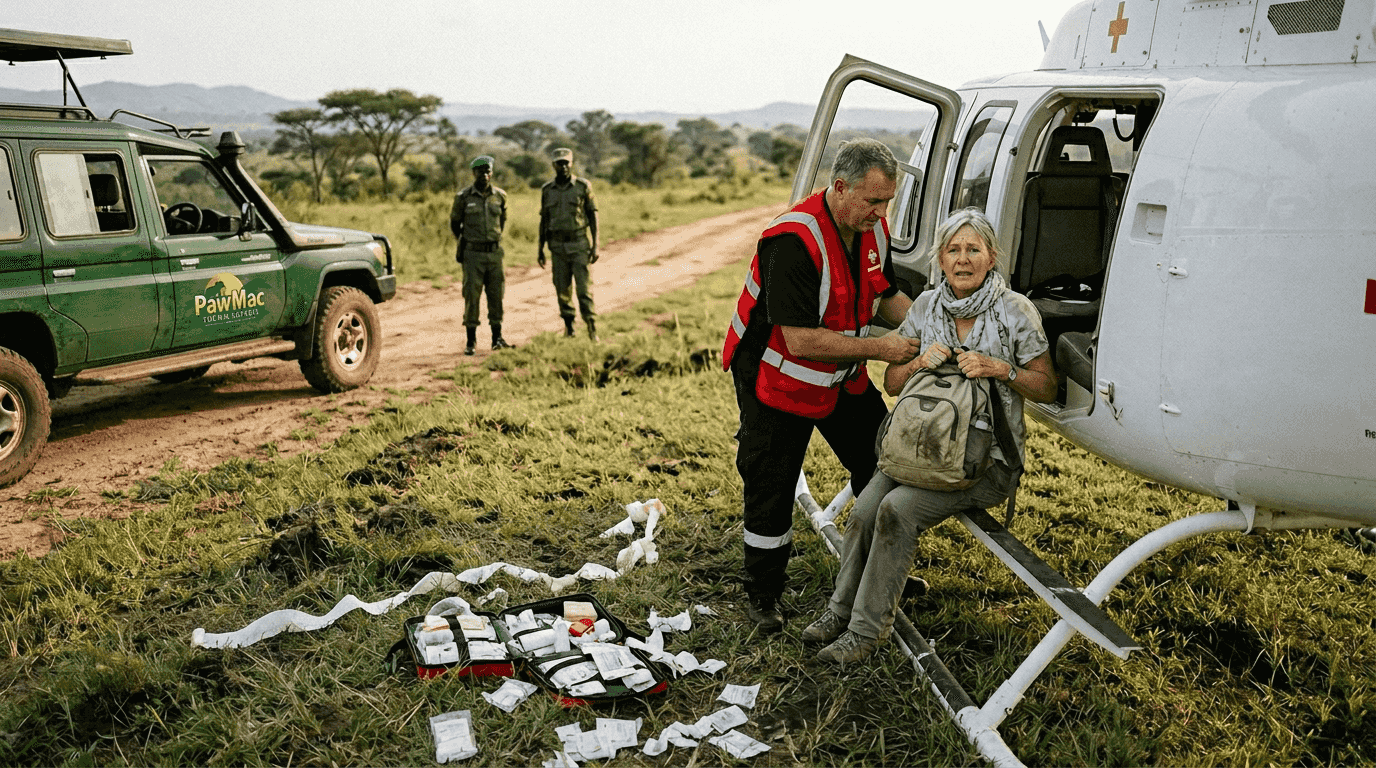
Medical emergencies in remote sectors like Rushaga or Nkuringo create unique challenges. Standard health insurance often excludes international treatment or evacuation. Helicopter transport from Bwindi to Kampala can exceed $10,000. Travel insurance covers emergency medical treatment and evacuation, bridging gaps in domestic health plans.
Safety concerns reinforce the need for comprehensive coverage. Terrorism risks, while uncommon, have triggered trip cancellations in East Africa. Policies that include terrorism coverage reimburse non-refundable expenses if government advisories prevent travel. Lost luggage is another frequent issue: delayed gear means missing essential trekking boots or binoculars during wildlife drives.
A World Travel & Tourism Council study found that travel insurance is crucial for safaris due to potential medical emergencies, trip cancellations, and lost luggage. Dr. Jane Doe, a travel medicine specialist, states:
“Travel insurance for African safaris is not a luxury but a necessity. The combination of high trip costs, remote locations, and adventure activities creates a risk profile that standard policies simply do not address.”
PawMac Safaris operates exclusively in Uganda, guiding guests through Bwindi’s sectors and Queen Elizabeth National Park. Our Uganda safari guide details permit logistics, but we do not sell or recommend insurance providers. Travelers must evaluate policies independently based on their itinerary and risk tolerance.
Key coverage areas of safari travel insurance policies
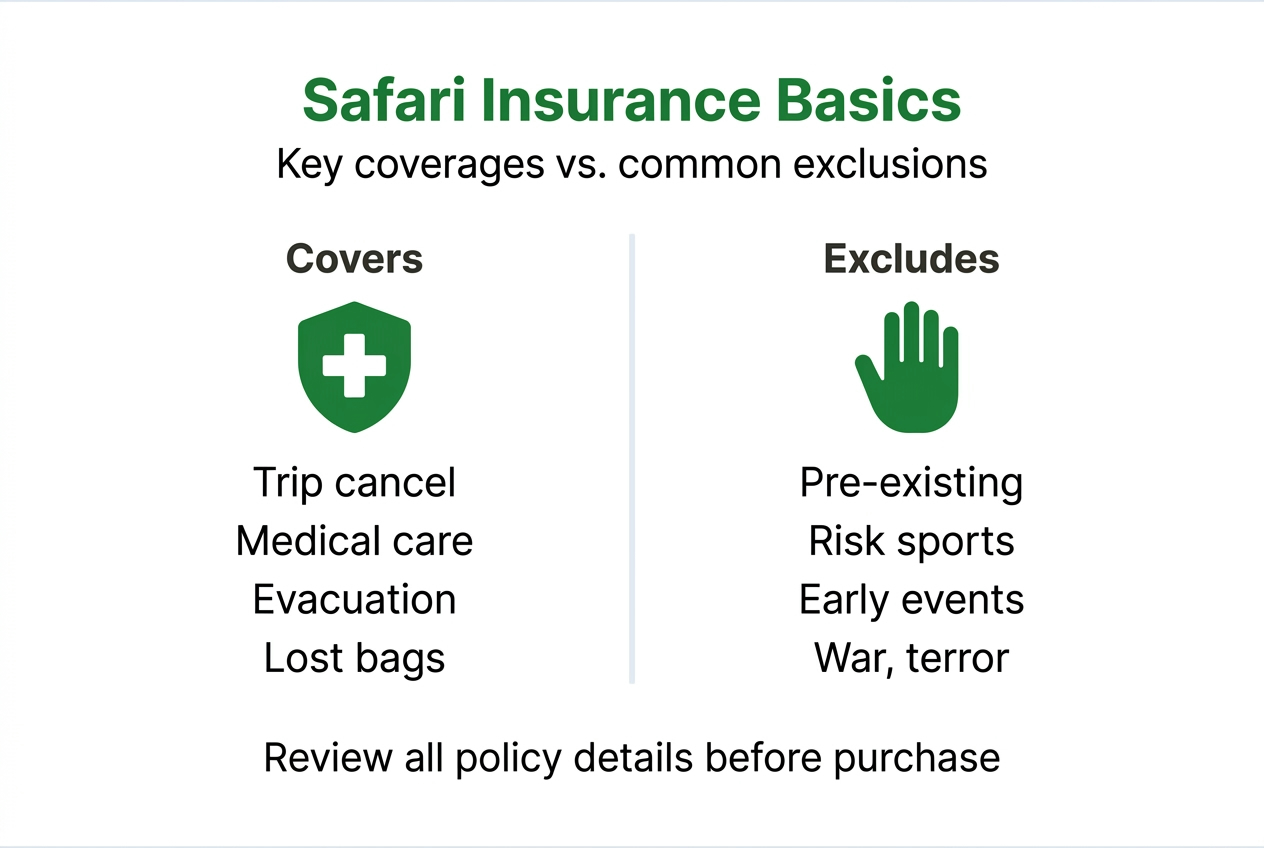
Trip cancellation and interruption reimburse pre-paid, non-refundable expenses if you cancel for covered reasons like illness, injury, or family emergencies. Trip cancellation coverage also applies if you must cut your trip short mid-safari. For Uganda, this means recovering costs for unused lodge nights, gorilla permits, and ground transport.
Emergency medical coverage pays for onsite treatment if you fall ill or suffer injury during your safari. Uganda’s remote sectors have limited medical infrastructure. Comprehensive policies cover doctor visits, hospital stays, and prescriptions. This is separate from evacuation and addresses immediate care needs.
Medical evacuation covers transport to the nearest equipped facility or repatriation home if local care is inadequate. Travel medical coverage breaks down into emergency medical and medical evacuation. Evacuation from Bwindi to Kampala or Entebbe requires helicopter services, which standard health insurance excludes.
Plan Your Uganda Safari with Local Experts
 WhatsApp Us
Terrorism coverage may be included with trip cancellation benefits or sold as an add-on. It reimburses losses if government travel advisories prevent your departure or force early return. Uganda’s political stability is generally strong, but regional events occasionally trigger advisories.
Lost luggage coverage helps replace essential items if airlines delay or lose your bags. Safari gear like trekking boots, rain jackets, and camera equipment are costly to replace on short notice. Policies typically reimburse up to a daily limit for necessities.
Pro Tip: Verify whether your policy includes adventure activity add-ons for gorilla trekking, chimpanzee tracking, or Big Five game drives. Standard plans often exclude these unless explicitly stated. Our safari travel insurance essentials post outlines common gaps.
Coverage types worth prioritizing:
- Trip cancellation and interruption: Protects non-refundable investments
- Emergency medical: Covers treatment in remote locations
- Medical evacuation: Funds helicopter transport to equipped facilities
- Terrorism coverage: Reimburses cancellations due to government advisories
- Lost luggage: Replaces essential gear quickly
Common exclusions and how to avoid denied claims
Pre-existing medical conditions frequently cause denied claims. Insurers exclude coverage for conditions diagnosed or treated before policy purchase unless you disclose them and pay an additional premium. Some policies offer pre-existing condition waivers if purchased within a specific window after booking.
Certain high-risk activities require specialized coverage. Gorilla trekking, while considered moderate difficulty by Uganda Wildlife Authority standards, may fall under “adventure sports” exclusions in standard policies. Always ask insurers whether your planned activities need riders or separate policies.
Events related to war or terrorism have strict conditions. Coverage applies only if incidents occur after policy purchase and meet specific criteria. Travel to areas with existing government warnings often voids terrorism benefits.
An Insurance Standards Organization survey found that 30% of denied claims result from policy exclusions like pre-existing conditions or certain activities. Reading policy fine print before purchase prevents surprises when filing claims.
Pro Tip: Ask insurers directly about coverage details for planned safari activities. Phrases like “trekking” or “wildlife viewing” may be interpreted differently across policies. Document these conversations for reference.
Common exclusions to watch:
- Pre-existing conditions: Require disclosure and often additional premium
- High-risk activities: Gorilla trekking and chimpanzee tracking may need riders
- War and terrorism: Coverage applies only under specific, narrow conditions
- Known events: Issues existing before purchase are typically excluded
Our understanding safari insurance exclusions resource helps identify gaps in standard policies.
Choosing and buying the right safari travel insurance policy
Comparing plans requires focusing on core benefits: medical coverage limits, evacuation provisions, trip cancellation thresholds, and adventure activity inclusions. Many policies require add-ons or specialized coverage for adventure activities beyond standard plans.
Step 1: Identify essential coverage
List your itinerary’s high-risk elements. Gorilla trekking at Buhoma, game drives in Queen Elizabeth, and Murchison Falls boat safaris each carry unique exposures. Match these to policy benefits.
Step 2: Compare provider reputations
Research claim process reviews and response times. Policies with low premiums but poor claim support create frustration when emergencies arise.
Step 3: Check adventure activity clauses
Confirm whether your planned activities are covered. Gorilla trekking, Big Five safaris, and bird watching expeditions may need explicit inclusion or riders.
Step 4: Purchase promptly after booking
Buying insurance within 14-21 days of your initial trip deposit often unlocks additional benefits like pre-existing condition waivers and cancel-for-any-reason options.
Pro Tip: Use a comparison table to visualize plan features, benefits, and exclusions side-by-side. This clarifies which policies align with your itinerary and budget.
| Feature | Basic Policy | Adventure Policy | Premium Policy |
|---|---|---|---|
| Emergency Medical | $50,000 | $100,000 | $250,000 |
| Medical Evacuation | $100,000 | $250,000 | $500,000 |
| Trip Cancellation | 100% trip cost | 100% trip cost | 150% trip cost |
| Adventure Activities | Excluded | Included | Included |
| Terrorism Coverage | Optional add-on | Included | Included |
| Lost Luggage | $500 | $1,000 | $2,500 |
Our Uganda safari planning guide walks through permit booking and logistics, helping you time insurance purchases effectively.
Best for: Travelers prioritizing comprehensive medical and evacuation coverage with adventure activity inclusions.
Not ideal if: You have minimal health risks and prefer self-insuring smaller trip costs.
Plan your Uganda safari with confidence
PawMac Safaris designs expert-guided adventures across Bwindi Impenetrable Forest, Queen Elizabeth National Park, and Murchison Falls. Our customized 4×4 safari vans with pop-up roofs handle remote tracks, while skilled drivers navigate challenging terrain safely. We provide boots-on-the-ground logistics expertise, but insurance decisions remain yours.

Explore our Uganda safari packages with transparent pricing to understand total trip costs before selecting insurance. Early booking secures permits and lodges, giving you time to evaluate coverage options. Our 3-day gorilla trekking encounter is a popular choice for first-time safari travelers.
Contact PawMac Safaris Uganda for personalized trip planning assistance. We help clarify itinerary details so you can match insurance policies to your adventure’s unique profile. Booking early integrates travel protection seamlessly into your preparation timeline.
Frequently asked questions
What does safari travel insurance typically cover?
Typical coverage includes trip cancellation, interruption, emergency medical treatment, medical evacuation, terrorism-related cancellations, and lost luggage. Specific adventure activity coverage often requires add-ons or specialized policies explicitly including gorilla trekking and wildlife safaris.
Is travel insurance required to enter Uganda for safari?
Travel insurance is not legally required for Uganda entry, but travel experts strongly recommend it. High trip costs, remote locations, and medical evacuation expenses make coverage financially prudent. Uganda Wildlife Authority does not mandate insurance for permit holders.
How do I handle exclusions related to pre-existing conditions or activities?
Declare all pre-existing conditions to your insurer during purchase to avoid denied claims. Check whether planned activities like gorilla trekking need special coverage or riders. Consult insurers before purchase and consider specialized adventure travel policies. Our safari insurance exclusions guide provides detailed examples.
When should I buy travel insurance for my safari?
Buy insurance immediately after booking your safari to protect pre-departure costs. Early purchase ensures coverage for sudden events like illness or family emergencies before travel. Late purchase risks missing key protections like cancel-for-any-reason benefits or pre-existing condition waivers.
Recommended
- Is Uganda Safe for Safari in 2026? 0 Incidents & $800 Permits
- Explore Adventure Stories and Tips on the PawMac Safaris Blog
- Uganda Safari Guide: Gorilla Trekking, Wildlife & Planning
- Safari Travel Insurance: What You Must Know | PawMac Safaris


