


- 39 Views
- 18 Min Read
- (0) Comment
Planning a Uganda safari in 2026 usually becomes real the moment you look at gorilla trekking costs. The safari Uganda cost question is not only about the permit, although the Uganda Wildlife Authority permit is the single biggest fixed expense. Your final budget also depends on the trekking sector in Bwindi Impenetrable Forest, lodge location, road or fly-in transport, season, group size and how efficiently your itinerary is built around the permit date.
PawMac Safaris plans gorilla trekking from the ground up in Uganda, with local guides, practical route knowledge and a dedicated team coordinating the moving parts before you arrive. Our Uganda-based team includes Adrian, who handles local vehicle logistics and client communications so travelers have clear updates, well-timed transfers and a smoother experience from Entebbe to Bwindi and beyond.
Table of Contents
- Safari Uganda cost in 2026: what your gorilla trekking budget includes
- Uganda gorilla trekking permit fees for 2026
- How PawMac Safaris secures UWA trekking permits
- Bwindi Impenetrable Forest: sectors, routes and what to expect
- Dry season vs wet season for gorilla trekking
- Sample Uganda gorilla trekking budgets for 2026
- What is included in a PawMac Safaris gorilla trekking itinerary
- Packing essentials for Bwindi gorilla trekking
- Local logistics: why PawMac Safaris has a dedicated Uganda team
- How to combine gorilla trekking with Uganda wildlife experiences
- Frequently Asked Questions
- Start planning your 2026 Uganda gorilla trekking safari
Safari Uganda cost in 2026: what your gorilla trekking budget includes
A proper Uganda gorilla trekking budget starts with one fixed item and several variable ones. The fixed item is the gorilla trekking permit. Variable costs include accommodation, private transport, fuel, driver-guide services, meals, park routing, domestic flights, porter fees, tips and any extra experiences such as chimpanzee tracking or cultural visits near Bwindi.
For many international travelers, a private Uganda gorilla trekking safari falls into one of three broad categories. A short budget or value-focused road itinerary prioritizes the permit, a practical lodge and efficient transfers. A mid-range itinerary adds more comfort, better lodge locations and smoother pacing. A luxury itinerary may include fly-in access, premium lodges, private guiding and a longer route that links Bwindi with Uganda's savannah parks.
These are realistic planning ranges for 2026, not fixed PawMac Safaris package prices. Final quotes depend on the live UWA permit rate, room availability, travel month, number of travelers and route design.
| Cost item | 2026 planning range | Notes |
|---|---|---|
| Gorilla trekking permit | Around USD 800 for most foreign nonresidents | UWA permit fee should be confirmed at booking because official tariffs can change |
| Gorilla habituation experience | Around USD 1,500 for most foreign nonresidents | Longer experience, usually requested by travelers who want more time in the forest |
| Chimpanzee tracking permit | Around USD 250 for most foreign nonresidents in Kibale | Useful when combining Bwindi with a primate-focused Uganda itinerary |
| Private 4×4 and driver-guide | About USD 180 to USD 350 per vehicle day | Varies by route, fuel, vehicle type, guide allocation and total trip length |
| Bwindi budget to mid-range lodge | About USD 90 to USD 350 per person per night | Location matters because your lodge should match your trekking sector |
| Bwindi luxury lodge | About USD 450 to USD 1,500+ per person per night | Premium lodges are limited and sell out early in peak months |
| Domestic flight to western Uganda | About USD 280 to USD 450 per person each way | Depends on route, baggage limits, season and availability |
| Porter support in Bwindi | Often USD 15 to USD 25+ per trekker | Paid locally and strongly recommended for comfort and community benefit |
The biggest cost mistake is pricing the permit in isolation. A USD 800 permit is only useful if the vehicle, lodge and itinerary place you in the correct sector at the right time. For broader budget planning beyond gorillas, PawMac Safaris has a detailed Uganda safari price guide covering permits, transport, accommodation and package ranges.
Uganda gorilla trekking permit fees for 2026
Gorilla trekking in Uganda is managed by the Uganda Wildlife Authority, usually referred to as UWA. Permits are date-specific and sector-specific, meaning your booking must match where you will sleep the night before trekking. This is especially important in Bwindi because the park has several trekking sectors separated by mountain roads.
At the time of planning, most foreign nonresident travelers should budget around USD 800 per person for a standard gorilla trekking permit. Foreign residents, Rest of Africa residents and East African citizens usually fall under different UWA tariff categories. PawMac Safaris confirms the applicable UWA rate before finalizing your safari so your quote reflects the correct traveler category and current tariff.
| Permit category | Typical planning figure | Practical note |
|---|---|---|
| Foreign nonresident gorilla permit | Around USD 800 per person | Most overseas visitors fall into this category |
| Foreign resident gorilla permit | Around USD 700 per person | Proof of residency is normally required |
| Rest of Africa gorilla permit | Around USD 500 per person | Applies only where UWA category rules are met |
| East African citizen gorilla permit | Around UGX 300,000 per person | Valid identification is required |
| Gorilla habituation experience | Around USD 1,500 per foreign nonresident | Offers more time with a gorilla group under UWA arrangements |
A standard gorilla trekking permit allows one hour with a habituated gorilla family once your trekking group reaches them. Under UWA rules, each habituated gorilla family is visited by a limited number of trekkers per day, which protects the gorillas and keeps the experience controlled. The minimum trekking age is 15.
Permit demand is strongest from June to September, during the December holiday period and around popular international school holiday windows. If you want luxury accommodation close to the trekking point, the permit and lodge should be secured together. A permit in Rushaga with a lodge near Buhoma, for example, can create an impractical pre-dawn drive on rough mountain roads.
How PawMac Safaris secures UWA trekking permits
Securing a 2026 gorilla trekking permit is not only a payment task. It is a sequencing task. The permit date must match your arrival day, your transfer time from Entebbe or another Uganda safari destination, your lodge location and your onward route after trekking.
Plan Your Uganda Safari with Local Experts
 WhatsApp Us
PawMac Safaris approaches permit handling as part of full itinerary design. Our team checks the route first, then aligns the best available trekking sector with appropriate accommodation and transport. This reduces unnecessary driving and protects the quality of the day before your trek, when you should be resting, not crossing Uganda's southwestern mountains in the dark.
A typical permit coordination process includes:
- Confirming your travel dates, passport names, nationality category and number of trekkers.
- Checking UWA permit availability for Bwindi sectors that fit the route.
- Matching the permit sector with accommodation in the same area or within a practical transfer distance.
- Advising on payment timing so permits can be secured before availability changes.
- Reconfirming trek logistics before arrival, including vehicle timing and client communications handled locally by Adrian and the Uganda team.
For peak 2026 dates, start the process 6 to 12 months ahead where possible. Smaller private groups with flexible lodge standards may still find options later, but prime dry-season dates and high-end lodges can tighten quickly. If your travel dates are fixed, treat the permit as the anchor of the itinerary and build everything else around it.
Travelers sometimes ask whether they should buy permits independently. It is possible, but it creates risk if the permit sector, lodge and transport are not coordinated. A licensed tour operator with deep Uganda logistics experience should be able to explain exactly where you will trek, where you will sleep and how long the transfer will take. PawMac Safaris adds value by managing those details before they become problems on the road.
Bwindi Impenetrable Forest: sectors, routes and what to expect
Bwindi Impenetrable Forest is the heart of Uganda gorilla trekking. The forest sits in the mountainous southwest and is known for steep trails, dense vegetation, misty ridges and extraordinary biodiversity. It is not a drive-through wildlife park. It is a walking safari in a living rainforest, guided by UWA rangers and trackers who monitor gorilla movements daily.
The park is divided into four main trekking sectors. Each has its own access points, lodge options and route implications.
| Bwindi sector | Best known for | Route considerations |
|---|---|---|
| Buhoma | Classic northern sector with long-established lodge options | Often works well when linking Bwindi with Queen Elizabeth National Park |
| Ruhija | Higher elevation, quieter forest feel and scenic access | Can work for routes connecting central Bwindi, Lake Bunyonyi or Queen Elizabeth |
| Rushaga | Several trekking groups and access to gorilla habituation experiences | Often paired with Kisoro access and southern Bwindi lodges |
| Nkuringo | Dramatic ridge views and rewarding but steeper trekking | Best for travelers comfortable with more demanding terrain |
No sector can guarantee an easy trek. Gorilla families move freely, and tracking depends on where they nested the previous night. Some treks locate gorillas within an hour. Others take several hours through mud, vines, slopes and thick vegetation. The experience is carefully managed, but it remains wild.
On trekking day, you typically start early with breakfast at your lodge before transferring to the UWA briefing point. After registration and briefing, UWA staff assign trekking groups based on permit allocation, gorilla family location and physical considerations. You then enter the forest with rangers and trackers. Once your group reaches the gorillas, the standard viewing time is one hour.
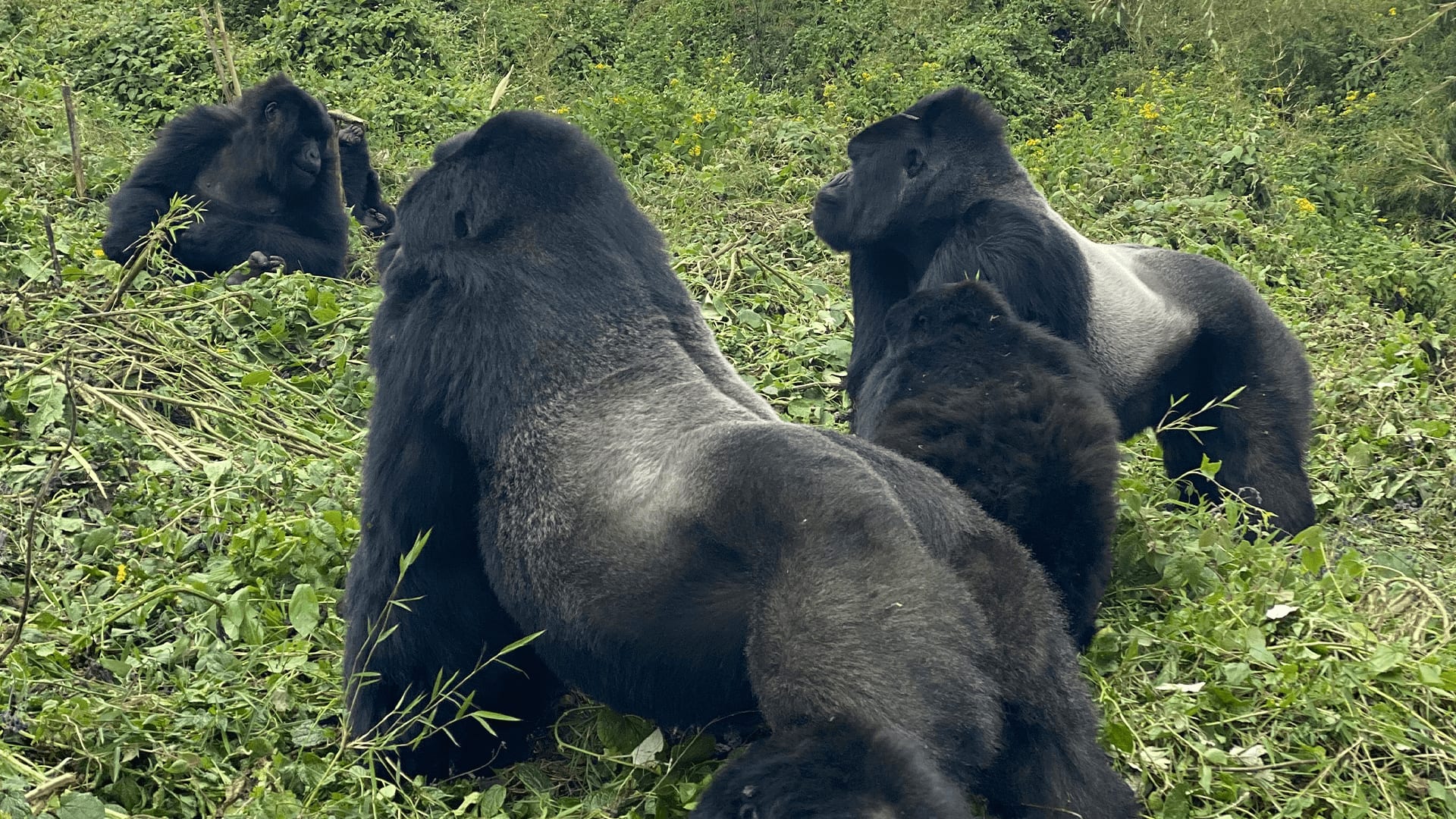
That hour is often quieter than travelers expect. You may watch a silverback feeding, a mother carrying an infant or younger gorillas moving through the undergrowth. Guides will explain where to stand, how to keep distance and how to behave if a gorilla moves close. Flash photography is not allowed. If you are unwell, especially with flu-like symptoms, you should not trek because mountain gorillas are vulnerable to human illnesses.
The return time varies. Some travelers are back for lunch. Others return mid-afternoon. PawMac Safaris plans the day with realistic pacing, including enough time after trekking for rest rather than immediately forcing a long onward transfer.
Dry season vs wet season for gorilla trekking
Uganda's gorilla trekking seasons are best understood by balancing trail conditions, demand and value. Bwindi is a rainforest, so rain can fall in any month. The difference is intensity, frequency and how muddy the trails are likely to be.
The drier periods usually run from June to September and December to February. These months are popular because trails tend to be firmer, skies can be clearer and many travelers are already on holiday. Demand is higher, which means permits and the best lodges should be secured earlier.
The wetter periods usually fall around March to May and October to November. Trails can be muddy and some road sections require more patience, but the forest is beautifully green and photographic conditions can be excellent when mist lifts through the canopy. Lodges may have better availability, and some travelers find the quieter atmosphere more rewarding.
| Season | Typical advantages | Budget and planning considerations |
|---|---|---|
| June to September | Drier trails, strong wildlife combinations, popular family travel window | Higher lodge demand, book permits early, premium rooms sell quickly |
| December to February | Good trekking conditions and strong holiday demand | Christmas and New Year dates need early planning |
| March to May | Lush forest, fewer crowds and possible lodge value | Muddy trails, slower roads and higher need for good rain gear |
| October to November | Green landscapes and less crowded trekking dates | Rain is likely, but experienced local logistics make a major difference |
Permit fees are not usually the main seasonal discount lever. Accommodation and availability tend to matter more. If your budget is tight but you still want a private guided experience, the shoulder months can be smart. If you want a luxury lodge in a specific sector, prioritize dates and availability over chasing the lowest rate.
Sample Uganda gorilla trekking budgets for 2026
A gorilla trekking safari can be designed as a short focused journey or as the centerpiece of a longer Uganda safari. The figures below are planning estimates per person, usually assuming two travelers sharing a private safari vehicle and room. Solo travelers often pay more per person because vehicle and guide costs are not shared.
| Safari style | Typical length | 2026 planning estimate per person | Best suited for |
|---|---|---|---|
| Focused budget road safari | 3 days | USD 1,250 to USD 1,900 | Travelers who want the permit, safe transport and simple accommodation |
| Comfortable mid-range Bwindi safari | 4 to 5 days | USD 1,900 to USD 3,200 | Travelers who value better pacing, stronger lodge locations and private guiding |
| Luxury fly-in gorilla safari | 3 to 4 days | USD 3,200 to USD 6,500+ | Travelers who want to reduce road time and stay in premium Bwindi lodges |
| Gorilla and chimpanzee primate safari | 6 to 8 days | USD 3,500 to USD 7,500+ | Travelers combining Bwindi with Kibale and other western Uganda highlights |
| Full Uganda wildlife and gorilla safari | 8 to 12 days | USD 4,500 to USD 10,000+ | Travelers adding savannah game drives, boat safaris and cultural experiences |
These estimates include the reality that Uganda is logistically diverse. Bwindi is far from Entebbe by road, and quality safari transport in a comfortable 4×4 costs more than a simple point-to-point transfer. The right vehicle, driver-guide and route plan can make the difference between a tiring trip and a polished safari.

What is included in a PawMac Safaris gorilla trekking itinerary
PawMac Safaris designs gorilla trekking itineraries for travelers who want practical accuracy, strong local support and a personalized Uganda experience. The focus is not to sell the same route to every guest. The focus is to match your travel dates, comfort level, budget and wildlife priorities with the correct park sectors, lodges and activities.
A typical PawMac Safaris gorilla trekking itinerary may include UWA permit coordination, private transport in a comfortable 4×4 vehicle, an expert local guide, accommodation planning, route timing, meal arrangements according to the itinerary and communication support before and during travel. Where suitable, the safari can also include chimpanzee tracking, Big Five focused routing, cultural tours and adventure activities within Uganda.
The details depend on your chosen package. A budget traveler may prioritize a clean, well-located lodge and a direct road route. A premium traveler may prefer more spacious rooms, scenic lodge settings, fly-in access and a slower pace. PawMac Safaris works across flexible pricing options while keeping the key priority intact: the gorilla trekking day must be protected by good logistics.
This is where local knowledge matters. Lodge names and star ratings do not tell the full story in Bwindi. A beautiful lodge in the wrong sector can add hours of mountain driving. A cheaper itinerary can become poor value if it underestimates transfer times or uses a route that leaves you exhausted before trekking. PawMac Safaris plans from Uganda, with a team that understands how the roads, park sectors and client expectations connect.
Packing essentials for Bwindi gorilla trekking
Packing well improves comfort, safety and your ability to enjoy the forest. Bwindi can be cool in the morning, humid by midday and muddy after rain. Even in a dry month, the vegetation may be wet from mist or overnight showers.
Bring practical trekking gear rather than fashion-focused safari clothing. Neutral colors work well, and long sleeves help protect against scratches and insects. Your shoes matter more than almost anything else because the terrain can be steep and slippery.
Essential items include:
- Waterproof hiking boots with good ankle support and a worn-in fit.
- Lightweight rain jacket or poncho that can be packed into a daypack.
- Long-sleeved shirt and long trekking trousers to protect skin from vegetation.
- Gardening-style gloves for gripping vines and branches on steep sections.
- Gaiters or long socks that can be pulled over trouser cuffs.
- Small daypack for water, snacks, camera gear, medication and rain gear.
- Reusable water bottle or hydration bladder with enough water for several hours.
- Insect repellent, sunscreen, lip balm and any personal medication.
- Camera with extra batteries, but no flash photography during gorilla viewing.
- Cash in small notes for porter support, tips and local purchases.
Porters are strongly recommended, even for fit travelers. They help carry your daypack, assist on steep or muddy sections and provide income to local communities around the park. Hiring a porter is one of the simplest ways to make your trek more comfortable while supporting conservation-linked livelihoods.
If you are taking a domestic flight to western Uganda, check luggage limits before packing. Soft-sided luggage is usually easier to manage than hard suitcases, especially when combining flights, 4×4 transfers and forest lodges.
Local logistics: why PawMac Safaris has a dedicated Uganda team
Gorilla trekking is a premium wildlife experience, but it happens in a real landscape with mountain roads, changing weather, limited park inventory and remote lodge access. Smooth execution depends on local coordination, not only an attractive itinerary PDF.
PawMac Safaris maintains a strong local presence in Uganda so travelers are supported by people who understand the route on the ground. Adrian is part of that local support structure, handling vehicle logistics and client communications to keep transfers, updates and day-to-day movements aligned. This matters when road conditions change, a lodge pickup time needs adjusting or guests need quick clarification during the safari.
The value of a Uganda-based team becomes especially clear in Bwindi. A permit sector must match the lodge. A vehicle must be suitable for mountain roads. A driver-guide must understand realistic timing, not only map distance. Communication should be clear before the trek, after the trek and when connecting to the next destination.
If you are comparing a licensed tour operator for Uganda, ask how they handle permit sectors, local vehicle backup, guide assignment, road timing and communication while you are in the country. PawMac Safaris addresses these issues as part of the planning process, not as afterthoughts. For a deeper checklist, this guide on how to compare safari operators for a Uganda trip explains what serious travelers should evaluate before booking.
Premium hospitality in Uganda is not only about the lodge. It is also about being met on time, receiving accurate updates, having the right guide and feeling that someone local is paying attention to the details. That is the standard PawMac Safaris works toward for gorilla trekking travelers in 2026.
How to combine gorilla trekking with Uganda wildlife experiences
Gorilla trekking is powerful enough to justify a short trip, but Uganda becomes even more rewarding when Bwindi is combined with other national parks. The best add-ons depend on your time, budget and tolerance for road travel.
Queen Elizabeth National Park is a natural pairing for many Bwindi itineraries, especially when using the Buhoma side or routes through western Uganda. Travelers can add game drives, the Kazinga Channel boat safari and the Ishasha sector, known for its tree-climbing lions when sightings are favorable. This combination gives a classic contrast between rainforest and savannah.
Kibale National Park is the strongest choice for travelers who want a primate-focused safari. Chimpanzee tracking adds another major permit cost, usually around USD 250 per foreign nonresident, but it creates a richer understanding of Uganda's primate diversity. The Kibale forest experience is different from Bwindi, with its own rhythm, sounds and tracking style.
Murchison Falls National Park works well for travelers with more time who want a broader Uganda wildlife circuit. It offers powerful Nile scenery, boat safari experiences and strong big game viewing. For travelers specifically focused on the Big Five, Uganda itineraries may also include rhino tracking at Ziwa Rhino Sanctuary as part of a northern route.
Lake Mburo National Park can be useful as a road-break between Entebbe or Kampala and Bwindi, especially on some value-focused itineraries. It is smaller than Uganda's major wildlife parks but adds zebra, antelope, birdlife and a gentler pace before or after the mountain roads.
Every add-on changes the budget. More parks mean more accommodation nights, vehicle days, fuel, park entries and activity fees. PawMac Safaris helps travelers decide whether a longer route genuinely improves the safari or simply adds cost. For many visitors, the strongest Uganda itineraries balance one signature primate experience, one savannah wildlife area and enough time to travel without rushing.
Frequently Asked Questions
How much does a Uganda gorilla trekking safari cost in 2026? A short private road safari to Bwindi commonly starts around USD 1,250 to USD 1,900 per person when the gorilla permit is included, while mid-range trips often fall around USD 1,900 to USD 3,200. Luxury fly-in trips can exceed USD 6,500 per person depending on lodge choice, flights and routing.
Is the Uganda gorilla trekking permit included in safari quotes? It should be clearly stated in the quote. PawMac Safaris confirms whether the permit is included, what traveler category has been used and what UWA rate applies at the time of booking.
When should I book 2026 UWA gorilla permits? For June to September, December and holiday travel, booking 6 to 12 months ahead is wise. If your dates are fixed or you want a specific luxury lodge, earlier planning is better.
Which Bwindi sector is best for gorilla trekking? There is no single best sector for every traveler. Buhoma, Ruhija, Rushaga and Nkuringo all offer excellent trekking, but the right choice depends on permit availability, lodge preference, fitness level and the wider Uganda route.
Is gorilla trekking difficult? It can be moderate or demanding depending on gorilla movement, weather and terrain. Some treks are short, while others take several hours on steep muddy trails. Good boots, a porter and realistic pacing make a major difference.
Can PawMac Safaris combine gorilla trekking with chimpanzee tracking and Big Five safaris? Yes. PawMac Safaris can design custom Uganda safari packages that combine Bwindi gorilla trekking with chimpanzee tracking, savannah wildlife drives, boat safaris, cultural tours and adventure activities based on your budget and travel style.
Start planning your 2026 Uganda gorilla trekking safari
A successful Uganda gorilla trekking safari starts with the right permit, the right sector and the right local team. The cost is significant, so every part of the itinerary should protect the value of that investment, from lodge location to vehicle timing and guide quality.
PawMac Safaris brings together expert local guides, comfortable 4×4 vehicles, flexible safari planning and dedicated Uganda-based coordination. With Adrian supporting local vehicle logistics and client communications, travelers benefit from a team that is present in Uganda and focused on making the journey seamless.
If you are planning gorilla trekking in 2026, share your preferred travel month, number of travelers, comfort level and whether you want to add chimpanzee tracking, Big Five safaris or cultural experiences. PawMac Safaris will help shape a clear, realistic Uganda itinerary built around the permits, parks and local logistics that matter most.


