


- 68 Views
- 18 Min Read
- (0) Comment
Uganda gorilla trekking is often imagined as a young adventurer's challenge, but many travelers in their 60s and 70s, and some well-prepared travelers in their 80s, successfully trek in Bwindi and Mgahinga. The deciding factor is not age alone. It is the quality of planning, the right sector choice, realistic pacing, good footwear, porter support, and honest communication about mobility or medical concerns.
In Uganda, gorilla treks take place in Bwindi Impenetrable National Park and Mgahinga Gorilla National Park. These are real rainforest environments, with roots, mud, vines, slopes, changing weather, and high humidity. At the same time, trekking is highly regulated and ranger-led, with professional trackers locating habituated gorilla families before and during the hike.
For senior travelers, the goal is not to make the trek feel effortless. The goal is to make it manageable, dignified, safe, and deeply rewarding. With thoughtful preparation, Uganda gorilla trekking can become one of the most meaningful wildlife experiences of a lifetime.
Is Uganda gorilla trekking suitable for seniors?
Yes, Uganda gorilla trekking can be suitable for many seniors, provided they are reasonably mobile, medically stable, and prepared for uneven forest terrain. There is no official upper age limit for gorilla trekking in Uganda. The official minimum age is 15 years, mainly because visitors must be mature enough to follow strict wildlife safety rules around gorillas.
Senior travelers should think less about calendar age and more about functional ability. Can you walk slowly for several hours with breaks? Can you manage stairs or gentle hills without major distress? Are your knees, hips, lungs, and heart stable enough for a day in humid, hilly conditions? If the answer is yes, then a carefully planned trek may be realistic.
The experience is not a casual nature walk. Treks can last from about 2 hours to 7 hours or more, depending on where the gorillas are feeding that day. The actual time with the gorillas is limited to one hour, but the approach and return hike can vary significantly.
| Senior travel consideration | Practical answer |
|---|---|
| Upper age limit | No official upper age limit |
| Minimum age | 15 years |
| Typical trek duration | About 2 to 7+ hours, including hiking and the one-hour gorilla encounter |
| Terrain | Forest paths, slopes, mud, roots, vegetation, and occasional steep sections |
| Available support | Rangers, trackers, porters, walking sticks, and in some cases prearranged carried-chair support |
| Best planning style | Private or tailored itinerary with rest days, nearby lodges, and flexible pacing |
A senior-friendly gorilla safari is not necessarily a cheaper or shorter safari. In many cases, the most comfortable option includes extra nights, carefully placed lodges, a private 4×4 vehicle, porter support, and possibly a domestic flight to reduce long road transfers.
Why Uganda works well for senior gorilla trekkers
Uganda is especially strong for seniors because gorilla trekking is spread across different sectors and landscapes. Bwindi has four main trekking sectors, Buhoma, Ruhija, Rushaga, and Nkuringo, while Mgahinga offers a distinct experience near the Virunga volcanic slopes in southwestern Uganda. This variety gives travelers and planners more room to match permits, accommodation, road access, and trekking style to individual needs.
Uganda also allows seniors to build a complete safari around the gorilla trek instead of rushing directly in and out. A well-paced itinerary can include Lake Bunyonyi, Queen Elizabeth National Park, Kibale Forest, Murchison Falls, or cultural experiences near Bwindi. This matters because older travelers often enjoy Uganda more when the route includes scenic recovery days, gentle boat safaris, and comfortable lodge time between major activities.
Another advantage is the depth of local guiding. With PawMac Safaris, senior travelers can plan around real ground conditions, not generic assumptions. Sector choice, transfer timing, lodge placement, porter arrangements, and medical pacing are all part of building a safari that feels polished rather than stressful.
Choosing the best gorilla trekking sector for seniors
No trekking sector in Uganda can be guaranteed easy, because gorillas move freely within the forest. However, some sectors tend to be better suited to seniors depending on fitness, accommodation preference, road routing, and permit availability.
Plan Your Uganda Safari with Local Experts
 WhatsApp Us
For a broader overview of where gorilla trekking happens, you can also read PawMac Safaris' guide to where to see gorillas in Uganda.
| Trekking area | Senior-friendly strengths | Watch-outs | Best suited for |
|---|---|---|---|
| Buhoma, Bwindi | Well-established visitor services, strong lodge options, good reputation for first-time trekkers | Permits are popular and can sell out early | Seniors who want comfort, established logistics, and classic Bwindi atmosphere |
| Ruhija, Bwindi | Cooler climate, beautiful forest, strong birding, often quieter than Buhoma | Higher elevation and winding access roads | Seniors who handle altitude reasonably well and enjoy quieter settings |
| Rushaga, Bwindi | Many gorilla families and broader permit availability, good for custom routing from Kisoro or Lake Mutanda | Terrain varies and some treks can be demanding | Seniors who want permit flexibility and are comfortable with varied terrain |
| Nkuringo, Bwindi | Dramatic views and a rewarding sense of remoteness | Steeper terrain makes it more challenging | Fitter seniors who actively hike or train before travel |
| Mgahinga Gorilla National Park | Beautiful volcanic scenery, bamboo zones, compact park feel | Fewer permits and gorilla movement can still involve climbing | Seniors seeking a scenic, less crowded experience with careful advance planning |
At the pre-trek briefing, rangers consider visitor fitness and may try to allocate travelers accordingly. This is helpful, but it is not a promise of an easy route. The most important work happens before travel, when your operator matches the permit sector, lodge location, and transport plan to your comfort level.

How fit should senior travelers be?
A senior traveler does not need to be an athlete, but basic walking fitness is important. Uganda gorilla trekking can involve slow climbing, careful footing, and periods of standing while trackers assess gorilla movement. The pace is usually steady rather than fast, but the forest can be physically tiring because of mud, humidity, and uneven ground.
A practical benchmark is the ability to walk for 2 to 3 hours on uneven paths with short breaks. If you can comfortably manage gentle hills, stairs, garden paths, and countryside walks, you are starting from a good base. If you struggle with balance, breathlessness, or joint pain on short walks, speak with a doctor and your safari planner before committing to a trek.
A simple 8 to 12 week preparation plan can make the experience much more comfortable:
- Walk 4 to 5 times per week, gradually increasing from 30 minutes to 90 minutes.
- Add gentle hills, stairs, or inclined treadmill sessions to prepare for forest slopes.
- Practice walking with the daypack you plan to carry on the trek.
- Include light leg strength and balance work, especially if you have knee or hip concerns.
- Break in your hiking boots well before arrival in Uganda.
If you want a deeper look at terrain and difficulty levels, PawMac Safaris has a dedicated guide on how hard a gorilla hike in Uganda can be.
How to make the trek easier for seniors
The smartest senior trekkers use support early, not only when they are already tired. Hiring a porter is one of the best decisions you can make. A porter can carry your daypack, help steady you on slippery sections, and provide an extra hand when the forest floor becomes muddy or steep. Porter fees vary by sector, but many travelers budget around USD 20 or more, plus a tip. The fee also supports local livelihoods around the parks.
Walking sticks are also highly recommended. Many lodges or trailheads can provide them, and they are especially useful for downhill sections, where knees can feel the most strain. Some travelers prefer collapsible trekking poles, but a sturdy local walking stick often performs very well in Bwindi's forest conditions.
If mobility is a major concern, ask about prearranged carried-chair or stretcher-style support in Bwindi. This service uses a team of local porters to carry a seated traveler through difficult sections or, in some cases, for much of the trek. It must be discussed in advance, quoted separately, and confirmed based on sector, porter availability, trail conditions, and safety judgment. It is not a casual last-minute solution.
Your pacing also matters. Seniors should avoid arriving late at night and trekking the next morning after a long road transfer. A better plan is to sleep near the correct trailhead, rest well, eat properly, and start the trek with fresh legs.
Health and safety preparation before the trek
Senior travelers should treat gorilla trekking as a light expedition, not a simple sightseeing stop. Before booking, speak with your healthcare provider if you have heart disease, respiratory concerns, recent surgery, uncontrolled blood pressure, joint replacements, severe arthritis, balance issues, or any condition affected by exertion, altitude, or humidity.
Uganda requires proof of yellow fever vaccination for entry. Malaria prevention is also important, so discuss appropriate prophylaxis with a travel medicine specialist before departure. Carry your prescription medications in hand luggage, keep them in original packaging where possible, and bring extra supply in case of travel delays.
Travel insurance is essential for seniors on safari. Look for coverage that includes emergency medical treatment, evacuation, trip interruption, and adventure activities where applicable. Remote national parks are beautiful, but they are not places to rely on basic insurance. PawMac Safaris also explains this in its Uganda safari travel insurance guide.
| Health topic | Senior travel advice |
|---|---|
| Medical clearance | Discuss the trek with your doctor if you have heart, lung, mobility, or balance concerns |
| Yellow fever | Carry valid vaccination proof for entry into Uganda |
| Malaria prevention | Ask a travel medicine specialist about suitable medication and mosquito precautions |
| Prescription medication | Carry extra supply, keep essentials in hand luggage, and bring written prescriptions |
| Respiratory illness | Do not trek if you have flu-like symptoms, coughing, fever, or contagious illness |
| Insurance | Choose a policy with strong medical and evacuation coverage |
Gorillas are vulnerable to human illnesses, especially respiratory infections. If you are unwell on trek day, you must inform your guide. This can be disappointing, but it is a serious conservation responsibility.
Gorilla permits for seniors in 2026
For 2026, the Uganda gorilla trekking permit for foreign non-residents is USD 800 per person. The permit allows you to join a ranger-led trek and spend up to one hour with a habituated gorilla family once located. It does not normally include accommodation, transport, porter fees, tips, personal gear, or travel insurance.
Permits are issued by sector, not just by park. This is critical for seniors. If your permit is for Rushaga, your lodge should be in or near the Rushaga area. If your permit is for Buhoma, you should not be staying far away in another sector the night before the trek. Poor sector-lodge alignment can create unnecessary early starts, long drives, and fatigue before you even enter the forest.
For peak travel months, especially June to September and December to February, seniors should ideally book 6 to 12 months in advance. This improves the chance of securing the right sector, appropriate lodge, and comfortable routing. You can learn more in PawMac Safaris' detailed Uganda gorilla trekking permit guide.
Best time of year for senior gorilla trekking in Uganda
The best months for many senior travelers are during Uganda's drier seasons, generally June to September and December to February. Trails can still be muddy because Bwindi is a rainforest, but drier months usually offer more stable footing and better overall road conditions.
Wet seasons, often March to May and October to November, bring greener forest, fewer crowds, and sometimes better availability. However, mud and slippery slopes can make trekking harder for seniors with knee, hip, or balance concerns. Some experienced travelers still enjoy the quieter atmosphere, but it requires careful footwear, good rain gear, and realistic expectations.
For many seniors, the ideal strategy is not just choosing the right month. It is choosing the right rhythm. Mid-week treks can feel less pressured than peak weekend dates. A rest day before the trek is valuable. Another gentle day afterward allows the body to recover before long drives or additional safari activities.
For month-by-month planning, see PawMac Safaris' guide to the best time to visit Uganda for safari and gorilla trekking.
What seniors should wear and pack
Good gear protects energy. When seniors are uncomfortable, wet, cold, overheated, or unstable underfoot, the trek becomes much harder than necessary. Clothing should be practical, neutral-colored, and suitable for changing forest weather.
Pack light, but do not underpack essentials. Your porter can carry the daypack, but you still want it organized and easy to access.
- Broken-in waterproof hiking boots with strong ankle support.
- Long lightweight trousers and a long-sleeved shirt to protect against vegetation and insects.
- A breathable rain jacket, plus a light fleece for cool mornings in higher sectors.
- Gardening gloves or trekking gloves for holding branches and steadying yourself.
- Gaiters or long socks to reduce mud, insects, and scratches.
- A small daypack with rain cover, water, snacks, medication, and documents.
- At least 1.5 to 2 liters of water, plus electrolyte tablets if recommended for you.
- Insect repellent, sunscreen, sun hat, and a simple first-aid kit.
- Camera with no flash, spare battery, and a waterproof pouch.
Avoid strong perfumes, bright clothing, heavy cotton, and new boots. New boots are one of the fastest ways to turn a special day into a painful one. For a fuller packing breakdown, use PawMac Safaris' Uganda safari packing guide.
Accommodation and transport considerations for seniors
The lodge you choose can shape the entire trek experience. A beautiful lodge far from the correct trailhead may not be the best choice for an older traveler. For seniors, location and practical comfort often matter more than decorative luxury.
Ask about driving time to the briefing point, room access, stairs, handrails, hot water reliability, heating or warm bedding, dietary needs, and whether early breakfast and packed lunch can be arranged smoothly. If you have mobility limitations, request a ground-floor room where available and confirm the walking distance between your room, dining area, and vehicle pickup point.
Transport should be equally thoughtful. Road journeys from Entebbe or Kampala to Bwindi can take a full day, often 8 to 10 hours or more depending on sector, stops, and road conditions. A private 4×4 safari vehicle allows rest stops, photography breaks, and better control of pace. Some seniors prefer to reduce road time with a domestic flight to airstrips serving the Bwindi region, followed by a shorter road transfer.
A road safari can still be excellent for seniors if it is paced properly. Breaking the journey with Lake Mburo, Queen Elizabeth National Park, or Lake Bunyonyi can turn a tiring transfer into a scenic Uganda safari route.
Senior-friendly itinerary ideas
Many seniors ask whether a 3-day Uganda gorilla trek is enough. It can work for fit travelers with limited time, but it is often tiring, especially by road. For older travelers, a 5 to 10 day itinerary is usually more comfortable and more rewarding.
| Itinerary style | How it works | Best for |
|---|---|---|
| 5-day fly-in gorilla trek | Arrive in Entebbe, fly closer to Bwindi, rest before trekking, trek, enjoy a gentle recovery day, return | Seniors who want the gorilla experience with less road fatigue |
| 7-day paced road safari | Entebbe, Lake Mburo or Lake Bunyonyi, Bwindi, rest day, gorilla trek, scenic return | Seniors who enjoy landscapes and do not want a rushed schedule |
| 10 to 12 day Uganda safari | Add Queen Elizabeth, Kibale, Murchison Falls, or cultural experiences around the gorilla trek | Seniors who want a deeper Uganda journey with wildlife variety and better pacing |
If your trek is part of a retirement celebration, anniversary, or multi-generational family journey, treat the safari like a carefully produced milestone rather than a standard holiday. The same attention to sequencing, comfort, and guest experience seen in world-record event planning can be applied to a Uganda safari, where every transfer, rest stop, lodge request, and contingency matters.
Gorilla trekking rules seniors must follow
Uganda's gorilla trekking rules protect both visitors and gorillas. Seniors should be fully comfortable with these rules before entering the forest, because following ranger instructions is essential.
Visitors must keep the required distance from gorillas, avoid flash photography, keep voices low, and avoid eating or drinking near the gorilla family. The viewing time is limited to one hour once the gorillas are found. If a gorilla moves closer, follow the ranger's instructions calmly. Do not run, shout, or make sudden movements.
Masks may be required or recommended during gorilla viewing to reduce disease risk. Even when a mask feels uncomfortable after a hike, it is part of responsible gorilla tourism. If you feel unwell before the trek, report symptoms honestly.
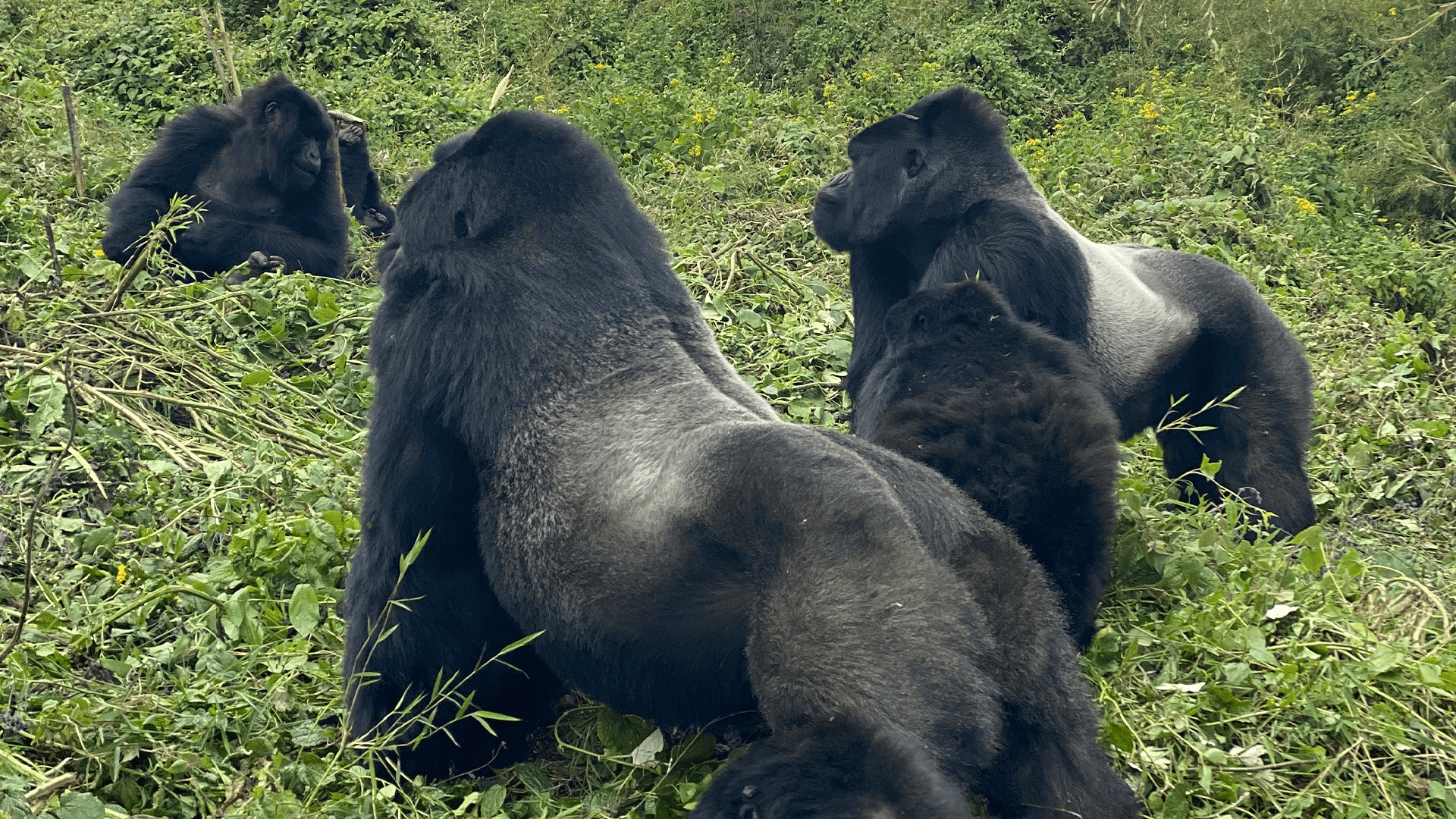
The most respectful gorilla encounters are quiet, patient, and low-impact. Seniors often excel at this style of wildlife viewing because they are less rushed and more willing to observe subtle behavior, such as grooming, feeding, resting, and silverback group dynamics.
Cost factors seniors should budget for
The gorilla permit is the largest fixed cost, but senior comfort often depends on the supporting details. A cheaper itinerary can become expensive in energy if it involves poor lodge placement, rushed transfers, or no recovery time.
| Cost item | Why it matters for seniors |
|---|---|
| Gorilla permit | Required for the trek, USD 800 for foreign non-residents in 2026 |
| Porter | Strongly recommended for balance, bag support, and local community benefit |
| Extra nights | Reduces fatigue before and after the trek |
| Domestic flights | Can reduce long road transfers for travelers with back, hip, or stamina concerns |
| Lodge category | Comfort, proximity, meals, room access, and warmth matter after a forest trek |
| Private 4×4 vehicle | Allows flexible stops, better pacing, and more personal comfort |
| Travel insurance | Essential for medical, evacuation, cancellation, and interruption protection |
| Carried-chair support | Useful for major mobility limitations, but must be arranged and quoted in advance |
A senior-friendly safari is about value, not just price. The right plan protects the permit investment and helps you arrive at the gorilla trek rested, confident, and prepared.
When seniors should reconsider gorilla trekking
Gorilla trekking is not right for every traveler. Seniors with unstable heart or lung conditions, serious balance issues, recent major surgery, severe mobility limitations, or acute illness should seek medical advice before booking. If a doctor advises against strenuous walking in remote conditions, it is better to choose a gentler Uganda itinerary.
This does not mean missing Uganda's wildlife. PawMac Safaris can design a safari around boat cruises, game drives, cultural experiences, birding, scenic lakes, and easier forest walks. Queen Elizabeth National Park, Murchison Falls National Park, Lake Mburo, and the Nile offer outstanding wildlife experiences with less physical demand than gorilla trekking.
The most responsible safari is the one that matches the traveler. For some seniors, that means a full gorilla trek. For others, it means a lighter itinerary that still celebrates Uganda's landscapes, wildlife, and culture.
Frequently Asked Questions
Can a 70-year-old go gorilla trekking in Uganda? Yes, many 70-year-old travelers can go gorilla trekking in Uganda if they are medically stable, reasonably mobile, and well prepared. The key is choosing the right sector, pacing the itinerary, hiring a porter, and being honest about fitness.
Is there a maximum age for gorilla trekking in Uganda? No, there is no official upper age limit. The official minimum age is 15 years. Older travelers are assessed more by mobility, health, and ability to follow ranger instructions than by age alone.
Which Bwindi sector is best for seniors? Buhoma and Ruhija are often considered good options for many seniors because of visitor services, lodge choices, and overall logistics, but the best sector depends on permit availability, current gorilla locations, fitness, and travel route. Nkuringo is generally better for fitter hikers because of steeper terrain.
Should seniors hire a porter for gorilla trekking? Yes, hiring a porter is strongly recommended. A porter carries your daypack, helps with balance on slippery sections, and supports the local communities around Bwindi and Mgahinga.
Can seniors use a carried chair for gorilla trekking? In some Bwindi sectors, carried-chair or stretcher-style support may be arranged for travelers with significant mobility challenges. This must be discussed in advance, quoted separately, and confirmed based on safety, terrain, and porter availability.
Is gorilla trekking safe for seniors? Gorilla trekking is ranger-led and well regulated, but it still takes place in remote rainforest terrain. Seniors should prepare physically, carry proper insurance, follow health guidance, use porters, and choose an itinerary that avoids unnecessary fatigue.
Is a fly-in gorilla safari better for seniors? A fly-in safari can be a very good choice for seniors who want to reduce long road transfers. Road safaris can also work well if they include rest stops, scenic overnight breaks, and a comfortable 4×4 vehicle.
How far in advance should seniors book Uganda gorilla trekking? For peak months, booking 6 to 12 months in advance is wise. This improves your chances of securing a suitable trekking sector, nearby accommodation, and a comfortable travel route.
Plan a senior-friendly Uganda gorilla trek with PawMac Safaris
Uganda gorilla trekking for seniors is absolutely possible when the details are handled with care. The right plan should respect your pace, protect your comfort, and still deliver the extraordinary feeling of standing quietly in Bwindi or Mgahinga with mountain gorillas just meters away.
PawMac Safaris specializes in personalized Uganda safari planning, including gorilla trekking tours, custom itineraries, expert local guides, comfortable 4×4 vehicles, cultural experiences, and safari routes that match different comfort levels and budgets. Share your age range, fitness level, mobility concerns, preferred travel dates, lodge expectations, and whether you want a road or fly-in safari.
With thoughtful planning and trusted local guidance, your Uganda gorilla trek can be safe, comfortable, and unforgettable.


