


- 100 Views
- 10 Min Read
- (0) Comment
TL;DR:
- Kibale Forest offers Uganda’s highest chimp sighting success and ethical conservation practices.
- Habituation experiences in Kibale provide deeper understanding of chimp social behaviors.
- Other parks like Budongo and Kyambura offer alternative chimp trekking with varied landscapes and success rates.
Choosing the right park for a chimpanzee safari in Uganda feels exciting and a little overwhelming at the same time. With several forests hosting wild chimpanzees, each offering its own trekking style, landscape, and ethical footprint, the decision deserves more than a quick search. Uganda has earned its reputation as Africa’s premier destination for primate experiences, and that reputation rests on something real. Over 1,500 chimpanzees call Kibale Forest National Park alone home, with sighting success rates consistently above 90%. This guide breaks down how to choose the right park, what to expect from a trek, and how to make sure your adventure supports conservation rather than undermining it.
Table of Contents
- How to choose a chimpanzee safari in Uganda
- Kibale Forest National Park: The gold standard
- Other top parks for chimpanzee trekking
- Comparison and choosing your experience
- Our take: What travelers get right and wrong about chimp safaris
- Explore Uganda’s best chimpanzee and wildlife safaris
- Frequently asked questions
Key Takeaways
| Point | Details |
|---|---|
| Kibale Forest leads | Kibale Forest is Uganda’s top park for ethical, high-success chimpanzee trekking. |
| Ethics matter most | Choosing regulated parks supports conservation and community benefits. |
| Multiple safari options | Uganda offers several parks for chimpanzee experiences tailored to adventure style. |
| Habituation offers depth | Habituation treks uncover complex chimpanzee behaviors and social interactions. |
How to choose a chimpanzee safari in Uganda
Now that you know Uganda excels at ethical chimpanzee safaris, let’s break down how to select the right trekking adventure. Not all experiences are equal, and the criteria you use to decide will shape everything from your sighting chances to the communities your visit supports.
Here are the key factors to weigh:
- Ethical practices and community impact: Look for parks regulated by the Uganda Wildlife Authority (UWA), where tourism revenue funds anti-poaching operations, scientific research, and local community programs. Regulated safaris keep group sizes small to minimize stress on the animals and reduce disease transmission risk.
- Sighting success rates: Parks with fully habituated chimp groups, meaning groups accustomed to human presence through a gradual research process, offer the highest predictability. Dry seasons (June to August and December to February) generally deliver better visibility inside the forest.
- Trek difficulty: Terrain varies widely. Some forests involve gentle walking on maintained paths, while others require navigating steep ridges and dense undergrowth. Be honest about your fitness level before booking.
- Health requirements: All reputable parks require health screening before a trek. If you have a cold, fever, or respiratory illness, you will not be allowed to trek. Chimpanzees share roughly 98% of human DNA and are highly susceptible to our diseases.
- Group size: UWA caps trekking groups at six people per habituated community. Smaller groups mean less noise, less pressure on the chimps, and a more intimate experience for you.
Exploring Uganda primate tracking options before you book helps you understand the full scope of what’s possible, from gorilla trekking to golden monkey encounters. If you want a broader view, the types of primate tracking experiences available in Uganda range from standard treks to full-day habituation sessions.
Pro Tip: Book your permits early, especially for peak dry season months. Kibale permits sell out weeks in advance, and last-minute bookings often mean settling for a less preferred trek time or park.
Kibale Forest National Park: The gold standard
Let’s start with Uganda’s most famous chimp haven. Kibale Forest National Park sits in western Uganda near Fort Portal, covering 795 square kilometers of moist evergreen forest. It hosts the highest density of primates of any African forest, and its chimpanzee program is the most developed on the continent.
Kibale is the premier destination for chimpanzee trekking and habituation in Uganda, with sighting success rates above 90% thanks to fully habituated groups that researchers have worked with for decades. That consistency is rare in wildlife tourism.
Here’s how a standard trek unfolds:
- Arrive at Kanyanchu Visitor Center by 7:30am for briefing.
- Trek departs at 8:00am or 2:00pm for standard treks.
- Habituation treks begin at 6:00am and last a full day alongside researchers.
- Groups follow rangers into the forest, tracking chimp calls and movement signs.
- Once located, groups spend up to one hour observing the chimps at a regulated minimum distance of 10 meters.
- No flash photography, no loud voices, no eating near the animals.
The habituation experience deserves special mention. Unlike a standard trek where you observe a group briefly, habituation lets you join researchers and rangers who are in the process of slowly accustoming a wild chimpanzee community to human presence. You witness social behaviors, including grooming, foraging, and territorial vocalizations, that a rushed one-hour visit rarely captures. For details on how to consistently achieve good sightings, the guide on chimpanzee tracking success at Kibale is worth reading before your trip.
| Trek type | Start time | Duration | Group size | Permit cost (2026) |
|---|---|---|---|---|
| Standard trek | 8am or 2pm | 2 to 4 hours | 6 max | $150 per person |
| Habituation experience | 6am | Full day | 4 max | $250 per person |
Kibale is also home to the Ngogo chimpanzee research site, one of the longest-running primate studies in the world. The data gathered there has transformed what scientists understand about chimp social structure and behavior.
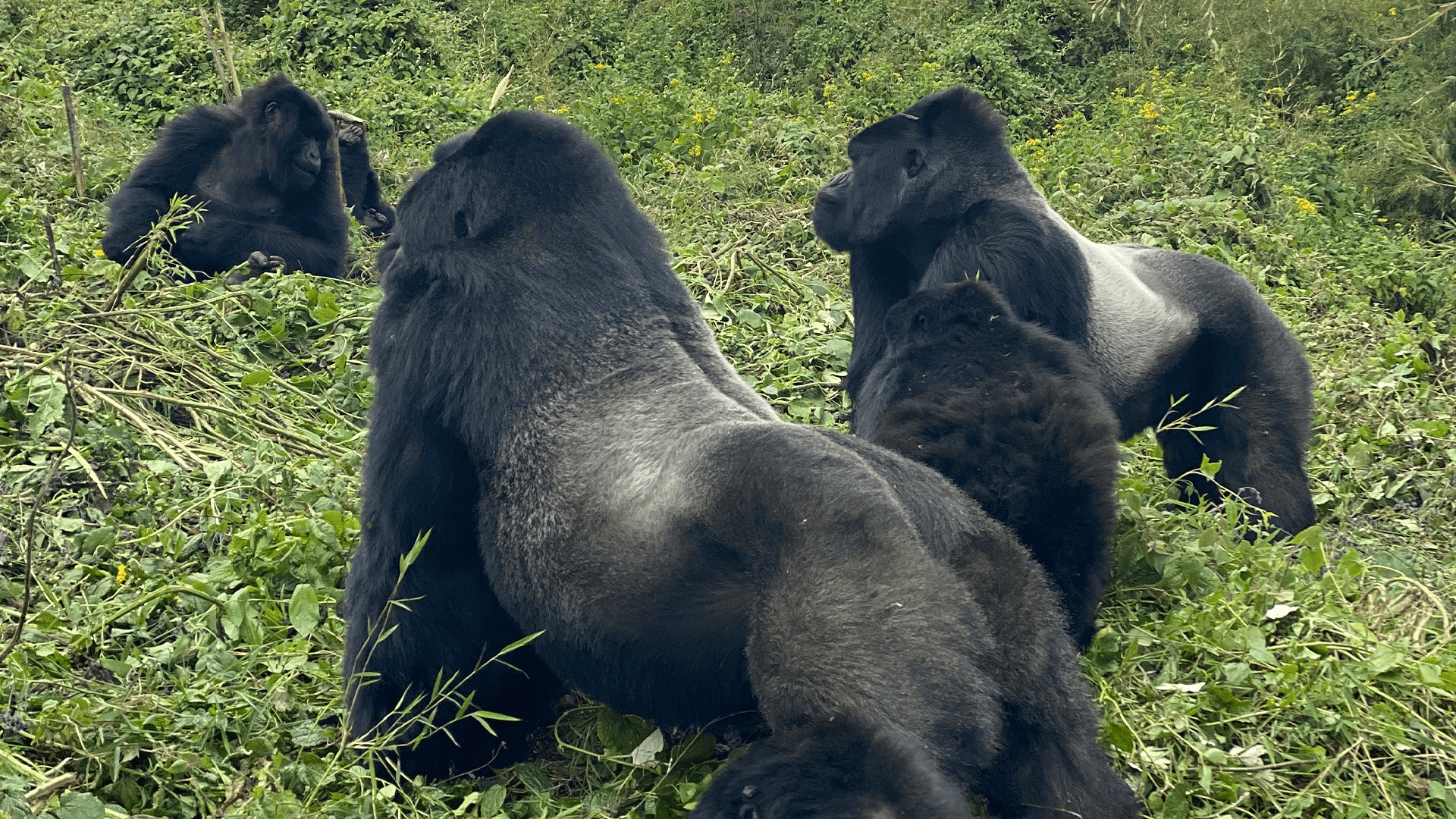
Plan Your Uganda Safari with Local Experts
 WhatsApp Us
Pro Tip: The afternoon trek at 2pm is often less crowded than the morning session. You also catch the chimps during their active afternoon feeding period, which means more movement and noise to track.
Book a dedicated Kibale chimpanzee safari to get the full Kibale experience with expert local guides who know the forest well.
Other top parks for chimpanzee trekking
While Kibale leads the pack, several other parks offer compelling chimp trekking across Uganda’s diverse landscapes.
Budongo Forest, Murchison Falls National Park
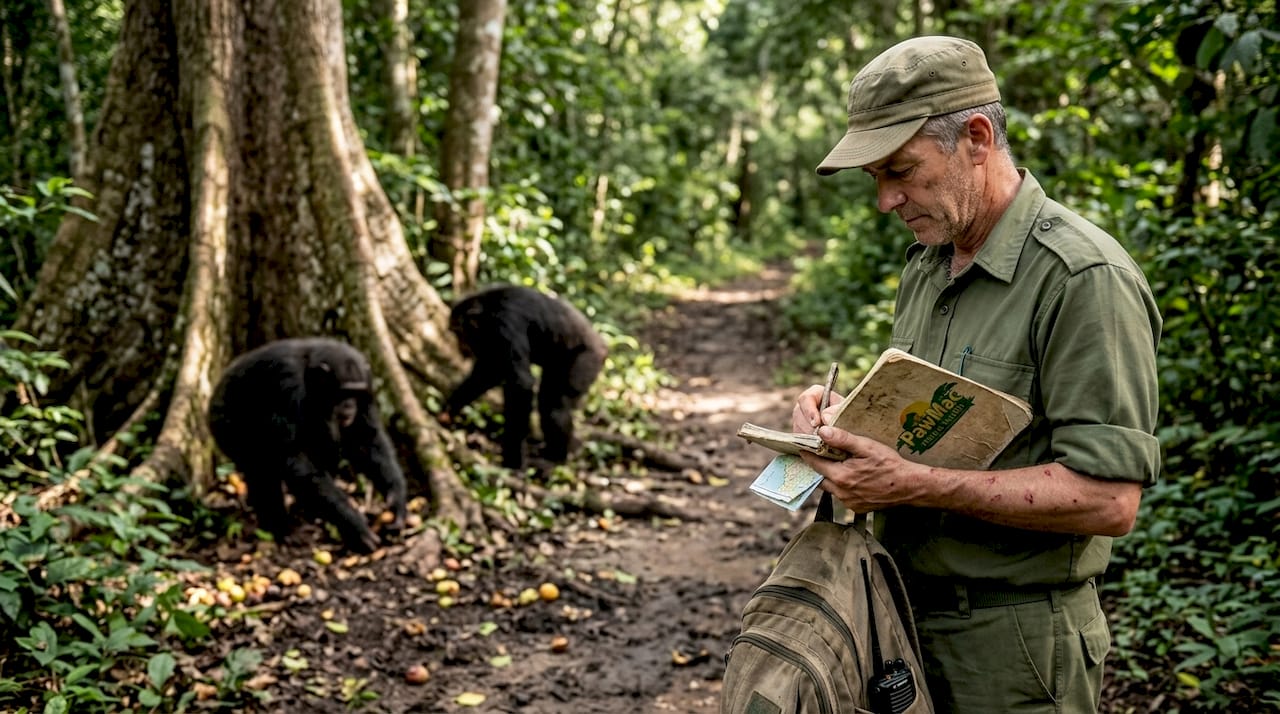
Budongo is a mahogany-dominated forest at the edge of Murchison Falls National Park, Uganda’s largest protected area. Chimpanzees here are habituated and regularly encountered, though sighting rates are somewhat lower than Kibale. The forest setting is strikingly different, with tall hardwood canopy and a quieter, more isolated atmosphere. Treks start at 8am and 2pm and follow the same group size and health check requirements as Kibale. The big advantage here is combining chimp trekking with a Nile cruise and the dramatic Murchison Falls on the same itinerary.
Kyambura Gorge, Queen Elizabeth National Park
Kyambura (sometimes called the “Valley of Apes”) is a forested gorge that slices through the savanna of Queen Elizabeth National Park. The chimp community here is smaller and sighting rates are lower, making it a more adventurous, less guaranteed experience. What makes Kyambura unforgettable is the landscape itself: you descend into a steep, lush gorge surrounded by open plains, creating a visual contrast that feels almost theatrical.
Kalinzu Forest Reserve
Kalinzu offers a budget-friendly alternative with genuine chimp sightings. Permit costs are lower, the forest is accessible, and the experience is quieter. It suits travelers who want a real chimp encounter without the Kibale price tag.
| Park | Sighting success | Trek duration | Trek start times | Combined attractions |
|---|---|---|---|---|
| Kibale Forest | Above 90% | 2 to 4 hours | 8am, 2pm, 6am | Bigodi Wetland, cultural villages |
| Budongo Forest | 70 to 80% | 2 to 3 hours | 8am, 2pm | Murchison Falls, Nile cruise |
| Kyambura Gorge | 50 to 70% | 2 to 4 hours | 8am, 2pm | Queen Elizabeth game drives |
| Kalinzu Forest | 60 to 75% | 2 to 3 hours | 8am, 2pm | Affordable access, local culture |
For travelers wanting to combine multiple primate experiences, the Uganda primate safari packages are designed to do exactly that efficiently. You can also plan itineraries that weave in gorilla trekking alongside chimp experiences by looking at gorilla and chimpanzee safaris together.
Comparison and choosing your experience
To make the smartest choice, let’s compare these parks and match them to your traveler style.
| Feature | Kibale | Budongo | Kyambura | Kalinzu |
|---|---|---|---|---|
| Sighting success | Above 90% | 70 to 80% | 50 to 70% | 60 to 75% |
| Ethical community impact | High | Moderate | Moderate | Moderate |
| Trek difficulty | Moderate | Easy to moderate | Moderate to difficult | Easy |
| Habituation option | Yes | No | No | No |
| Best for | First-timers, dedicated chimp experience | Combo itineraries | Adventure seekers | Budget travelers |
Kibale’s tourism model integrates revenue sharing with surrounding communities, actively reducing poaching pressure. That community-integrated approach is one reason its sighting rates stay so consistently high: rangers are drawn from local villages and have deep personal stakes in protecting the forest.
Choose Kibale if you want the highest probability of a powerful, ethically anchored chimp encounter. Choose Budongo or Kyambura if your itinerary already includes Murchison Falls or Queen Elizabeth and you want to add chimps without backtracking. Choose Kalinzu if budget is a primary concern but you still want a genuine experience.
Timing matters too. For the best Uganda safari conditions, the dry seasons deliver better forest visibility and easier trail conditions across all parks. That said, chimpanzees are active year-round, and some travelers find the lush green forests of the wet season worth the muddier trails.
Our take: What travelers get right and wrong about chimp safaris
Most travelers arrive focused on the sighting, which is understandable. But the sighting is only the surface. What makes a chimpanzee encounter genuinely extraordinary is understanding what you’re watching.
Chimpanzees live in what researchers call a fission-fusion society, a social structure where one large community splits into smaller subgroups that merge and separate fluidly throughout the day. Witnessing a reunion between subgroups, with their dramatic vocalizations and greetings, is something few travelers anticipate but none forget. The Ngogo research site has documented behaviors including organized hunts and complex grooming alliances that reveal an intelligence and social depth that a brief standard trek barely scratches.
Habituation treks change how travelers think about these animals. Those who invest the extra time and cost consistently describe it as the most meaningful wildlife experience of their lives. For Uganda safari tours that go beyond the checkbox mentality, habituation at Kibale is the path that delivers genuine depth. Choosing regulated, community-integrated safaris also means your money protects both the forest and the families who live beside it. That’s not a footnote. That’s the entire point.
Explore Uganda’s best chimpanzee and wildlife safaris
Ready for the next step? PawMac Safaris specializes in ethical, expertly guided chimpanzee and wildlife experiences across Uganda’s most rewarding parks.

Whether you want a dedicated three-day chimp safari at Kibale or a multi-park primate adventure, the Uganda safari packages on offer are tailored to your pace, budget, and interests. For a clear breakdown of what different itineraries cost, the Uganda safari pricing page gives you everything you need to plan with confidence. Browse all available Uganda wildlife tours and find the adventure that fits your story. Our team brings local knowledge, ranger contacts, and permit-booking expertise to every trip we plan.
Frequently asked questions
What is the best park in Uganda for chimpanzee trekking?
Kibale Forest National Park offers the highest sighting rates in Uganda, with above 90% success thanks to fully habituated chimpanzee communities and expert ranger guidance.
How long does a chimpanzee trek in Uganda take?
Most treks last between 2 and 5 hours, depending on where the chimpanzees are located and whether you choose a standard trek or a full-day habituation experience.
Are chimpanzee safaris in Uganda ethical?
Yes. UWA-regulated tours fund conservation and community programs, cap group sizes, and require health screening before every trek to protect both chimps and visitors.
Can I combine chimpanzee and gorilla trekking in Uganda?
Absolutely. Many itineraries combine both, and Uganda primate tracking packages are designed specifically to include gorillas, chimpanzees, and golden monkeys on one trip.
Recommended
- Uganda primate tracking: gorillas, chimps & golden monkeys
- Chimpanzee Tracking Uganda: Secure 95% Success Rate
- Types of primate tracking in Uganda: your ultimate guide
- Uganda Safari Guide: Gorilla Trekking, Wildlife & Planning


