
- 8 Views
- 11 Min Read
- (0) Comment
TL;DR:
- Uganda offers family-friendly safaris with wildlife, culture, education, and bonding opportunities.
- Reputable operators ensure safety, comfort, and tailored activities for all ages.
- Optimal trip length is 7 to 12 days during dry seasons for maximum experience.
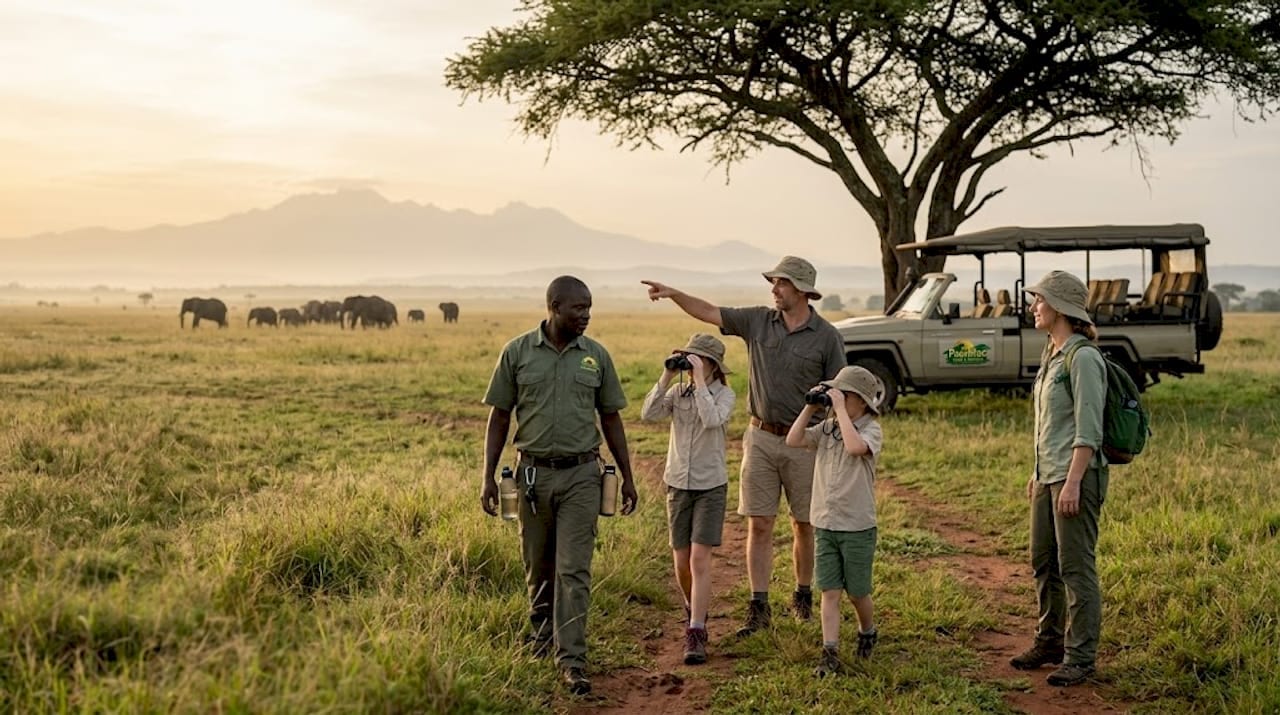
Many families assume safaris are reserved for adventurous adults willing to rough it in remote wilderness. That assumption leaves an extraordinary experience on the table. Uganda’s family safaris are thoughtfully designed for all ages, blending safe, comfortable travel with wildlife immersion, hands-on learning, and genuine cultural connection. Whether your group includes curious eight-year-olds, teens craving something beyond a screen, or grandparents seeking a meaningful journey together, Uganda delivers. This article walks you through the real benefits, practical safety guidance, smart planning tips, and customizable activities that make a family safari in Uganda not just possible, but truly memorable.
Table of Contents
- The unique benefits of family safaris in Uganda
- Safety and comfort: Safeguarding your family adventure
- Best times and trip lengths: Planning your ideal family safari
- Customizing your safari: Activities, learning, and cultural encounters
- Our perspective: What most families miss when planning their first safari
- Ready to plan your unforgettable Uganda family safari?
- Frequently asked questions
Key Takeaways
| Point | Details |
|---|---|
| Immersive wildlife experiences | Family safaris in Uganda offer direct engagement with diverse animals and landscapes in a way that fascinates all ages. |
| Safety and comfort prioritized | Leading safari operators and lodges specialize in safe, child-friendly, and comfortable experiences for families. |
| Perfect timing and length | Plan your safari during the dry season and stay 7–12 days with several nights per park for ideal wildlife viewing and family relaxation. |
| Customizable cultural encounters | Expand your journey with activities like village visits, school exchanges, and hands-on learning tailored to your family’s interests. |
The unique benefits of family safaris in Uganda
Uganda is not your average safari destination. Known as the Pearl of Africa, it packs extraordinary biodiversity into a compact landscape. Families can witness mountain gorillas, tree-climbing lions, hippos, elephants, shoebill storks, and hundreds of bird species across parks that are genuinely accessible to all ages. This is not about enduring long, dusty drives across a featureless plain. Uganda’s national parks offer dramatic scenery, short transfer distances, and varied activities that keep every member of the family engaged.
One of the greatest gifts a Uganda safari offers families is education woven seamlessly into fun. Children absorb lessons about animal behavior, conservation, and ecosystems in real time, far more vividly than any classroom or documentary can provide. They see how poaching affects gorilla populations, how a river ecosystem sustains hippos and crocodiles, and why wetlands matter for birds. These are lessons that stay with kids for life.
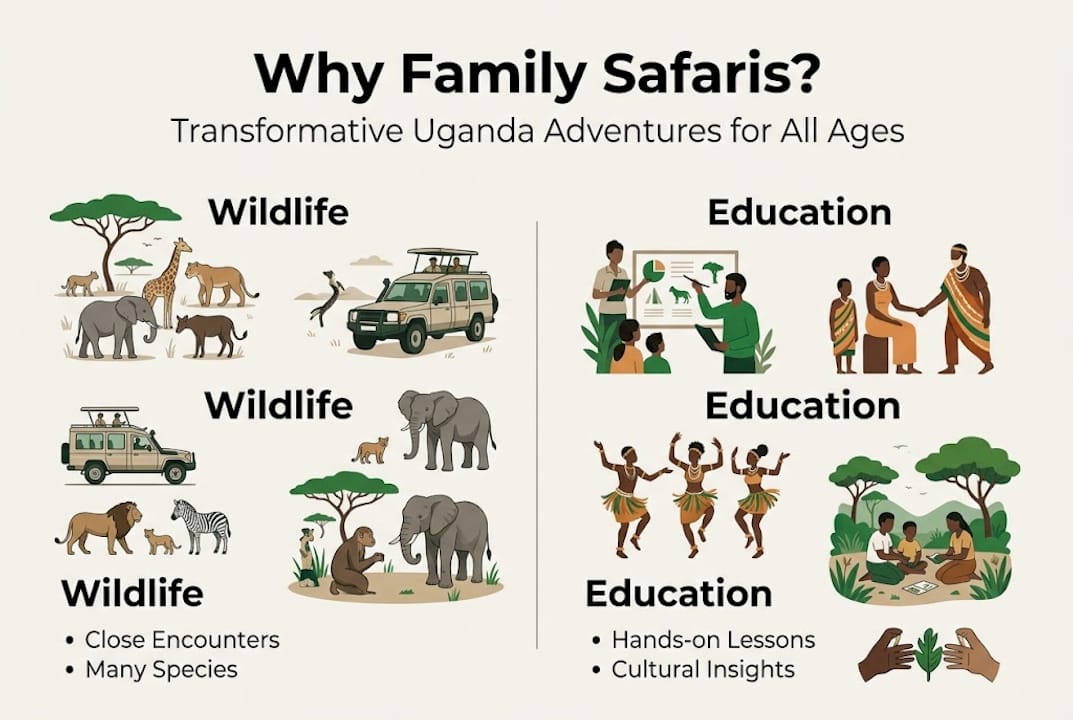
Cultural richness adds another dimension that most families do not expect. Village visits, traditional craft workshops, and community school exchanges create genuine human connections that transform a wildlife trip into a full cultural experience. Kids especially respond to meeting peers in Ugandan villages, sharing games, and learning a few words of Luganda or Rukiga.
Expert reviews note transformative experiences for kids 8 and older in Queen Elizabeth National Park in particular, where the diversity of habitats and activities matches well with younger energy levels and curiosity.
Traveling together through new challenges, whether it is spotting a leopard at dawn or hiking to a chimpanzee habitat, builds a kind of family bond that ordinary vacations rarely produce. You share stories, inside jokes, and moments of pure awe that become the fabric of family memory.
“A Uganda safari gives children a sense of how interconnected life really is. Seeing conservation work firsthand changes their perspective in ways that last into adulthood.”
Key benefits at a glance:
- Wildlife diversity across multiple ecosystems, from savanna to rainforest
- Real-time conservation education through guided experiences
- Cultural village visits and community engagement for all ages
- Shared discoveries that strengthen family bonds
- Flexible family safari packages tailored to group size and interests
Pro Tip: Spend two to three nights in two or three different parks. Mixing Queen Elizabeth’s savanna game drives with Bwindi’s forest encounters and a community visit in between gives your family both wildlife variety and cultural depth without exhausting anyone.
Choosing the best safari lodges for families also matters enormously. Properties with spacious family rooms, swimming pools, and child-friendly menus make the rest of the trip feel like a genuine retreat.
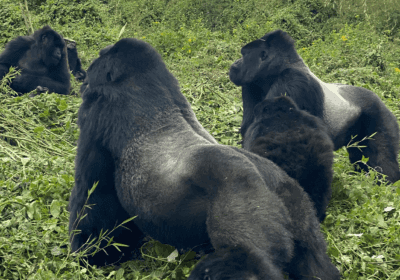
Plan Your Uganda Safari with Local Experts
 WhatsApp Us
Safety and comfort: Safeguarding your family adventure
Beyond the unmatched experiences, families want to know: is a Uganda safari truly safe and comfortable for everyone? The honest answer is yes, provided you travel with an experienced, reputable operator.
Safety is high with reputable operators, and standard precautions for malaria and hydration keep health risks very manageable. Malaria prophylaxis prescribed by a travel doctor before departure, insect repellent, and long-sleeved clothing at dawn and dusk are the core protections. Staying hydrated, especially during dry season game drives, is equally important for children.
Reputable guides do more than identify wildlife. They manage group pacing, enforce safe distances from animals, communicate in real time with park rangers, and tailor each excursion to the energy levels of your family on any given day. That flexibility is invaluable when you are traveling with kids.
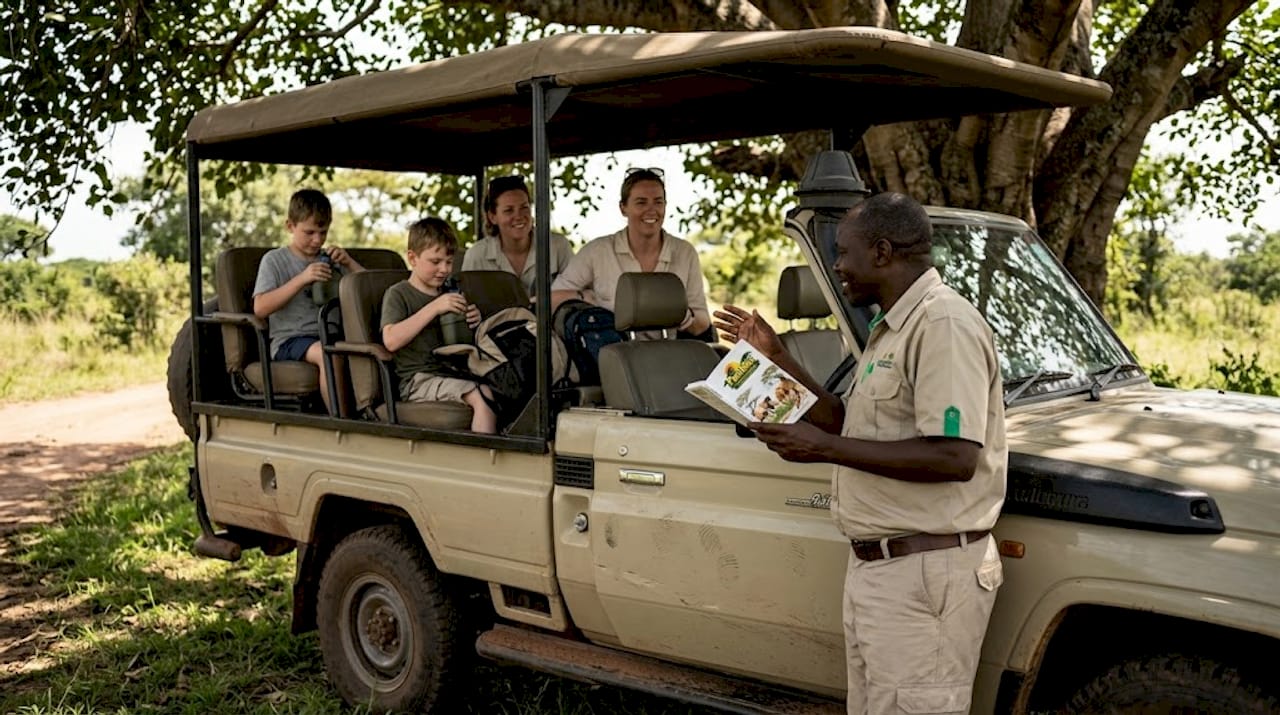
Vehicle choice matters, too. Custom-built safari 4x4s with pop-up roofs and ample seating allow families to stand, stretch, and photograph without crowding. Good operators will also arrange regular rest stops and adjust game drive schedules to avoid the hottest midday hours.
For families with very young children or multi-generational groups, communicating your needs upfront to your operator allows for flexible itineraries with shorter drives, earlier returns to the lodge, and afternoon swimming or relaxation built into the schedule.
Top 4 comfort and safety must-haves:
- Malaria prevention: Consult a travel doctor at least six weeks before departure for appropriate prophylaxis
- Hydration packs: Carry reusable water bottles; reputable lodges always provide filtered drinking water
- Child-appropriate vehicles: Confirm your operator uses spacious 4x4s with proper seating and safety belts
- Flexible scheduling: Build in rest afternoons so younger travelers recharge properly
For more specific guidance, review these family safari safety tips that cover everything from packing lists to park-specific precautions. Understanding the importance of safari guides also helps families appreciate how central a skilled guide is to both safety and experience quality.
Pro Tip: For groups with children under six, ask your operator specifically about lodge-based activities like nature trails, bird-watching from the veranda, and cultural storytelling sessions. These can be just as enriching as full game drives, with far less physical strain.
Best times and trip lengths: Planning your ideal family safari
Once families are reassured about safety and comfort, the next question is: when should you go, and for how long?
Dry seasons from June to September and December to February are best for families, offering better wildlife visibility, drier trails, and fewer mosquitoes. During these months, animals concentrate around water sources, making sightings more predictable and rewarding. Trails in gorilla trekking parks like Bwindi are also significantly less muddy, which matters a great deal when trekking with kids or older family members.
The best time for Uganda safaris depends on your family’s priorities. If gorilla trekking is the centerpiece, the dry season is non-negotiable. If birding excites your group, the wetter months from March to May bring migratory species in remarkable numbers.
Season summary and recommended trip lengths:
| Season | Months | Wildlife Viewing | Trail Conditions | Recommended Length |
|---|---|---|---|---|
| Dry (peak) | Jun to Sep | Excellent | Dry, easy | 8 to 12 days |
| Dry (short) | Dec to Feb | Very good | Dry, accessible | 7 to 10 days |
| Wet (long) | Mar to May | Good (birding) | Muddy, challenging | 7 to 10 days |
| Wet (short) | Oct to Nov | Good | Variable | 7 to 9 days |
Trip length shapes the entire quality of the experience. A rushed five-day trip leaves families exhausted and under-exposed to Uganda’s richness. The ideal recommended trip durations sit between seven and twelve days, with two to three nights per park. That pacing gives children time to settle into each environment, ask questions, process what they have seen, and genuinely relax before moving on.
Quick planning checklist:
- Book during dry season for the easiest, most rewarding experience
- Allocate at least two nights per park to avoid feeling rushed
- Build in one full rest day mid-trip for children and older travelers
- Confirm school vacation dates align with your preferred travel window
- Consider a sample 15-day itinerary as a strong starting framework
Customizing your safari: Activities, learning, and cultural encounters
With timing and essentials covered, the heart of your trip lies in tailored experiences and interactions along the way.
Uganda offers a wider range of family-appropriate activities than most first-timers realize. Game drives are the anchor, but boat cruises along the Kazinga Channel in Queen Elizabeth let kids see hippos and Nile crocodiles from a safe, stable vessel. Guided nature walks in Murchison Falls introduce younger children to insects, plant life, and bird calls in an intimate way. Birding sessions with a specialist guide work beautifully for curious teens and adults alike.
Junior ranger programs, available at select lodges, give children a structured learning experience with age-appropriate conservation missions, animal tracking exercises, and wildlife journals. These programs create remarkable ownership over the experience. Kids come home as genuine advocates for the wildlife they encountered.
Cultural add-ons elevate the trip further. A visit to a Batwa community near Bwindi, for example, shares the story of a people whose lives have been intertwined with the forest for generations. Traditional craft workshops and local school exchanges create moments that no game drive can replicate.
Expert reviews highlight transformative experiences for kids 8 and up in Queen Elizabeth, where the breadth of activities matches well with their developing curiosity and stamina.
Popular activities by age group:
| Activity | Under 8 | Ages 8 to 12 | Teens | Adults |
|---|---|---|---|---|
| Game drives | Yes (short) | Yes | Yes | Yes |
| Boat cruises | Yes | Yes | Yes | Yes |
| Gorilla trekking | No | Yes (fitness dependent) | Yes | Yes |
| Nature walks | Yes (gentle) | Yes | Yes | Yes |
| Junior ranger programs | Yes | Yes | Yes | N/A |
| Village and cultural visits | Yes | Yes | Yes | Yes |
| Birding walks | Yes (guided) | Yes | Yes | Yes |
Three steps to customize your family itinerary:
- List your family’s priorities: Wildlife, culture, adventure, relaxation, or a specific animal like gorillas or chimps
- Match activities to ages: Use the table above to build a balanced schedule that works for your youngest and oldest traveler
- Build in breathing room: Every itinerary benefits from an unplanned afternoon, a slow morning at the lodge, or an optional extension
When choosing safari lodges, look for properties that actively support responsible family activities and community partnerships. These lodges enrich the experience while reinforcing values you want your children to carry forward.
Our perspective: What most families miss when planning their first safari
Most families approach a Uganda safari with a wildlife checklist in mind. Gorillas. Elephants. Lions. That focus is understandable, but it often means the most memorable moments get overlooked in the planning stage.
The connection your child makes with a local guide who grew up near Bwindi Forest, or the conversation sparked by watching a Batwa elder weave a basket, often outweighs any single animal sighting. Guide expertise and cultural depth are not optional extras; they are what separate a good trip from a truly life-shaping one.
A common mistake is under-budgeting for downtime. Families often pack their schedules tightly, then find children hitting a wall by day four. Experienced planners always build in slower afternoons and lodge-based activities. Reviewing seasonal safari planning before you book also prevents frustration from choosing a travel window that doesn’t align with your goals.
Finally, matching activities to children’s actual ages, not ideal ages, makes the difference between a transformative trip and an exhausting one.
Ready to plan your unforgettable Uganda family safari?
Planning a family safari in Uganda is genuinely exciting, and having the right specialists alongside you makes all the difference. At PawMac Safaris, we design itineraries that balance wildlife, culture, safety, and comfort for families of every shape and size.
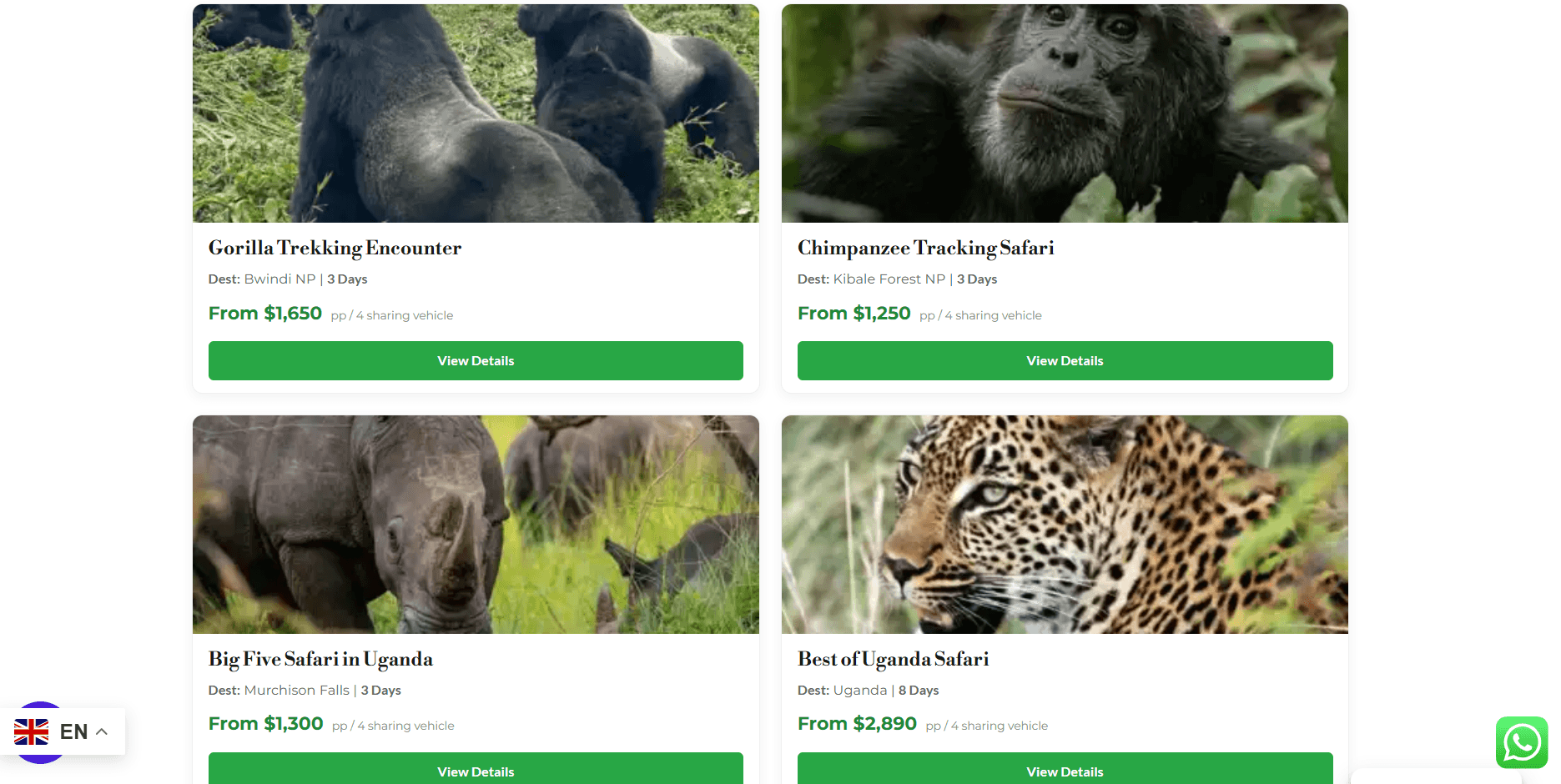
Browse our full range of Uganda wildlife tours to see what is possible, or use our custom planner to create your perfect safari built around your family’s specific interests and ages. If gorillas are on your list, explore our dedicated gorilla trekking experiences for family-friendly permit guidance and itinerary options. Reach out to our team directly. We love helping families design memories that last a lifetime.
Frequently asked questions
Is Uganda safe for family safaris with children?
With reputable operators and standard health precautions, Uganda is considered very safe for family travel. Malaria prevention and hydration are the key health considerations to address before departure.
What age is best for kids on a Uganda safari?
Children 8 and older benefit most from the full range of activities, though many experiences can be adapted for younger kids. Transformative experiences for kids 8+ are especially well-documented in Queen Elizabeth National Park.
How many days should a family safari in Uganda be?
Seven to twelve days is the ideal range, giving families enough time to settle into each park without rushing. An ideal trip length of 7 to 12 days with two to three nights per park is the consistent recommendation from experienced safari planners.
What unique activities can families do beyond game drives?
Families can enjoy boat cruises, guided nature walks, birding sessions, junior ranger programs, and village cultural visits for a well-rounded experience. These activities, especially experiences for kids 8+, create deeper learning and lasting memories beyond wildlife checklists.
Recommended
- Top tips for a safe and fun family safari in Uganda
- Explore Adventure Stories and Tips on the PawMac Safaris Blog
- Family Safari Packages in Uganda | Best Family Tours
- Why Choose Tailored Safari Packages in Uganda