


- 255 Views
- 13 Min Read
- (0) Comment
Wildlife photographers planning African safaris face critical logistical challenges that directly impact shooting success. Permits for wildlife photography in Uganda require advance planning and knowledge of gear restrictions, seasonal timing, and park-specific access protocols. Uganda’s national parks offer exceptional opportunities for capturing rare species including mountain gorillas, tree-climbing lions, and shoebill storks, but only when you navigate permit systems, weather windows, and equipment requirements correctly. This guide delivers practical logistics for planning and executing optimal wildlife photography tours in Uganda’s premier shooting locations during 2026.
Table of Contents
- Preparing For Your African Wildlife Photography Tour In Uganda
- Executing Your Photography Tour: Best Practices In Uganda’s National Parks
- Common Challenges And Troubleshooting In Wildlife Photography Tours
- Expected Results And How To Verify Your Photographic Success
- Explore Tailored Uganda Safari Tours For Photographers
- What Essential Permits Do I Need For Wildlife Photography In Uganda?
- When Is The Best Time To Visit Uganda For Wildlife Photography?
- What Type Of Camera Equipment Works Best On These Tours?
- How Can I Ensure Ethical Wildlife Photography During My Safari?
Key takeaways
| Point | Details |
|---|---|
| Logistics drive success | Proper permit acquisition, gear preparation, and seasonal timing determine photographic outcomes more than camera quality alone. |
| Park selection matters | Uganda’s Bwindi, Queen Elizabeth, and Murchison Falls each offer distinct wildlife subjects requiring different shooting strategies. |
| Timing optimizes results | Dry seasons from June to September and December to February provide superior wildlife visibility and lighting conditions. |
| Local expertise essential | Experienced guides familiar with animal behavior patterns and park sectors dramatically increase quality sighting opportunities. |
Preparing for your African wildlife photography tour in Uganda
Successful wildlife photography tours begin months before departure with systematic gear preparation and permit acquisition. Your equipment list must include weather-sealed camera bodies, telephoto lenses ranging from 100-400mm for versatility, and backup batteries since charging opportunities remain limited in remote sectors. Uganda’s permit and gear requirements specify that gorilla photography permits cost exactly $800 for 2026 and require booking 3-6 months ahead during peak seasons.
Optimal shooting months align with Uganda’s two dry seasons when wildlife congregates around permanent water sources and vegetation thins for clearer sightlines. June through September offers consistent morning light and minimal rain interruptions, while December to February provides excellent conditions with fewer tourist crowds in popular parks. Weather patterns during these windows deliver golden hour lighting that lasts 45-60 minutes after sunrise, critical for capturing dramatic wildlife portraits with natural rim lighting.
Essential preparation checklist:
- Weather-sealed DSLR or mirrorless body with minimum 20MP resolution
- Telephoto zoom 100-400mm and prime 500mm or 600mm for distant subjects
- Sturdy carbon fiber tripod with gimbal head for heavy lens support
- Minimum 3 spare batteries and 128GB+ memory cards
- Lens cleaning kit and silica gel packets for humidity control
- Gorilla photography permit ($800) booked minimum 90 days advance
- Uganda Wildlife Authority park entry permits for planned locations
| Preparation Element | Timeline | Cost Range (USD) |
|---|---|---|
| Gorilla photography permit | 90-180 days advance | $800 exact |
| Park entry permits | 30-60 days advance | $40-50 per park |
| Professional telephoto lens | Purchase/rent 60 days out | $1,200-3,500 |
| Weather protection gear | 30 days before departure | $150-300 |
| Backup storage devices | 30 days before departure | $80-200 |
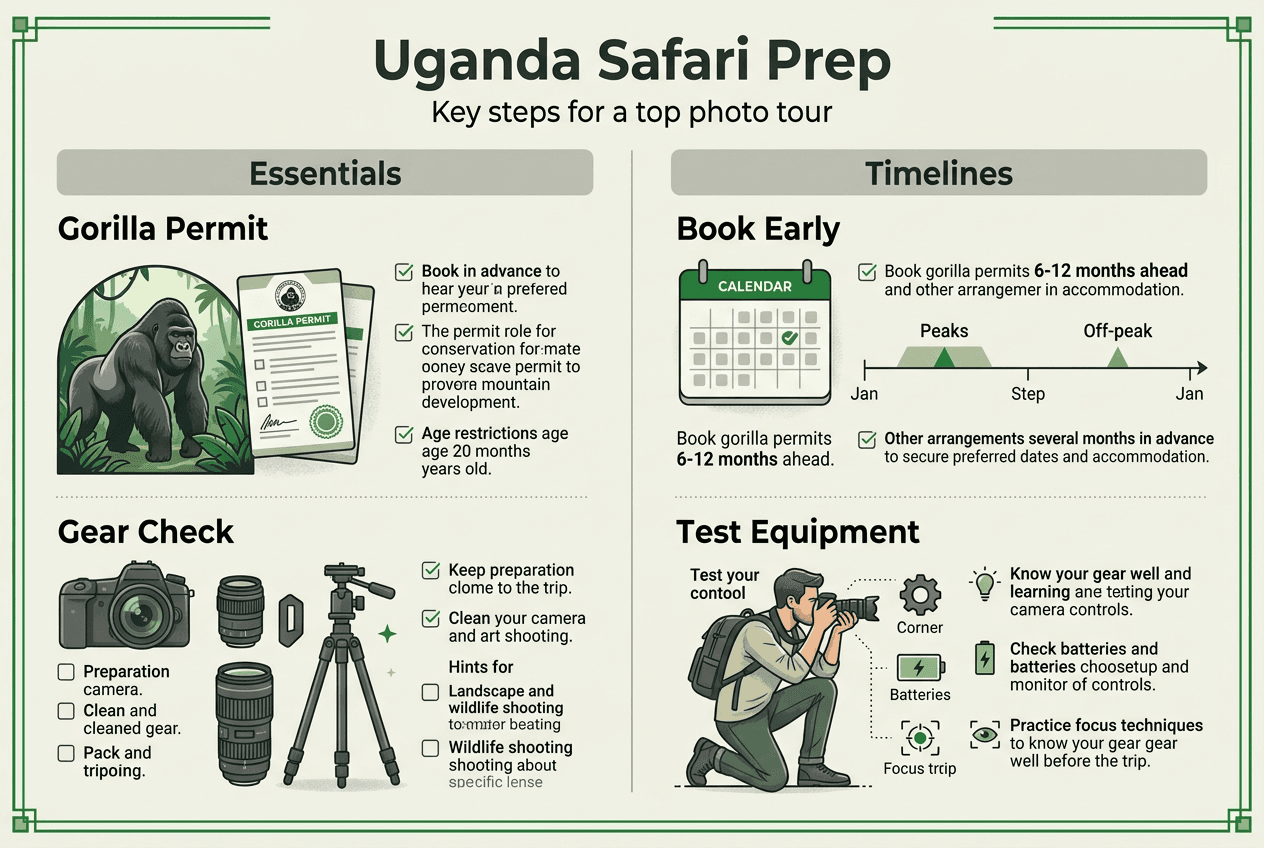
Pro Tip: Test your complete gear setup including lens stabilization, autofocus tracking, and battery performance in similar humid conditions at least two weeks before departure to identify and resolve technical issues before reaching Uganda.
Executing your photography tour: best practices in Uganda’s national parks
Daily shooting routines in Uganda’s parks follow predictable wildlife activity patterns that dictate optimal photography windows. Uganda’s parks like Bwindi and Queen Elizabeth offer varied wildlife and photographic conditions ideal for different shooting styles, from dense forest gorilla encounters to open savanna Big Five opportunities.
Step-by-step daily shooting protocol:
- Depart accommodations 90 minutes before sunrise to reach prime locations during first light when animals are most active and lighting remains soft.
- Position your customized 4×4 safari van with pop-up roof for unobstructed 360-degree shooting angles, communicating preferred sides to your driver based on sun direction.
- Shoot continuously during the golden hour window, prioritizing behavioral moments over static portraits as wildlife interacts naturally.
- Return to base camp during midday heat when animals rest in shade and harsh overhead light degrades image quality.
- Resume shooting 2 hours before sunset, focusing on backlit opportunities and silhouettes as the sun drops toward the horizon.
- Review and backup images each evening to prevent data loss and identify gaps in coverage for next-day priorities.
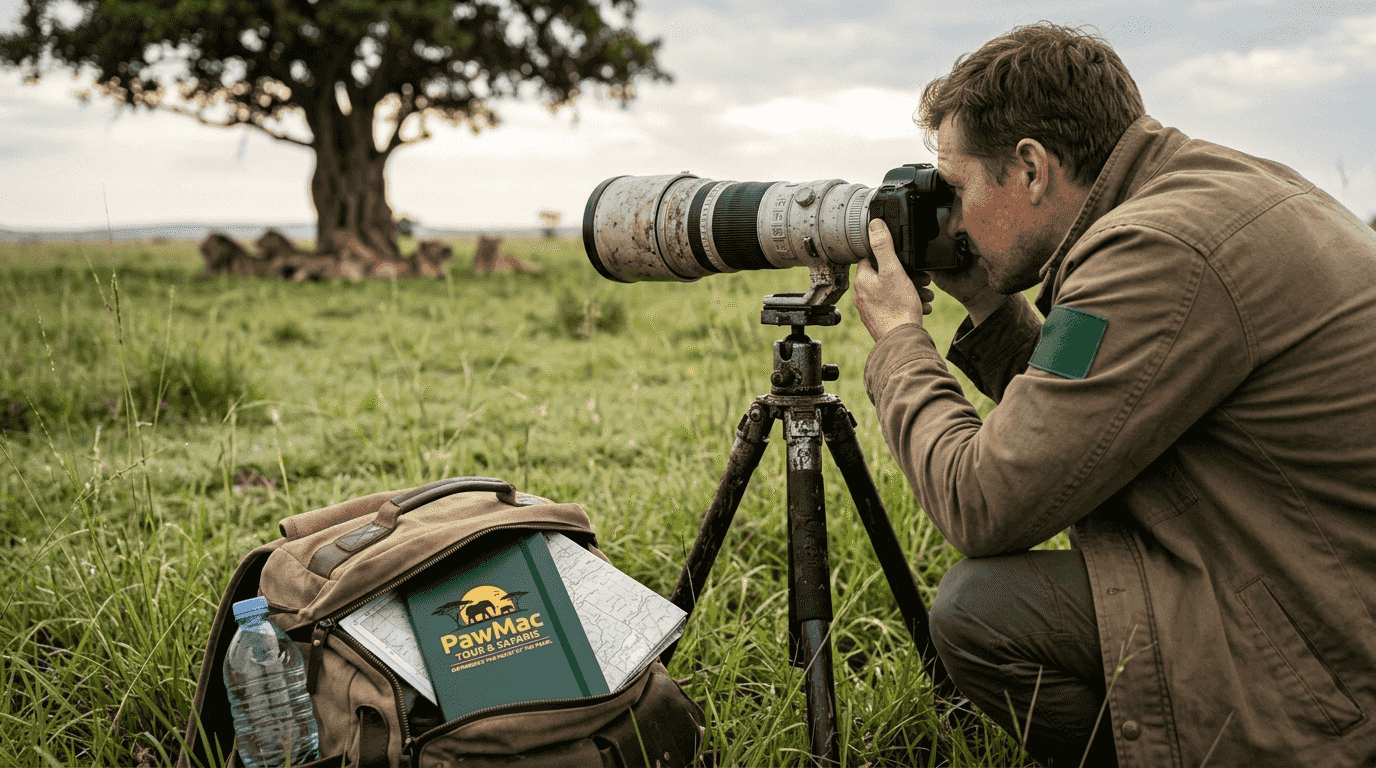
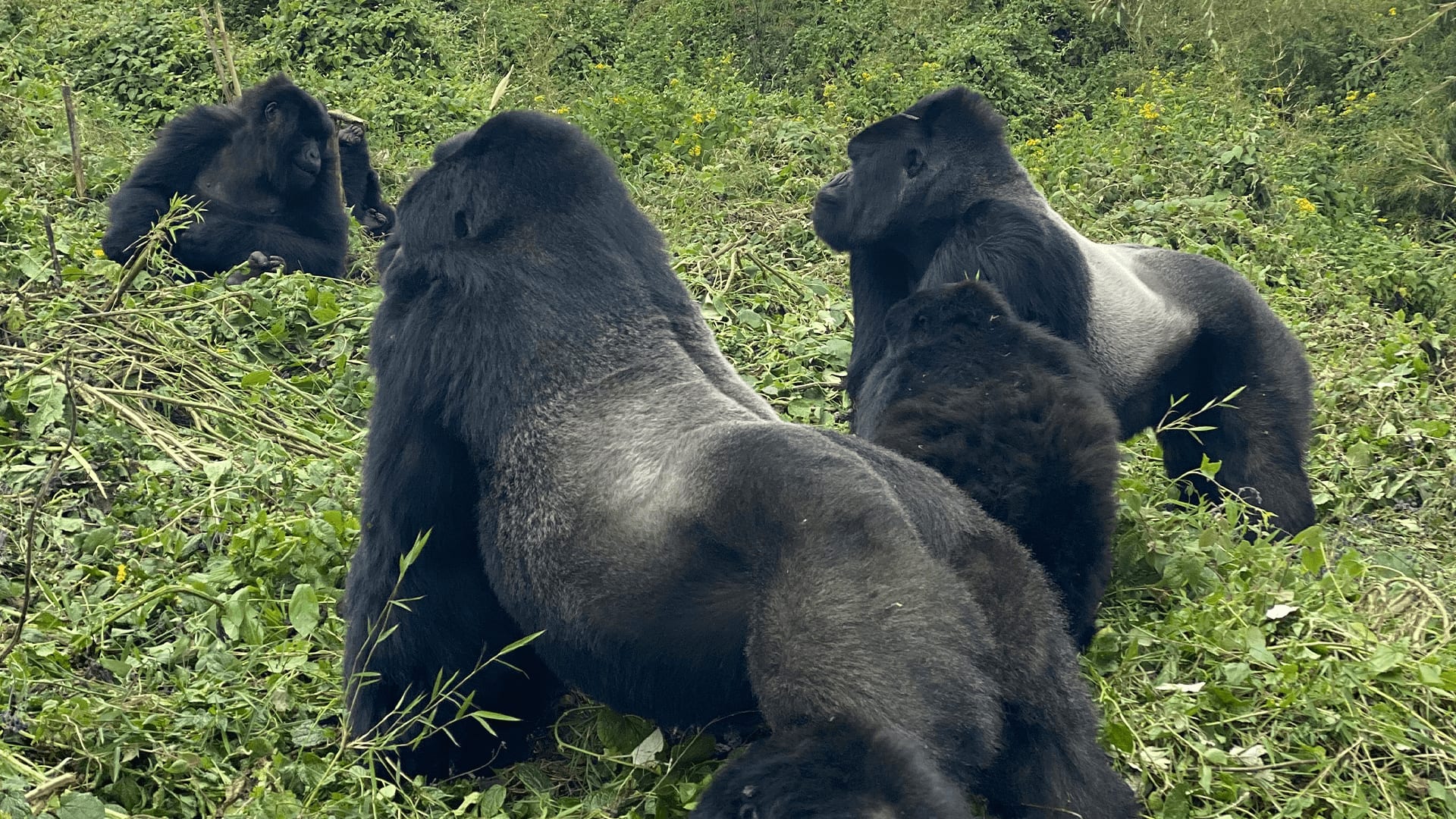
Park selection determines the wildlife subjects and shooting conditions you’ll encounter. Queen Elizabeth National Park provides open savanna access to Big Five mammals with tree-climbing lions in Ishasha sector offering unique elevated perspectives. Murchison Falls delivers high-density elephant and giraffe populations against dramatic waterfall backdrops, while Bwindi’s mountain gorilla families require specialized low-light techniques in dense forest canopy conditions.
Plan Your Uganda Safari with Local Experts
 WhatsApp Us
| National Park | Primary Subjects | Shooting Conditions | Best Months |
|---|---|---|---|
| Bwindi Impenetrable | Mountain gorillas, forest birds | Dense canopy, low light, close range | June-Sept, Dec-Feb |
| Queen Elizabeth | Lions, elephants, hippos, buffalo | Open savanna, varied backgrounds | June-Sept, Jan-Feb |
| Murchison Falls | Giraffes, Nile crocodiles, shoebills | River settings, dramatic landscapes | Dec-Feb, June-Aug |
| Kibale Forest | Chimpanzees, 13 primate species | Forest understory, dappled light | June-Sept, Dec-Jan |
Critical onsite shooting techniques:
- Set continuous autofocus with animal eye detection to maintain sharp focus during unpredictable movement
- Use shutter speeds minimum 1/1000s for flying birds and 1/500s for walking mammals to freeze motion
- Shoot in aperture priority mode at f/5.6-f/8 for adequate depth of field while maintaining background separation
- Enable back-button focus to decouple focusing from shutter release for faster subject reacquisition
- Adjust ISO freely up to 3200 rather than accepting motion blur from slow shutter speeds
Pro Tip: Hire guides who specialize in photographic safaris rather than general tourism, as they understand animal behavior prediction, optimal positioning for light direction, and patience required for behavioral moments rather than rushed sightings.
Common challenges and troubleshooting in wildlife photography tours
Unpredictable weather and technical difficulties are common and require flexible shooting plans in Uganda’s variable microclimates. Even during dry seasons, afternoon thunderstorms can develop rapidly in highland parks, while morning mist in forest locations delays ideal lighting by 1-2 hours beyond standard sunrise times.
Frequent logistical challenges include wildlife no-shows at expected locations, equipment malfunctions in humid conditions, and permit timing conflicts when multiple parks require sequential visits. Animals follow food and water availability rather than photographer schedules, meaning prime subjects may relocate to different sectors between your research phase and actual tour dates. Camera sensors accumulate condensation during temperature transitions from air-conditioned vehicles to 85°F exterior humidity, causing temporary autofocus failures until equipment acclimatizes.
Practical solutions for common obstacles:
- Pack backup camera bodies and lenses in waterproof cases with desiccant packets to prevent moisture damage during storage
- Build 2-3 buffer days into itineraries for weather delays or permit rescheduling without losing critical shooting opportunities
- Carry lens hoods, rain covers, and microfiber cloths for rapid weather protection during sudden downpours
- Maintain gear at ambient temperature rather than air-conditioned storage to minimize condensation formation
- Coordinate with Uganda timing specialists who track real-time animal movements and adjust sector recommendations accordingly
- Prepare alternative shooting plans for each location focusing on different subjects when primary targets prove elusive
“Flexibility separates successful wildlife photographers from frustrated tourists. The gorilla family you planned to shoot may move sectors overnight, or the tree-climbing lions might descend during your scheduled visit. Photographers who adapt their technical approach and subject priorities to actual field conditions rather than predetermined shot lists consistently produce superior portfolios.” – Senior Wildlife Photography Guide, Bwindi Impenetrable Forest
Equipment maintenance in Uganda’s humid forest environments requires daily attention to prevent fungal growth on lens elements and corrosion on electronic contacts. Store all gear in sealed bags with fresh silica gel packets replaced every 48 hours, and never leave equipment in closed vehicles where interior temperatures exceed 120°F. Clean sensor and lens surfaces each evening using proper tools rather than waiting until visible spots appear in images, as tropical moisture accelerates debris adhesion that becomes progressively harder to remove.
Expected results and how to verify your photographic success
African wildlife photography tours in Uganda yield unique images of rare species that require patience and skill to capture, particularly intimate portraits of mountain gorilla families and behavioral sequences of tree-climbing lions found nowhere else on the continent. Typical successful shoots produce 200-400 keeper images from 3,000-5,000 total frames across a 7-10 day tour, with highlight shots featuring sharp eye focus, compelling behavior, and clean backgrounds that isolate subjects.
Evaluating photographic success requires objective technical criteria beyond subjective aesthetic preferences. Sharp focus on the subject’s nearest eye remains non-negotiable, while proper exposure preserves detail in both highlight and shadow regions without clipping. Compelling images capture decisive moments showing natural behavior rather than static poses, with body language and environmental context telling visual stories about the animal’s life and habitat.
Quality assessment criteria:
- Tack-sharp focus on subject’s eye with adequate depth of field for facial features
- Proper exposure maintaining detail in highlights (sky, white feathers) and shadows (dark fur)
- Clean background separation using shallow depth of field or uncluttered natural settings
- Behavioral content showing interaction, feeding, grooming, or other natural activities
- Technical excellence including correct white balance and minimal digital noise
Post-tour workflow steps:
- Import and backup all raw files to minimum two separate storage devices within 24 hours of tour completion to prevent catastrophic data loss.
- Perform initial culling removing obvious technical failures including missed focus, severe motion blur, and unusable exposures to reduce file volume by 60-70%.
- Rate remaining images using 5-star system identifying hero shots (5 stars), strong supporting images (4 stars), and acceptable documentation (3 stars).
- Process hero shots first using consistent editing approach that enhances natural colors and sharpness without creating artificial-looking results.
- Create portfolio selects showcasing range of species, behaviors, and technical approaches rather than repetitive similar frames.
- Share strategically on photography platforms with proper metadata including species names, park locations, and camera settings to build credibility.
Set specific photographic goals before departure focusing on particular species, behaviors, or technical challenges you want to master. Post-tour evaluation against these objectives reveals growth areas for future trips, whether improving low-light performance for forest species, mastering flight photography for birds, or developing patience for rare behavioral moments. Track your keeper rate (final portfolio images divided by total frames) across multiple tours to measure technical improvement and shooting efficiency over time.
Explore tailored Uganda safari tours for photographers
Pawmac Safaris designs specialized Uganda safari tours specifically for wildlife photographers who demand optimal positioning, extended shooting windows, and expert guidance on animal behavior patterns. Our customized 4×4 safari vans feature pop-up roofs providing 360-degree shooting access while professional suspension systems deliver stable platforms for telephoto work on rough park tracks.

Our photography-focused Uganda safari packages include dedicated guides trained in photographic safari protocols who understand lighting requirements, behavioral prediction, and patience needed for decisive moments rather than rushed sightings. We coordinate all permit logistics including the $800 gorilla photography permits for Bwindi sectors and park entry documentation, while customized itineraries allocate maximum time during golden hours when wildlife activity and lighting conditions peak.
Photography safari package features:
- Extended shooting sessions starting 90 minutes pre-dawn through full golden hour coverage
- Customized 4×4 safari vans with pop-up roofs and stabilized shooting platforms
- Photography specialist guides familiar with animal behavior and optimal positioning
- Coordinated permit acquisition for all parks and special access requirements
- Flexible scheduling accommodating weather delays and wildlife movement patterns
Consider our 3-Day Big Five Safari as an intensive introduction to Uganda’s photographic opportunities, or extend to 10-14 day comprehensive tours covering multiple ecosystems from savanna to montane forest. Each itinerary builds buffer days for weather contingencies and prioritizes parks based on your target species and shooting style preferences.
Pro Tip: Book photography safaris minimum 4-6 months ahead for 2026 peak seasons to secure gorilla permits, preferred accommodation near park gates, and guides experienced in photographic safari protocols rather than general tourism.
What essential permits do I need for wildlife photography in Uganda?
Uganda requires specific photographic permits beyond standard park entry fees when shooting wildlife for professional or commercial purposes. The gorilla photography permit costs exactly $800 for 2026 and grants one hour with a habituated family group in Bwindi’s Buhoma, Ruhija, Rushaga, or Nkuringo sectors. Chimpanzee tracking permits in Kibale Forest run $200 and include photography rights during the allocated viewing time. Standard park entry permits ($40-50) cover general wildlife photography of non-primate species across Queen Elizabeth, Murchison Falls, and other national parks.
Camera equipment faces minimal restrictions in most parks, though gorilla photography prohibits flash use to avoid startling animals and requires maintaining 7-meter minimum distances. Professional video equipment and drone operations need separate commercial filming permits obtained through Uganda Wildlife Authority headquarters in Kampala, typically processed within 5-7 business days. All permits require advance booking through registered tour operators rather than individual applications, with gorilla permits specifically selling out 3-6 months ahead during June-September and December-February peak seasons.
When is the best time to visit Uganda for wildlife photography?
Uganda’s two dry seasons deliver optimal wildlife photography conditions from June through September and December through February when reduced rainfall improves trail accessibility and concentrates animals around permanent water sources. Morning light quality during these months provides 45-60 minute golden hour windows with warm color temperatures ideal for wildlife portraits, while midday cloud cover remains minimal for consistent exposure conditions. Dry season vegetation thins in savanna parks, improving sightlines for distant subjects and reducing obstructed compositions from dense foliage.
Wet season months from March to May and October to November present challenges including muddy tracks limiting vehicle access to remote sectors, though serious photographers find advantages in dramatic storm light and reduced tourist crowds. Newborn animals appear during wet seasons providing unique behavioral photography opportunities, while migrant bird species peak from November through April for specialized avian shooters.
What type of camera equipment works best on these tours?
Wildlife photography in Uganda demands weather-resistant camera bodies with fast autofocus systems and high ISO performance for low-light forest conditions where gorillas and chimpanzees inhabit dense canopy environments. Recommended telephoto lenses include 100-400mm zooms for versatility across varying subject distances and 500mm or 600mm primes for distant savanna species in Queen Elizabeth and Murchison Falls parks. Full-frame sensors provide superior image quality and better high-ISO performance necessary for shooting at 1600-3200 ISO in Bwindi’s shadowed forest understory.
Essential support gear includes sturdy carbon fiber tripods with gimbal heads supporting heavy telephoto lenses during extended shooting sessions, though monopods offer greater mobility for tracking moving subjects. Pack minimum three spare batteries since charging opportunities remain limited in remote park accommodations, and carry 256GB+ memory card capacity for raw file workflows producing 50-80MB files per frame. Weather protection including rain covers and lens hoods proves critical during Uganda’s unpredictable afternoon thunderstorms that develop even during dry seasons.
How can I ensure ethical wildlife photography during my safari?
Ethical wildlife photography requires maintaining minimum distance regulations specific to each species, with gorilla encounters mandating 7-meter separation and general wildlife requiring 25+ meters to avoid stress behaviors. Never pursue or harass animals for better angles, as this disrupts natural behavior patterns and potentially triggers dangerous defensive responses from protective mothers or territorial males. Flash photography remains strictly prohibited during primate encounters since sudden bright light causes distress and potential aggression from gorilla families and chimpanzee groups.
Follow your guide’s instructions regarding positioning, movement, and shooting duration without exception, as their expertise in animal behavior prevents dangerous situations and ensures sustainable tourism practices. Respect park regulations including designated shooting areas, restricted zones protecting sensitive habitats, and time limits for wildlife encounters that prevent over-exposure to human presence. Ethical photographers prioritize animal welfare and conservation over obtaining specific shots, understanding that missed photographs matter far less than preserving Uganda’s wildlife populations for future generations.
Recommended
- Wildlife photography tours Uganda 2026: permits & gear guide
- Uganda Safari Guide: Gorilla Trekking, Wildlife & Planning
- Uganda Safari Guide 2026: Gorilla Permits & Logistics
- Wildlife Photography Tours in Africa | PawMac Safaris


