


- 157 Views
- 13 Min Read
- (0) Comment
TL;DR:
- Guided safaris in Uganda operate under strict safety protocols and professional oversight.
- Travel advisories often overstate risks; actual guided tours are time-tested and well-managed.
- Choosing licensed operators, following park rules, and avoiding border zones ensure a safe experience.
Uganda’s reputation as the “Pearl of Africa” is well-earned, yet many international travelers hesitate before booking a safari here, largely because of sweeping headlines about safety across the African continent. That hesitation is understandable, but it often oversimplifies a far more nuanced picture. The reality is that guided safaris in Uganda, particularly within established national parks such as Queen Elizabeth, Murchison Falls, and Bwindi Impenetrable Forest, operate under stringent safety protocols that most travelers never read about. This article examines real travel advisories, recent incident data, and precisely how guided tours reduce risk so you can make an informed, confident decision.
Table of Contents
- What are the real risks of a Ugandan safari?
- How guided tours dramatically boost safety
- Recent incidents and what’s changed since 2023
- Expert advice for a safe, responsible Uganda safari
- Why perceptions of Ugandan safari safety lag behind reality
- Plan your safe and unforgettable Ugandan safari adventure
- Frequently asked questions
Key Takeaways
| Point | Details |
|---|---|
| Guided tours enhance safety | Licensed operators and UWA rangers provide major advantages over self-drive safaris. |
| Current risks are manageable | Sticking to main tourist circuits and reputable tours keeps risk low for travelers. |
| Recent improvements | No major safari incidents since 2023, and international advisories have eased. |
| Responsible tourism matters | Following best practices protects both yourself and Uganda’s unique wildlife. |
What are the real risks of a Ugandan safari?
Having set the urgent context, let’s break down exactly what risks travelers need to be aware of when considering a Ugandan safari.
Uganda is a stunning destination, but like any international travel, it carries real risks that deserve honest attention. The key is separating the generalized country-level warnings from the specific realities of the main tourist circuits. Government advisories are written to cover entire nations, not individual park boundaries, and that distinction matters enormously.
The US State Department currently issues a Level 2 “Exercise Increased Caution” advisory for Uganda, citing crime, terrorism concerns, limited medical access in remote areas, and a largely unregulated tourism sector outside of established operators. Safari vehicles have also been documented as causing injuries in rare cases involving poor road conditions or reckless driving. These are real concerns, but they are not uniform across the country.
“Travelers should be aware that Uganda’s tourism sector is not fully regulated in all areas, medical access in remote regions is limited, and night driving poses significant risks. Safari vehicle incidents have also been reported.” — US State Department
Understanding Uganda safari safety means recognizing the difference between country-wide advisory language and what actually happens on organized, guided tours inside protected national parks.
Top risks to be aware of include:
- Petty crime and opportunistic theft, primarily in urban areas like Kampala rather than inside national parks
- Terrorism risk, largely concentrated near the borders with DRC and South Sudan rather than in the safari heartland
- Road safety, including unpaved tracks, aggressive driving, and limited roadside assistance in remote corridors
- Medical emergencies, including limited hospital infrastructure outside major cities and delayed evacuation times
- Wildlife incidents, which are rare but possible when travelers stray from guide-approved paths
| Risk category | Advisory type | Main area of concern | Recent incidents in tourist zones |
|---|---|---|---|
| Crime | Level 2 caution | Kampala and urban centers | Minimal within national parks |
| Terrorism | Targeted warning | DRC and South Sudan borders | No recent reports in safari circuits |
| Road safety | General caution | Remote/rural roads | Ongoing, manageable with guides |
| Medical access | Infrastructure concern | Remote wilderness areas | Improved with operator protocols |
| Wildlife exposure | Activity-specific | All national parks | Rare with licensed guides present |
The table above illustrates something important. The categories that generate the most alarm, terrorism and crime, are geographically concentrated far from where most guided safaris operate. The risks that do apply to national parks, such as road conditions and wildlife exposure, are precisely the areas where professional guides provide the greatest protective value.
How guided tours dramatically boost safety
Now that you understand the general risks, let’s see how choosing a guided tour changes the equation entirely.
The single most effective decision a traveler can make for their safety in Uganda is booking with a licensed, reputable tour operator. Self-drive safari options exist, but they carry considerably higher risk. According to US State Department guidance, guided tours are essential: licensed operators work alongside Uganda Wildlife Authority (UWA) rangers, carry communication radios, and implement emergency protocols that self-drive travelers simply cannot replicate. Self-drive safaris are rated as substantially riskier.
The role of safari guides in Uganda goes far beyond narrating animal sightings. Experienced guides are trained in wildlife behavior, first aid, route navigation, and emergency communication. They know which areas are seasonal flood risks, which approach distances are safe near buffalo herds, and how to coordinate with ranger stations within minutes if something goes wrong.
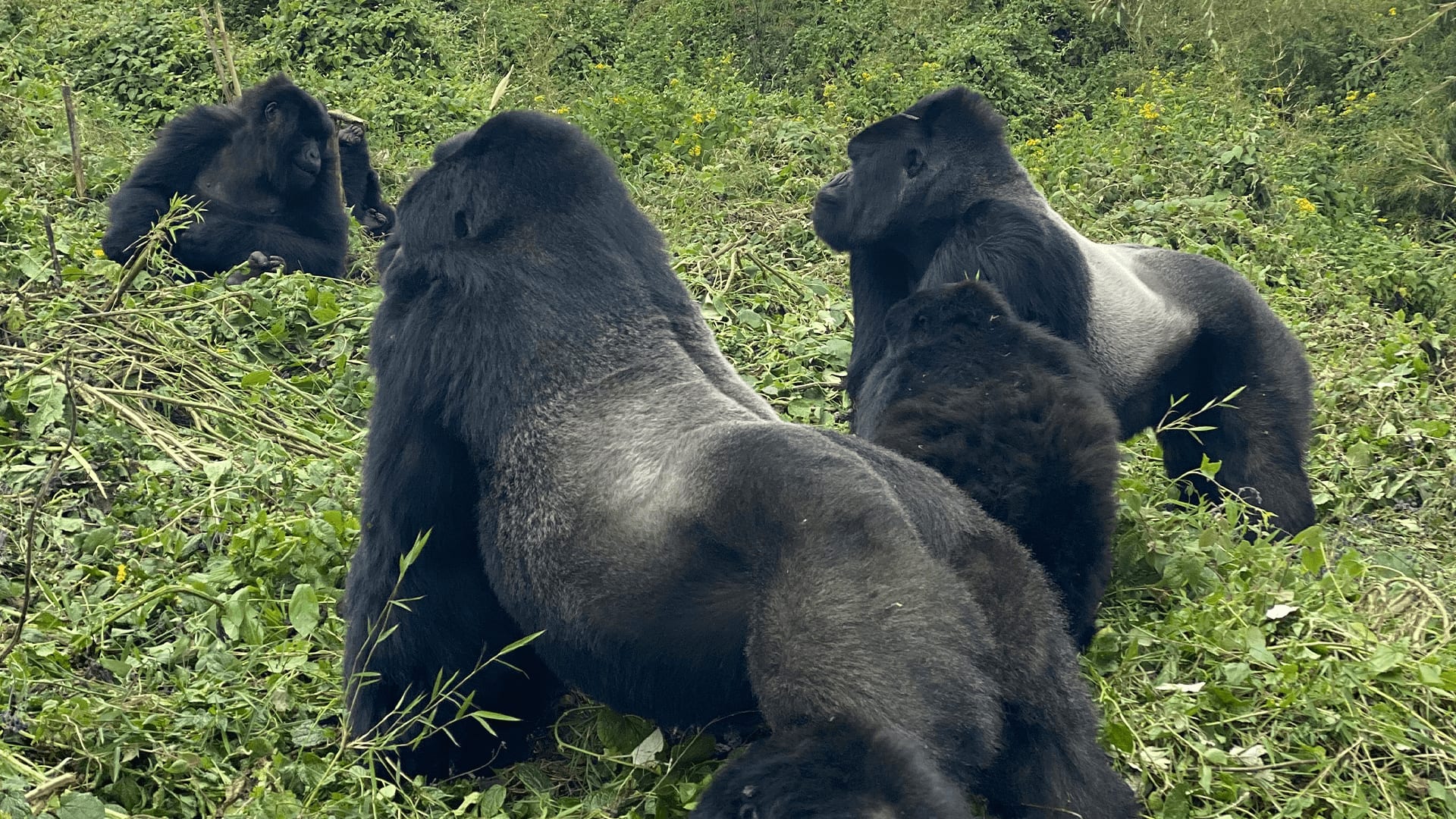
Plan Your Uganda Safari with Local Experts
 WhatsApp Us
Guided vs. self-drive safari: a safety comparison
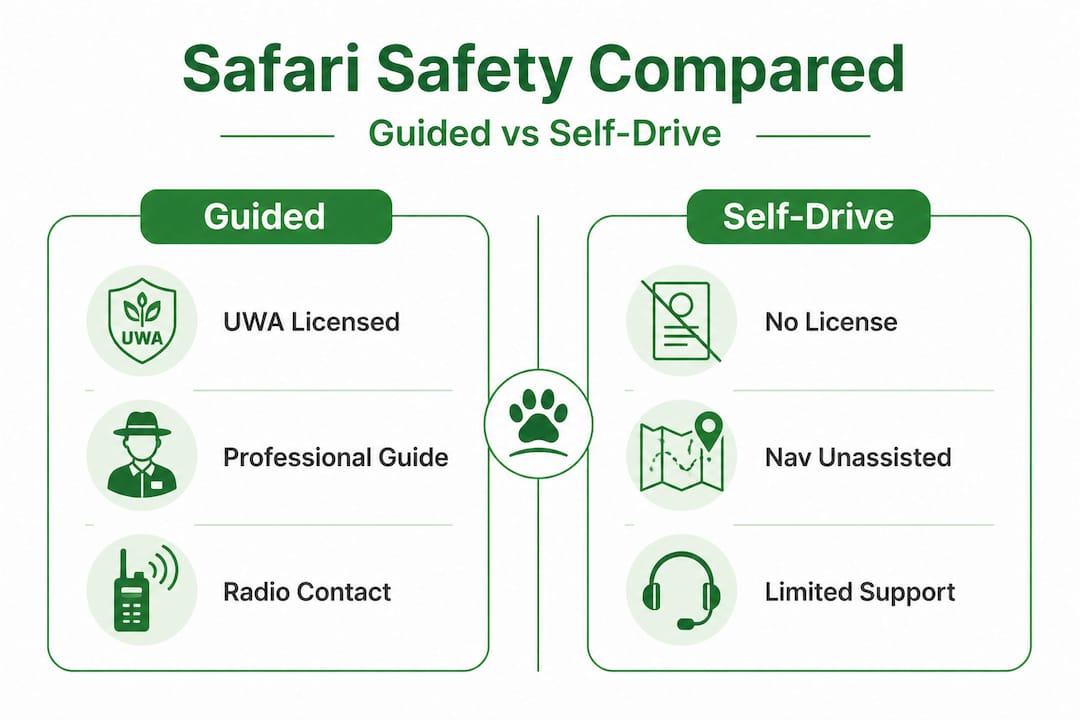
| Safety factor | Guided safari | Self-drive safari |
|---|---|---|
| Operator licensing | Required by UWA regulation | Not applicable |
| UWA ranger coordination | Active on most park circuits | Traveler’s responsibility |
| Emergency radio communication | Standard equipment | Rarely available |
| Wildlife approach protocols | Trained guide enforces limits | Unknown/variable |
| Medical response capacity | Operator first aid, evac plans | None organized |
| Night driving risk | Avoided by reputable operators | High risk |
| Route knowledge | Deep, current, local | Limited, relies on GPS |
The benefits of guided safaris extend well beyond convenience. They represent a structured safety architecture that government advisories themselves acknowledge as the superior model.
How a licensed guide manages risk in real time:
- Pre-departure briefing: Guests are informed about park rules, appropriate distances from wildlife, and emergency hand signals before the vehicle enters the park.
- Wildlife behavior monitoring: Guides read animal body language continuously, repositioning vehicles when stress signals appear in elephants, hippos, or cape buffalo.
- Radio contact with rangers: Communication radios allow instant coordination with UWA ranger posts stationed throughout the park.
- Medical first aid capacity: All licensed PawMac Safaris vehicles carry first aid kits, and guides are trained in wilderness first response.
- Night driving prohibition: Reputable operators enforce a strict no-driving-after-dark policy, eliminating one of the most commonly cited road risks.
- Medical evacuation planning: Operators maintain pre-arranged contacts with Kampala hospitals and evacuation services, with response times mapped in advance.
Pro Tip: When evaluating a tour operator, ask specifically whether they hold a UWA operating license, whether their guides carry first aid certification, and whether their vehicles are equipped with communication radios. Any reputable operator will answer all three questions clearly and immediately.
Recent incidents and what’s changed since 2023
Understanding historical risks gives important context, so let’s examine what has changed in recent years and why 2026 is genuinely a safer time to visit.
The 2023 incident near Queen Elizabeth National Park, in which two tourists and one guide lost their lives in an attack linked to armed insurgents near the park boundary, sent shockwaves through the global safari community. The Ugandan government, UWA, and international tourism bodies responded swiftly. Security infrastructure along park perimeters was reinforced, patrol schedules were intensified, and intelligence-sharing protocols with regional security forces were upgraded.
The outcome of that coordinated response is measurable. The UK FCDO lifted its enhanced advisories for Queen Elizabeth National Park and Semuliki in December 2025, after confirming that no major incidents affecting safari operations had occurred since 2023. The advisory status for these parks returned to “normal precautions,” which is the same category applied to many well-established safari destinations across East Africa.
This shift is significant. The UK FCDO is one of the most cautious and data-driven advisory bodies in the world. When it removes a targeted warning, it reflects genuine improvements on the ground, not just diplomatic optics. Travelers consulting the Uganda safari guide will find that the current landscape is notably more stable than headlines from two or three years ago might suggest.
Key security upgrades implemented since 2023:
- Expanded UWA ranger patrol coverage along park boundaries adjacent to the DRC border
- New rapid-response protocols between tourism operators and regional security forces
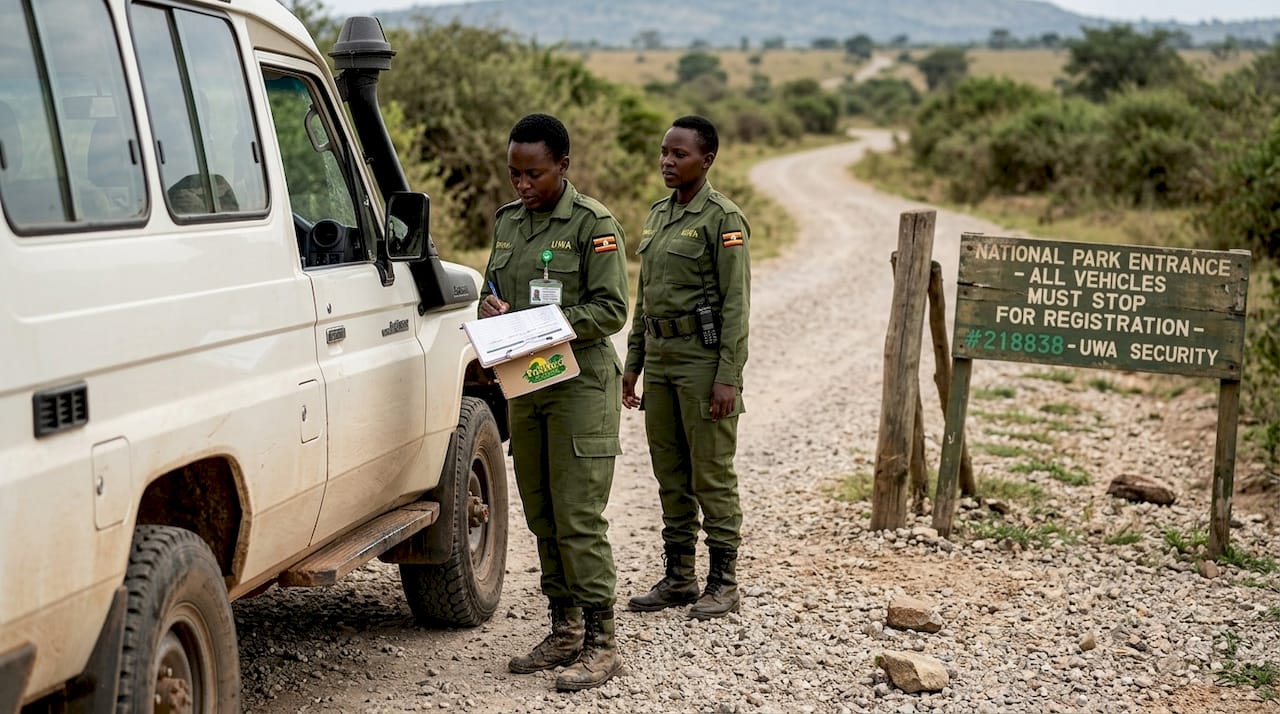
- Mandatory registration of all tourist vehicles entering national parks
- Upgraded communication infrastructure in Queen Elizabeth and Semuliki buffer zones
- Increased coordination between Uganda’s tourism ministry and international tour operator associations
Pro Tip: Before traveling, bookmark both the US State Department and UK FCDO Uganda pages and check them within two weeks of your departure. Advisories can change, and being informed in real time is one of the simplest and most powerful safety measures available.
The broader statistical picture supports optimism. No major incidents affecting organized safari groups have been reported since 2023. Visitor numbers to Uganda’s national parks have rebounded, and international operator confidence in the Ugandan tourism sector has visibly improved since the December 2025 advisory changes.
Expert advice for a safe, responsible Uganda safari
With recent improvements in mind, let’s look at what you can do to further ensure your safety before and during your safari.
Choosing Uganda means choosing a destination where wildlife is genuinely wild, where mountain gorillas roam mist-covered forests, and where the Nile carves through landscapes that take your breath away. That wildness is the attraction. It also means that preparation and intelligent decision-making matter more here than on a resort holiday.
Best practices for a safe Uganda safari:
- Book only with licensed, UWA-registered operators. Unregistered guides and budget operators who cut corners on safety protocols represent the most avoidable risk in the sector.
- Stay within established tourist circuits. Queen Elizabeth, Murchison Falls, Bwindi, and Mgahinga are well-monitored and well-resourced. Improvising into uncharted zones adds unnecessary risk.
- Maintain the recommended buffer distances from the DRC and South Sudan borders. The US State Department advises against travel within 50 kilometers of these borders, and this guidance applies to Karamoja in the northeast as well.
- Follow your guide’s instructions without exception. This is not a formality. It is the single most reliable safety mechanism available inside a national park.
- Avoid spontaneous participation in or proximity to political protests. Uganda’s political climate is generally stable in tourist zones, but protests can escalate unpredictably.
- If traveling with family, review dedicated family safari safety tips to understand age-appropriate activities and additional precautions.
Responsible tourism and personal safety are more connected than many travelers realize. When you book with ethical operators, support local communities, and respect conservation boundaries, you are also reducing the friction points where tourist-community tensions or wildlife stress can create hazardous situations.
Pro Tip: Arrange comprehensive safari travel insurance before departure, with specific medical evacuation coverage for East Africa. Check that the policy covers gorilla trekking and game drives explicitly, as some standard travel policies exclude wildlife activities. Keep digital and physical copies of your policy accessible throughout the trip.
Edge cases to avoid include the DRC and South Sudan border zones within 50 kilometers, Karamoja region in the northeast, and any areas experiencing active civil unrest or protests. These are the areas that actually justify advisory language, not the safari heartland.
Why perceptions of Ugandan safari safety lag behind reality
After sharing practical advice, a step back reveals a bigger truth about how safari safety is perceived versus how it is actually experienced.
Government travel advisories serve a specific, cautious function. They are written by risk analysts who must account for worst-case scenarios across entire countries. They are not written by people who have sat in a safari vehicle at dawn watching elephants move through golden savanna light, or who have shared a community meal with a ranger after a full day in Bwindi. That experiential gap is enormous, and it shapes the fear that many travelers carry unnecessarily.
The US State Department’s advisory language highlights general country-level risks and isolated past events. What it cannot capture is the overwhelmingly positive, safe experience that the vast majority of guided safari travelers report. Operators and travelers consistently describe the main safari circuits as highly safe environments, precisely because of the layered security provided by trained guides, UWA rangers, regulated infrastructure, and responsible community partnerships.
The guided safari advantages are not just logistical. They represent a fundamentally different relationship with risk. A traveler on a self-drive adventure in an unfamiliar country, navigating unmarked tracks without radio communication, is genuinely exposed. A traveler in a licensed vehicle with a certified guide, coordinating with a ranger station and operating under a licensed tour company’s emergency protocols, is in a structurally different risk category. The advisory does not distinguish between these two profiles. You should.
This does not mean complacency is warranted. Real risks exist, and preparation matters. But the emotional distance between “African safari” as a concept loaded with danger and the measured, professional, deeply enjoyable reality of a guided Ugandan safari experience is vast. Travelers who come prepared tend to leave with one dominant feeling: they wish they had come sooner.
Plan your safe and unforgettable Ugandan safari adventure
Uganda’s national parks are more accessible, more secure, and more remarkable than the cautious narrative around African safari safety often suggests. The research, the advisories, and the on-the-ground reality all point in the same direction: a well-planned, guided safari in Uganda is not just safe. It is one of the most rewarding wildlife experiences available anywhere on Earth.

PawMac Safaris specializes in exactly this kind of experience: licensed, UWA-registered, locally led, and built around both your safety and the ethical conservation of Uganda’s extraordinary wildlife. Whether you want to witness a silverback gorilla in Bwindi, track lions across Queen Elizabeth’s open plains, or feel the spray of Murchison Falls, every itinerary is designed with your security as the foundation. Explore the full range of Uganda safari tours, or take the first step toward something truly personalized with a custom Uganda safari. For one of the most action-packed starts imaginable, the Murchison Falls safari remains a firm favorite. Let’s make your adventure both safe and unforgettable.
Frequently asked questions
Is it safe to go on safari in Uganda in 2026?
Yes, guided safaris in Uganda are widely considered safe in 2026. The UK FCDO lifted its enhanced advisories for Queen Elizabeth and Semuliki parks in December 2025 after no major incidents affecting safari operations since 2023, with parks now operating under normal precautions.
Are guided tours safer than self-drive safaris?
Guided tours are significantly safer because they include licensed operators, UWA rangers, and communication radios that self-drive travelers cannot access, along with expert knowledge of wildlife behavior, emergency protocols, and current route conditions.
What are the main safety precautions for tourists in Uganda?
Stick to established tourist circuits in national parks, follow your guide’s instructions at all times, and avoid DRC and South Sudan border zones within 50 kilometers, as well as the Karamoja region and areas with active political unrest.
Have there been any recent safety incidents on Ugandan safaris?
No major incidents affecting organized safari groups have been reported since 2023. The UK FCDO formally lifted its targeted travel advisory for Queen Elizabeth and Semuliki National Parks in December 2025, reflecting this sustained period of stability.
Recommended
- Role of safari guides in Uganda: 50% safer wildlife encounters
- Top advantages of guided safaris in Uganda for 2026
- Is Uganda Safe for Safari in 2026? 0 Incidents & $800 Permits
- Top tips for a safe and fun family safari in Uganda
- Adventure Tourism For Youth Camps: A Parent’s Guide


