


- 154 Views
- 10 Min Read
- (0) Comment
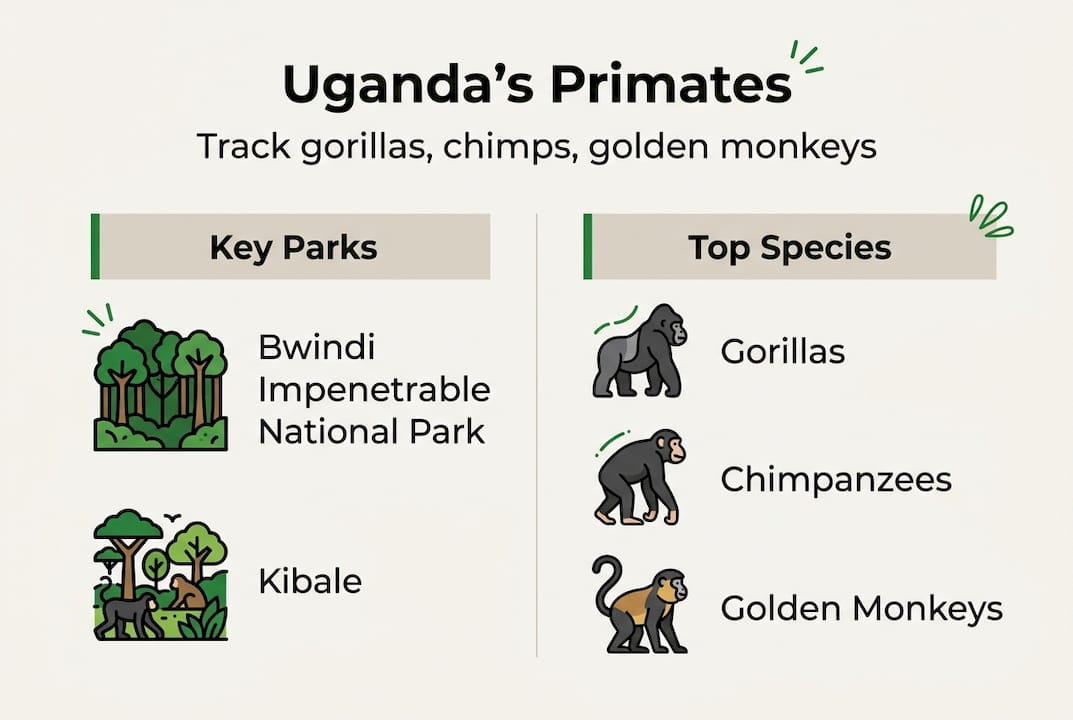
Uganda quietly holds one of the most remarkable concentrations of primates on the planet. With over 20 primate species sharing forests, swamps, and volcanic slopes, this country offers something no single destination in Africa can match: the chance to track mountain gorillas, chimpanzees, and golden monkeys all in one trip. Gorilla tracking success rates sit above 95%, and chimpanzee sightings in Kibale National Park are nearly guaranteed. If you have been wondering whether primate tracking is worth the investment, the answer is a clear yes, and this guide breaks down exactly what each experience involves.
Table of Contents
- Why Uganda stands out for primate tracking
- Gorilla tracking in Uganda: The adventure and mechanics
- Chimpanzee tracking: Fast-paced encounters in multiple parks
- Golden monkeys: Energetic treks and unique ecology
- Responsible tourism: Health, safety, and local impact
- How to design your primate adventure: Logistics and expert tips
- Book your primate safari in Uganda
- Frequently asked questions
Key Takeaways
| Point | Details |
|---|---|
| Uganda’s primate diversity | Uganda offers more primate tracking options than any other country, with dense populations and affordable permits. |
| High success rates | Tracking gorillas, chimpanzees, and golden monkeys boasts 90%+ visitor success rates in Uganda. |
| Responsible tourism matters | Strict health and distance rules protect endangered primates and benefit local communities. |
| Combine treks for variety | Travelers can plan a ‘primate triple’ adventure by combining different treks and parks. |
| Expert-led logistics | Choosing licensed operators and the right season ensures a memorable and ethical safari. |
Why Uganda stands out for primate tracking
Uganda earns its reputation as the primate capital of Africa through sheer diversity and accessibility. No other country lets you combine three distinct primate tracking experiences at a lower overall cost. Rwanda offers gorilla trekking, but permits there run $1,500 per person compared to Uganda’s $700. That price difference alone makes Uganda the smarter choice for budget-conscious adventurers who refuse to compromise on quality.
Kibale National Park holds the world’s highest density of chimpanzees, with over 1,500 individuals across its forest. Mgahinga Gorilla National Park is the only place in Uganda where you can track golden monkeys in their bamboo forest habitat. Bwindi Impenetrable National Park and Mgahinga together protect roughly half of the world’s remaining mountain gorillas. Uganda also has more tracking sites and higher success rates than most competing destinations.
“Uganda offers more primate tracking sites, more affordable permits, and consistently high sighting success rates than any comparable destination in East Africa.”
The so-called primate triple combines gorilla, chimpanzee, and golden monkey tracking into one itinerary. It is the ultimate wildlife experience for serious adventurers. Pair this with a broader Uganda safari guide to understand how these parks connect geographically.
Best seasons for primate tracking:
- June to September: long dry season, firm trails, excellent visibility
- December to February: short dry season, good conditions with fewer crowds
- March to May and October to November: wet seasons, muddy trails, but lower permit demand
| Primate | Park | Permit cost (2026) | Best season |
|---|---|---|---|
| Mountain gorilla | Bwindi / Mgahinga | $800 | Jun-Sep, Dec-Feb |
| Chimpanzee | Kibale NP | $250 | Jun-Sep, Dec-Feb |
| Golden monkey | Mgahinga | $60-$100 | Jun-Sep, Dec-Feb |
Gorilla tracking in Uganda: The adventure and mechanics
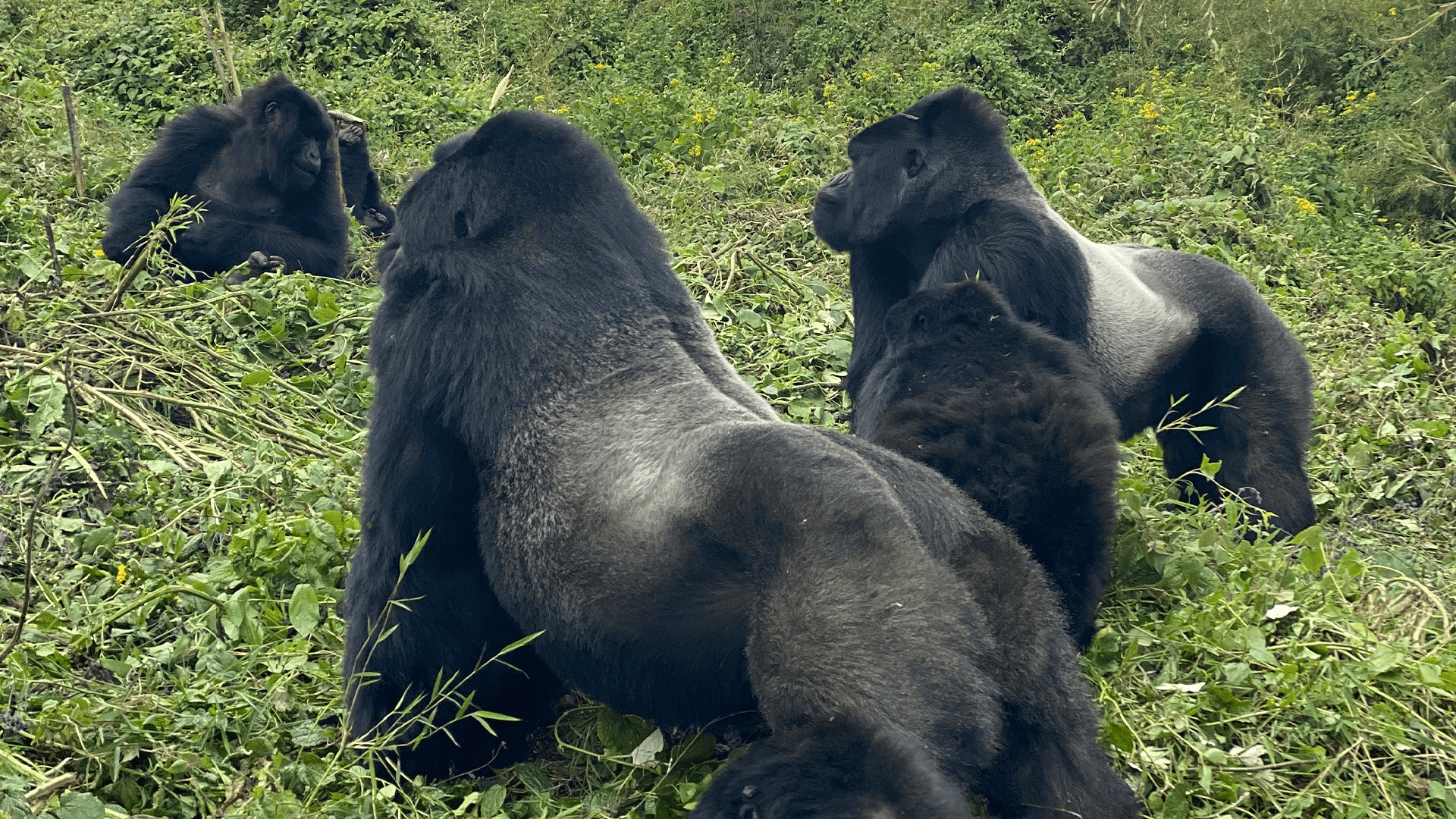
Gorilla tracking is the centerpiece of any Uganda primate safari. The experience is physical, emotional, and unlike anything else in wildlife travel. Treks typically last between two and six hours depending on where the gorilla family has moved overnight. Once rangers locate the group, you get exactly one hour of observation time at a minimum distance of 8 meters.
Here is how a standard gorilla tracking day unfolds:
- Pre-dawn briefing at the park headquarters, where rangers assign you to a gorilla family group
- Trek into the forest with a guide, armed ranger, and porter if you choose one
- Locate the gorillas using radio communication from habituation teams
- One hour of observation at close range, watching feeding, play, and social behavior
- Return trek to the trailhead, usually shorter since you know the route
Pro Tip: Hire a porter. It costs around $15 and directly supports local employment. Porters carry your bag, steady you on steep terrain, and make the trek far more enjoyable.
The UWA tracking rules require masks when within 10 meters of gorillas, no flash photography, no eating near the animals, and staying home if you feel sick. These rules exist because gorillas share roughly 98% of human DNA and are highly vulnerable to our respiratory illnesses.
| Feature | Gorilla tracking | Chimpanzee tracking |
|---|---|---|
| Trek duration | 2-6 hours | 1-4 hours |
| Observation time | 1 hour | 1 hour |
| Permit cost | $800 | $150-$250 |
| Physical demand | Moderate to high | Moderate |
| Minimum age | 15 years | 12 years |
For a deeper look at what each gorilla trekking experience involves, including family group options and lodge recommendations, explore the full breakdown of gorilla trekking packages available in Uganda.
Chimpanzee tracking: Fast-paced encounters in multiple parks
Chimpanzees are louder, faster, and far less predictable than gorillas. Tracking them is a high-energy experience that rewards patience and quick reflexes with your camera. Kibale National Park is the top destination, but you can also track chimps in Kyambura Gorge inside Queen Elizabeth National Park, Budongo Forest in Murchison Falls National Park, and Kalinzu Forest Reserve.
Plan Your Uganda Safari with Local Experts
 WhatsApp Us
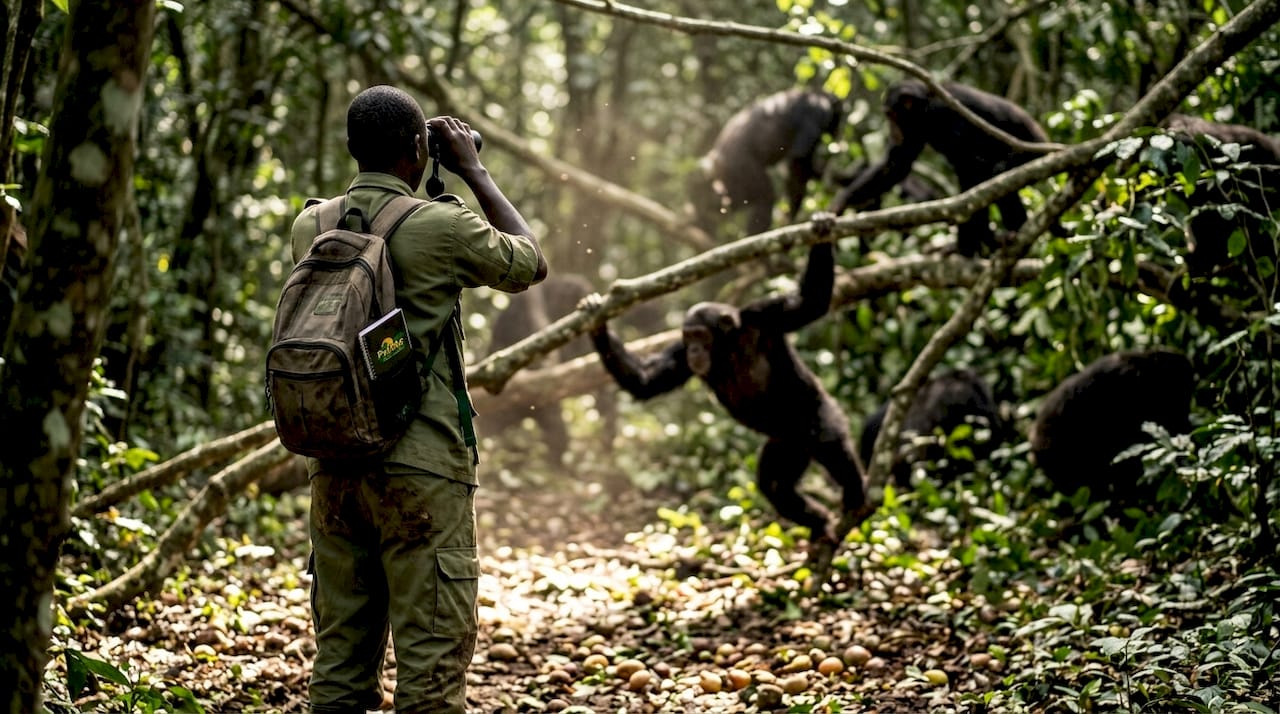
Kibale stands apart because of its 90-95% tracking success rate and the sheer number of habituated chimpanzees available for tracking. Permits cost $250 for morning sessions and $150 for afternoon sessions. The minimum age is 12 years.
What to expect during chimpanzee tracking:
- Morning briefing at the park gate with your ranger guide
- Forest walk listening for chimp calls, drumming on tree roots, and nest locations
- One hour of observation once the group is located
- Chimps move fast and climb high, so expect dynamic sightings rather than calm close-ups
The habituation experience is a separate, longer option where you spend a full day with a chimpanzee community that is still being accustomed to human presence. It costs more but delivers an immersive, research-level encounter. Check chimpanzee tracking success rates and seasonal tips before booking.
Pro Tip: Book the morning session for chimpanzee tracking. Chimps are most active and vocal in the early hours, which means better sightings and more dramatic behavior to observe.
For a dedicated chimp-focused trip, the Kibale chimpanzee safari is a well-structured three-day option. Review Uganda safari pricing to compare package costs across different parks.
| Park | Permit cost | Success rate | Notes |
|---|---|---|---|
| Kibale NP | $250 (AM) / $150 (PM) | 90-95% | Best overall option |
| Kyambura Gorge | $50 | Lower | Dramatic gorge setting |
| Budongo Forest | $90 | High | Combine with Murchison |
| Kalinzu Forest | $50 | Moderate | Budget-friendly option |
Golden monkeys: Energetic treks and unique ecology
Golden monkeys are the most underrated primate tracking experience in Uganda. These vivid, acrobatic primates live exclusively in the bamboo forests of the Virunga volcanic mountains, making Mgahinga Gorilla National Park the only place in Uganda to track them. The golden monkey permit costs between $60 and $100, the trek is less strenuous than gorilla tracking, and sighting chances are very high.
Golden monkeys are endemic to the Albertine Rift, meaning they exist nowhere else on Earth outside this narrow volcanic zone. Their conservation status is endangered, which makes every sighting meaningful beyond the spectacle.
What makes golden monkey tracking special:
- Monkeys leap through bamboo at speed, creating dynamic and colorful photo opportunities
- Groups can number 80 or more individuals, so sightings feel immersive rather than fleeting
- The bamboo forest habitat looks completely different from Bwindi’s dense jungle
- Habituation experience available for those wanting a full-day, research-style encounter
| Feature | Golden monkey | Gorilla | Chimpanzee |
|---|---|---|---|
| Permit cost | $60-$100 | $800 | $150-$250 |
| Trek difficulty | Easy to moderate | Moderate to high | Moderate |
| Group size seen | Up to 80+ | 5-20 | 10-50+ |
| Habitat | Bamboo forest | Dense jungle | Mixed forest |
Combining golden monkey tracking with gorilla trekking in Mgahinga on consecutive days is one of the most efficient ways to experience two species in a single park. The Uganda primate safari five-day itinerary is built around exactly this kind of combination.
Responsible tourism: Health, safety, and local impact
Primate tracking is only sustainable when visitors follow the rules consistently. The UWA guidelines exist to protect both the animals and the long-term viability of tourism. Gorillas and chimpanzees share approximately 98% of human DNA, which means they can catch our colds, flu, and other respiratory illnesses with serious consequences.
Key rules every tracker must follow:
- Maintain a minimum distance of 7 to 8 meters from all primates at all times
- Wear a mask when within 10 meters of gorillas or chimpanzees
- Never eat, drink, or smoke near the animals
- Avoid flash photography, which causes stress and disrupts natural behavior
- Stay home if you are feeling unwell, even with mild symptoms
Permit fees are not just entry tickets. A significant portion funds anti-poaching patrols, ranger salaries, and the community revenue sharing program that directs money to villages surrounding the parks. Hiring a porter adds direct income to local families. These choices compound into real conservation impact over time.
For photography-specific guidance, the wildlife photography permits page covers gear restrictions and permit requirements in detail. The safari planning guide also covers health preparation and what to pack.
How to design your primate adventure: Logistics and expert tips
Planning a primate tracking trip requires more lead time than most travelers expect. Gorilla permits sell out months in advance, especially for peak dry season dates. Here is a practical sequence to follow:
- Decide on your primate combination first: gorilla only, chimp only, or the full primate triple
- Book gorilla permits early, ideally three to six months ahead for June through September
- Choose a licensed operator who handles permit acquisition, transport, and lodge bookings
- Plan your route to minimize driving time between parks, since Kibale and Mgahinga are in different regions
- Pack smart: sturdy hiking boots, long sleeves, rain gear, and a good zoom lens
Pro Tip: Traveling in low season (March to May) can reduce permit demand and unlock discounts on lodges, but expect muddy trails and occasional rain. The licensed operators who specialize in primate tracking will advise on the best timing for your specific itinerary.
Common mistakes to avoid:
- Booking permits independently without understanding the UWA allocation system
- Underestimating travel time between parks on Uganda’s roads
- Skipping the porter to save money, then struggling on steep terrain
- Arriving without travel insurance that covers trek cancellations
For a full multi-park adventure, the 15-day Uganda safari covers gorillas, chimps, golden monkeys, and Big Five game viewing. If you want a focused primate and wildlife combination, the gorilla and wildlife safari five-day option is a strong starting point.
Book your primate safari in Uganda
Reading about primate tracking is one thing. Standing eight meters from a silverback gorilla or watching chimpanzees drum on tree roots is something else entirely. PawMac Safaris designs primate itineraries that combine the gorilla, chimp, and golden monkey experiences into seamless, responsible adventures built around your schedule and budget.

Every package we offer is built on ethical travel principles, licensed guides, and direct community support. Whether you want a focused gorilla trekking Uganda experience, a dedicated 5-day primate safari covering multiple species, or a fully customized multi-week adventure, our team handles every detail. Browse all Uganda wildlife tours and reach out to start planning your trip today.
Frequently asked questions
Which park in Uganda offers the highest chance to see chimpanzees?
Kibale National Park has the world’s highest density of chimpanzees, with a 90-95% success rate for tracking. It is the most reliable option for a guaranteed sighting.
How much does it cost to track gorillas, chimpanzees, and golden monkeys in Uganda?
In 2026, permit prices are approximately $800 for gorillas, $250 for chimpanzees in Kibale, and $60 to $100 for golden monkeys, with lodge discounts often available in low season.
What are the key rules for responsible primate tracking?
The UWA tracking guidelines require maintaining 7 to 8 meters distance, wearing masks near primates, avoiding flash photography, and staying away if you feel unwell.
Can children join primate tracking in Uganda?
Children must be at least 15 years old to participate in gorilla, chimpanzee, and golden monkey tracking across all Uganda national parks.
When is the best time of year for primate tracking in Uganda?
The dry seasons from June to September and December to February offer the firmest trails, clearest forest visibility, and the most comfortable trekking conditions.
Recommended
- Chimpanzee Tracking Uganda | PawMac Safaris
- Chimpanzee Tracking Uganda: Secure 95% Success Rate
- 5-Day Uganda Primate Safari | PawMac Safaris
- Unforgettable 3-Day Chimpanzee Tracking Safari in Kibale NP


