


- 61 Views
- 21 Min Read
- (0) Comment
A successful Big Five safari in Uganda is not just about choosing a park and hoping for the best. Uganda’s classic safari icons, lion, leopard, elephant, buffalo, and rhinoceros, are spread across different habitats, which means your route matters as much as your timing.
The key stop many travelers miss is Ziwa Rhino Sanctuary, because rhinos are not currently found in Uganda’s national parks. From there, the strongest Big Five route usually continues to Murchison Falls National Park, then south to Queen Elizabeth National Park, with optional extensions to Kidepo Valley, Kibale Forest, or Bwindi Impenetrable National Park depending on your time, budget, and interest in primates.
This guide explains how to plan a Big Five safari in Uganda without losing days to poor routing, rushed transfers, or missed wildlife zones.

What “Big Five” Means in Uganda
The Big Five refers to five famous African safari animals: lion, leopard, elephant, rhinoceros, and Cape buffalo. The term comes from historic hunting difficulty, but today it is used by safari travelers as a wildlife-viewing benchmark.
In Uganda, the Big Five experience is unique because it combines classic savanna game drives with river safaris, rhino tracking on foot, and the option to add mountain gorillas or chimpanzees. This makes Uganda especially rewarding for travelers who want more than a single-style safari.
The important planning detail is this: you cannot complete the Big Five in one Uganda national park. Rhinos require a separate stop at Ziwa Rhino Sanctuary, while the other four are best searched for in Murchison Falls, Queen Elizabeth, or Kidepo Valley.
| Big Five animal | Best Uganda stops | Planning note |
|---|---|---|
| Rhinoceros | Ziwa Rhino Sanctuary | Usually visited en route to or from Murchison Falls |
| Elephant | Murchison Falls, Queen Elizabeth, Kidepo Valley | Often seen near rivers, savanna plains, and woodland edges |
| Buffalo | Murchison Falls, Queen Elizabeth, Kidepo Valley | Common but still best viewed with a professional guide |
| Lion | Queen Elizabeth, Murchison Falls, Kidepo Valley | Ishasha is famous for tree-climbing lions |
| Leopard | Murchison Falls, Queen Elizabeth, Kidepo Valley, Lake Mburo | Elusive, best searched for early morning or late afternoon |
For a deeper overview of the animals themselves, PawMac Safaris also has a dedicated guide to Big Five animals in Uganda.
Start With the Right Route, Not Just the Right Park
Many Uganda safari mistakes begin at the route-planning stage. A traveler may choose Murchison Falls for elephants and lions, add Queen Elizabeth for tree-climbing lions, and then realize too late that rhinos were not included. Others try to add Kidepo Valley to a short itinerary, only to discover that the overland transfer time is too demanding for the number of days available.
A practical Uganda Big Five route should balance three things: wildlife probability, road logic, and rest time. Uganda is compact compared with some safari destinations, but the roads between wildlife regions still require careful scheduling. Driving from one major park to another can take most of a day, especially when weather, roadworks, ferry schedules, or park gate timing are involved.
For most travelers, the smartest starting point is Entebbe, Uganda’s main international gateway. From there, you can travel north toward Ziwa and Murchison Falls, then loop southwest toward Kibale, Queen Elizabeth, Bwindi, or Lake Mburo before returning to Entebbe. This creates a natural arc instead of a backtracking itinerary.
Plan Your Uganda Safari with Local Experts
 WhatsApp Us
If your priority is purely the Big Five, you can plan a shorter route around Ziwa and Murchison Falls. If you want a fuller Uganda safari, Queen Elizabeth and Ishasha become essential additions. If you want Uganda’s wildest savanna atmosphere, Kidepo Valley is extraordinary, but it needs more time.
The Key Stops You Should Not Miss
1. Ziwa Rhino Sanctuary for rhino tracking
Ziwa Rhino Sanctuary is the essential first stop for anyone serious about completing a Big Five safari in Uganda. It is located north of Kampala and works well as a stop on the way to Murchison Falls National Park.
Unlike a standard vehicle-based game drive, rhino tracking at Ziwa is typically done on foot with trained ranger guides. This makes it one of Uganda’s most memorable wildlife encounters, but it also requires listening carefully to safety instructions. Rhinos are powerful wild animals, and responsible viewing distance is part of the experience.
Ziwa is not a place to rush through as a simple roadside detour. Allow enough time for the tracking briefing, the guided walk, photography, and possible delays if the rhinos are farther from the starting point. If you are driving onward to Murchison Falls the same day, your guide should plan departure times carefully so you are not entering the park late and tired.
Learn more about the experience in PawMac Safaris’ Ziwa rhino tracking guide.
2. Murchison Falls National Park for elephants, buffalo, lions, leopards, and the Nile
Murchison Falls National Park is one of the strongest Big Five safari stops in Uganda because it can produce four of the five animals after your rhino tracking experience at Ziwa. The park’s northern savanna is especially important for game drives, while the Victoria Nile adds a completely different wildlife perspective.
Elephants and buffalo are often among the more reliable sightings, particularly around open plains, woodland, and riverine areas. Lions may be found on game drives with expert tracking and good timing. Leopards are more elusive, but Murchison offers genuine opportunities, especially in quieter hours and suitable habitat.
The park is also famous for the dramatic waterfall where the Nile is forced through a narrow gorge. Do not treat the waterfall as a side attraction. A well-planned Murchison visit should include both a game drive and a boat safari, because the river reveals hippos, crocodiles, waterbirds, elephants, and buffalo from a different angle.
For most travelers, Murchison deserves at least two nights. One night is possible only on a very rushed itinerary and often sacrifices either the boat safari, the top-of-falls visit, or a quality morning game drive.
PawMac Safaris’ detailed Murchison Falls safari guide explains how to structure time in the park.
3. Queen Elizabeth National Park for varied habitats and Ishasha lions
Queen Elizabeth National Park is one of Uganda’s most versatile safari destinations. Its landscapes include open plains, crater lakes, wetlands, forested gorges, and the Kazinga Channel. This variety makes the park an excellent follow-up to Murchison Falls, especially for travelers who want more than a single game-drive experience.
The Kasenyi plains are a major focus for lion and plains game sightings. The Kazinga Channel boat safari is one of Uganda’s best wildlife-viewing activities, especially for elephants, buffalo, hippos, crocodiles, and birds. The channel often provides relaxed viewing conditions and excellent photography opportunities.
The Ishasha sector, in the southern part of the park, is the key stop many travelers regret skipping. It is known for Uganda’s famous tree-climbing lions. Sightings are never guaranteed, but Ishasha adds a rare behavior-based wildlife experience that fits beautifully into a route between Queen Elizabeth and Bwindi.
If you are planning Queen Elizabeth properly, avoid treating it as a single stop on the map. Kasenyi, Kazinga Channel, Kyambura Gorge, and Ishasha are different safari zones with different travel times and wildlife strengths. A strong itinerary gives the park at least two nights, and three nights is better if Ishasha is included.
For sector-by-sector planning, see PawMac Safaris’ Queen Elizabeth National Park safari itinerary guide.
4. Kidepo Valley National Park for remote wilderness, if you have enough time
Kidepo Valley National Park is not mandatory for every Big Five safari in Uganda, but it is one of the country’s most powerful wilderness experiences. Located in northeastern Uganda, Kidepo offers dramatic savanna landscapes, lower visitor density, and a strong sense of isolation.
Wildlife can include lions, elephants, buffalo, and leopards, along with species and scenery that make the park feel very different from Murchison Falls and Queen Elizabeth. The challenge is access. Overland travel to Kidepo takes time and should not be forced into a short itinerary.
Kidepo works best for travelers with 10 to 14 days or more, or for guests willing to consider domestic flight options where available. If you have only five to seven days, focus on Ziwa, Murchison Falls, and possibly Queen Elizabeth instead of stretching the route too thin.
PawMac Safaris’ Kidepo Valley safari guide is a useful resource if you are considering this remote extension.
How Many Days Do You Need for a Big Five Safari in Uganda?
The ideal length depends on whether you want a focused Big Five route or a broader Uganda wildlife journey. A three-day trip can include Ziwa and Murchison Falls, but it is tight. A seven-day safari offers a much more balanced pace and better chances of quality sightings.
| Trip length | Best for | Suggested key stops | Main trade-off |
|---|---|---|---|
| 3 days | Travelers short on time | Ziwa Rhino Sanctuary, Murchison Falls | Rushed pace and limited game drives |
| 5 days | Focused Big Five safari | Ziwa, Murchison Falls, optional extra Murchison activities | Usually skips Queen Elizabeth and Ishasha |
| 7 to 8 days | Balanced wildlife route | Ziwa, Murchison Falls, Queen Elizabeth, Ishasha | Requires careful transfer planning |
| 10 to 12 days | Wildlife plus primates | Ziwa, Murchison, Kibale, Queen Elizabeth, Bwindi | Higher cost due to permits and more nights |
| 14 days or more | Complete Uganda safari | Ziwa, Murchison, Kidepo or Kibale, Queen Elizabeth, Bwindi, Lake Mburo | Best experience, but requires more budget and time |
For most first-time visitors, 7 to 10 days is the sweet spot. This gives you time for rhino tracking, Murchison Falls, Queen Elizabeth, and one or two premium add-ons such as chimpanzee tracking in Kibale or gorilla trekking in Bwindi.
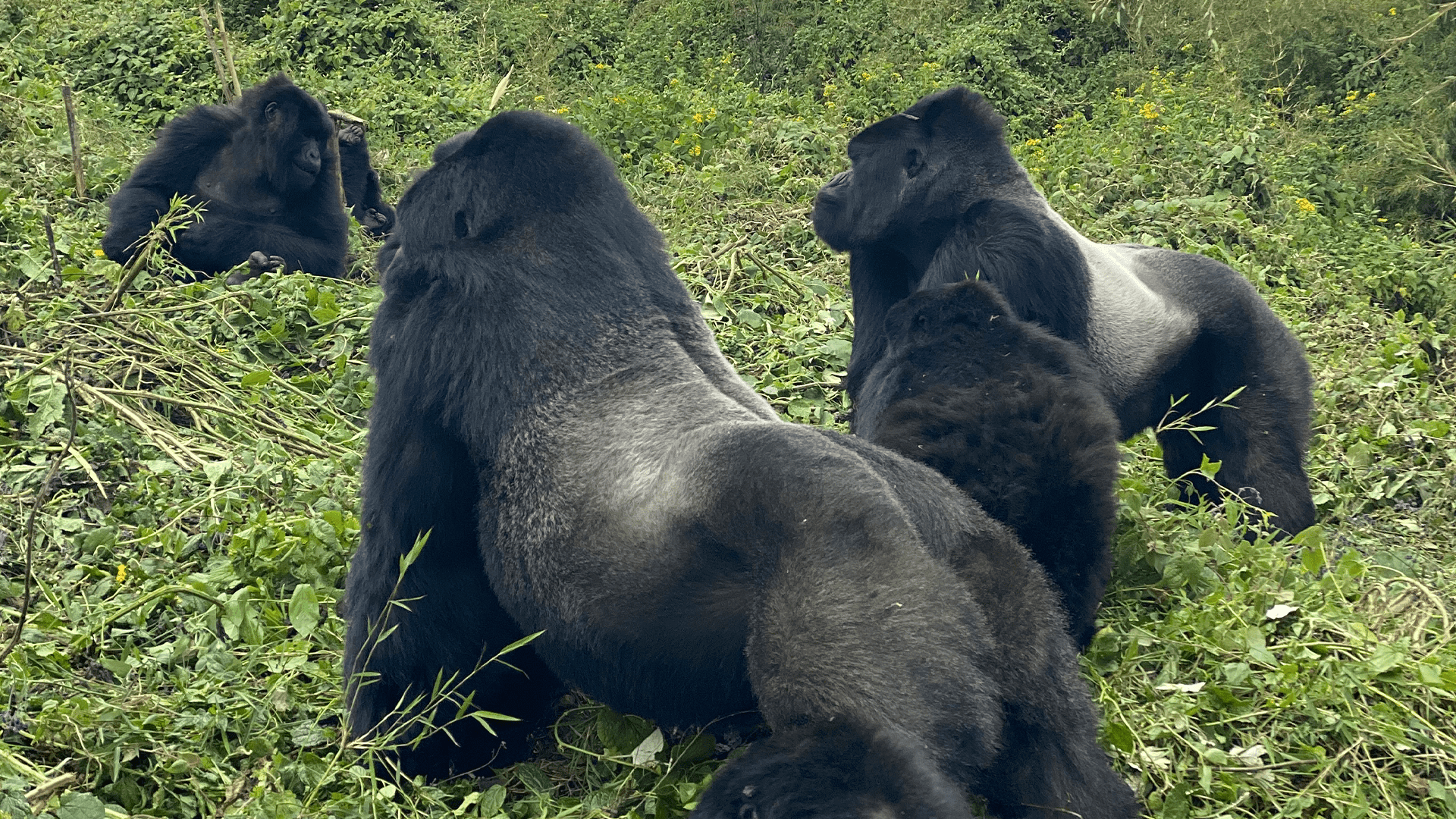
If gorilla trekking is part of your plan, remember that gorilla permits are limited and should be booked early. Uganda’s gorilla experiences take place in Bwindi Impenetrable National Park and Mgahinga Gorilla National Park, not in the Big Five savanna parks. That means gorillas are an extension to your Big Five route, not a substitute for it.
Sample Uganda Big Five Safari Routes
Best 5-day route for a focused Big Five safari
A well-planned five-day safari can cover Ziwa and Murchison Falls without feeling completely rushed. It is ideal for travelers who want a compact wildlife itinerary and are not adding gorilla trekking.
| Day | Route and focus | Why it matters |
|---|---|---|
| Day 1 | Entebbe or Kampala to Ziwa, then continue toward Murchison Falls | Completes the rhino stop and positions you for savanna wildlife |
| Day 2 | Morning and afternoon game drives in Murchison Falls | Best chance for lions, elephants, buffalo, and possibly leopard |
| Day 3 | Nile boat safari and top-of-falls experience | Adds river wildlife and the park’s signature landscape |
| Day 4 | Extra Murchison game drive or delta-focused activity | Improves sighting chances and reduces rush |
| Day 5 | Return to Entebbe or Kampala | Allows a safer, more comfortable departure plan |
This route is efficient because it avoids unnecessary backtracking. The main limitation is that it does not include Queen Elizabeth or Ishasha, so you miss tree-climbing lions and the Kazinga Channel.
Best 8-day route for Big Five plus Queen Elizabeth
An eight-day route is stronger for travelers who want Uganda’s most important Big Five stops without adding too many extras. It includes Ziwa, Murchison Falls, Queen Elizabeth, and Ishasha.
| Day | Route and focus | Why it matters |
|---|---|---|
| Day 1 | Arrival in Entebbe | Buffer for flight delays and recovery |
| Day 2 | Entebbe to Ziwa and onward to Murchison Falls | Essential rhino tracking stop |
| Day 3 | Murchison Falls game drives | Core savanna wildlife viewing |
| Day 4 | Nile boat safari and falls visit | Completes the Murchison experience |
| Day 5 | Transfer toward Queen Elizabeth region | Long but logical southwest movement |
| Day 6 | Kasenyi game drive and Kazinga Channel boat safari | Lions, elephants, buffalo, hippos, and rich birdlife |
| Day 7 | Ishasha sector for tree-climbing lions | Key stop often missed on rushed routes |
| Day 8 | Return toward Entebbe or continue to Bwindi | Flexible ending based on your next priority |
This is a more complete wildlife itinerary than the five-day version, but it still requires efficient road management. If you want to reduce long drives, PawMac Safaris can help adjust overnight stops and pacing according to your comfort level.
Best 12-day route for Big Five, chimpanzees, and gorillas
For travelers who want Uganda’s full wildlife signature, a 12-day route can combine Big Five safari stops with Kibale chimpanzee tracking and Bwindi gorilla trekking. This is one of the most rewarding ways to experience the country because it connects savanna, river, rainforest, and mountain habitats.
| Segment | Main stops | Experience |
|---|---|---|
| Start | Entebbe, Ziwa, Murchison Falls | Rhinos, game drives, Nile boat safari |
| Middle | Kibale Forest | Chimpanzee tracking and forest biodiversity |
| Southwest | Queen Elizabeth, Kazinga Channel, Ishasha | Lions, elephants, buffalo, boat safari, tree-climbing lions |
| Gorilla extension | Bwindi or Mgahinga | Mountain gorilla trekking |
| Return | Lake Mburo or direct Entebbe route | Optional relaxed wildlife stop before departure |
This route is ideal if you want Uganda’s most complete wildlife story. It is also the kind of itinerary where professional coordination matters, because gorilla permits, chimpanzee permits, lodge locations, transfer times, and park activities must align.
Best Time to Plan a Big Five Safari in Uganda
Uganda can be visited year-round, but the experience changes by season. The drier months, generally June to September and December to February, are popular for game viewing because vegetation is often lower and wildlife may concentrate around water sources. Roads and tracks are also more manageable during these periods.
The wetter months, generally March to May and October to November, can bring lush scenery, dramatic skies, excellent birding, and fewer visitors in some areas. However, road conditions can be more challenging, and game drives may require more flexibility.
If your safari includes gorilla trekking or chimpanzee tracking, dry-season travel can make forest trails easier, though rain is possible at any time in Uganda’s rainforest regions. If your focus is photography, the green season can be beautiful, but you should build in time for weather changes.
The best approach is not simply asking for the “best month.” Instead, decide what matters most: easier roads, fewer crowds, lower-season value, photography, birding, or permit availability. PawMac Safaris’ guide to the best time to visit Uganda for safari and gorilla trekking can help refine your timing.
How to Avoid Missing Key Wildlife Stops
The biggest risk on a Uganda Big Five safari is not lack of wildlife. It is poor sequencing. Uganda rewards travelers who respect geography and timing.
First, confirm that Ziwa is included if your goal is the Big Five. Without Ziwa, your itinerary may still be an excellent wildlife safari, but it is not a complete Big Five route in Uganda.
Second, give Murchison Falls enough time. A rushed one-night stay reduces your chances of strong game viewing and may force you to choose between the boat safari and the falls experience. Two nights should be considered the practical minimum for a quality visit.
Third, do not underestimate Queen Elizabeth’s internal distances. Kasenyi, Kazinga Channel, Kyambura, and Ishasha are not the same stop. If your itinerary says “Queen Elizabeth” but does not specify the sector, ask for clarification.
Fourth, protect your early mornings. Lions, leopards, hyenas, and many other animals are more active in cooler hours. Late departures from the lodge can turn a high-potential game drive into a quiet scenic drive.
Fifth, use a suitable 4×4 safari vehicle. Uganda’s wildlife roads can change quickly with rain, dust, ruts, and seasonal conditions. Comfortable 4×4 vehicles are not a luxury detail, they are part of the safari’s reliability.
Choosing Lodges Without Sacrificing Sightings
Accommodation should support the wildlife plan, not just look attractive in photos. A beautiful lodge in the wrong location can cost you valuable morning game-drive time.
In Murchison Falls, the choice of lodge area affects access to the northern game-drive circuits, ferry crossings, boat safari timing, and the top-of-falls visit. In Queen Elizabeth, your lodge choice should match whether you are focusing on Kasenyi, Kazinga Channel, Ishasha, or a combination of sectors.
Budget travelers may choose simpler lodges outside park boundaries, but this can add driving time at the beginning and end of each activity. Mid-range travelers often look for the best balance between comfort and location. Luxury travelers may prioritize privacy, views, and premium service, but should still confirm that the lodge location works for the planned wildlife activities.
Before confirming your safari, ask these practical lodge questions:
- How long is the drive from the lodge to the main game-drive area?
- Will we need a ferry crossing or long access road before morning activities?
- Is the lodge better positioned for Kasenyi, Kazinga Channel, or Ishasha?
- Does the itinerary allow enough rest after long transfer days?
- Are meals timed to support early game drives and activity departures?
PawMac Safaris designs custom safari packages across budget, mid-range, and luxury styles, which makes it easier to match your lodge choices to your actual wildlife goals.
Budgeting for the Route, Not Just the Package Price
The cost of a Big Five safari in Uganda depends on duration, accommodation level, vehicle type, group size, season, park activities, and whether you add gorillas or chimpanzees. The mistake is comparing only the headline package price without looking at what the route includes.
A cheaper itinerary may skip Ziwa, reduce Murchison to one night, avoid Ishasha, or place lodges far from key wildlife zones. That may lower the price, but it also weakens the experience.
When comparing safari quotes, look at the route line by line. Confirm whether rhino tracking is included, how many game drives are planned, whether boat safaris are included, which sectors are covered, and how long the transfer days are expected to be.
Also check what is excluded. Common extra costs may include visas, travel insurance, tips, premium drinks, optional activities, personal purchases, and some permit-based experiences. If gorilla trekking is added, the permit cost is a major budget item and should be confirmed early.
For a more detailed pricing discussion, review PawMac Safaris’ cost of Big Five safari in Uganda guide.
What to Pack for Big Five Game Drives in Uganda
Packing well improves comfort, safety, and sighting quality. Uganda’s safari days can include cool mornings, hot afternoons, dusty tracks, sudden rain, and long hours in the vehicle.
Neutral-colored clothing is recommended for game drives. Lightweight long sleeves and trousers help with sun and insect protection. A warm layer is useful for early mornings, especially in open vehicles or higher-elevation regions. A waterproof jacket is sensible even in the dry season.
Binoculars are highly valuable, even if your guide has a pair. They help you enjoy leopards in trees, lions resting in shade, birds along the Nile, and distant elephants moving across the plains. For photography, bring extra batteries, memory cards, lens cloths, and dust protection.
Do not overpack the vehicle with hard-sided luggage if you are traveling with a group. Soft-sided bags are easier to load into safari vehicles and lodge rooms. If your route includes gorilla trekking, you will need additional forest gear such as hiking boots, gaiters, gloves, and rain protection.
PawMac Safaris has a dedicated Uganda safari packing guide for travelers combining game drives and gorilla treks.
Should You Add Gorilla Trekking to a Big Five Safari?
If time and budget allow, yes. A Big Five safari gives you Uganda’s classic savanna wildlife, while gorilla trekking adds one of the world’s most profound wildlife encounters. Together, they create a richer itinerary than either experience alone.
The best way to add gorillas is usually after Queen Elizabeth and Ishasha, because the route naturally continues toward Bwindi or Mgahinga. This avoids unnecessary backtracking and gives you a strong wildlife progression: rhinos, savanna game, river safaris, tree-climbing lions, then mountain gorillas.
However, gorilla trekking should not be added casually at the last minute. Permits are limited, and your permit sector must match your lodge location. Bwindi has multiple trekking sectors, and choosing the wrong lodge for the wrong sector can create long, stressful transfers before the trek.
If gorilla trekking is a priority, build the safari around permit availability first, then fit the Big Five route around it. PawMac Safaris can coordinate permits, accommodations, and 4×4 routing so the safari flows logically.
For planning details, see the gorilla trekking permit Uganda guide.
Why Local Guide Expertise Matters
Wildlife sightings depend on habitat knowledge, timing, patience, and field interpretation. A good guide does more than drive from one marked point to another. They read tracks, listen for alarm calls, understand animal movement patterns, coordinate with ranger information where appropriate, and know when to wait quietly.
This is especially important for leopards and lions. Leopards may rest in trees or thickets and are easy to miss without trained eyes. Lions may be active very early, then disappear into shade as temperatures rise. Elephants and buffalo are easier to see, but guide judgment still matters for safe, respectful positioning.
A guide also protects the rhythm of the trip. They know when to leave the lodge, when to pause for photography, when to move on, and how to adjust if weather or road conditions change. On a multi-park Uganda safari, this logistical judgment is just as valuable as wildlife knowledge.
PawMac Safaris specializes in expert-guided Uganda wildlife tours, with local knowledge, comfortable 4×4 vehicles, and personalized safari planning for different budgets and travel styles.
Common Planning Mistakes to Avoid
Even experienced travelers can make avoidable mistakes when planning a Big Five safari in Uganda. The country’s wildlife circuit is rewarding, but it is not a place where every highlight sits next to the next.
The first mistake is assuming rhinos are inside the national parks. They are not. Ziwa must be included if the Big Five is your goal.
The second mistake is booking too few nights in major parks. One-night stays create pressure and reduce your chances of relaxed sightings. Wildlife is unpredictable, so extra game drives matter.
The third mistake is skipping boat safaris. Uganda’s river systems are part of what makes its safari experience distinctive. The Nile in Murchison Falls and the Kazinga Channel in Queen Elizabeth can be just as rewarding as vehicle-based game drives.
The fourth mistake is underestimating road transfers. A route that looks short on a map can feel long when you include park roads, photo stops, check-ins, ferry timing, and weather.
The fifth mistake is treating all lodges near a park as equal. Location determines how early you reach wildlife areas and how much time you spend driving before the actual game drive begins.
Frequently Asked Questions
Can you see the Big Five in Uganda? Yes, but you need the right route. Rhinos are seen at Ziwa Rhino Sanctuary, while lions, leopards, elephants, and buffalo are best searched for in parks such as Murchison Falls, Queen Elizabeth, and Kidepo Valley.
What is the best park for a Big Five safari in Uganda? Murchison Falls National Park is one of the strongest choices after visiting Ziwa because it offers excellent opportunities for elephants, buffalo, lions, and sometimes leopards, plus Nile boat safaris. Queen Elizabeth is also important, especially for the Kazinga Channel and Ishasha tree-climbing lions.
How many days do I need for a Big Five safari in Uganda? A focused route can be done in 5 days, but 7 to 10 days is better if you want Murchison Falls, Queen Elizabeth, Ishasha, and a more comfortable pace. Add more days if you want gorilla trekking, chimpanzee tracking, or Kidepo Valley.
Are Big Five sightings guaranteed in Uganda? No ethical safari operator can guarantee sightings of all wild animals. Elephants and buffalo are often more reliable, while lions and leopards require good timing, expert guiding, and patience. Rhino tracking at Ziwa is typically the most focused rhino experience.
Can I combine a Big Five safari with gorilla trekking? Yes. Many travelers combine Ziwa, Murchison Falls, Queen Elizabeth, Ishasha, and Bwindi in one itinerary. This creates a powerful Uganda safari with rhinos, savanna wildlife, river safaris, tree-climbing lions, and mountain gorillas.
Is a private safari better than a group safari for Big Five viewing? A private safari gives more flexibility for early starts, photography stops, rest breaks, and route adjustments. Group safaris can offer good value, but they follow a more fixed schedule.
Plan Your Uganda Big Five Safari With PawMac Safaris
A well-planned Big Five safari in Uganda depends on more than choosing famous parks. You need the right sequence, enough time in each wildlife zone, practical lodge placement, reliable 4×4 transport, and guides who understand Uganda’s landscapes in detail.
PawMac Safaris creates personalized Uganda safari packages, from budget-friendly routes to luxury wildlife journeys, with expert local guides, gorilla trekking add-ons, chimpanzee tracking, Big Five game drives, cultural tours, and flexible planning support.
If you want to include Ziwa, Murchison Falls, Queen Elizabeth, Ishasha, and optional gorilla trekking without wasting time or missing key stops, start with a custom Uganda itinerary. Explore more planning resources in the Uganda Safari Guide or contact PawMac Safaris to design a route that fits your travel dates, comfort level, and wildlife priorities.


