


- 63 Views
- 18 Min Read
- (0) Comment
A gorilla hike Uganda travelers book in 2026 is best described as moderate for many visitors, strenuous for some, and rarely technical. You do not need mountaineering skills, ropes, or elite athletic ability. You do need steady legs, patience, good boots, and a realistic mindset for muddy rainforest terrain.
The challenge changes from day to day because the gorillas are wild and move naturally through Bwindi Impenetrable National Park and Mgahinga Gorilla National Park. Some groups are found after a shorter forest walk. Others require several hours of climbing, descending, and pushing through thick vegetation with Uganda Wildlife Authority ranger teams.
For most reasonably active travelers, the experience is achievable with the right preparation. The key is not asking, “Am I fit enough for the hardest possible trek?” but “How do I choose the right sector, pace, gear, and support so the hike matches my ability?”

The quick answer: how hard is gorilla hiking in Uganda?
On a simple difficulty scale, most Uganda gorilla treks fall between 3 and 4 out of 5.
A 3 out of 5 trek means you may walk for two to four hours on uneven forest trails, with some climbs, mud, and humid conditions. A 4 out of 5 trek may involve steeper slopes, slippery descents, thick undergrowth, and five to seven hours or more from start to finish.
The hike is usually harder than a normal nature walk and easier than a high-altitude mountain summit. It is physically demanding because of the terrain, not because you are moving fast. Ranger teams control the pace, trackers help locate the gorillas, and porters can carry your daypack or assist you on difficult sections.
The most important point: the difficulty is unpredictable. Gorilla location, rainfall, sector, group assignment, and your own fitness all shape the day.
What makes a gorilla hike in Uganda easy or difficult?
No two gorilla treks are identical. Even travelers starting from the same sector on the same morning can have different levels of difficulty because they may be assigned to different gorilla families.
Uganda’s gorilla habitats are real mountain forests, not staged wildlife enclosures. Trails may be narrow, muddy, root-covered, and steep. In some places, rangers may cut through vegetation to reach a gorilla family that has moved away from established paths.
| Difficulty factor | Easier version | Harder version | How to prepare |
|---|---|---|---|
| Gorilla location | Family is near the trailhead | Family has moved deep into the forest | Keep your day flexible and start well rested |
| Terrain | Gradual forest paths | Steep slopes, roots, mud, and vines | Wear broken-in waterproof hiking boots |
| Weather | Dry trail conditions | Rain before or during the hike | Pack a light rain jacket and gaiters |
| Fitness | Comfortable walking uphill | Knee, balance, or endurance limitations | Train on hills and hire a porter |
| Sector choice | Lower or less steep trekking area | Higher, steeper, or more rugged area | Match the sector to your ability before booking |
| Daypack weight | Small bag with essentials | Heavy camera gear and extra clothing | Carry only what you need or use a porter |
The trek can feel surprisingly manageable if you have the right footwear and a slow, steady rhythm. It can feel much harder if you arrive tired after a long transfer, wear unsuitable shoes, or underestimate the wet forest conditions.
Plan Your Uganda Safari with Local Experts
 WhatsApp Us
Bwindi vs Mgahinga: where is the hike harder?
Uganda has two national parks where travelers can trek mountain gorillas: Bwindi Impenetrable National Park and Mgahinga Gorilla National Park.
Bwindi is the best-known gorilla trekking destination in Uganda, with four main trekking sectors: Buhoma, Ruhija, Rushaga, and Nkuringo. It is a large, biodiverse rainforest with varied terrain and multiple habituated gorilla families. Mgahinga is smaller, scenic, and set against the Virunga volcanic landscape in southwestern Uganda.
If difficulty is your main concern, do not choose only by park name. Choose by sector, lodge location, current permit availability, and your fitness profile.
| Trekking area | General difficulty | Best suited for | Notes for 2026 travelers |
|---|---|---|---|
| Buhoma, Bwindi | Moderate | First-time trekkers, comfort-focused travelers | Often considered one of the more accessible Bwindi sectors, though no easy trek is guaranteed |
| Ruhija, Bwindi | Moderate to strenuous | Travelers who do well in cooler, higher terrain | Can involve steeper forest sections and misty conditions |
| Rushaga, Bwindi | Moderate to strenuous | Travelers seeking more permit options and flexible routing | Has several gorilla families, but terrain varies by assignment |
| Nkuringo, Bwindi | Strenuous | Fit hikers and travelers comfortable with steep gradients | Known for dramatic scenery and tougher climbs |
| Mgahinga Gorilla National Park | Moderate to strenuous | Travelers who enjoy volcanic landscapes and fewer crowds | Higher-altitude setting, with terrain shaped by the Virunga slopes |
For a deeper look at sector logistics, road access, and how to avoid mismatching your lodge and permit area, read PawMac Safaris’ guide to Bwindi National Park gorilla trekking logistics.
What happens on the actual gorilla trekking day?
Your trekking day usually starts early. Travelers arrive at the sector briefing point in the morning for registration, health checks, and a ranger briefing. The Uganda Wildlife Authority team explains the rules, assigns visitors to gorilla groups, and organizes ranger escorts.
The hike then begins either directly from the briefing area or after a short drive to a trailhead. Trackers often move ahead early to locate the gorilla families based on their previous nesting sites and fresh signs such as broken vegetation, feeding remains, and dung.
A typical day follows this rhythm:
- Morning briefing: Rangers explain safety rules, gorilla etiquette, health requirements, and group assignments.
- Porter selection: You can hire a porter before departure, which is strongly recommended even if you feel fit.
- Forest hike: The group walks at a controlled pace through trails, slopes, and sometimes thick vegetation.
- Gorilla location: Trackers and rangers coordinate until the assigned family is found.
- One-hour encounter: Once with the gorillas, you spend up to one hour observing them under ranger supervision.
- Return hike: The walk back may be easier, similar, or occasionally more tiring depending on the route.
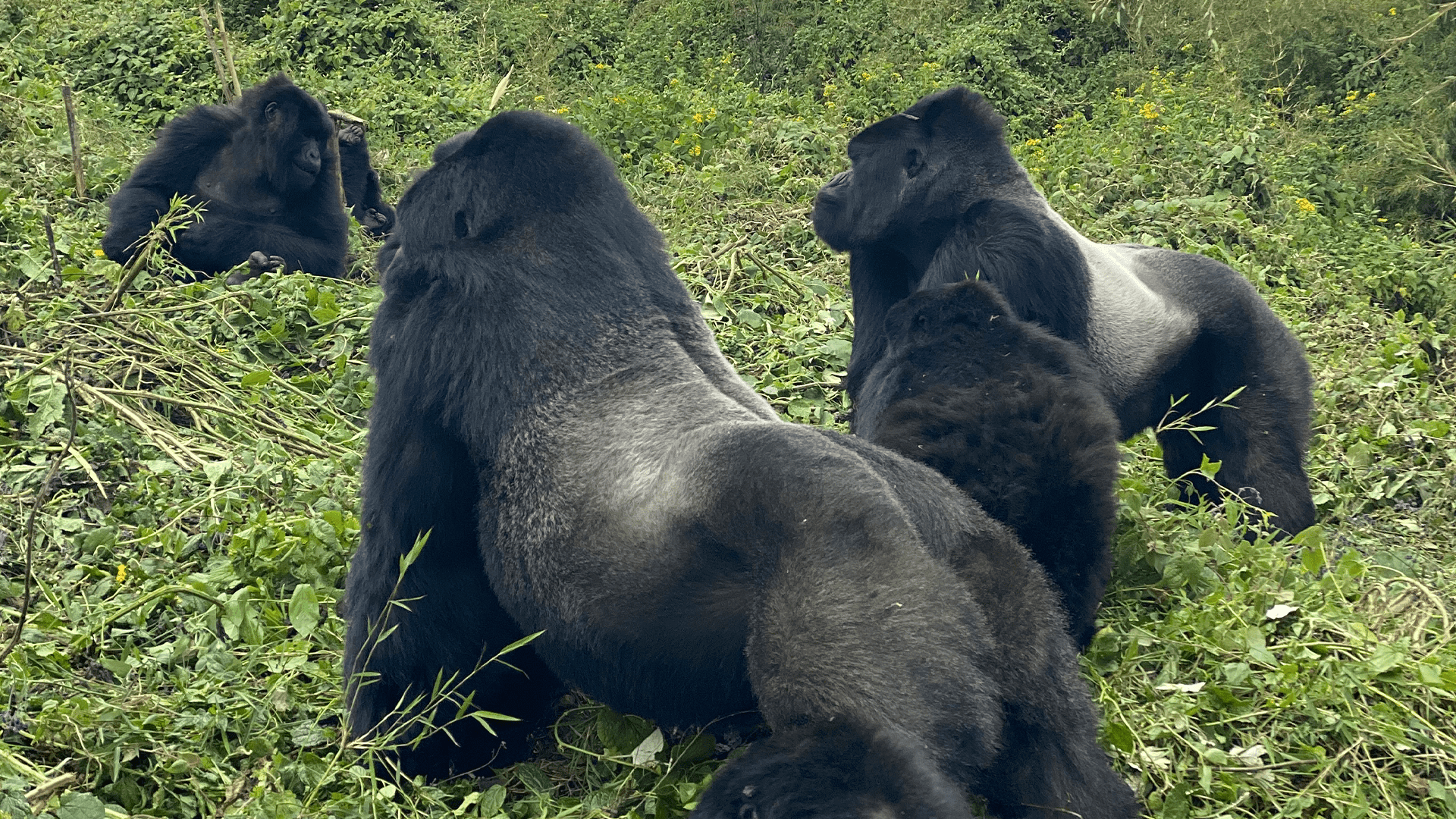
The one hour with the gorillas is not the hard part. Most travelers forget the fatigue once they are watching a silverback feeding, a mother grooming her infant, or young gorillas climbing nearby branches. The physical effort is the path to a wildlife encounter that cannot be replicated from a vehicle.
How long does a gorilla hike take in Uganda?
Most gorilla trekking days take 2 to 7 hours in total, including the hike in, the one-hour gorilla encounter, and the walk back. Some treks are shorter. A few can take longer if the assigned gorilla family has moved far from the starting area.
This is why a tight schedule is risky. Do not plan a major road transfer, domestic flight, or demanding activity immediately after your trek unless your safari expert has built the timing carefully. A good itinerary gives you room to return, clean up, eat, and rest.
For travelers booking a 2026 Uganda safari, the hike should be treated as the main event of the day. It is not an activity to squeeze between long drives.
What fitness level do you need?
You should be able to walk for several hours at a slow to moderate pace, including uphill sections, steps, mud, and uneven ground. You do not need to run, climb technical rock, or carry a heavy pack.
A useful self-test is this: can you walk for two to three hours on hilly terrain without feeling exhausted the next day? If yes, you are probably in a good starting position for many Uganda gorilla treks. If not, you can still prepare with focused training before travel.
| Time before your safari | Training focus | Practical goal |
|---|---|---|
| 8 weeks before | Build walking consistency | Walk 3 to 4 times per week, including one longer walk |
| 6 weeks before | Add hills or stairs | Practice steady uphill movement without rushing |
| 4 weeks before | Strengthen legs and balance | Include squats, step-ups, and gentle core work if suitable for you |
| 2 weeks before | Test your gear | Walk in your trekking boots with your daypack |
| Final week | Rest and stay healthy | Avoid new intense workouts and prioritize sleep |
If you have knee problems, balance concerns, asthma, heart conditions, or recent surgery, speak with your doctor before booking. Then share your limitations clearly with PawMac Safaris so the itinerary can be planned responsibly.
Can seniors do a gorilla hike in Uganda?
Yes, many older travelers complete gorilla trekking in Uganda successfully. Age alone is not the deciding factor. Mobility, balance, stamina, medical stability, and attitude matter more.
The minimum age for gorilla trekking is 15, but there is no upper age limit set purely by age. Older travelers should be honest about walking ability and should strongly consider hiring a porter. Porters do more than carry bags. They often help steady trekkers on muddy slopes, offer a hand during descents, and make the experience more comfortable.
A premium or carefully paced itinerary can also reduce strain. For example, staying close to the correct trekking sector avoids unnecessary early morning drives on winding roads. Adding a rest day before or after the trek can make a significant difference.
No ethical operator can guarantee an easy gorilla group. However, a well-planned trip improves the chances that your trek day starts smoothly, with the right lodge, vehicle timing, briefing point, and support team.
How much does weather affect difficulty?
Weather is one of the biggest variables in a Uganda gorilla hike. Bwindi and Mgahinga are forest environments, so rain can fall in any month. Even in the dry seasons, you should be ready for wet vegetation and muddy ground.
The popular dry-season windows are generally June to September and December to February. These months often bring more favorable trail conditions, though they also attract higher demand for permits and lodges. The wetter periods, especially March to May and October to November, can bring muddier trails but also lush scenery, fewer crowds, and excellent photographic atmosphere.
| Season | Trail conditions | Booking impact | Best for |
|---|---|---|---|
| June to September | Usually drier, but still rainforest | High demand, book early | First-time trekkers, families with eligible teens, classic safari combinations |
| December to February | Often good trekking conditions | High holiday demand | Travelers combining gorillas with wildlife parks |
| March to May | Wetter and muddier | More availability in some periods | Flexible travelers, photographers, value-focused trips |
| October to November | Mixed rain and clear spells | Moderate to lower demand | Travelers comfortable with mud and greener landscapes |
If you are nervous about difficulty, choose a drier month and book early enough to secure a suitable sector. If you are fit and flexible, wetter months can still offer a rewarding experience.
For month-by-month safari planning, PawMac Safaris has a dedicated guide to the best time to visit Uganda for safari and gorilla trekking.
Gear that makes the hike easier
Good gear does not make the forest flat, but it can prevent discomfort from becoming a major problem. The most common mistakes are wearing soft city sneakers, packing too much, and assuming a rain jacket is optional.
Prioritize practical, lightweight items that protect you from mud, rain, insects, and scratches. Neutral colors such as olive, brown, grey, and khaki are ideal for forest trekking.
Essential gear includes:
- Waterproof hiking boots with ankle support, already broken in before travel.
- Long trousers and a long-sleeved shirt to protect against nettles, insects, and branches.
- Lightweight rain jacket or poncho for sudden forest showers.
- Gardening-style gloves for gripping vegetation and protecting your hands.
- Gaiters or long socks to reduce mud and insect exposure around your ankles.
- Small daypack with water, snacks, camera, rain cover, and basic medication.
- Trekking poles if you are used to them, especially for descents.
- Face mask and personal sanitizer, following current ranger guidance on gorilla health protection.
For group leaders, schools, churches, or organizations combining a safari with community visits in Uganda, keep donation supplies separate from personal trekking gear. Large shipments require proper storage and transport planning; U.S. organizers sometimes use commercial storage references such as bulk pallets for sale when thinking through large-scale goods, but your gorilla trekking daypack should remain compact and trail-ready.
For a detailed Uganda-specific packing breakdown, see PawMac Safaris’ Uganda safari packing guide for gorilla treks and Big Five safaris.
Should you hire a porter?
Yes, in most cases. Hiring a porter is one of the simplest ways to make a gorilla hike easier and more meaningful.
A porter carries your daypack, helps you keep balance on muddy sections, and allows you to focus on the trail instead of your luggage. Even strong hikers often appreciate having their hands free for steep sections and photography.
Porter fees are modest compared with the total cost of a gorilla safari, and porter income directly supports local households around the parks. It is a practical decision and a responsible tourism choice at the same time.
If you are carrying heavy camera gear, have knee concerns, or are unsure about your stamina, do not wait until the trail becomes difficult. Arrange a porter at the beginning.
Permits and 2026 booking logistics that affect difficulty
A Uganda gorilla permit is not just an entry ticket. It determines your trekking date, park sector, and access to a regulated gorilla experience. In 2026, the foreign non-resident gorilla trekking permit is commonly planned around USD 800 per person, based on current Uganda gorilla trekking guidance used in PawMac Safaris itineraries.
Permits are limited because visitor numbers are controlled to protect the gorillas. Each standard trek allows a maximum regulated visit of one hour with a habituated gorilla family, under ranger supervision.
The booking mistake that makes the hike unnecessarily hard is not usually the permit itself. It is poor coordination between permit sector, lodge location, road transfer, and traveler fitness.
For example, staying far from your assigned sector can mean a very early wake-up, a long bumpy drive before the hike, and unnecessary fatigue before you even reach the briefing point. This is why sector-lodge alignment matters so much in Uganda.
If you are still comparing costs, rules, and availability, read the PawMac Safaris gorilla trekking permit Uganda guide.
Is the gorilla hike safe?
Yes, Uganda gorilla trekking is a regulated activity led by Uganda Wildlife Authority ranger teams, with strict rules designed to protect both visitors and gorillas. The hike itself carries normal outdoor risks such as slips, mud, fatigue, dehydration, and minor scratches. Serious incidents are uncommon when travelers follow ranger instructions and prepare properly.
The gorilla encounter has its own rules. Keep the required distance, stay quiet, do not eat near the gorillas, avoid flash photography, and follow the ranger’s position instructions. If a gorilla moves closer, remain calm and listen to the ranger. You are entering their habitat, so respectful behavior is essential.
Do not trek if you are sick with flu-like symptoms, a cough, fever, stomach illness, or any contagious condition. Mountain gorillas are vulnerable to human-transmitted diseases. Responsible travelers protect the animals by being honest at the briefing.
How PawMac Safaris helps match the trek to your ability
The easiest way to make a gorilla hike feel harder than necessary is to book it as a single isolated activity without understanding Uganda’s geography. Bwindi sectors are not interchangeable, roads are winding, and lodges must be matched carefully to permit location.
PawMac Safaris helps travelers plan Uganda gorilla trekking with local knowledge, expert-guided logistics, comfortable 4×4 vehicles, and custom safari packages across budget, mid-range, and luxury styles. The planning conversation should include your fitness level, preferred comfort standard, photography interests, medical considerations, travel dates, and whether you want to combine the trek with chimpanzee tracking, Big Five safaris, cultural tours, or adventure activities.
This does not mean the forest becomes predictable. Wild gorillas decide where they go. But good planning reduces avoidable stress and helps you start the trek rested, properly equipped, and in the right sector for your travel style.
If you are building a broader itinerary, a route such as Entebbe, Kibale, Queen Elizabeth National Park, Bwindi, and Lake Mburo can balance primates, savanna wildlife, boat safaris, and rest time. PawMac Safaris’ 7-day Uganda safari itinerary is a useful starting point for travelers who want gorillas plus wildlife without overcomplicating the schedule.
Which travelers find the hike most difficult?
Travelers who struggle most are not always the least fit. Often, the hardest treks happen to people who underestimate the environment or rush their itinerary.
You may find the hike more difficult if you arrive sleep-deprived, wear poor footwear, carry a heavy bag, skip breakfast, avoid hiring a porter, or book a lodge too far from your trekking sector. Travelers who do not usually hike on uneven ground may also find the descents harder than the climbs.
Photographers should think carefully about weight. A long lens, spare body, batteries, and rain protection can become tiring after several hours. If photography is a priority, hire a porter and keep your movement controlled. The forest can be dark, humid, and unpredictable, so steady handling matters more than carrying every piece of equipment you own.
Which travelers usually manage well?
Travelers who manage best usually prepare simply and consistently. They walk before the trip, break in their boots, pack light, listen to rangers, and accept that the trek is part of the experience.
A positive mindset matters. Gorilla trekking is not a race to a viewpoint. It is a slow search through one of Uganda’s most important forest habitats. The pauses, mud, birdsong, distant calls, and ranger explanations all build the anticipation before the encounter.
If your goal is a perfectly predictable hike, Uganda’s gorilla forests may challenge you. If your goal is a rare, ethical wildlife encounter with real adventure, the effort is part of what makes the day unforgettable.
Practical ways to make your gorilla hike easier
Small decisions before and during the trek can change how the day feels. The best approach is to reduce unnecessary strain without trying to remove the adventure completely.
Choose a sector that matches your ability as much as permit availability allows. Stay near the correct briefing point. Add a rest night before the trek if you are arriving from a long international flight or a full-day road transfer. Eat breakfast even if you feel nervous, carry enough water, and tell your guide about any medical or mobility concerns before the morning briefing.
During the hike, take short steady steps, especially on climbs. Use your porter’s help without embarrassment. Keep your rain gear accessible rather than buried at the bottom of your bag. When the group stops, drink water before you feel thirsty.
For a full pre-trip checklist, PawMac Safaris’ guide on how to prepare for gorilla trekking in Uganda covers fitness, gear, health rules, and practical trekking habits in more detail.
Final verdict: is a gorilla hike in Uganda too hard?
For most travelers, no. A gorilla hike in Uganda is challenging but achievable. It asks for preparation, humility, and respect for a wild rainforest environment. It does not require extreme fitness, but it does reward travelers who take the physical side seriously.
If you can walk for several hours, handle uneven terrain, and follow ranger guidance, you have a strong chance of completing the trek comfortably. If you are unsure, choose your sector carefully, travel in a drier season, use a porter, and work with a local operator that understands Uganda’s ground realities.
The reward is extraordinary: one carefully managed hour with mountain gorillas in their natural Ugandan habitat. The hike may test your legs, but the encounter stays with you long after the mud has been washed from your boots.
Frequently Asked Questions
How hard is a gorilla hike Uganda travelers book in 2026? Most Uganda gorilla hikes are moderate to strenuous. The difficulty depends on the assigned gorilla family, sector, weather, terrain, and your fitness. Reasonably active travelers usually manage well with good boots, a porter, and proper preparation.
How many hours do you hike to see gorillas in Uganda? A typical gorilla trekking day lasts 2 to 7 hours including the hike in, one hour with the gorillas, and the return walk. Some treks are shorter, while others take longer if the gorillas have moved deep into the forest.
Which Uganda gorilla trekking sector is easiest? Buhoma is often considered one of the more accessible Bwindi sectors, but no sector can guarantee an easy trek. Gorilla movement changes daily, and final group assignment is managed by Uganda Wildlife Authority ranger teams.
Do I need to be very fit for gorilla trekking in Uganda? You do not need elite fitness, but you should be comfortable walking for several hours on uneven, muddy, and hilly ground. Training with hill walks, stairs, and broken-in hiking boots before travel is strongly recommended.
Should I hire a porter for the gorilla hike? Yes, hiring a porter is highly recommended. A porter carries your daypack, helps on slippery sections, and supports local communities around Uganda’s gorilla parks.
Can I do a gorilla hike in Uganda if I have knee problems? It may be possible, but you should speak with your doctor first and tell your safari planner in advance. Choose a carefully paced itinerary, use trekking poles if suitable, hire a porter, and avoid booking a rushed schedule around your trek day.
Plan your 2026 Uganda gorilla trek with PawMac Safaris
If you want the gorilla hike to match your fitness, comfort level, and travel goals, plan it with local experts who understand Uganda’s sectors, roads, permits, and lodge logistics.
PawMac Safaris designs personalized Uganda gorilla trekking tours with expert local guides, comfortable 4×4 vehicles, flexible pricing options, and safari extensions to Uganda’s best wildlife parks. Whether you want a focused gorilla trek, a luxury primate safari, or a full Uganda wildlife itinerary, the right planning can turn a challenging hike into a smooth and unforgettable journey.
Start with PawMac Safaris’ complete guide to gorilla trekking in Uganda and begin shaping your 2026 adventure in the Pearl of Africa.


