


- 67 Views
- 17 Min Read
- (0) Comment
Gorilla trekking in Uganda is one of those rare travel experiences where one day can become the highlight of an entire lifetime. But because the permit is date-specific, the terrain is wild, and the rules are designed to protect critically important mountain gorilla populations, small mistakes can carry big consequences.
A forgotten passport, wrong lodge sector, poor footwear, hidden cough, or unrealistic transfer plan can turn an unforgettable morning in Bwindi Impenetrable National Park or Mgahinga Gorilla National Park into stress, discomfort, or even a missed trek.
The good news is that most gorilla trekking mistakes are completely avoidable. With the right planning, honest fitness preparation, and experienced local guidance, your day can feel calm, safe, and deeply rewarding from the pre-dawn briefing to the final walk back through the forest.
Why gorilla trekking mistakes matter so much in Uganda
A Uganda gorilla trek is not a casual walk that can simply be rescheduled if you arrive late. Your gorilla permit is tied to a specific date and park area, and in Bwindi, logistics can be sector-specific. The visitor centers are spread across different parts of the forest, and the road between sectors can take hours.
The trekking day also begins early. Travelers typically report to the park briefing point around 7:00-8:00 a.m., depending on the sector and current park instructions. Rangers then allocate groups, explain safety rules, check health conditions, and lead visitors into the forest. If you miss this window, the forest does not wait.
Uganda is exceptional for gorilla trekking because it offers multiple trekking sectors in Bwindi plus Mgahinga in the Virunga foothills. That variety gives travelers more choice, but it also increases the need for accurate planning. A good itinerary aligns your permit, lodge, vehicle, guide, fitness level, and onward route. A poor one leaves too much to chance.

Quick overview: mistakes that can ruin the day
| Mistake | Why it causes problems | Better approach |
|---|---|---|
| Booking the wrong sector | You may stay hours from your briefing point | Match permit, lodge, and route before payment |
| Arriving too late | Missed briefing can mean a missed trek | Sleep near the correct sector the night before |
| Wearing poor footwear | Mud, roots, and slopes increase slip risk | Use broken-in waterproof hiking boots |
| Hiding illness | Gorillas are vulnerable to human diseases | Report symptoms honestly and follow ranger advice |
| Skipping a porter | Fatigue can reduce your enjoyment and safety | Hire local porter support at the trailhead |
| Bringing too much camera gear | Heavy bags slow you down in steep forest | Pack light, weatherproof, and practical gear |
| Ignoring ranger rules | It risks safety and conservation protocols | Listen carefully and follow instructions immediately |
Mistake 1: Booking a permit without matching it to the right sector
This is one of the most expensive mistakes in Uganda gorilla trekking. Bwindi Impenetrable National Park is not a single entrance experience. It has four main trekking sectors: Buhoma, Ruhija, Rushaga, and Nkuringo. Mgahinga Gorilla National Park is separate, near Kisoro and the Virunga volcanoes.
A permit for one sector does not mean you can simply show up at another. If your permit is for Rushaga but your lodge is near Buhoma, you may face a very long early morning transfer on rough roads, or worse, you may not make the briefing in time.
Each sector has its own character. Buhoma is popular for its history and access to Queen Elizabeth National Park via Ishasha. Ruhija sits at higher elevation and can feel cooler and quieter. Rushaga is known for strong permit availability and access from the southern route. Nkuringo offers dramatic views and more demanding terrain. Mgahinga brings volcanic scenery and a distinct feel near the Virunga ranges.
| Trekking area | Best suited for | Planning caution |
|---|---|---|
| Buhoma | Travelers combining Bwindi with Ishasha or northern routes | Permits and lodges can sell early in peak months |
| Ruhija | Birders, cooler forest conditions, quieter experiences | Higher elevation can feel demanding for some travelers |
| Rushaga | Travelers seeking more permit options and southern routing | Confirm lodge distance to the correct briefing point |
| Nkuringo | Fit hikers who enjoy steep terrain and big views | Not ideal for travelers seeking the gentlest walking day |
| Mgahinga | Volcano scenery, golden monkey add-ons, Kisoro routing | Fewer permits than Bwindi, so availability matters |
Before paying for anything, confirm the exact permit sector, accommodation location, drive time to briefing, and onward route. PawMac Safaris handles this alignment carefully because sector-lodge mismatch is one of the easiest ways to damage an otherwise excellent itinerary.
Plan Your Uganda Safari with Local Experts
 WhatsApp Us
For deeper planning, see the PawMac Safaris guide to where to see gorillas in Uganda.
Mistake 2: Treating the transfer as an afterthought
Many visitors underestimate Uganda’s road realities. On a map, distances can appear simple. On the ground, mountain roads, rain, roadworks, sharp bends, and slow sections can change the rhythm of the day.
The most reliable approach is to sleep near your correct gorilla trekking sector the night before. Do not plan to arrive from Entebbe, Kampala, Queen Elizabeth National Park, or Lake Bunyonyi on the same morning as your trek unless your guide has specifically confirmed that the route is practical, safe, and timed with a generous buffer.
This matters even more in the rainy months, usually March-May and October-November, when tracks can become muddy. Uganda’s green season can be beautiful, atmospheric, and less crowded, but it rewards travelers who build flexibility into the itinerary.
A well-paced gorilla itinerary also avoids exhausting you the day before the trek. If you spend 9-10 hours on the road, arrive after dark, eat late, and sleep poorly, your body will feel it on the trail. The best plans protect both logistics and energy.
Mistake 3: Choosing the cheapest quote without checking what is included
A low safari price can look attractive until you realize key items are missing. With gorilla trekking, the biggest fixed cost for many international visitors in 2026 is the Uganda gorilla permit, commonly USD 800 for foreign non-residents. Beyond that, costs depend on transport, fuel, driver-guide services, accommodation, meals, park logistics, and optional support such as porters.
The mistake is not choosing a budget safari. Uganda can be planned well at different comfort levels. The mistake is comparing quotes only by headline price instead of checking inclusions line by line.
Ask whether the quote includes the gorilla permit, correct-sector accommodation, 4×4 transport, fuel, driver-guide, meals, drinking water, airport transfers, and activity timing. Also confirm what is excluded, such as porter fees, tips, visas, insurance, laundry, drinks, or personal expenses.
This is similar to any major financial decision: the cheapest option is not always the lowest-risk option. Travelers who like to research decision-making and risk before committing money may find resources such as Greek Shares useful for building the same habit of comparing value, trade-offs, and long-term consequences before spending.
For safari pricing context within Uganda, PawMac Safaris has a detailed guide on Uganda safari prices.
Mistake 4: Wearing the wrong clothes for a rainforest trek
Bwindi is called impenetrable for a reason. Trails can be muddy, vegetation is thick, and conditions can change quickly. Shorts, sandals, thin fashion leggings, heavy jeans, and brand-new boots can all turn into problems.
The best clothing is practical, protective, and comfortable. Wear long lightweight trousers, a long-sleeved shirt, waterproof hiking boots, gaiters if you have them, and a light rain jacket. Gardening-style gloves can help when you need to hold vegetation for balance. Neutral colors are best, and strong perfumes or scented lotions are unnecessary in the forest.
The biggest footwear mistake is arriving with new boots. Blisters can ruin your day faster than steep terrain. Break in your boots before you fly to Uganda, and test them on uneven ground if possible. If your trek is in the wet season, waterproofing matters. If your trek is in the dry season, remember that Bwindi and Mgahinga are still mountain forest environments, so mud and rain remain possible.
A small daypack should be light but complete. Include water, snacks, rain cover, face mask, insect repellent, basic medication, camera, extra battery, and a waterproof pouch for documents and electronics. For a full clothing-focused guide, read PawMac Safaris’ article on what to wear for gorilla trekking.
Mistake 5: Underestimating the physical effort
Gorilla trekking is not a race, but it is a real hike. Some groups find gorillas within a relatively short walk. Others may spend several hours moving through steep, muddy, or uneven forest. Trek duration can vary widely because gorillas move naturally, and trackers follow their latest signs.
The common mistake is assuming the trek will be easy because the visitor has done game drives before. Gorilla trekking is different from sitting in a safari vehicle. You may climb, descend, step over roots, balance on wet ground, and pause often while rangers and trackers assess fresh signs.
You do not need to be an athlete, but you should prepare. In the weeks before travel, walk regularly, practice hills or stairs, and build stamina. If you have knee, hip, heart, breathing, or balance concerns, discuss them honestly with your doctor and your safari planner.
At the briefing, rangers often consider age, fitness, and group ability when allocating visitors, though no allocation can guarantee an easy trek. Being honest about your fitness helps the team support you better.
Mistake 6: Refusing a porter to save a small amount of money
Some travelers avoid hiring a porter because they want to prove they can do the trek independently. Others assume their daypack is light enough. But in the forest, even a modest bag can become tiring after hours of climbing, humidity, and uneven ground.
A porter does more than carry your bag. Porters often help with balance on slippery sections, advise where to step, and provide steady support when the terrain becomes awkward. Hiring a porter also gives direct income to local community members living near the park, which strengthens the connection between gorilla conservation and local livelihoods.
Budget a small amount of local cash for porter support and tips. Fees can change, so confirm current rates with your PawMac Safaris guide before trek day. Even strong hikers often finish the day grateful they hired one.
Mistake 7: Ignoring health rules or hiding symptoms
This is the mistake that should never happen. Mountain gorillas are genetically close to humans and can be vulnerable to human respiratory illnesses. If you have flu-like symptoms, fever, persistent coughing, vomiting, or another contagious condition, report it to your guide before the trek.
Do not hide symptoms because you are afraid of losing the experience. Rangers take health protocols seriously for good reason. Conservation comes first, and the long-term survival of Uganda’s gorillas depends partly on responsible visitor behavior.
During the encounter, you may be asked to wear a mask, keep distance, avoid direct contact, turn away if you need to cough or sneeze, and follow ranger instructions if a gorilla moves closer. The usual guideline is to keep at least 7 meters away where the forest allows. If a gorilla approaches, stay calm and follow the ranger’s direction.
Also remember the age rule. Gorilla trekking in Uganda is for travelers aged 15 and above. Families with younger children can still enjoy many Uganda safari experiences, but children below the minimum age cannot join the gorilla trek.
Mistake 8: Forgetting documents or permit details
Your permit is not just a general ticket. It is connected to your trek date and booking details. Your passport information may be needed for verification, and your guide or operator should have the permit confirmation organized before you arrive at the park.
Still, travelers should not be passive about documents. Carry your passport or a copy if instructed by your guide, have your travel insurance details accessible, and keep essential documents protected from rain. If you are traveling in a group, make sure everyone understands the departure time and meeting point the evening before.
Do not assume phone signal will solve a paperwork problem at the last minute. Forest regions can have patchy connectivity, and the morning briefing is not the time to search through old emails for confirmation numbers.
Mistake 9: Bringing the wrong camera setup
Gorilla photography in Uganda is unforgettable, but the forest can be technically challenging. Light is often low, vegetation is dense, and humidity can affect gear. The mistake is either bringing too much equipment or relying only on a phone without understanding its limits.
For most travelers, a practical camera setup is better than a heavy professional kit. A camera with good low-light performance and a moderate zoom can work well. If you use a phone, clean the lens before the encounter, switch off flash, and keep it secure. Flash photography is not allowed around gorillas.
Avoid changing lenses in rain or mud. Bring extra batteries because cool, damp environments can reduce performance. Keep gear in a waterproof pouch or dry bag until needed. Most importantly, do not spend the entire one-hour encounter staring at a screen. Take your photos, then lower the camera and watch the gorillas with your own eyes.
If photography is a major reason for your trip, consider reading PawMac Safaris’ wildlife photography safari checklist before departure.
Mistake 10: Treating the one-hour encounter like a private photo session
A standard gorilla trekking permit allows one hour with the gorillas once your group reaches them. That hour is carefully regulated. It is not a private studio session, and the gorillas are not there to perform.
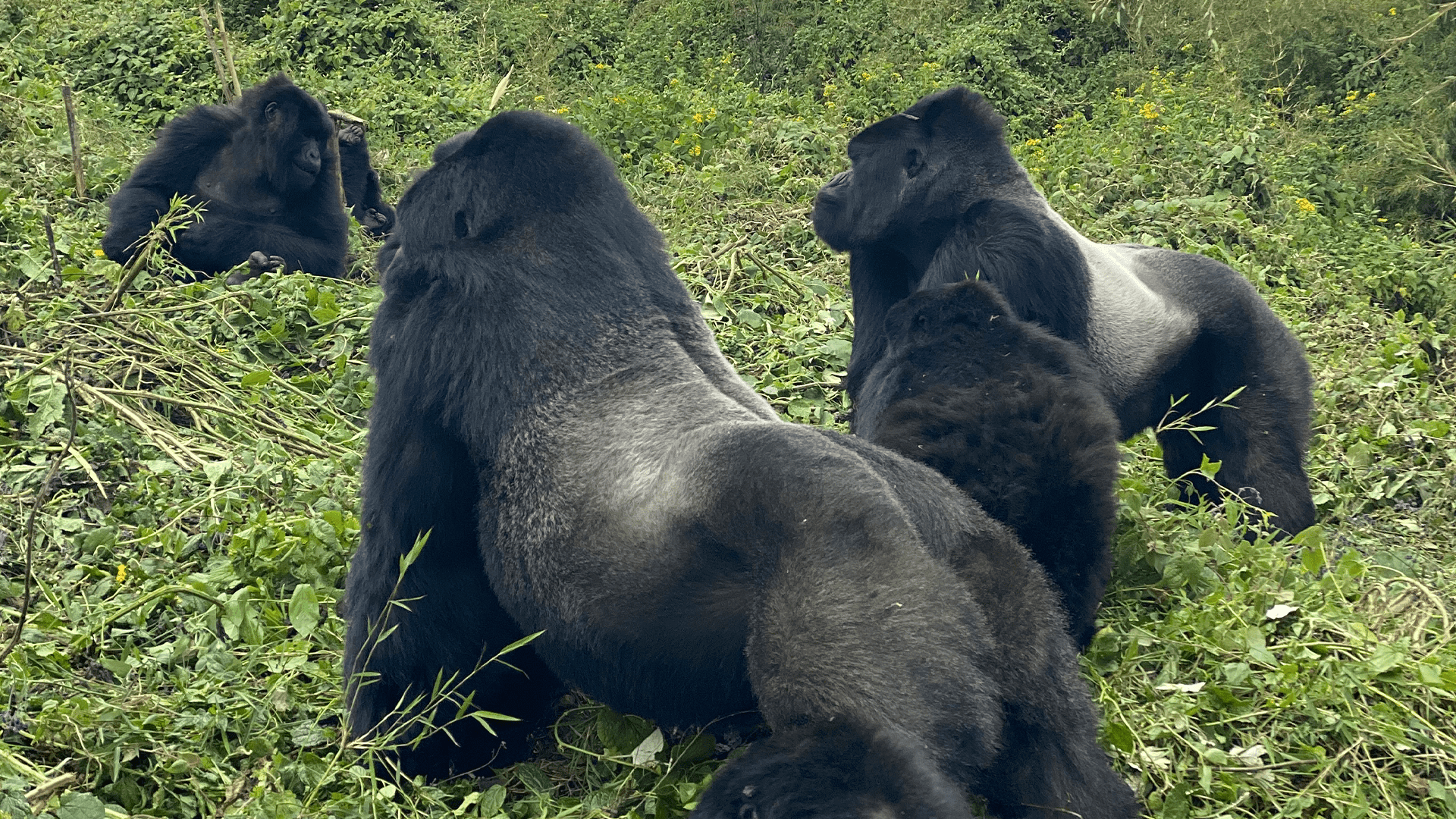
The best encounters happen when travelers are quiet, patient, and respectful. Rangers will position the group safely, but vegetation, slope, light, and gorilla behavior all influence the view. Sometimes a silverback rests behind leaves. Sometimes juveniles play in clear sight. Sometimes the group feeds slowly and moves every few minutes.
Trying to force the perfect angle can create stress and risk. Do not step ahead of the ranger, block other trekkers, make loud noises, call to gorillas, or move suddenly. The memory of the encounter is far more valuable than one risky photograph.
Mistake 11: Not eating, drinking, or pacing properly
Gorilla trekking mornings often start early, and nerves can reduce appetite. Skipping breakfast is a bad idea. You need steady energy, especially if your trek becomes longer than expected.
Eat before leaving the lodge, even if it is something simple. Carry enough drinking water and compact snacks such as nuts, energy bars, or fruit. Your guide can advise what is practical and allowed. Never eat near gorillas unless the rangers say you are far enough away and it is appropriate to stop.
Pacing matters too. Walk steadily, not aggressively. If you rush at the start, you may struggle later on steep sections. If you need to pause, say so. Rangers and porters are used to helping different fitness levels, but they cannot help if you stay silent until you are exhausted.
Mistake 12: Expecting the forest to behave like a zoo
One of the most beautiful things about gorilla trekking in Uganda is that it is wild. The gorillas choose where they move, feed, rest, and interact. Trackers work skillfully from the previous nesting site and fresh signs, but nature remains nature.
Travelers ruin their own day when they arrive with rigid expectations: a guaranteed short walk, perfect visibility, dry weather, no mud, a silverback posing in open light, and a lodge return by a specific hour. The reality is more powerful because it is unscripted.
Go in with respect for unpredictability. The forest may test your patience before rewarding you. A misty trail, distant vocalization, fresh footprint, or sudden glimpse through leaves is part of the experience, not a delay before the experience.
Mistake 13: Planning too much immediately after the trek
After the trek, many travelers feel emotional, tired, muddy, and deeply satisfied. This is not the ideal time to squeeze in a rushed long-distance transfer unless the itinerary has been carefully designed.
Some routes can work after a trek, especially shorter moves between nearby lodges or onward travel to Lake Bunyonyi or Kisoro. But a long, high-pressure drive after a demanding trek can make the day feel less special and more exhausting than necessary.
A better plan gives you time to return to the lodge, shower, eat, rest, and absorb what you experienced. If possible, build the itinerary so the evening after gorilla trekking is calm. Uganda rewards travelers who do not rush every hour.
The right mindset for a successful gorilla trekking day
A successful trek is not about controlling everything. It is about preparing thoroughly, then entering the forest with humility. Uganda’s gorilla parks are living ecosystems, not theme parks. Rangers, trackers, guides, porters, and local communities all play a role in making the experience possible.
The smartest travelers do three things well. They plan logistics precisely, prepare their bodies honestly, and behave respectfully in the forest. That combination protects your investment, improves your comfort, and supports the conservation purpose behind regulated gorilla tourism.
Here is a simple final check before trek day:
- Confirm your permit sector, briefing point, and departure time with your guide.
- Sleep near the correct sector the night before your trek.
- Pack waterproof boots, long clothing, rain protection, water, snacks, and a light daypack.
- Carry essential documents in a waterproof pouch.
- Tell your guide immediately if you feel unwell.
- Hire a porter if you want better comfort, balance, and community support.
- Keep your camera simple, silent, and flash-free.
- Follow every ranger instruction during the encounter.
Frequently Asked Questions
What is the biggest mistake travelers make with gorilla trekking in Uganda? The biggest mistake is booking a permit, lodge, and route that do not match. In Bwindi, sectors are far apart, so your accommodation must be close enough to the correct briefing point.
Can I miss my gorilla trek if I arrive late? Yes. Gorilla trekking starts with a mandatory morning briefing, and late arrival can put your permit at risk. Always sleep near the correct sector the night before and allow extra time for road conditions.
Do I really need hiking boots for gorilla trekking? Yes, proper hiking boots are strongly recommended. Trails can be muddy, steep, and slippery, even outside the main rainy seasons. Break in your boots before traveling to Uganda.
Is it worth hiring a porter in Bwindi or Mgahinga? For most travelers, yes. A porter can carry your daypack, help with balance, and make the trek more comfortable. It also provides direct income to local communities near the gorilla parks.
What happens if I am sick on gorilla trekking day? Tell your guide immediately. Gorillas can be vulnerable to human illnesses, especially respiratory infections. Rangers may advise that you should not trek if symptoms pose a risk.
How long is the actual time with gorillas? A standard Uganda gorilla trekking permit allows one hour with the gorillas once your group reaches them. The walking time before and after can vary from a short hike to several hours.
Can PawMac Safaris help avoid these mistakes? Yes. PawMac Safaris coordinates permits, sector-matched lodges, 4×4 transport, local guides, timing, packing guidance, and trek-day logistics so travelers can focus on the experience rather than the stress.
Plan a smoother Uganda gorilla trekking experience
Gorilla trekking should feel exciting, not confusing. The difference often comes down to local planning: the right permit sector, the right lodge, the right vehicle, the right pacing, and the right advice before you step into the forest.
PawMac Safaris designs expert-guided Uganda gorilla trekking tours with local knowledge, professional logistics, comfortable 4×4 vehicles, and flexible safari options for budget, mid-range, and luxury travelers. Whether you want a focused Bwindi trek, a gorilla and chimpanzee safari, or a longer Uganda wildlife itinerary, our team helps you avoid the mistakes that can ruin the day.
Start with the full PawMac Safaris guide to gorilla trekking in Uganda or explore how to prepare for gorilla trekking in Uganda. When you are ready, contact PawMac Safaris to plan a Uganda gorilla trekking experience built around your dates, comfort level, and travel style.


