


- 92 Views
- 16 Min Read
- (0) Comment
If you are planning a Uganda safari in 2026, it is completely understandable to have questions about the latest health advisory and the reported Bundibugyo virus cases. A once-in-a-lifetime trip, especially one involving gorilla trekking, chimpanzee tracking, and premium wildlife lodges, deserves clear facts rather than speculation.
This update reflects the information available as of June 1, 2026. The key message is measured but reassuring: Uganda’s major safari destinations remain open, monitored, and operational. The reported cases in Uganda are limited, localized, and linked to cross-border travel from the Democratic Republic of the Congo, while the primary outbreak remains concentrated in DRC areas outside Uganda’s safari circuits.
At PawMac Safaris, client safety is our absolute priority. We are monitoring the Ebola situation Uganda travelers are asking about, following Ministry of Health and World Health Organization guidance, and continuing to operate Uganda safaris with the same high standards of local planning, professional guiding, and practical risk management.
Quick summary for travelers
For travelers asking is it safe to travel to Uganda right now, the short answer is: yes, Uganda safaris and gorilla trekking remain safe when planned with current guidance and a professional local operator.
Here are the essential facts:
- In mid-May 2026, an outbreak of the Bundibugyo virus was declared, with the primary outbreak heavily concentrated in the Democratic Republic of the Congo, especially Ituri and North Kivu.
- As of late May and early June 2026, Uganda has reported only 9 confirmed cases.
- The cases in Uganda are strictly localized, primarily in Kampala and Wakiso districts, and linked to cross-border travel from the DRC.
- There is no widespread local transmission in Uganda.
- National parks, gorilla trekking zones such as Bwindi Impenetrable National Park, chimpanzee tracking destinations, and major wildlife reserves remain open, secure, and closely monitored.
That said, responsible travel means staying informed, respecting screening procedures, and working with a local team that understands the difference between a national headline and the real situation on the ground.
The current situation: what has actually been reported
What is the Bundibugyo virus?
Bundibugyo virus is one of the viruses that can cause Ebola disease. It is serious and must be treated with urgency by public health authorities, but it is not spread through casual sightseeing, game drives, or normal safari activities.
Ebola disease is generally transmitted through direct contact with the bodily fluids of an infected person, contaminated materials, or infected wildlife. It is not considered an airborne illness in the way travelers often think about flu-like respiratory infections. This distinction matters, because the normal structure of a Uganda safari, private transport, controlled lodge environments, ranger-led park activities, and limited contact with crowds, is very different from the settings where Ebola transmission risk is highest.
The current outbreak was declared in mid-May 2026. The main outbreak is concentrated in the Democratic Republic of the Congo, particularly Ituri and North Kivu. Uganda’s reported cases, 9 confirmed as of late May and early June 2026, are localized and linked to cross-border travel from the DRC.
What this means for Uganda safari safety 2026
The facts do not support panic or blanket cancellation of Uganda safari plans. They do support sensible precautions, accurate monitoring, and professional routing.
| Reported fact | What it means for safari travelers |
|---|---|
| Primary outbreak concentrated in DRC, especially Ituri and North Kivu | The main outbreak zone is outside Uganda’s core safari itinerary routes. |
| Uganda has reported 9 confirmed cases as of late May and early June 2026 | The situation in Uganda is limited, not widespread. |
| Cases are localized primarily in Kampala and Wakiso | Uganda’s national parks and gorilla trekking sectors are not the reported transmission centers. |
| Cases are linked to cross-border travel from DRC | Public health response is focused on surveillance, contact tracing, and border screening. |
| No widespread local transmission in Uganda | Safari operations, park activities, and lodge stays continue under close monitoring. |
This is why it is important to read advisories carefully. A health alert mentioning Uganda does not automatically mean that Bwindi, Kibale, Queen Elizabeth National Park, Murchison Falls, Kidepo Valley, or other safari destinations are unsafe.
Plan Your Uganda Safari with Local Experts
 WhatsApp Us

Is it safe to travel to Uganda right now?
For most safari travelers with properly planned itineraries, yes. The current health situation does not mean that safaris, gorilla trekking, or wildlife tours across Uganda should be avoided. It does mean that travelers should work with a reliable local operator, follow health screening procedures, and avoid unnecessary exposure to higher-risk settings.
Uganda’s safari circuit is geographically and operationally distinct from the localized urban case clusters. A typical PawMac Safaris itinerary may include Entebbe arrival logistics, private 4×4 transfers, Bwindi for gorilla trekking, Kibale for Uganda chimpanzees, Queen Elizabeth National Park for game drives and boat safaris, Murchison Falls for Nile wildlife, or Kidepo for remote wilderness. These experiences are conducted in regulated parks, with trained guides, ranger briefings, and established visitor protocols.
For a broader country-level perspective on safety, you may also find our detailed guide to whether a Uganda safari is safe helpful.
Why the main tourist areas remain low risk
Uganda’s signature safari destinations are not casual urban gathering points. They are managed conservation areas where visitor activity is structured, guided, and monitored. Movement into parks is controlled through entry gates, permits, lodges, and professional operators.
| Safari area | Main experience | Current practical implication for travelers |
|---|---|---|
| Bwindi Impenetrable National Park | Mountain gorilla trekking | Gorilla trekking remains open under strict health and ranger protocols. |
| Mgahinga Gorilla National Park | Gorillas and golden monkeys | Primate activities continue with standard visitor screening and UWA rules. |
| Kibale National Park | Chimpanzee tracking and habituation | Chimp tracking remains available with health-focused primate viewing rules. |
| Queen Elizabeth National Park | Game drives, Kazinga Channel, Ishasha lions | Wildlife safaris continue in monitored park settings. |
| Murchison Falls National Park | Big game, Nile boat safaris, waterfalls | Park activities remain operational with guided logistics. |
| Kidepo Valley National Park | Remote wilderness and wildlife | Remote safari operations remain separate from localized urban case areas. |
The practical safety advantage of a guided Uganda safari is that your itinerary is not improvised day by day. Transport, accommodation, permits, activity timings, and route decisions are coordinated in advance and adjusted when needed based on local information.
Gorilla trekking safety during the current health advisory
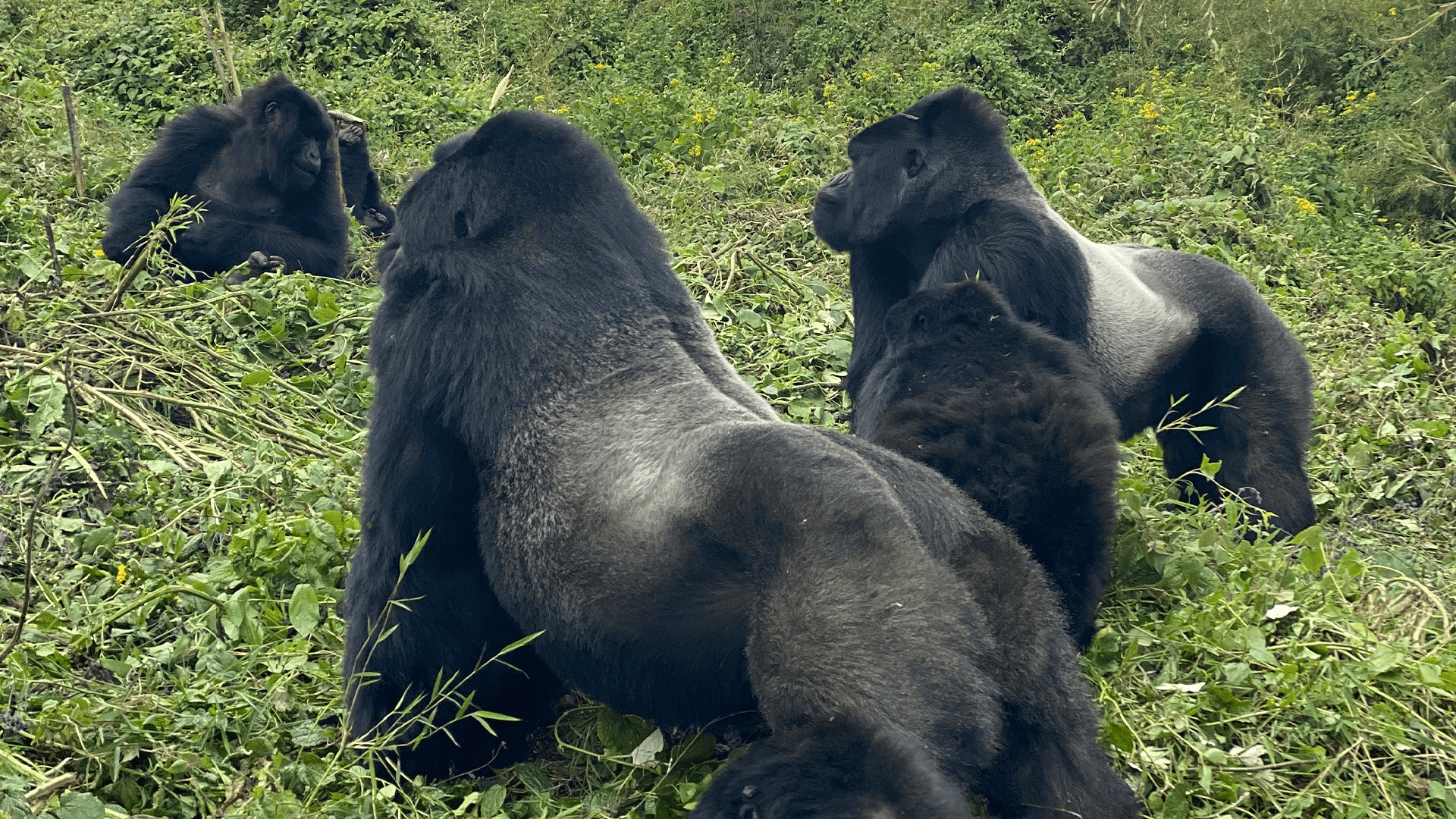
Gorilla trekking safety has always depended on strict health standards, even before the current advisory. Mountain gorillas are vulnerable to human diseases, which is why Uganda Wildlife Authority rules already include health screening, distance requirements, limited group sizes, controlled viewing time, and ranger supervision.
For travelers planning gorilla trekking in Bwindi or Mgahinga in 2026, the core rules remain essential:
- Do not trek if you have fever, vomiting, diarrhea, unusual fatigue, or any illness symptoms.
- Follow ranger instructions at all times during the pre-trek briefing and forest encounter.
- Maintain the required distance from gorillas and avoid any attempt to touch wildlife.
- Use masks and hygiene measures where instructed, especially during primate encounters.
- Keep voices low, avoid flash photography, and respect the one-hour viewing limit.
These rules protect both travelers and wildlife. They also make gorilla trekking one of the most carefully managed wildlife experiences in Uganda.
If you are still in the planning stage, our complete gorilla trekking in Uganda guide explains permits, sectors, trek difficulty, packing, and what to expect on the day.
What about chimpanzee tracking?
Uganda chimpanzees are typically tracked in controlled forest settings such as Kibale National Park, Kyambura Gorge, Budongo Forest, and Kalinzu Forest Reserve. Like gorilla trekking, chimpanzee tracking involves ranger briefings, visitor rules, group management, and health precautions.
The current localized Bundibugyo virus cases do not change the fundamental structure of chimpanzee tracking. Travelers should still be transparent about any symptoms, carry hand sanitizer, avoid close contact with others if unwell, and obey all ranger instructions in the forest.
For many travelers, a combined gorilla and chimpanzee itinerary remains one of Uganda’s most rewarding safari options. You can review route ideas in our guide to combining gorillas and chimpanzees on a Uganda safari.
Uganda’s public health response: screening, monitoring, and containment
Uganda has a strong track record of responding quickly to isolated health events. The Ministry of Health, working with international health partners including the World Health Organization, has activated surveillance, contact tracing, health facility readiness, and screening protocols.
For travelers, the most visible measures may include checks at airports, land borders, and selected health facilities. These procedures are designed to identify symptoms early, trace contacts, and prevent isolated imported cases from becoming widespread transmission.
What travelers may notice on arrival
At Entebbe International Airport and other formal entry points, travelers may experience additional screening or health questions. This is not a reason for alarm. It is a normal containment tool during an outbreak alert.
You should travel with patience and allow time for arrival formalities. If your itinerary includes an airport pickup, onward transfer, or overnight stay before safari, confirm timing with your operator. Our Entebbe Airport transfers guide explains how arrivals typically connect into Uganda safari routes.
Why Uganda’s experience matters
Uganda’s public health teams have experience managing viral hemorrhagic fever alerts, including through rapid response, community engagement, and contact tracing. In this current situation, the fact that Uganda’s reported cases remain limited and localized is important. It indicates that the response is active and targeted.
No responsible operator can promise that travel is risk-free anywhere in the world. What we can say is that Uganda’s safari areas are not the reported center of transmission, and the country has established systems for detecting and managing health events.
PawMac Safaris’ commitment to client safety
PawMac Safaris is continuing to operate Uganda safari itineraries with careful monitoring and practical safeguards. Our role is not to replace public health authorities, but to interpret official guidance responsibly and apply it to real safari logistics.
Our safety approach includes:
- Continuous monitoring of Ministry of Health and World Health Organization guidance.
- Route planning that prioritizes safe, efficient movement between Entebbe, Kampala where necessary, and national parks.
- Professional local guides who understand park procedures, road conditions, and real-time logistical updates.
- Clear pre-trip communication so travelers know what documents, health measures, and insurance arrangements are required.
- Coordination with lodges, park offices, and activity providers to confirm that safaris, permits, and guided experiences remain properly scheduled.
PawMac Safaris also uses comfortable 4×4 vehicles suited to Uganda’s roads and safari terrain. This matters for safety because a well-planned private or small-group road transfer reduces unnecessary public exposure, keeps your itinerary controlled, and allows your guide to adjust timing if screening procedures or road conditions require it.
Practical travel advice for guests booked in June 2026 and beyond
If your Uganda safari is already confirmed, the best approach is not panic. Instead, review your documents, confirm your insurance, and stay in direct contact with your operator.
Before departure
Check your passport validity, Uganda e-visa approval, Yellow Fever vaccination certificate, and travel insurance documents. Uganda requires a Yellow Fever certificate for entry, and malaria prevention remains an important safari health consideration regardless of the current Bundibugyo virus advisory.
If you are choosing or updating travel insurance, look carefully at medical evacuation, trip interruption, infectious disease exclusions, and cancellation terms. PawMac Safaris does not sell insurance, but we strongly recommend that every traveler purchases comprehensive coverage before departure. Our Uganda safari travel insurance guide gives practical points to compare.
If you develop symptoms before travel, contact a medical professional and speak to your safari consultant before flying. This is especially important if your itinerary includes gorilla or chimpanzee tracking, because primate activities have strict health rules.
During arrival and city transfers
Most international safari travelers enter through Entebbe. If your itinerary requires a night in Entebbe or Kampala before continuing to the parks, choose reputable accommodation, minimize unnecessary crowd exposure, and follow standard hygiene measures.
For travelers independently arranging pre-safari or post-safari hotel nights, using reliable booking platforms with transparent cancellation terms can be useful. Services such as hotel booking deals from InnRox may help compare stays while keeping your Uganda safari logistics flexible.
PawMac Safaris can advise how your city night connects to your route, whether you are heading west to Kibale and Bwindi, north to Murchison Falls, or onward to Queen Elizabeth National Park.
During your safari
Once you are on safari, the most important safety tool is communication. Tell your guide immediately if you feel unwell. Do not attempt to push through a primate trek if you have fever, vomiting, diarrhea, or other concerning symptoms. Your guide’s role is to protect you, your group, the wildlife, and the communities connected to the parks.
You should also avoid direct contact with sick individuals, avoid bushmeat, never touch animal carcasses, and follow lodge hygiene procedures. These are sensible precautions that apply during any viral hemorrhagic fever advisory.
Should you cancel or postpone your Uganda safari?
Based on the current facts as of early June 2026, a blanket cancellation of Uganda safaris is not supported by the situation on the ground. The cases in Uganda are limited, localized, and linked to cross-border travel from the DRC. There is no widespread local transmission in Uganda, and the safari parks remain open and monitored.
However, individual decisions should consider your medical history, travel insurance terms, route, timing, and risk tolerance. Travelers who are immunocompromised, pregnant, elderly with complex medical needs, or traveling with very young children may wish to speak with a travel medicine professional before departure.
Before canceling, contact PawMac Safaris directly. Many safari costs are time-sensitive, especially permits and peak-season lodges. A discussion allows us to explain the latest operational situation, identify whether your itinerary passes through any area of concern, and review practical alternatives if official guidance changes.
Cost and booking considerations during a health advisory
Transparent budgeting is especially important during advisory periods because rushed cancellations or late changes can create unnecessary financial loss.
For 2026, key Uganda safari costs still include:
| Cost item | Typical 2026 cost context | Planning note |
|---|---|---|
| Gorilla trekking permit for foreign non-residents | USD 800 per person | Essential for Bwindi or Mgahinga, usually booked well in advance. |
| Chimpanzee tracking permit in Kibale for foreign non-residents | Around USD 250 per person | Important for travelers including Uganda chimpanzees in the itinerary. |
| Porter for gorilla trekking | Often USD 20 to USD 30 plus tip | Highly recommended for comfort and community support. |
| Mid-range private safari package | Often USD 2,500 to USD 5,500+ per person depending on length and inclusions | Costs vary by route, permits, lodge level, and season. |
| Luxury Uganda safari package | Often USD 6,000 to USD 12,000+ per person for longer premium itineraries | Luxury lodges, domestic flights, and private guiding increase cost. |
| Premium lodge nights in key safari areas | Often USD 500 to USD 1,500+ per person per night at high-end properties | Rates depend on season, location, room category, and inclusions. |
Permit changes and cancellations are subject to Uganda Wildlife Authority rules and availability, while lodge cancellation terms vary by property and season. This is why we encourage guests not to make unilateral changes before speaking with our team.
During an advisory period, some travelers may prefer to add private transfers, reduce time in busy urban areas, or upgrade accommodation for more private space. These choices may increase the budget, but they can also provide peace of mind for high-intent travelers who value comfort, controlled logistics, and premium support.
How this affects common Uganda safari itineraries
3 to 4 day gorilla trekking safaris
Short gorilla trekking itineraries usually focus on Entebbe or Kampala connections and Bwindi Impenetrable National Park. The main safety consideration is ensuring smooth transfers, confirming permit validity, and respecting health screening before trekking.
Because Bwindi is far from the localized case clusters, the current advisory does not automatically undermine a well-planned gorilla trek. Travelers should still arrive healthy, follow ranger instructions, and stay in close contact with their PawMac Safaris consultant before departure.
7 to 10 day primate and wildlife safaris
These itineraries often combine Kibale, Queen Elizabeth National Park, and Bwindi. They are among the best choices for travelers who want Uganda chimpanzees, mountain gorillas, tree-climbing lions, boat safaris, and classic game drives in one route.
From a safety perspective, the advantage is that most time is spent in national parks, lodges, and guided transfer corridors rather than crowded urban environments. Itinerary timing should allow for arrival screening, reasonable rest, and flexible transfer planning.
10 to 14 day luxury or family safaris
Longer premium itineraries may include Murchison Falls, Ziwa Rhino Sanctuary, Kibale, Queen Elizabeth, Bwindi, Lake Mburo, or Kidepo. These trips require more moving parts, which makes professional coordination even more valuable during advisory periods.
For families and luxury travelers, PawMac Safaris can help design pacing that reduces fatigue, avoids unnecessary city congestion, and balances signature wildlife experiences with comfort and recovery time.
Frequently Asked Questions
Is it safe to travel to Uganda right now for safari? Yes, based on the situation as of early June 2026, Uganda safaris remain safe when planned responsibly. The reported cases in Uganda are limited, localized primarily in Kampala and Wakiso, and linked to cross-border travel from the DRC. There is no widespread local transmission in Uganda.
Is gorilla trekking in Bwindi still open? Yes. Gorilla trekking zones such as Bwindi remain open, secure, and closely monitored. Travelers must follow Uganda Wildlife Authority health rules, including not trekking when sick and obeying ranger instructions.
Are Uganda chimpanzee tracking activities affected? Chimpanzee tracking in destinations such as Kibale continues under standard health and ranger protocols. Travelers should be symptom-free and transparent about their health before any primate activity.
Where are the reported Uganda cases located? As of late May and early June 2026, Uganda has reported 9 confirmed cases, localized primarily in Kampala and Wakiso districts and linked to cross-border travel from the DRC.
Should I cancel my Uganda safari because of the Ebola situation Uganda is reporting? Not automatically. The current facts do not support blanket cancellation of Uganda safaris. Contact PawMac Safaris first so we can review your itinerary, latest guidance, permit status, lodge terms, and any practical adjustments.
What precautions should I take before travel? Carry valid travel insurance, confirm your Yellow Fever certificate, follow malaria prevention advice, monitor your health, avoid travel if you develop concerning symptoms, and stay in direct contact with your safari consultant.
Does PawMac Safaris follow WHO guidance? Yes. PawMac Safaris continuously monitors guidance from the Ugandan Ministry of Health and the World Health Organization and applies relevant safety practices to safari planning, guest communication, and on-the-ground logistics.
Speak with PawMac Safaris before making changes
If you have an upcoming Uganda safari, gorilla trekking permit, chimpanzee tracking plan, or luxury wildlife itinerary, please reach out to PawMac Safaris directly before canceling or changing your trip.
Our team will help you understand the latest Uganda safari safety 2026 information, review your exact route, explain what the current health advisory means for your permits and lodges, and answer any personal concerns with care and clarity.
Uganda remains one of Africa’s most extraordinary wildlife destinations, from mountain gorillas in Bwindi to chimpanzees in Kibale, tree-climbing lions in Ishasha, and Big Five safari moments across its national parks. With accurate information, professional local guidance, and sensible precautions, your Uganda safari can continue to be safe, rewarding, and deeply memorable.
Contact PawMac Safaris today with your questions, travel dates, or planned itinerary, and let our local experts guide you with facts, reassurance, and responsible safari planning.


