


- 35 Views
- 18 Min Read
- (0) Comment
Uganda gorilla trekking tours are often described as once-in-a-lifetime, but the best experiences are not accidental. They come from choosing the right route, securing the right permit sector, budgeting realistically, and preparing for a day in dense tropical forest where altitude, mud, and mountain weather can all shape the trek.
Uganda is one of the world’s premier destinations for seeing endangered mountain gorillas in their natural habitat. The country’s gorilla trekking takes place in two protected areas in the far southwest: Bwindi Impenetrable National Park and Mgahinga Gorilla National Park. Both are exceptional, but they suit different travel styles, budgets, timelines, and fitness levels.
For travelers planning 2026 Uganda gorilla trekking tours, the key question is not simply where can I see gorillas? The better question is which route gives me the best overall safari experience for my time, budget, and expectations?
Quick planning snapshot for Uganda gorilla trekking tours
The table below gives a practical overview before we look at each route in detail.
| Trip style | Best route | Ideal length | Typical 2026 budget per person sharing |
|---|---|---|---|
| Short gorilla-focused safari | Entebbe to Bwindi by road | 3 days | US$1,250-US$2,800 |
| Comfortable premium gorilla tour | Entebbe to Kihihi or Kisoro by scheduled flight | 4 days | US$3,500-US$7,500+ |
| Gorilla and savannah wildlife safari | Entebbe, Queen Elizabeth, Bwindi | 5 to 7 days | US$2,800-US$6,500+ |
| Primate-focused Uganda safari | Entebbe, Kibale, Queen Elizabeth, Bwindi | 7 to 9 days | US$4,000-US$9,500+ |
| Active trekking and volcano scenery | Entebbe, Mgahinga, Lake Bunyonyi | 4 to 6 days | US$1,900-US$5,500+ |
These ranges are realistic planning estimates for privately guided safaris and exclude international flights, visas, personal insurance, premium drinks, and optional extras. Your final cost depends heavily on permit availability, lodge category, travel season, group size, and whether you travel by road or domestic flight.
Where gorilla trekking happens in Uganda
Uganda has two official mountain gorilla trekking destinations: Bwindi Impenetrable National Park and Mgahinga Gorilla National Park. Both are managed under Uganda’s conservation framework, and gorilla permits are issued for specific dates and locations.
Bwindi Impenetrable National Park
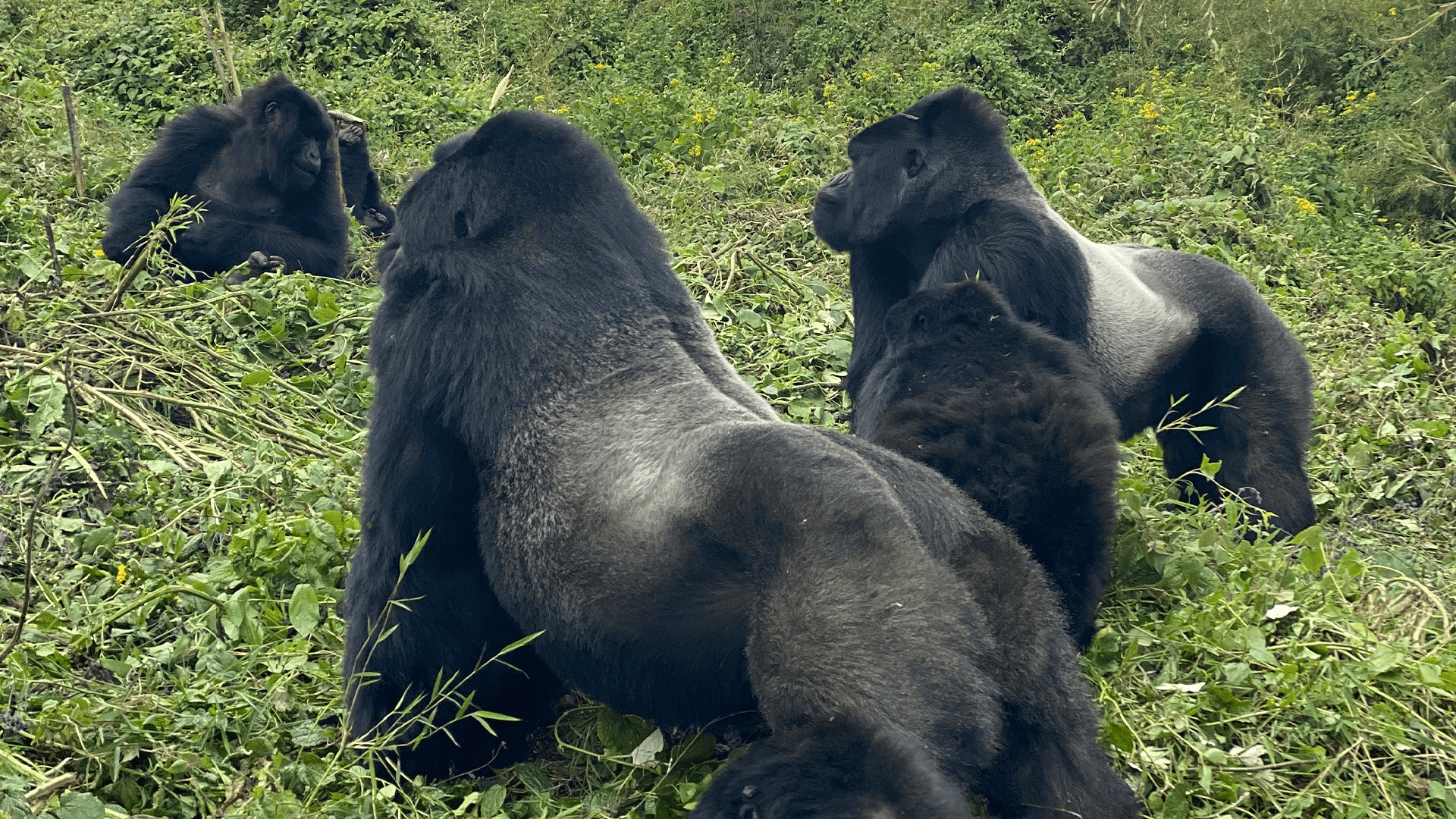
Bwindi is Uganda’s best-known gorilla trekking destination and the main choice for most first-time visitors. The park is a UNESCO-listed rainforest with steep ridges, thick vegetation, high biodiversity, and multiple habituated gorilla families.
Bwindi is divided into four trekking sectors: Buhoma, Ruhija, Rushaga, and Nkuringo. This matters because your permit is tied to a sector, and your lodge should be chosen near that sector. A traveler booked for Rushaga, for example, should not stay in Buhoma the night before the trek unless they are prepared for an impractical early drive.
| Bwindi sector | Best for | Route advantage | Terrain feel |
|---|---|---|---|
| Buhoma | Classic Bwindi experience and premium lodges | Convenient for combining with Queen Elizabeth National Park via Ishasha | Forested slopes with varied trek difficulty |
| Ruhija | Birding, cooler high-altitude forest, quieter atmosphere | Good access from Kabale and Lake Bunyonyi | Elevated and often misty, with moderate to demanding trails |
| Rushaga | Permit availability and gorilla habituation options | Strong choice for southern Bwindi itineraries | Mixed forest slopes, often flexible for group allocation |
| Nkuringo | Active travelers and dramatic views | Excellent scenery toward the Virunga volcanoes | Steeper and more physically demanding |
Bwindi is ideal if your priority is a high probability of excellent gorilla viewing, a wider range of lodges, and flexible itinerary design. It also combines well with Queen Elizabeth National Park, Lake Bunyonyi, Kibale National Park, and cultural visits around southwestern Uganda.
Mgahinga Gorilla National Park
Mgahinga is Uganda’s smallest national park, but it offers a very distinctive gorilla trekking atmosphere. The park sits in the Virunga volcano landscape near Mount Gahinga, Mount Muhabura, and Mount Sabyinyo. Its scenery is more open in places than Bwindi, with bamboo zones, volcanic slopes, and wide mountain views.
Mgahinga has fewer gorilla permits than Bwindi, so availability can be more limited. However, it is a superb choice for travelers who want a quieter park experience and the option to add golden monkey tracking or volcano hiking.
Plan Your Uganda Safari with Local Experts
 WhatsApp Us
Mgahinga works especially well for active travelers, photographers who appreciate mountain backdrops, and guests who want to spend more time in the Kisoro region rather than moving quickly between parks.
The best Uganda gorilla trekking routes
There is no single best Uganda gorilla trekking route. The right choice depends on how much time you have, how much road travel you are comfortable with, and whether gorillas are the full focus or part of a broader Uganda safari.
Route 1: Entebbe to Bwindi by road, the classic 3-day tour
This is the most common short gorilla trekking route in Uganda. It usually starts in Entebbe or Kampala, travels southwest through central Uganda, and continues toward Kabale, Kisoro, or the northern side of Bwindi depending on the permit sector.
A typical 3-day structure looks like this: travel to Bwindi on day one, trek gorillas on day two, and return to Entebbe or Kampala on day three. The drive is long, often 8 to 11 hours depending on your start point, road conditions, and final sector. For some travelers, this is acceptable because it keeps the budget lower than flying.
This route is best for travelers who have limited time but want a complete Uganda gorilla trekking experience. It is also popular with visitors adding a short gorilla safari before or after business travel, conferences, or family visits in Uganda.
The trade-off is pace. A 3-day road safari is efficient, but not relaxed. If your budget allows, adding one extra night near Lake Bunyonyi or in Bwindi makes the trip more comfortable and gives you more room for delays, scenic stops, or community experiences.
Route 2: Fly-in gorilla trekking from Entebbe
A fly-in Uganda gorilla trekking tour is the premium choice for travelers who want to reduce road time. Scheduled domestic flights typically connect Entebbe with airstrips such as Kihihi for northern Bwindi or Kisoro for southern Bwindi and Mgahinga. From the airstrip, guests continue by road to their lodge.
This route can turn a long overland transfer into a much easier travel day. It is especially valuable for high-end travelers, older guests, honeymooners, families with older children, and anyone combining Uganda with a tight international schedule.
Fly-in tours cost more because they add domestic airfare, airstrip transfers, and often higher-end lodge choices. However, the comfort difference can be significant. Instead of arriving after a full day on the road, you can reach the gorilla region with more energy for the trek.
This route is best planned early because flight schedules, luggage limits, and permit sectors must align. If your permit is in Nkuringo or Rushaga, Kisoro is typically more practical than Kihihi. If your permit is in Buhoma, Kihihi is usually the better airstrip.
Route 3: Queen Elizabeth National Park and Bwindi
This is one of the most rewarding combinations in Uganda because it pairs mountain gorillas with savannah wildlife. Queen Elizabeth National Park adds game drives, crater landscapes, the Kazinga Channel, elephants, buffalo, hippos, crocodiles, and strong birding.
The route often runs from Entebbe to Queen Elizabeth, then continues south through the Ishasha sector toward Bwindi. Ishasha is known for its tree-climbing lion sightings, although sightings are never guaranteed. From there, Buhoma is a natural Bwindi sector choice, but other sectors may be used depending on permit availability and itinerary design.
A 5 to 7-day version of this route gives you a much richer Uganda safari than a short gorilla-only itinerary. It is ideal for travelers who want both primates and classic wildlife without extending to every major park in the country.
Route 4: Kibale, Queen Elizabeth, and Bwindi
For primate enthusiasts, this is one of Uganda’s strongest safari routes. Kibale National Park is the country’s premier chimpanzee tracking destination, and it combines naturally with Queen Elizabeth and Bwindi.
A well-paced itinerary may include chimpanzee tracking in Kibale, the Bigodi Wetland area, game drives and boat safari experiences in Queen Elizabeth, then gorilla trekking in Bwindi. It requires more time, usually 7 to 9 days, but the variety is exceptional.
This route suits travelers who want Uganda’s primate diversity rather than only one major wildlife encounter. It also spreads out the driving and gives the safari a more complete rhythm, from rainforest to crater lakes to savannah to mountain forest.
Route 5: Mgahinga, Lake Bunyonyi, and southwestern Uganda
This route is excellent for travelers who want a scenic, active, and slightly less conventional gorilla trekking tour. Mgahinga can be combined with golden monkey tracking, volcano hikes, Batwa cultural experiences, and time around Lake Bunyonyi.
Lake Bunyonyi is a relaxing stop after trekking. It is known for its island-dotted views, cool climate, canoeing, and peaceful lodges. It is not a Big Five destination, but it adds comfort and scenery to an otherwise physically demanding region.
This route is particularly good for guests who enjoy hiking and mountain landscapes. It can also work well when Bwindi permits are limited but Mgahinga permits are available for the desired dates.
Uganda gorilla trekking costs in 2026
The gorilla permit is the central fixed cost in any Uganda gorilla trekking tour. For 2026 planning, the widely used permit rate for foreign non-residents is US$800 per person for standard gorilla trekking. This permit allows one trek and, once the gorillas are located, up to one hour with a habituated gorilla family.
For a deeper breakdown of permit categories and booking timelines, PawMac Safaris has a dedicated 2026 gorilla permit guide that explains current pricing in more detail.
| Permit category | Standard gorilla trekking permit | Notes |
|---|---|---|
| Foreign non-resident | US$800 | Most international leisure travelers fall in this category |
| Foreign resident | US$700 | Requires valid residency documentation |
| Rest of Africa | US$500 | Applies to eligible African nationals outside the East African Community |
| East African citizens | UGX 300,000 | Subject to valid identification and current Uganda Wildlife Authority rules |
Permit rates can change, and availability is always date-specific. The permit does not include your lodge, meals, vehicle, driver-guide, fuel, porter, tips, travel insurance, or international flights.
What makes up the total safari price?
A gorilla trekking safari is not priced by the permit alone. The total cost is built from several components, and small itinerary decisions can shift the final budget significantly.
| Cost item | Typical planning range | What affects the price |
|---|---|---|
| Gorilla permit | US$800 for most international visitors | Permit category and any official rate changes |
| Accommodation | US$70-US$1,500+ per person per night | Budget, mid-range, luxury, or high-end lodge choice |
| Private 4×4 safari vehicle and guide | Often US$250-US$450+ per vehicle per day | Route distance, fuel, vehicle type, and guide days |
| Domestic flights | Often US$280-US$500+ one way | Season, routing, baggage, and availability |
| Porter during trek | Commonly US$15-US$25+ | Paid locally, highly recommended |
| Tips | Flexible, often US$10-US$30 per service point | Guide, ranger team, porter, lodge staff, and service level |
Travelers often underestimate the value of a good guide and vehicle in Uganda. Southwestern routes involve long distances, mountain roads, changing weather, and early starts. A comfortable 4×4 and experienced local guide can make the difference between a tiring transfer and a well-managed journey.
Realistic 2026 tour budget examples
The figures below are planning ranges, not fixed package prices. They assume foreign non-resident permits and per-person sharing arrangements. Solo travelers should expect higher per-person costs because vehicle and guide expenses are not shared.
| Sample Uganda gorilla trekking tour | Budget estimate | Mid-range estimate | Luxury estimate |
|---|---|---|---|
| 3-day Bwindi by road | US$1,250-US$1,800 | US$1,850-US$2,800 | US$3,200-US$5,500+ |
| 4-day fly-in Bwindi safari | Not usually the best budget option | US$3,500-US$5,000 | US$5,500-US$7,500+ |
| 5-day Queen Elizabeth and Bwindi | US$2,000-US$3,000 | US$3,200-US$4,800 | US$5,500-US$8,000+ |
| 7 to 9-day Kibale, Queen Elizabeth, and Bwindi | US$3,800-US$5,500 | US$5,500-US$7,500 | US$8,000-US$12,000+ |
Season also matters. June to September and December to February tend to attract stronger demand, especially for premium lodges and preferred gorilla sectors. March to May and parts of November can offer better lodge value, but trails may be wetter and road conditions can require more flexibility.
For a wider look at how permits, parks, accommodation level, and safari length affect the total trip budget, see PawMac Safaris’ Uganda safari prices guide.

How to choose the right route for your budget
If you are trying to control costs, choose a road-based itinerary, travel with two or more people, use comfortable mid-range lodges, and avoid unnecessary one-night stops. The permit will remain the largest single fixed cost, so savings usually come from transport style and accommodation category.
If comfort is the priority, consider a 4-day fly-in safari instead of a 3-day road trip. This is more expensive, but it reduces fatigue and gives you a more premium pace. For many high-end travelers, the extra night and domestic flight are worth the investment.
If overall safari value matters more than the lowest price, combine gorilla trekking with Queen Elizabeth or Kibale. The daily cost rises, but you get a much broader Uganda experience. This is often the best choice for travelers flying long-haul who want their Uganda safari to feel complete.
Essential tips for Uganda gorilla trekking tours
Book permits before building the final itinerary
Gorilla permits are limited, and they are linked to a specific park sector and date. This means your route, lodge, and transfer plan should be built around confirmed permit availability, not the other way around.
For peak-season travel, start planning 6 to 12 months ahead if you want top lodge choices or multiple rooms. For mid-range travel, 3 to 6 months can work, but earlier is safer. Last-minute permits are sometimes available, especially outside peak months, but relying on that is risky for international travel.
If you want a practical sequence for securing dates, permits, and logistics, use PawMac Safaris’ step-by-step guide to booking gorilla trekking in Uganda.
Match the sector to your travel style
Do not choose a Bwindi sector only because a permit is available. Buhoma may be best if you are coming from Queen Elizabeth. Rushaga may be better if you want more permit flexibility or are interested in the gorilla habituation experience. Nkuringo is excellent for active travelers but can feel demanding for guests who prefer gentler terrain.
A well-planned Uganda gorilla trekking tour aligns three things: permit sector, lodge location, and the next day’s route. When those three are coordinated, the safari feels smooth. When they are not, guests can lose hours on rough mountain roads.
Prepare for a real hike, not a zoo-style viewing
Gorilla trekking is guided, regulated, and safe, but it is still a forest trek. You may walk for less than two hours or much longer depending on where the gorillas are feeding that day. Trails can be muddy, steep, slippery, and humid.
You do not need to be an elite athlete, but you should be comfortable walking on uneven ground. If you have knee concerns, limited mobility, or respiratory issues, tell your safari planner before permits are booked. Rangers can sometimes consider fitness levels when allocating trekking groups, but this is never a guarantee.
Hiring a porter is one of the best decisions you can make. Porters carry your daypack, help on difficult sections, and provide meaningful local employment. Even strong hikers often find that a porter improves the experience.
Pack for mud, rain, and altitude
Southwestern Uganda’s gorilla forests can be cool in the morning, warm during the climb, wet without warning, and muddy even in the dry season. Good packing is not about bringing more, it is about bringing the right items.
- Waterproof hiking boots with good ankle support
- Long trousers and a long-sleeved shirt for forest protection
- Lightweight rain jacket or poncho
- Gardening-style gloves for gripping vegetation
- Gaiters or long socks to protect against mud and insects
- Small daypack with water, packed lunch, camera, and personal medication
- Insect repellent, sunscreen, and a dry bag for electronics
- Passport or permit identification details requested by your guide
Neutral, breathable clothing works best. Avoid bright colors, heavy cotton, and strong fragrances. For safari clubs, conservation teams, or private groups preparing coordinated travel wear for Uganda, a full-service apparel partner such as Arcus Apparel Group can be useful for sourcing practical custom garments before departure.
Understand the gorilla trekking rules
Gorilla trekking rules protect both visitors and gorillas. Mountain gorillas are vulnerable to human illnesses, so guests who are visibly sick may be denied trekking. The minimum age is 15 years, and group sizes are limited.
Once you find the gorillas, viewing time is normally limited to one hour. Your ranger guide will explain the current distance rules, photography etiquette, and how to behave if a gorilla moves close. Flash photography is not allowed. Stay calm, keep voices low, and follow instructions immediately.
The one-hour viewing limit may sound short, but it is often deeply satisfying. You may see feeding, grooming, juveniles playing, mothers holding infants, or a silverback resting nearby. The quality of the encounter comes from being in the gorillas’ natural forest, not from rushing for more time.
Budget for tips and local payments
Tipping is voluntary, but it is customary when service is good. Carry small US dollar notes in clean condition or local currency for porters and lodge staff. As a planning guide, many travelers budget US$15-US$25 for a porter, US$10-US$20 for the ranger or trekking team contribution, and a separate amount for their safari driver-guide at the end of the trip.
Your safari guide can advise on local norms, but tipping should always reflect your own satisfaction and comfort.
Consider adding chimpanzees or Big Five wildlife
If you are flying all the way to Uganda, gorilla trekking can be the highlight but not the only experience. Kibale adds chimpanzee tracking, Queen Elizabeth adds savannah game and boat safaris, Murchison Falls adds powerful Nile scenery and excellent wildlife viewing, and Ziwa Rhino Sanctuary can complete a Big Five-focused route when combined with the right national parks.
This is where Uganda stands apart. A well-designed safari can move from gorilla forest to chimpanzee habitat to lion and elephant country without leaving the country.
Best time for gorilla trekking in Uganda
Uganda gorilla trekking is available year-round. The most popular periods are June to September and December to February, when conditions are generally drier and international travel demand is strong. These months are ideal for travelers who want a higher chance of firmer trails, clearer views, and easier logistics.
The wetter months, especially March to May and parts of October to November, can still be rewarding. Forests are lush, some lodges may offer better value, and there can be fewer visitors. The trade-off is muddier trekking, slower roads, and a greater need for waterproof gear.
Because gorillas do not migrate, the best month is often the month that matches your travel style. Photographers may enjoy misty wet-season atmosphere. Premium travelers may prefer dry-season comfort. Budget-conscious travelers may look for shoulder-season lodge value.
Private tours vs group gorilla trekking safaris
A private Uganda gorilla trekking tour gives you more control over pace, lodge level, stops, and route design. This is the preferred choice for couples, families, photographers, older travelers, and guests combining gorillas with multiple parks.
Group tours can reduce costs, but they may also involve fixed dates, less flexible lodge choices, and a faster pace. They work best when you are comfortable sharing a vehicle and following a set schedule.
PawMac Safaris specializes in personalized Uganda safari planning, which is particularly valuable for gorilla trekking because permit sectors, accommodation, road transfers, and guest fitness need to be coordinated carefully. Local knowledge matters most when the itinerary moves beyond a simple map and into real roads, real weather, and real permit availability.
Frequently Asked Questions
How much does a Uganda gorilla trekking tour cost in 2026? Most 3-day Uganda gorilla trekking tours by road start around US$1,250-US$1,800 per person sharing for budget-conscious travelers and can reach US$3,200-US$5,500+ for luxury options. Longer safaris with Kibale, Queen Elizabeth, or fly-in logistics cost more.
How much is a Uganda gorilla permit in 2026? The main planning rate for foreign non-residents is US$800 per person for standard gorilla trekking. Foreign residents, eligible African nationals, and East African citizens have different permit categories, subject to current official rules.
Is Bwindi or Mgahinga better for gorilla trekking? Bwindi is best for more lodge options, more trekking sectors, and broader permit availability. Mgahinga is excellent for travelers who want volcanic scenery, a quieter atmosphere, and possible add-ons such as golden monkey tracking or volcano hiking.
How difficult is gorilla trekking in Uganda? Difficulty varies by gorilla location, weather, sector, and your assigned group. Some treks are moderate, while others involve steep, muddy climbs. A reasonable fitness level, proper boots, and a porter make the experience much easier.
Can children go gorilla trekking in Uganda? The minimum age for gorilla trekking is 15 years. Families with younger children can still visit Uganda, but alternative activities must be planned while eligible adults trek.
How far in advance should I book Uganda gorilla trekking tours? For peak months and luxury lodges, booking 6 to 12 months ahead is recommended. For other periods, 3 to 6 months may be enough, but earlier planning gives better permit and accommodation choices.
Is one gorilla trek enough? One trek is enough for many travelers, but two treks increase your chances of varied sightings and photography conditions. If gorillas are your main reason for visiting Uganda, a second trek can be a worthwhile investment.
Plan your Uganda gorilla trekking tour with local expertise
The best Uganda gorilla trekking tours are built around accurate permit planning, sensible routing, realistic budgets, and guides who understand the country beyond the brochure. Whether you want a short Bwindi trek, a premium fly-in safari, or a longer journey combining gorillas, chimpanzees, and Big Five wildlife, careful planning will protect both your time and your investment.
PawMac Safaris helps travelers design expert-guided Uganda safari experiences with local knowledge, comfortable 4×4 vehicles, flexible accommodation levels, and professional support from planning to the final travel day. If you are preparing for a 2026 gorilla trekking safari, start with your preferred travel dates, comfort level, and budget range, then build the route around the best available permit sector.


