


- 137 Views
- 13 Min Read
- (0) Comment
TL;DR:
- Border crossings between Uganda and Rwanda have been significantly streamlined by modern systems, making them more manageable for safari travelers. Choosing the appropriate border post—such as Cyanika for gorilla trekkers or Katuna for central routes—can reduce travel time and avoid delays caused by traffic or paperwork issues. Working with a professional safari operator ensures smooth border transitions by handling permits, documents, and protocols efficiently.
Crossing from Uganda into Rwanda, or the reverse, sounds like it could eat up half your safari day. Many travelers picture long queues, unpredictable officials, and a tangle of paperwork they haven’t prepared for. The reality, especially for those traveling with a professional safari operator, is far more manageable. Modern One-Stop Border Post (OSBP) systems have transformed the experience at major crossings, cutting wait times dramatically. Whether you’re heading to mist-shrouded gorilla country in southern Bwindi or combining a Queen Elizabeth National Park safari with Volcanoes National Park in Rwanda, this guide gives you the exact logistics you need to cross confidently.
Table of Contents
- Major Uganda-Rwanda border posts: Choosing the right crossing
- Step-by-step border crossing procedure: What to expect
- Vehicle and luggage rules: Permits, insurance, and banned items
- Tips for a smooth Uganda-Rwanda border crossing
- Why most safari travelers underestimate Uganda-Rwanda border logistics
- Plan your safari: Border crossing made easy with expert guides
- Frequently asked questions
Key Takeaways
| Point | Details |
|---|---|
| Choose the right border | Selecting Katuna, Cyanika, or Mirama Hills depending on your safari route saves time and hassle. |
| Prepare documents early | Passport, visa, and Yellow Fever certificate are mandatory, and vehicle travelers also need permits and insurance. |
| Mind luggage restrictions | Plastic bags are banned in Rwanda and luggage is checked, so pack safely and avoid fines. |
| Use daylight and expert help | Crossing during daylight, avoiding peak truck traffic, and using a professional safari guide minimize delays. |
| Enjoy seamless safaris | Modern OSBP posts and knowledgeable operators make Uganda-Rwanda border crossings surprisingly stress-free for wildlife and trekking travel. |
Major Uganda-Rwanda border posts: Choosing the right crossing
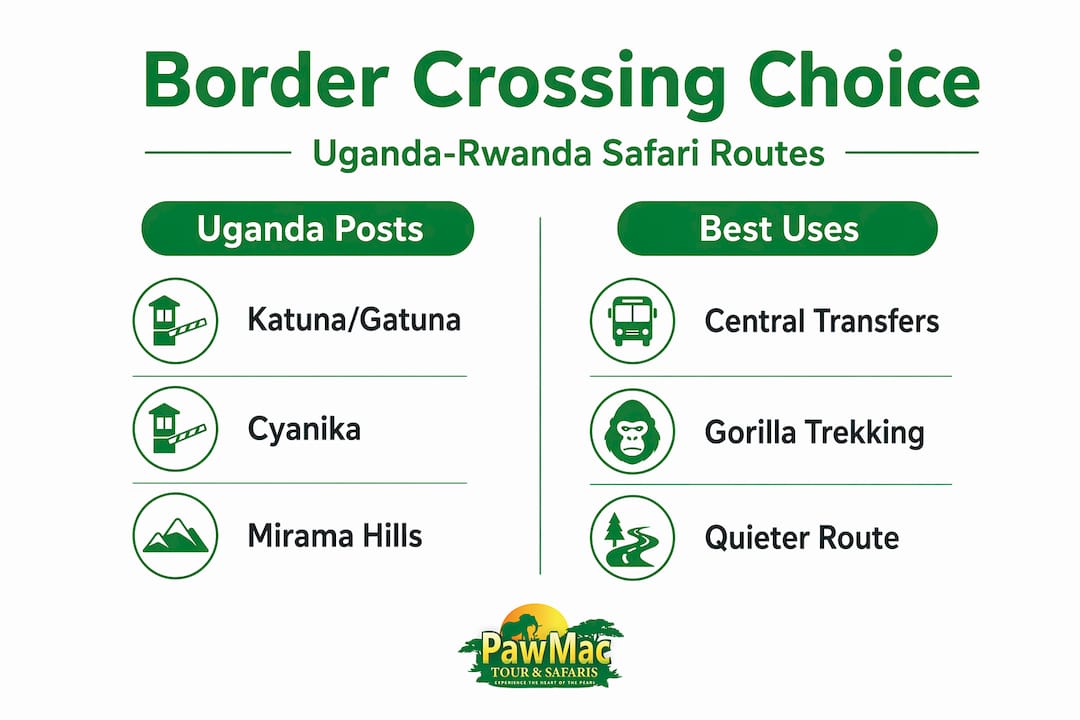
Once you understand why border crossings matter for safaris, the next step is finding the right post for your journey. Route selection is not just about convenience. It directly affects how much time you spend on the road versus in the forest or on a game drive. Main border crossings between Uganda and Rwanda are Katuna/Gatuna, Cyanika, and Mirama Hills/Kagitumba. Each serves a different safari corridor, and choosing the wrong one can add three or more hours to your journey.
Katuna/Gatuna
Katuna/Gatuna is the busiest crossing, operates 24 hours a day, and uses the OSBP system. It connects central Uganda with Kigali and is well suited for travelers heading to Bwindi’s Ruhija or Buhoma sectors, Lake Bunyonyi, or Queen Elizabeth National Park. Because it operates around the clock, it works well for itineraries that require early morning or late-evening arrivals. The downside is commercial truck traffic, which can create queues, especially during morning peak hours.
Cyanika
Cyanika is preferred for gorilla trekking to Mgahinga Gorilla National Park and Bwindi’s Nkuringo and Rushaga sectors. It opens at 6am and closes at 8pm, so timing matters here. From Kigali, the drive to Cyanika takes roughly 4 to 5 hours, making it the shorter route for travelers coming from Rwanda’s capital who are heading straight into southern gorilla country. Foot traffic at Cyanika is noticeably lighter than at Katuna, which means faster processing for safari travelers.
Mirama Hills/Kagitumba
The Kagitumba/Mirama Hills crossing is a 24-hour OSBP post located in western Uganda. It tends to be less crowded than Katuna and is ideal for travelers who are combining safaris in western Uganda parks like Queen Elizabeth with activities in northern Rwanda. If you’re planning a loop itinerary that avoids Kampala entirely, this crossing is often the most efficient option.
Side-by-side comparison
| Border post | Hours | OSBP | Best use | Crowd level |
|---|---|---|---|---|
| Katuna/Gatuna | 24 hours | Yes | Buhoma/Ruhija Bwindi, QENP, Lake Bunyonyi | High |
| Cyanika | 6am to 8pm | No | Mgahinga, Nkuringo/Rushaga Bwindi | Low to medium |
| Mirama Hills/Kagitumba | 24 hours | Yes | Western Uganda parks, loop itineraries | Low |
Understanding the best time to visit Uganda also plays into border selection. During peak trekking season, from June through September, Cyanika sees more foot traffic from international trekkers. Planning your crossing for early morning on weekdays minimizes delays regardless of which post you choose. You can explore available Uganda safari tours and Rwanda safari tours to see how operators route itineraries around these crossings.
For deeper background on the gorilla trekking side of things, reputable gorilla trekking guides often cover route planning alongside permit information, making them useful companion resources for border logistics.
Step-by-step border crossing procedure: What to expect
With your crossing point decided, here’s how to move smoothly from one country to the next. Knowing the sequence of steps in advance removes most of the anxiety from the experience. The crossing procedure follows a consistent pattern at all major posts: you exit one country, then enter the other, with combined facilities at OSBP posts meaning you don’t have to walk through a no-man’s land between the two immigration buildings.
The step-by-step process
- Pull up to the border post and park your vehicle in the designated area. Keep your documents within easy reach.
- Proceed to the exit counter in the departing country. An officer will review your passport and issue an exit stamp.
- Move to the entry counter in the arriving country. Present your passport, visa (or East Africa Tourist Visa if applicable), and your Yellow Fever vaccination certificate. The Yellow Fever certificate is mandatory and officers will turn you back without it.
- Receive your entry stamp and collect your documents. At OSBP posts, steps two and three happen within the same facility.
- Submit to a luggage and security check. Rwanda’s side is noticeably stricter. Officers actively look for plastic bags, which are banned under Rwandan law, and any contraband items.
- Return to your vehicle and proceed into the new country.
Estimated crossing time at a well-managed OSBP post runs between 30 and 60 minutes when your documents are in order. Delays happen mostly when paperwork is incomplete, queues from commercial vehicles build up, or peak hours coincide with your arrival.
Plan Your Uganda Safari with Local Experts
 WhatsApp Us
A Yellow Fever certificate is not a suggestion. Both Uganda and Rwanda enforce this requirement strictly. Carry the original card, not a photo of it.
Before crossing, review the complete Uganda visa process guide so you arrive with the correct visa category. Also check the Uganda safari planning resource for itinerary timing tips that account for border stops.
Pro Tip: Carry USD cash in small denominations. Some travelers need to pay a visa-on-arrival fee or cover minor processing costs. Cards are rarely accepted at border posts, and local currency exchange rates can be unfavorable at border kiosks.
Vehicle and luggage rules: Permits, insurance, and banned items
Whether you’re using a safari vehicle or planning a self-drive, understanding both vehicle and luggage rules is essential. Many travelers who cross independently are surprised by the documentation required for a private vehicle. Overlooking any single item can result in delays of several hours or even a turn-back at the gate.
Vehicle documentation
For private vehicles, you will need the following:
- Temporary Import Permit (TIP): Issued at the border, this document authorizes your vehicle to operate temporarily in the destination country.
- COMESA insurance: The Common Market for Eastern and Southern Africa insurance covers your vehicle across member states. If your existing policy does not include COMESA coverage, you can purchase it at the border, though doing so in advance saves time.
- Vehicle logbook or registration document: Officers verify that the vehicle belongs to you or that you have authorization to drive it across borders.
- Driver’s license: An international driving permit is recommended alongside your national license, though many border officials accept national licenses from most countries.
- Vehicle road worthiness certificate: Required in some cases, especially for older vehicles.
Luggage rules
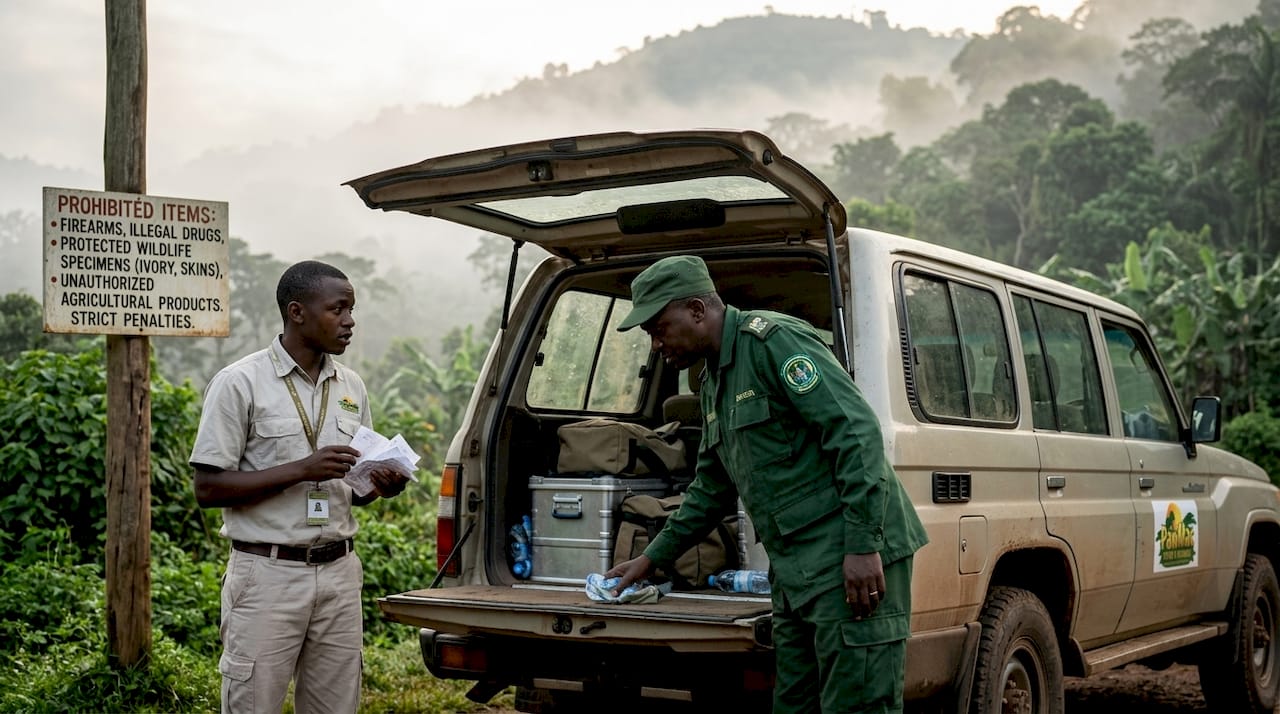
Rwanda’s plastic bag ban is one of the most enforced regulations at the border. Rwanda’s plastic bag ban applies to all travelers, without exception. Officers will open bags and remove any plastic shopping bags. Pack your safari gear in fabric bags, dry sacks, or hard cases. This is not just a customs formality. Rwanda enforces the ban nationwide, and you can be fined for carrying plastic bags even in Kigali.
Other items to note:
- Firearms and ammunition require special permits arranged well in advance.
- Large quantities of cash above certain thresholds must be declared.
- Wildlife products, including ivory or any animal-derived souvenirs, are strictly prohibited.
Check the gorilla trekking permit info page for details on how trekking permits interact with your overall documentation needs, especially if you’re crossing for a specific permit-based activity. For a visual overview of recommended baggage rules for travelers, packing guides can help you visualize what to leave behind.
Pro Tip: If you’re traveling with a professional safari operator, they will handle vehicle permits, COMESA insurance, and compliance checks as part of the tour package. This alone can save two or more hours at the border and removes the stress of navigating regulatory requirements in an unfamiliar language.
Tips for a smooth Uganda-Rwanda border crossing
Even with the right documents and route, a few practical tips can make your border experience much easier. These insights come from experience on the ground, not just from reading the rules.
Top tips for efficient crossings
- Cross during daylight hours, ideally between 8am and 3pm. Avoid Katuna in the early morning when commercial trucks queue up after overnight hauls.
- Choose Cyanika for gorilla trekking in southern Bwindi or Mgahinga. OSBP efficiency reduces delays but busier commercial traffic at Katuna can cause queues. Cyanika sees far less truck traffic, making it the quieter option for trekkers.
- Use a professional safari guide where possible. Guides who cross regularly know the officials, understand the paperwork sequence, and can prevent small issues from becoming big delays.
- Remove all plastic bags from your luggage before reaching the Rwandan side. Do this before you even approach the border so inspection is quick and smooth.
- Carry your documents in a single, organized folder. Passport, visa, Yellow Fever card, vehicle permits, and insurance should all be accessible without digging through a bag.
- Be patient and respectful with border staff. Officers handle hundreds of crossings daily. A calm, courteous manner keeps interactions professional and efficient.
- Keep USD on hand for any fees that arise unexpectedly. ATMs are not always available at or near border posts.
For a broader look at why guided travel pays off beyond the border crossing itself, the guided safari advantages article outlines how professional guides add value at every stage of the journey. When budgeting for your trip, reviewing Uganda safari pricing helps you understand what’s included in operator-led packages. Additional practical advice from experienced travelers is available through border crossing tips compiled by regional trekking experts.
Pro Tip: If your gorilla trek is in the morning, plan to arrive in the destination country the afternoon before. This strategy removes any border-related time pressure and lets you rest overnight near the trailhead.
Why most safari travelers underestimate Uganda-Rwanda border logistics
With actionable tips in hand, let’s address a common misconception: that crossing between Uganda and Rwanda is an ordeal requiring hours of patience and luck. The truth, based on real experience with dozens of cross-border itineraries, is quite the opposite for well-prepared travelers.
The fear of border confusion is understandable. Stories circulate about chaotic crossings in other parts of Africa. But Uganda and Rwanda have invested seriously in improving border infrastructure. OSBP systems at Katuna and Mirama Hills mean a single stop handles both exit and entry. Officials at these posts are accustomed to international tourists and typically process safari travelers efficiently.
The most underappreciated advantage is strategic route selection. For gorilla trekkers from Kigali, Cyanika minimizes travel time to southern Bwindi and Mgahinga, while Katuna is better for itineraries combining Lake Bunyonyi and Queen Elizabeth National Park. Travelers who choose Katuna when they should use Cyanika often add unnecessary hours to an already long transfer day. That time is far better spent on the trail or watching wildlife.
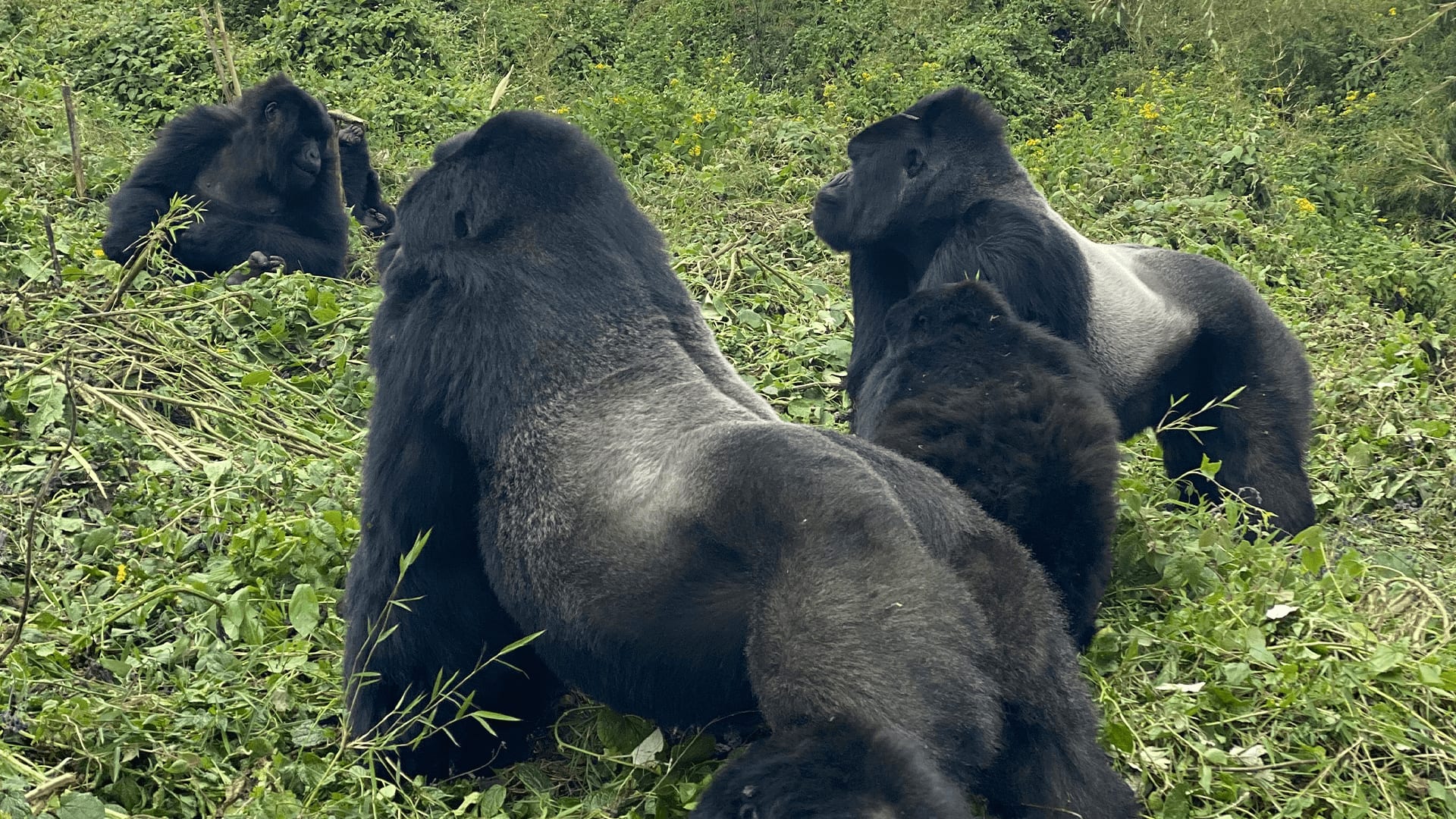
There’s also the self-drive versus guided debate. Self-drive travelers can absolutely make this crossing successfully, but they need to prepare several days in advance for vehicle documentation. Professional operators handle paperwork, permits, and compliance as a routine part of their service. For a once-in-a-lifetime gorilla trek, removing logistical friction matters. The experience of standing ten meters from a silverback mountain gorilla in a mist-filled forest is not something you want clouded by morning border stress.
Consider also that crossing logistics connect directly to safari extensions advice for travelers building multi-country itineraries. Route efficiency at the Uganda-Rwanda border often determines whether a Tanzania extension is realistic within a given trip window.
Plan your safari: Border crossing made easy with expert guides
Having unraveled the logistics and myths, here’s how to make your trip seamless with expert support.
Working with a specialist safari operator transforms border logistics from a potential obstacle into a non-event. At PawMac Safaris, we build cross-border gorilla and wildlife itineraries that account for every permit, vehicle document, and time window at each crossing. You focus on the extraordinary wildlife. We handle the paperwork.

Whether you’re planning safari tours in Uganda that extend into Rwanda or looking for dedicated gorilla trekking packages built around southern Bwindi or Mgahinga, our team knows exactly which border to use, when to cross, and how to keep your itinerary on track. For those interested in wildlife tours in Rwanda as part of a broader East Africa adventure, we can structure seamless routes that maximize your time in the field rather than at border queues. Reach out to our team and let’s plan your crossing, and everything that comes after it.
Frequently asked questions
Which Uganda-Rwanda border post is fastest for gorilla trekking?
Cyanika is typically fastest for gorilla trekking in Mgahinga and southern Bwindi, with less traffic and efficient procedures compared to Katuna.
What documents do I need for crossing the Uganda-Rwanda border?
You’ll need a valid passport, the appropriate visa, a Yellow Fever vaccination certificate, and, for vehicle travelers, permits and insurance documents. The CDC health requirements confirm that Yellow Fever certification is mandatory for entry into both countries.
Is there an issue with plastic bags in Rwanda?
Yes. Rwanda enforces a strict plastic bag ban and officers will check your luggage at the border. Remove all plastic bags before arrival.
How long does crossing typically take?
Most major Uganda-Rwanda border posts take between 30 and 60 minutes to cross if your documentation is complete and in order.
Should I use a tour operator or cross independently?
Tour operators streamline crossings, paperwork, and logistics efficiently. Professional operators handle permits and compliance as standard, while independent travelers need thorough advance preparation. Both options are feasible with the right planning.
Recommended
- Uganda Visa Process Guide for Safari Travelers: Step-by-Step
- Uganda vs Rwanda gorilla trekking: cost, permits & experiences
- Uganda safari extensions into Tanzania: maximize adventure
- Uganda Safari Guide: Gorilla Trekking, Wildlife & Planning


