


- 46 Views
- 18 Min Read
- (0) Comment
Some travelers come to Uganda for a classic safari. Others want to feel the forest mud under their boots, hear chimpanzees calling before sunrise, raft the Nile, climb into alpine zones below equatorial glaciers, and spend evenings in lodges where the day’s story is still alive in their muscles.
That is where adventure tours in Uganda stand apart. Uganda is not only a wildlife-viewing destination, it is an active, layered country where rainforest, savanna, wetlands, volcanic slopes, roaring rivers, and community traditions can be combined into one deeply personal journey.
For travelers who want more than a vehicle-based safari, the key is not simply adding more activities. It is designing the right rhythm: enough challenge to feel earned, enough comfort to recover well, and enough local expertise to make every transfer, permit, lodge, and ranger briefing work smoothly.

Why Uganda Is Built for Travelers Who Want More
Uganda’s strength is variety within one country. A well-planned itinerary can move from the forested slopes of Bwindi Impenetrable National Park to the open plains of Queen Elizabeth National Park, then to the Nile at Murchison Falls or the adventure capital of Jinja. Longer journeys can include the Rwenzori Mountains, Lake Bunyonyi, Kibale Forest, Lake Mburo, or the remote wilderness of Kidepo Valley National Park.
This makes Uganda ideal for travelers who want a safari that feels immersive rather than passive. You can walk with rhino guides at Ziwa Rhino Sanctuary, trek on foot to mountain gorillas, track chimpanzees in Kibale, ride a boat toward thunderous falls, search for tree-climbing lions in Ishasha, and end the trip with cultural encounters that explain how people live beside these landscapes.
The best adventure tours are not rushed. They respect driving distances, weather, park rules, altitude, and the physical effort required for activities like gorilla trekking or Rwenzori hiking. PawMac Safaris builds Uganda-focused trips around these realities, using expert local guides, comfortable 4×4 vehicles, and customized planning to match each traveler’s fitness, budget, interests, and preferred comfort level.
The Best Adventure Tours in Uganda at a Glance
The right adventure depends on how active you want to be, how much time you have, and whether your priority is wildlife, hiking, water adventure, photography, culture, or a combination of all of them.
| Adventure experience | Best places in Uganda | Activity level | Minimum time to plan | 2026 planning budget guidance |
|---|---|---|---|---|
| Gorilla trekking | Bwindi, Mgahinga | Moderate to strenuous | 3 days | About $1,300 to $4,500+ per person with permit, lodging, and transport |
| Gorilla Habituation Experience | Bwindi, mainly southern sectors | Strenuous | 4 to 5 days | Permit alone is about $1,500 per foreign non-resident |
| Chimpanzee tracking | Kibale, Budongo, Kyambura | Moderate | 2 to 3 days | Kibale standard tracking permit is commonly about $250 for foreign non-residents |
| Nile rafting and Jinja adventures | Jinja, River Nile | Moderate to high | 1 to 2 days | Rafting often falls around $125 to $160 before transfers and extras |
| Rwenzori trekking | Rwenzori Mountains | Demanding | 3 to 8+ days | Short treks can start below $1,500, summit-focused treks cost much more |
| Big Five style wildlife route | Ziwa, Murchison Falls, Queen Elizabeth | Easy to moderate | 5 to 8 days | About $1,800 to $5,500+ per person depending comfort level |
| Remote wilderness safari | Kidepo Valley | Moderate | 4 to 6 days | Often $2,500 to $7,000+ due to distance or flight logistics |
| Cultural and community encounters | Bigodi, Batwa areas, Karamoja, Ankole regions | Easy to moderate | Half day to 2 days | Often $20 to $100+ per experience depending structure and location |
These figures are planning estimates, not fixed package prices. Final safari costs depend on travel month, group size, accommodation category, vehicle type, activity permits, route design, and whether domestic flights are included.
Gorilla Trekking: Uganda’s Signature Adventure
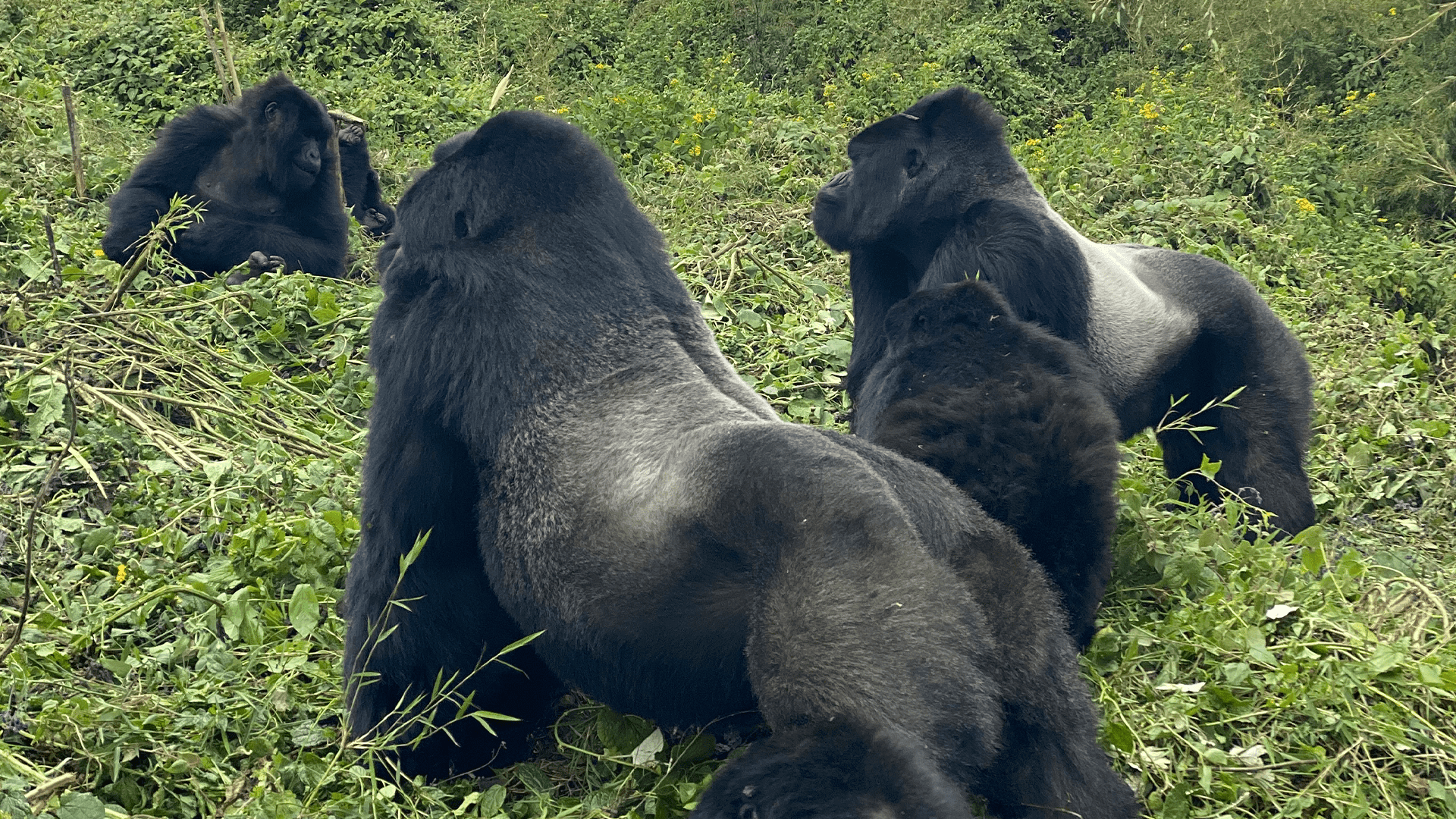
For many travelers, gorilla trekking is the reason they choose Uganda. It is physical, emotional, and unpredictable in the best way. You do not simply arrive at a viewing platform. You begin with an early briefing, enter dense forest with Uganda Wildlife Authority rangers and trackers, then walk until your assigned gorilla family is located.
The trek may take two hours or it may take most of the day. Terrain can include slippery slopes, thick vegetation, narrow paths, mud, and high humidity. Once the gorillas are found, standard trekking permits allow one hour with them. That hour is tightly managed to protect the animals, but it can feel astonishingly intimate.
Plan Your Uganda Safari with Local Experts
 WhatsApp Us
For 2026 planning, the Uganda gorilla trekking permit for foreign non-residents is widely budgeted at $800 per person. This permit is usually the biggest single cost in a gorilla safari, and it should be booked early, especially for June to September and December to February travel.
A critical detail many travelers overlook is sector matching. Bwindi has different trekking sectors, including Buhoma, Ruhija, Rushaga, and Nkuringo. Your permit, lodge, and route must align. Booking a lodge far from your assigned sector can mean a painful early transfer, or worse, a missed briefing. A local operator like PawMac Safaris helps match the permit sector, lodge location, road route, and traveler fitness before the booking is locked in.
If gorillas are your main priority, read more about gorilla trekking in Uganda before choosing your dates and route.
Gorilla Habituation: For Travelers Who Want a Deeper Forest Experience
Standard gorilla trekking is powerful, but some travelers want more time and more field context. Uganda’s Gorilla Habituation Experience offers a longer, more research-oriented encounter with semi-habituated gorilla groups under strict ranger and researcher supervision.
The habituation permit is significantly more expensive, commonly planned at about $1,500 per foreign non-resident, but it can allow up to four hours in the presence of gorillas once located. It is not simply a longer photo session. The experience can be physically tougher, the gorillas may be less settled than fully habituated groups, and the day can feel more like fieldwork than tourism.
This option suits travelers who are fit, patient, conservation-minded, and willing to spend more for a rarer, slower experience. It is less suitable for travelers who want guaranteed comfort, easy trails, or a short morning activity.
Chimpanzee Tracking in Kibale: Sound, Speed, and Forest Drama
Chimpanzee tracking in Kibale Forest is a different type of adventure from gorilla trekking. Gorillas often feel grounded and contemplative. Chimpanzees are louder, faster, and more kinetic. You may hear pant-hoots echoing through the canopy before you see them. The forest can suddenly come alive with movement, calls, branch shaking, and social behavior.
Kibale is Uganda’s most famous chimpanzee destination and one of the strongest choices for travelers who want reliable sightings and rich primate diversity. Standard chimp tracking permits for foreign non-residents are commonly budgeted at about $250 per person in 2026 planning, though current rates should always be confirmed at the time of booking.
Chimpanzee tracking usually fits well between Murchison Falls or Queen Elizabeth and Bwindi. A 7 to 10 day itinerary can combine Kibale chimps, Queen Elizabeth game drives, the Kazinga Channel boat cruise, Ishasha tree-climbing lions, and Bwindi gorilla trekking without feeling too compressed.
For travelers who want a more specialized primate journey, Kibale can also be paired with Bigodi Wetland, nocturnal forest walks where available, and gorilla trekking in either Bwindi or Mgahinga.
Nile Adventure in Jinja: Rafting, Kayaking, and the Source of the Nile
Jinja adds adrenaline to a Uganda itinerary. It is the country’s best-known hub for Nile adventure, with white-water rafting, kayaking, stand-up paddling, boat trips, cycling, and relaxed riverside stays.
White-water rafting is the headline activity. Depending on water levels, operator schedules, and the chosen section, rafting in Jinja is typically a full or half-day experience. Travelers often budget around $125 to $160 per person for rafting before factoring in private transfers, accommodation, meals, or extra activities.
Jinja works especially well at the beginning or end of a safari because it is more accessible from Entebbe and Kampala than far western parks. It can also help break up a long itinerary, especially for couples or groups where not everyone wants every day to revolve around wildlife.
Safety matters here. Ask about equipment condition, guide experience, safety kayakers, rescue procedures, and whether your travel insurance covers white-water rafting. Adventure activities are often excluded from basic policies unless specifically added.
For a deeper planning view, see this guide to Jinja and Nile adventure in Uganda.
Rwenzori Mountains: Uganda’s High-Altitude Challenge
The Rwenzori Mountains, often called the Mountains of the Moon, are for travelers who want serious trekking. This is not a gentle scenic walk. The Rwenzori experience can include boggy trails, steep climbs, cold nights, thick vegetation, alpine plants, and demanding weather changes.
Shorter Rwenzori hikes can be built into a western Uganda safari, while longer routes can take 6 to 8 days or more, especially for travelers aiming toward higher-altitude objectives. Costs vary widely because mountain treks require guides, porters, park arrangements, meals, mountain accommodation, specialized logistics, and sometimes technical support.
As a planning range, short Rwenzori trekking add-ons may start under $1,500 per person, while longer and more ambitious treks can rise to $3,000 to $5,000+ per person, depending on duration, route, crew size, and service level.
The Rwenzori Mountains pair naturally with Kibale Forest, Queen Elizabeth National Park, and Bwindi. They are best for travelers who are comfortable with multi-day hiking and understand that mountain weather can change plans.
Murchison Falls: Big Wildlife With Real Movement
Murchison Falls National Park offers one of Uganda’s strongest combinations of wildlife, river drama, and scenery. A good Murchison adventure usually includes game drives, a Nile boat safari, and time at or near the falls where the river forces itself through a narrow rock gap.
This is also a practical route for travelers who want to include rhino tracking at Ziwa Rhino Sanctuary. With Ziwa, Murchison Falls, and later Queen Elizabeth, travelers can build a strong Big Five style itinerary in Uganda while still adding primates and active elements elsewhere.
A 3-day Murchison Falls safari can often be planned from around $850 to $2,200+ per person, depending on group size, accommodation, park fees, boat schedules, and vehicle arrangements. Adding Ziwa, premium lodges, or private travel increases the cost but improves comfort and flexibility.
Murchison is especially good for travelers who want variety without extreme trekking. You can spend mornings on game drives, afternoons on the river, and still feel that each day has a different shape.
Queen Elizabeth, Ishasha, and Lake Mburo: More Than Game Drives
Queen Elizabeth National Park is one of Uganda’s most flexible safari destinations. The Kazinga Channel boat cruise gives close views of hippos, crocodiles, elephants, buffalo, and waterbirds. Kasenyi is known for classic plains wildlife. The Ishasha sector is famous for its tree-climbing lions, although sightings, like all wild encounters, are never guaranteed.
For adventure-focused travelers, Queen Elizabeth works best as a connective park. It sits between Kibale and Bwindi, making it ideal for itineraries that combine chimps, lions, boats, and gorillas.
Lake Mburo is smaller, but it can add walking safaris, cycling, horseback riding in nearby areas, and a relaxed final stop before returning to Entebbe. It is useful for travelers who want to step out of the vehicle and experience a gentler landscape with zebras, impalas, elands, and rich birdlife.
These parks are not as physically demanding as the Rwenzori or Bwindi, but they add texture to an adventure tour. The best itineraries mix exertion and recovery, not hard activity every day.
Kidepo Valley: Uganda’s Remote Wilderness Frontier
Kidepo Valley National Park is for travelers who want space, silence, and a sense of remoteness. Located in northeastern Uganda, it requires more time and budget than the western circuit, but the reward is a wild, uncrowded safari setting with striking landscapes.
Kidepo is best added to longer itineraries or planned as a focused fly-in or overland wilderness safari. Overland travel can be rewarding but time-consuming. Fly-in options save time but raise the budget significantly.
A Kidepo-focused extension can cost $2,500 to $7,000+ per person, depending on whether you travel overland or by air, lodge level, group size, and number of nights. It is not usually the cheapest way to see wildlife in Uganda, but it is one of the most memorable for travelers who value remote places.
Cultural Encounters That Add Meaning to Adventure
Adventure in Uganda is not only physical. Cultural experiences can transform a safari from a wildlife itinerary into a more complete understanding of the country.
Near Bwindi, Batwa cultural experiences can offer insight into forest heritage when arranged respectfully and through community-benefiting structures. Around Kibale, Bigodi Wetland and nearby community walks connect primate tourism with local livelihoods. In western Uganda, Ankole cattle experiences can reveal pastoral traditions. In Karamoja, cultural visits can add depth to a Kidepo journey when planned with care and sensitivity.
Expect many community experiences to cost roughly $20 to $100+ per person, depending on duration, location, guiding, performances, meals, and whether transport is included. The most important question is not only price. Ask how the community benefits, who guides the visit, and whether the experience feels participatory rather than staged.
How Much Should You Budget for an Adventure Tour in Uganda?
Uganda can serve budget-conscious travelers, mid-range safari guests, and high-end travelers looking for premium lodges and private guiding. The main cost drivers are permits, transport, accommodation, trip length, season, and how remote your route becomes.
| Cost item | 2026 planning estimate | Why it matters |
|---|---|---|
| Gorilla trekking permit | About $800 per foreign non-resident | Usually the largest single permit cost on a Uganda safari |
| Gorilla Habituation Experience | About $1,500 per foreign non-resident | Premium forest experience with longer gorilla viewing time |
| Kibale chimpanzee tracking permit | About $250 per foreign non-resident | Key cost for primate-focused itineraries |
| Porter for gorilla trekking | Often about $15 to $25, plus optional tip | Strongly recommended for support and local income |
| Budget accommodation | Roughly $60 to $150 per night | Best for simple comfort and cost control |
| Mid-range accommodation | Roughly $180 to $400 per night | Strong balance of comfort, location, and value |
| Luxury lodges | Often $500 to $1,500+ per night | Location, exclusivity, service, and views drive pricing |
| Domestic flights | Often several hundred dollars per sector | Saves time on long routes such as Kidepo or Bwindi |
| Full private safari package | Highly route-dependent | Vehicle, fuel, guide, permits, lodges, and park fees shape the final quote |
As a practical package guide, a 7-day Uganda adventure combining chimps, savanna wildlife, and gorillas often falls around $2,800 to $6,500+ per person sharing. A 10 to 12 day active itinerary with Jinja, Murchison, Kibale, Queen Elizabeth, and Bwindi may range from $4,000 to $9,500+ per person sharing. Luxury fly-in or premium lodge itineraries can exceed $10,000 per person, especially with gorilla permits, top lodges, private guiding, and domestic flights.
International flights, visas, travel insurance, vaccinations, tips, premium drinks, personal shopping, and some optional activities are usually separate unless clearly stated in the quote.
Sample Adventure Itineraries for Different Travel Styles
The 5 to 6 day high-impact adventure
This is best for travelers with limited time who still want a meaningful trip. A route might include Entebbe, Ziwa Rhino Sanctuary, Murchison Falls, and Jinja, or Entebbe, Bwindi, and Lake Mburo if gorillas are the priority. The challenge is avoiding too much driving for too few nights.
The 7 to 8 day primate and wildlife route
This is one of the most balanced Uganda adventure tour styles. It can include Kibale for chimpanzees, Queen Elizabeth for game drives and the Kazinga Channel, Ishasha for tree-climbing lion territory, and Bwindi for gorilla trekking. It offers forest, savanna, water, and mountain scenery without needing domestic flights.
The 10 to 12 day complete adventure circuit
This option gives more breathing room. Travelers can include Jinja, Murchison Falls, Kibale, Queen Elizabeth, Bwindi, and Lake Mburo, or replace one park with a short Rwenzori trekking add-on. This is ideal for travelers who want more than highlights but still want a logical route.
The 12 to 14 day deep Uganda expedition
This is for travelers who want Uganda to be the main journey, not a quick extension. You can add Kidepo, a longer Rwenzori trek, gorilla habituation, or more cultural time. The budget rises, but so does the depth of experience.
Best Time for Adventure Tours in Uganda
Uganda can be visited year-round, but activity style should influence timing.
The drier seasons, generally June to September and December to February, are preferred for gorilla trekking, chimpanzee tracking, hiking, and savanna game viewing. Trails are still wild and can still be muddy, but conditions are usually more manageable. These months are popular, so permits and lodges should be booked early.
The wetter seasons, generally March to May and October to November, bring greener landscapes, fewer crowds, and strong birding. They can also mean slippery trails, slower road transfers, and a greater need for itinerary flexibility. Travelers who do not mind rain may find excellent value in these months, especially if they are flexible on lodge choice.
For Rwenzori trekking, weather is always a serious factor. For Jinja rafting, water levels and operator schedules should be checked close to travel. For photography, shoulder months can be beautiful because the light, vegetation, and dramatic skies add atmosphere.
Safety, Fitness, and Insurance for Active Uganda Trips
Adventure does not mean careless risk. Uganda’s most rewarding experiences are guided, regulated, and built around local expertise. Gorilla and chimpanzee activities involve ranger briefings and strict rules. Boat safaris follow park procedures. Mountain and rafting activities require appropriate operators, equipment, and insurance.
Before traveling, visitors should check Yellow Fever vaccination requirements, discuss malaria prevention with a travel health professional, and buy travel insurance that includes medical evacuation. If you plan to raft, hike at altitude, or do other higher-risk activities, confirm those are covered by name in your policy.
Fitness expectations should also be honest. Gorilla trekking can be manageable for many travelers, including older travelers with preparation, but it is not a paved walk. Hiring a porter is one of the smartest decisions you can make. It supports local livelihoods and makes the trek more comfortable.
What to Pack for a Uganda Adventure Tour
Packing should match activity, not just destination. Uganda’s landscapes change quickly, from warm savanna to cool mountain forest.
- Lightweight long-sleeved shirts and long trousers for forest treks and insect protection.
- Waterproof hiking boots with good grip, already broken in before travel.
- Rain jacket or poncho, especially for Bwindi, Kibale, and the Rwenzori region.
- Garden-style gloves for gripping vegetation during gorilla trekking.
- Daypack with water, snacks, camera gear, sunscreen, insect repellent, and personal medication.
- Neutral-colored clothing for safari drives and forest activities.
- Dry bags or waterproof liners for rafting, rain, and boat transfers.
- Binoculars, extra camera batteries, power bank, and enough memory cards.
Avoid relying on brand-new footwear, heavy cotton for trekking, bright colors in wildlife areas, and overpacked luggage that slows down vehicle loading and lodge transfers.
How to Choose the Right Uganda Adventure Tour Operator
The more active your itinerary becomes, the more important local planning becomes. A simple hotel-and-vehicle booking is not enough when your trip involves gorilla permits, chimp permits, long-distance 4×4 transfers, ranger schedules, river activities, mountain weather, and sector-specific lodge placement.
A strong operator should explain the route clearly, show what is included and excluded, confirm permit timing, recommend realistic driving days, and adapt the experience to your fitness and comfort level. PawMac Safaris specializes in personalized Uganda safari planning, with expert local guides, flexible safari styles, and itineraries that can combine wildlife, primates, culture, and adventure activities.
For premium travelers, document handling also matters. Gorilla and chimpanzee permits often require passport details, and high-value safari bookings may involve deposits, medical notes, insurance information, or emergency contacts. Travelers who want to better understand why responsible document handling matters can review broader governance, risk, and compliance resources and then ask their safari planner direct questions about how personal information is received and stored.
A transparent quote should show permit costs, accommodation category, meal plan, park fees, vehicle and fuel arrangements, guide services, transfers, and optional activities. If a price looks unusually low, check whether gorilla permits, chimp permits, park entry, fuel, boat cruises, or airport transfers have been left out.
Frequently Asked Questions
Are adventure tours in Uganda suitable for first-time safari travelers? Yes, as long as the itinerary is planned realistically. First-time travelers can enjoy gorilla trekking, chimpanzee tracking, boat safaris, and moderate hikes with good guiding, proper pacing, and the right accommodation choices.
How many days do I need for an adventure tour in Uganda? A short adventure can be done in 5 to 6 days, but 8 to 12 days gives a much better balance of primates, wildlife, river activities, and rest. For Rwenzori trekking or Kidepo Valley, consider 12 to 14 days or more.
Is gorilla trekking very difficult? It can range from moderate to strenuous depending on the gorilla family location, weather, terrain, and your fitness. Travelers should prepare for mud, slopes, humidity, and several hours of walking. A porter can make the trek much easier.
What is the biggest cost in a Uganda adventure safari? Gorilla permits are often the biggest single activity cost at about $800 for foreign non-residents. Luxury lodges, domestic flights, private vehicles, and remote routes such as Kidepo can also significantly increase the total budget.
Can I combine Nile rafting with gorilla trekking? Yes. Jinja can be added at the beginning or end of a Uganda itinerary. A common approach is to visit Jinja first, then continue to Murchison Falls, Kibale, Queen Elizabeth, and Bwindi, depending on available days.
Is Uganda better for active travelers than a standard safari destination? Uganda is excellent for active travelers because the country offers gorilla trekking, chimpanzee tracking, mountain hikes, river adventures, walking safaris, boat safaris, and cultural encounters within one destination.
Plan a Uganda Adventure That Goes Beyond the Ordinary
If you want a safari that feels active, personal, and deeply connected to Uganda, the route matters. The right plan will align permits, guides, 4×4 transport, lodges, seasons, activity difficulty, and your travel style into one smooth journey.
PawMac Safaris can help you design a custom Uganda adventure, from gorilla trekking and chimpanzee tracking to Nile rafting, Big Five routes, cultural tours, Rwenzori hikes, and remote wilderness extensions. Explore tailored options with PawMac Safaris and start planning a Uganda safari that gives you more than a checklist of sightings.


