


- 155 Views
- 12 Min Read
- (0) Comment
TL;DR:
- Gorilla trekking offers a raw and unpredictable wilderness experience that is both physically demanding and emotionally rewarding.
- The journey involves careful preparation, strict conservation rules, and an acceptance of nature’s uncertainty, making each encounter uniquely powerful.
Many travelers picture gorilla trekking as a scenic jungle walk that ends with a guaranteed, perfectly timed wildlife sighting. The reality is far more raw, more physical, and ultimately more rewarding than that. Gorilla trekking authenticity comes with genuine uncertainty: sometimes you find the gorilla family within minutes, and sometimes you’re pushing through steep, rain-soaked forest for hours. That unpredictability is not a flaw in the experience. It’s the very thing that makes it unforgettable. This guide walks you through exactly what to expect, from the pre-dawn briefing at the park gates to the quiet, breathtaking moment you lock eyes with a silverback.
Table of Contents
- Setting out: Preparing for your gorilla trek
- On the trail: The reality of trekking through Uganda’s forests
- The encounter: Face to face with mountain gorillas
- Conservation impact: Why your trek matters
- Our take: Why unpredictability makes gorilla trekking truly wild
- Ready for your gorilla trekking adventure?
- Frequently asked questions
Key Takeaways
| Point | Details |
|---|---|
| Expect the unexpected | Every gorilla trek is unpredictable, with hike durations and experiences differing daily. |
| Prepare thoughtfully | Proper gear, health checks, and readiness for changing weather ensure a memorable trek. |
| Respect ethical rules | Strict viewing protocols protect gorillas from disease and disturbance. |
| Your visit helps conservation | Tourism fees fund crucial habitat and veterinary programs for gorilla survival. |
| Adventure is more than the encounter | Embracing uncertainty and challenge is part of an authentic wildlife adventure. |
Setting out: Preparing for your gorilla trek
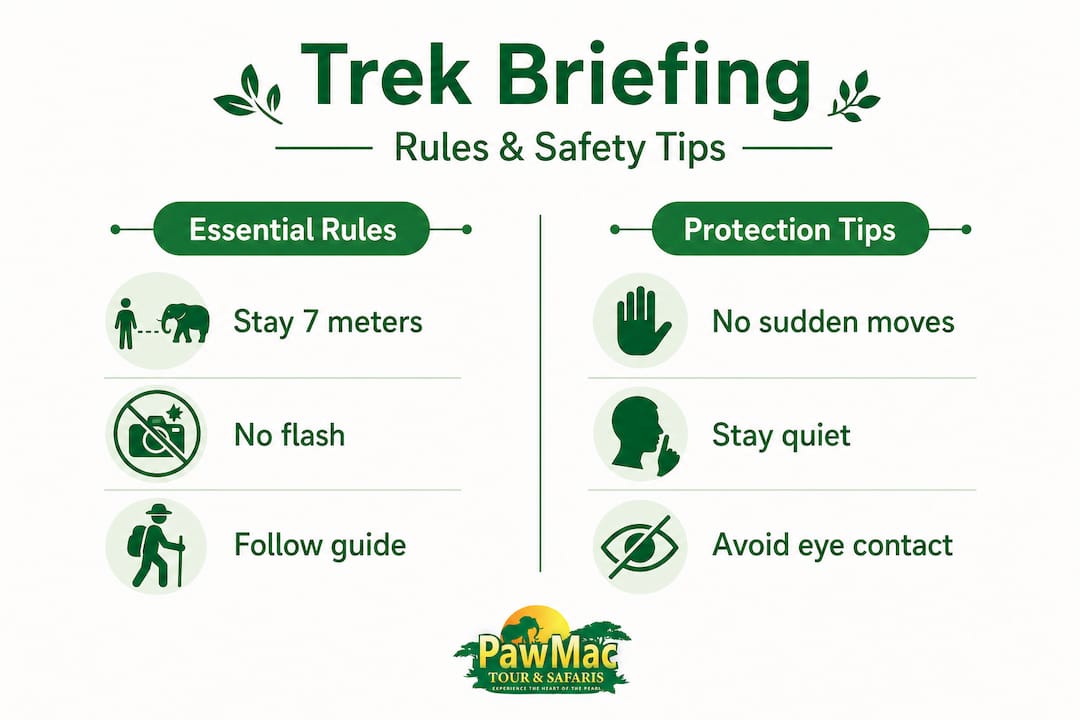
The day begins before sunrise. Most trekkers are collected from their lodges around 6:00 a.m. and driven to the Uganda Wildlife Authority headquarters at the edge of Bwindi Impenetrable Forest or Mgahinga Gorilla National Park. By 7:30 a.m., rangers gather all permitted trekkers for a structured briefing that covers safety protocols, ethical guidelines, and what to expect on the trail.
This briefing is not a formality. Rangers explain how to behave when you encounter the gorilla family, what sounds to avoid making, and how to position yourself in the forest. They also conduct a basic health check. Visitors must not trek when ill, and safe distances must be maintained to minimize disease risk and stress on the gorillas. Mountain gorillas share approximately 98% of human DNA, making them highly susceptible to common human illnesses like colds and flu. If you show symptoms, you will be asked to stay behind. This rule protects both you and the animals.
Start preparing for gorilla trekking at least two weeks before your departure. Knowing what to wear is especially important because the right gear can make the difference between a comfortable trek and a miserable one.
Essential packing checklist:
- Sturdy, ankle-support hiking boots with a thick sole for muddy, uneven terrain
- Long-sleeved shirts and long pants to protect against nettles, insects, and scratches
- A lightweight, waterproof rain jacket since Bwindi receives rainfall year-round
- Gardening or thick gloves to grip vegetation and protect your hands
- A daypack carrying at least 1.5 liters of water, energy snacks, and a first-aid kit
- Insect repellent and sunscreen for exposed skin during clearings
- A camera or smartphone with a fully charged battery and extra memory
Pro Tip: Bring more water than you think you’ll need. Trek durations are unpredictable, and dehydration sets in quickly in humid forest conditions. High-energy snacks like nuts, dried fruit, or energy bars are equally important for maintaining stamina on longer treks.
On the trail: The reality of trekking through Uganda’s forests
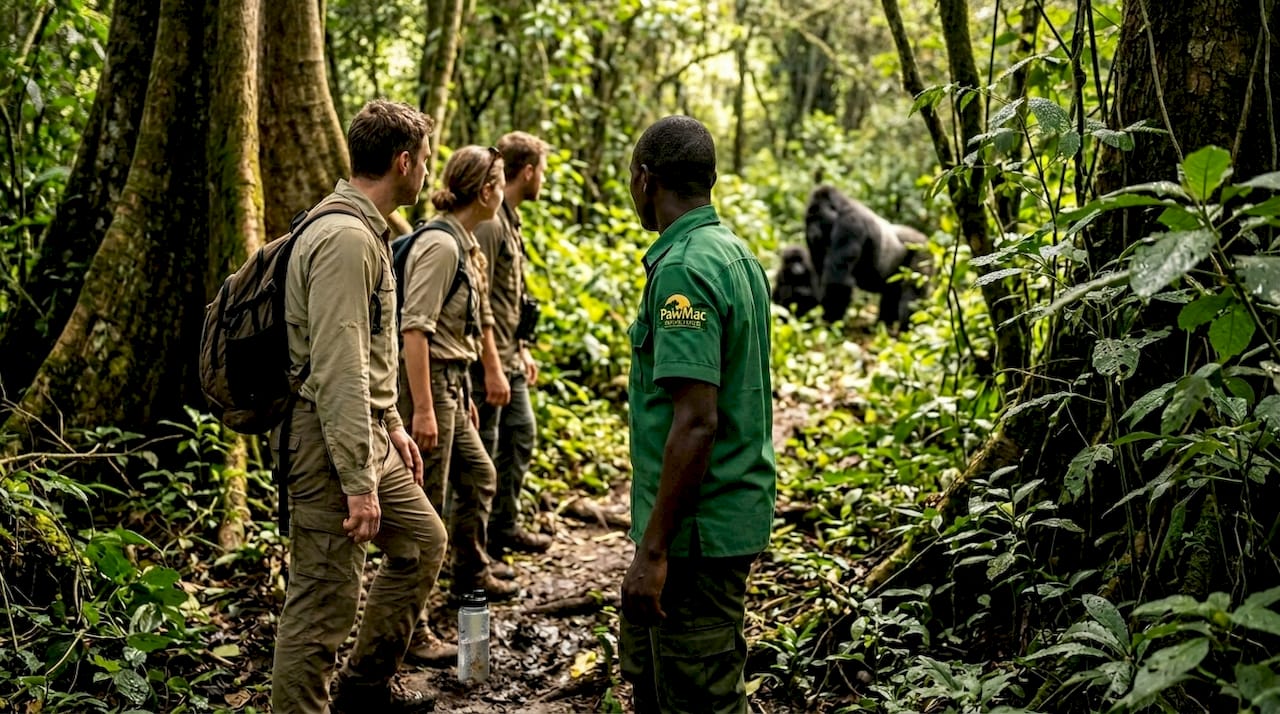
Once the briefing ends, each group of eight trekkers is assigned to a specific habituated gorilla family and led by an experienced ranger guide. The trail begins at the forest edge and quickly becomes something most people don’t anticipate: steep, tangled, and alive with sound.
Bwindi’s terrain is not a manicured park path. You’re moving through one of Africa’s oldest and most biodiverse rainforests, a place where the ground shifts between exposed roots, muddy slopes, and dense undergrowth. The air is thick and humid. Mist clings to the canopy. Every step requires attention.
“Trek duration can range from 10 minutes to several hours depending on gorilla movement and location.”
This is one of the most important things to understand before you go. Gorillas are wild animals. They move freely within their home ranges, and rangers track them daily using GPS data and the previous evening’s nesting location. Some days, the family is close to the trailhead. Other days, they’ve moved deep into the forest overnight.
Plan Your Uganda Safari with Local Experts
 WhatsApp Us
| Trek duration | Influencing factors |
|---|---|
| Minimum: 10 to 30 minutes | Gorilla family resting near trailhead |
| Typical: 2 to 4 hours | Standard forest movement overnight |
| Maximum: 6 to 8 hours | Family moved to remote terrain or valley |
Common surprises trekkers encounter on the trail:
- Sudden, heavy rainfall that turns the path into a mudslide
- A gorilla juvenile appearing in a tree directly above the group
- The silverback charging briefly as a display of dominance before settling
- Tracker teams radioing that the family has moved since morning
- Unexpected encounters with other forest wildlife including chimpanzees, forest elephants, or rare birds
The physical challenge is real. Some sections require using your hands to pull yourself up slopes, and ranger guides often cut through vegetation with machetes to clear a path. Porters are available for hire at the trailhead and are highly recommended. They carry your bag, offer a steadying hand on difficult terrain, and provide genuine support throughout the trek. Hiring a porter also directly benefits local community members.
For a full breakdown of what each section of the trek involves, the complete gorilla trekking guide covers terrain, group sizes, and sector-by-sector differences across Bwindi. If you’re still at the planning stage, booking your trek well in advance is essential, as permits sell out months ahead of peak season.
The encounter: Face to face with mountain gorillas
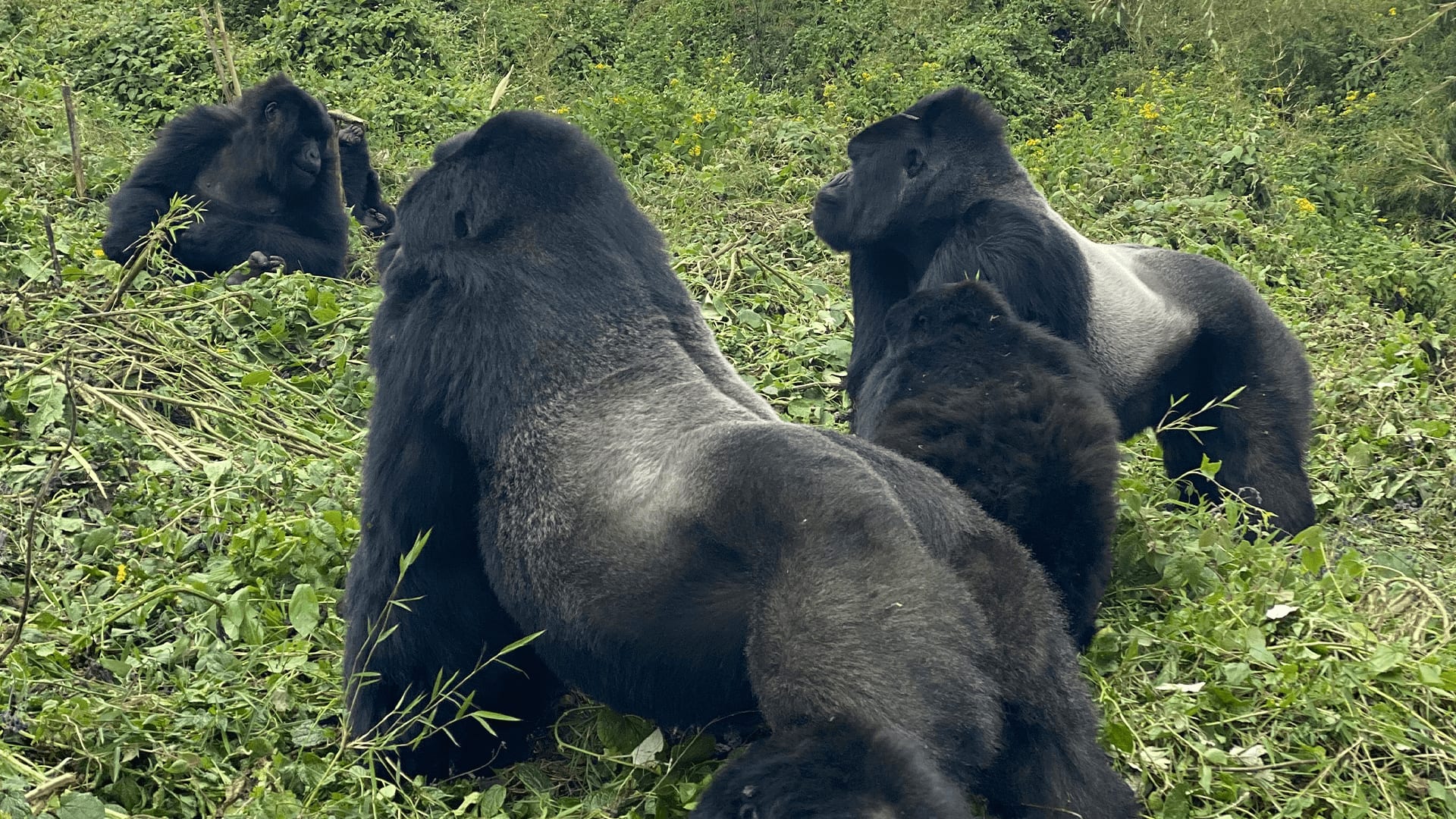
Nothing fully prepares you for the moment the forest goes quiet and your ranger guide holds up a hand to signal: stop. You hear them before you see them. A low rumble. The crack of a branch. The soft shuffle of something large moving through vegetation just ahead. Then the undergrowth parts, and there they are.
The first impression is almost always the same. Travelers describe a sudden stillness, a catch in the breath. The gorilla family goes about its life with a calm indifference that feels almost humbling. Infants tumble over each other in play. A female grooms a juvenile. And then the silverback turns his gaze toward the group, and time seems to stop entirely.
The smell of the forest mixes with the warm, earthy scent of the animals. The sounds of the jungle fade into the background. For most trekkers, this is the most emotionally charged wildlife encounter of their lives.
Viewing rules and the rationale behind them:
| Rule | Rationale |
|---|---|
| Minimum 7-meter distance from gorillas | Reduces disease transmission risk |
| Maximum group size of 8 trekkers | Minimizes stress and disturbance to the family |
| No flash photography | Prevents startling the animals |
| No eating or drinking in front of gorillas | Avoids attracting animals and spreading germs |
| Coughing or sneezing into clothing | Reduces airborne disease exposure |
| Exactly 1 hour of observation time | Limits cumulative human impact on the family |
Maintaining distance and minimizing disturbance are essential to protect both gorillas and humans from disease. These rules are enforced without exception. Rangers will gently redirect trekkers who step too close, and the one-hour limit is strictly observed regardless of how extraordinary the encounter feels.
That one hour passes faster than you can believe. Experienced trekkers often say they spend the first ten minutes in pure shock, the next twenty minutes photographing and absorbing the scene, and the final thirty minutes wishing it wouldn’t end. The countdown is real, and it adds a bittersweet intensity to every second.
Pro Tip: Put your camera down for at least five minutes of the encounter. Just watch. The gorillas’ expressions, the way a mother holds her infant, the casual authority of the silverback, these are details that photographs can’t fully capture and that your memory will hold far longer.
For deeper context on how habituated families are prepared for human visitors, the ethical habituation tips page explains the multi-year process rangers use. You can also review responsible safari tips to understand how your behavior in the field contributes to long-term conservation outcomes.
Conservation impact: Why your trek matters
The Uganda gorilla trekking permit costs $800 USD per person. For many travelers, that number gives pause. But understanding where that money goes transforms it from a ticket price into something much more meaningful.
Tourism revenue directly supports daily veterinary care and the conservation of gorilla populations. Gorilla Doctors, the international veterinary organization that monitors mountain gorilla health, operates in part because of permit fee contributions. Rangers who track gorilla families every single day, anti-poaching units that protect forest boundaries, and community programs that give local families a financial stake in conservation, all of these depend on trekking revenue.
Every permit supports vital conservation work. Uganda’s mountain gorilla population has grown from approximately 620 individuals in 2008 to over 1,000 today, a recovery directly linked to sustained conservation funding and community engagement. That growth didn’t happen by accident. It happened because ethical tourism created the economic conditions for protection to succeed.
Steps you can take to be an ethical trekker:
- Book through a licensed, responsible operator who channels fees correctly and follows Uganda Wildlife Authority guidelines
- Hire a local porter to support community livelihoods and reduce your own physical burden on the trail
- Follow all ranger instructions without exception, including the 7-meter distance rule and the one-hour limit
- Stay healthy before your trek and report any illness symptoms honestly at the morning briefing
- Avoid single-use plastics in the forest and carry out everything you bring in
- Purchase crafts from local community cooperatives near the park to extend your economic impact beyond the permit fee
To understand the full scope of how permit revenue is distributed and why it matters, the how permits fund conservation article breaks down the funding chain in detail. The connection between your visit and gorilla survival is direct, traceable, and significant.
Our take: Why unpredictability makes gorilla trekking truly wild
Most travel content focuses on the gorilla encounter itself: the silverback’s gaze, the infant’s curiosity, the quiet magic of that one hour. And that moment is extraordinary. But here’s what rarely gets said clearly enough: the trek before the encounter is just as formative.
We’ve guided hundreds of trekkers through Bwindi and Mgahinga, and the ones who come away most transformed are rarely the ones who had a 20-minute walk to the gorillas. They’re the ones who hiked for five hours through rain and mud, who doubted themselves on a steep ridge, who sat down exhausted and then heard the rangers say “we’re close.” The struggle is the story.
Gorilla trekking is not a theme park ride with a guaranteed outcome at a set time. It’s a genuine wilderness experience, and that means accepting conditions you can’t control. The weather will not cooperate on schedule. The gorillas will not pose conveniently. Your boots will get muddy. You might feel tired and uncertain before the encounter happens.
That discomfort is not something to manage or minimize. It’s the thing that makes the moment of encounter feel earned. When you finally see the silverback, you’re not just a tourist looking at an animal. You’re someone who pushed through real difficulty to be in that place at that moment. That changes how the experience lands in your memory.
Travelers who approach gorilla trekking with rigid expectations often leave feeling mildly disappointed, not because the experience was poor, but because they were comparing it to an imagined version. Travelers who approach it with openness and physical readiness almost universally describe it as one of the most powerful experiences of their lives. The real experiences shared by past trekkers reflect this pattern consistently.
Embrace the uncertainty. That’s where the wildness lives.
Ready for your gorilla trekking adventure?
Planning a gorilla trek involves more moving parts than most people realize: securing the right permit sector, coordinating lodge transfers, understanding seasonal trail conditions, and booking far enough in advance to get your preferred dates. Getting these details right makes the difference between a smooth, memorable experience and a stressful one.

PawMac Safaris handles every element of that planning process, from permit acquisition to customized itineraries across Bwindi, Mgahinga, and Uganda’s other iconic parks. Whether you’re looking at Uganda wildlife tours that combine gorilla trekking with chimpanzee tracking and game drives, or you want to explore the full range of Uganda safari options to find the right fit for your schedule and budget, the team at PawMac Safaris brings the local expertise and conservation commitment that this experience deserves. Contact us today to see trek packages and start securing your permits before they sell out.
Frequently asked questions
How long does a typical gorilla trek take?
A trek can range from as short as 10 minutes to several hours, depending on where the gorilla family is located that day. Most trekkers spend between two and four hours on the trail before reaching the gorillas.
What should I wear for gorilla trekking in Uganda?
Wear long pants, long-sleeved shirts, and sturdy waterproof hiking boots with ankle support, and always bring a rain jacket since Bwindi’s trails can be muddy and wet regardless of season.
Is gorilla trekking safe for the gorillas?
Yes, because strict health protocols are in place, including not trekking when ill and maintaining a minimum 7-meter distance, which significantly reduces disease transmission risk and minimizes stress on the gorilla family.
What does my gorilla trekking fee support?
Your $800 USD permit fee funds daily veterinary care, anti-poaching operations, ranger salaries, and community development programs that give local families a direct economic reason to protect gorillas and their habitat.
Can anyone participate in gorilla trekking?
Most healthy adults can participate, though the trek requires a moderate to good fitness level due to steep, sometimes slippery terrain and variable trek durations that can extend to several hours.
Recommended
- How to Book Gorilla Trekking in Uganda: Step-by-Step Guide
- Uganda vs Rwanda gorilla trekking: cost, permits & experiences
- Gorilla Trekking in Uganda: Cost, Permits & Tours 2026
- Gorilla Trekking Experiences | PawMac Safaris


