


- 11 Views
- 21 Min Read
- (0) Comment
If you want to book a safari in Uganda, start with the route before you start comparing lodges, vehicle types, or daily rates. The route decides how much of your trip is spent watching wildlife instead of sitting in transit, whether your gorilla permit matches the correct trekking sector, and whether your budget is going toward the experiences you actually came for.
Uganda rewards thoughtful planning. Bwindi Impenetrable National Park, Kibale Forest, Queen Elizabeth National Park, Murchison Falls National Park, Kidepo Valley National Park, Lake Mburo, and the Nile adventure corridor all offer very different safari rhythms. A strong itinerary connects them in the right order, at the right pace, and with enough flexibility for weather, road conditions, permit availability, and personal comfort.
Table of Contents
- Why the Route Should Come Before the Booking Form
- The Three Questions That Shape the Right Uganda Safari Route
- What must be included
- How many nights are realistic
- How much road time feels comfortable
- Route Blueprints for Different Uganda Safari Goals
- Gorilla focused route
- Primates and savannah route
- Big game and waterfalls route
- Luxury fly in route
- Costs to Understand Before You Book a Safari
- Permit costs
- Accommodation and vehicle costs
- Domestic flights and route upgrades
- Timing Your 2026 Uganda Safari Around the Route
- Dry season routing
- Green season routing
- The Booking Sequence That Protects Your Trip
- Confirm permits before lodge deposits
- Match lodge location to trek sector and park gates
- Plan transfers as experiences not filler
- Common Routing Mistakes That Make Safaris Feel Rushed
- When a Custom Safari Makes More Sense Than a Fixed Package
- Frequently Asked Questions
- Book Your Uganda Safari With the Route Already Working
Why the Route Should Come Before the Booking Form
A safari quote is only as good as the route behind it. Two Uganda itineraries can both say 8 days, include gorilla trekking, and visit a savannah park, yet feel completely different on the ground. One may move smoothly from Entebbe to Kibale, Queen Elizabeth, Bwindi, and Lake Mburo. Another may force long backtracking, late arrivals, and rushed park activities because the routing was built around lodge availability rather than safari logic.
Uganda is compact compared with many safari destinations, but it is not a country where map distance tells the full story. Mountain roads near Bwindi can be slow, park tracks vary by season, ferry crossings at Murchison Falls need timing, and some airstrips only make sense for certain lodge locations. A well-planned route protects your most valuable safari currency: daylight in the right habitat.
This is especially important for premium travelers who want a polished experience. Comfort does not only come from a luxury lodge. It comes from arriving before dark, having a guide who understands the next day’s movement, choosing the right trekking sector, and avoiding unnecessary one-night stops that make the trip feel like logistics rather than adventure.
PawMac Safaris plans Uganda safaris with this route-first mindset, combining local knowledge, expert-guided wildlife experiences, comfortable 4×4 vehicles, and personalized planning across Uganda’s national parks. If you are still comparing broad circuit styles, this guide to choosing the right Uganda safari route is a useful companion to the route-first approach below.
The Three Questions That Shape the Right Uganda Safari Route
Before you ask for a final quotation, answer three planning questions. They determine whether your itinerary should be a short gorilla-focused escape, a classic primate-and-savannah circuit, a big game route, or a high-comfort fly-in safari.
What must be included
Start with the non-negotiable experience. For many travelers, it is gorilla trekking in Bwindi. For others, it is chimpanzee tracking in Kibale, photographing tree-climbing lions in Queen Elizabeth National Park, seeing the Nile force its way through Murchison Falls, or reaching the remote wilderness of Kidepo Valley.
The mistake is trying to make every highlight a priority on a short trip. Uganda offers dense safari variety, but the best journeys still need focus. If gorillas are your main reason for traveling, build the route around the confirmed permit date and trekking sector. If big game is the main priority, the route may need more time in Murchison Falls, Queen Elizabeth, or Kidepo. If primates are the focus, Kibale and Bwindi should lead the planning.
A simple hierarchy works well:
- Primary experience: The one thing you would regret missing, such as gorilla trekking.
- Secondary experiences: Important additions, such as chimpanzees, boat safaris, or lion tracking.
- Nice-to-have experiences: Activities to include only if they do not weaken the route.
This structure prevents the itinerary from becoming a checklist. In Uganda, a safari with fewer parks but better timing often feels richer than a route that collects destinations without enough time to experience them properly.
Plan Your Uganda Safari with Local Experts
 WhatsApp Us
How many nights are realistic
Trip length should match the geography. A 3 or 4 day Uganda safari can work for gorilla trekking if you focus only on Bwindi and accept a long road transfer or use a domestic flight. A 7 to 10 day safari opens the door to the classic western circuit. A 12 to 14 day journey allows a deeper Uganda experience with primates, savannah wildlife, boat safaris, cultural visits, and a more relaxed pace.
The following planning guide gives a realistic starting point:
| Trip length | Best route style | What it can include comfortably | What to avoid |
|---|---|---|---|
| 3 to 4 days | Gorilla focused | Entebbe and Bwindi, usually one gorilla trek | Adding multiple parks |
| 5 to 6 days | Short primate or wildlife route | Bwindi plus Lake Mburo, or Murchison Falls focused | Trying to combine Kibale, Queen Elizabeth, and Bwindi too quickly |
| 7 to 10 days | Classic Uganda circuit | Kibale, Queen Elizabeth, Bwindi, Lake Mburo, or Murchison Falls variants | One-night stays in every park |
| 11 to 14 days | Full Uganda safari | Primates, savannahs, boat safaris, cultural tours, and more relaxed transfers | Underestimating permit and lodge demand in peak months |
| 14+ days | In-depth Uganda journey | Western circuit plus Kidepo, Jinja, or additional gorilla trekking | Building the route without rest points |
If your international flights allow only one week in Uganda, do not treat a 10 day route as if it can be compressed without consequences. The price may still look attractive on paper, but the safari will feel rushed.
How much road time feels comfortable
Some travelers enjoy overland safari travel because the changing landscape is part of the experience. Uganda’s roads reveal tea estates, crater lakes, papyrus wetlands, banana plantations, escarpments, fishing villages, and the rising ridges around Bwindi. Other travelers prefer to reduce transfer time and spend more hours at lodges, on game drives, or in the forest.
Be honest about your comfort threshold. A private 4×4 with an experienced driver-guide makes long drives manageable, but route design still matters. Families with children, honeymooners, older travelers, photographers carrying heavy equipment, and guests arriving after long-haul flights often benefit from either a slower route or selective domestic flights.
The right question is not whether road travel is good or bad. The right question is where the road transfer adds value and where it only consumes energy.
Route Blueprints for Different Uganda Safari Goals
There is no single best Uganda safari route. The strongest route is the one that matches your purpose, timing, budget, and travel style. The examples below are route blueprints rather than fixed packages, because permit availability, lodge choice, flight schedules, and season can change the best order.
Gorilla focused route
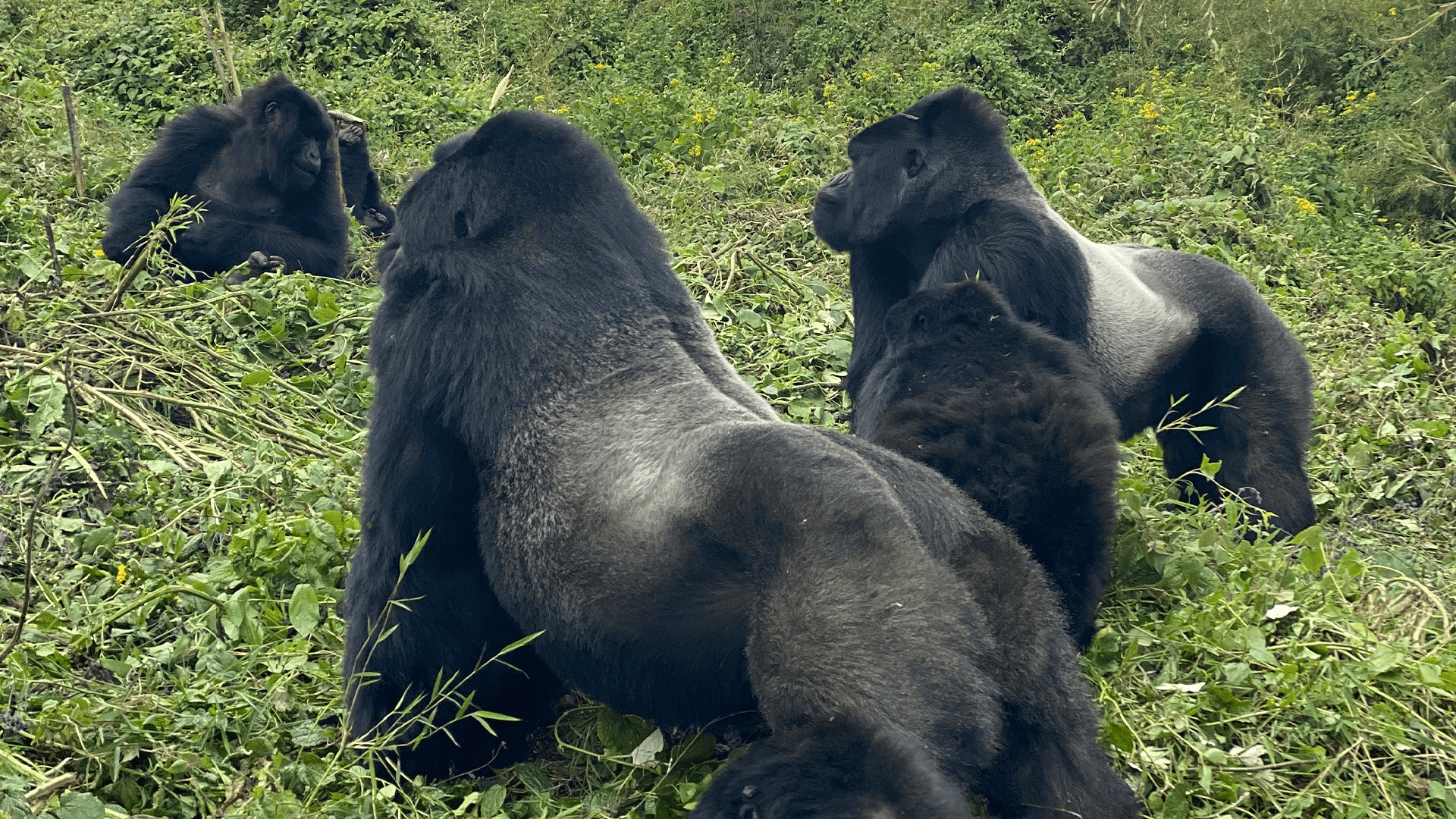
A gorilla focused route is ideal for travelers with limited time or a clear priority: reach Bwindi, trek responsibly, and return without overcomplicating the trip. This is commonly structured as Entebbe to Bwindi and back, sometimes by road and sometimes with a scheduled domestic flight to reduce transfer time.
For a 3 to 4 day trip, the route usually includes arrival in Entebbe, transfer to the Bwindi region, one gorilla trekking day, and return to Entebbe. If the budget allows, a fly-in option can make the journey feel significantly more comfortable. If traveling by road, it is important to accept that transfer days are substantial and should be planned with realistic departure times.
A 5 to 6 day gorilla route can add Lake Mburo National Park, giving you a softer savannah finish with game drives, walking safari options, and a shorter final transfer back toward Entebbe. This is a more balanced choice for travelers who want gorillas first but still want classic wildlife viewing.
Primates and savannah route
For many first-time visitors, the most rewarding Uganda safari route combines Kibale Forest, Queen Elizabeth National Park, Bwindi, and Lake Mburo. This is the classic western Uganda circuit because it blends chimpanzee tracking, crater landscapes, savannah game drives, boat safaris, gorilla trekking, and a gentle return toward Entebbe.
A strong version of this route often needs 8 to 10 days. Kibale deserves proper positioning because chimpanzee tracking starts early and is best enjoyed when you are not arriving late the previous night. Queen Elizabeth works well after Kibale, especially with the Kazinga Channel boat safari and game drives in Kasenyi or Ishasha, depending on route flow. Bwindi then becomes the primate highlight, followed by Lake Mburo as a convenient and scenic final wildlife stop.
This circuit is popular for good reason. It offers Uganda’s signature diversity without forcing you into extreme distances every day. It is also easier to adapt for mid-range, luxury, or private family travel.
Big game and waterfalls route
If your priority is savannah wildlife, dramatic scenery, and the Nile, Murchison Falls National Park deserves serious attention. A route focused on Murchison can include Ziwa Rhino Sanctuary en route, game drives on the northern bank, a Nile boat safari, and a visit to the top of the falls. For many travelers, this is the strongest short safari option if gorilla trekking is not the main purpose.
Murchison can also be paired with Kibale or continued into the western circuit, but this requires careful time planning. Adding Murchison to Bwindi in a short itinerary often creates a route that looks exciting but feels stretched. If you want both Murchison Falls and gorilla trekking, consider 9 to 12 days or use domestic flights where appropriate.
Kidepo Valley National Park is another outstanding big game destination, especially for travelers seeking remoteness and wide-open landscapes. However, Kidepo is far from the standard western circuit. It is best treated as a deliberate route choice, not a last-minute addition.
Luxury fly in route
A luxury Uganda safari is not simply a standard road itinerary with more expensive lodges. The route itself should be upgraded. Strategic domestic flights can connect Entebbe with airstrips serving Bwindi, Queen Elizabeth, Murchison Falls, or Kidepo, reducing long drives and preserving energy for high-value experiences.
A fly-in safari is particularly effective for honeymooners, anniversary travelers, private family groups, and guests with limited vacation time. It also works well when combining one or two premium lodges with signature activities such as gorilla trekking, chimpanzee tracking, private game drives, boat safaris, and cultural visits.
The key is precision. Airstrip selection must match lodge location, luggage guidelines must be clear, and the ground transfer from the airstrip to the lodge must be realistic. A poorly matched fly-in route can still create unnecessary road time at the destination end.
Costs to Understand Before You Book a Safari
A route-first safari budget is easier to understand because each cost has a purpose. Permit costs secure rare wildlife experiences. Vehicle and guide costs determine how smoothly you move between regions. Lodge costs shape comfort and location. Domestic flights reduce time and fatigue. When these elements are planned in the right order, the quote becomes transparent rather than confusing.
Permit costs
Uganda’s primate permits are among the most important items to confirm early. As of the current Uganda Wildlife Authority tariff period, a gorilla trekking permit for a foreign nonresident is generally planned at US$800 per person. Foreign resident and East African citizen rates differ, and all rates should be verified at the time of booking. Gorilla habituation experiences, when available, cost more and require even earlier planning.
Kibale chimpanzee tracking is commonly planned around US$250 per foreign nonresident adult, with different rates for residents and citizens. Other chimpanzee locations may have different pricing and availability. These permit fees are not small extras. They are central route anchors because they are tied to dates, locations, and daily visitor limits.
| Cost item | Realistic 2026 planning figure | Why it affects the route |
|---|---|---|
| Gorilla trekking permit | About US$800 per foreign nonresident | Determines Bwindi date and trekking sector |
| Kibale chimpanzee permit | About US$250 per foreign nonresident | Requires early positioning near Kibale |
| Park entry fees | Often around US$40 to US$45 per foreign nonresident adult per 24 hours in major parks | Affects multi-park route budgeting |
| Gorilla habituation permit | Often planned at a premium above standard trekking | Requires specific availability and more time in Bwindi |
| Optional specialist activities | Varies by park and activity | Can change the best lodge location or number of nights |
The most expensive mistake is not the permit itself. It is booking lodges or flights before confirming whether the permit date and sector match the route.
Accommodation and vehicle costs
Accommodation pricing in Uganda varies widely by location, season, meal plan, exclusivity, and room category. Around Bwindi and top savannah locations, luxury lodges can command premium rates because access is limited and the setting is exceptional. Mid-range lodges can still be very comfortable, but location matters as much as star level.
For planning purposes, private Uganda safaris often fall into these broad per-person ranges, excluding international flights and subject to group size, season, rooming, permits, and domestic flights:
| Safari style | Typical route length | Planning budget per person | Best suited for |
|---|---|---|---|
| Value-conscious private safari | 5 to 7 nights | About US$2,200 to US$4,500 | Travelers prioritizing gorillas or a short wildlife route |
| Mid-range private safari | 7 to 10 nights | About US$4,500 to US$7,500 | First-time visitors wanting comfort and strong routing |
| Luxury private safari | 7 to 10 nights | About US$8,000 to US$14,000+ | Guests wanting premium lodges and a refined pace |
| Fly-in premium safari | 8 to 12 nights | About US$12,000 to US$20,000+ | Travelers who value time savings and top-tier comfort |
Vehicle costs are also route-sensitive. A private 4×4 safari vehicle with an expert local guide is not merely transportation. It is your mobile viewing platform, route manager, safety layer, and interpretation hub. Longer routes with remote parks, challenging terrain, or multiple cross-country transfers naturally require more fuel, time, and operational planning.
For a deeper budget perspective, PawMac Safaris also explains Uganda safari costs, timing, and smart routes in a dedicated planning guide.
Domestic flights and route upgrades
Domestic flights are not necessary for every Uganda safari, but they can be a smart investment when time is limited or comfort is a priority. A flight between Entebbe and an airstrip serving Bwindi or the western parks can replace a long road transfer, although you still need ground transfers at both ends.
As a planning estimate, scheduled domestic flight sectors may add several hundred dollars per person per leg, often in the broad range of US$300 to US$500+, depending on routing, season, luggage rules, and availability. Private charters cost substantially more but may be appropriate for high-end groups, specialist photographers, or guests with tight schedules.
The decision should be made route by route. If the road journey is scenic and breaks naturally with good stops, driving can be worthwhile. If the road day forces a late arrival before gorilla trekking, a flight may protect the quality of the experience.

Timing Your 2026 Uganda Safari Around the Route
Uganda can be visited year-round, but the best route for your trip may shift with the season. The drier months are popular because forest trails are often more manageable and savannah wildlife viewing can be easier. The greener months can offer lush landscapes, excellent photography, fewer crowds, and sometimes better value, but the route needs more margin for road and weather conditions.
Dry season routing
The main dry season windows are typically June to September and December to February, although weather patterns can vary. These periods are high demand for gorilla permits, chimpanzee permits, and premium lodges. If you want to travel during these months in 2026, it is wise to begin planning 9 to 12 months ahead, especially for luxury lodges near Bwindi or private groups requiring multiple gorilla permits on the same date.
Dry season routing is well suited to classic Uganda circuits because road conditions are generally more predictable. However, popularity brings pressure on availability. If the best lodge in the ideal trekking sector is full, the route may need adjustment rather than simply accepting a less convenient location.
Green season routing
The wetter periods, often around March to May and October to November, can still produce excellent safaris when planned intelligently. Forests are atmospheric, birdlife can be outstanding, and landscapes are deeply green. Photographers often appreciate the softer light and dramatic skies.
The route should include more breathing room in green season. Avoid unnecessary late arrivals, allow extra time for rural roads, and choose lodges with practical access. For gorilla trekking, good footwear, gaiters, waterproof layers, and porter support become even more valuable.
Green season can also be attractive for travelers who prefer quieter lodges or have flexible dates. The key is not to treat it as a discount version of peak season. It needs its own route logic.
The Booking Sequence That Protects Your Trip
Once the route is right, the booking process becomes more secure. The order matters because Uganda’s most important safari components are limited by date, location, and availability.
Confirm permits before lodge deposits
For gorilla and chimpanzee trekking, permit availability should be checked before the route is treated as final. A beautiful itinerary can collapse if the preferred gorilla sector has no permits on the desired date. This is why a professional planner will usually ask for passport details, preferred travel dates, flexibility, and group size early in the process.
After permits are held or confirmed, lodge reservations can be aligned to the correct sector and travel sequence. This protects you from paying for a beautiful property that sits too far from the starting point of your trek.
Match lodge location to trek sector and park gates
Bwindi is not one single entrance. It has multiple trekking sectors, including areas such as Buhoma, Ruhija, Rushaga, and Nkuringo. These sectors are not interchangeable from a logistics perspective. A lodge that is excellent for one permit sector may be inconvenient for another.
The same principle applies to savannah parks. In Queen Elizabeth National Park, for example, a route centered on Kasenyi and the Kazinga Channel differs from one that prioritizes Ishasha. In Murchison Falls, the location of your lodge relative to ferry crossings, game drive tracks, and boat safari departures can change the daily rhythm.
This is where local planning expertise becomes valuable. The goal is not just to put a famous park name on the itinerary. The goal is to put you in the right part of the park at the right time of day.
Plan transfers as experiences not filler
Transfers can be productive safari time when designed properly. The drive from Kibale to Queen Elizabeth can include crater scenery. The route toward Bwindi can pass through highland landscapes and local communities. The journey to Murchison Falls can include rhino tracking at Ziwa, if it fits the route and timing.
Still, not every transfer needs to be filled with activities. Sometimes the premium choice is to leave early, arrive calmly, and enjoy the lodge before the next major safari day. A good itinerary knows when to enrich a transfer and when to keep it simple.
Once your safari dates are secured, it is also practical to handle home preparations early, including pet care, travel documents, insurance, and property security. For travelers based in southern Idaho who need gates, boundaries, or repairs completed before departure, arranging a trusted Twin Falls fencing contractor ahead of time is the kind of practical detail that keeps the travel window stress-free.
Common Routing Mistakes That Make Safaris Feel Rushed
Many disappointing safari experiences begin with an itinerary that looked efficient on paper. Uganda’s highlights are extraordinary, but they deserve enough time. These are the mistakes to avoid before you book a safari.
| Routing mistake | Why it causes problems | Better approach |
|---|---|---|
| Booking lodges before permits | The lodge may not match the trekking sector | Hold or confirm permits first |
| Adding too many parks to a short trip | More time goes to transfers than wildlife | Choose fewer parks and deeper experiences |
| Ignoring arrival fatigue | Long-haul travelers start the safari exhausted | Add an Entebbe overnight when needed |
| Treating all Bwindi sectors as nearby | Mountain roads can be slow between sectors | Match permit, lodge, and route carefully |
| Underestimating Murchison or Kidepo distances | Remote parks require deliberate planning | Add nights or use flights where suitable |
| Choosing the cheapest quote without route review | Low price may hide rushed days or weak locations | Compare the daily flow, not only the total cost |
A well-priced safari is not automatically the cheapest safari. It is the itinerary where the cost supports the right experiences, in the right order, without unnecessary compromise.
When a Custom Safari Makes More Sense Than a Fixed Package
Fixed packages can work well when your dates, budget, and interests match the route exactly. But Uganda is often best experienced through custom planning because permits, lodge locations, domestic flights, and personal priorities interact so closely.
A custom Uganda safari is especially useful if you are traveling for a honeymoon, planning a family safari, combining gorilla trekking with chimpanzees, requesting luxury lodges, traveling with older guests, carrying specialist camera equipment, or wanting cultural tours alongside wildlife. It also helps if you have fixed international flight dates and need the internal route to work around them precisely.
Customization does not mean making the itinerary complicated. In the best cases, it makes the trip simpler. PawMac Safaris can shape the route around your priorities, guide comfort level, preferred lodge style, and budget range, then refine the sequence so that each day earns its place.
Safety and smooth logistics also belong in the planning conversation. Airport transfers, vetted accommodation, private driver-guides, health preparation, and responsible park behavior all contribute to a worry-free journey. If you want a practical preparation checklist, this PawMac Safaris guide to safe travel in Uganda covers important details for first-time and returning visitors.
Frequently Asked Questions
How early should I book a safari in Uganda for 2026? For peak travel months, especially June to September and December to February, begin planning 9 to 12 months ahead if gorilla trekking, chimpanzee tracking, or luxury lodges are priorities. Shorter notice can work in quieter periods, but permit and lodge flexibility becomes more important.
Should I choose the route before choosing lodges? Yes. In Uganda, the route should come first because lodge location must match trekking sectors, park gates, transfer times, and activity start points. A beautiful lodge in the wrong place can make the safari less comfortable.
What is the best Uganda safari route for a first-time visitor? A strong first-time route often includes Entebbe, Kibale Forest, Queen Elizabeth National Park, Bwindi Impenetrable National Park, and Lake Mburo over 8 to 10 days. This gives a balanced mix of chimpanzees, gorillas, savannah wildlife, boat safari scenery, and manageable transfers.
How much does gorilla trekking add to a Uganda safari budget? For foreign nonresident travelers, a standard gorilla trekking permit is commonly planned at about US$800 per person, subject to official confirmation at booking. The total cost impact also includes the lodge location, guide and vehicle time, and the number of nights required near Bwindi.
Is a fly-in Uganda safari worth it? A fly-in safari is often worth it when time, comfort, or premium pacing matters. It can reduce long road transfers to Bwindi, Murchison Falls, Queen Elizabeth, or Kidepo, but it must be matched carefully with lodge location and airstrip logistics.
Can I combine gorilla trekking, chimpanzees, and Big Five wildlife in one Uganda safari? Yes, but the route needs enough time. A 9 to 12 day itinerary can combine Bwindi, Kibale, Queen Elizabeth or Murchison Falls, and rhino tracking where appropriate. Trying to fit all of this into a very short trip usually weakens the experience.
Book Your Uganda Safari With the Route Already Working
The smartest way to book a safari in Uganda is to begin with the route: your priority experience, your available nights, your comfort level, your permit needs, and your budget range. Once those pieces are clear, the lodges, vehicles, guides, and activities can be selected with purpose.
PawMac Safaris designs Uganda safari routes with expert local guidance, personalized planning, comfortable 4×4 safari vehicles, and a strong focus on gorilla trekking, chimpanzee tracking, Big Five wildlife, cultural tours, and memorable national park experiences.
If you are planning Uganda for 2026, start with a route conversation before you commit to a package. Share your dates, travel style, group size, must-see experiences, and approximate budget, and plan your Uganda safari with PawMac Safaris around the route that gives your trip the strongest foundation.


